


A Private Island Home On The Spot Where The Magna Carta Was Signed
By
8 months ago
The home also boasts a tree planted by Queen Elizabeth II and President Nixon
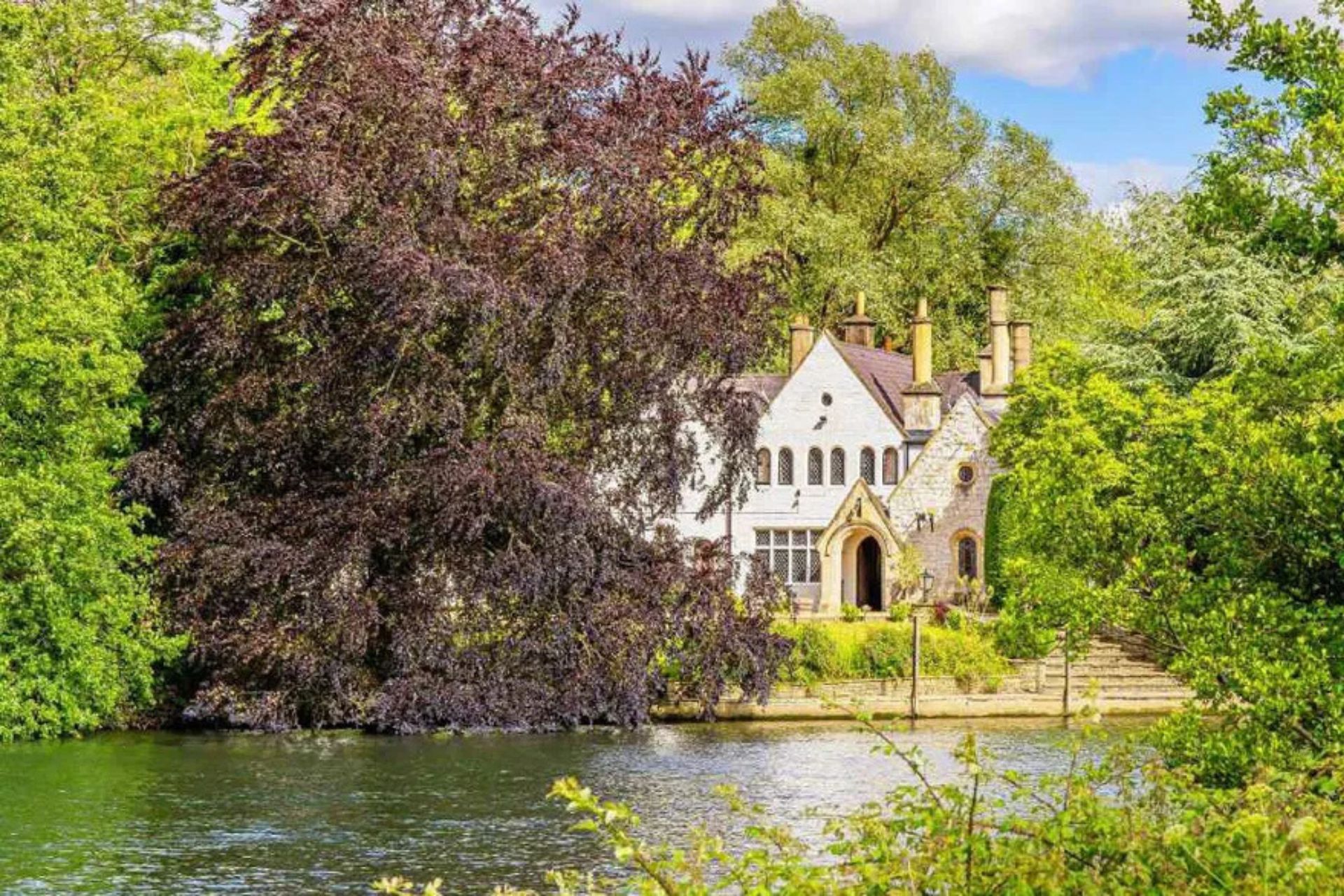
Though this may not be the largest private island on the river, nor the location of the Duke and Duchess of Windsor’s secret hideaway from which they conducted their scandalous affair, this Thames private island boasts its own impressive history – laying claim to the very spot where the Magna Carta was signed and a house complete with the stone tablet on which the famous charter was allegedly sealed.
Discover Magna Carta House
Waterview Properties
The History
It was the year 1215 and the barons were angry. King John (the one and only of his name) was in a scrap with King Philip II of France over some land in Normandy which John – despite the giant channel in his way – had decided was rightfully England’s. In a bid to get Normandy back, John needed money. And to get money, he needed to raise taxes. It seems times truly never change…
Predictably, raising taxes left the barons angry. Especially when John continually tried and failed to reclaim the land in France (gaining him the nickname ‘softsword’) despite everybody telling him to give up on the war.
As John began locking up the barons who refused to pay their taxes, a rebel faction formed – with a group of 40 nobles taking London in May 1215. Forcing John into negotiations, he and the rebel barons eventually came to an agreement in the form of the Magna Carta.
Signing the document in June 1215, the charter laid out many of the key freedoms we have today, including that the king or queen must follow the rule of law, the freedom of the Church from the interference of the monarch, the rights of barons to not be punished for crimes unless lawfully convicted and their freedom to declare war on the king if he failed to follow the Magna Carta.
Waterview Properties
Though the Magna Carta is celebrated as a key cornerstone of British democracy today, the original document was less than a success – with John having already decided to ignore the whole thing and petition Pope Innocent III to declare it null and void on the grounds of coercion, which he did only nine weeks later. It was only its re-issues in 1216 and 1217, and its official inclusion in English law in 1297 that cemented Magna Carta’s place in constitutional history.
Step Inside
To placate the barons, it was agreed that the Magna Carta would be signed at a neutral location: a water meadow on the south bank of The Thames called Runnymede, located between the royal fortress of Windsor Castle and the rebel base at Staines. While nobody knows exactly where the document was signed – with various memorials, monuments and tea rooms around Runnymede boasting connections to the spot – Magna Carta House, as it is aptly known, sits on the location with the best claim to fame.
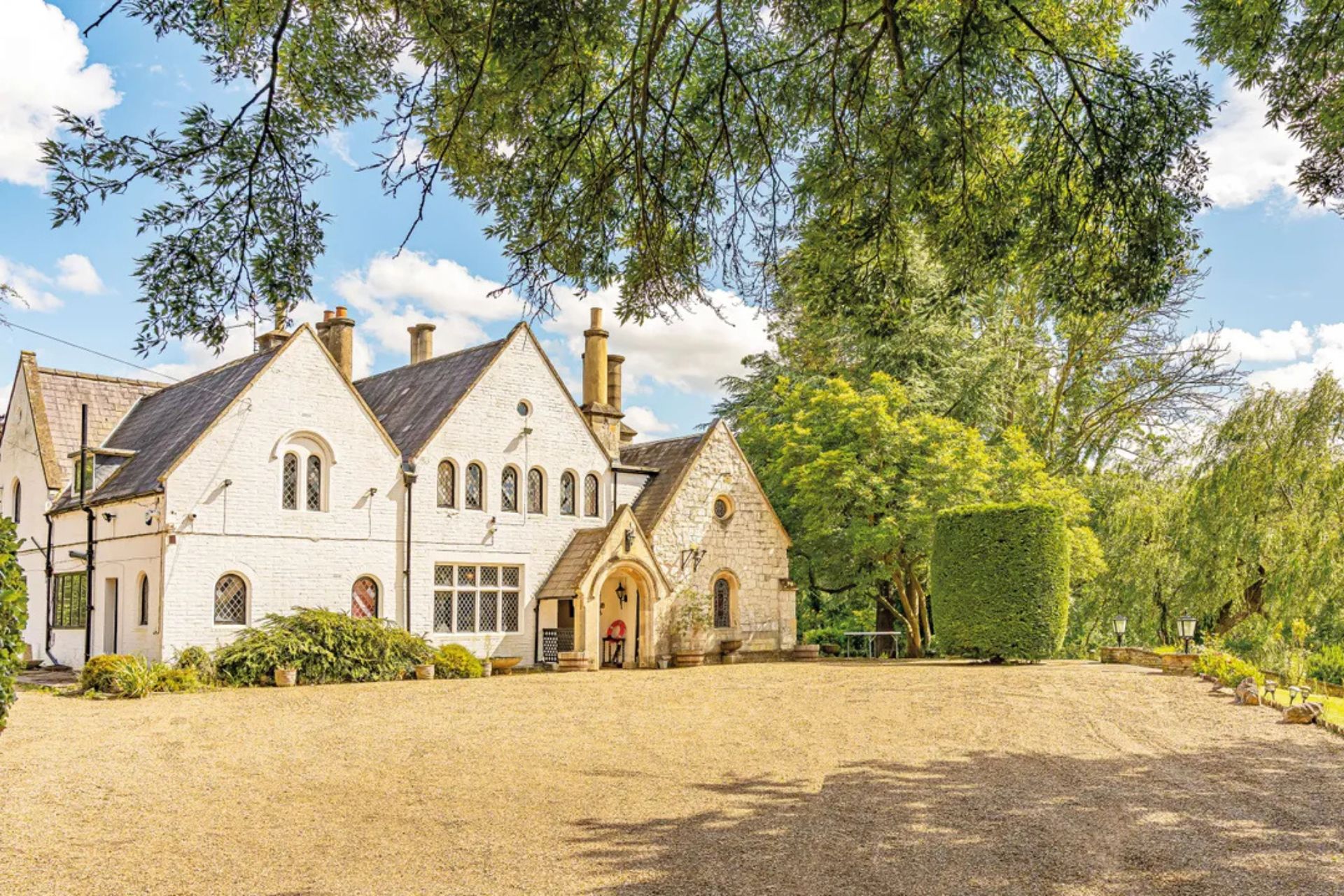
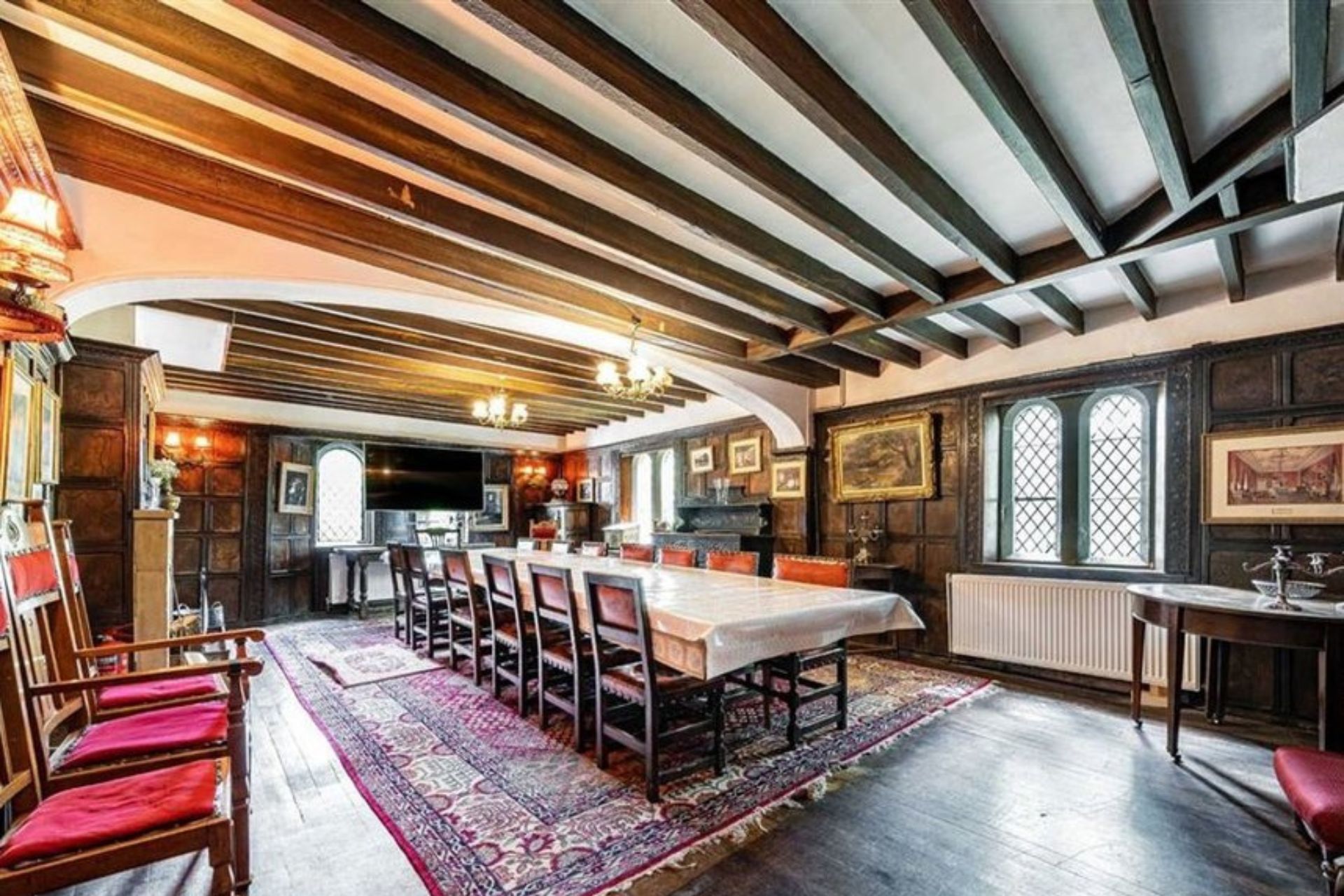
Six hundred years on, a politician called George Simon Harcourt commemorated the charter by building a Norman-style house on the spot of its signing. Complete with an irregular Welsh slate roof and cylindrical chimneys, the Grade II listed six-bedroom home (which spans 4,700 sqft) includes an entrance hall, stately dining room with seating for 20, a drawing room which overlooks the grounds, a study and a kitchen/breakfast room, plus an additional two bedroom cottage sat on the grounds.
Waterview Properties
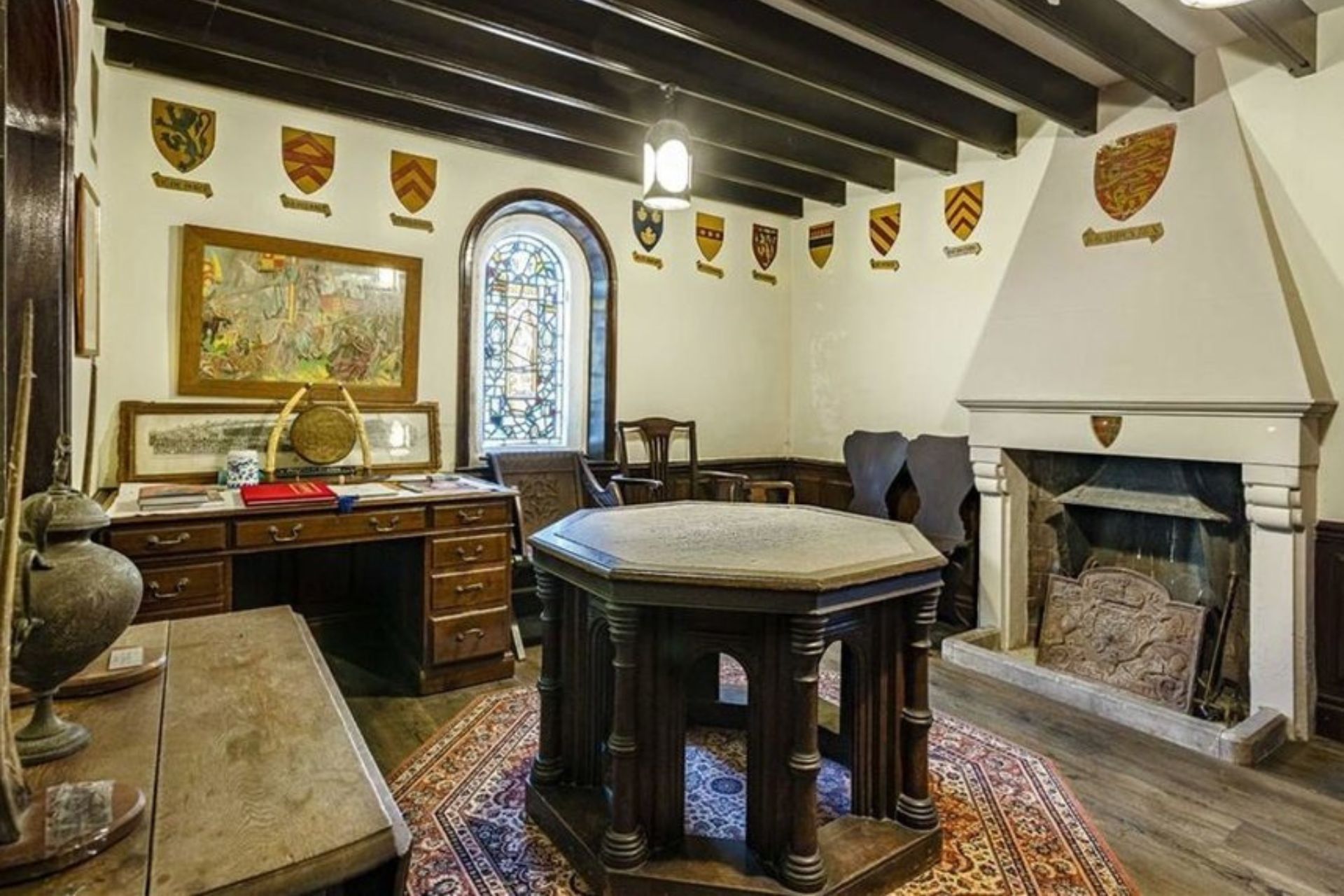
The most impressive feature of the home, however, is the Magna Carta room which boasts an octagonal table that claims to be inlaid with the very same stone on which the Magna Carta was sealed. While the house has been renovated throughout the years, the Magna Carta room (and its many coats of arms) remains the same.
And Out
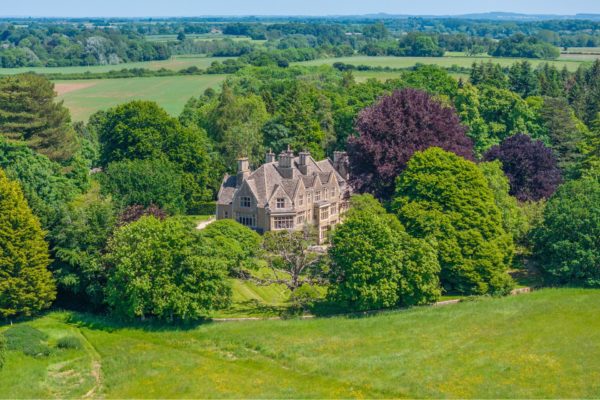
Situated on a private island on the River Thames, the Magna Carta House is accessed via a quiet tree-lined approach along a grand drive. With four acres of mature gardens complete with an array of trees and shrubs and 100ft of riverfront views, the grounds include stone steps leading down to the river, private mooring and a large paved terrace with an ornamental koi pond.
If the Magna Carta wasn’t enough of a claim to fame, the grounds of the house also hold a tree planted by Elizabeth II and President Nixon from when the pair visited the spot during a 1974 visit.
Magna Carta House is on the market for £4.5m. Find out more at waterview.co.uk