


How To Design A Home For A Hotel Creative
By
10 months ago
Step inside this North London home designed by Tom Rutt
Designing a home for a client must be intimidating at the best of times – does it fulfill their brief? Does it reflect their personality? How do I break the news that this feature they’re desperate for just doesn’t work.
However, when your client is the head of creative at some of the world’s most beautiful hotels (Hôtel du Couvent, Nice; Hôtel Le Pigalle, Paris and Hôtel Les Roches Rouges, Saint-Raphael in case you’re planning your next French break), we can imagine the pressure feels doubly on.
Thankfully for Vanina Kovarski, the creative mind behind these gorgeous getaways, she was in the expert hands of Tom Rutt, founder of TR Studio. And together, the pair have brought this once sterile Highgate home back to life.
Inside This Tom Rutt Home Renovation
Like so many designers, Tom Rutt started his studio quite by accident: after years of working around various architecture firms across the capital (including Norman Foster), he suddenly found himself founding his own. With an approach to design that is very much centered around the ‘client journey’, he is renowned for working closely with clients to ensure their home feels uniquely their own.
While the job of architect feels familiar to most, the role of ‘head of hotel creative’ isn’t something most children are listing out among their ‘dreams jobs’. As Vanina explains, her role is all about the small details: ensuring that everything from music and uniforms to candles and shampoos conforms to the brand’s identity and creates a calm and cohesive experience for guests.
Within her role, Vanina also works closely with the hotels’ interior designers and architects, and is thus well-used to bringing a strong vision to the table and ensuring it is brought to life. No pressure then, Tom.
Unlike many other clients who come to architects with a blank slate, Vanina was well-equipped with ideas, photos and Pinterest boards. ‘I knew straight away that Vanina had really good taste and so I just knew that we could end up doing a really good project together,’ Tom assures.
When Vania first reached out to Tom, she had been on the hunt for the right architect for a while: ‘It was important to have an architect with a real sense of space and flow but with a good eye for materiality and the little details,’ she explains. She had reached out to a handful of architects from Instagram but was struggling to decide on the one. One architect she interviewed had made it quite clear that he didn’t care whether their tastes were aligned or not – he just wouldn’t add the project to his website if it didn’t.
When attempting to whittle down her list, she turned to the experts (the founder and interior designer of the hotels where she works) for help. And the response was unanimous: Tom was the way to go. ‘The first time we spoke there was a piece of art behind me and he said “I really like that painting”.’ The pair were clearly a match made in design heaven.
However, the house Tom ended up renovating wasn’t the house Vanina had initially planned to do up. While looking to buy an entirely different property for her renovation project, she ended up purchasing the North London rental where she was then, and still is, living. Having already resided in the house for a while, Vanina had developed a sense of how the house works – and what about it didn’t.
‘It was totally habitable but it had been redone by developers 10 years before and it was very sterile and not to our taste,’ she explains. ‘It also lacked functionality and some of the rooms needed reorganising.’ Though I’ve not been fortunate (or unfortunate) enough to see images of the home pre-renovation, Tom and Vanina recall horror stories of big white tiles, awful floors and a steel staircase which felt totally out of place. ‘So many bits were totally unsympathetic and didn’t make the most of this really, really nice building,’ explains Tom.
The renovation itself started all the way back in early 2020 and while Vanina was only kicked out of her home for seven months of construction, the project and its planning lasted many years longer. Tom was called in to manage the architectural side of the project – moving the staircase, raising the ceilings and lowering the floors in a full reconfiguration of the home – while he and Vanina then collaborated on the interior design, with Vanina drawing on much of her own collection.
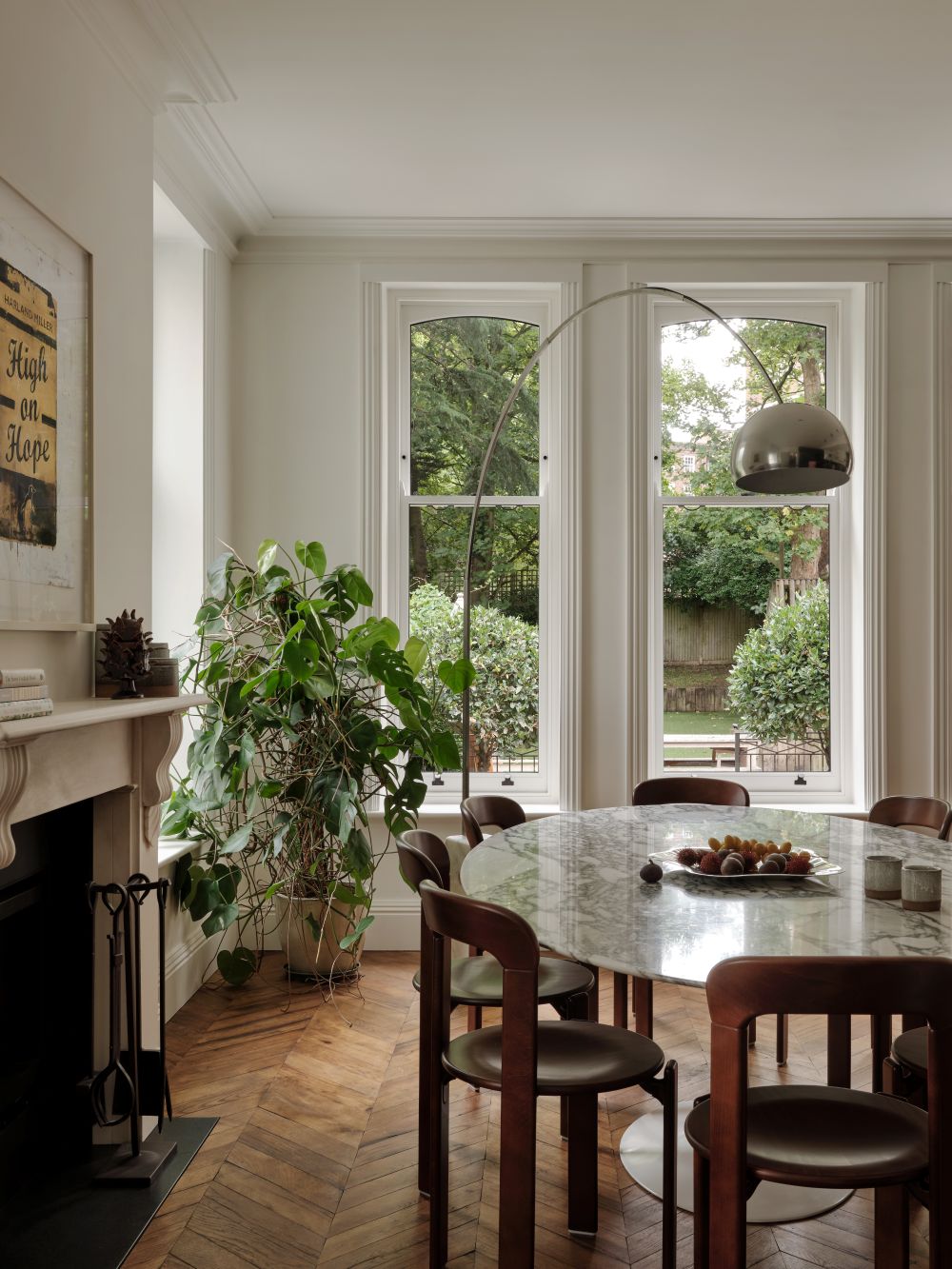
Working alongside hotel designers, you’d imagine that Vanina’s book of homeware brands would’ve been overflowing. And while true back in France where the hotels are based, she was keen to use suppliers local to the UK – meaning many inspiration images sent to Tom as she hunted around for the perfect fit.
‘I came with strong ideas and Tom was very receptive and very much aligned with that,’ she explains, adding that it was a ‘very collaborative project’: ‘He’s very good at listening to what we wanted and needed as a family.’ However, like all good renovations, there was an inevitable push and pull throughout their design journey. ‘I remember you saying we’re going to put the bedroom in the bathroom; it’s going to work,’ Vanina recalls to Tom. ‘And me pushing against you. But in the end, with a few iterations the design works perfectly. It was great to be able to have that back and forth and work together.’
Vanina particularly praises Tom for taking her vision ‘one step forward’. ‘I think some of the layout choices I made were not 100 percent architecturally politically accurate. For example, the lowering of the floor in that bedroom so that we had enough space on the top. You said I would do that in my own house but probably not in a client’s,’ she recalls. ‘But in the end, it just worked perfectly and it looks great.’
Despite the strong vision shared by the pair, the design still went through many iterations before reaching its final form, with the home’s listed status throwing another spanner in the works. They eventually got the permission they needed for an extension; the costs ballooned and it was back to the drawing board.
Instead of attempting to extend, Tom realised the solution was to make the space work harder. ‘How do we manage to get all the things that were needed within the original space? That was the big challenge.’
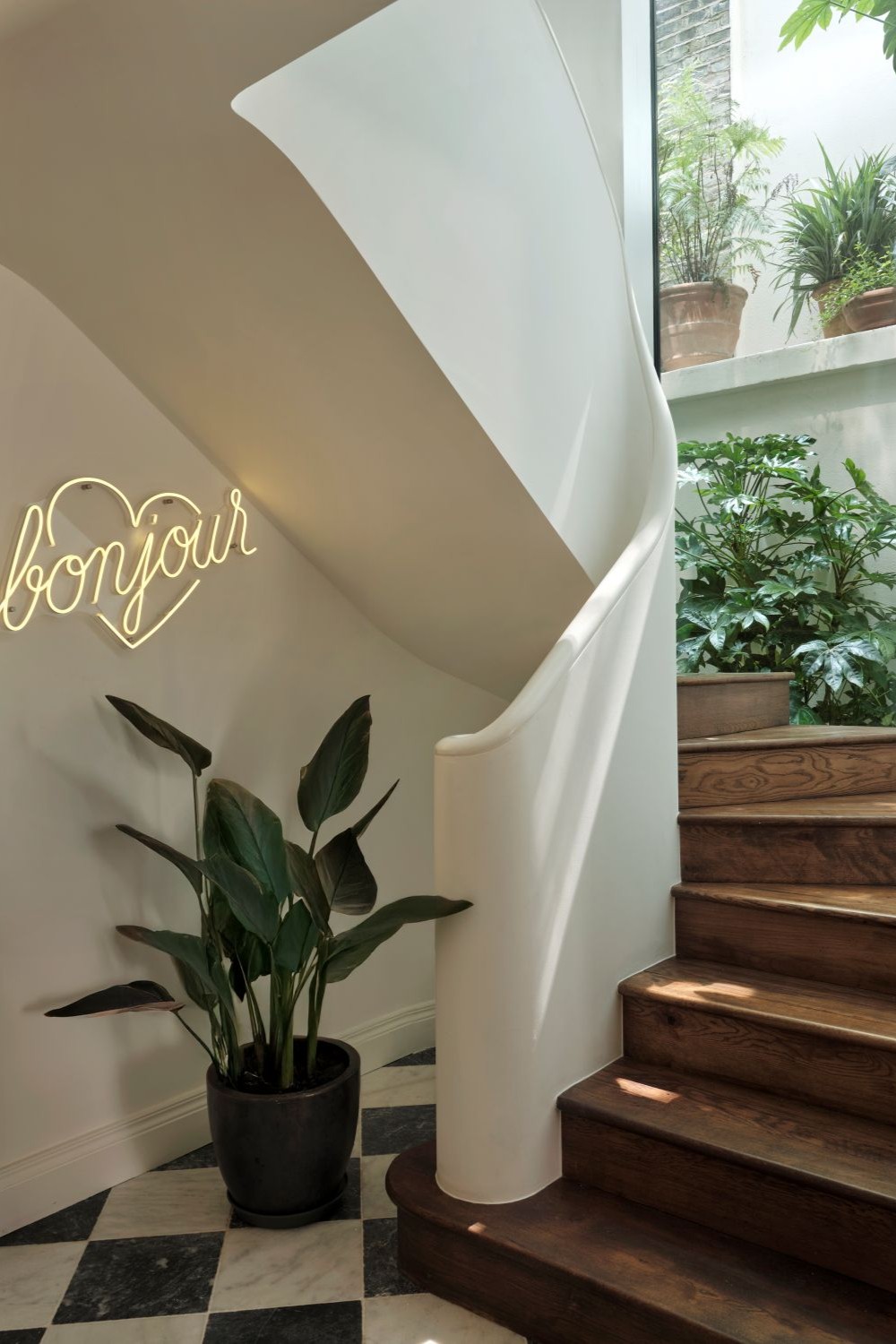
While both Tom and Vanina are pleased to have found space for their big and beautiful staircase (it’s going on my mental Pinterest board), they are both proud to note how the design prioritises function over form throughout. ‘Because there is nothing worse than a good design that doesn’t work. But I think with all the challenges, we really made it work […] We implemented our wishes in a way that was sympathetic to the house, but also the way that we live and host and enjoy the place.’
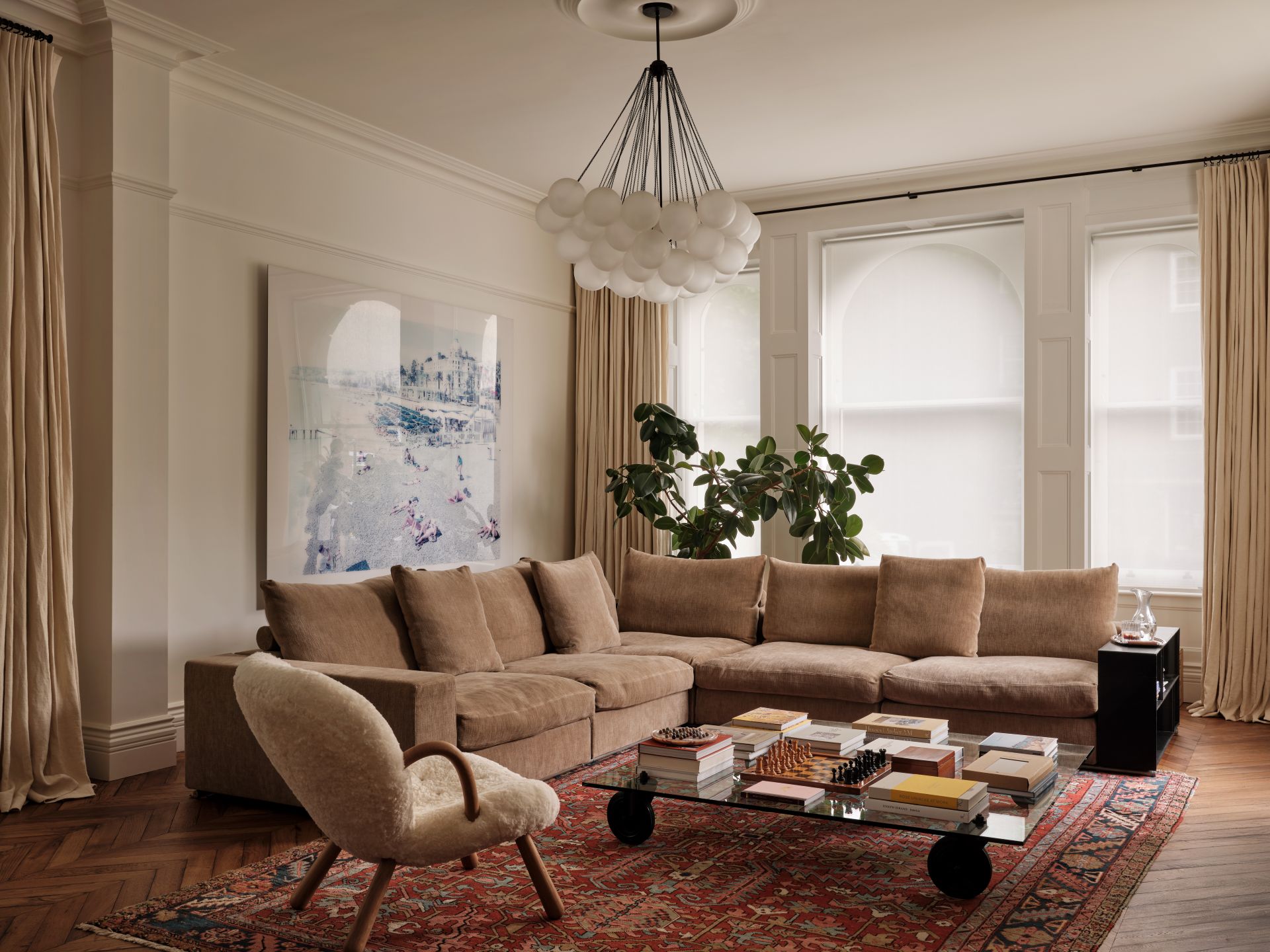
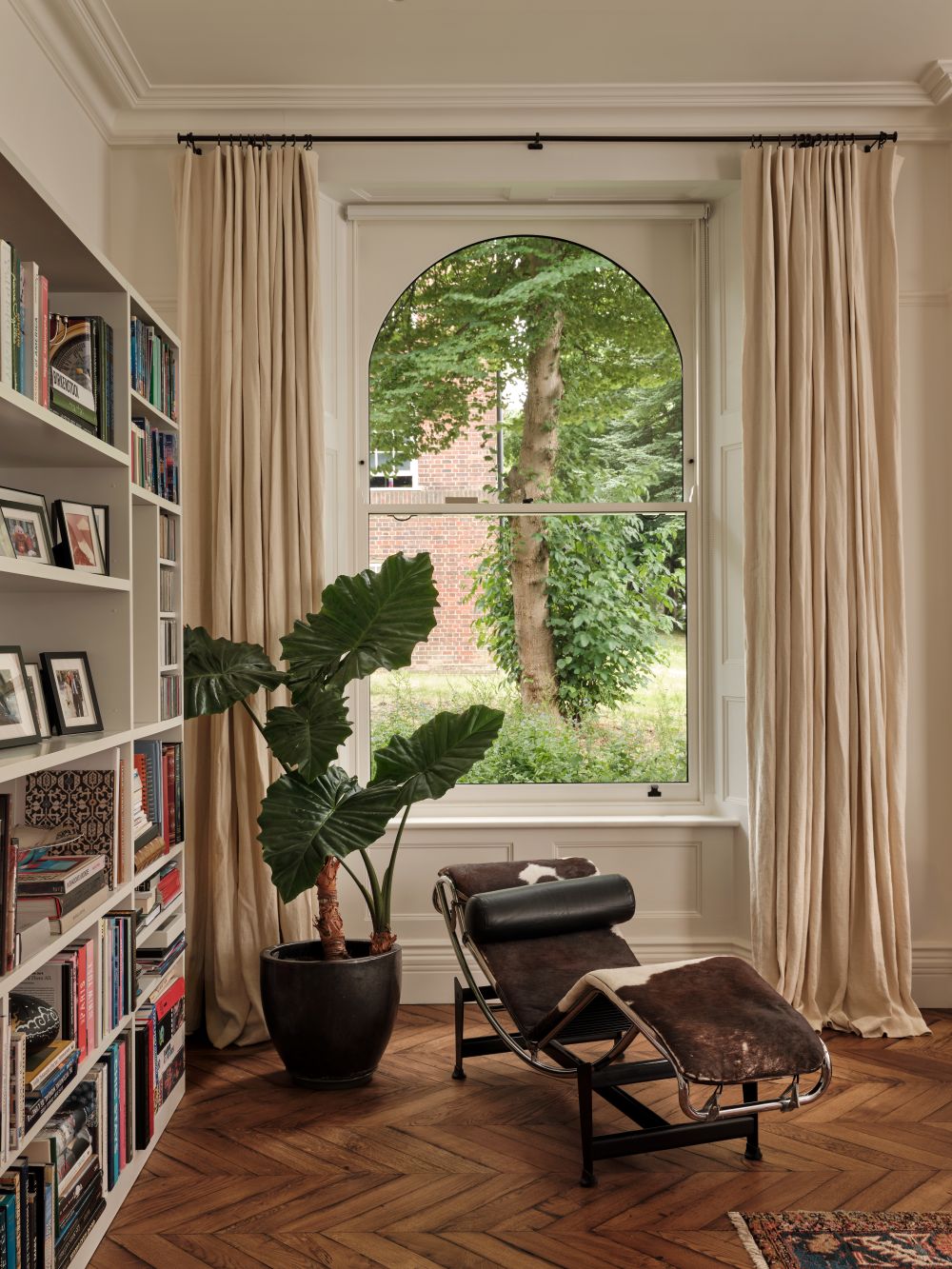
With a 19th century classic white stucco townhouse (complete with tall rooms and sash windows) to work with, it would be easy to opt for a period accurate restoration. And though they kept the mouldings which still existed in the home, they didn’t go out of their way to call in an expert restorer to add in any cornices which would’ve been there 200 years ago.
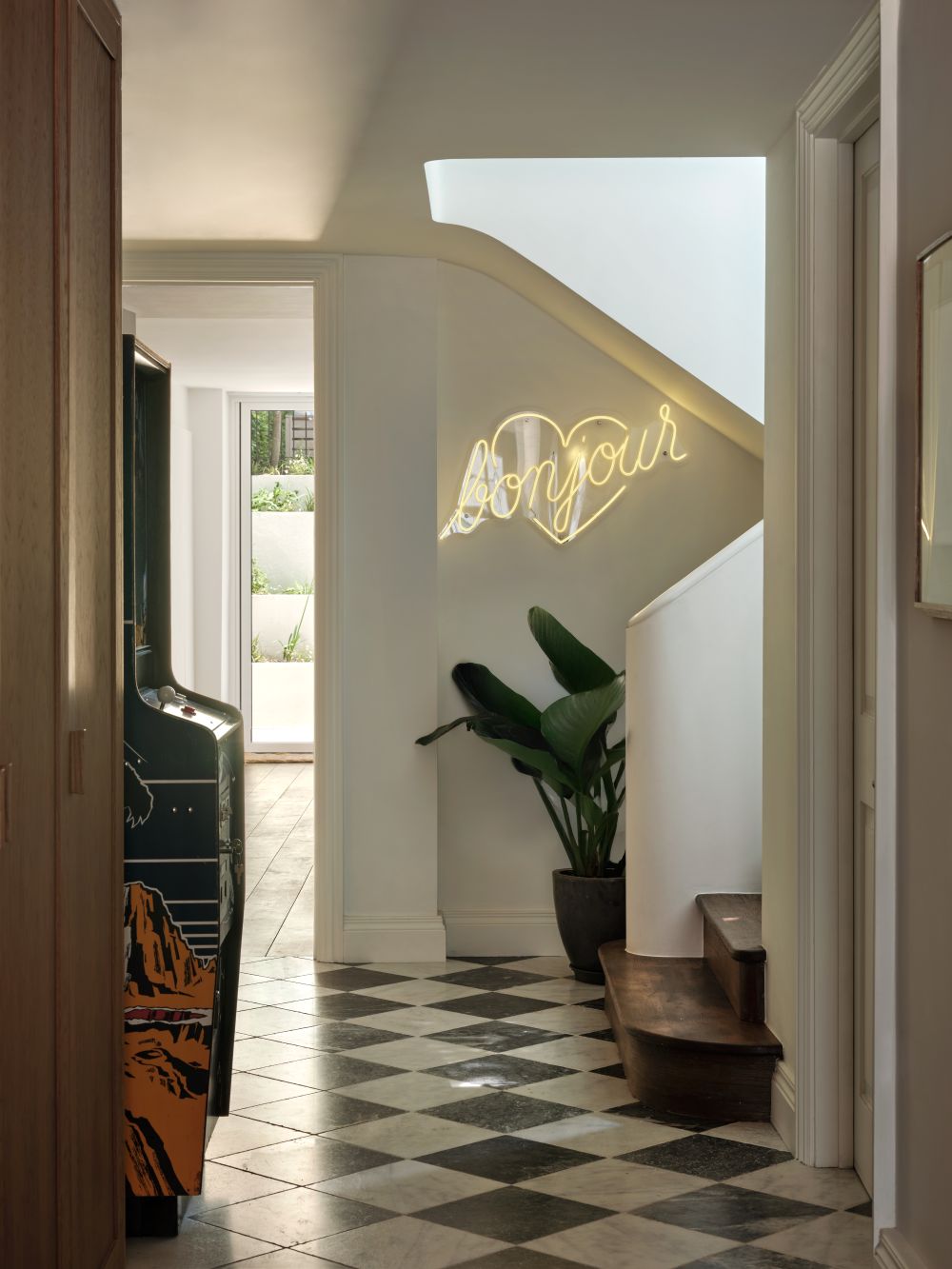
‘All the refurb within the house was to remove everything that was not sympathetic to the bones,’ explains Vanina. While they couldn’t remove everything – I sense some antagonism directed towards the big windows – the goal was to make the home more sympathetic without going full out pastiche. ‘We were not putting in a very old staircase, we just made sure that the one we chose fit in the house in a better way without trying to copy something from the past.’
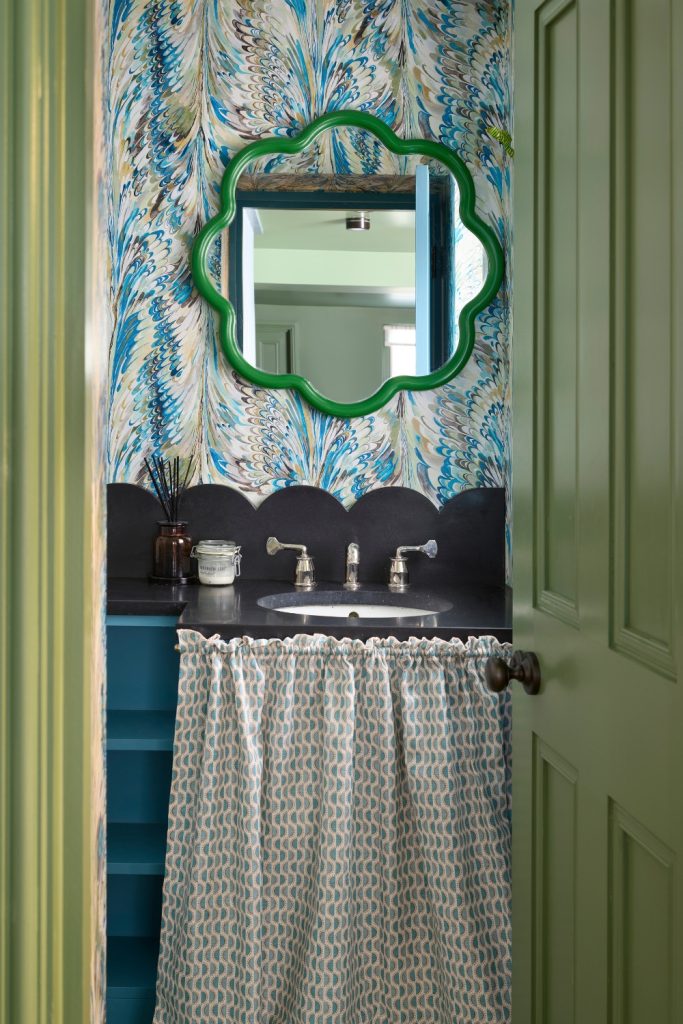
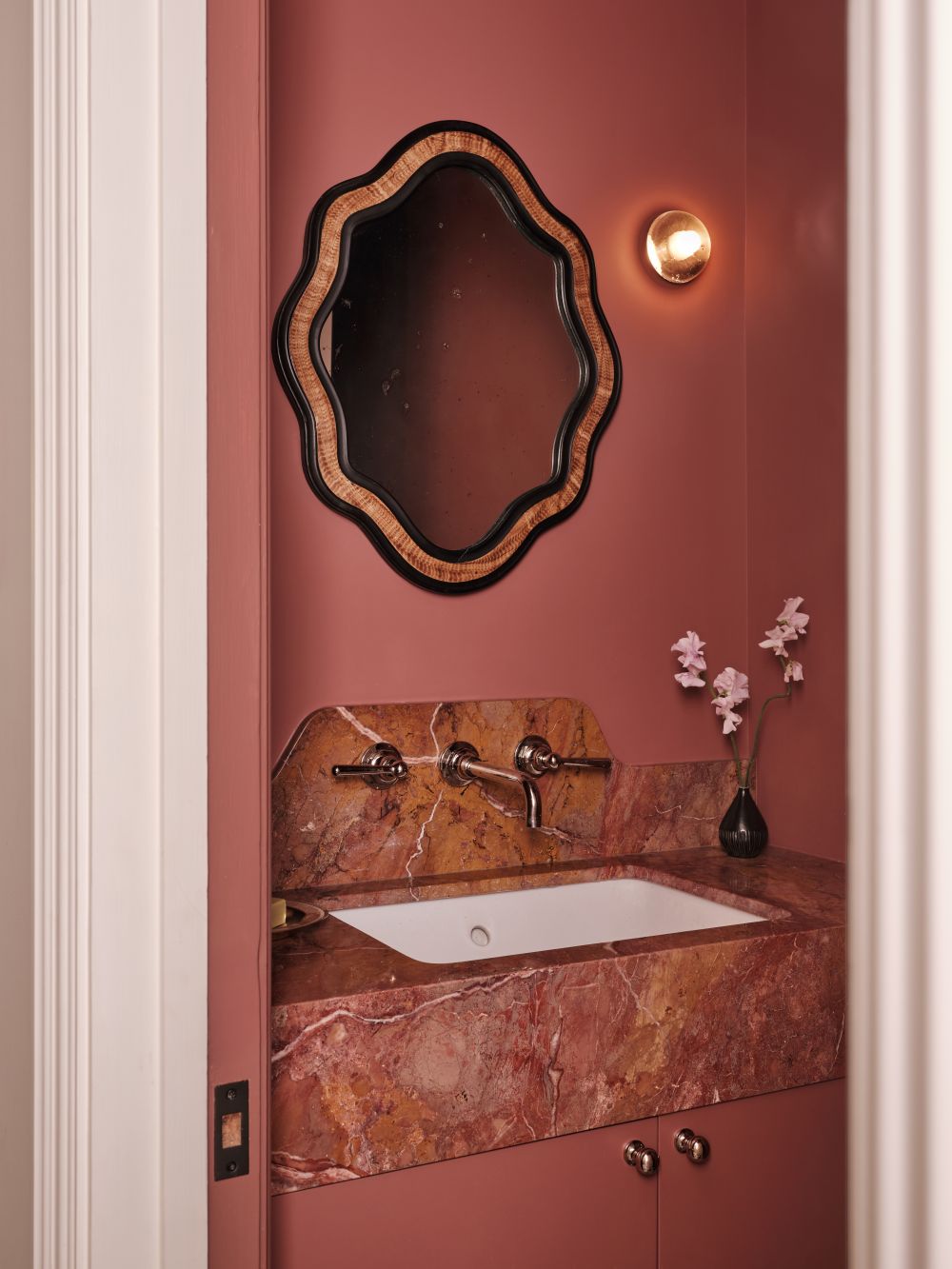
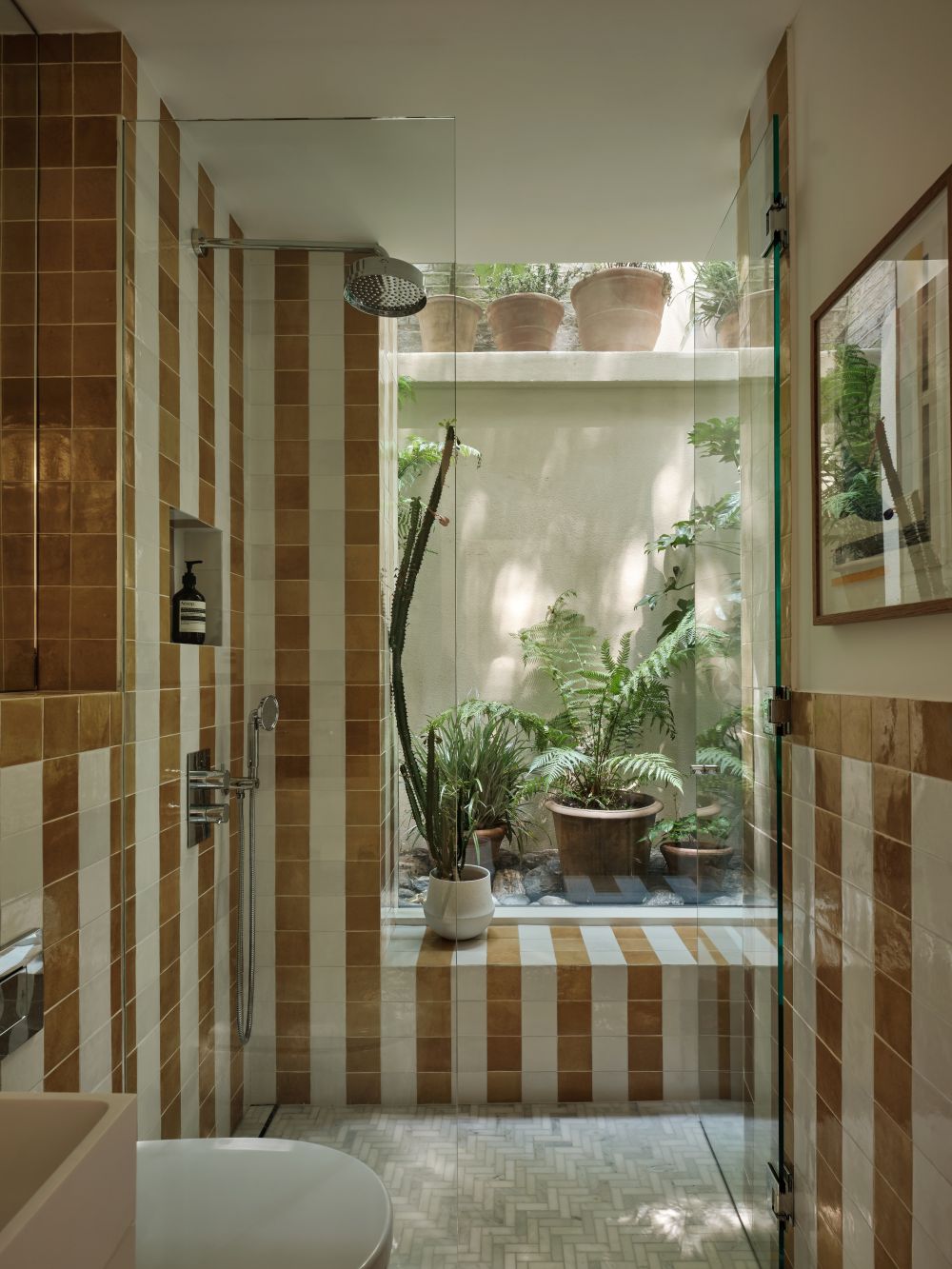
The end result? A light white minimalist home, sprinkled with a dash of playfulness. As Tom explains, the house itself is a ‘classic English frame’ but the staircase, bathrooms and art ‘totally shifts it’. ‘There’s nothing staid and English about it. You have this beautiful background frame, but then it’s lifted and elevated in a way that’s very smooth and bright and easy to live in.’ From a whimsical staircase (Tom’s favourite feature, and mine) and a dreamy bathroom complete with colourful tiles (Vanina’s) to a vintage arcade game and neon art, this home is a masterclass in hotel-level comfort complete with plenty of personality.