


Is This The Most Storied Home Around?
By
8 months ago
Discover the secrets of Battlecrease Hall
All homes carry stories, but some hold more secrets than others. And Battlecrease Hall has certainly lived many lives. While you would be hard-pressed to find just one historic connection, claim to fame or well-known former resident of most properties currently on the market, it seems that Battlecrease Hall has seen it all. From its start as Civil War prisoner cells to starring in an ASOS ad campaign, delve into this property’s fascinating past.
Discover Battlecrease Hall
In recent years, home basements have become a must for most high-end properties. Where else are you meant to store your home gym, home cinema, home bar or wine store? However, you’ll be thankful to find that this 17th century home keeps all its floors firmly above the ground.
Rumour has it that during the Civil War, Cromwell’s Roundhead soldiers held crown-supporting Cavalier prisoners in its cellars. God knows what revenge their ghosts are plotting down in the dirt. Though the royalists likely had a rather miserable time trapped in the cellar, at least their brave efforts were not entirely forgotten. According to local lore, the mulberry tree in the garden was planted by order of Charles I – presumably to commemorate the soldiers once held on its grounds.
Glossing over its more bloody past, in the mid-18th century Battlecrease Hall received a full Georgian revamp. No longer stained by memories of the Civil War, the home received a more upmarket resident in the form of Lady Emma Hamilton who rented the home as a weekend retreat for her and her love, Lord Nelson.
Who Was Lady Emma Hamilton?
The model, dancer, actress and friend to Marie Antoinette’s sister achieved one of the most impressive social climbs of her era. Born to a blacksmith father (who died when she was just two) in 1765, Amy Lyon – later known as Emma Hart – received no formal education. Working from as young as 12, she eventually moved to London where she became a maid, actress and artist’s model. Here, aged 15, she caught the attention of Sir Harry Fetherstonhaugh who hired her to work as a hostess and entertainer at a stag party. If you thought modern stag-dos were getting out of hand, this one lasted several months and saw young Emma supposedly dance nude on the dining room table. Fetherstonhaugh took her as his mistress, impregnated her, then ignored her to focus on hunting with his pals.
To pass the time, Emma befriended fellow stag-goer Charles Frances Greville – who then, like any good Georgian gentleman, also took her as a mistress on the condition that Fetherstonhaugh’s bastard child was fostered out. While the arrangement worked out well for a while, Greville’s funds soon ran dry, and he needed a rich wife to replenish them. Freeing himself of his mistress to attract himself a suitable candidate, he offered Emma up to his uncle Sir William Hamilton. Though she started as out as a mistress, the 60-year-old man soon (unsurprisingly) fell for the 26-year-old woman and the two were wed, making Emma a lady.
Now wife to an ambassador, Emma was introduced to the upper-echelons of society, including Horatio Nelson. She and her husband invited him to stay under their roof, where Emma nursed the wounded soldier back to health and threw a party with 1,800 guests for his 40th birthday. Sick and tired of not being able to have a child with William, Emma and Nelson soon fell in love and started their affair, sneaking out to Battlecrease Hall for their not-so-secret liaisons.
The History Of Battlecrease Hall
As Emma and Nelson’s affair moved more obviously into the public eye (William placidly accepted it, often accompanying the pair on their travels), the history of Battlecrease Hall continued. It was eventually bought up by renowned adventure writer Sir Henry Rider Haggard (1856 – 1925), who purchased the property as a residence for his two sisters, while he himself lived nearby.
Later, during the interwar period Battlecrease Hall served as a convalescence home for the upper class, bridging the gap between hospital discharge and their remittance to society. It was then acquired by RAF commander-in-chief Sir Reginald and his wife Lady Harland before becoming the residence of Walter Hayes – former vice-president of Ford and later chairman of Aston Martin. As a major figure in motorsport and manager of world champion Jackie Stewart, the sale of Aston Martin to the Ford Motor Company was signed in the drawing room of this very house by Hayes and Henry Ford Jr. And if that’s not enough, historic records show that the poet and novelist Thomas Love Peacock once lived opposite in Peacock House while Percy Bysshe Shelley resided at the nearby Dunalley Cottage.
More recently, Battlecrease Hall has starred in a BBC programme which covered its refurbishment and has appeared in various music videos, magazine photo shoots and television commercials for brands including Diageo and ASOS.
Step Inside
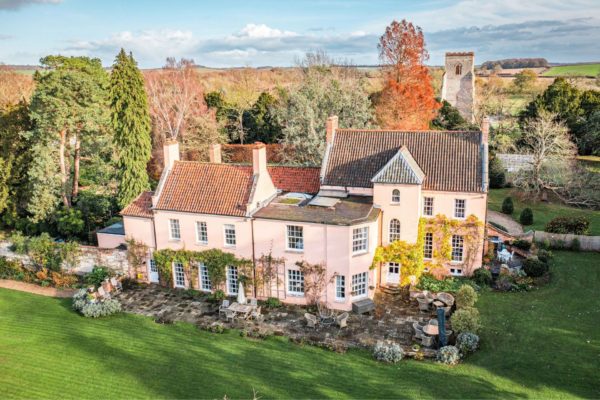
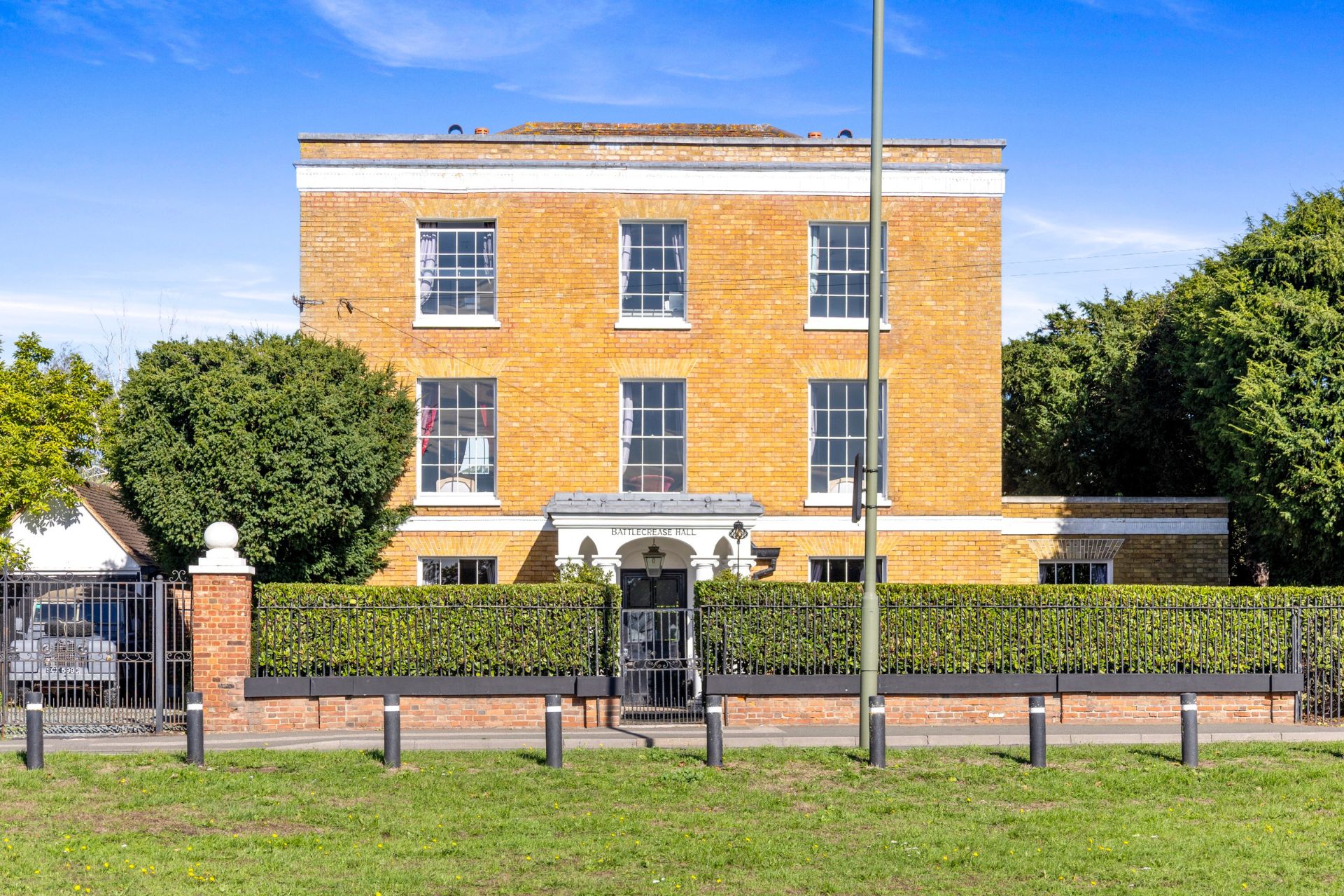
Standing proudly on the edge of Bishop Duppas Park, Battlecrease Hall rests in the historic riverside town of Shepperton on the north bank of the Thames. The area combines village lifestyle with urban convenience – there are direct trains to London Waterloo in under an hour, or easy access to the M25 – while river access provides ample opportunity for kayaking, paddleboarding, sailing and open-water swimming.
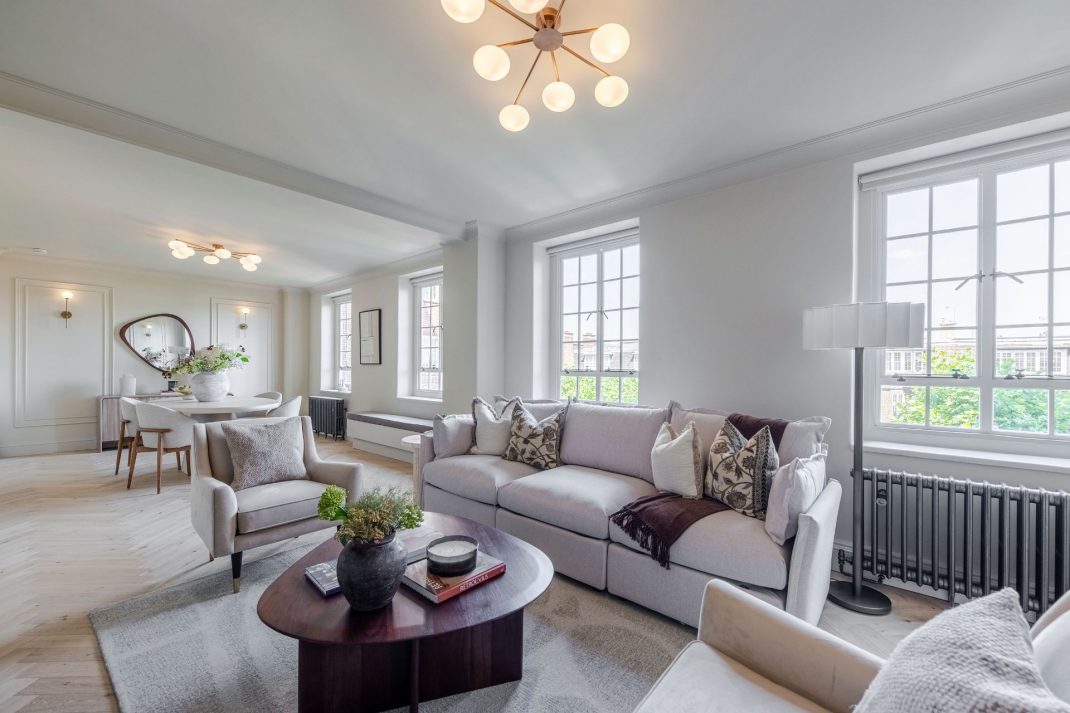
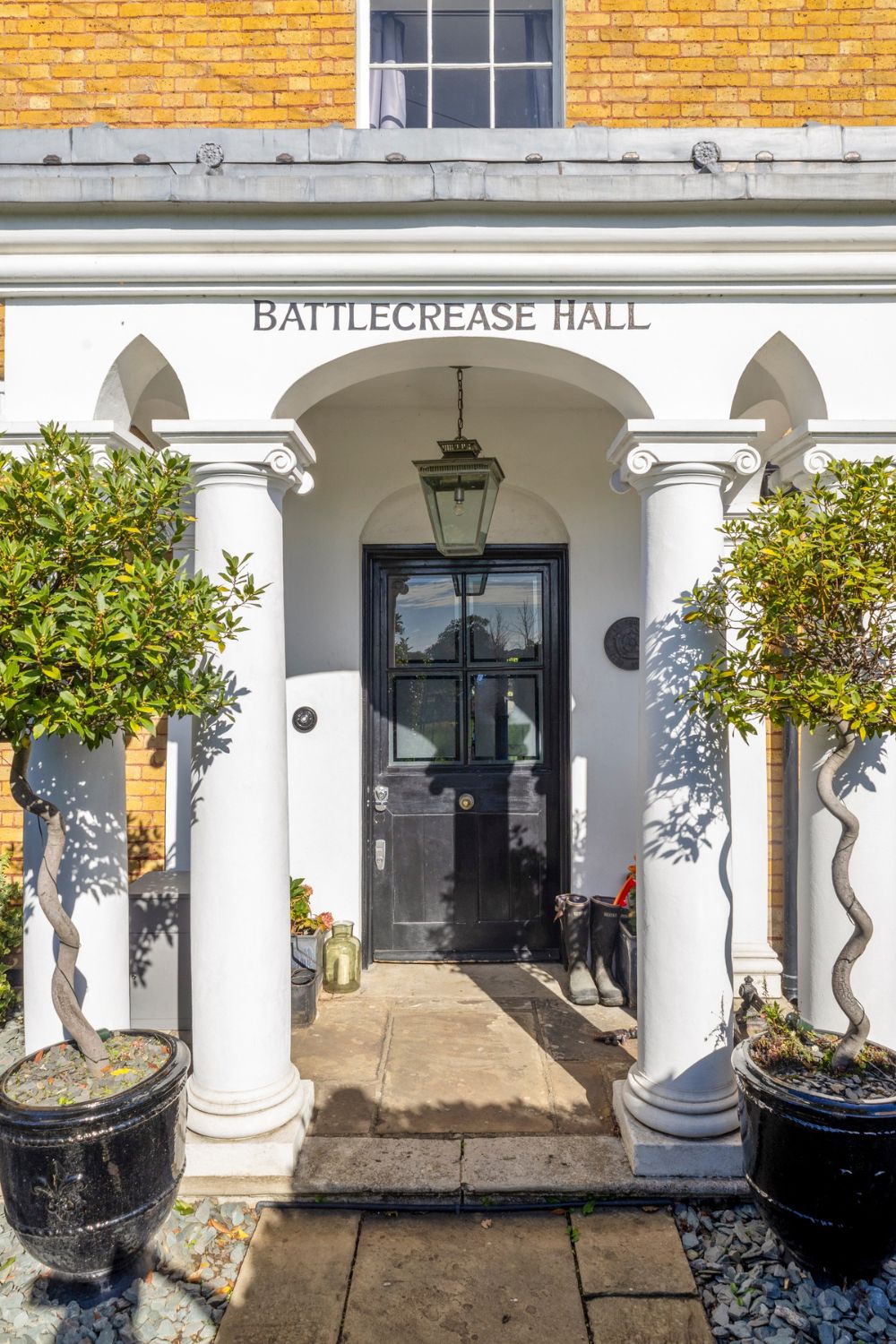
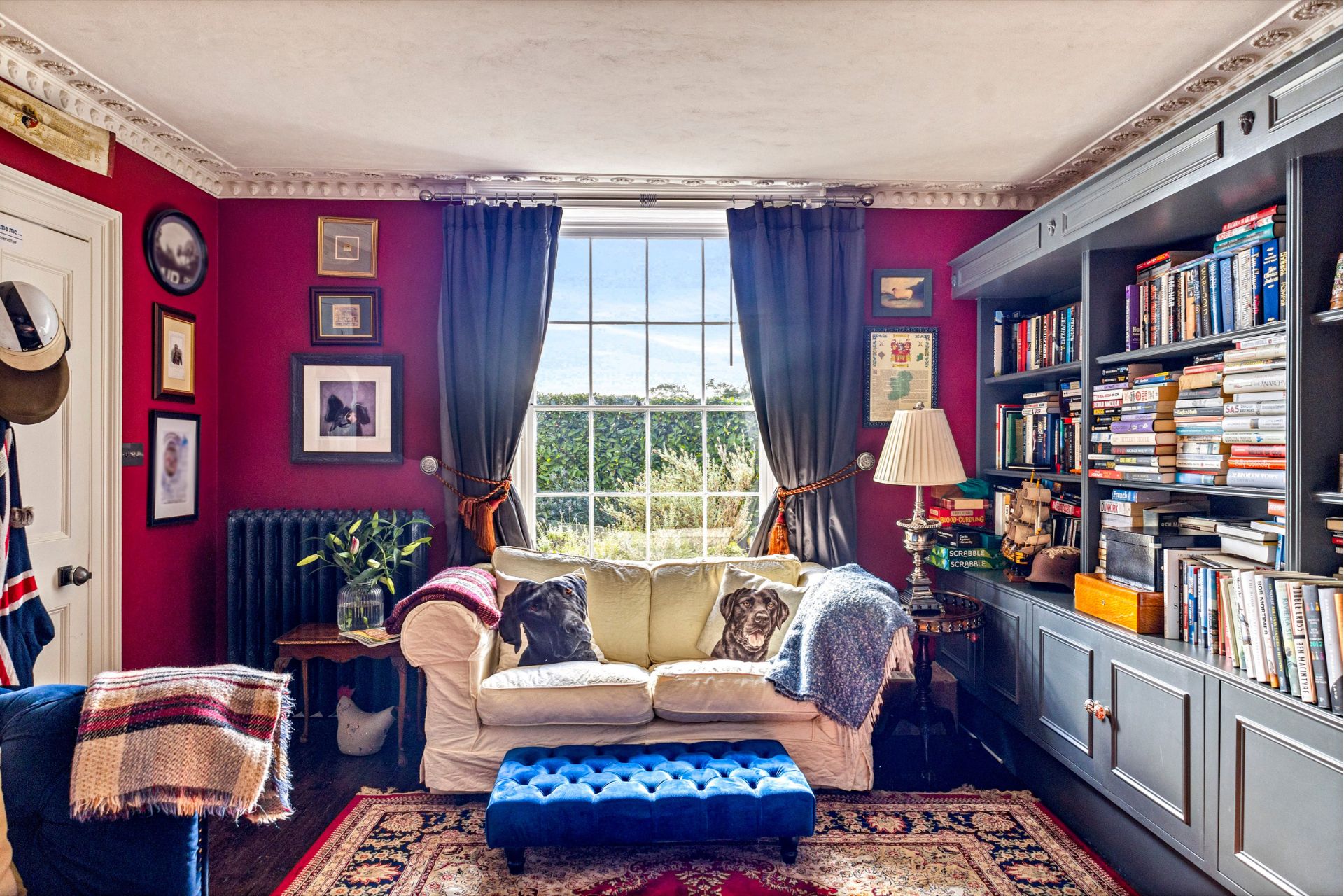
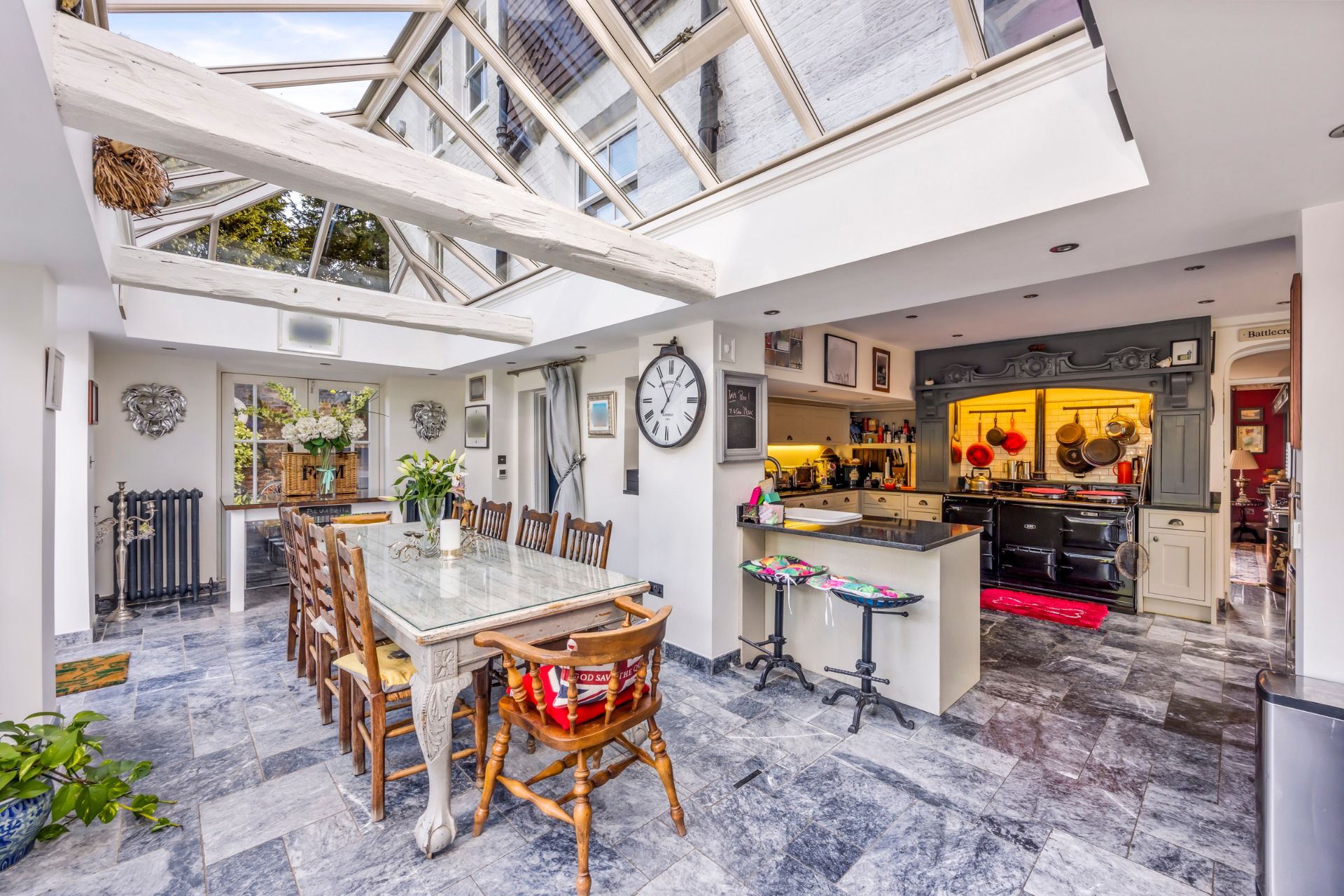
Recently restored by its current owners – as chartered by the BBC – this Georgian home retains its rich historic character while providing the ease of modern living. As you enter, the property welcomes you with its original Georgian coach light, elegant railings, and the restored pillars and cornices that frame the entrance porch. From here, the ground floor opens up into two elegant reception rooms complete with fireplaces, original shutters and period cornicing, while the open-plan kitchen sits to the rear – its French doors opening onto the courtyard. Beyond the kitchen, a conservatory dining space looks out over the garden through a further set of French doors.
Upstairs are two en-suite bedrooms, including a light-bathed principal suite complete with a dressing room, as well as a landing with views of greenery and glimpses of Walton Bridge. On the second floor are four further bedrooms and three bathrooms decked out in Farrow & Ball, with two of the bedrooms boasting an ensuite and a spacious walk-in wardrobe.
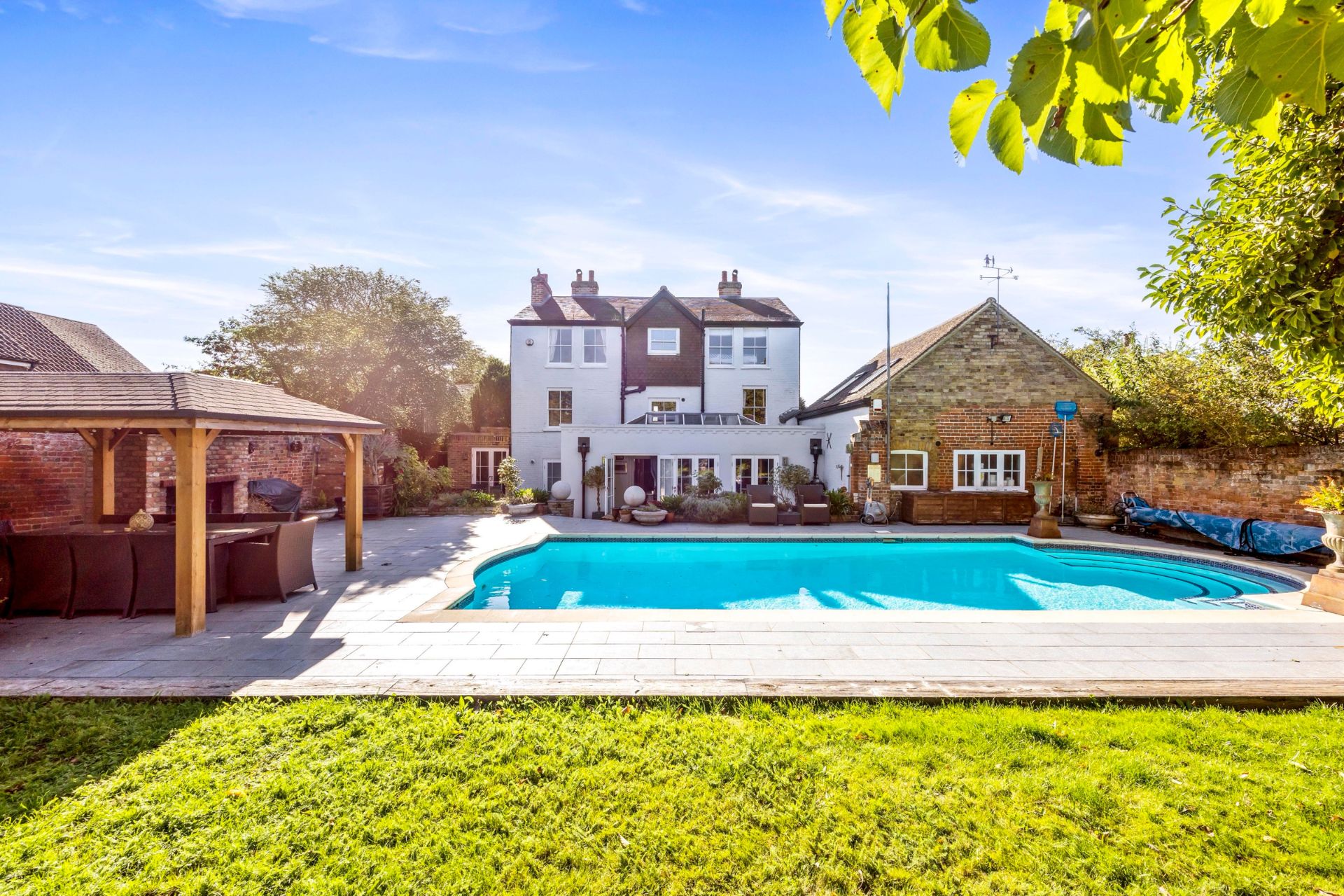
Outside, a large heated swimming pool takes centre stage, complemented by a dining and seating area with an outdoor fireplace. The manicured lawn wraps around Charles I’s mature mulberry tree and leads to a productive fruit and vegetable garden enclosed by a brick wall. The original coach house which sits still to the left of the garden and features its historic rein hooks, has been converted into a garage, study and lounge, complete with a bathroom and pool maintenance area.
On the market for £3m. Find out more at search.savills.com