


I Explored The Himalayan Slopes Untouched By Modern Tourism
By
6 months ago
On the winding slopes of the Lower Himalayas, Shakti invites us to slow down, walk far and encounter local communities
Vomiting up a bright orange laddu on the Almora-Bageshwar road is not the most auspicious way to begin a Himalayan adventure. Yet there I was, only an hour into a five-hour drive along looping hairpins, my roadside lunch from Udupiwala projected onto the tarmac. The spicy masala dosa had been excellent, but the fist-sized ghee pudding was a mouthful too far.
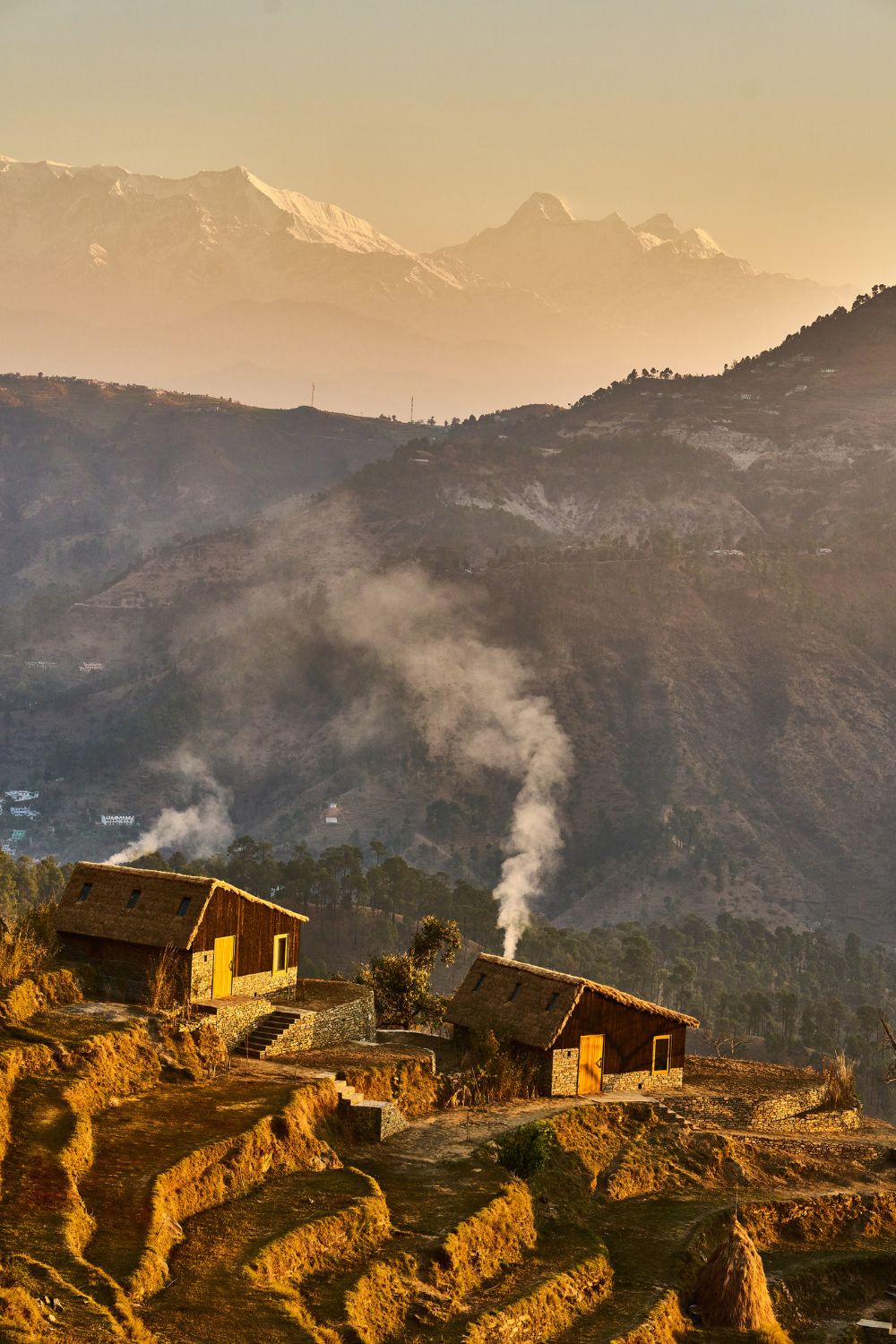
We were racing the light. Fog had delayed my flight from Delhi – so common an occurrence that Shakti, the company I am travelling with, books both train and plane tickets for every guest, just in case. Now we were due to arrive at our first destination, Panchachuli, deep in the foothills of the Himalayas of Uttarakhand, well after dark. From the final drop-off point it would still be a steep, 20-minute climb on narrow paths to reach my longed-for bed. But that is the point of Shakti. Its homesteads – beautifully renovated village houses or newly built stone, wood and glass cottages – are chosen to be gloriously inaccessible.
When I finally reach my cottage, a wood stove burns bright in the corner and the nausea ebbs away – a ginger tea just the tonic. Outside the picture window, the sky is devil black and pricked with stars, though you can still make out the looming shapes of the mountains.
Shakti is the vision of Jamshyd Sethna, one of India’s most respected hospitality entrepreneurs, better known for founding Banyan Tours. This project, which started some 20 years ago, is something quite different: a collection of intimate homestays in remote places untouched by tourism, of which both Panchachuli and Prana, where I am heading the following day, are the newest. Some of the houses’ locations allow guests to walk between villages; all offer encounters – utterly unforced – with locals and an experience of a way of life rarely glimpsed by outsiders.
The mountains here tell their own story. The Himalayas are the youngest in the world; once ocean floor, they are still slowly being thrust upwards as the Indian and Eurasian plates nudge against one another. The geology, though, is softer, rich in quartz and limestone, and prone to landslides come the lengthy monsoon season.
Pine trees, planted by the British from the 1890s onwards for their resin and sap, are ubiquitous. Quick-growing and dangerously flammable, they suck up a lot of water and thick layers of their fallen needles stifle the growth of other plants. Indigenous oak, cherry and silk cotton do still flourish though, and come spring, the mountains are a riot of red and pink rhododendron flowers.
The landscape acts as a living medicine cabinet for the villagers. Pujan, my guide, tells me that they chew the rhododendron petals for sore throats, burn mugwort as an antiseptic, and inhale the smoke of dried boneset seeds as a make-do anaesthetic for toothache.
At dawn, bed tea arrives. Is there a more beautiful custom than this? A gentle knock, and a tray of spicy, sweet masala chai and biscuits is placed carefully on the bed, and the stove relit. Still snuggled in my duvet, sipping the warm tea, I watch the mountains turn a gentle pink.
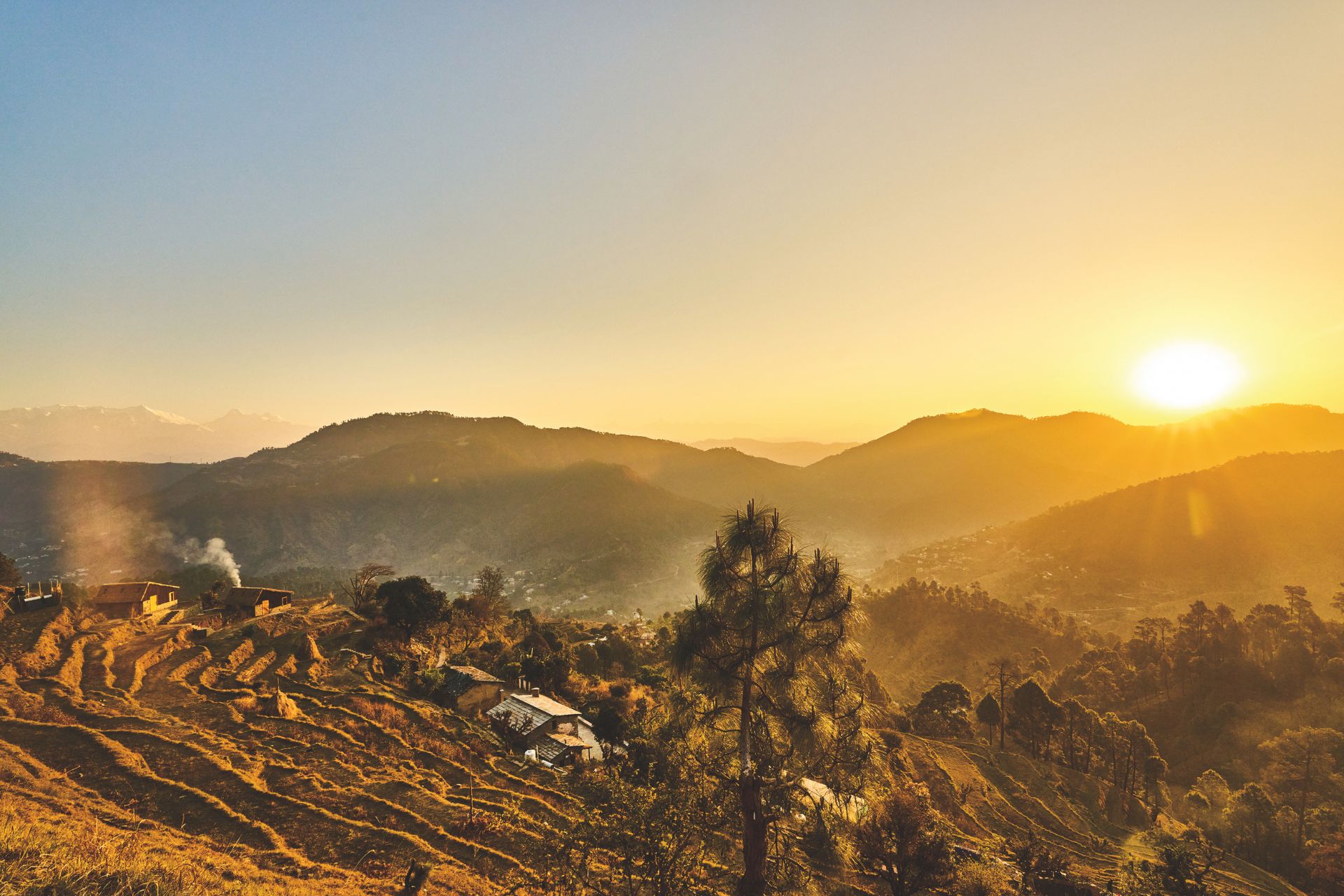
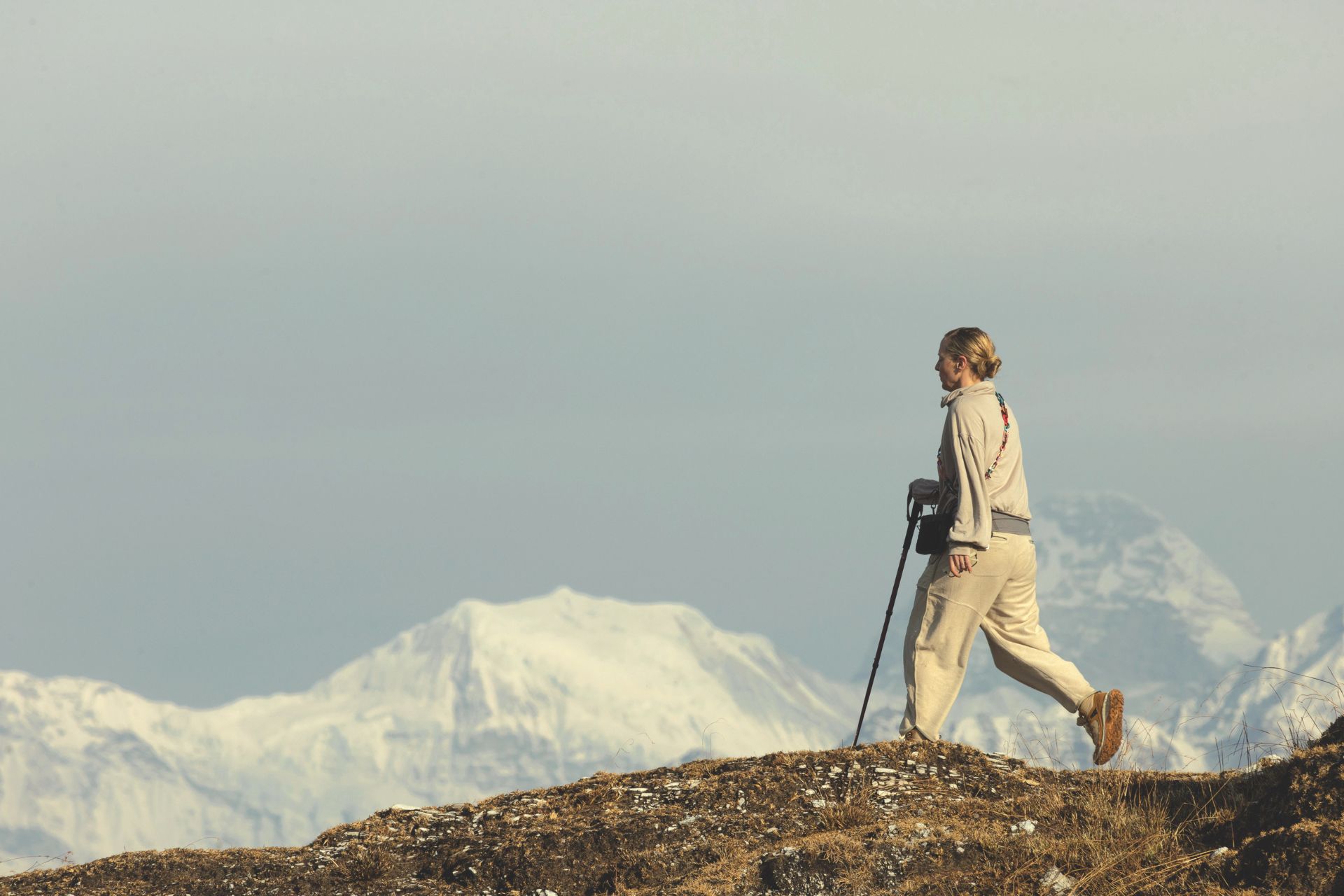
Walking is the rhythm of life here, and walking is why people come. Our first route winds down through the village of Vasudev, where women – always women – move along steep paths in jewel colours with catlike balance, branches or straw piled high on their heads.
We stop to pay respects to an 11-day-old baby whose naming ceremony has brought both sides of the family together. Soon the father will return to his job at a Delhi warehouse, not seeing his home – or baby – again for months.
Pujan points out the smallholder gardens where carrots grow beside marijuana plants – used, he explains with a grin, to settle animals’ stomachs. Agave spikes serve as ear-piercing tools for village girls. Cactus crowns on rooftops are believed to ward off evil and, even more mythically, to act as lightning conductors. Every object has its use.
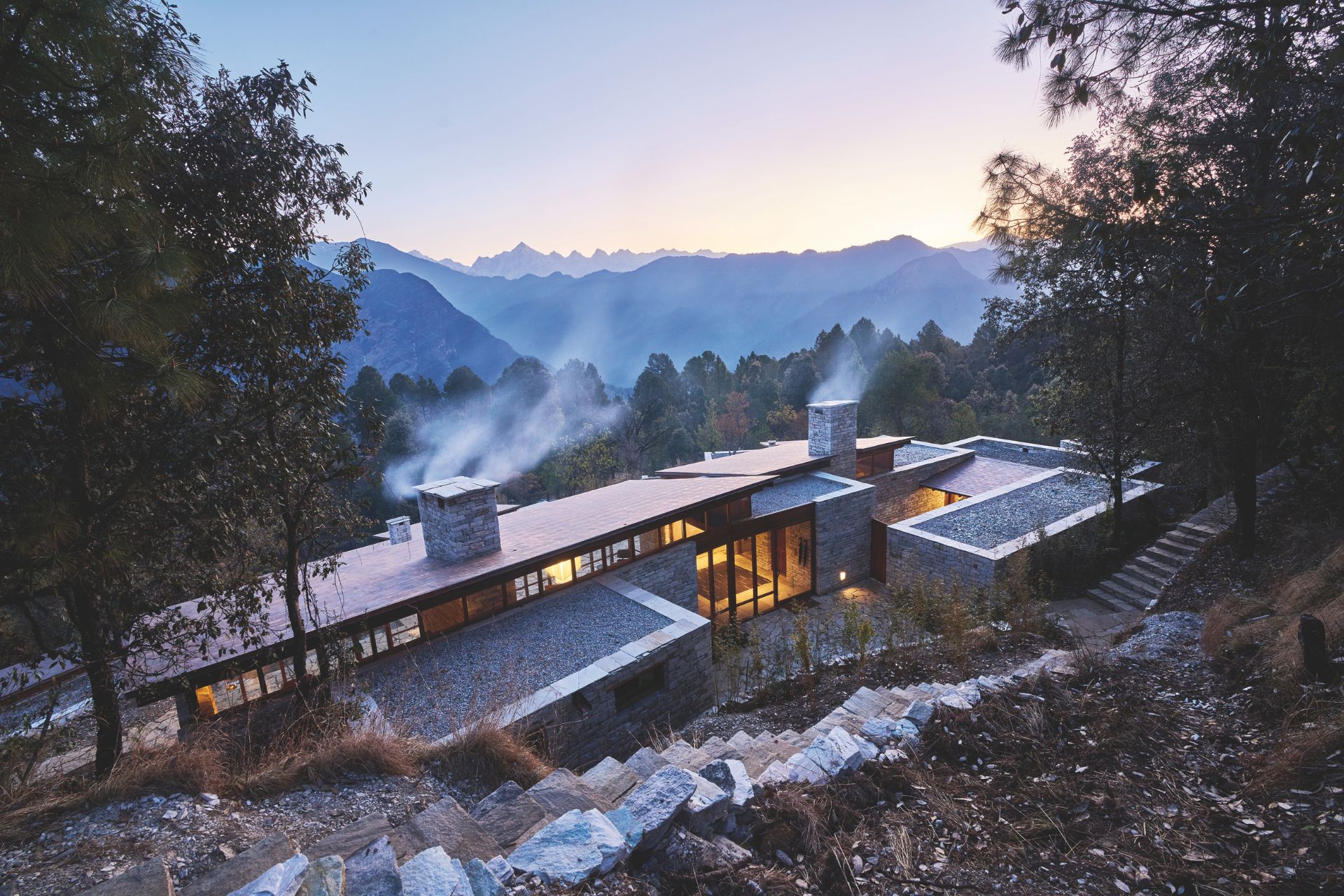
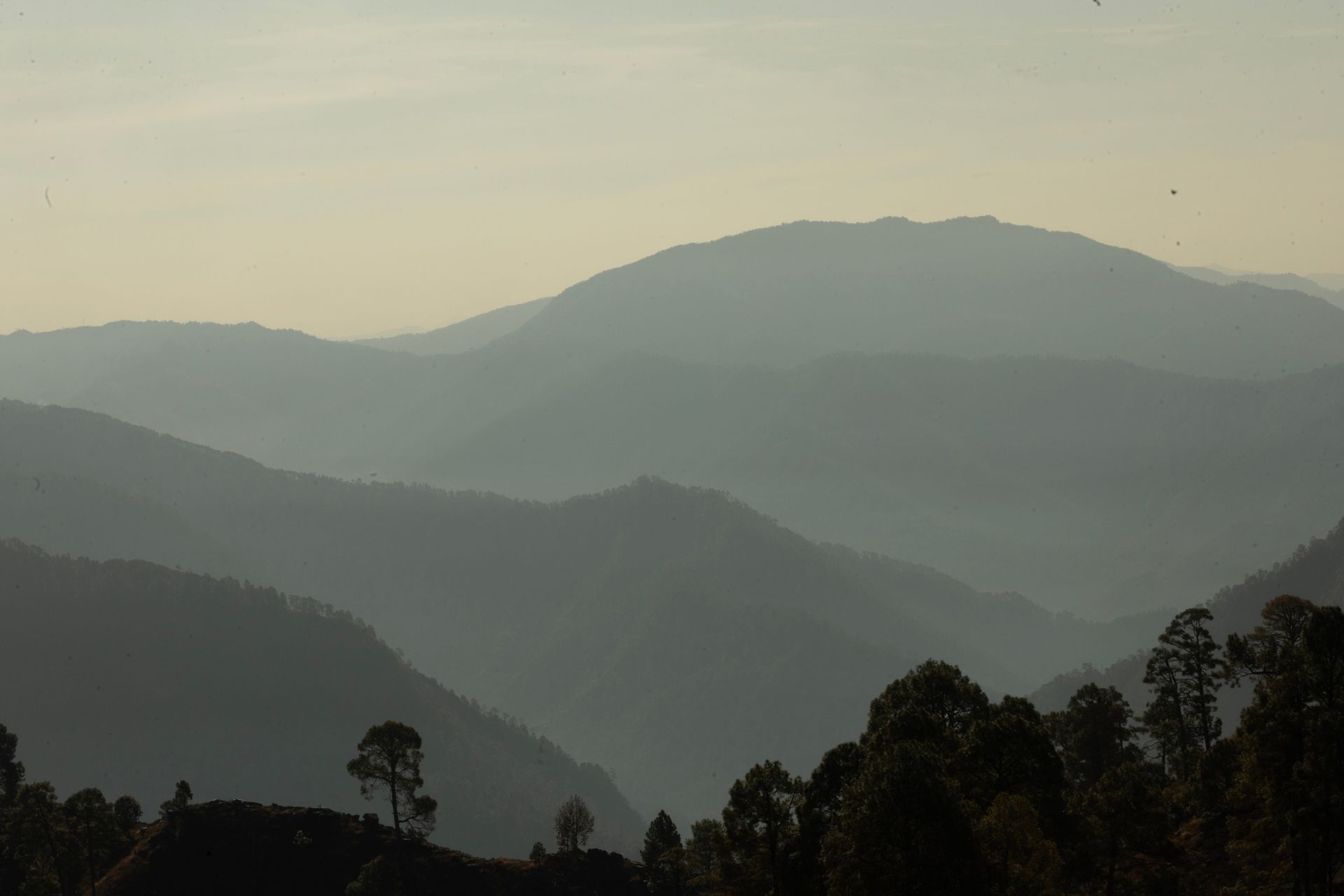
Four hours further north-east lies Prana, the starriest Shakti property, opened recently after an 11-month building project. Reaching it involves another serpentine four-hour drive and a 45-minute uphill walk. Seven dry-stone cottages sit on a ridge with views so vast it is hard to take it all in.
Newness too arrives in the form of a wood-red sauna – utterly blissful after a long day’s walk – and a yoga pavilion.
Staff have worked for Sethna for 17, 19, 20 years – they are its lifeblood. He tries, as far as possible, to find local people, giving them a reason to stay near their villages rather than drift off to Delhi. The young can’t see a way to survive in the mountains, unlike their parents.
There are small signs of change, though: Pujan tells me that some young people who fled to cities have returned since the pandemic, finding new ways to earn a living at home. Kiwi plantations are beginning to appear on once-abandoned terraces. Tourism, handled delicately like the Shakti exemplar, can provide income without uprooting communities.
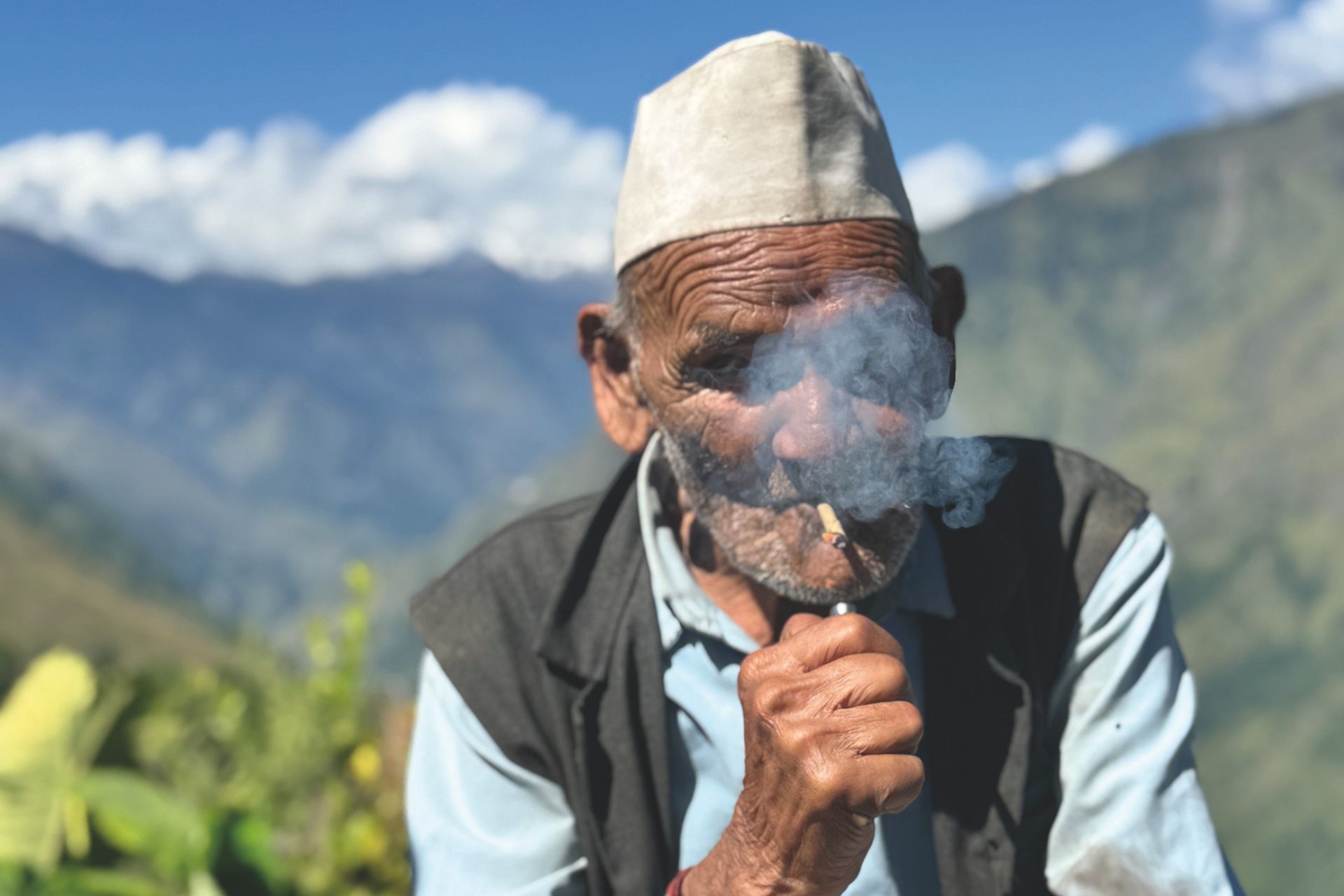
On another walk, I meet Kushal Singh, 87, a former soldier of the Kumaon Regiment who fought in conflicts against China and Pakistan in the 1960s and 70s. He has lived in his two-storey house since 1975; at night, his goats and cows are herded into the ground floor rooms, their bodies heating the upper floor where he and his wife, Chandra Devi, sleep.
For the past 50 years or so, his army pension has paid him 45,000 rupees – around £365 – a month, enough to survive on. Chandra Devi has never travelled further than Bageshwar, 50 miles away.
‘She has so much to do,’ chuckles Kushal in Hindi, nodding towards his wife, who, at 75, is handwashing clothes in a bucket. ‘I just sleep.’
Later, in her lean-to kitchen with its earthen floor, I squat with Radha Devi – another villager – to watch her cook radish kadhi over an open fire. Smoke curls towards the rafters as she stirs in the freshly made buttermilk. She shows me how to make Pahadi namak, a condiment made of chilli, garlic, mountain salt and coriander that can be eaten on anything.
We smother it gluttonously on sweet lemons. She pushes a bowl of rice and kadhi into my hands, which I eat from a spotless stainless steel bowl. It is quite simply delicious.
In fact, all the food is outstanding, homemade with fresh ingredients every day. Carrot and orange soup, an unctuous mutton and apricot curry, lentil dhal, cardamom rice pudding – all delicately spiced and eagerly devoured after hours on the mountain.
At 1am the night before our 16km walk, a storm explodes directly overhead. Rain drums on the copper roof, electricity dazzles the sky and it is as though the mountains are being cracked apart.
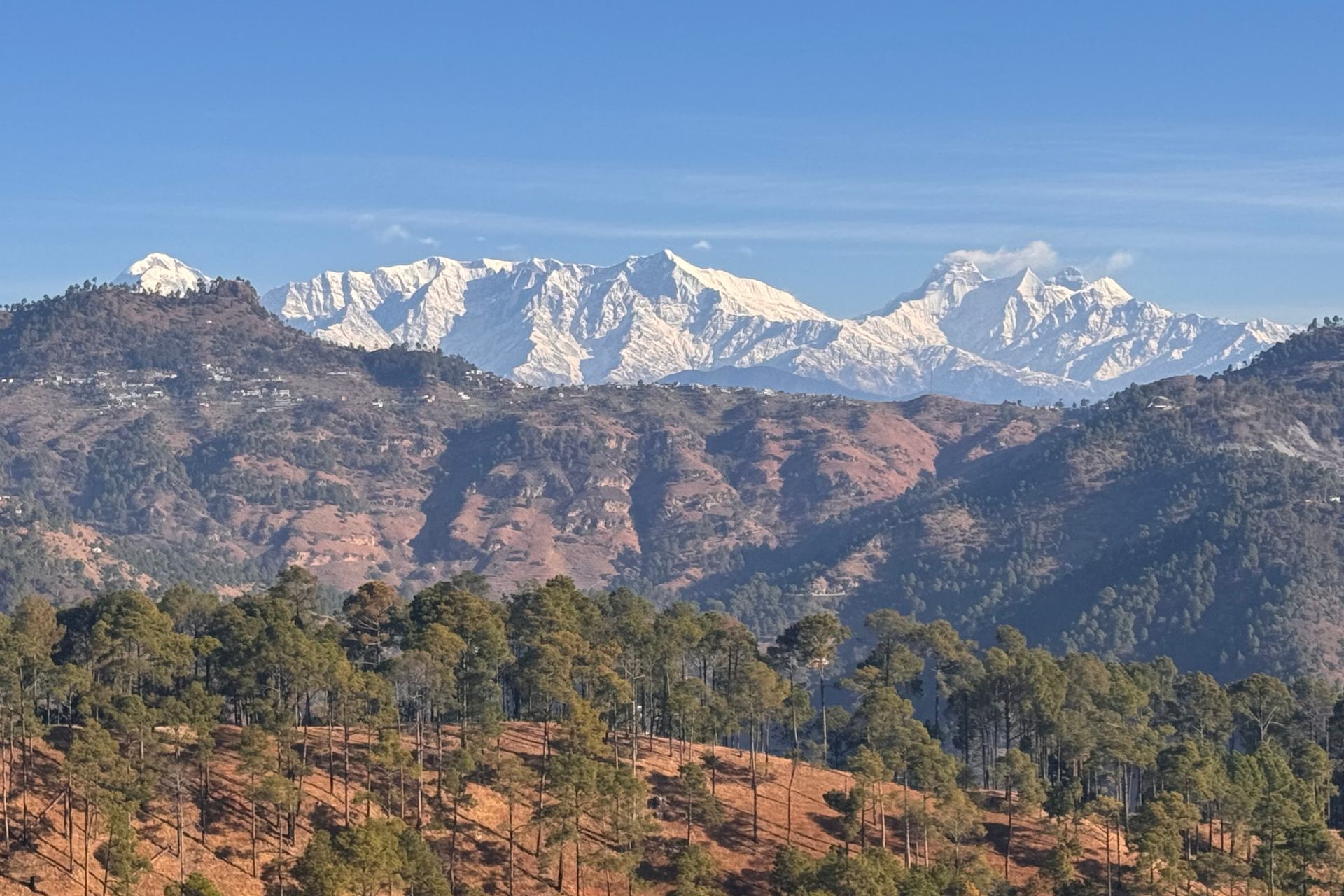
By dawn, though, the highest peaks show off a dazzling new coat of snow and the sky is a peerless blue.
We start out high on a ridge and make our way gradually lower, scrambling down old, rocky goat-herder paths and up tufted mountain pastures, wrapping and switchbacking towards the river valley.
We stumble across a prayer ceremony in the trees. A pundit is chanting mantras and blowing a conch shell to produce an extraordinary noise in front of a small fire garlanded with marigolds. Two women make puris as an offering to the nāgas – snake gods – to protect them.
They let me help them make the bread, pushing out the dough with my thumbs and slapping it between my hands before tossing it into the boiling oil. Much smiling is done, and I laugh when this surreal vignette is interrupted by a Nokia ringtone. The government was prescient enough to realise it was far cheaper to install phone masts in the mountains than try to build miles of landlines.
No two days here are the same. No two guests’ experiences are identical. Nothing is prescribed. You are at the mercy of the mountains – and you must make of them what you will.
BOOK IT: Shakti Himalaya offers a five-night Village Walk experience, including three nights at Shakti Prana and two nights at Shakti Panchachuli from £4,785 per person (based on two sharing). Taxes and flights are not included. Find out more at shaktihimalaya.com
Lucy’s return flights from London Heathrow to Delhi had a carbon footprint of 2,815.3kg of CO₂e (ecollectivecarbon.com).