


In The Studio With Sculptor Conrad Shawcross
By
7 months ago
Olivia Cole meets the renowned sculptor, who still has dazzling work to do
From his revamped factory in Hackney, Conrad Shawcross is working on his most ambitious works to date, says Olivia Cole.
Artist’s Studio: Conrad Shawcross
British sculptor Conrad Shawcross first acquired his studio – a ruined factory – in the noughties, when Hackney was still an affordable part of London. It had been stables (in the days when buses were pulled by horses), then a taxidermist, then a sheet metal bending factory kitting out kebab shops and chippies in the 1970s. He lived in a kind of ‘blissful squalor’ with artist friends.
The work Shawcross made here has now been exported around the world, from Hong Kong to Provence to Philadelphia, and is an established part of the British cultural landscape. When he became a Royal Academician in 2013, aged 36, he was the youngest member ever to be elected. His work is a regular feature of the Royal Academy Summer Exhibition and on Greenwich Peninsula, The Optic Cloak transforms the riverbank. Outside the Francis Crick Institute in King’s Cross, his 14m-high Paradigm sculpture has found another showstopping location.
In 2014, the nature of his old factory transformed again, becoming a purpose-built centre of operations for both his work and his wife’s, multidisciplinary artist Carolina Mazzolari. He dug down and built up, creating both a home and a vastly expanded studio. ‘It’s full of creativity,’ he says, but as far as the family are concerned, it’s just home. ‘One day they’ll realise it’s quite an unusual environment in which to live.’
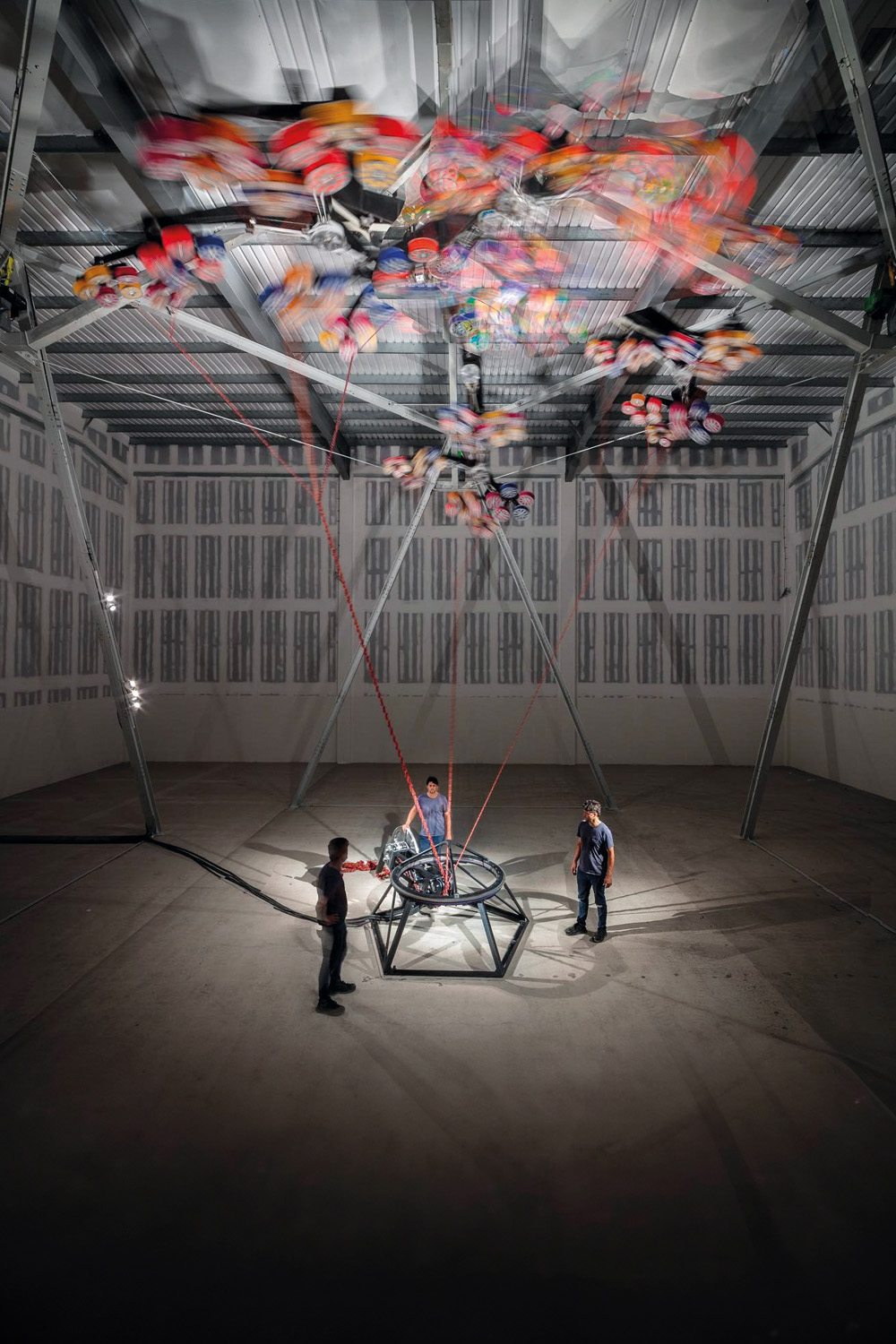
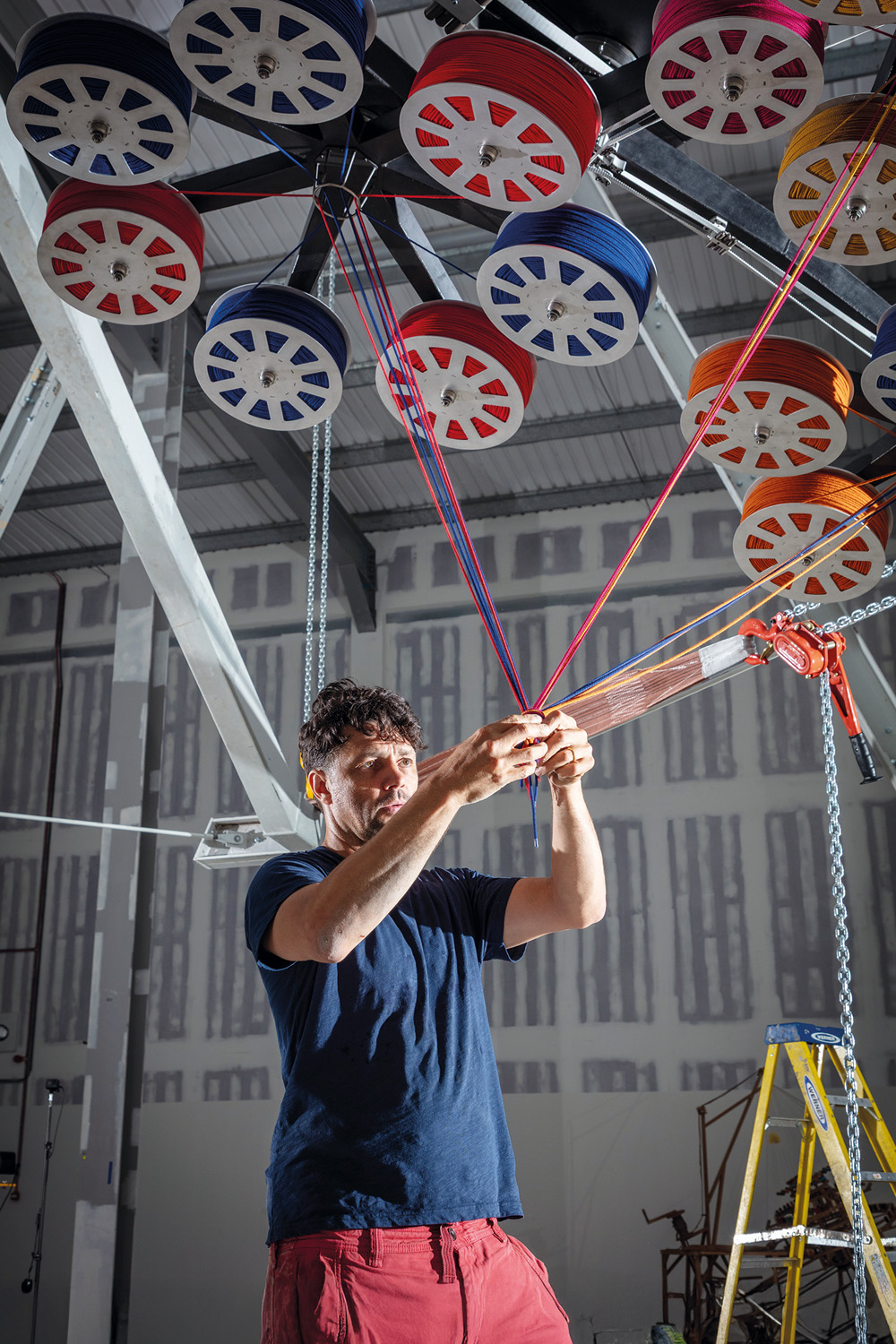
The new space has enabled the scale of his sculptures to grow. Shawcross has always been drawn to the lonely endeavour of inventors and thinkers, but with his most recent ‘rope machine’, he took the idea to a whole new level. The Nervous System (Umbilical) – commissioned by David Walsh, founder of The Museum of Old and New Art in Tasmania – is his most ambitious and complex work to date: the spinning sculpture suspends from the ceiling, with woven dyed wool ropes like umbilical cords and movements designed to suggest the sun’s passage through the solar system. The work was on display at Here East in London’s Olympic Park until November last year and now moves to Tasmania.
‘David and I hatched the idea of this machine that would never come back to the same point. I think he thought what I was proposing was impossible,’ Shawcross remembers. Twelve years on, the finished sculpture is spectacular to witness, both in terms of its ideas and meticulous, delicate execution. ‘It starts at zero and will never return to the same cosmology. So in that way, it’s analogous to our solar system, which is innately repetitive but never actually repeats.’
‘We’ve limped back to shore,’ he says, ‘but like every great odyssey, you think it’s over and it’s not, because now I’ve got to build a space for it at MONA.’
Back in the studio, everything stops for lunch. ‘I used to make it myself every day, but now we take it in turns.’ And to really decompress, Shawcross explores the forests in Sussex on his mountain bike. Both are simple rituals and reminders of the humanity at the centre of this argonaut’s dazzling investigations into our fragile place in the universe.
Stay up to date with Conrad Shawcross at conradshawcross.com