


This Former Priory Has Been In The Same Family For 500 Years
By
6 months ago
Medieval poet William Langland once studied here
With roughly 30 million households in the UK, Little Malvern Court’s feature in Simon Jenkins’s list of England’s Thousand Best Homes certainly sets it a step above the rest. And having remained in the same family for nearly 500 years, this former priory seems to be a keeper.
On The Market: Little Malvern Court
Credit: Blue Book Agency
The History
‘Ac on a May morwenynge / On Malverne hilles / Me bifel a ferly / Of fairye me thoghte’. While it may read like gibberish today, these words come from one of the most important poems in the English canon: The Vision of Piers Plowman. (The translation, for those who need to dust up on their Middle English, ‘But on a May morning on Malverne hills, a marvel befell me, of fairy bethought.’)
Now almost exclusively read by reluctant university students and obsessive academics, the opening lines of this 14th century religious dream-vision reflect on the pastoral beauty of the Malvern Hills in Worcestershire. A source of inspiration to poets and artists throughout history, the Area of Outstanding Natural Beauty similarly inspired Radclyffe Hall’s poem, The Malvern Hills: ‘The Malvern Hills be green some days / And some days purple-blue, / There never was the like of them / The whole of England through.’ Similarly, the musician Edward Elgar (now buried in a nearby church) composed his ‘Enigma Variations’ on these hills.
Credit: Derry Moore
But even older than the poems and songs which wax lyrical about this rugged landscape is Little Malvern Court. This historic property is the perfect spot from which to enjoy these breathtaking scenes. Heralding back to a time where people spoke in tongues not easily recognisable to us today, this Grade II* listed medieval house started life as a 12th century priory, where Piers Plowman’s author William Langland is believed to have studied.
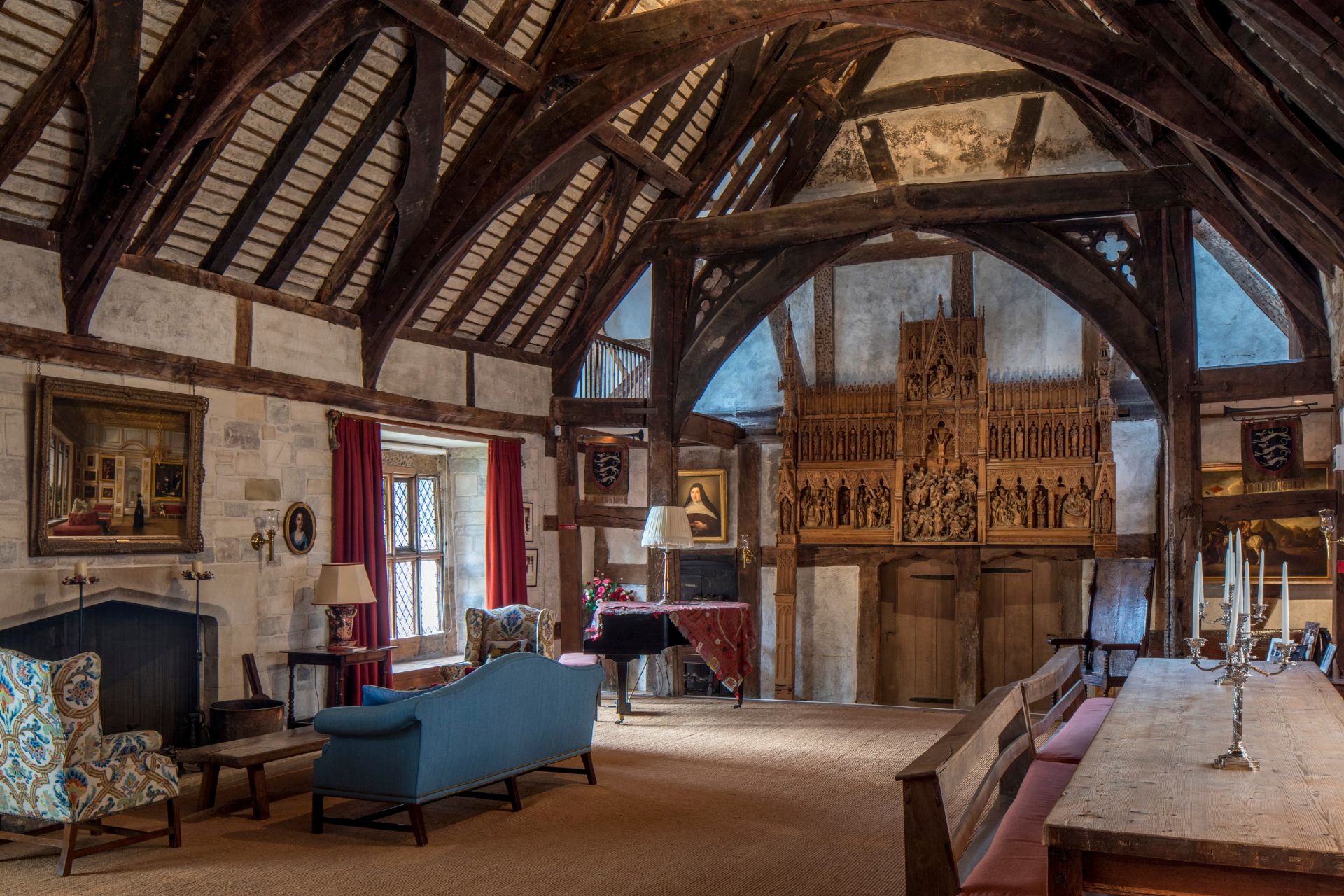
A small community of Benedictine monks established the priory around 1125–1127. For centuries the community, who lived by the Rule of St Benedict, tended the land and worshipped within buildings clustered around the church. From 1480–1482, the priory was rebuilt and restored by Bishop Alcock – the Bishop of Worcester and founder of Jesus College Cambridge – who oversaw the construction of Prior’s Hall. The home’s oldest surviving room, this medieval structure functioned as the dining room at the heart of the monastery. Today, the hall’s soaring oak roof exhibits early architectural features including cusped wind-braces, double purlins and finely moulded timbers.
Credit: Derry Moore
While the hall survived, much of the property was altered during the Dissolution of the Monasteries in 1530s. Many monasteries were ransacked and destroyed during this era, but Little Malvern Court enjoyed a luckier fate, passing into the sympathetic hands of the Catholic Russell family under the rule of Queen Mary I. While subsequent monarchs were less kind towards the Catholics, the concealed chapel, which was secretly tucked away behind Prior’s Hall, speaks to the family’s unwavering devotion.
Following the occupation of the Russell family, in the 18th century, the property passed by marriage to the Beringtons – a direct descendent of the current owners who have kept Little Malvern Court in the family for more than 500 years. Adapted and extended over the Georgian and Victorian eras, primarily by architect Joseph Hansom (inventor of the Hansom Cab), the priory is now transformed into a family home.
Credit: Derry Moore
The Home Today
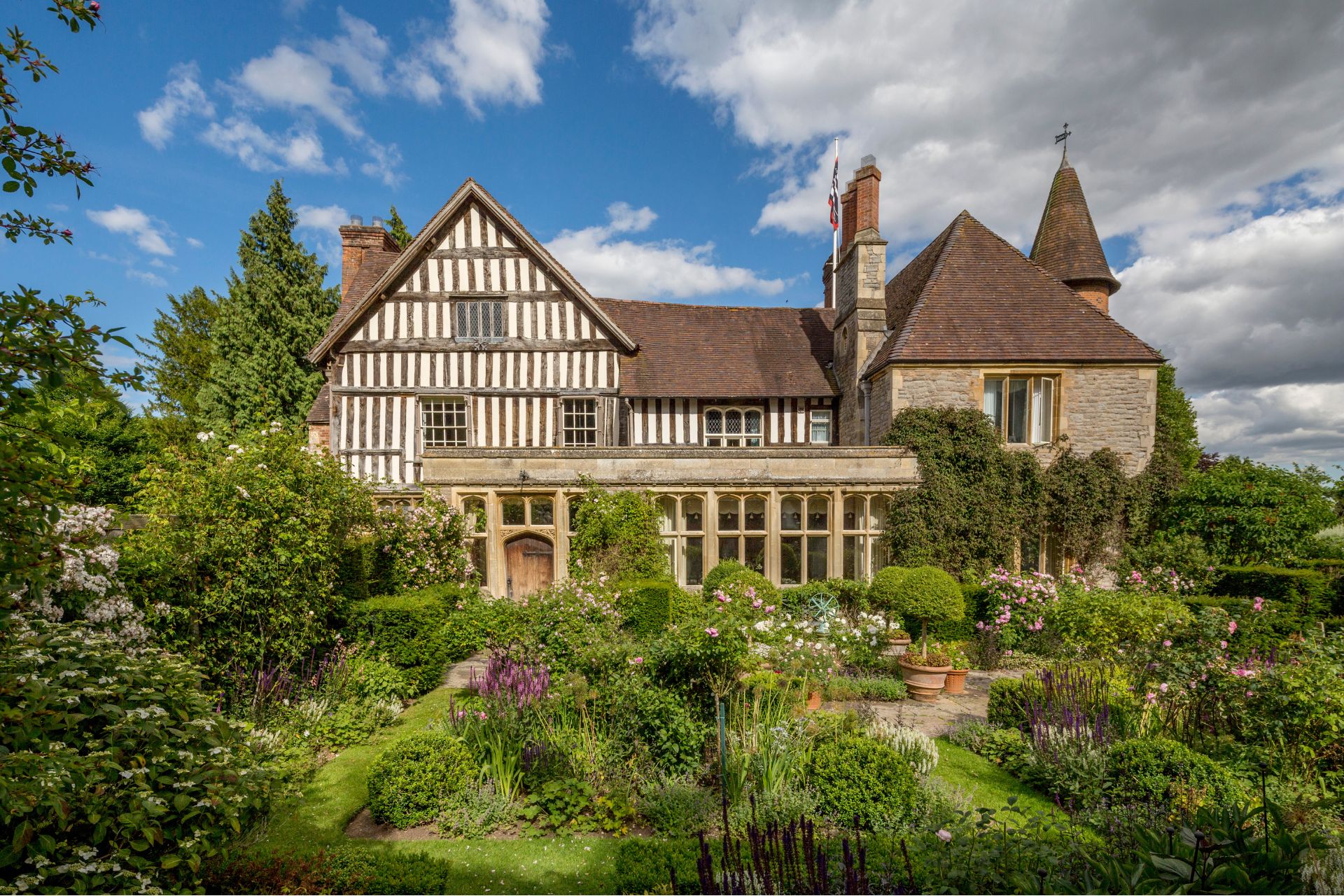
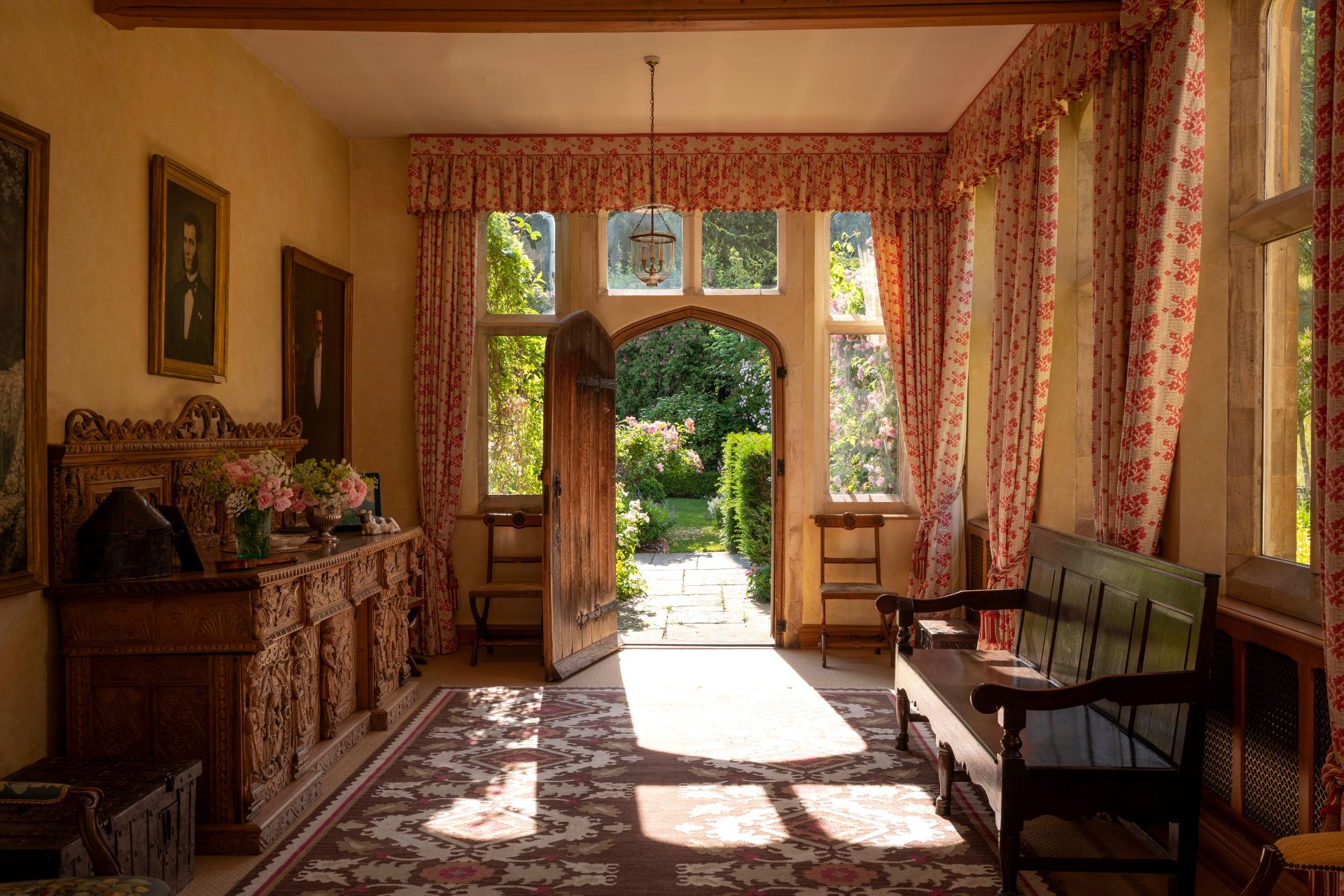
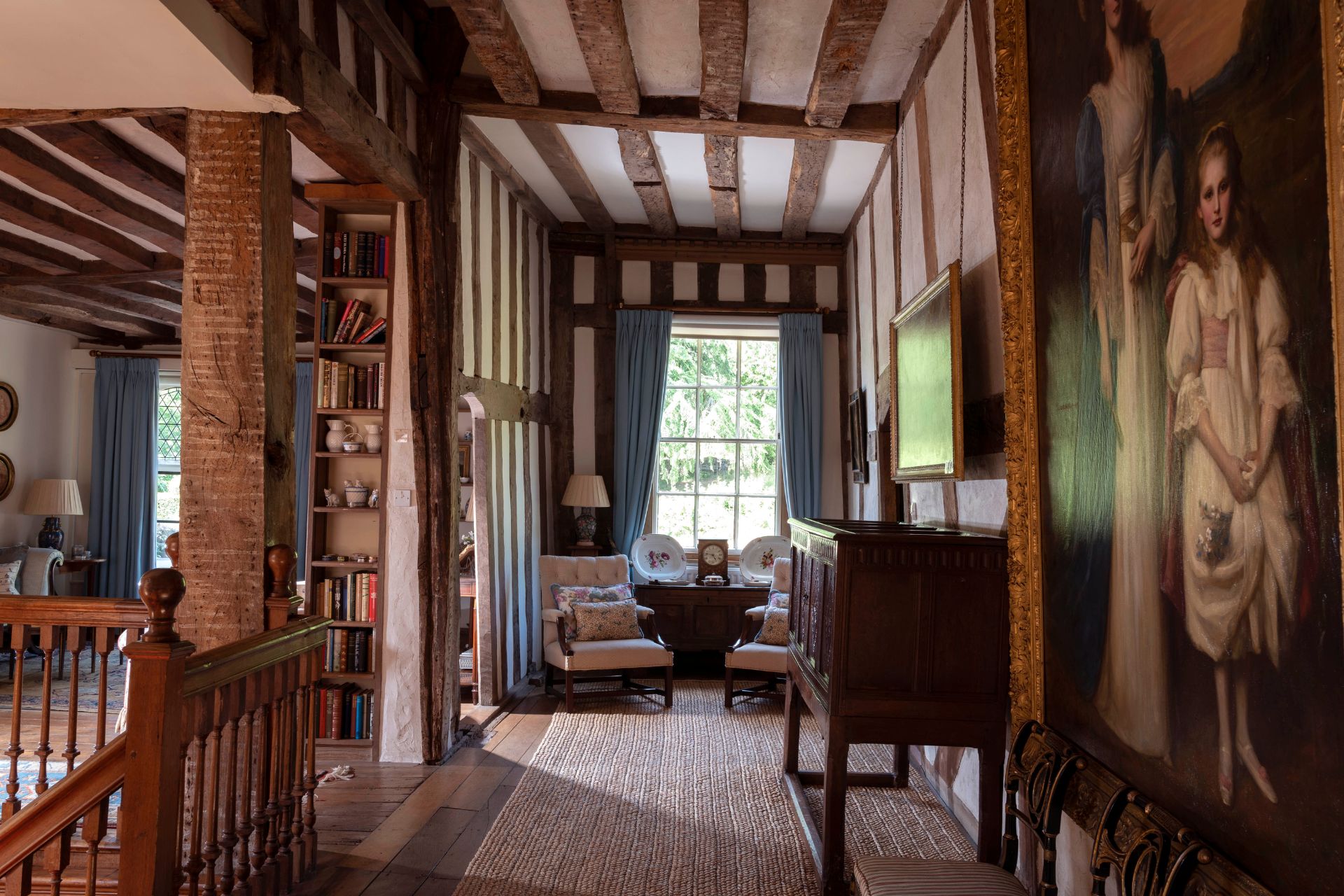
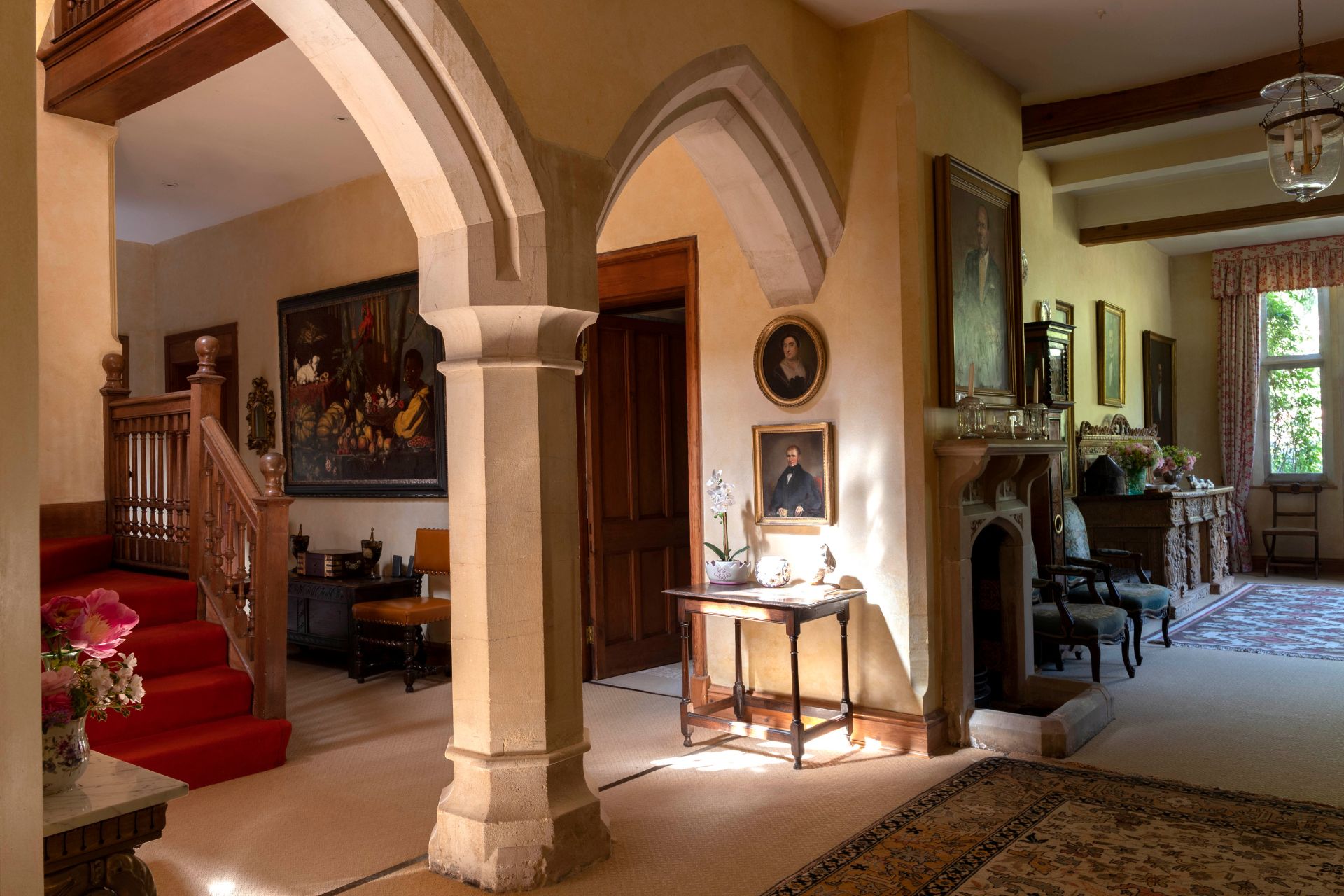
Perched on an unspoilt hillside with sweeping views across the Severn Valley, Little Malvern Court’s mellowed timbered gables, turret, tower and clustered chimney stacks cut a dramatic silhouette. In spite of its grand scale, it is comfortable and intimate within – the high airy ceilings, spiral staircases, great mullion windows and arched doorways transporting visitors back in time.
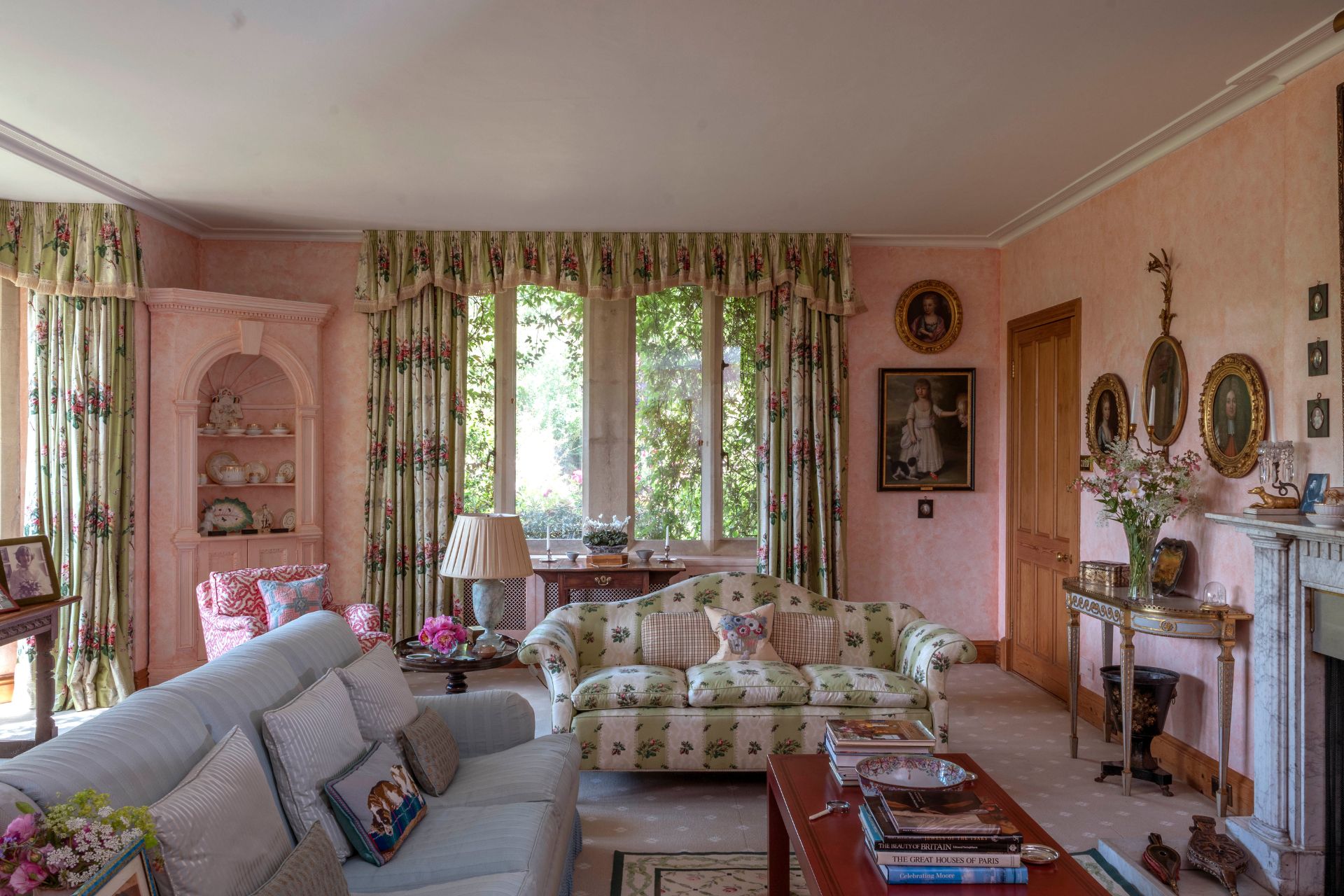
Centred around a small central courtyard, the ground floor boasts the historic Great Hall, a generously proportioned drawing room and dining room with views across the gardens, as well as a family sitting room, study, playroom and expansive kitchen and breakfast room.
Credit: Derry Moore
Ascending via the lift or one of three period staircases, the first floor offers up a further living room and a principal bedroom with its own private bathroom and dressing room, with five further bedrooms (three ensuite) arranged over the first and second floors. For further accommodation, the garage is fitted with a kitchenette, sitting room and bathroom. There are also two semi-detached timber-framed cottages (Stable Cottage and Coach House Cottage), both with three bedrooms of their own.
Credit: Derry Moore
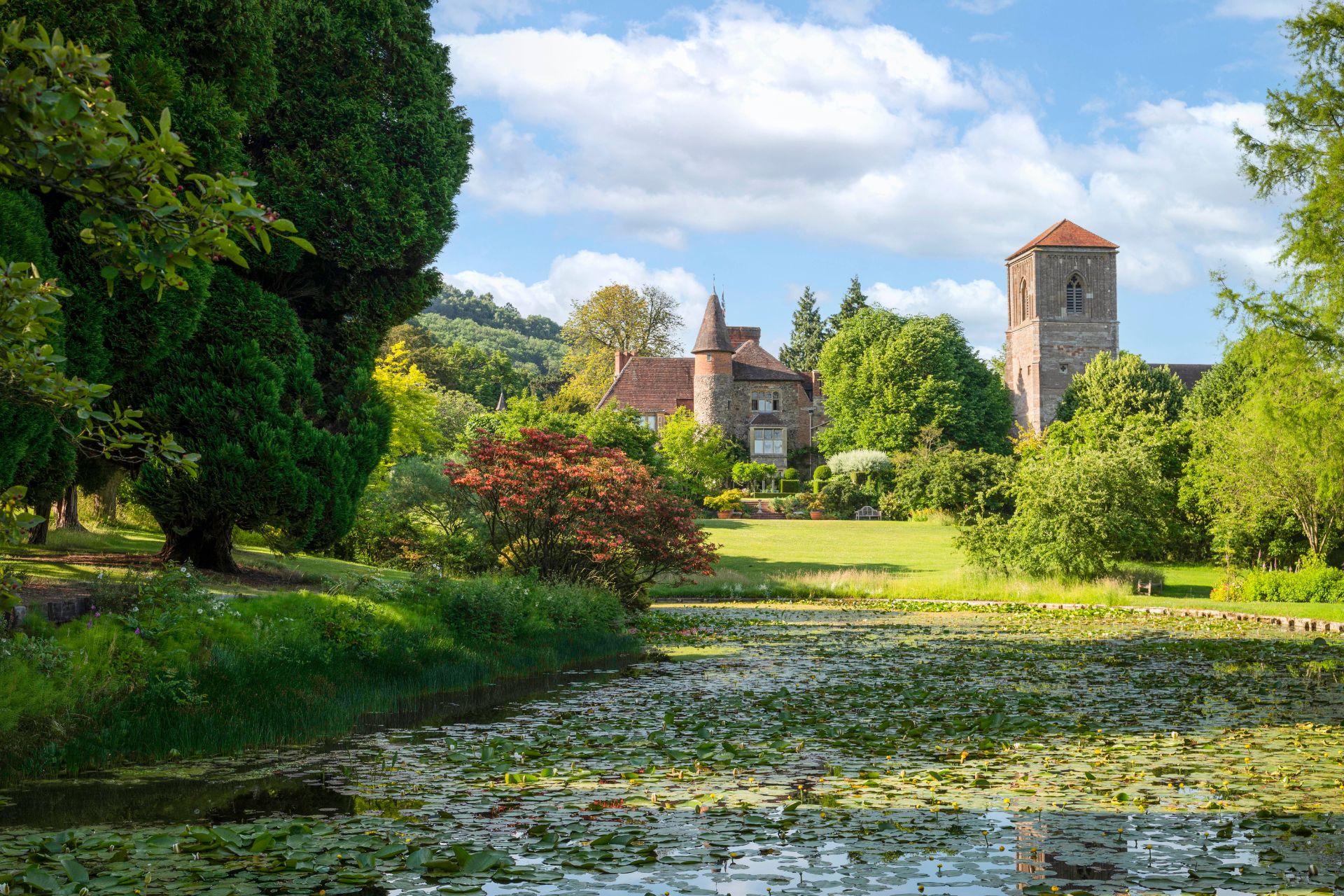
Set within 37 acres of grounds, the gardens still bare traces of their monastic origins, including a series of historic fishponds now restored and planted with water lilies. Closer to the house, a sequence of formal gardens unfold, with rose gardens, sculptural yew topiary and a series of mature trees which frame the views across the hills – including cedar planted from seeds brought back from the Holy Land in the 1860s by Charles Berington. There is also a substantial Victorian walled kitchen garden established in the 19th century, incorporating a tennis court, orchard, potting house, glasshouse and garden store, as well as an area of pasture and pockets of deciduous woodland.
On the market for £1.95m, find out more at bluebookagency.com