


Here’s How You Can Safely View The August Partial Eclipse In The UK
By
1 month ago
What time is it, and how can you see it?
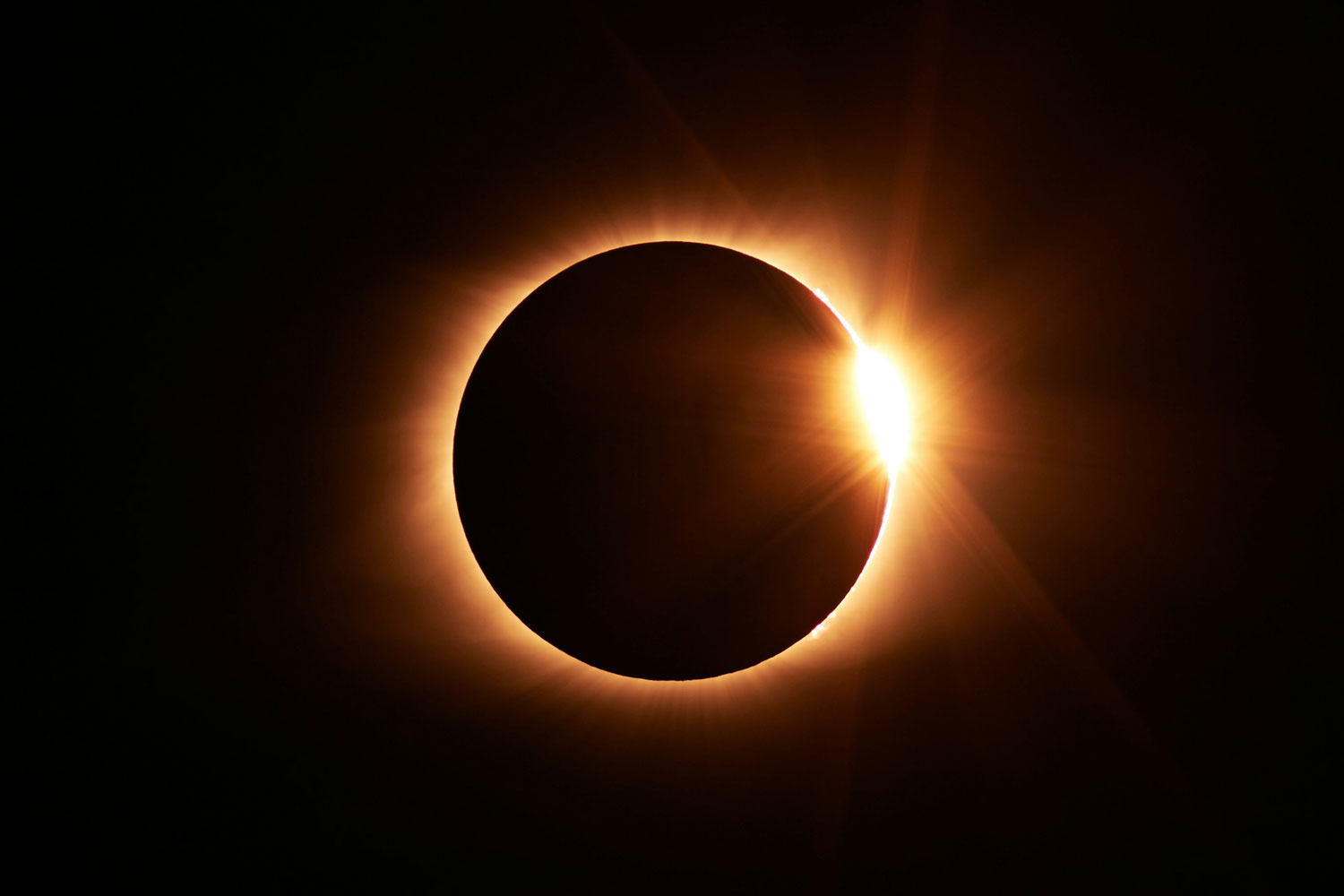
Just after 6pm on Wednesday 12 August, the Moon will begin crossing the face of the Sun, and by early evening, much of the sun will have disappeared, creating a rare partial eclipse. You won’t be able to view the full solar eclipse in the UK, but across much of the country the Moon will obscure at least 88 percent of the Sun – and in some places considerably more. Here are the best places to watch the August partial solar eclipse from, and how to keep your eyes safe while viewing it.
Where Will Get The Best View Of The Partial Eclipse?
Exactly how much you see, and when, depends on where you are standing. According to timeanddate.com’s interactive eclipse map, Edinburgh will see 90.7 percent coverage, while Land’s End in Cornwall gets the UK’s best view at 95.9 percent. Timings shift according to where you’re watching it from, too. In London, the eclipse begins at 18:17 and reaches its maximum at 19:13, when 91.4 percent of the Sun will be hidden. Further north, according to Royal Museums Greenwich guide, Edinburgh and Glasgow reach their maximum around 7.05pm, Manchester and Liverpool around 7.10pm, and Truro, right at the far southwest tip, closer to 7.16pm.
How Rare Is This Eclipse Event?
Kevin Currie, Director of New Scientist Discovery Tours, notes that this will be the most coverage of the Sun seen from the UK since the total solar eclipse of 1999. The next time the UK will get anywhere close to full coverage is a long way off, too. Total eclipses are only visible from any one location roughly once every 366 to 400 years. Whether we see it this time is, of course, not guaranteed. As Currie puts it, our view will be ‘at the mercy of the great British weather,’ and there is no guarantee the clouds will cooperate.
How Do You Keep Your Eyes Safe?
However tempting it is to glance up, do not look directly at the Sun at any point during the eclipse, even when it is almost entirely covered. The UK Health Security Agency explains why this particular event is riskier than an ordinary sunny day: because the Sun looks dimmer during an eclipse, it overrides the natural instinct to look away, while the intense radiation reaching your retina stays just as damaging. Furthermore, this harm is painless, so you may not know it has happened until later. After the 1999 eclipse, the Royal College of Ophthalmologists recorded around 70 cases of eclipse-related eye damage, and roughly 40 percent of those people had looked for less than a minute.
Ordinary sunglasses, however dark, will not protect you. What you need are proper eclipse glasses or viewing cards certified to the ISO 12312-2:2015 standard, bought in advance from a reputable source. Check the lenses are free of scratches or tears before use, and read the manufacturer’s instructions carefully. If you would rather skip the glasses altogether, a pinhole projector is a good (and fun) option. BBC Newsround has a family-friendly rundown of how to make one, and it is a nice project if you are watching with children this summer holidays.
How To Watch It
Because this eclipse happens early in the evening and sits low on the horizon, Currie recommends finding higher ground with a clear, unobstructed westerly view. Throughout the eclipse the Sun will drop closer to the horizon and higher vantage points will buy you more time. Getting away from streetlights and other artificial light will also sharpen the experience, cutting down the light pollution competing with the sky.
Do not expect full darkness, but watch for an odd, silvery dimming to the light, a distinct drop in temperature as the Moon covers more of the Sun, and shifting shadows or subtly altered colours. Local wildlife may react too, with birds falling quiet, believing that dusk has arrived early.
Where To Watch It In London
Although you won’t be able to see the full solar eclipse in London, you’ll get the best vantage point up high in wide open spaces. The capital’s best viewing spots include:
- Primrose Hill, north of Regent’s Park
- Parliament Hill, Hampstead Heath
- Greenwich Park, home to the Royal Observatory
- Telegraph Hill, near Nunhead
Many venues are also hosting viewing parties, including Kioku by Endo, the rooftop restaurant at The OWO – home to a terrace overlooking the Thames. Horizon 22, found on floor 58 of 22 Bishopsgate, is also throwing an eclipse event (£25 for adults, £15 for children).
What If You Miss It?
If you miss the eclipse, or one astrological event is not enough, the Perseid meteor shower peaks later that night, between midnight and 05:30 on 13 August. Assuming clear skies, it is one of the most reliable annual meteor showers, produced by fragments of ice and rock shed by Comet Swift-Tuttle burning up in the atmosphere.
In Summary
You can check exact eclipse timings for your location at timeanddate.com, and never view the eclipse without ISO 12312-2:2015 certified glasses.