


How Top Interior Designers Find Their Inspiration
By
1 hour ago
Faced with a million choices of paint, pattern and texture, where do we begin a decorating project?
Whatever the home project – kitchen, spare room, downstairs loo – finding inspiration to kick off your plans of a dream home can leave us feeling stuck and overwhelmed. After all, with so much choice at our fingertips, how do we know where to start? Hatta Byng seeks out the experts for their top tips.
Where Does Real Interior Design Inspiration Come From?
A friend called me a few weeks ago panicking about redecorating a spare bedroom. ‘I can’t even work out what paint colour to go with’ was her worry – something I suspect many of us identify with. We have a wealth of imagery to draw upon, along with endless paint charts, wallpaper samples and fabric options, but the abundance only serves to complicate things. How do designers find and use inspiration to create rooms in which people genuinely want to linger?
Tom Bartlett, founder and director of Waldo Works, tells me that setting a narrative for a project, particularly a new build with a blank-ish canvas, creates a logic for the design process. ‘That narrative governs every decision going forward. The four million choices you could have made are now narrowed down to more like four.’
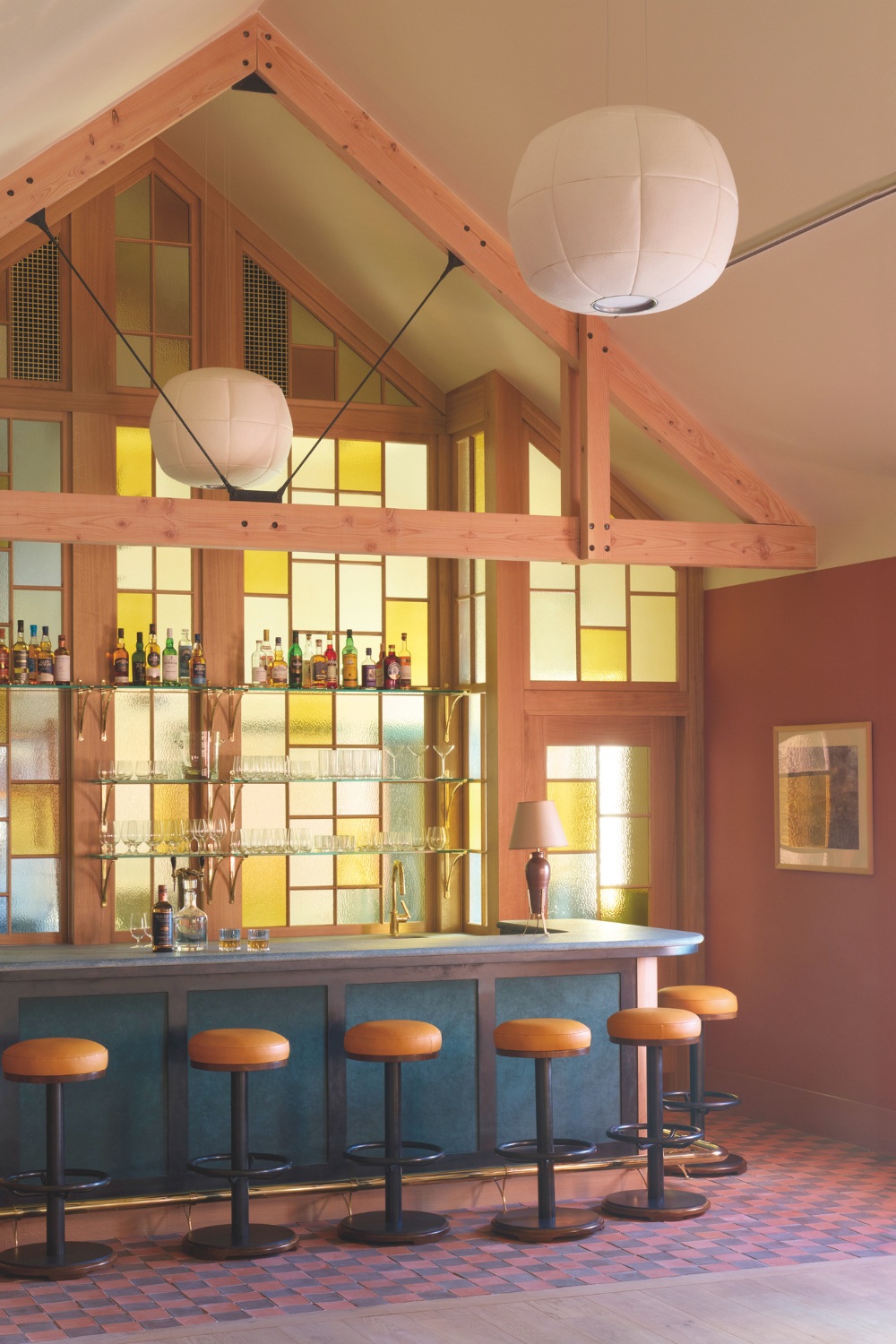
For a recent apartment overlooking the harbour in Hong Kong, it was the junk boats and their rusty-coloured sails that became the starting point. At the Kilchoan Estate, a group of five cottages to rent in Knoydart in western Scotland, it was the idea of seeing the glowing welcome of a pub at night from across the heather that was the guiding story. This led Bartlett to use yellow-tinted glass for the screen behind the bar, following Sir John Soane’s technique of using glass to manipulate light. The choice of yellow also nods to the colours of whisky, peaty water and Highland cattle.
Tom Bartlett
‘I ask clients to tell me about one object they particularly love,’ says designer Tolu Adèkó. ‘It could be a family photo or a piece of jewellery. If you can begin from something that is already loved, it provides a starting point from which to build. If it’s a piece of art we can draw from the colours, but it could also be the period of art or the life of the artist that provides the cue from which we work.’
When Remy Renzullo is stuck, he makes himself put down his pencil and close his laptop. ‘Even just walking down the street can result in spotting an arch that provides the solution to a shower opening.’ Travel is vital to him; when he lived in New York, he made sure he got to the Met once a week.
‘I can be flicking through photos taken five years earlier and find a corbel or a wall treatment perfect for a project I’m working on,’ Renzullo says. When he first set out as a decorator, a visit to Nymphenburg Palace became the basis of a trompe l’oeil scheme in a New York dining room; it wasn’t the grand state rooms that inspired, but a thin green line painted on ageing panelling in a small antechamber. ‘Physically visiting a place lets you notice the smaller moments you wouldn’t find in a book.’
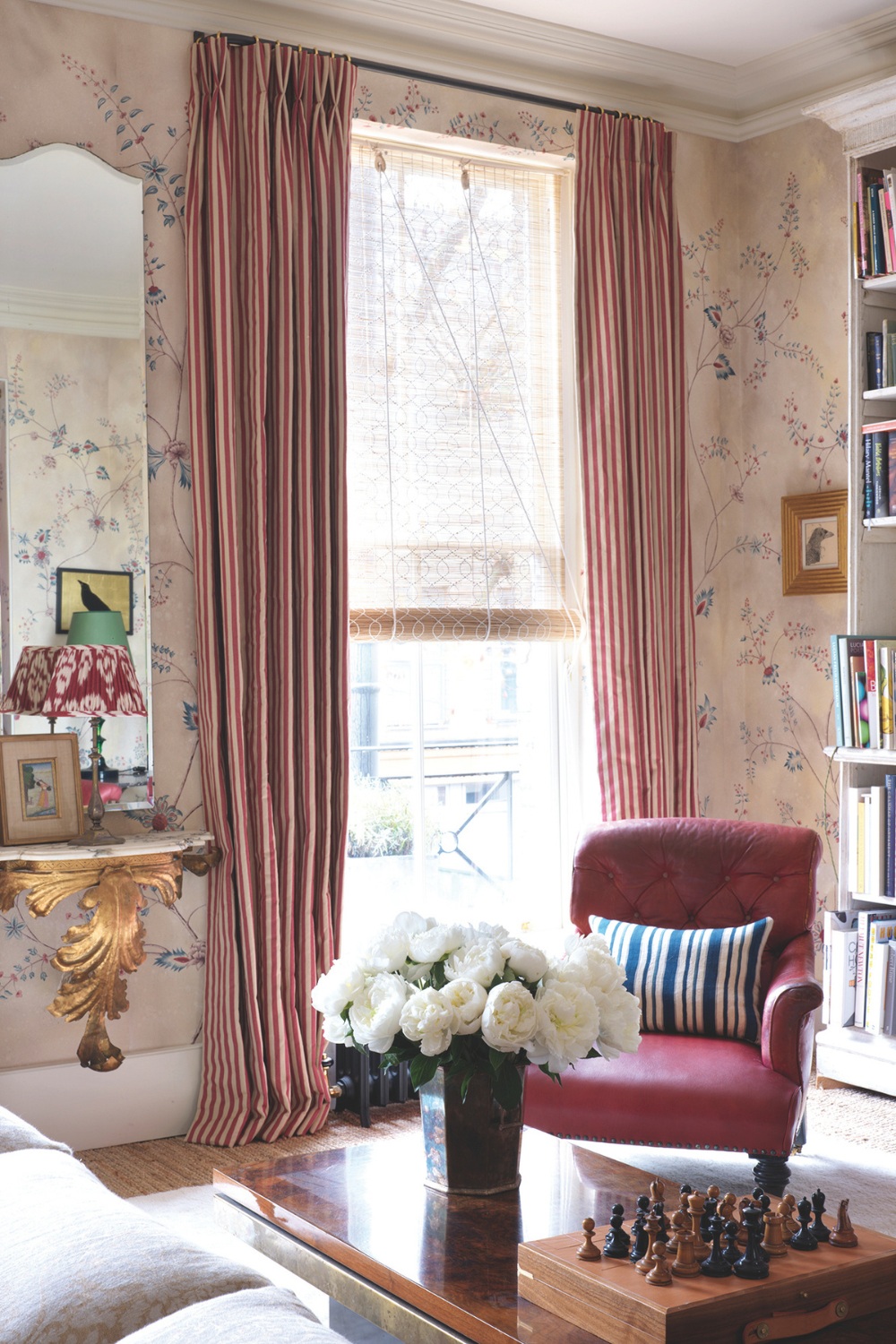
Renzullo never agonises about copying, as any inspiration will always be filtered through his eye. Joanna Plant doesn’t worry too much about borrowing from past designers, either. Her library of reference books, particularly the Colefax titles, is a constant resource. ‘Roger Banks Pye’s Inspirational Interiors is full of heavenly ideas,’ she says. Geoffrey Bennison: Master Decorator by Gillian Newberry is also a constant source. ‘But it is not the obvious things I’m looking at. Often it’s the furniture layouts I learn from.’ These great decorators were adept at creating wonderfully inviting rooms. ‘I’m looking at the different seating areas, the amount of chairs and tables, the depth of a sofa, the height of a side table.’
Plant remembers being struck by how much furniture Mark Birley had in his drawing room and how brilliant it felt, with chairs in all the places you need. More than anything, she is trying to capture the feeling of a room she has seen. On her laptop is a folder entitled ‘Good Houses’. ‘We are endlessly bombarded by images, but a single picture doesn’t tell the full story. I want to make cohesive houses, to look at the whole place and see the entire idea.’
Joanna Plant
When decorating my own Regency home in Yorkshire, it was two books, Mlinaric on Decorating and The Interiors of Chester Jones, that I returned to often and, like Plant, for a feeling rather than individual detail. In particular, I admire the restraint of David Mlinaric’s own houses, which brings a subtle modernity to an old house and the softness of his colour palette.
By contrast, Philip Hooper, managing director at Sibyl Colefax and John Fowler, cites the daringness of Pauline de Rothschild’s renowned Albany set in Piccadilly as an early revelation. Its painted floors, cut-edge silk curtains and meticulous detailing showed him that decoration was about far more than assembling a scheme.
For him, the intellectual stimulation of what makes a room exciting, understanding the ‘science’ of how it is put together, is the thrill. His constant reference is Mario Praz’s An Illustrated History of Interior Decoration, alongside 1930s issues of Country Life. ‘The scholarship that comes from a lifetime of looking ensures every decision makes sense,’ he says. He still travels with a sketchbook. ‘Drawing makes you analyse what you’re looking at.’
All of this may sound rather high-minded for someone choosing paint and curtains for a spare bedroom. But these designers show that visual confidence comes from paying attention: noticing why a friend’s sitting room works, looking closely at a Venetian palazzo, or simply asking, as Adèkó suggests, why it is you love a particular object. The more you look, the easier it becomes to edit the endless choices before you and to create rooms that are comfortable, inviting and subtly original.