


Chad Harbach On Self-Doubt, Setbacks & His Long-Awaited Sequel, The Brightness
By
5 minutes ago
‘Life is stories inside of stories, and roles on top of roles’
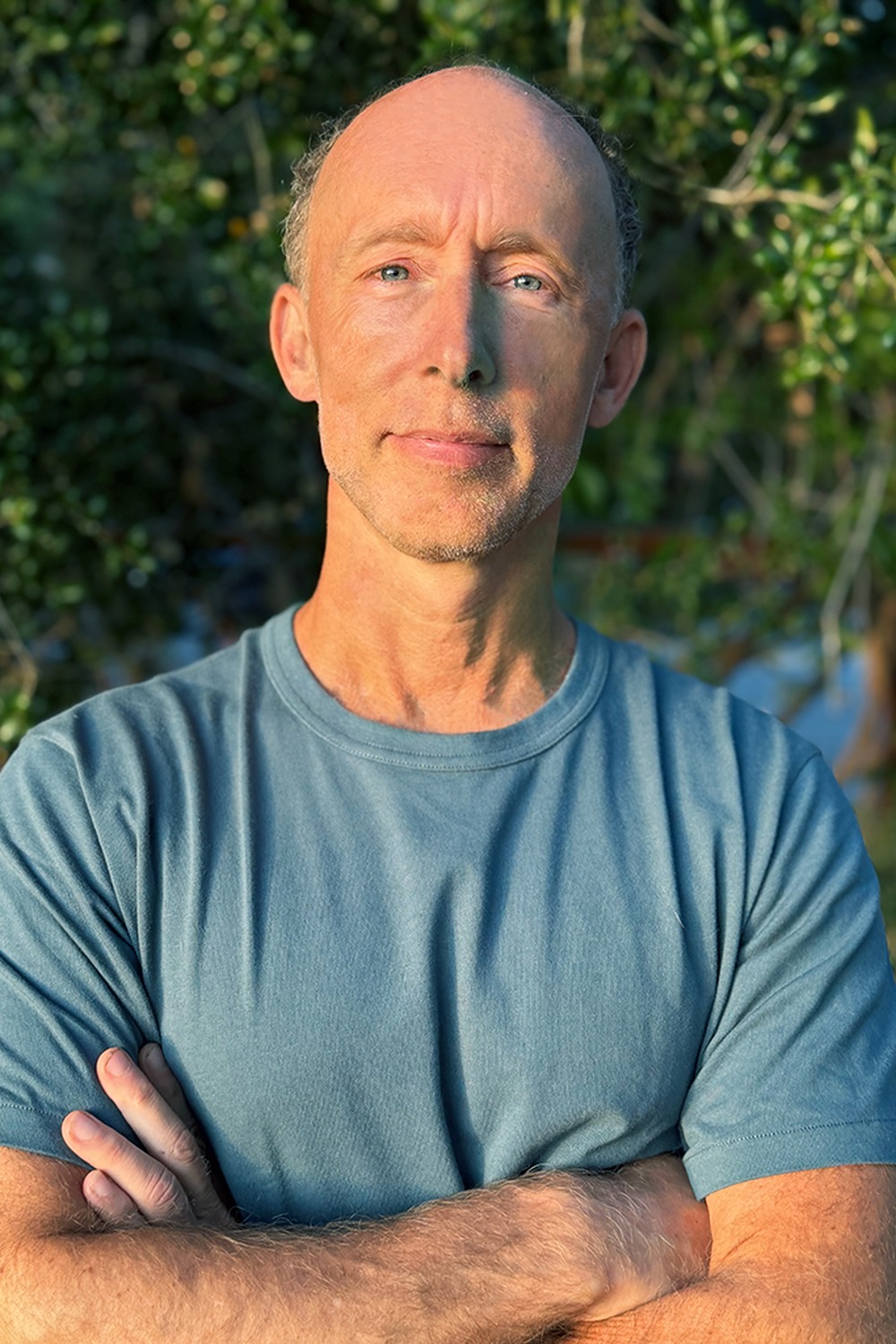
In 2011, Chad Harbach’s debut novel The Art of Fielding became a word-of-mouth bestseller and has since been translated into 20 languages. A decade-plus later, he’s back at Westish College in the form The Brightness. The novel picks up four years on with Pella Affenlight as she graduates and is swept into a campus strike led by women against toxic masculinity, while trying to balance glittering Brooklyn parties against the quiet of life on Lake Michigan. A TV series combining both novels is already in the works.
In November’s C&TH Book Club, Chad Harbach talks to Belinda Bamber about his long-awaited sequel.
Interview With Author Chad Harbach
What’s the story in a sentence?
Two friends – one reaching the end of her twenties, the other just beginning – embark on a journey of figuring out how to live, a journey that entails all the hazard and pleasures of sex, work, art, political action, friendship and love.
The Brightness is a sequel to your acclaimed first novel, The Art of Fielding (2011), though it reads equally well as a standalone. Why did you want to return to Pella’s story?
I had no interest, at least overtly, in returning to the world of The Art of Fielding. But whenever I sat down with my notebook and let my thoughts sprawl, I found myself writing about Pella.
I was fascinated by her situation at the end of TAOF – a young woman in her early twenties who’s grieving the death of both parents and the end of an early, ill-advised marriage; who’s talented, sophisticated, earnest, and a little lost; and who finds herself, after a lifetime in cosmopolitan places, belatedly starting college in a small Wisconsin town. The Brightness begins four years later, just as she’s graduating from Westish College, and trying to figure out what comes next.
While The Art of Fielding was about male students bonding on the baseball pitch, The Brightness focuses on a group of women in a #MeToo-style strike against toxic masculinity. If I didn’t know you’d written it, I’d have assumed it was by a woman. Where does your astonishing insight come from?
If I have any insight, it probably comes from paying attention. And, too, there has always been an aspect of my inner life that seemed strangely in tune with the female experience – an aspect that went largely unexplored in The Art of Fielding.
Who have been your female role models?
My mother and my two grandmothers. And, of course, the close friends, colleagues, and partners I’ve had the good fortune to know and learn from, including those whose comments on the manuscript for The Brightness have been invaluable.
Do you identify with Pella’s split existence between glittering Brooklyn parties and rural campus life?
When I left my Wisconsin hometown to attend Harvard, I may as well have been emigrating to a different country – or, for that matter, planet. So, yes, I do identify with this split inside of Pella, though she’s heading in the other direction, having grown up on the East Coast before finding herself in small-town Wisconsin.
She loves elements of each place: the bright lights of New York, with its pace and ambition and keen intelligence; the nurturing shade and quiet of her modest garden on the shore of Lake Michigan. You could say that the problem of the novel, for Pella, is to figure out how to integrate these parts of herself.
Was there a central question you were exploring as you wrote this book, and if so, did you find enlightenment?
I think the question, always, is how to live: how to flourish, how to create, how to bring your highest and most authentic qualities into being. Personally, I’m nowhere near finding enlightenment – albeit a little closer than I used to be.
Which character do you most relate to?
Pella. She’s talented and magnetic yet beset by self-doubt. She has huge ambitions for her life and career but is prone to devoting her energy to helping her friends get ahead. She wants to shine; she wants to hide. She wants to get married; she wants to be free.
She’s fearful one moment and daring the next. She’s brimming over with vitality but plagued by depression and grief. All contradictions I feel.
Shakespearean references abound, not least in the plot’s colourful cross-dressing, celebrations, confusions and creative bed-hopping. What has been Shakespeare’s greatest gift to you?
I could give a hundred answers to this question. I’ll go with that beautiful, flexible iambic pentameter, so lyrical and yet so natural, which Shakespeare didn’t invent but deployed to such perfection. I’m always attuned to the syllabic rhythm of sentences – I try never to write Hello if Hi better suits the cadence – and Shakespeare remains the best example.
Your books are built on character and have the structure of classic nineteenth-century novels. Pella’s growth arc reminds me of an Austen heroine. Any influences?
Again, so many. Some of the most relevant to The Brightness are all of Jane Austen, Portrait of a Lady, and the major novels of Edith Wharton, especially Custom of the Country.
And – I almost forgot – George Meredith’s The Egoist, a gorgeously written and plotted novel that, though written by a man, might be the best explication of the dilemmas facing women in Victorian England. (You just have to skip the prologue, which is unreadably ornate.)
Do you still write in longhand?
CH: Yes, absolutely. All my first drafts – even if it’s a draft of a paragraph I’m adding at the last minute – are written with notebook and pen. I find my thoughts touch deeper and more surprising places when writing longhand than they could when I’m typing on a computer.
Which other campus novels have you enjoyed reading?
There are many – as there should be, universities having loomed so large in the life of the last century. Don DeLillo’s White Noise and also his End Zone, which was the only novel about college sports I had read before beginning The Art of Fielding. Lord Jim. Stoner. The Groves of Academe. An Experiment in Love by Hilary Mantel. One could go on and on…
A literary critic in The Brightness decries ‘literature as hospice – another drop of morphine for a dying world’. Do you believe in the value of novels when the world is in crisis?
I tend to think of a novel as a form of consciousness, much the way an individual human being, or a certain bird or dog, exists as a form of consciousness. In this way a novel is very much alive. You can’t break it into pieces, you can’t reduce it to themes or lessons, you can’t capture it in a plot summary.
You have to encounter it as a living gestalt, and as a gestalt it moves through the world and influences other consciousnesses – namely, those of its readers. We tend to think of such influence as educational or didactic; I imagine it’s more subtle and powerful than that.
What do you gain by breaking the fourth wall and making the reader aware of you as writer? Or does this speak to a literary in-circle, given your connections as a co-founder of the New York cultural magazine n+1?
I’m certainly not speaking to an in-circle – if I tried, I doubt they would hear me. Ultimately, I think fourth wall-breaking is far from trickery; it’s an ancient, natural part of art, whose ultimate purpose, done well, is to make the story feel real.
My four-year-old and I lie in the dark every night and tell one another a bedtime story; he comes up with some amazingly, dizzying conceits, in which the story we’re telling becomes part of the story we’re telling, and the whole thing spins and spirals in ways that would make Charlie Kaufman (the screenwriter behind Eternal Sunshine of the Spotless Mind) proud. Life is stories inside of stories, and roles on top of roles.
If you could bequeath your son just one book, what would it be?
It would be one writer, Chekhov. To me, Chekhov embodies the highest virtues of the human being: tender, curious, funny, wise, deep-seeing, delighted by beauty, disgusted by injustice – above all, compassionate, humble, and humane.
Global warming is a perennial theme of your writing. Do you feel any hope after even more wildfires dominated global news headlines this summer?
Well, there are no shortage of existential threats. Our attitude toward climate change and the ensuing geopolitical turmoil is terrifying; our attitude toward artificial intelligence is terrifying; our willingness to stare at screens until our cognitive powers collapse is terrifying.
If I feel hope, it’s because much is yet unknown and undecided, and beauty and thoughtfulness can still prevail, at least in local ways.
The Brightness is structured around key scenes, which make it perfect for filming. Would you take on the challenge of scripting this for a series?
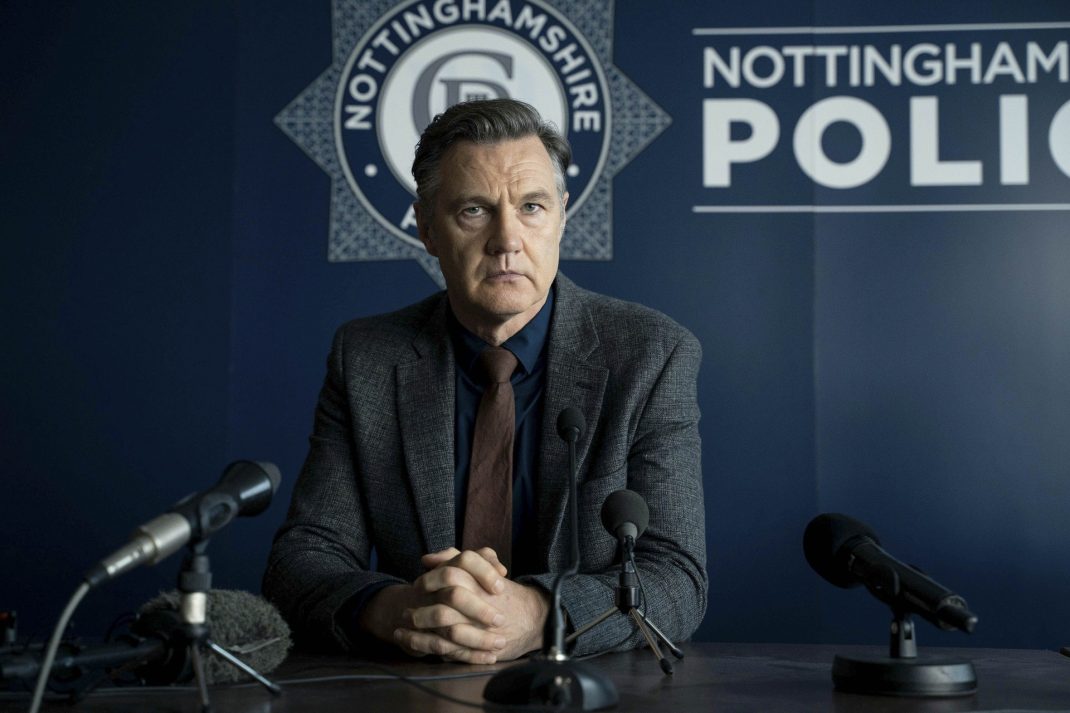
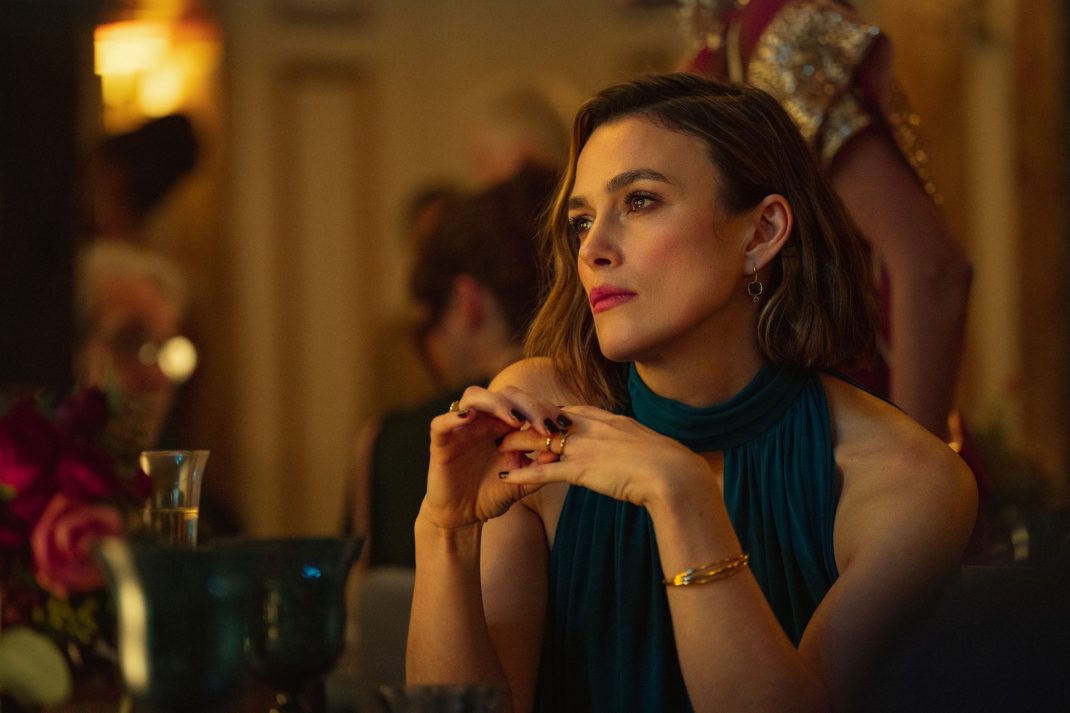
There is indeed a TV series in the works, which combines The Art of Fielding and The Brightness, and which will, should it all work out, entail many more than six episodes. I won’t be the lead writer, but I am involved in the process.
Key scenes – often, key images – are the novelist’s lifeblood. If you try to plot a book too thoroughly in advance, you’re likely to rob yourself of the magical accidents that will make the book uniquely itself. ‘No surprise for the writer, no surprise for the reader,’ as Robert Frost famously said.
But if you have no idea where you’re headed, you might wander in circles forever. I try always to be writing toward some key encounter that has a vivid urgency in my mind, and to find some surprises along the way.
Your characters typically develop resilience in the face of major setbacks. How did you yourself cope with the 2017 plagiarism allegation about the baseball plot in The Art of Fielding? It must have been harrowing.
That was indeed a harrowing experience: before filing a lawsuit, my accuser had spent years trying to persuade various journalists that I had somehow plagiarised his unpublished manuscript (which, of course, I’d never seen). Some of them tried bizarrely hard to believe him: for certain journalists, a juicy scandal is far more fun than its total absence.
The saga consumed a good deal of my brain-space for a long while. The good, I suppose, came from the opportunity to practise forgiveness and serenity in the face of what felt like a maddening injustice.
I wouldn’t say, though, that those allegations caused me despair. What I know about despair comes from other sources: chronic illness, the loss of loved ones, and other forms of life-obliterating upheaval. If my novels enact a resilience in the face of such blows, and that resilience rubs off on a reader, I’m glad.
Are you planning a sequel? Pella’s story would make an excellent trilogy. But I believe each novel took ten years to write – is that your natural pace?
I too am keen to know what might befall Pella – not to mention Irma, Owen, and everyone else. But I haven’t had a moment to consider what’s next. We’ll see.
As for pace, I do believe my novels have benefited from their long gestations. I’m a patient writer, and I’m willing to sit with my characters until they reveal themselves. But there are other, quicker ways to write a book – and I’m inclined to try some of them. I won’t live forever, after all.
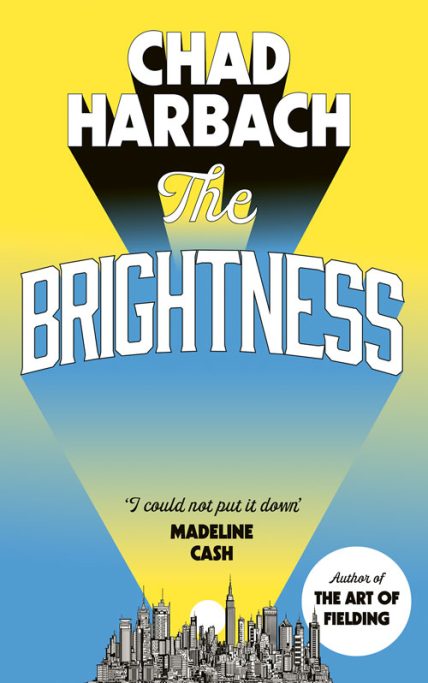
HarperCollins, hardback, £22