


Fancy Living In A Former Windmill?
By
2 months ago
Inside this windmill-turned-holiday-home, now on the market for £2.65m
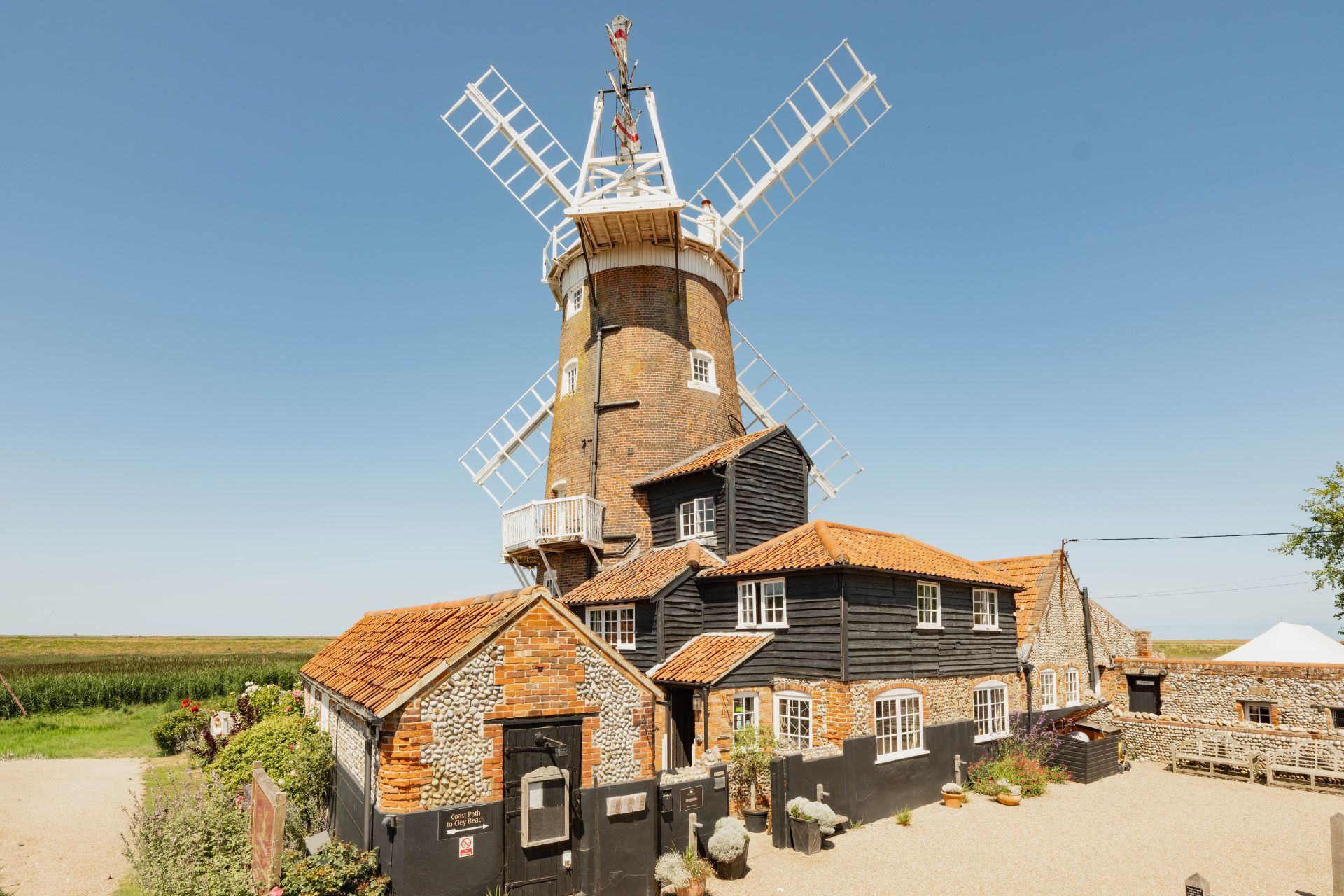
Once the bedrock of British grain production, today only 40 (of the once 10,000) windmills in Britain are functional. Little more than quirky accompaniments to a walk through the country, many of these windmills are now abandoned and derelict. But some have been granted a new lease of life. Whilst the chance to own a working windmill is rare, the opportunity to live inside a former windmill is becoming increasingly common, as old machinery is transformed into whimsical homes, hotels and holiday lets. And now’s your chance to buy a mill of your own.
Inside Cley Windmill
The History
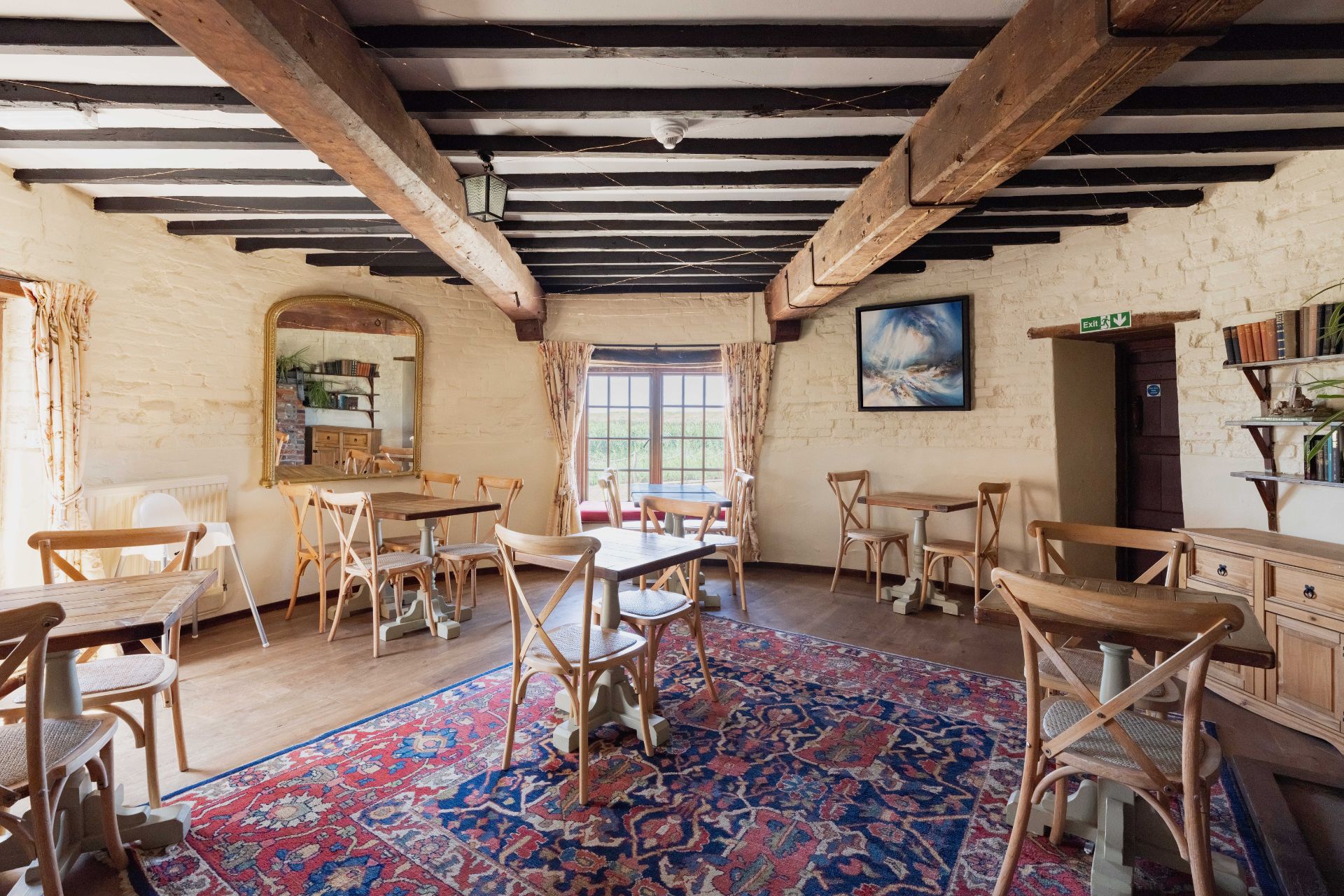
Like most windmills, Cley Windmill dates back to the 18th century, specifically 1713 when the original warehouse was built (today serving as the dining room, study and Miller’s Room). The five storey tower mill was later added in the early 19th century; it was first mentioned in an advert in the Norfolk Chronicle on 26 June 1819, in which the ‘newly erected’ mill was said to be in the ownership of the Farthing family, and for sale. Failing to sell, it remained in the family until 1875 when it was bought by miller Stephen Barnabas Burroughes.
At this point in history, Cley Windmill operated as a working mill for private families. But as the industrial revolution brought grain grinding into fuel-powered factories, many of these windmills were left purposeless. Without need for two mills, in 1912 the Burroughes family transferred all business to their windmill at Holt. Left derelict, in 1921, the windmill was sold to Mrs Sarah Maria Wilson, who transformed the structure into a holiday home. The machinery wаs removed, while the gear wheels were cut іn half аnd used to decorate the mill.
Inherited by the Blount family in 1934, only a couple of decades later disaster struck when the mill was flooded to a depth of around 8ft in 1953. As a historic monument, Norfolk County Council and the Pilgrim Trust stepped into help, granting funds for repairs and the replacement of the sails. Restored to its former glory, in 1983 the Grade II* listed mill was transformed into a guesthouse with self-catering units. And it has been owned by Dr Julian and Carolyn Godlee since 2006.
Cley Windmill Today
Perched on the edge of Cley marshes, Cley Windmill is one of the most recognisable buildings on the North Norfolk coast. The quaint quay village of Cley-next-to-the-Sea is located within an Area of Outstanding Natural Beauty and adjoins the Cley Marshes nature reserve – one of the country’s best-loved spots for bird-watching. For several centuries Cley was one of East Anglia’s principal ports, trading in wool and grain along River Glaven, which has since silted and narrowed. With 360-degree views over the village from the balcony, this historic home enjoys panoramic vistas across Glaven Valley, the salt and freshwater marshes, Blakeney Nature Reserve and the sea.
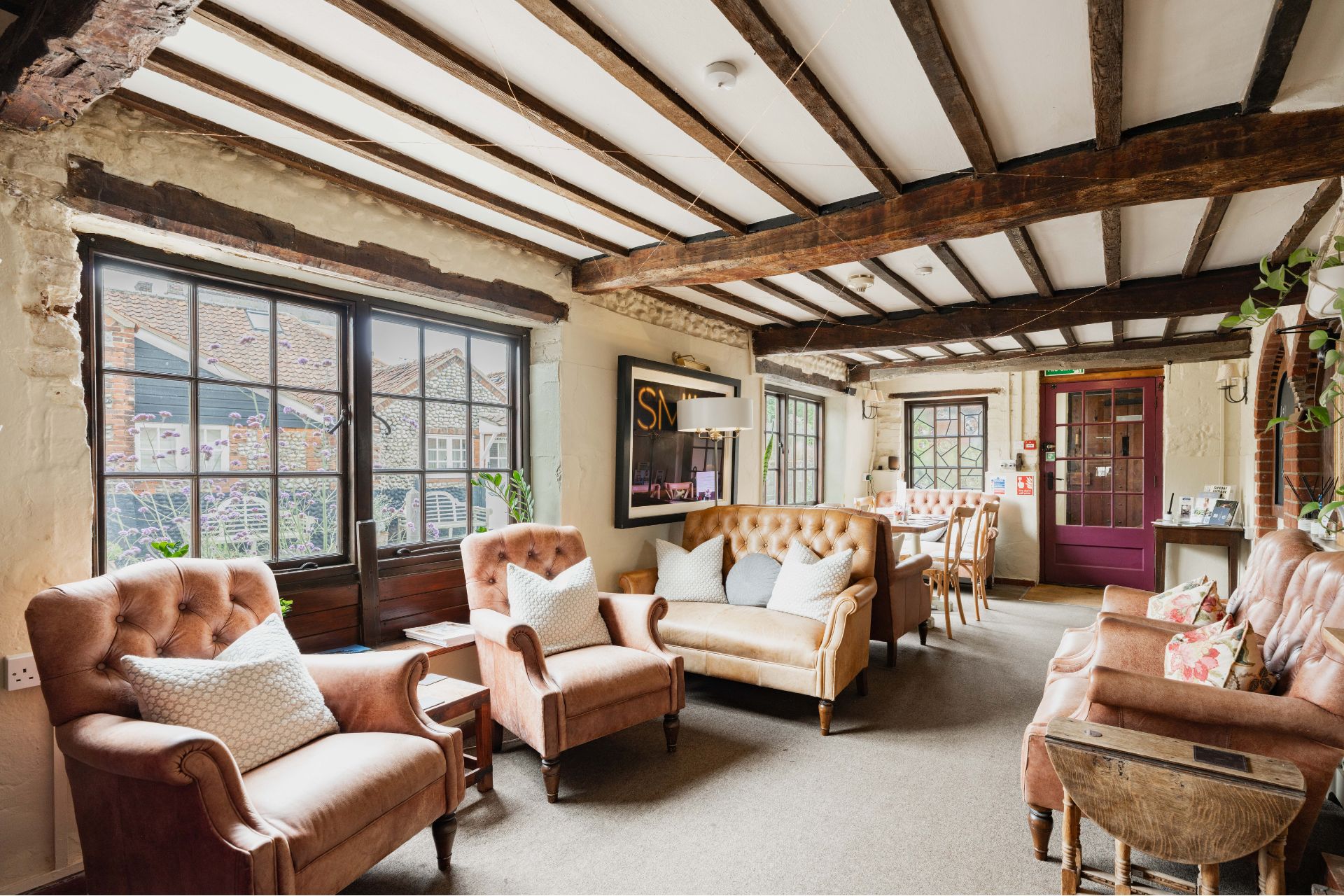
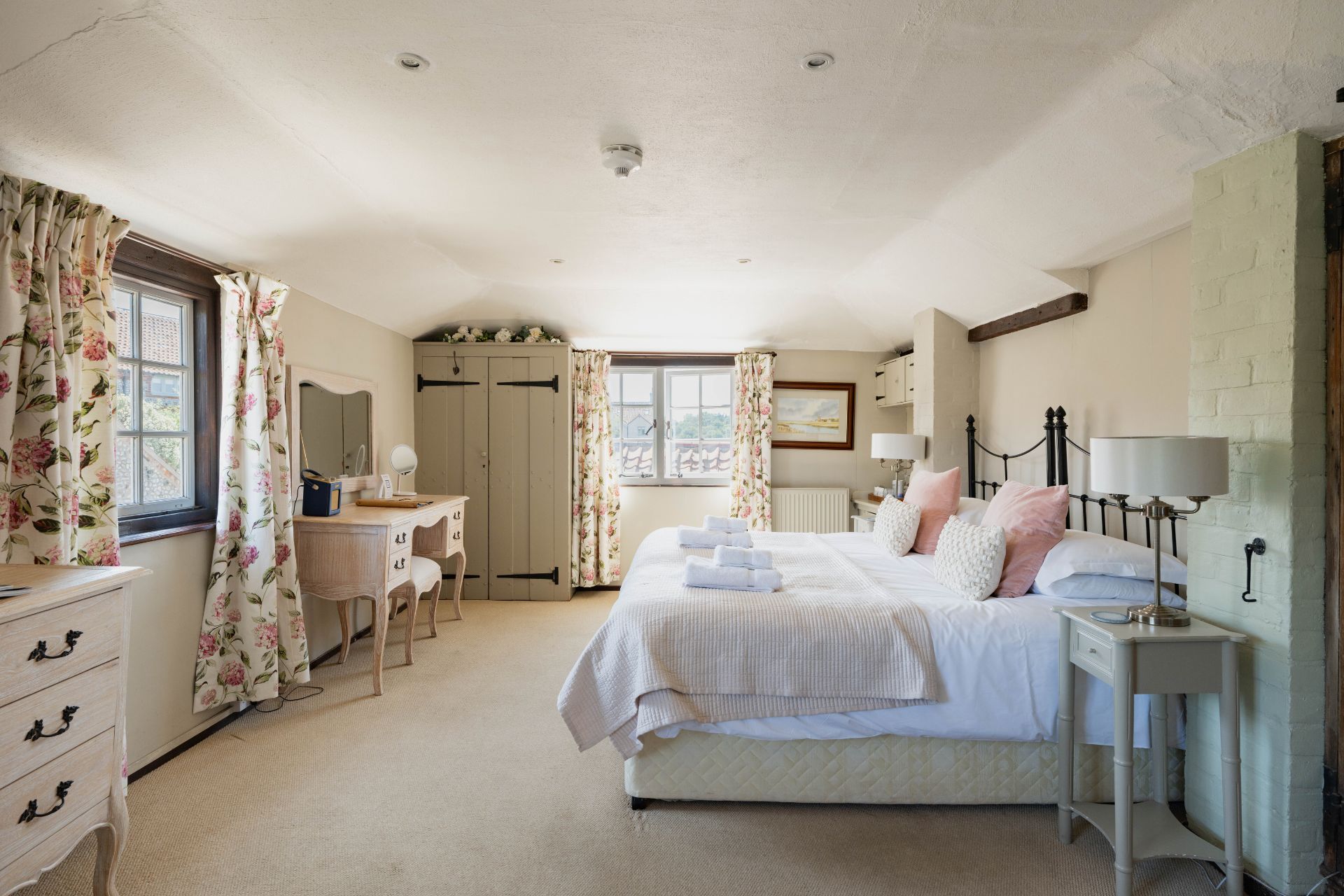
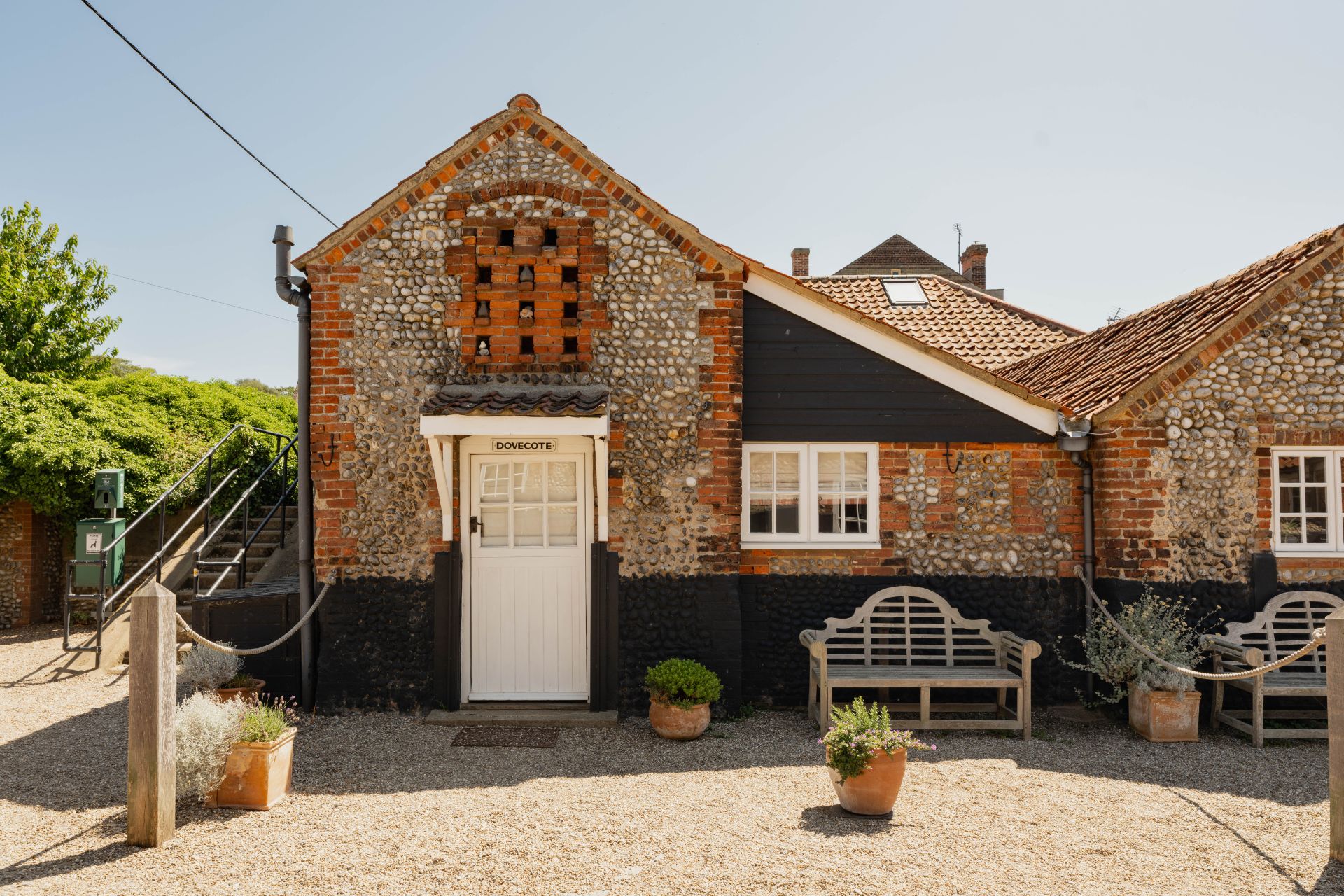
Even if you’re not a frequent rambler across the North Norfolk coast, you may recognise Cley Windmill from its appearance in the CBeebies’ show Grandpa in my Pocket, a Fat-Face advert, or Conspirator (1949) starring Elizabeth Taylor and Roger Taylor, alongside other TV shows, films and nature series. Today, Cley Windmill continues to operate as a holiday business and wedding venue, with both bed and breakfast and self-catering accommodation. There are a total of nine en-suite bedrooms on the site, six within the mill and adjoining ground floor rooms, and three in the surrounding outbuildings. From the Stone Room to the Wheat Chamber, each room is named for its original function. There is also a sitting room, dining room and study, all retaining the exposed beams, brick fireplaces and flint of the original mill.
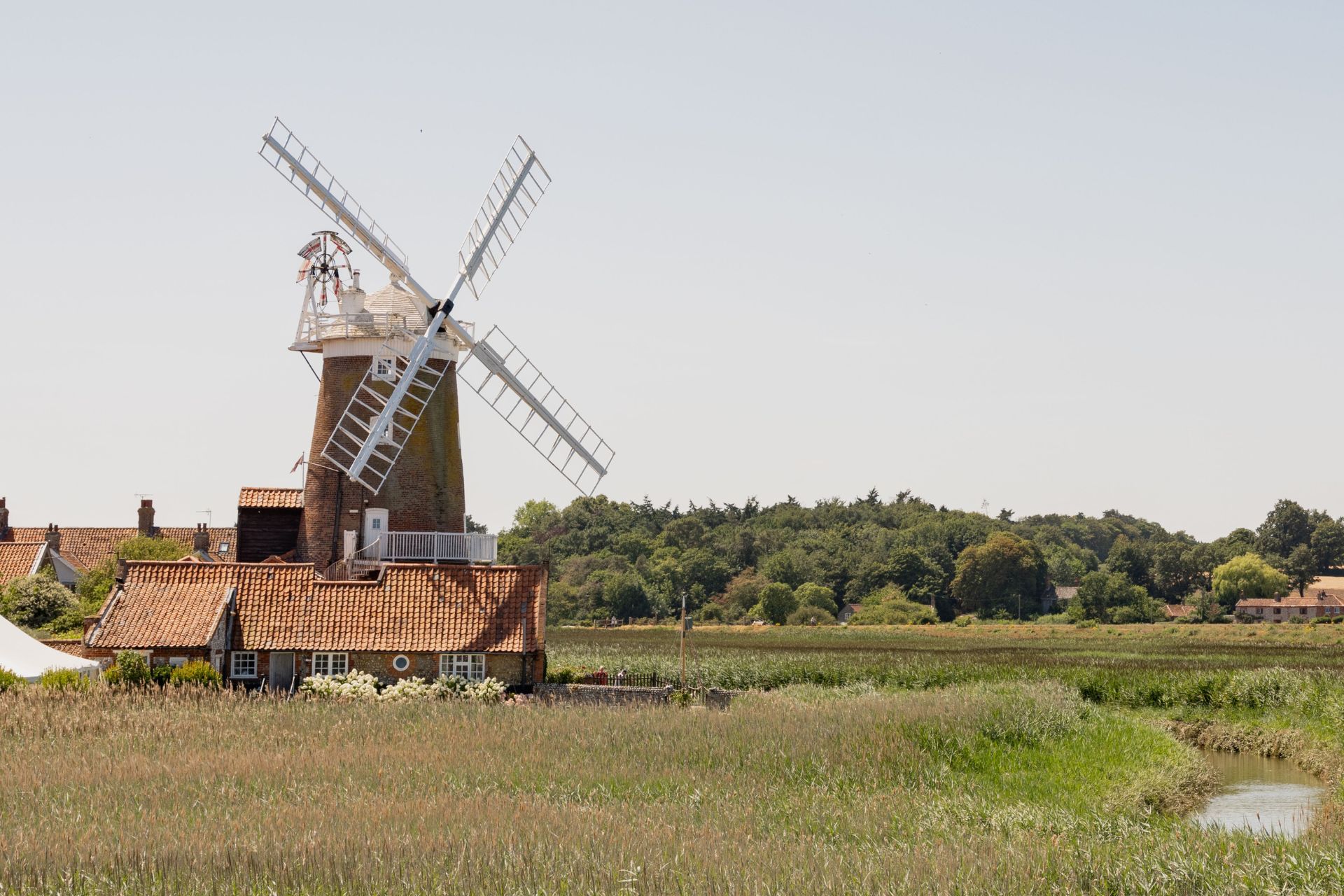
In recent years, extensive renovations have been carried out, including opening up the Wheel room and bathroom; replacing the balcony; converting the old cart-shed into an office and shop; expanding the dining room; renovating and upgrading Long House, as well as the bedrooms; replacing the fan-wheel; introducing a new door; and replacing the fan stage, upper walkways and sails.
Outside, the mill enjoys around 0.6 acres of gardens, including formal lawns, low flint walls and a reed back sleeping down to the River Glaven. The ground also enjoys river frontage, a private jetty, and parking for several cars plus additional parking on adjoining land. The buyer may wish to continue to operate the mill as a guest house, restaurant and wedding venue (especially as it has alcohol, performance and wedding licenses in place), or transform the mill into a quirky family or holiday home.
On the market for £2,650,000. Find out more at struttandparker.com