


Live In The Childhood Home Of Virginia Woolf
By
5 months ago
A chance to buy a room of one's own
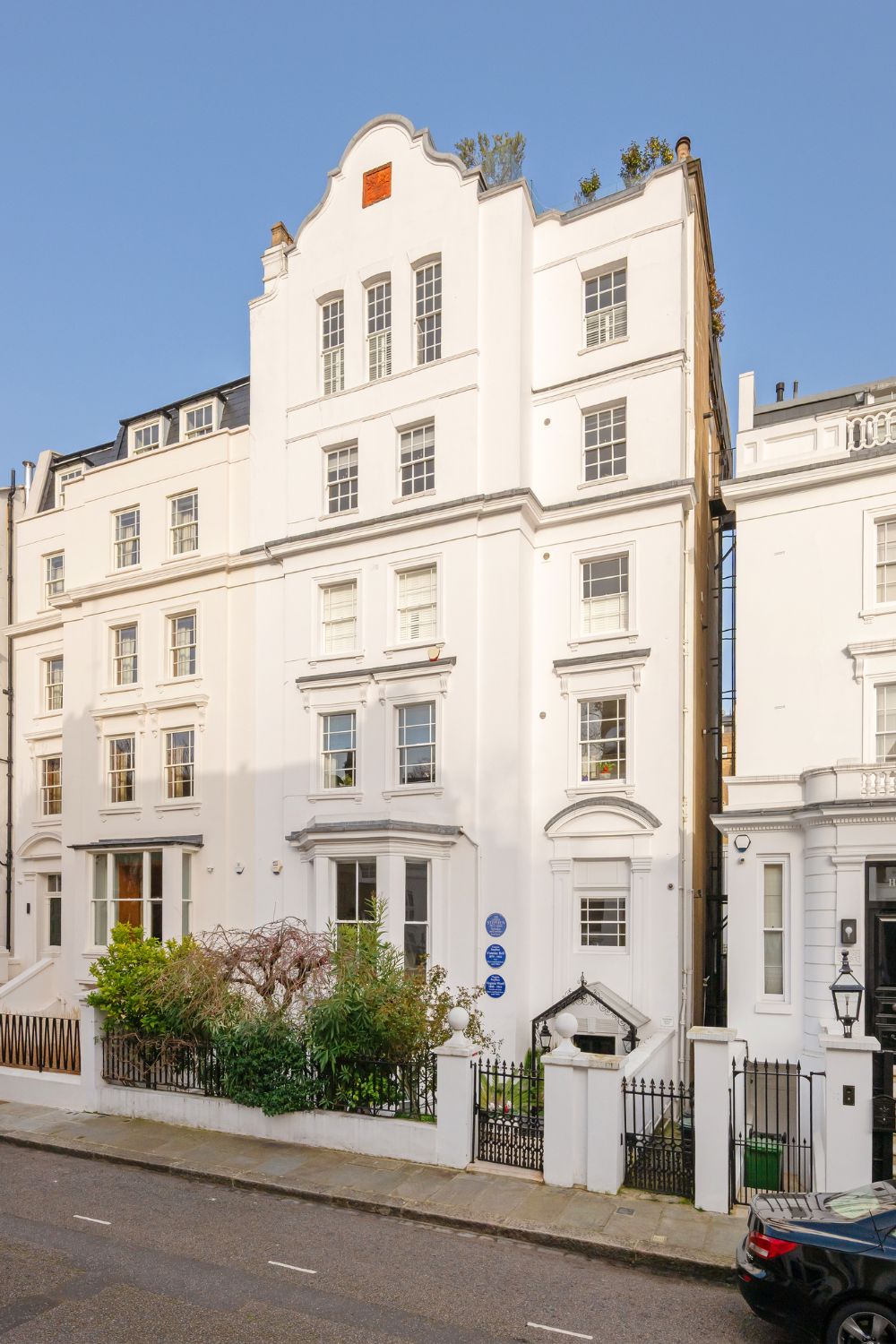
While Bloomsbury is the London borough best-associated with Bloomsbury Group co-founder Virginia Woolf, the acclaimed British novelist actually started her life across the city in Kensington. Born on 25 January 1882, Woolf was raised at 22 Hyde Park Gate – which remained her family home for 22 years up until the death of her father in 1904.
While Virginia Woolf is perhaps the better-known name today, it’s actually her father, Sir Leslie Stephen, who gets his name on the home’s only official Blue Plaque, while his two daughters only have unofficial plaques at this address. A distinguished scholar, critic, writer and skilled mountaineer, Stephen was the first editor of the Dictionary of National Biography and the editor of the Cornhill Magazine. Throughout his illustrious career, he encouraged many of the most beloved authors of the next generation, including Thomas Hardy, Robert Louis Stephenson and Henry James.
A long-time lover of Hyde Park Gate, Sir Leslie Stephen was born at number 42, later returned to 20 (then 11 Hyde Park Gate South), and then – following the death of his first wife, William Thackeray’s daughter Harriet – fell in love with the widowed Julia Duckworth at 22 (then 13).
Married in the spring of 1878, the pair moved into Duckworth’s house and built a two-storey upward extension for Stephen’s book-lined study on the fourth floor and the servants’ quarters above. They soon gave birth to Vanessa (later, the artist Vanessa Bell), Virginia, and their brothers Thoby and Adrian, raising them alongside their half-siblings Stella, George and Gerald Duckworth from Stephen’s previous marriage. Creatives from an early age, the central Stephen siblings produced a family newspaper together called the Hyde Park Gate News.
However, it was not all happy memories at the home. Woolf’s mother died in 1895 when she was just 13 years old, plunging the already sensitive girl into a deep despair. She also faced much abuse throughout her childhood at the hands of her much-older half-brothers George and Gerald, who sexually assaulted her from the age of six. And at 22, following the tragic news of father’s death, the Mrs Dalloway author attempted to throw herself from the window – though thankfully it was too low for her to cause any real damage.
After this incident, Woolf and her siblings escaped the domineering presence of their half-siblings and moved to 46 Gordon Square in Bloomsbury. It is in this iconic corner of London that they hosted the intellectual gatherings which would become the Bloomsbury Group – and where Woolf would later meet her husband Leonard, and her lover Vita Sackville-West. She and Leonard then moved onto Richmond, where they lived at Hogarth House, which last went on the market in 2023.
Inside 22 Hyde Park Gate
Today, details of Woolf’s time at 22 Hyde Park Gate can be found throughout her autobiographical essay A Sketch of the Past, in her collection Moments of Being. As well as detailing the horrors of her abuse and emotional turmoil, it also contains more general, and happy, descriptions of life in the home. Describing the property, she writes: ‘The drawing room at Hyde Park Gate was divided by black folding doors picked out with thin lines of raspberry red. We were still much under the influence of Titian. Mounds of plush, Watts’ portraits, busts shrined in crimson velvet, enriched by the gloom of a room naturally dark and thinly shaded in summer by showers of Virginia Creeper.’ Elsewhere in the essay, she described the basements where the home’s seven maids were confined as ‘dark’ and ‘insanitary’.
Now divided up into separate apartments, a two-bedroom flat on the fourth floor of this historic home is on the market. In Woolf’s work she describes how her parents’ bedroom was on the first floor, the Duckworth siblings’ rooms on the second, the night and day nurseries on the third floor, and the ‘great study with its high ceiling of yellow stained wood’ on the fourth where this apartment now sits. Woolf, meanwhile, would have slept on the floor below – originally in the nursery, and then in ‘a room of [her] own’ when she turned 15.
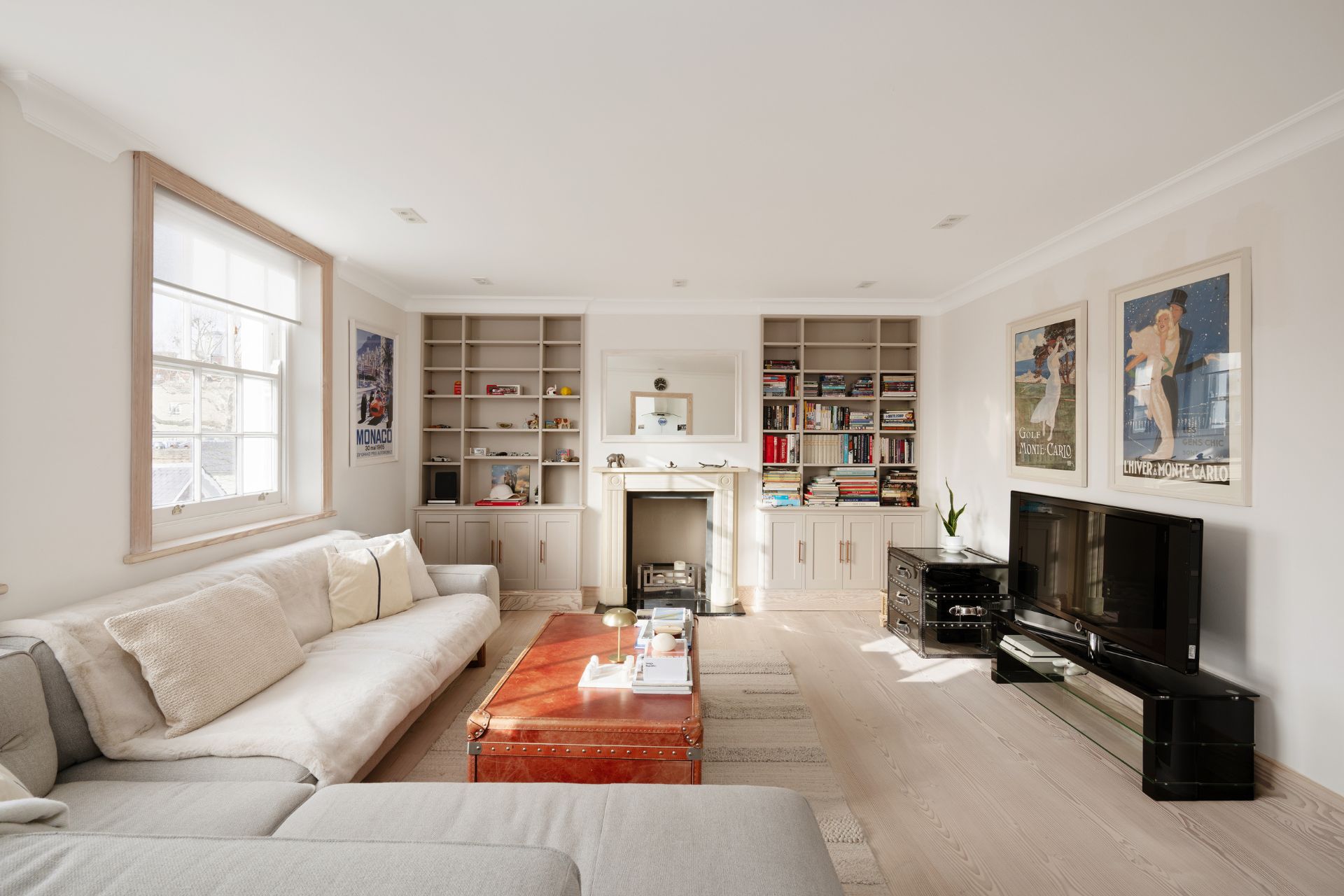
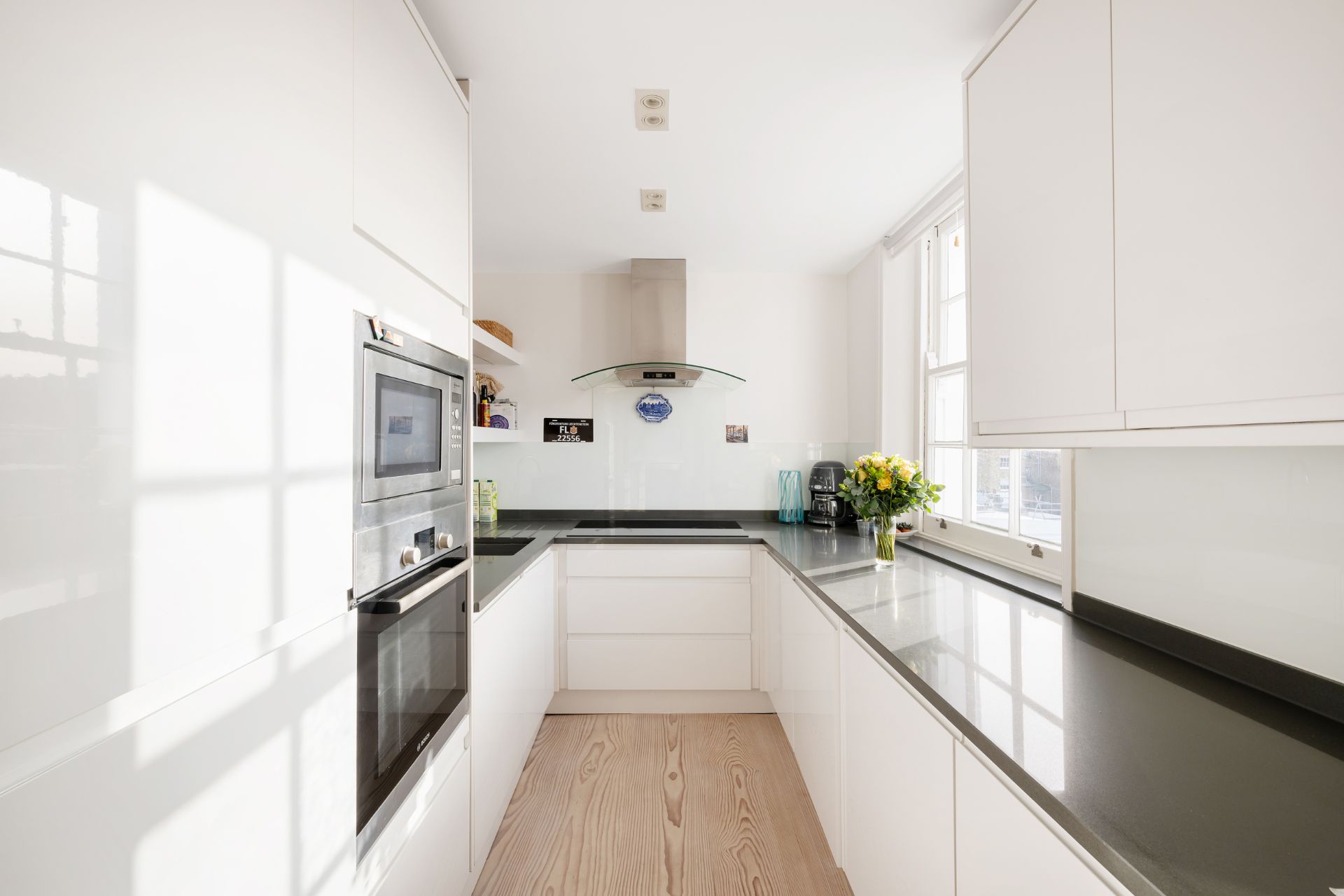
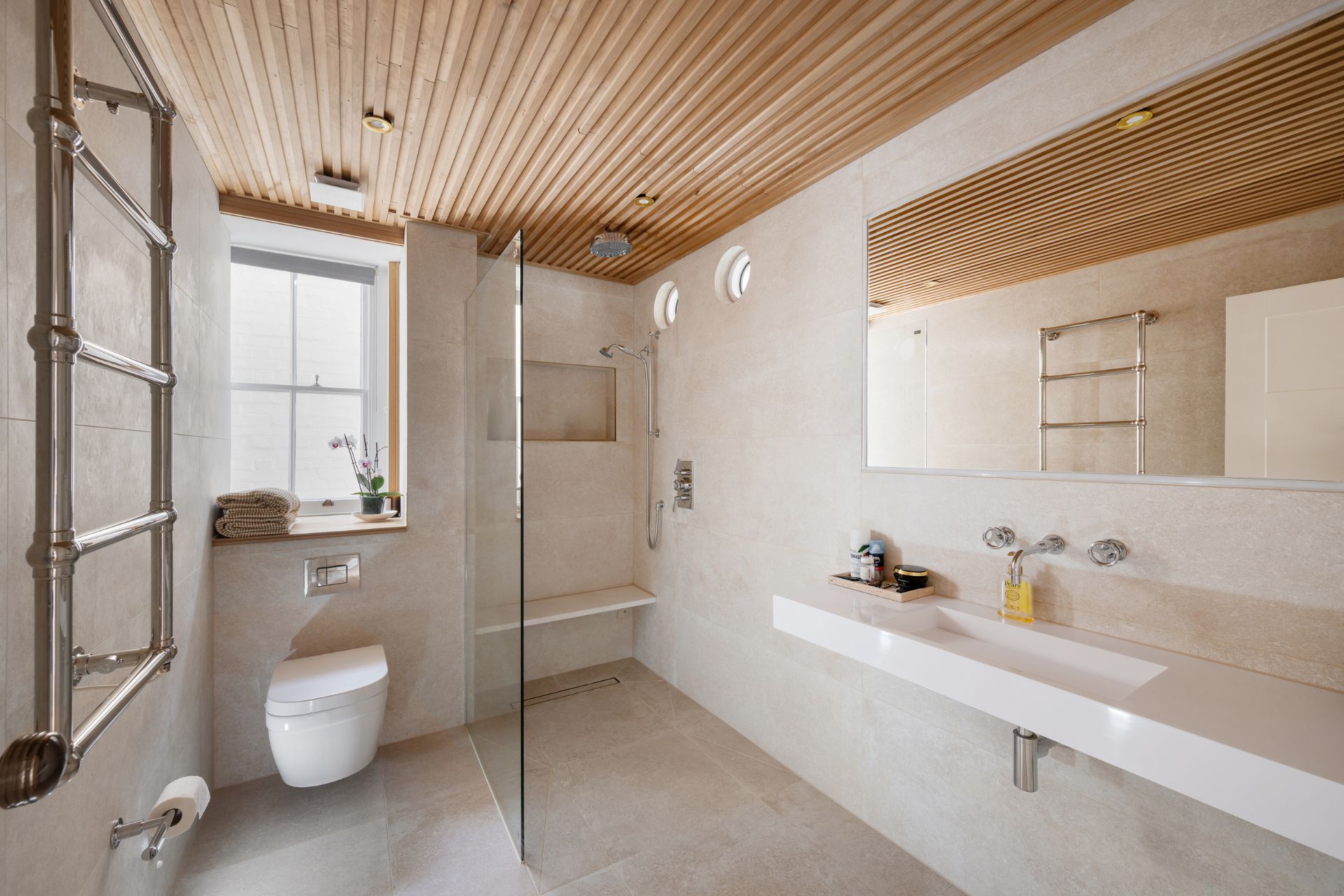
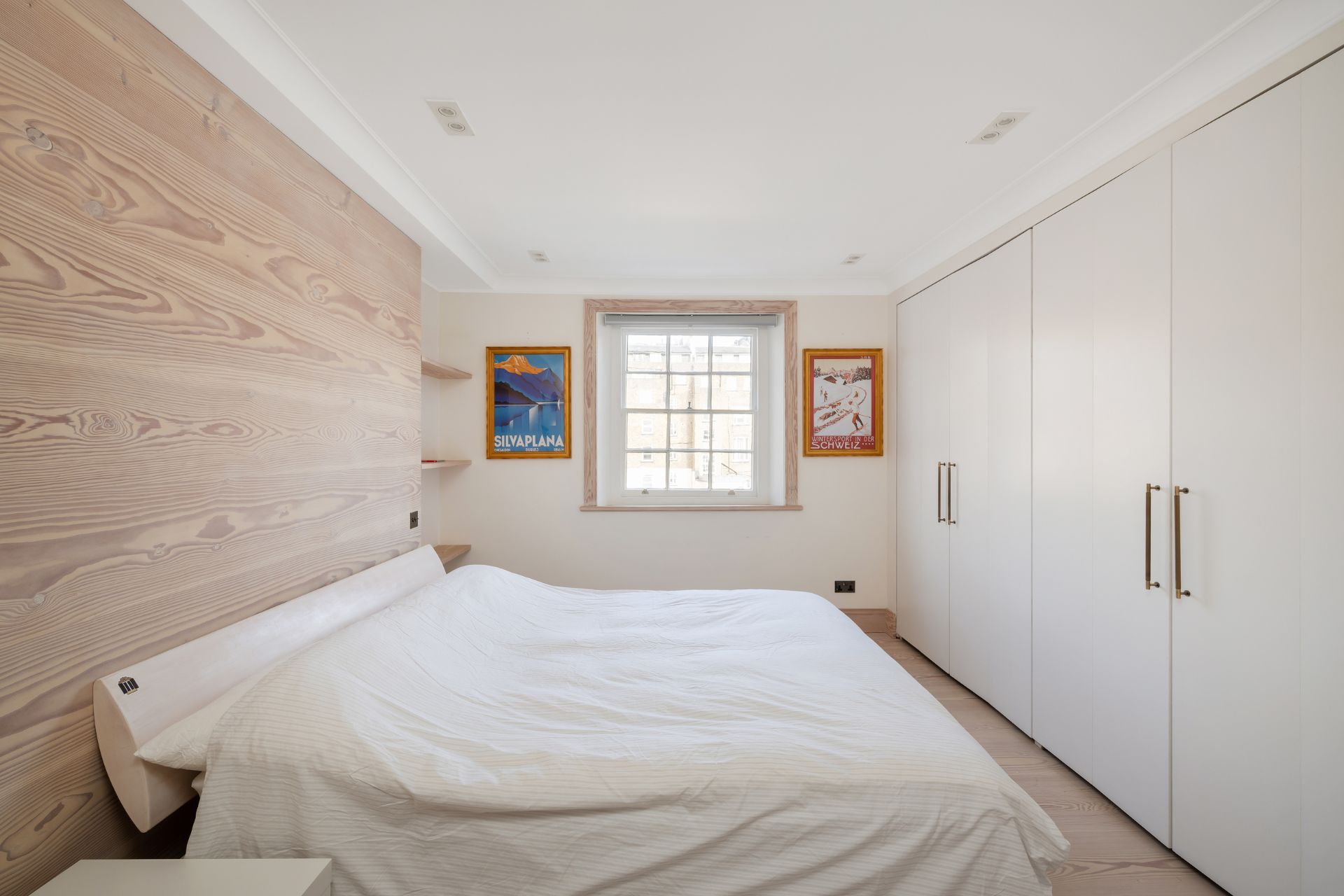
Upgraded by the current owners, the interiors boast Danish Dinesen wood flooring, bespoke joinery, custom-built cabinetry and underfloor heating – while original features such as the sash windows and characterful fireplaces have been retained.
On the market for £1.95. Find out more at ddre.global