


Interview: Bryony Kimmings On Her Show Bog Witch And Doomsday Prepping
By
46 minutes ago
The performance artist tackling climate change with a sense of humour
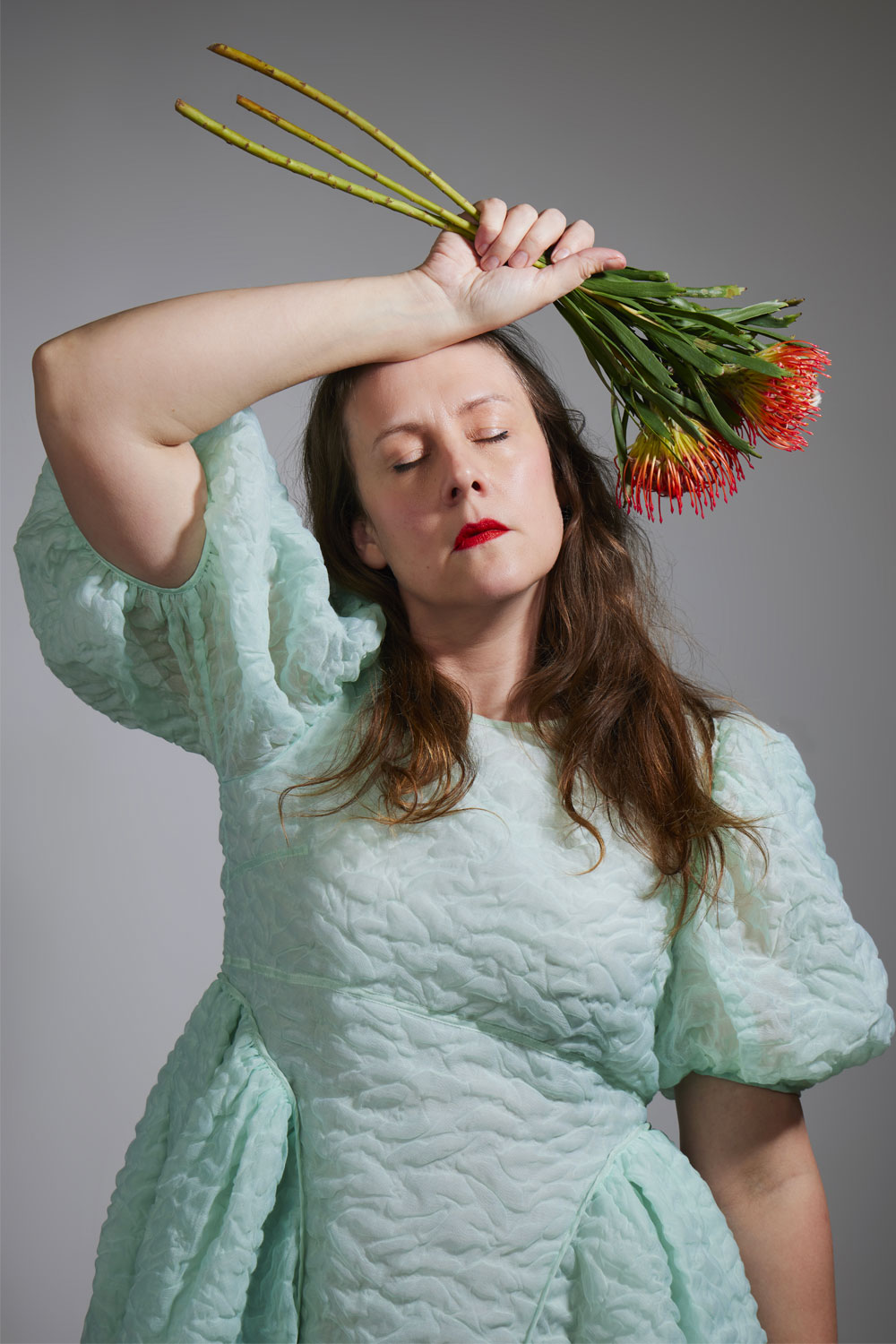
Bryony Kimmings is a performance artist who has bared her soul on stage – and then some. Dodgy dancing through depression? See her male mental health show, Fake It Til You Make It (2015). Amassing pubic hair from her audience? In Sex Idiot, her 2010 tell-all comedy show about chlamydia. She’s done it all. (‘Sometimes I get my tits out, too.’) But while her earlier shows – which mix broad stroke comedy with other live performance arts, like clowning, poetry, and movement – focus on topics at personal stake, her newer works increasingly focuses on the world at stake, and climate change.
‘Because that’s the world we’re living in,’ she says, ‘so I want it in the background of every story I write.’
Her show, Bog Witch, tells the story of her first year living in the countryside, and eventual slide into ‘reluctant climate activism’; there is, like many of her shows, an inevitable ‘heightened autobiographical’ element to it.
It is also a return to performance after nearly five years away, largely spent writing – and child-rearing. ‘The move to writing literally came as my son was starting school,’ she says, ‘I couldn’t take him on tour with me anymore. This [show] has been a long time in the making, trying to make it accessible for me.’
‘I wanted to come back to performing to see if it was still a part of my life,’ she says. (The conclusion? ‘I think it is.’) The show’s first run took place in late 2025 at the Soho Theatre Walthamstow. This chapter of its life takes it on the road from May to October in 2026. And this time round – ‘it’s the funniest show I’ve ever made,’ she says, ‘I’ve shaved off 30 minutes and now it’s joke after joke after joke.’
She says this is not in spite of the subject matter. Climate change is ‘not a laughing matter. It’s fucking awful, [but] our reaction to it – terror – isn’t helpful,’ she says. Her goal with the show was instead ‘just to allow people to watch something about the climate crisis, that doesn’t feel terrifying or worthy, or disconnected from normal life. Mainstreaming the subject matter…’
C&TH meets the performer to hear more about her touring show, Bog Witch.
Bryony Kimmings On Bog Witch
What’s the elevator pitch for Bog Witch?
It’s a show about me, and my first year moving to the countryside, as my partner and I try to start a carbon-neutral, off-grid smallholding. It’s me moving from not understanding or wanting it, to becoming a reluctant climate activist… And then growing to love it. With dancing, projections and storytelling.
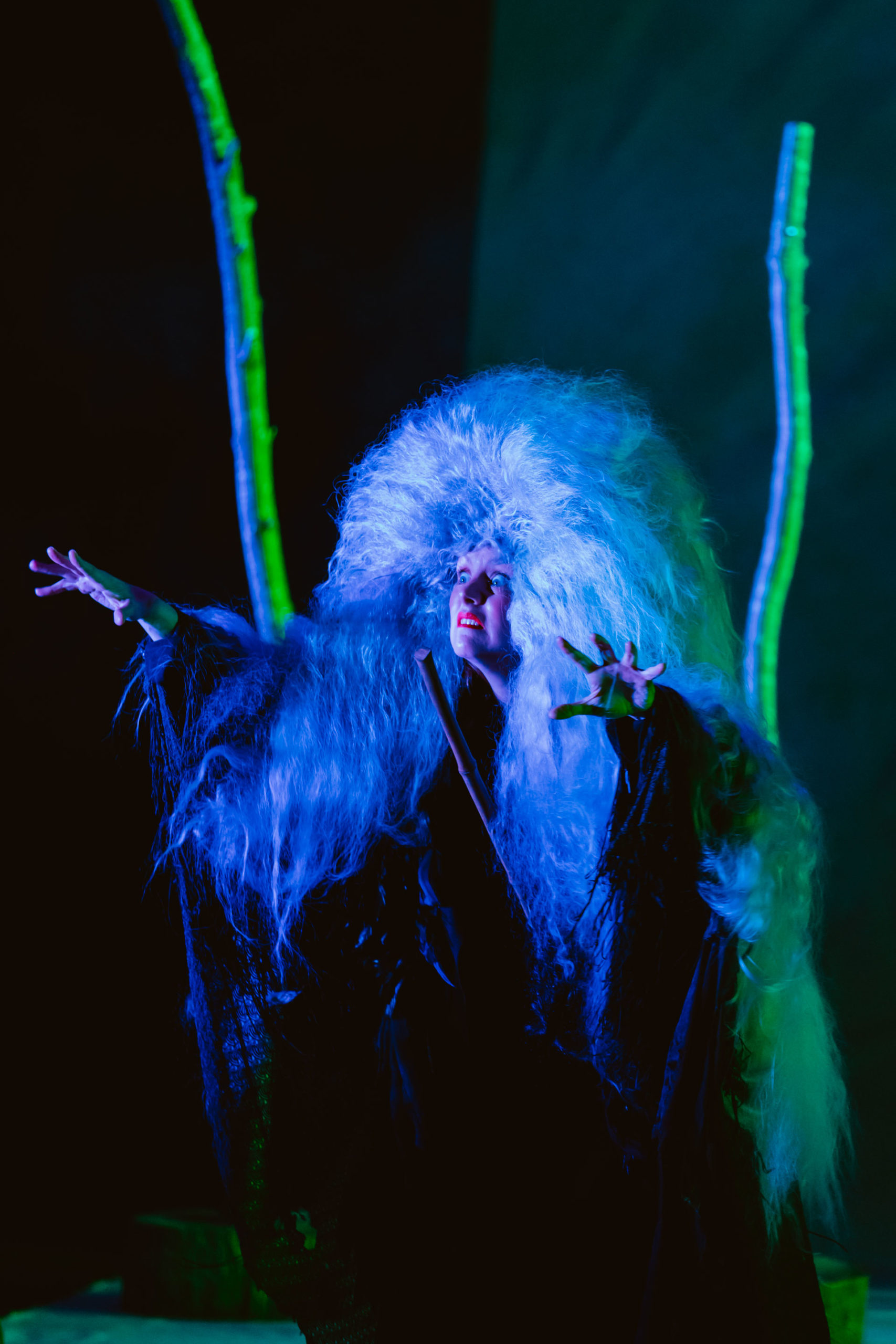
Kimmings aims to address the image problem of the climate movement. Photo by Rosie Powell
Is it autobiographical, then?
Some things are heightened – there was a storm, for instance, but it didn’t blow the roof off – because you have to find the drama in things. But mostly it’s true. We began living on this smallholding. I call it ‘the farm’, although it’s not a farm. Our ultimate aim is to create a true permaculture site, which means no waste, no external resources, being off-grid and energy self-sufficient, harvesting rainwater, blah, blah, blah.
It’s not sustainable to do it all yourself, though – we’re in a small farmers network group, so, for example, we don’t rear pigs but we do eat them, so we trade vegetables and eggs with our neighbours. We’re working in a community; it’s not a kind of doomsday prepper sense (the whole ‘put a boundary around your property and buy guns’ way). We’re futureproofing, though, improving our homestead for when the climate crisis inevitably stops all the services from functioning. I kind of sound like a prepper!
But, yes, in the beginning I found moving here to be a massive culture shock. I wanted to buy things from Amazon, order my cigarettes on delivery… Mostly it was not being allowed to buy stuff anymore. Ouch.
It sounds like there was a lot of sacrifice to that way of living.
I guess. I mean, I say in the show, but I think there is, or was, a bit of a hole in my soul. I was trying to fill it with Starbucks and new jewellery. Every time I felt bad, the knee-jerk reaction would be to… go and get pissed… go outside and smoke a cigarette… Do something as a consumer. Will [Kimmings’s partner] was trying to argue with me that it wasn’t my fault, there’s nothing you can ever do, it’s a nature disconnect at fault. I was honestly like, ‘that’s bollocks’, but it turns out it’s really not.
It’d be reductive to say that the mental health crisis is purely down to humanity’s disconnect from nature, but there’s certainly been a great healing from not buying stuff and being outdoors more. That said, getting to this place was also boring as fuck. The easy way to fill that void is with shit, the hard way is to actually figure out why you feel that way in the first place.
The lifestyle you’re moving towards – it’s very associated with right-wing movements at the minute, certainly at least in the US. Does that stigma hang over you?
It’s weird. There’s definitely a right-wing prepper movement – which has this idea that the world is out to get you, and in response storing up cans and guns and food – and that is a massive movement in the US. It’s bolstered by how cheap land is in the US. And then there’s a definite movement in the UK, of people living off-grid or in permaculture spaces, but it’s much more associated with a hippie subculture.
But I think ‘prepping’… You know you’re ‘prepping’ for the apocalypse, right? At some point we have to understand that that apocalypse is now not fictional, even if it sounds crazy. What are we experiencing if not the beginning of an apocalypse of some kind? Late stage capitalism… It’s not a comet smashing into earth, or aliens arriving, but a very particular way of ending.
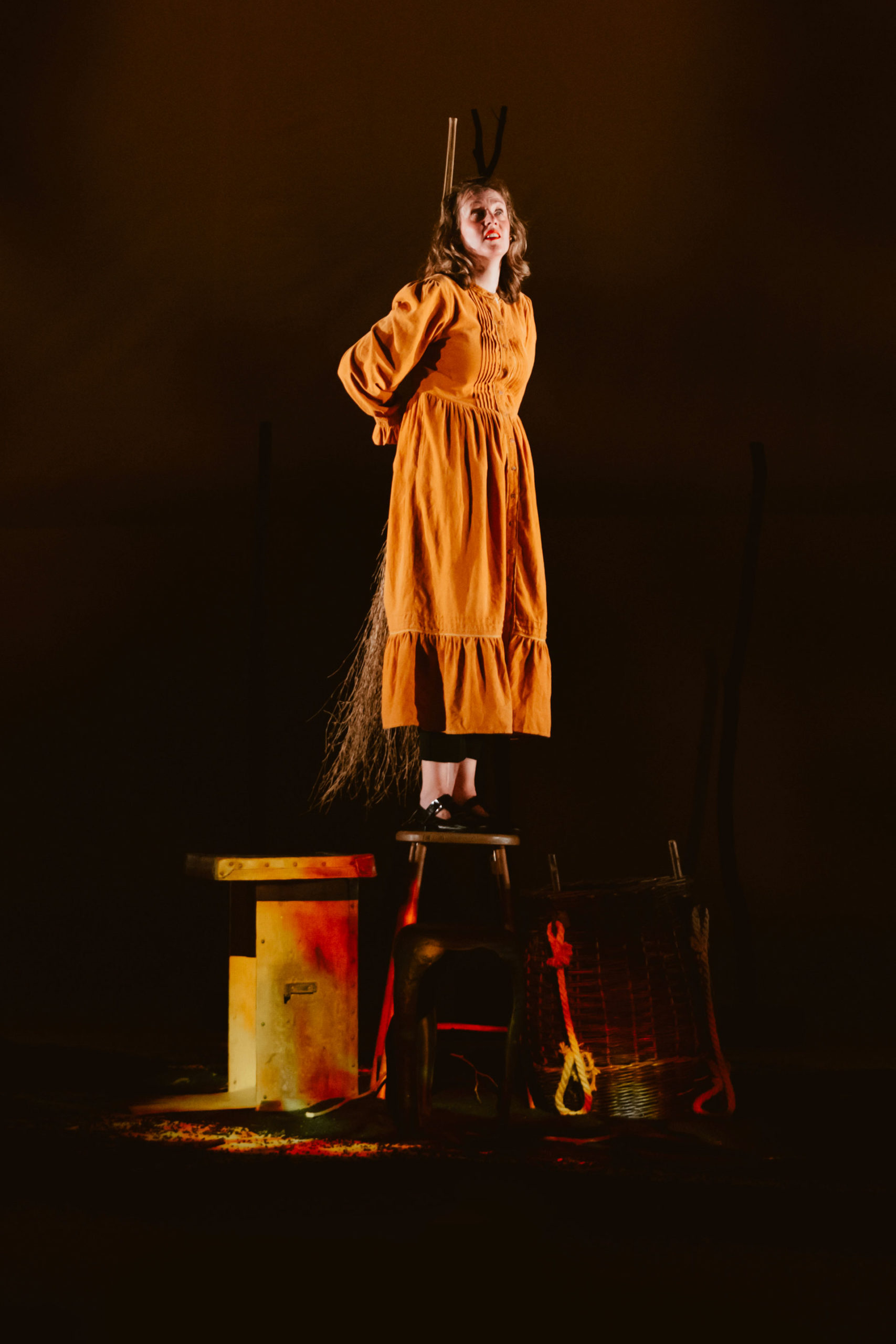
A world at stake – and Kimmings, too. Photo by Rosie Powell
So, yeah, I wouldn’t want to call it prepping. It has a right-wing kind of ‘hillbilly’ connotation. Will called it regenerative or Earth-sympathetic, which I hate, because I think the environmental movement already has a really bad image problem. If you think about activists, you think white, middle class people with dreads and too much time on their hands.
Resilience is the word we’ve landed on, instead. We’re trying to set up a co-op of ten families, and our main aims are to be able to cope with supply chain disruptions – like the oil issues, which we’re seeing already because of what’s happening in Iran. We’re aiming to have a solar generator, a hand crank, tools which help us cope with instability. You don’t want to be trapped without food, water, and sanitation.
Going back to the image problem…
It’s a shame about the PR for the climate movement – and the left more widely; it’s allowed the right to win in terms of messaging. The problem is: you can hold your poster up on the M25 and stop all the normal people from getting to work… While the rest of us are trying to get to work because we can’t afford to take the day off to hold up placards. It’s, like, over there is the climate movement.
How do you feel about comedy in the context of climate change? Do we need to be able to laugh about it?
I realised last night that this is the funniest show I’ve ever made. I’ve cut the flab, so it’s joke after joke after joke. It’s a stand-up show, basically, with singing. And I think that’s important. [The climate crisis] is a difficult thing for people to comprehend, and it’s scary. The phrase ‘climate crisis’ causes people to put their head in the sand. I think it’s because there’s no solution, so it feels completely futile to talk about.
With a show, I always have an aim. This one wasn’t grand. It was just to allow people to watch something about the climate crisis, that doesn’t feel terrifying or worthy, or disconnected from normal life. Mainstreaming the subject matter… The best way to mainstream a subject is to make it comedy, because comedy is egalitarian.
The hope is then that the audience can think: oh, that wasn’t as hard to laugh about, and, by extension, maybe I should talk to my friends more about this, about how worried I am or how scary it is. And, also, if she [Kimmings], that idiot, is up there – because at the start of the show I am a total idiot, I am like ‘what is this soil’ – if that goof-bag can do it, then maybe I can, too.
It’s not a laughing matter. It’s fucking awful, and our reaction to it – terror – isn’t helpful. Nor is our grief. Our rage isn’t even that helpful, if we want to take action. I spoke to a documentary producer a few years ago, who told me that they had always tried to make their programmes enraging, to make people angry about what’s happening to the planet. And actually, they said, the person who is angry in the pub – that’s the person people move away from. We don’t want people to be cross; being cross is impotent.
I want to seize on you describing yourself just now as an idiot – you say this in the promotional materials for the show, too, almost in equal line with your other, multihyphenate disciplines (artists, maker, etc). Talk me through how ‘idiot’ sits within that hierarchy?
I’m a clown, I think. The clown is lower than the audience, right? The stupidest person in the room, because – then – the clown has power. They don’t have anywhere lower to go. And, also, they are innocent. So the relationship you build with the clown is nurturing, useful.
I’m also what I would call a performance artist; that’s what I trained in. But maybe it’s insecurity. I’m a working class girl from a council estate. If I told my mum I was a ‘performance artist’, she’d tell me to shut up. So most of the time I say comedian, and to some people I say artist. That multi-hyphenate is less me being like, ‘look at all these terms’, but more giving choice – pick what you’re comfortable with. I’m someone who talks about themselves on stage, sometimes gets their tits out, sometimes messes about as a clown, and other times, makes you cry. So I put the word ‘idiot’ in, too.
I’m also very interested in how you balance those disciplines, because there’s your performance work as well as TV work, and then, alongside all of that, parenting.
I’m sort of part writer, part stay-at-home mum, most of the time. Also, I have a disabled child, so I’m a carer, on top. It is a massive juggle. The one thing that moving to the countryside has done is given us a lot more space. I think space is very helpful – whereas before I was trying to write in the room next to my kid, in a small flat in Brighton – the space gives autonomy over different parts of my life. I make my work just down the lane in a rehearsal space on a commune, then I write from home during school hours. And then I parent.
Do you also find these parts of your career move in cycles?
Definitely phases. This [moment] has been a long time in the making, trying to get it to be accessible for me, and also to not feel I was failing one [element of my life] in order to achieve another. As a parent, I think you’re always wondering, am I being selfish? Am I giving them enough of my time? Maybe particularly if you’re a mum, I don’t know.
The move to writing literally was because my son was going to start school. I couldn’t take him on tour with me anymore. We’d go to Australia and America. But I always knew there would come a point where that lifestyle stopped working. It was less about not wanting to perform anymore, and more about what job would keep me at home, and I had the skills for.
There have been, then, a few evolutions in your career over the past few years. Where do you hope it’ll take you next?
I wanted to come back to performing to see if it was still a part of my life. I think it is. I love sitting around a table with all the people I work with – writing is very solitary – and I have concluded every now and then I’ll need to pop up and do a show. But when my children leave home, I’d really like to direct. I think directing film is too all-consuming to do with my children, especially with a disabled child.
In my head, it was always: be a performance artist for ten years; then be a writer for ten years; and then try to be a director. But I’d quite like to start a farm shop, too, you know? Anyway, if we start this commune, we might not even be making movies by then.
Yeah, who can plan exactly?
It is insane, isn’t it? Did people feel like this when the Second World War was happening – that you can’t trust in anything happening around you? We’ve been lucky as western people, obviously, and now it’s just not like that. Is this actually happening? Bizarre.
Quick Fire With Bryony Kimmings
If I could give advice to my 15 year old self… Marry the nice guy.
I’m currently watching Small Prophets. Mackenzie Crook’s new comedy-drama for the BBC. He’s so good in it.
My current read… My friend’s book. The Shock of the Light. It’s a new 1940s female spy novel. Not my usual book, but brilliant.
The last film I loved was Sirât. Set in Morocco. I’m loved it because I’m an old raver, and it felt like being at a rave.
My favourite song of all time is Charles & Eddie, Would I Lie To You?
My on-repeat musician: Self Esteem.
My cultural guilty pleasure… Bridgerton.
And one ultimate recommendation… Go see the Tracey Emin exhibition. It was really good.
Bryony Kimmings tours Bog Witch at theatres nationwide through 1 October 2026. More info and tickets at bryonykimmings.com