


Quietly Radical: Fra Angelico Exhibit At Palazzo Strozzi & Museo Di San Marco In Florence
By
2 months ago
Plus where to stay in Florence
If any excuse were needed to visit Florence in the only tourist-light month in the city, then consider this landmark exhibition celebrating the monk-artist Beato Angelico it. Combining the delights of a quiet, misty and mysterious Florence with the dazzle of the friar-artist’s luminous devotional work, a January visit becomes even more irresistible when you stay in one of two new hotels that cater to different tastes and budgets, also reviewed below.
Review: Florence’s Fra Angelico Exhibit
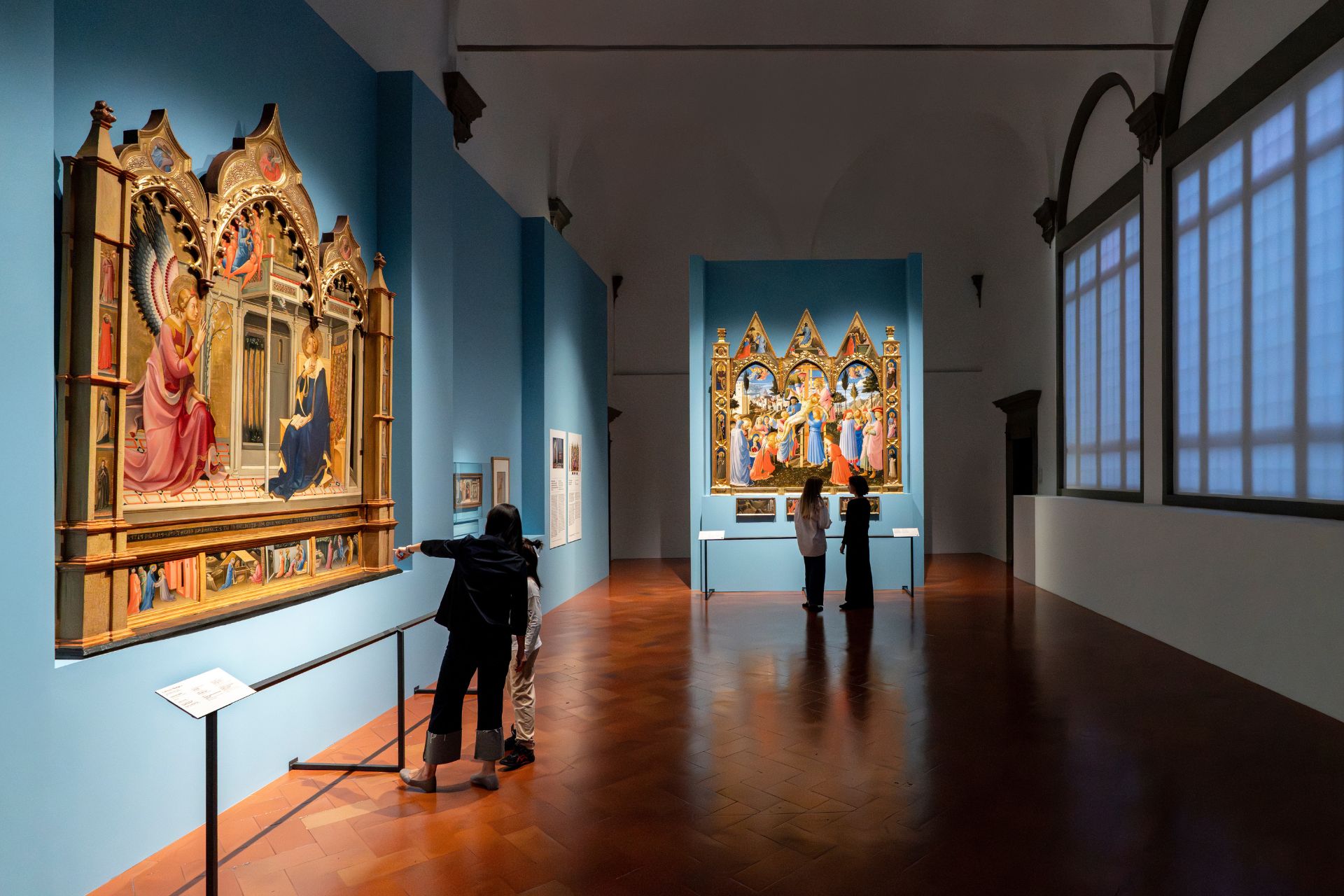
Beato Angelico, exhibition views, Palazzo Strozzi e Museo di San Marco, Firenze, 2025. Credit: Ela Bialkowska, OKNO Studio
The two-venue retrospective folds Palazzo Strozzi and the Museo di San Marco into a single liturgy of image-making, presenting in this double exhibition the super-star space of the grand Palazzo Strozzi which usually plays host to the giants of contemporary art (see my review of the Tracey Emin show here) and the quieter San Marco museum, the humble convent that housed the monk painter and whose monks’ cells provided the canvas for a lot of his most prized frescoes.
Despite being quite familiar with Fra Angelico’s work, as I walked into the opening room of the exhibition at Palazzo Strozzi I stopped in my tracks and audibly gasped. And the breath never really returned to my lungs for the hours I spent quietly perusing the devout painter’s oeuvre: a masterclass in luminous devotion brought to dazzling life, the pervading hush of faith rendered with the same care a composer gives to silence.
The show gathers an extraordinary range of material: frescoes still in situ at San Marco converse with altarpieces and small-scale panels brought together at Palazzo Strozzi, and the result is both intimate and expansive.
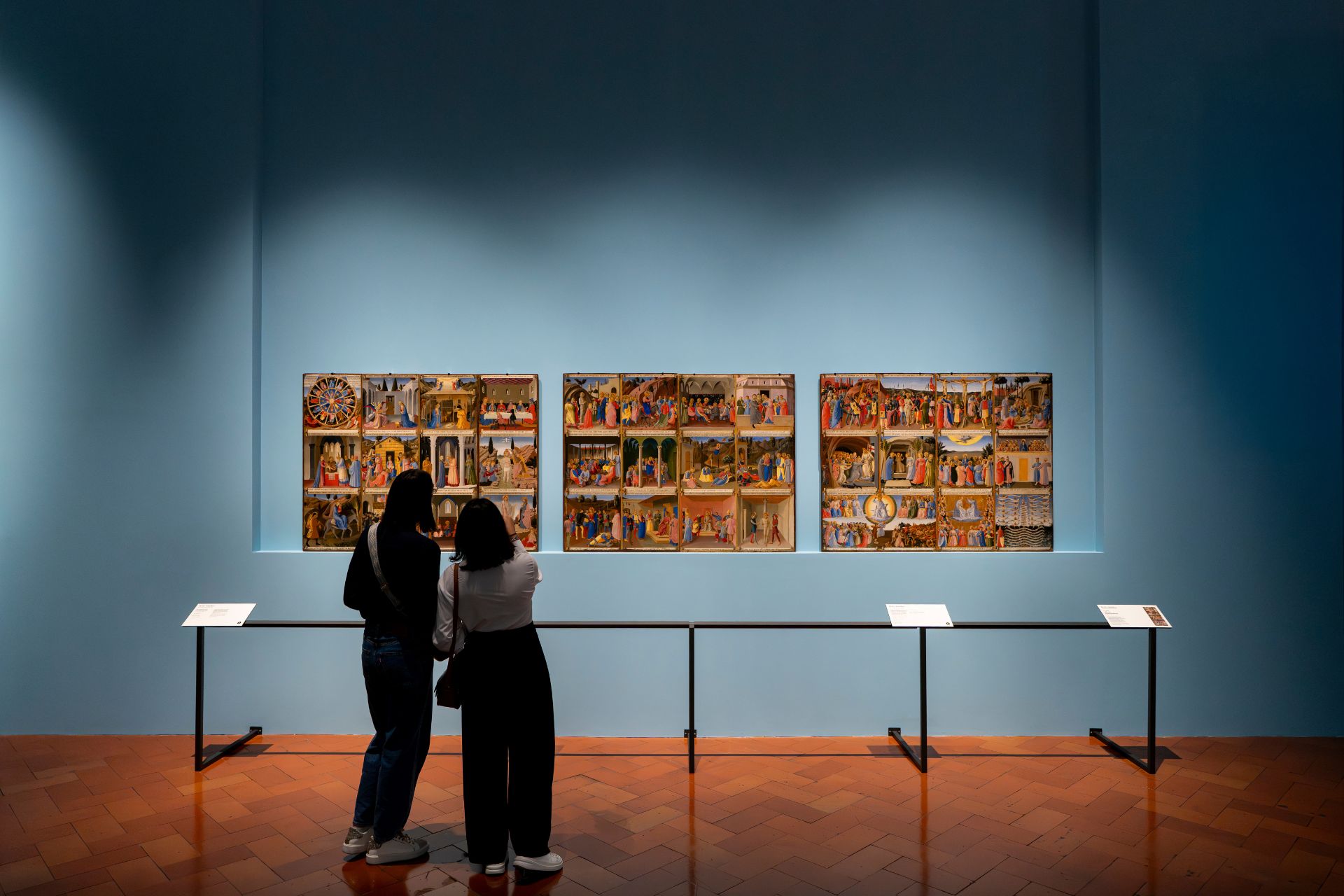
Beato Angelico, exhibition views, Palazzo Strozzi e Museo di San Marco, Firenze, 2025. Credit: Ela Bialkowska, OKNO Studio
Curatorial ambition is the exhibition’s most persuasive backer. Spanning more than 140 works drawn from roughly 70 institutions, the catalogue-like sweep gives you Angelico as craftsman, theologian and visual innovator, someone for whom gold leaf could act like a theologian’s word, clarifying, not obscuring. The two-venue solution is a neat dramaturgy: Palazzo Strozzi stages the travels, loans and reconstructed altarpieces; San Marco returns visitors to the claustral world in which Fra Angelico painted, read and prayed.
What surprises is how modern parts of Angelico’s practice feel. His handling of space – tentative perspective, a moral geometry that places figures at a measured remove – reads less as quaint medievalism than as an early language for empathy. Small scenes glow with pigments that insist on being looked at closely; large panels, when restored, reveal a patience for detail and a restraint that feels contemporary. This is a show that rewards slow looking: gestures repeat; facial types modulate; gold is not simply ornament but punctuation.
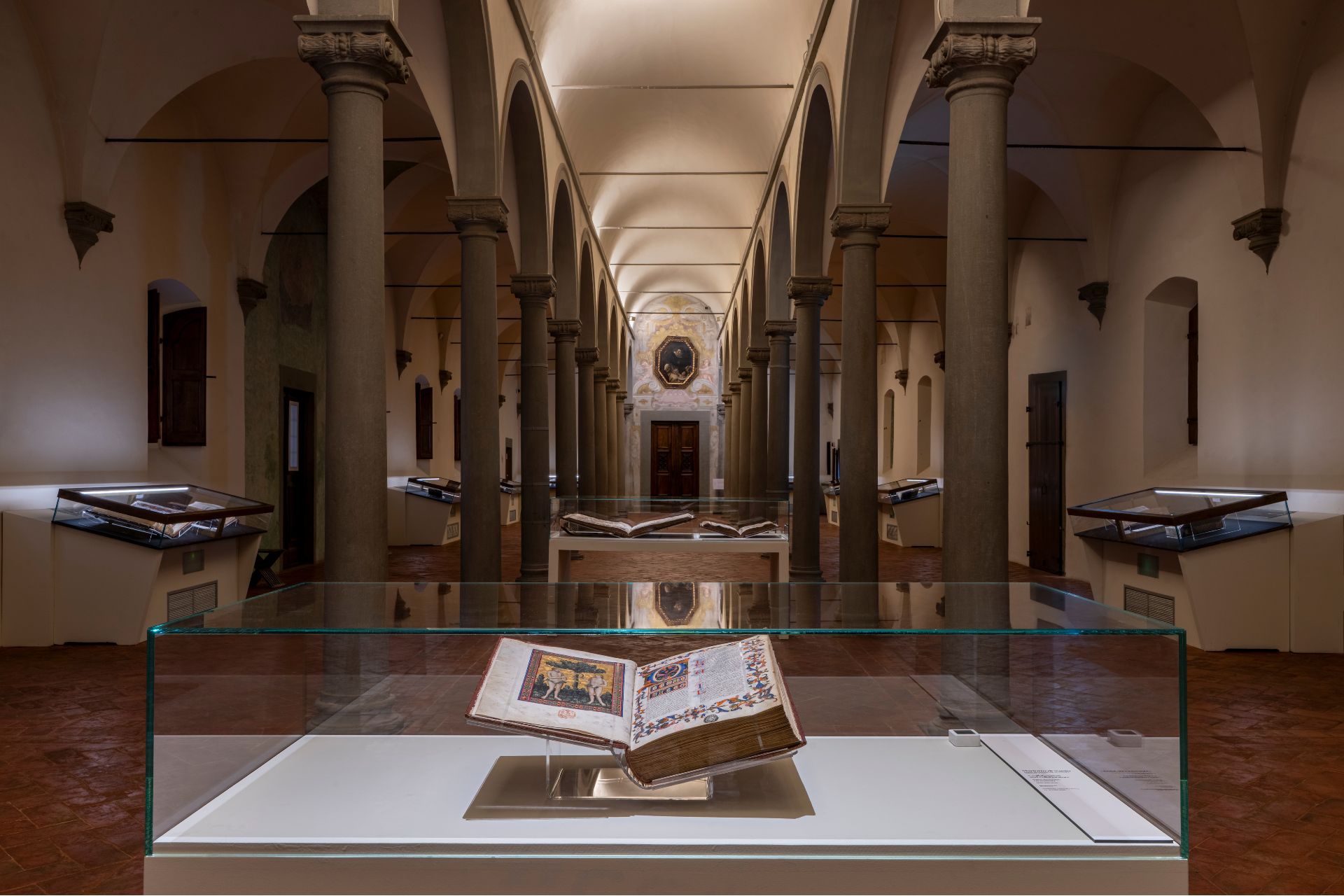
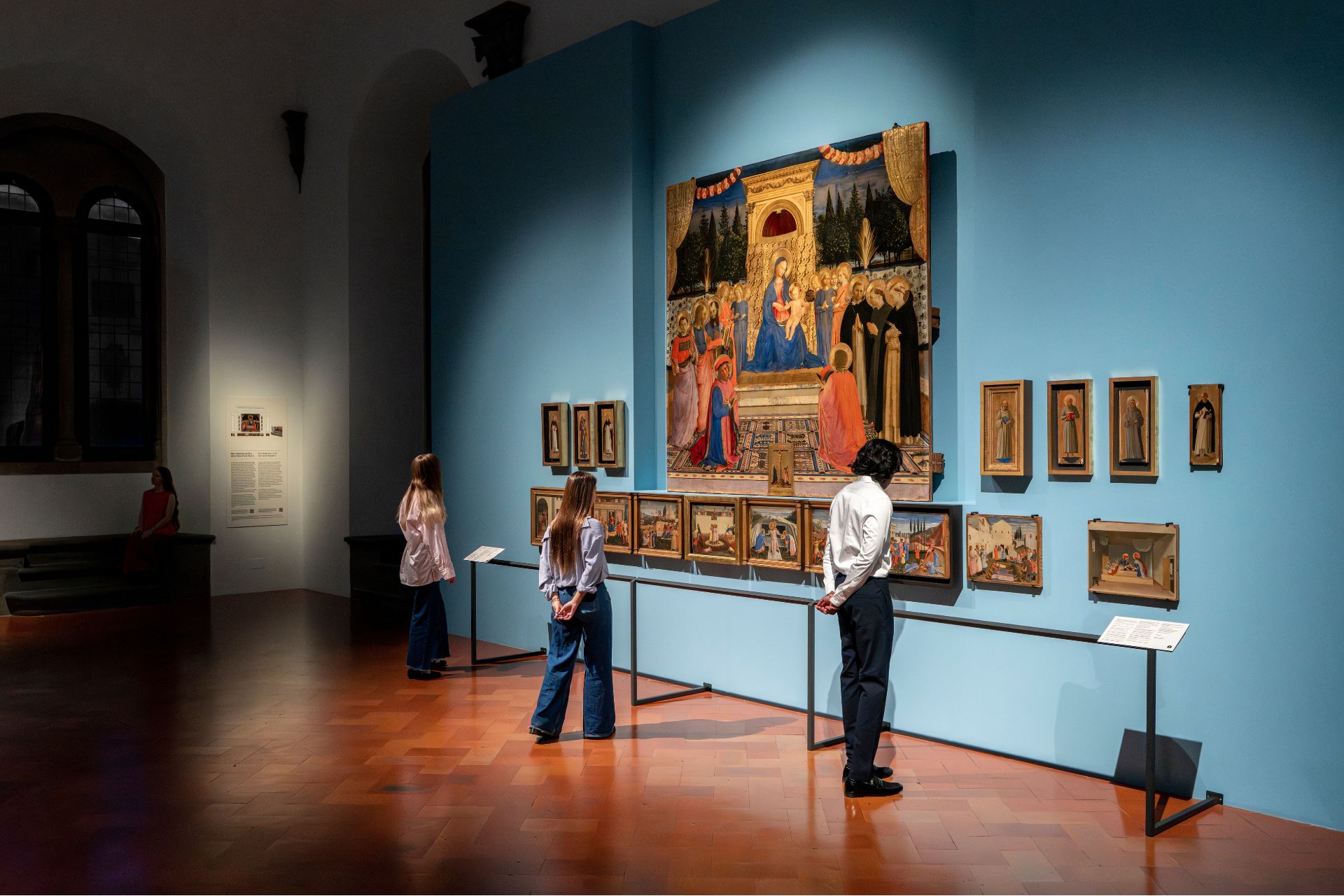
Beato Angelico, exhibition views, Palazzo Strozzi e Museo di San Marco, Firenze, 2025. Credit: Ela Bialkowska, OKNO Studio
Restoration plays a starring role. One newly stabilised altarpiece – a work broken, reshaped by later hands and reunited through scientific sleuthing – is emblematic of the exhibition’s project: to show Angelico’s hand beneath centuries of accretion. Infrared reflectography, careful consolidation of panels and conservation that resists the temptation to “make new” have revealed under drawing and tempera techniques that read as blueprints of early Renaissance method. The technical narrative enriches rather than overwhelms the devotional one.
Stylistically, Angelico resists the flashy anecdote. His best scenes are not theatrical climaxes but compositional acts of mercy: a lowered gaze, a tidy fold of drapery, hands that almost meet. The show, like Angelico, practices understatement. It asks for attention rather than applause. Which, in an era of blockbuster spectacle, feels quietly radical.
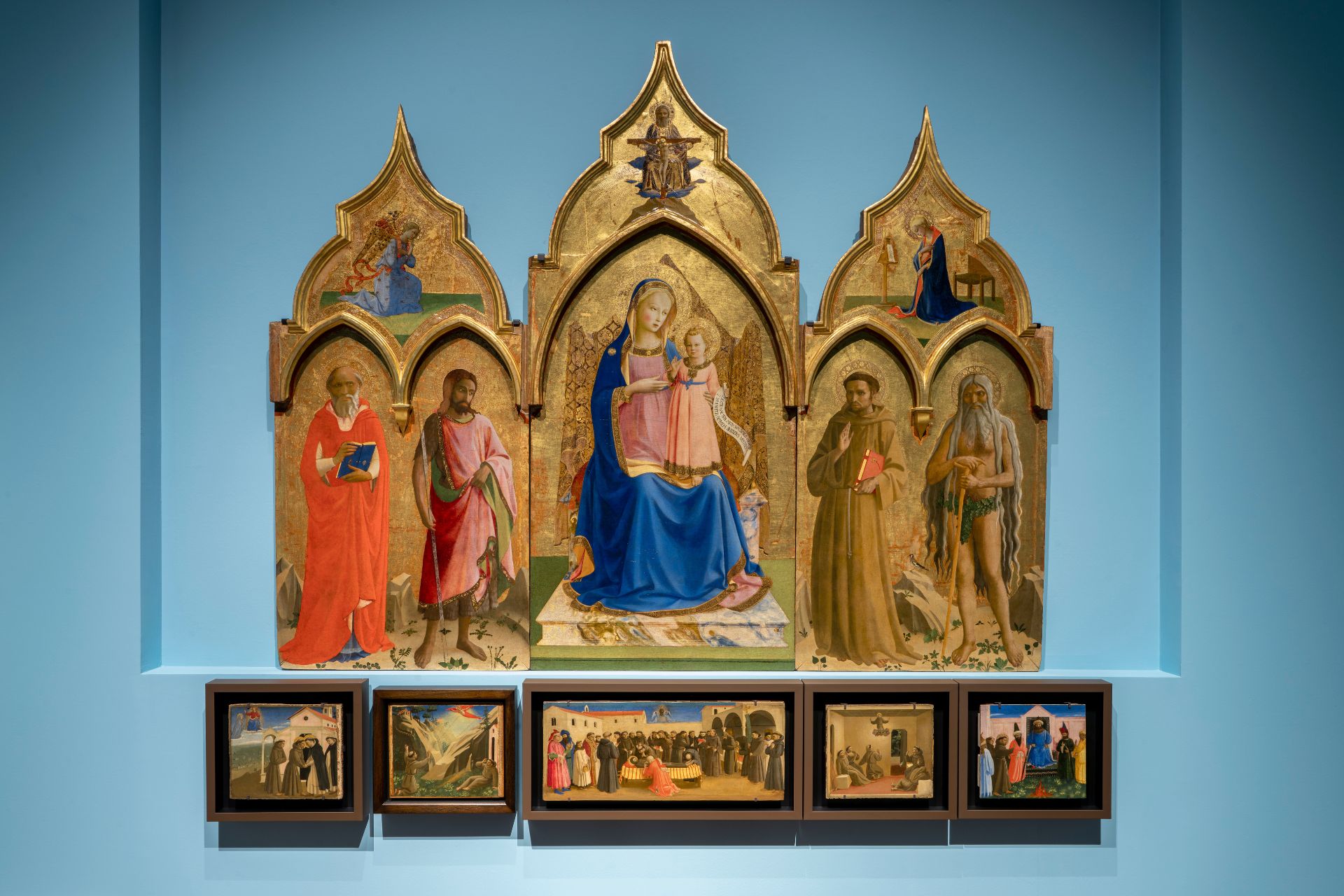
Beato Angelico, exhibition views, Palazzo Strozzi e Museo di San Marco, Firenze, 2025. Credit: Ela Bialkowska, OKNO Studio
For readers who love Florence as a lived city rather than as a postcard, this exhibition is a reminder: the Renaissance was not a single moment of grand gestures but a long revision of how people represented care. Beato Angelico places the artist where he belongs, at the heart of that revision, and does so with scholarship that complements rather than competes with the quiet power of the work.
The Fra Angelico exhibit in Florence, Italy is on now until 25 January 2026. Book here.
Where We Stayed
Florence
The Hoxton, Florence
Florence has a peculiar talent for absorbing the new without ever feeling invaded by it. The Hoxton, Florence, opened in early 2025, is the latest proof. Housed partly in a 16th-century Ricasoli palazzo and partly in a 1980s extension by the radical architect Andrea Branzi, it doesn’t disguise its double identity. Instead, it plays with it, creating a dialogue between frescoed ceilings and Memphis-style geometry, between monastic hush and cocktail-hour sociability. The result is neither heritage fetish nor design gimmick, but a hotel with a confident, lived-in charm.
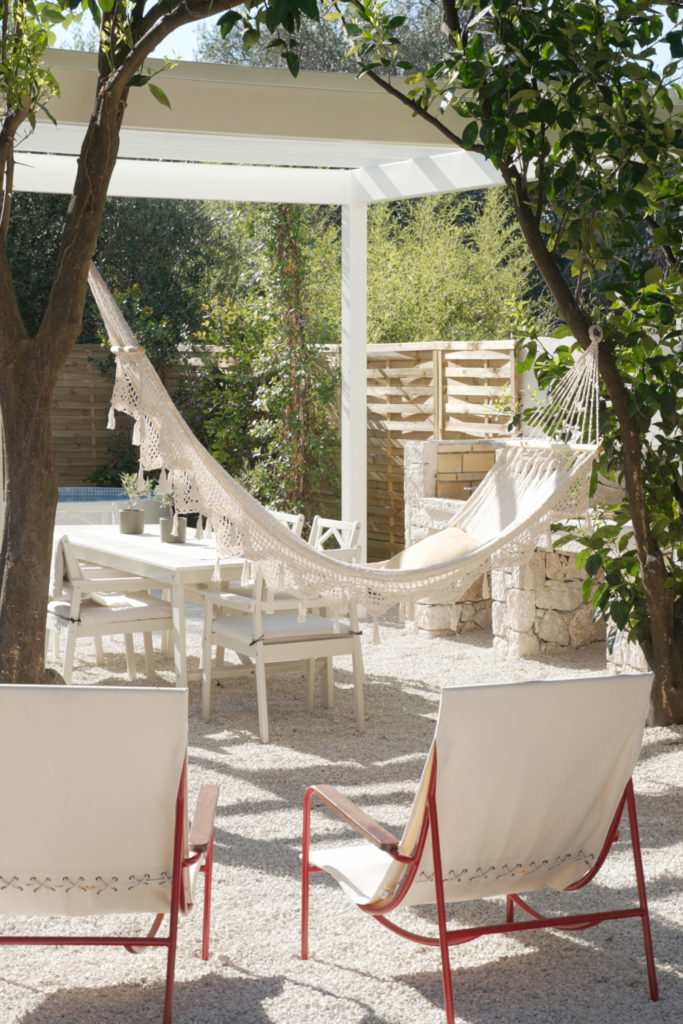
You enter through a courtyard strung with lemon trees and a burbling fountain. Inside, lime-washed walls and terrazzo floors give the interiors an easy warmth. The public spaces – restaurant, bar, garden and lobby – are arranged to invite lingering rather than passing through. True to Hoxton form, there’s a sense that the lobby is meant to be used, not merely admired: laptops hum quietly in corners, locals stop for a spritz, guests read the papers over a late breakfast. It feels more like a Florentine salon than a hotel lounge.
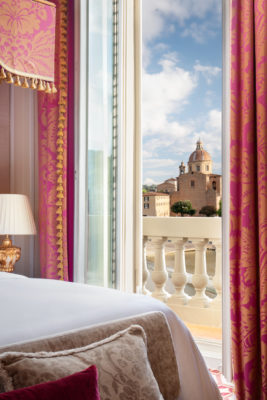
Rooms range from compact ‘Snugs’ to expansive suites and even a three-bedroom ‘House’, a fully serviced apartment with kitchen and terrace. Throughout, the design is smart but not self-conscious: brass lamps, linen drapes, tiled bathrooms and beds that invite surrender. Some rooms have terraces overlooking the rooftops, others retain fragments of original fresco. Although this is the latest opening in the hip hotel chain’s global repertoire, the balance between comfort and character is deftly held.
Its excellent restaurant, Alassio, is a light-filled space that spills onto a terrace beneath the portico. Menus lean toward the seasonal and local, without insisting on Tuscan cliché. The adjacent wine bar, Violetta, attracts Florentines in search of an aperitivo away from the crush of Piazza della Repubblica. That mix of hotel guests and locals sharing the same space gives the Hoxton its particular rhythm. You could spend an entire day here, working, eating, idling, and still feel part of the city beyond the gate.
Its location on Via delle Mantellate, just inside the old walls near Piazza della Libertà, means you’re a 10-minute walk from the Duomo but spared the terrible crush of the core. The tram from the airport stops close by, and the surrounding streets are full of small bakeries, frame shops and tailors, the remnants of the unvarnished Florence that barely exists anymore in the centro storico. This isn’t the hushed palazzo stay of the city’s grand hotels, but something more democratic: a hotel that belongs to Florence’s present as much as its past.
The Hoxton represents the Florence of today: social, bright, and a little irreverent. It’s for travellers who like their comfort softened by a bit of city noise, who prefer to be part of the daily life. Thoughtfully designed, well run, and alive from breakfast until late evening, The Hoxton, Florence brings a confident, modern rhythm to a city that knows how to balance beauty with life.
The Hoxton, Florence, Via delle Mantellate, 2, 50129 Florence, Italy