In Partnership With Range Rover
In the first of our Leading the Conversation interviews with Range Rover, poet, actor and screenwriter Lucas Jones talks discipline, integrity and writing his way into a new chapter
What’s worth keeping when everything else changes? It’s the question at the heart of Leading the Conversation, a new four-part series from Country & Town House in partnership with Range Rover, created to mark the launch of Range Rover Electric and Range Rover Sport Electric. Going electric is a big moment for the original luxury SUV, and not one the marque has rushed. It has taken its time over every detail, with no compromise on the heritage, refinement and capability that made its name. The result is quieter, and more Range Rover than ever.
So we put that same question to four leaders in British culture: poet Lucas Jones, interior designer Sophie Paterson, model and regenerative farming campaigner Arizona Muse, and journalist and author Afua Hirsch. Each answers it in a short film, shot in a corner of London or Surrey that means something to them, arriving in the quiet comfort of a Range Rover Electric. And each sat down with C&TH for a longer conversation, which we’ll be sharing here over the coming weeks. Watch all four films on the Leading the Conversation hub.
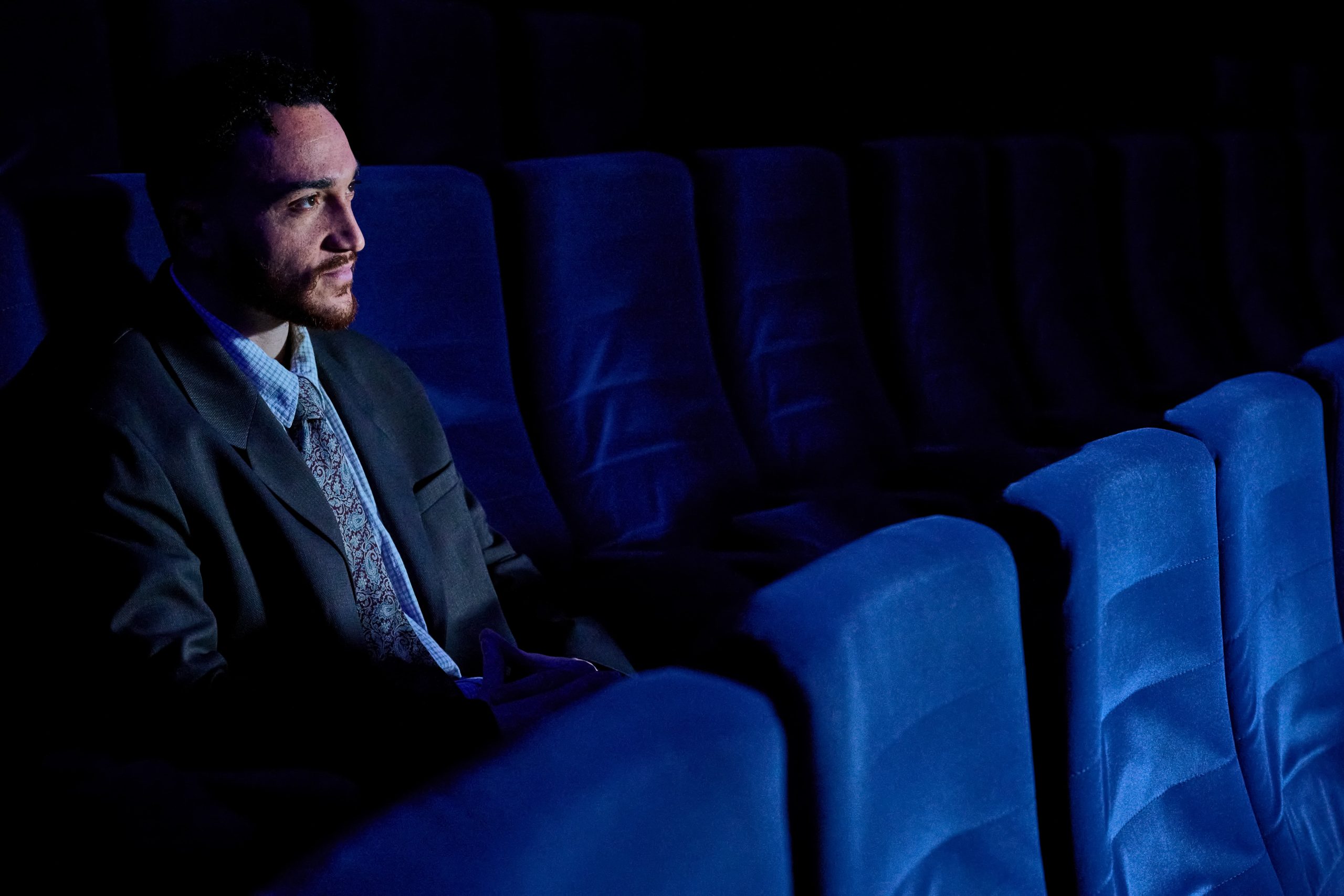
First up, Lucas Jones. Poet, actor and now screenwriter, Lucas grew up in an isolated working-class town, found his north star in the cinema as a boy and has since built an audience of more than a million people for one of the oldest art forms there is, largely via the phone in his pocket. He’s just turned 30, his first feature film is due to shoot next spring and, funnily enough, he still doesn’t introduce himself as a poet. We met him at his favourite Mayfair cinema to find out more.


Hi Lucas, thanks for coming. Why did you choose to meet here, and what does this place say about you?
The cinema’s always been my church. I’ve always come to the cinema to heal and make sense of reality. For my 13th birthday, I was given an unlimited card to go to the cinema as much as I could. I wasn’t from a family with a lot of money, so it was a pretty big deal. I would go to the cinema three times a day sometimes. I just found it to be the place – and it still is the place – I feel the most relaxed in my life.
Going to the cinema as a little kid with my dad and watching films, and realising I wanted to do that thing. That’s the first thing I remember. It was like, ‘Cool, I want to do that.’ I’ve never changed my mind about that. I’ve always wanted to act and write and make music and tell stories. That’s all I’ve done in my whole life.
You’ve told us you spend a lot of time writing in and around Mayfair. What does it give you that other places don’t?
There’s a heritage here which I don’t necessarily feel part of, coming from where I grew up. So, it’s always fascinated me as an Emerald City. I would wander the streets for quite literally hours, listening to music, going to the cinema. It’s so beautiful. I didn’t know any of the history, but I could feel the history in the air. There was something aspirational about wandering around here and writing.
This was a time when I was living alone in London, as a classic starving artist. But then it veered into a not-sexy version of actually starving, where I’m not 24 anymore, I’m 27. It’s not cool. I was scared. I’d come here and write and spend the last £20 I had on a salad in a fancy restaurant, to try and feel there was something outside of the situation I was in. The cool thing is I did manage to write my way out of that. I’ve written myself into this new reality. It feels like a miracle today.
Who do you write for?
In the same way that you dream – in the same way that you create the dream, and how you perceive the dream – I feel like I write for whoever is perceiving the dream. I feel I am experiencing this reality as we all are. I’m constantly astounded and baffled by it. I’m moving through the world as this confident, slick thing – as if I know what I’m doing. I’m trying to place the track in front of the train as I go, by writing.
Poetry is one of the oldest art forms there is, and you’ve found your audience via your phone. What does a poem need to hold someone on a phone screen?
Social media is engineered so that outrage catches your attention. So, I sometimes try and play a game – not intentionally, but because it leads to the best ideas – of saying something provocative, or something that makes people angry, in the first line. The mission of the poem or the story is that by the final line, whatever assumptions or anger they had has been resolved, and you feel loved, and you feel seen, and you feel protected. That’s a really fun game to play.
For it to last, it has to be really honest. It has to point to something that’s categorically true. Often we find something true because our brains are wired to find negativity. When you start on something really negative and provocative, you get to the truth quicker, because you’re wired to find the problem.
When did you know you had a voice that was entirely your own?
I don’t know if I do yet. I don’t know if I ever will. I definitely have a voice. Whether it’s my own, it’s hard to say. I’m a patchwork of other people’s thoughts and ideas, as we all are. But I’ve found a voice that I like, which is pretty cool, because a big part of being an artist, and being a young artist especially, is that you don’t like what you make for a long time. It’s so hit and miss. I like what I make these days. I’m also less precious about it. Sometimes I don’t love what I make, but I don’t mind either.
More profoundly than that, sometimes I don’t love the thing I’ve made, but I see that someone else is really seen or held by it. Then it makes me love the thing. Especially in my first book – I nearly took one poem out, as it was a bit on the nose; not the most interesting, most complicated thing I could think of, which obviously artists love to do. But sometimes simplicity is the thing that lands. The poem I nearly took out, ‘Some good news if you wish you were dead’, was the first one that went viral. People still come up and say, ‘I was about to end my life, and I read that poem and I didn’t.’ The impact of your work isn’t always what you might expect.
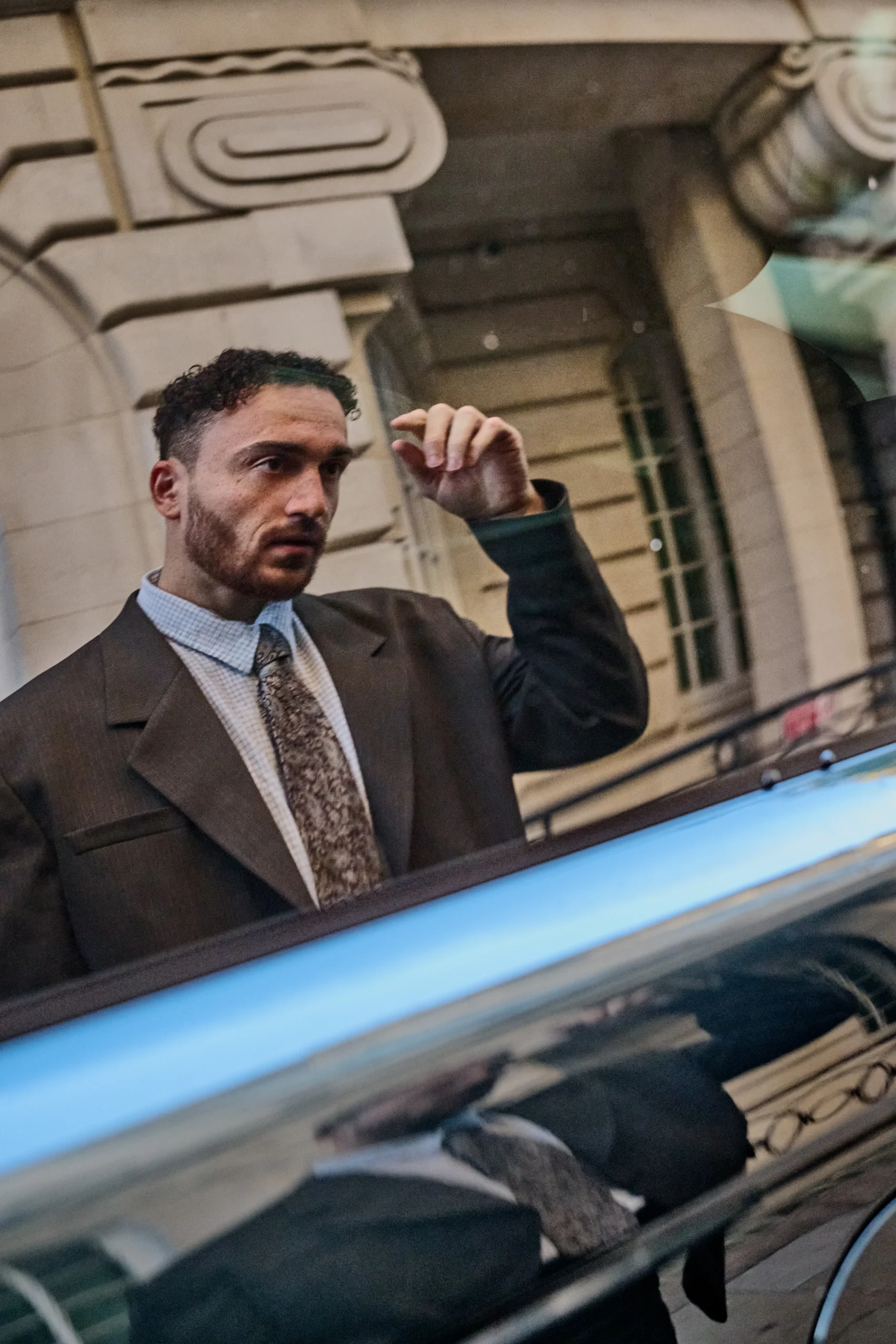
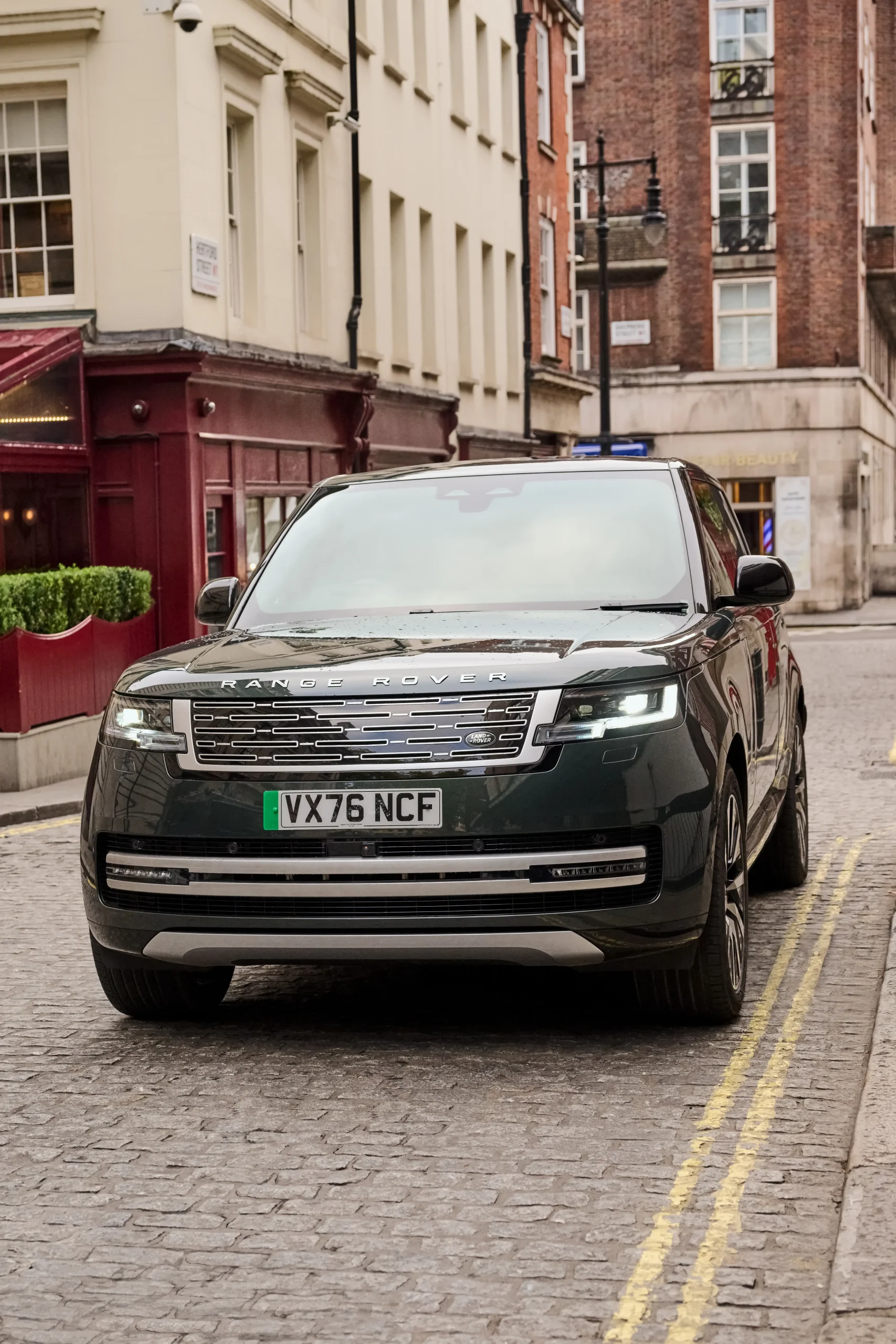
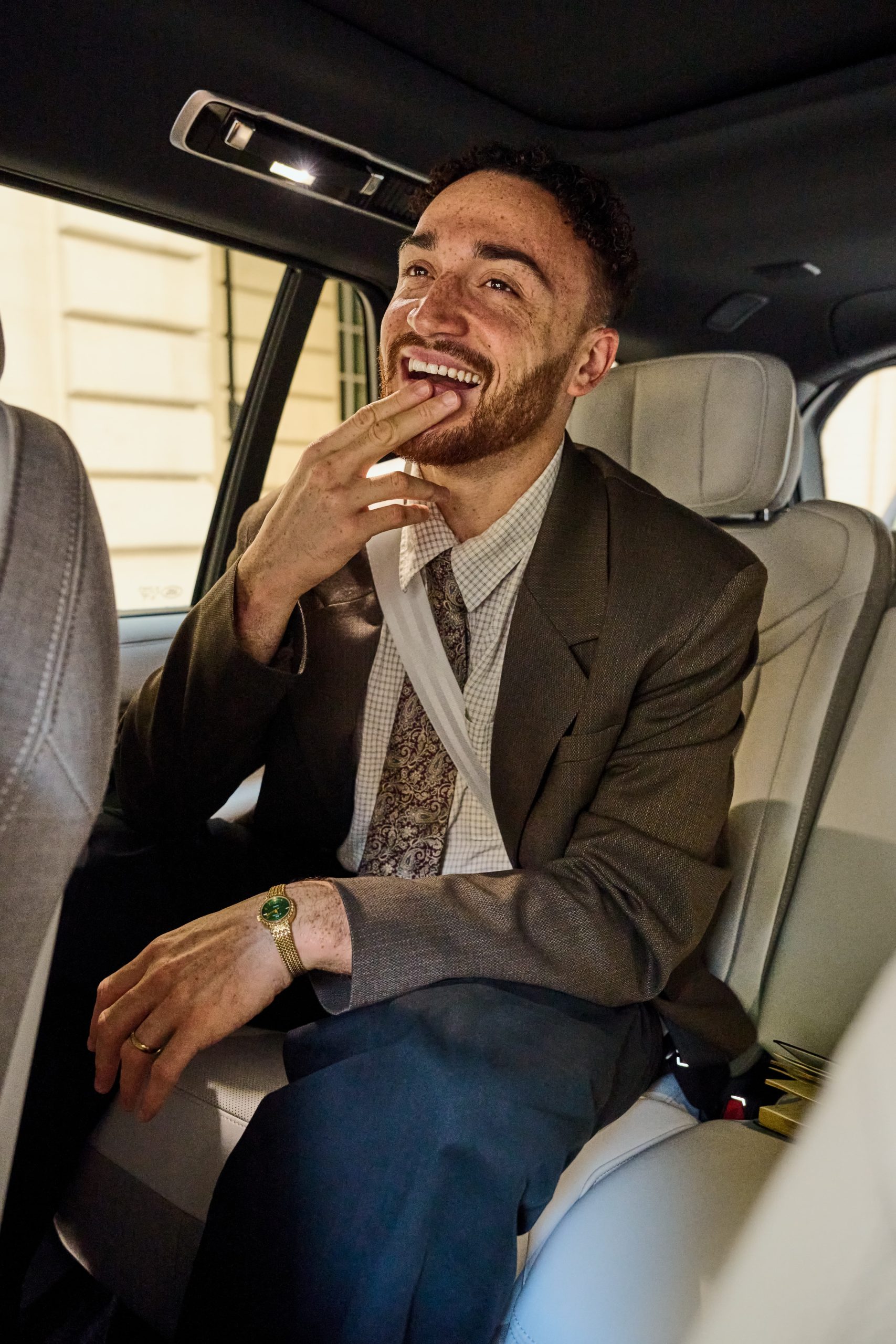
“I won’t rush the person I am trying to become. I refuse to rush arriving at a point before I’ve earned it… Life is in chapters and stages, and I really love this chapter.”
What will you never compromise on?
I will never compromise on what I authentically believe. I’m in a position now where there’s some money attached to some things, and there have been things I’ve turned down. I just can’t align with the things I don’t align with. I can’t. I refuse to. There’s no point, it’s cursed money.
The best things often take longer than people want them to. What have you refused to rush?
The person I am trying to become. I refuse to rush arriving at a point before I’ve earned it. I don’t know much, but I’m good at articulating the things I do know in new ways. And, in the grand scheme of things, I also accept that life is in chapters and stages. I really love this chapter. But I’m not there yet, whatever that means.
Discipline isn’t the word most people reach for with poets. Take us through an ordinary writing day – how does it flow?
Discipline is something that artists struggle to associate with what we do. I used to think, ‘When I’m inspired, I’ll create.’ But then I would never make anything of any value, because the job of the artist is to sit at a blank page, or blank canvas, or whatever your medium is, and opt in. Sign into the task. It’s an annoying chore – like going to the gym, in that you know you should – to sit down at the page and opt in to be an artist right now. I’m an open channel. Send through me whatever should be said. That’s the discipline part, because otherwise you’re waiting to be moved. Sometimes I’m not moved. Sometimes I feel I have nothing to say.
What does leading look like in your world – and who showed you how?
My older brother comes to mind. I look back at my childhood and realise how protective he was of me, in a beautiful, adorable, heartbreaking way. I looked up to him as if he had all the answers. In terms of how I want to put my arms around the people I love, that’s my brother.
I’ve also got amazing parents and they really love me. I don’t want to undermine what an unbelievable, lifelong force it is to be loved by your parents, to know you’re actually loved for real. That gift was far more profound than if they had been super rich and given me loads of money, because it’s infinite.
More than a million people follow your work. Does that feel like leadership or responsibility?
It would feel arrogant to say it feels like leadership. But I’m also not naive to the fact that people definitely do look up to me now. I do feel the need to love people in a way that feels authentic to me and to them. I do feel a genuine, ‘Oh god, I need to make sure you’re all right,’ when people come up in the street and say they’ve been through something. I’ve never thought about the word ‘leadership’. I’ll have to think about that one. I’m not sure.
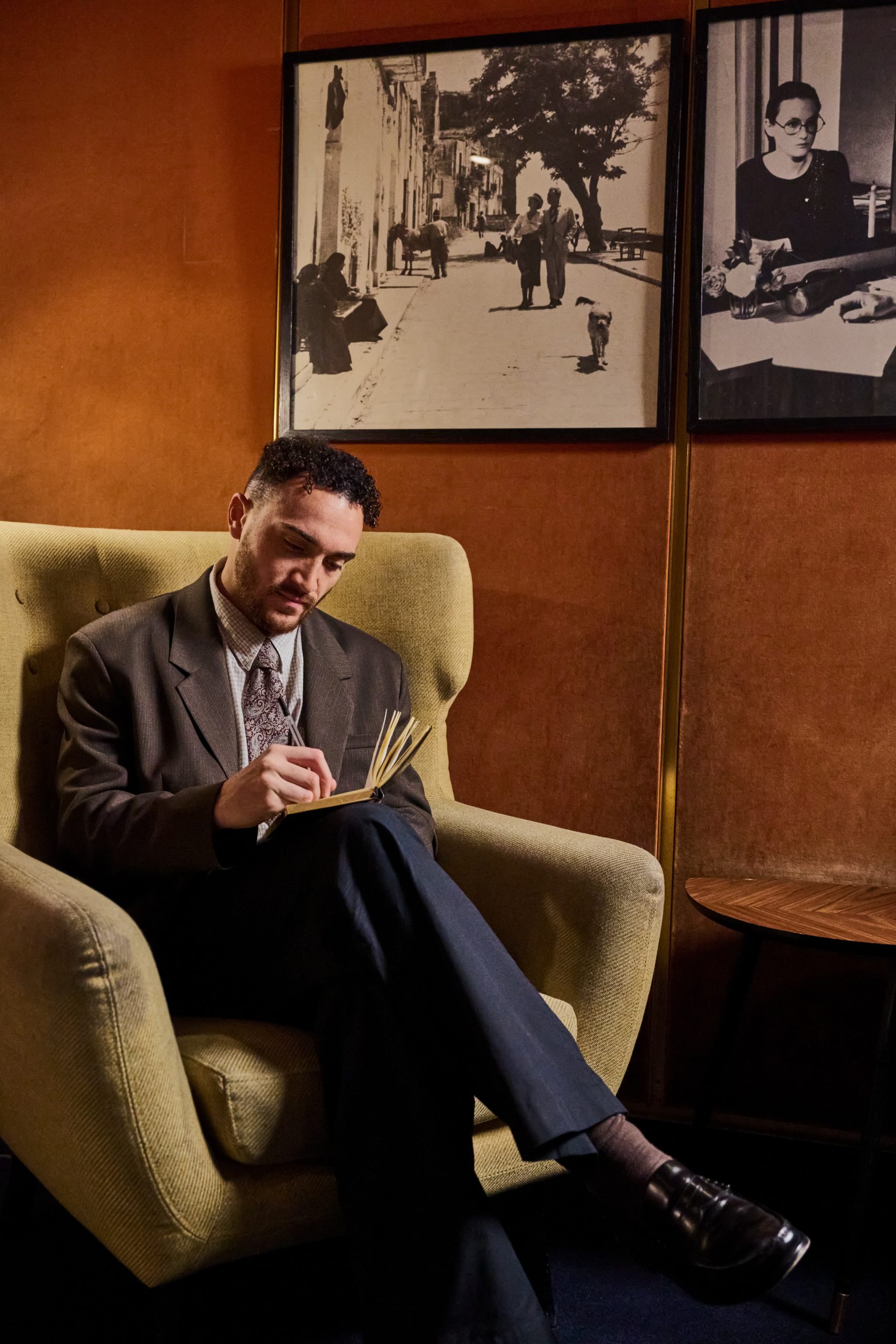
What is your next chapter?
I’ve got a movie, Miss You Forever, Zara Drake, coming up. It’s a really beautiful film about the last of the It Girls of the modern era, struggling with the crush and responsibility of loneliness and success. She falls in love with a musician who’s in a similar place, and they’re both at an existential point in their careers, where the art and their success didn’t fix the generational trauma.
I started writing the script in December 2022 – which feels wild – and finished it last January. I’ve kept in three scenes that I wrote back in 2022, exactly as they were back then. I love how they’ve survived; they became these structures that the film was built around. I’m really excited to make it. We’re meant to shoot next spring. The funny thing is, once you finish the script, people need to know that filmmaking is a business. It’s spreadsheets, and I feel like I’m on Wall Street sometimes.
How do you go about honing and perfecting a script? Four years is quite a long time.
We have an innate barometer of truth when we write a script, or any work of art. That’s the discipline part I talked about with the blank page. You write something, and sometimes it’s a good scene but you know it’s not true or, more so, you know it’s not this film. When I think about my creativity, about what I’m trying to create, it feels like there’s this beacon somewhere out in the ether, a light flashing in the mist, and your job is to get as close to it as you can and to follow the path correctly. Sometimes you veer off a little bit and you get lost, then you come back to the path. The closer you can stay to that path, the better. So, when you feel yourself veer off, that’s when you know you’re not going to land at the endpoint.
What are you carrying into this next chapter, and what are you leaving behind?
I’m a lot more settled in my life than I was when I started. I’ve been doing this stuff for over 10 years – people have only cared for two-and-a-half. I’ve just turned 30. All of the creativity in my twenties was a real whirlwind. I was very chaotic, messy in some ways. Not in a cliché way of doing drugs – that’s not my thing – but in my lifestyle. I would go to sleep at 7am and I was always hungry. I really committed to being an artist when I was 18: I am doing nothing else, even if it kills me. When I go back to read my first self-published collection, (Sorry I Was Miles Away) In the Year of Romance, it feels very much like that.
Now I’m in a place where I’m steady, and I’m married, and really excited about my life and my wife, and I feel safe. I can feel myself growing up and it’s pretty cool.
What does it actually take to become a poet?
If you want to be an artist, you’re going to have to fight for it. Reality is constantly pushing back at you for being an artist. I don’t mean this in a cynical way. It just is. You’re not going to make any money for a long time. People are going to be suspicious about why they should listen to you in the first place. You’re not very good at first. People have natural talents, a natural sense of what they could be, but you’re like an uncut gem for a long time. Unpolished. You have to be pretty industrious. That’s the thing artists should really cling on to.
When did you first call yourself a poet?
I actually still don’t. Obviously, it’d be mental to say I’m not a poet, given that #poem is on every post when I put poetry up. I’ve just never identified with it for some reason. I’ve been an actor for 10 years, and I was in a band for a long time before that and wrote songs. All of these things have just blurred into this one thing. I just make stuff. I create. But obviously I am writing poetry, and obviously I’m a poet. I just never introduce myself that way.
How do you take your responsibility as a leading voice of a generation?
Whoa. Very seriously, very gratefully and very tentatively – but with a light touch.
Discover More About Range Rover
Lucas Jones is a poet, actor and screenwriter who has spent more than a decade making work across poetry, film and music. His poetry now reaches more than a million followers, and his self-published collection (Sorry I Was Miles Away) In the Year of Romance introduced a new generation to poetry. His first feature film, Miss You Forever, Zara Drake, which he wrote, is due to shoot in spring 2027.