


Curator Amy Miller’s Guide To Burgh House’s Donald Towner Exhibition
By
5 days ago
Amongst the Trees and Terraces: Donald Towner runs until 13 December 2026
Tucked away in Hampstead, local gallery and museum Burgh House is a real hidden gem. With the 2026 exhibition now open (and free to visit), below we get curator Amy Miller’s guide to Amongst the Trees and Terraces: Donald Towner, including who the artist is, and how his paintings shaped the Hampstead we know today.
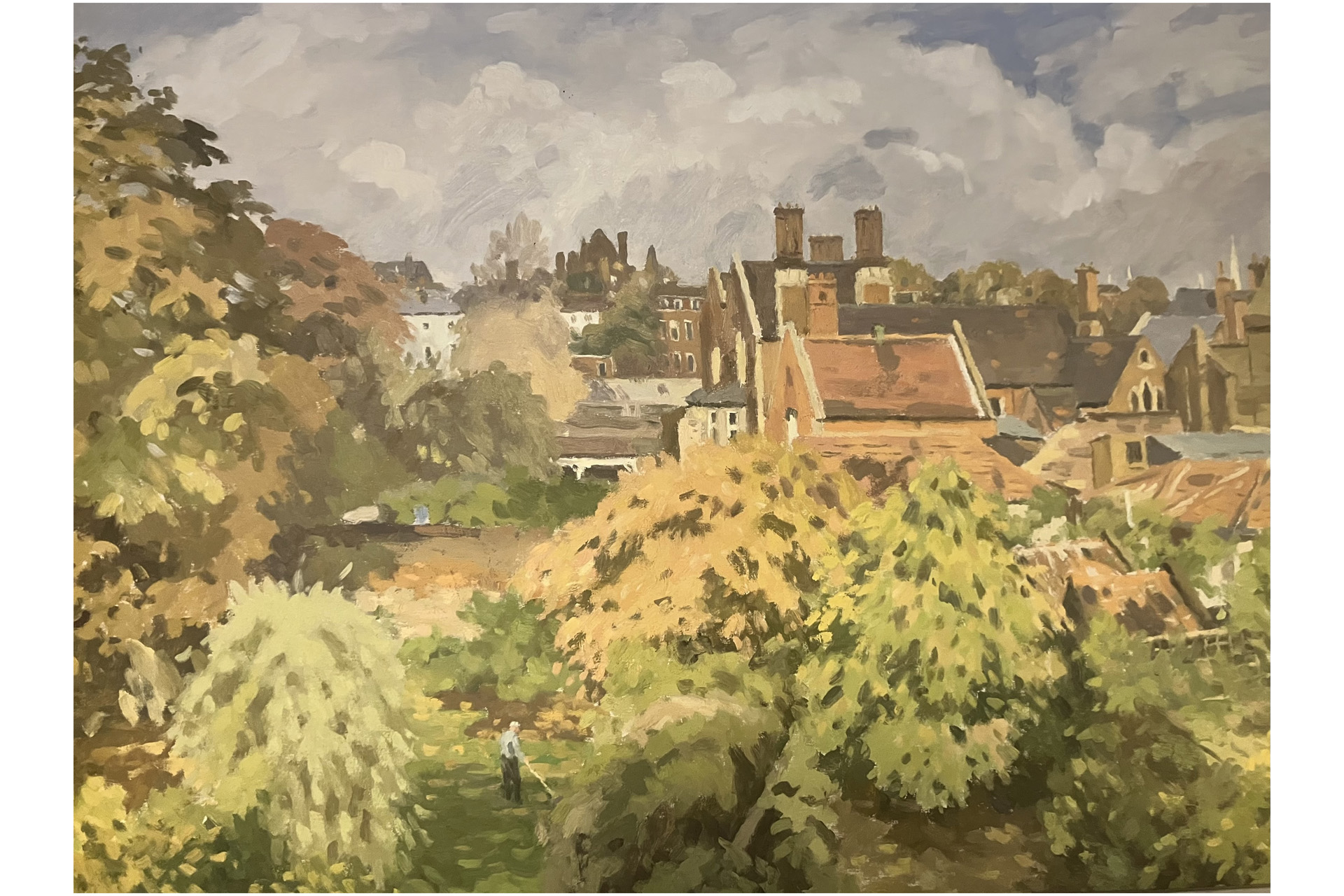
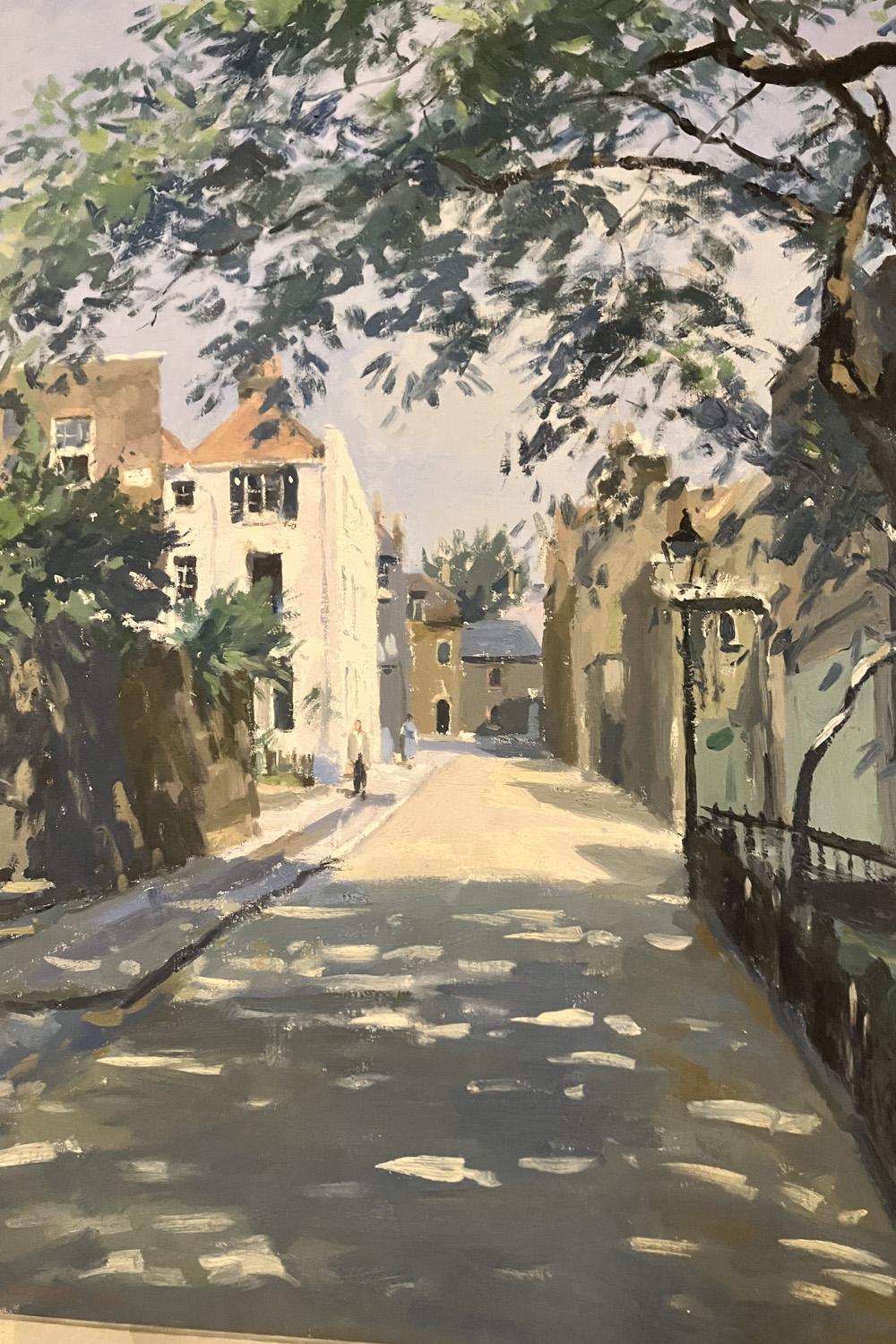
From My Studio Window, Donald Chisholm Towner (1903 – 1985), 1976, Collection Burgh House
Overview
The exhibition showcases the work of Donald Towner (1903-1985) – an artist from East Sussex who became a Hampstead fixture. He was friends with Eric Ravilious and Edward Burra and really should be more well-known today. His father was an amateur naturalist and he was enthralled by the natural world at a young age – he writes about it quite lyrically in his memoir Reflections (1979). He also painted cityscapes – Covent Garden, the Embankment (which is in the RA collection), and St. Paul’s surrounded by the rubble of the Blitz. He produced images of a rather bucolic Britain for a British Tourist Board Campaign to bring visitors back to Britain after the Second World War. He showed his work across London in private galleries, in the RA, etc.
During his time in East Sussex, he was friends with Eric Ravilious. Towner and Ravilious used to go on painting trips around the area, sleeping in farmers’ barns and spending, by Towner’s account, a scandalous week in Rye. He also knew the artist Edward Burra. In fact, they all took their entrance examination for the Royal College of Art on the same day, and Towner recounted how he and Ravilious spent ages working on their landscapes, whilst Burra only drew an eye.
Towner was fascinated with the eighteenth century in Britain. He lived in an early Georgian house and collected creamware and other decorative arts of the period. But it seems to have been the creamware that fascinated him. He became a noted scholar on the subject, publishing a number of books about it, and his collection went to Temple Newsam House and the V&A. His family have kindly lent a few pieces to the show.
His very last show, just a few months before his death, was at Burgh House. We have in our archive the programme that he produced for that show. It’s quite a poignant piece as it was hand drawn and photocopied – you can see how shaky he was.
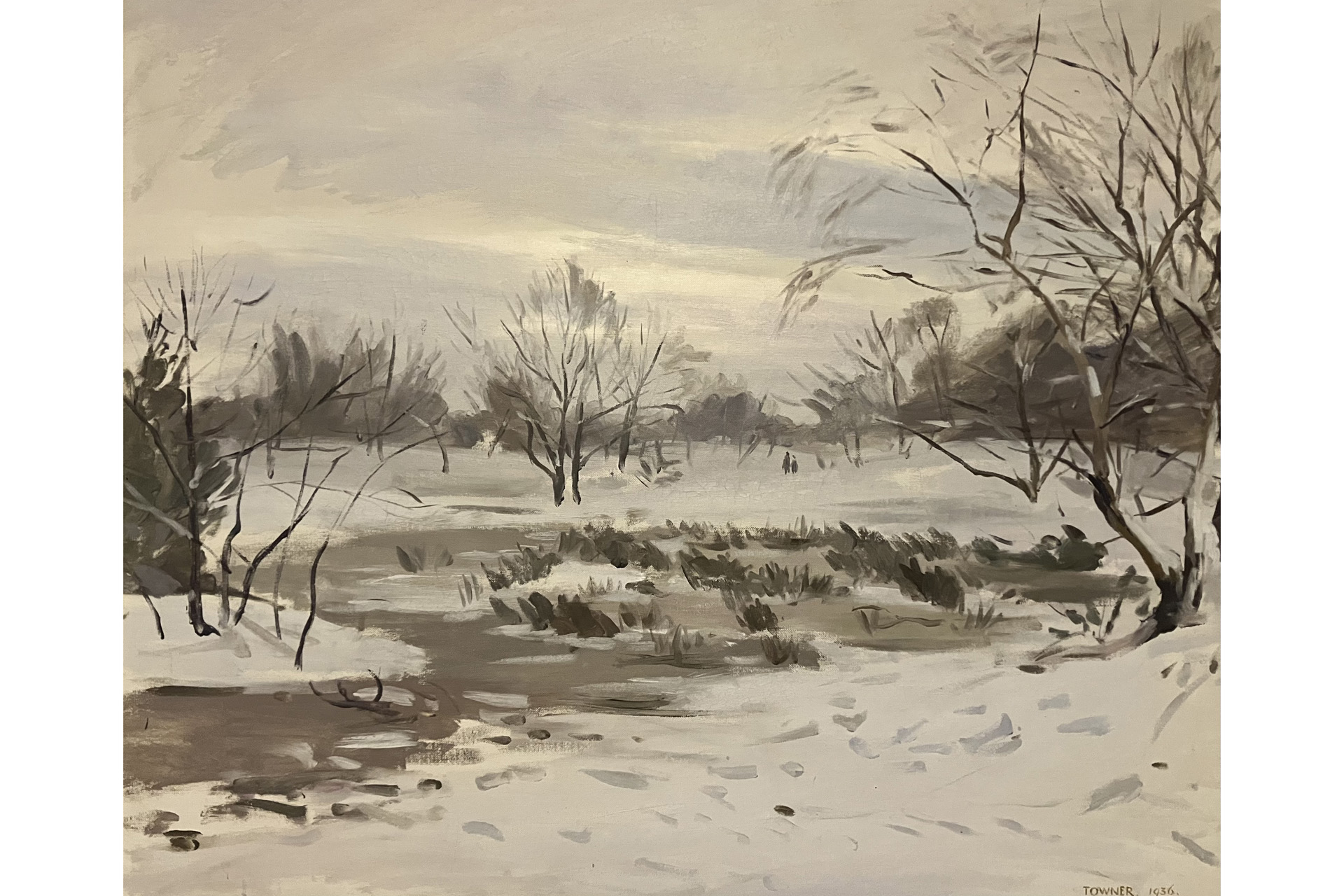
The Heath in Winter, Donald Chisholm Towner (1903 – 1985), 1936, Collection Burgh House
The Background
Donald Towner was a fixture in Hampstead. He’s originally from Eastbourne and moved to Hampstead in the late 1920s with his widowed mother. He was often found with his easel, painting on the Heath or in the streets around his home. Those residents of Hampstead who knew him described him as a great bear of a man who was unfailingly lovely and genial. At his funeral, the first curator of Burgh House, Christopher Wade, gave his eulogy and described him as the most joyful of artists.
When I came to Burgh House in 2024, Towner’s paintings were on display throughout the house, and they capture some of that sense of the man. They are beautifully painted landscapes that conjure perfect summer days and, because he favours a large foreground, you as the viewer are immersed in the scene almost immediately.
In talking to local residents who collected his work and reading his memoir, I realised that here was an artist that should have a greater reputation than he did. Burgh House has quite a good collection of Donald Towner’s work, but knowing how embedded he had been in Hampstead, I knew that there would be a great deal of his work that was in private hands that hadn’t been seen before. Additionally, I was able to get in touch with his family and they have also been incredibly generous in lending to the exhibition. It’s been lovely to pull together his body of work from collectors, family members and our own collections. Everyone has shared their personal memories of Donald Towner.
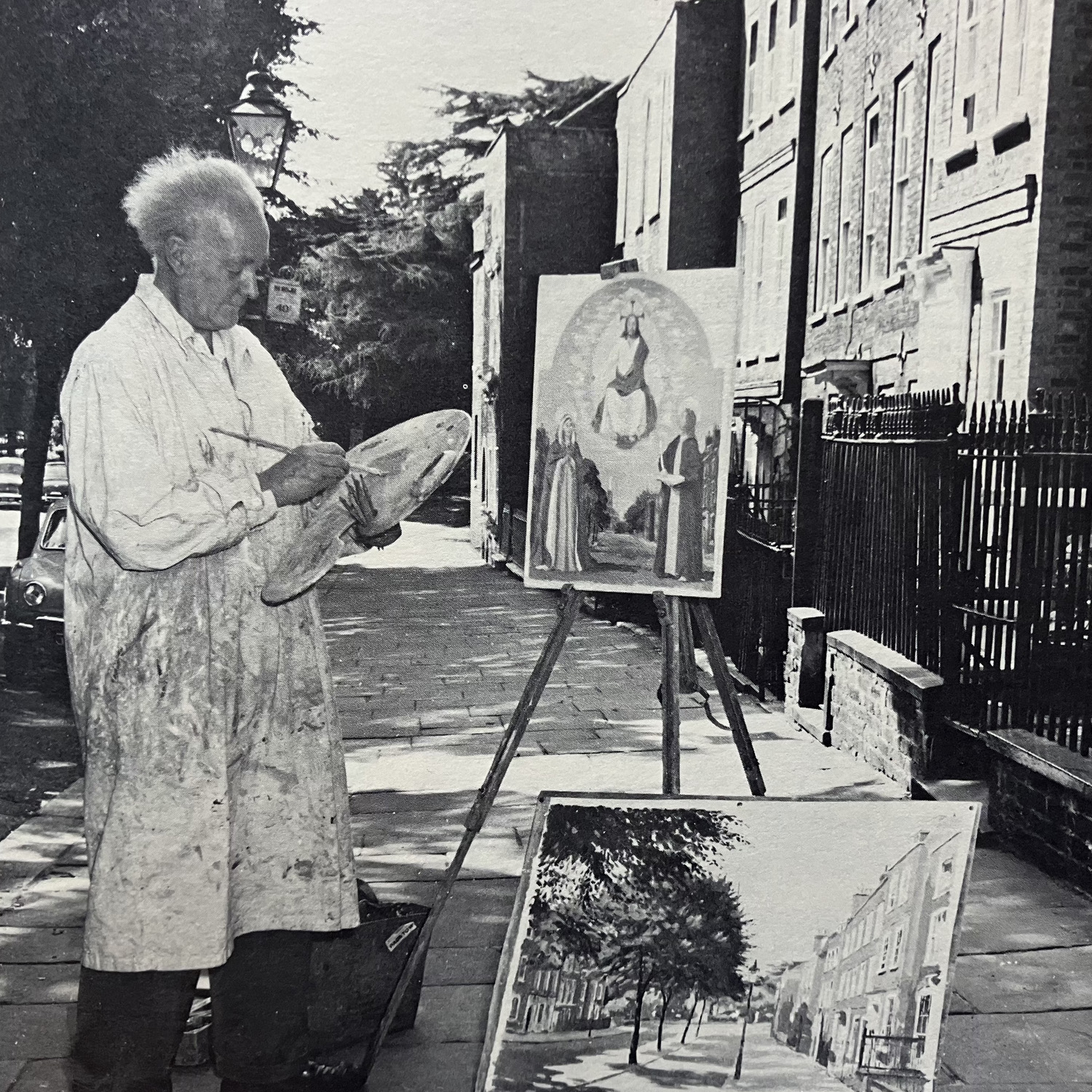
Donald Towner painting on Church Row, Hampstead.
What Is On Display?
There are two very distinct sides to Donald Towner’s work. He was an en plein air painter, and Towner favoured oils for most of his work. In his memoir Reflections, he mentioned the worrisome nature of transporting wet oil paintings home undamaged. He noted that often, insects would track paint from one colour onto another.
His early and later pieces were done in watercolour and we have one of his watercolours of Cuckmere Haven. Towner trained at Eastbourne School of Art alongside Eric Ravilious and recounted in his memoir that during this time he and Ravilious ‘tramped the Downs and spent long holidays together, always with our water-colours with us.’
In the exhibition, we’ve tried to cover the trajectory of Towner’s career, but also really placing it in Hampstead which became such an important place to him. Some of the highlights include his 1946 painting of St. Paul’s Cathedral surrounded by rubble. During the Second World War the Towners stayed in South Harting, West Sussex. Here Donald Towner worked as a farm labourer, an illustrator for the agricultural feed firm Bibby and taught art at nearby Churcher’s College, Petersfield. When they returned to London, the family found a city altered by the Blitz. This painting of St. Paul’s Cathedral was captured in that immediate post-war period. Although the painting is a testimony to the destruction of war, it is also an optimistic image showing the resilience of London, framing the Cathedral against a blue sky.
Other images that Towner painted of central London both before and after the Second World War include Covent Garden (Tullie House Museum and Art Gallery, Carlisle) and The Embankment, Westminster (Royal Academy, London) both painted in 1934. In his paintings Towner often employed an unusual perspective, painting from the rooftops of nearby buildings for a bird’s eye view.
One of those wonderful surprises was discovering Towner’s involvement with the UK Travel Association in marketing post-war Britain. In 1948 the UK Travel Association issued a series of full colour posters showing Britain through the seasons as part of a campaign to boost tourism to post-war Britain. They commissioned leading artists of the period: Terence Cuneo, Ernest Haslehurst, Norman Wilkinson, and Donald Towner. Towner’s Britain in Spring shows a riverside view of Syon House (built 1547) framed by blossom. He would receive further commissions from the UK Travel Association, including the 1950 series The Inns, Abbeys, Cathedrals and Castles of Britain. This was a commercial highlight for Towner’s work.
After the Second World War, Donald Towner began to focus on the study of creamware, noting in Reflections: ‘I thought it the most lovely of all ceramics and still think so.’ Creamware was developed in England in the 18th century. It is a cream or white coloured earthenware that has calcinated flint added to it. In this process, the flint has been heated at a high temperature which whitens it, making it easier to grind to powder, and add to clay. This produces a fine, white ceramic similar to porcelain. Staffordshire and Leeds were the centres of creamware production in Britain.
During the course of his extensive research on creamware, Donald Towner established a methodology for identification and significantly contributed to the body of knowledge on the subject. He delivered a number of academic papers and became Secretary of the English Ceramic Circle. He was approached by Arthur Lane, then head of the Department of Ceramics at the V&A. Lane asked Towner to write a monograph on creamware, which was the first of a series of publications that Towner produced on the subject.
Really, the main message to take away from the exhibition is that here is an almost forgotten artist, whose output, both academic and artistic, surely deserves more attention.
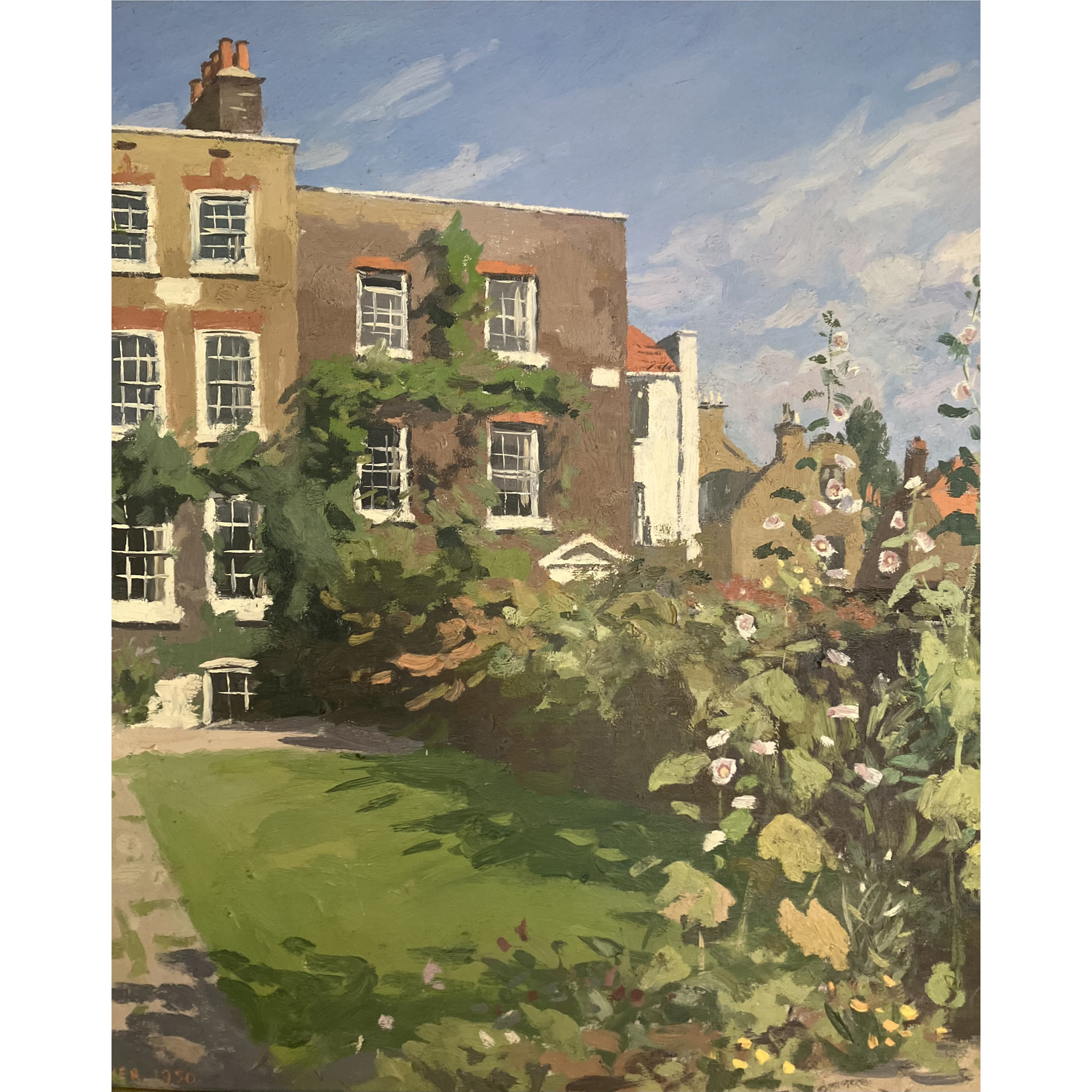
The Mount, detail, Donald Chisholm Towner (1903 – 1985), 1950, Collection Burgh House
While You’re There…
In addition to Donald Towner, we have another temporary exhibition: Hampstead Vanished and Imagined. The displays showcase Burgh House’s rich collections and tell the story of Hampstead over time: of landscapes and buildings altered or no longer present. In some cases, the agents of change were technological drivers, such as the railways which connected Hampstead, a former spa town on the edge of the Heath, with the City of London. This ease of access meant an increase in day-trippers in the good weather, but it also meant an overall population increase of commuters.
Whilst Hampstead expanded with the growth of the railways, the damage of the Second World War irrevocably altered streets and local landmarks. Bomb damage to New End Square, which Burgh House survived relatively unscathed, caused foundational issues for surrounding buildings, including those connected with the old spa. Despite campaigns to save them, demolition went ahead and the flats that are Wells House were built. The fate of Weatherall House allows us to consider a number of questions about transformative impacts on a sense of place. Later residents’ campaigns and potential changes to architectural icons like Cannon Hall, as well as Camden Council plans, demonstrate that imagined changes can be unsettling.
We also have a showcase of Hampstead Women Artists, focussing on the illustrators Helen Allingham (1848–1926), Kate Greenaway (1846–1901) and later, Mary Hill (1868–1947), who found a platform that allowed their work to reach wide audiences and shape the visual tastes of their time. Their work taps into nostalgia in its various forms: Allingham’s rural idylls, Greenaway’s visions of childhood innocence and escapism from the Industrial Revolution, and Hill’s cobbled streets of Hampstead, seemingly untouched by the World Wars. Hampstead offered inspiration, a sense of place, and subject matter for these artists, who not only helped to capture the character of the area but also supported themselves and their families through their art.
Our Peggy Jay Gallery is hired by local artists, and their work is often for sale. After seeing the collections at our museum galleries, it’s always good to see who you might discover in the Peggy Jay.
No visit to Hampstead would be complete without a walk on the Heath (depending on the weather). National Trust properties 2 Willow Road and Fenton House are nearby, as is Keats’ House. A bit further afield is the Freud Museum. The Well Walk Theatre near Burgh House in New End Square has puppet performances for children and families and more. If you venture onto Flask Walk, you can always pick up some lovely seasonal blooms at Sayeh and Galton Flowers.
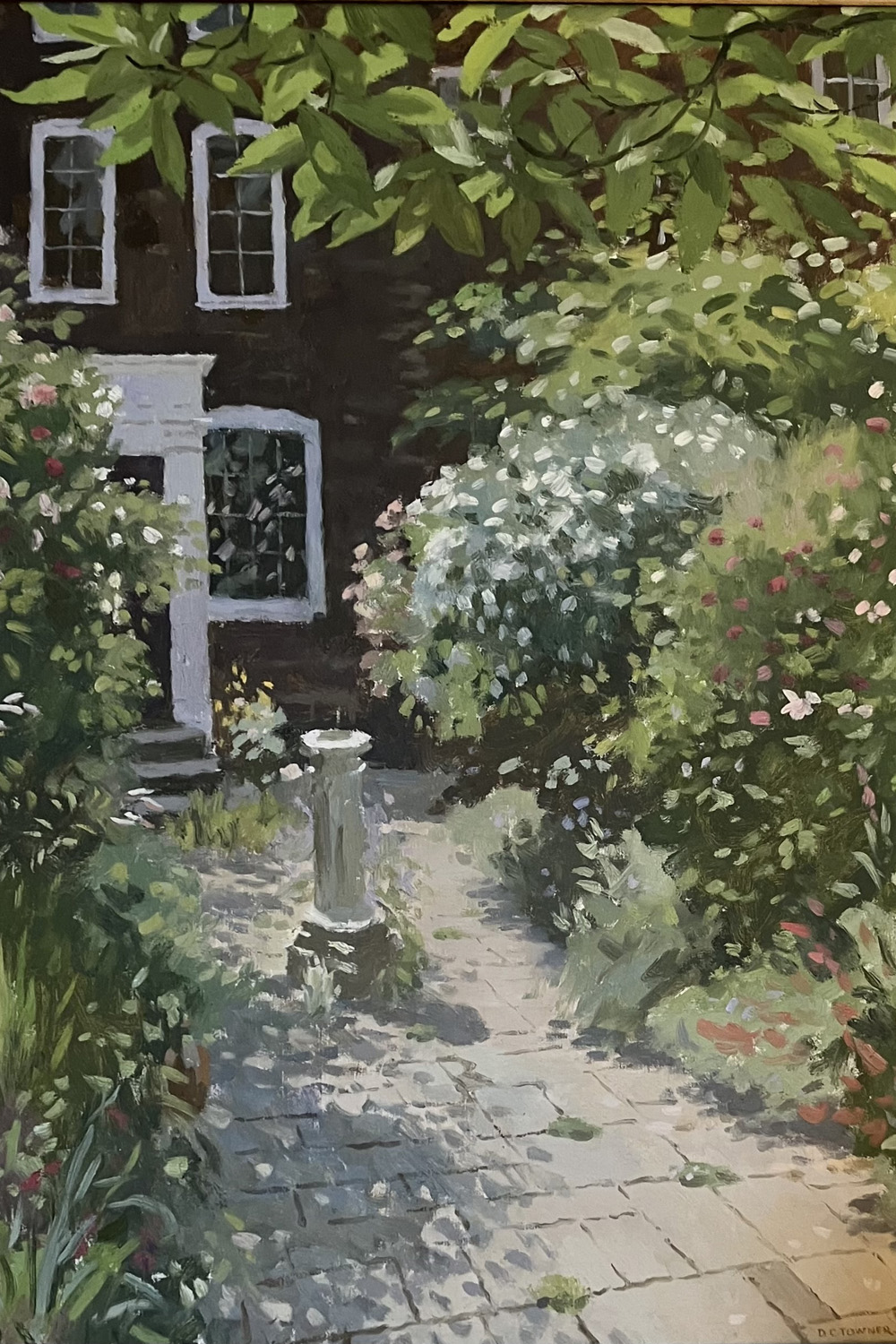
The Garden, 8 Church Row, Donald Chishold Towner (1903 – 1985), 1975, Collection G Barrass and K Lippincott
VISIT
Burgh House is open to the public from 10am to 4pm, Wednesday to Friday and Sunday. If you are someone who likes to linger and enjoys a quieter exhibition space, I would recommend Wednesdays. Additionally, curator’s tours of the exhibition (which are free) are also scheduled for Wednesdays (please check our website before you visit).
A visit to the exhibition can always be followed by a visit to our café.
Amy Miller is Burgh House’s curator. Anyone and everyone can visit for free. Find out more at burghhouse.org.uk