

Meet the Future Icons: Annie Lennox
By
2 hours ago
Singer-songwriter & co-founder, The Circle
Nominated by Livia Giuggioli, co-founder of Quintosapore and The Circle
‘This statistic hasn’t changed for decades and if we don’t change it, no one else will!’
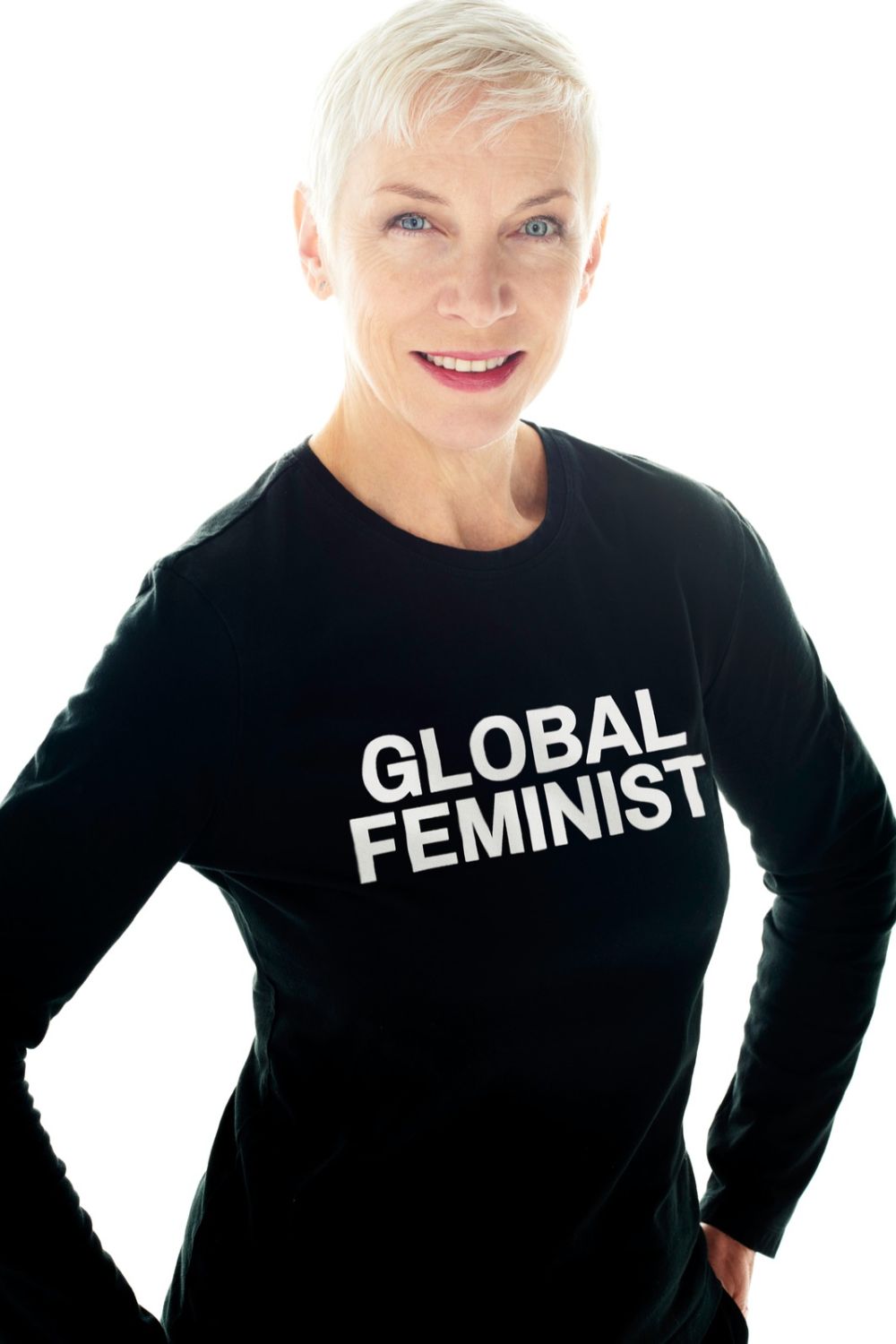
Annie Lennox, who calls herself a singer-songwriter, human-rights activist and global feminist, co-founded The Circle after meeting Nelson Mandela, and wants men in the movement too.
What do you do and why does it matter?
I have several roles in my life, but I’m fundamentally a singer-songwriter, human-rights activist and global feminist.
I try to use my platform to highlight and address some of the world’s most pressing challenges that are close to my heart and conscience, especially those affecting women and girls.
What first made you realise environmental or social impact was something you wanted to be part of?
I’ve had many ‘aha’ moments over the years that led me to follow the path I’m on today.
One of the most powerful was the opportunity to meet Nelson Mandela, over 20 years ago, when he launched 46664, his HIV/AIDS campaign. People in South Africa were literally dying in their thousands back then, without access to treatment, the most affected being women and children.
This awareness had a powerful impact upon me, as a woman and a mother. I hadn’t realised that the HIV/AIDS pandemic was directly affecting women and children on such a scale. So I decided I had to try to contribute to making a positive change.
Realising that women face so many social, economic and cultural challenges, a few years later I co-founded The Circle, a global feminist NGO. My hope for women and girls everywhere around the world is that we can create a better future, free from the oppression of gender-based violence and economic injustice.
What’s the achievement you’re most proud of – and what made it possible?
I rarely think of accomplishments with ‘pride’… It might be more akin to ‘satisfaction’. There are lots of more personal things, like managing to get somewhere on time, or feeling like a job has been well done.
This summer I performed at the Wilderness Festival – the band were so great and the whole event was such fun that I felt elated when we came off stage… I also absolutely loved creating my book ‘Retrospective’ together with Rizzoli.
Where have you had the most measurable, tangible impact?
When it comes to advocacy, it’s almost impossible to measure the difference one makes, as it’s somewhat intangible.
Being part of a campaign to put the ‘pariah’ word ‘feminism’ back on track again could only be measured by the word being seen on the cover of women’s magazines, in the media, or spoken by women themselves.
I think my main personal contribution has been to perform for concerts that ‘collectively’ and ‘individually’ raised so much money over the years that I’ve stopped counting!
What’s the biggest misconception people have about your field – or about the change you’re trying to make?
The biggest misconception is that feminism is only for women.
We believe that the feminist movement needs to include men, and men must feel welcome to join us in solidarity as allies.
Data shows that a more equitable society increases productivity, lessens poverty and improves wellbeing across generations. Global feminism makes a better world for everyone.
If you could change one thing systemically – policy, culture, industry practice – right now, what would it be?
The change I’d most like to see is a culture where everyone treats others as they would like to be treated themselves, with respect, dignity and empathy. If we could genuinely value every person equally, many of the injustices we see today would become much harder to sustain.
Who or what is your biggest source of inspiration right now?
Many years ago, I was inspired by the American writer and social activist bell hooks, who said, ‘The goal of global feminism is to reach out and join global struggles to end sexism, sexist exploitation and oppression.’ This resonated with me; I believe no woman should be left behind within the women’s movement. There’s still a lot of work to be done. One glass ceiling at a time!
This links to some of my current sources of inspiration – The Circle’s exceptional grassroots feminist leaders working in their communities, who do exactly that, ensuring that no woman is left behind.
Women like Grace Dorong, who was displaced as a child refugee in South Sudan, who now helps thousands of women enduring gender-based violence to get their lives back on track through training and small business grants.
Or Alice Atieno who, as a survivor of trafficking herself, went on to support hundreds of women who went through similar ordeals – with access to counselling, healthcare and emergency assistance, as well as being able to seek justice for sexual exploitation and violence.
What keeps you up at night – and what gives you hope?
Apart from the spread of horrific warfare and the rapid build-up of climate catastrophe, the mere fact that one in three women experience physical or sexual violence in their lifetime ought to be something that keeps us all up at night! This statistic hasn’t changed for decades and if we don’t change it, no one else will!
Eco-guilty pleasure – what’s the one thing you haven’t managed to give up?
It’s hard to avoid plastic in America, or anywhere in the world, come to think of it. I’m horrified by the fact that mostly everything comes wrapped in plastic.
It’s well over time to address this curse of convenience, but there are alternatives, if only all consumers got together and just said no to plastic… The manufacturers would have to find an alternative.
The Circle is a global feminist organisation, co-founded by Annie Lennox and other leading women, supporting women and girls facing gender-based violence and economic inequality around the world. Since 2008 it has supported more than 1.5 million people on women’s rights in 31 countries. thecircle.ngo