


Rothko In Florence: An American Master Comes Home
By
5 months ago
This is an exhibition that asks you to slow down in a city that seduces you into speed
One of the most anticipated exhibitions currently showing in Florence isn’t just a blockbuster. It’s an emotional homecoming that moves in ways that can’t quite be explained. Kamin Mohammadi immerses in fields of colour.
Exhibition Review: Rothko In Florence
There is a moment, about two thirds of the way through the Rothko exhibition at Palazzo Strozzi, when you realise you have stopped thinking. The great colour fields – burning reds, luminous purples, those hovering rectangles of light and weight – have done something to the room, to the very air in your lungs. You stand in front of canvases that are taller than you and you find yourself very still, not quite sure if you want to weep, and not quite sure why.
You can feel them before you see them. I was expecting to immerse in the huge canvases of colour but I wasn’t quite expecting this. But then Rothko is unexpected.
The much-anticipated blockbuster show Rothko in Florence is one of those rare exhibitions that deserves the hyperbole. Over 70 works drawn from MoMA, the Tate, the Centre Pompidou and the National Gallery of Art in Washington, trace the full arc of Mark Rothko’s career, from the figurative, Surrealism-inflected works of the 1930s through the mythic forms of the 1940s and into the incandescent abstractions of his maturity.
The arc in itself is already fascinating – seeing the figures that populate his earlier work start to dissolve and eventually become pure symphonies of colour. But what makes this show singular is its premise: that Florence made Rothko who he was. And that claim, when you see the evidence assembled here, turns out to be not just defensible but revelatory.
Born Marcus Rothkowitz in Dvinsk, Russia, in 1903, Rothko came to Florence for the first time in 1950, travelling with his wife Mell. He was already a serious painter, already moving away from figuration, already searching for something he couldn’t define. In Florence, he stood before Fra Angelico’s frescoes at San Marco and wept (frankly, after two decades living in the city, I would say this is the only sane response here). He entered the Vestibule of the Biblioteca Medicea Laurenziana – Michelangelo’s compressed, pressurised, impossible room, all the architectural weight pushed to the edges – and recognised it immediately. ‘The room had exactly the feeling I wanted,’ he said. He would return to Florence twice more, in 1959 and 1966. The city never left his work.
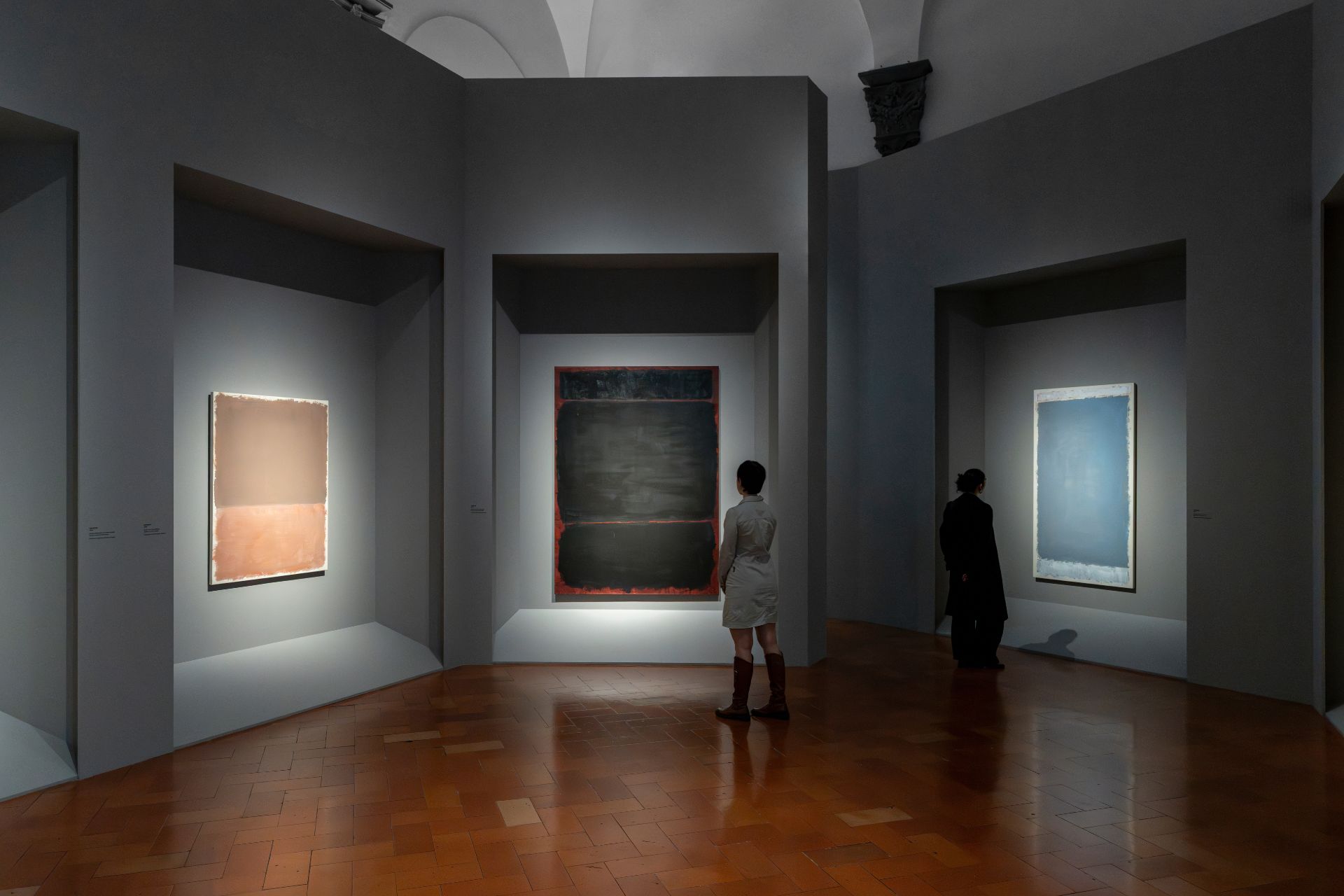
Rothko’s son Christopher and art historian Elena Geuna, the show’s curators, have made this dialogue the spine of the exhibition. At Palazzo Strozzi, the chronological hang is exquisitely done: you move through the early figurative work (remarkable, and largely unknown), watch the Surrealist influence dissolve, and then enter the rooms of the large abstractions and feel the temperature change. The palette shifts from room to room: fiery reds and burnt oranges, the cooler greens and blues of the mid-period, then the sombre, earth-bound tones of the 1960s. In the room devoted to the Four Darks in Red (1958), rage hangs in the air. The closing octagonal room is arranged like a chapel, or perhaps like the 10th-century Baptistery just up the road, whose golden mosaics also hum with chromatic mystery.
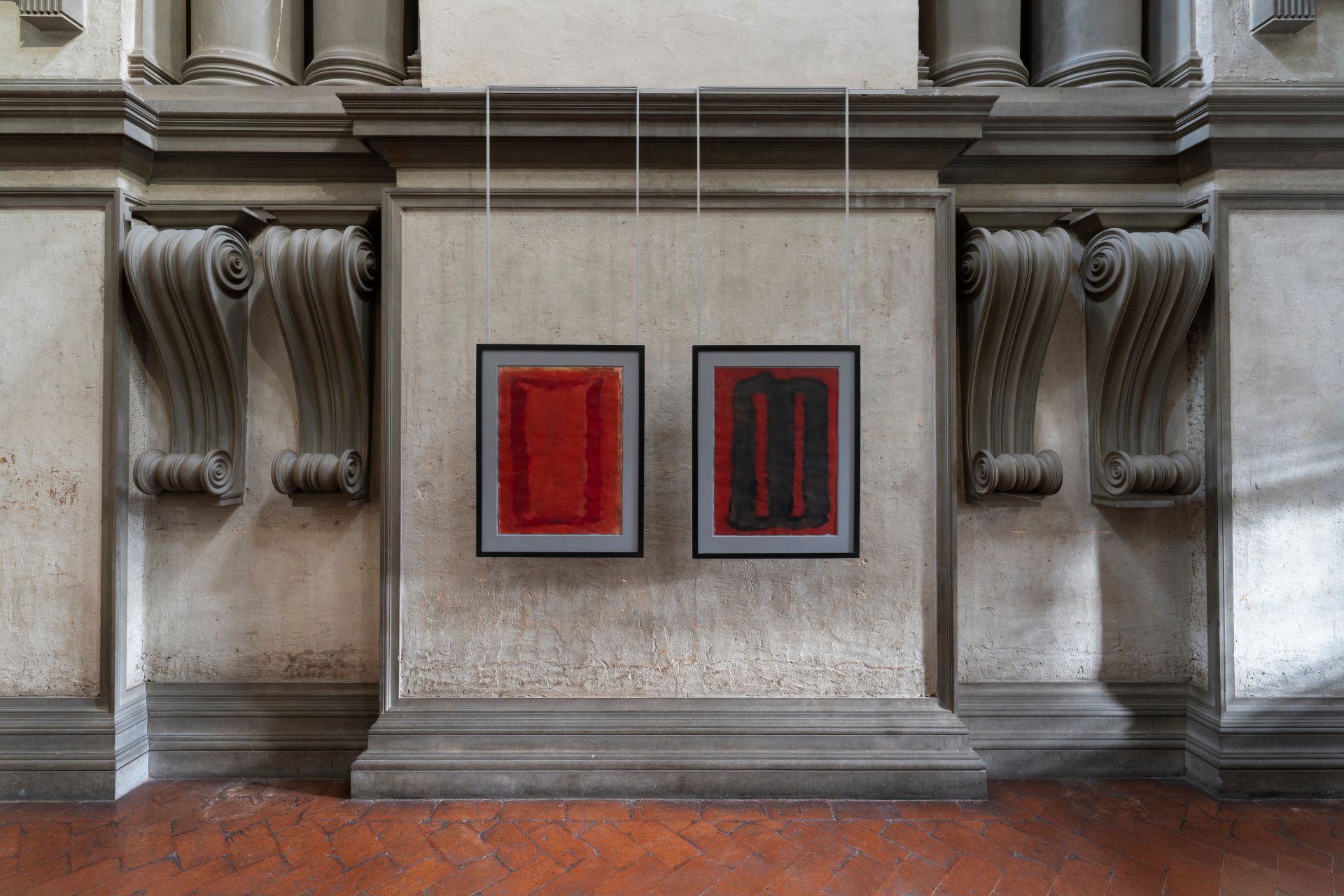
But while the main show at the Strozzi is the rock star, it is the satellite venues that elevate this exhibition to extraordinary. The Biblioteca Medicea Laurenziana is not on most visitors’ Florence itineraries, and it should be. Michelangelo’s vestibule is one of the strangest, most vertiginous spaces in Italy – the staircase cascades in stone, the blind windows are sealed off, the whole room seems to strain at itself. Here, two studies for the Seagram Murals (1958) are hung at the base of the staircase. They are dark red and black, insistent and architectural. The rhyme with the space is uncanny: Rothko didn’t borrow from Michelangelo so much as continue a conversation about what architecture can do to a body standing inside it.
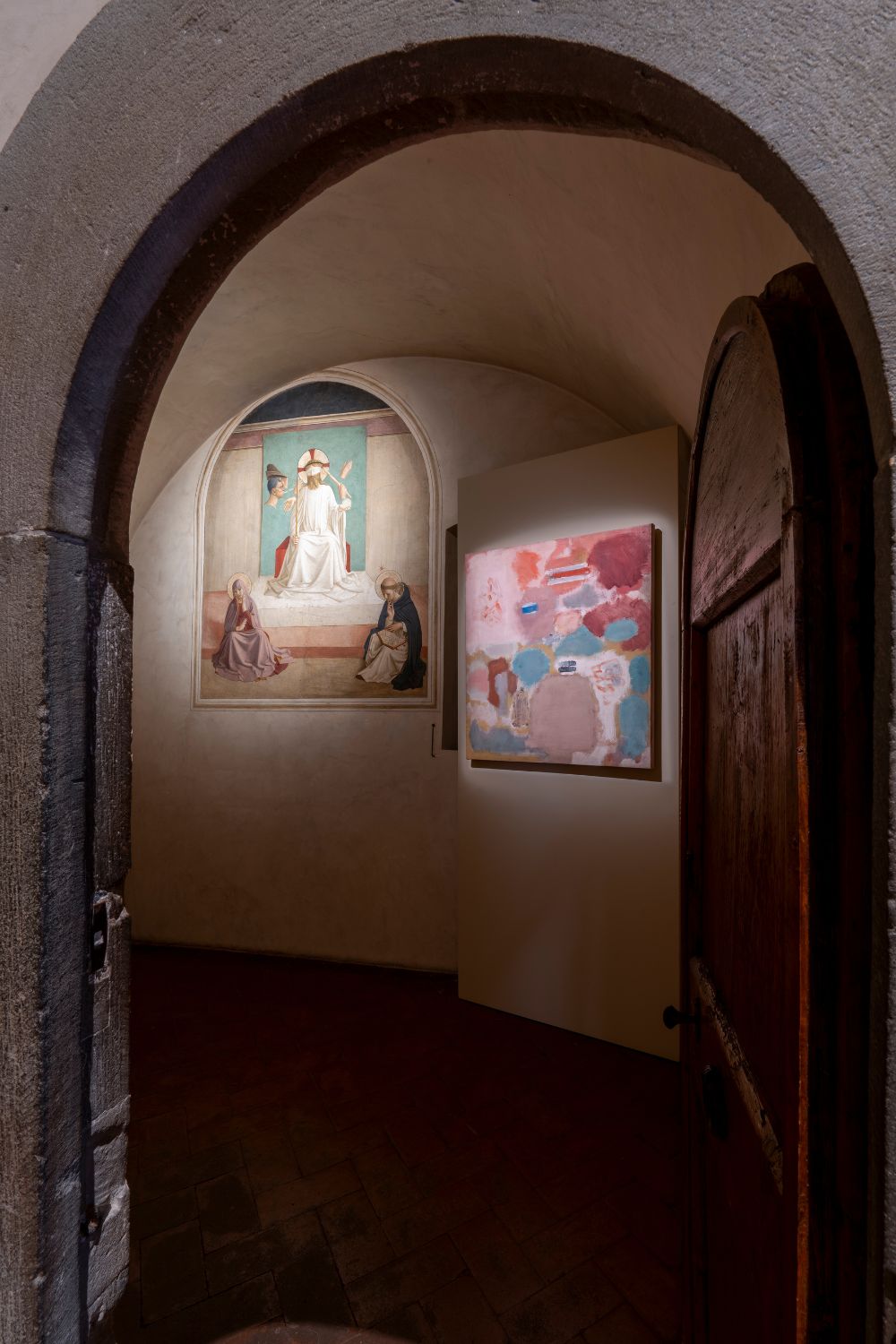
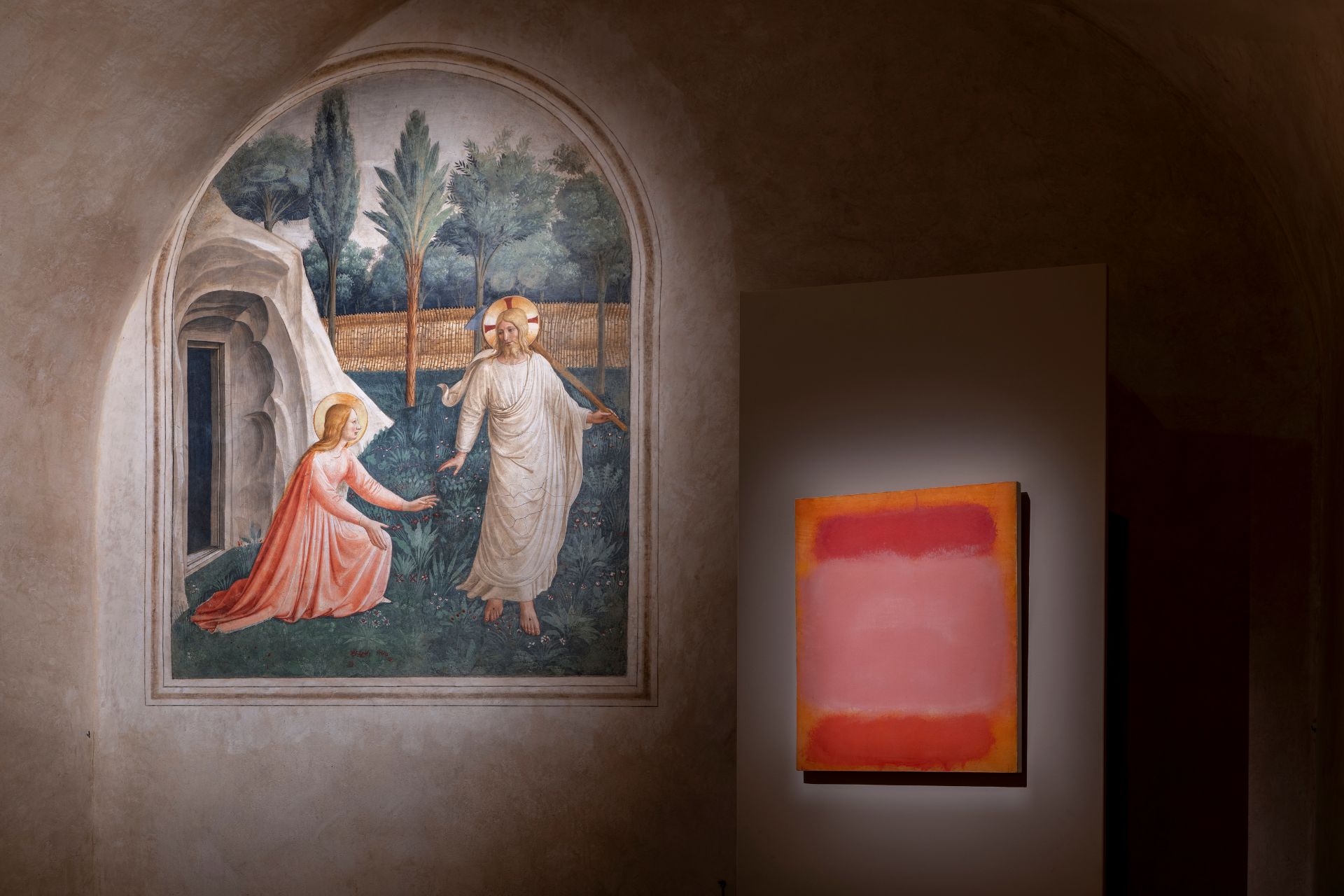
And then there is San Marco. Of all the many sacred spaces in Florence, the monastery of San Marco is perhaps the most affecting. Fra Angelico’s frescoes in the monks’ cells were not made for visitors: they were made for contemplation, one painting per cell, one monk living with one image. The cells are small. The light diffuses. Placed inside four of those cells are Rothko’s paintings, including No. 21 (1947), an early Multiform of loosely drifting colour patches, hung in the cell where Fra Angelico’s Mocking of Christ looks across at it. These works, made five centuries apart, share something that is very hard to articulate yet very easy to feel. Both Fra Angelico and Rothko were painters of transcendence, painters who believed that colour and form could carry the viewer somewhere beyond reason. Angelico worked in the theology of the divine; Rothko worked in the theology of the self. In San Marco, the distance between those two theologies collapses.
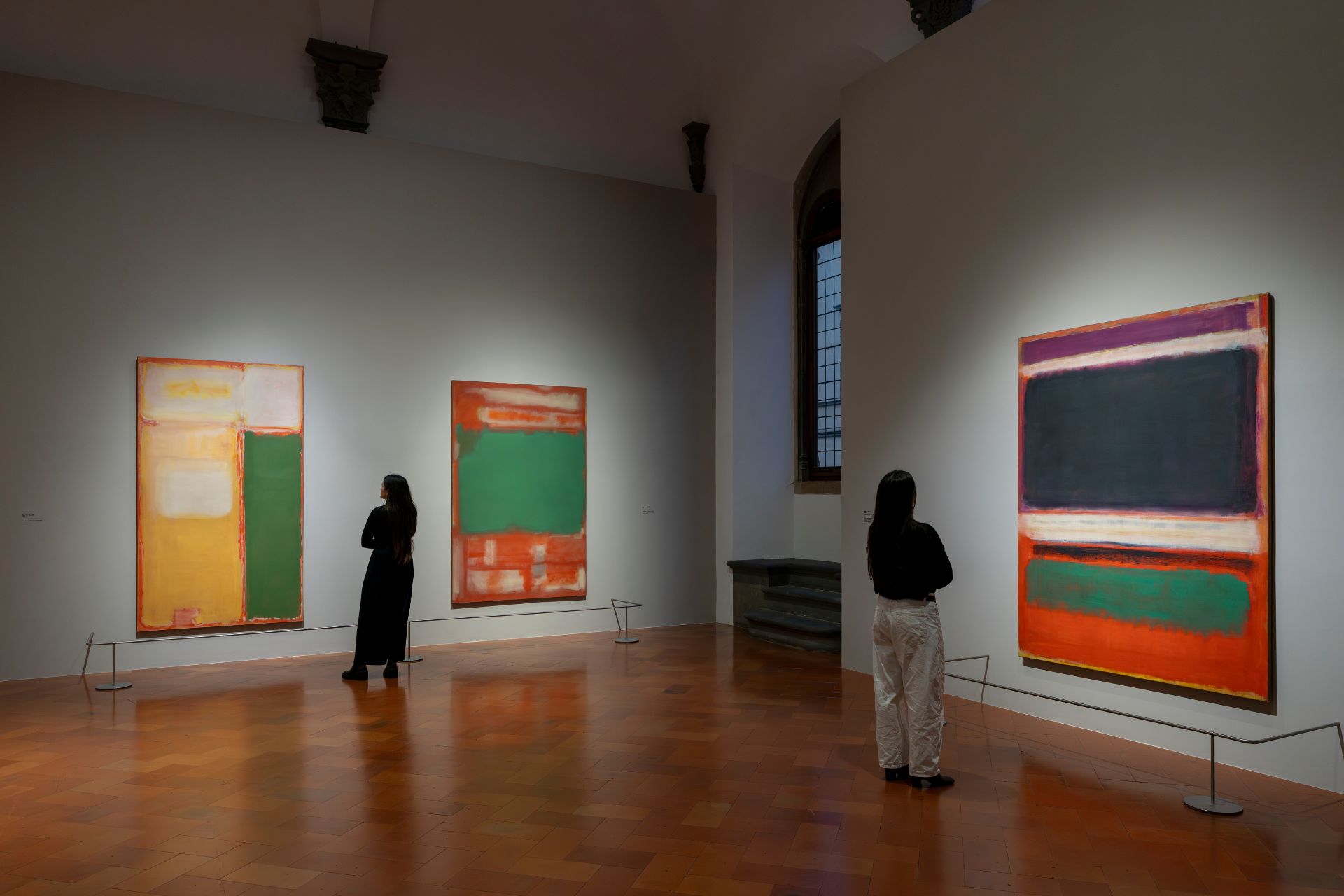
Rothko said of the people who wept in front of his paintings: ‘They are having the same religious experience I had when I painted them.’ Standing in that small cell, the fresco to one side, the Rothko to the other, the window giving onto a courtyard garden, I understood what he meant. Not as a concept but as a lived experience.
This is an exhibition that asks you to slow down in a city that seduces you into speed. Florence has so much to give that visitors often end up consuming it as a series of checkboxes rather than as encounters: the Uffizi, the Accademia, Brunelleschi’s dome… Rothko in Florence takes you out of the circuit of the canonical and puts you inside the living argument that Florence has always been having with itself about beauty, spirituality, and what painting is actually for.
Go slowly. Start at Palazzo Strozzi, where the full arc of Rothko’s life is laid before you and a brilliantly illuminating video documents his life and work. Then walk to San Marco. Save the Laurentian Library for last. Stand at the bottom of Michelangelo’s staircase and look at those two red studies and understand that you are standing at the point where 1958 New York and 1530 Florence made the same gesture toward infinity.
Rothko in Florence, Palazzo Strozzi, Museo di San Marco and Biblioteca Medicea Laurenziana, Florence. Until 23 August 2026. palazzostrozzi.org