


Interview: Sally Abé, The TV Chef Behind Hackney’s New Favourite Restaurant, Teal
By
5 months ago
A month after opening, how's the chef feeling? C&TH finds out
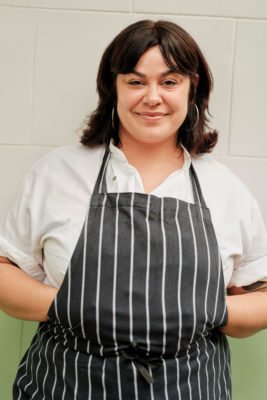
Cast back to 2007, and Sally Abé’s career had just begun at the Savoy Grill, in London. Under the tutelage of Gordon Ramsay, and through the forge-fire of the capital’s finest kitchens, Abé emerged as one of Britain’s brightest chefs. Across the next 20 years in top kitchens, she would confirm this position. Her tenancy as the Harwood Arms’ head chef saw her retain, for four years, its status as London’s only Michelin-starred pub. Later, after leading and launching The Pem, she ventured to the Cotswolds as head chef of The Bull in Charlbury. You might find her a familiar face thanks to her screen appearances on Saturday Kitchen Live and Great British Menu.
It was met with vast industry excitement, then, when it was announced that she would (finally) be opening her first solo venture, Teal. It officially welcomed diners on 26 March 2026.
Describing Teal as a ‘little British bistro’, Abé explains that her goal with the menu was to design something that ‘bring[s] British flavours and combinations, but modernise[s] them with a touch of elegance’. She likes the idea that it might be described as a ‘whimsical’ menu. For all that whimsy, though, C&TH meets Abé and finds an award-winning chef in her complete power – crowned by a first solo venture that is unequivocally hers.
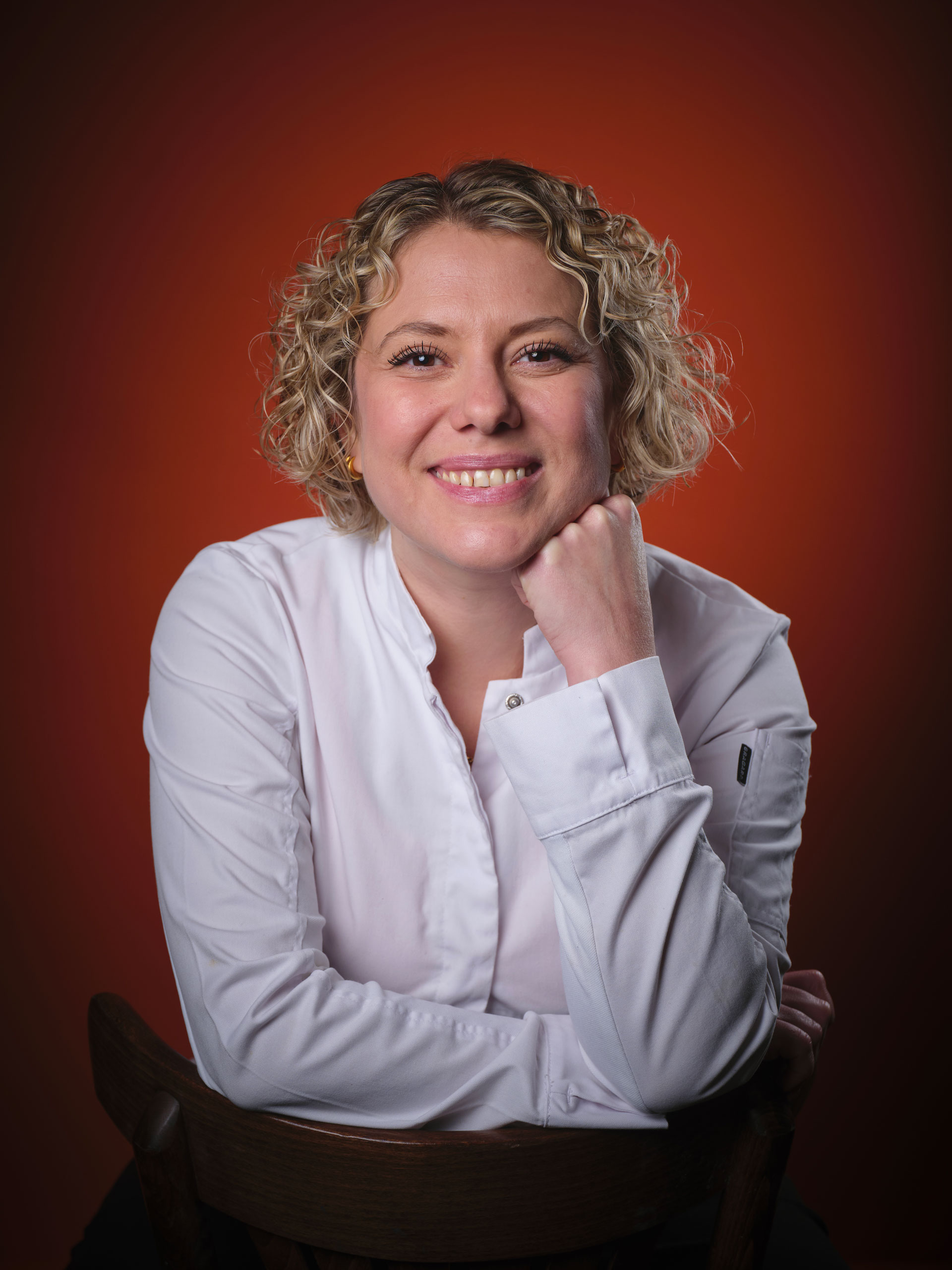
© Jodi Hinds
Chef Sally Abé Is In An Era Of Whimsy With Her New Hackney Restaurant Teal
A month in, how do you feel?
Talk me through what brought you to opening.
This year marks 20 years of my working in restaurants. Opening Teal has almost been a lifelong dream. Most chefs want to open their own restaurant, do their own thing, and get to put what’s in their head on the plate. It’s so exciting to be able to find and be doing that myself.
The food is…
Reimagined British classics, but – without being twee – the other day somebody described the food as quite ‘whimsical’, which I really liked. The idea is to bring British flavours and combinations, but modernise them with a touch of elegance.
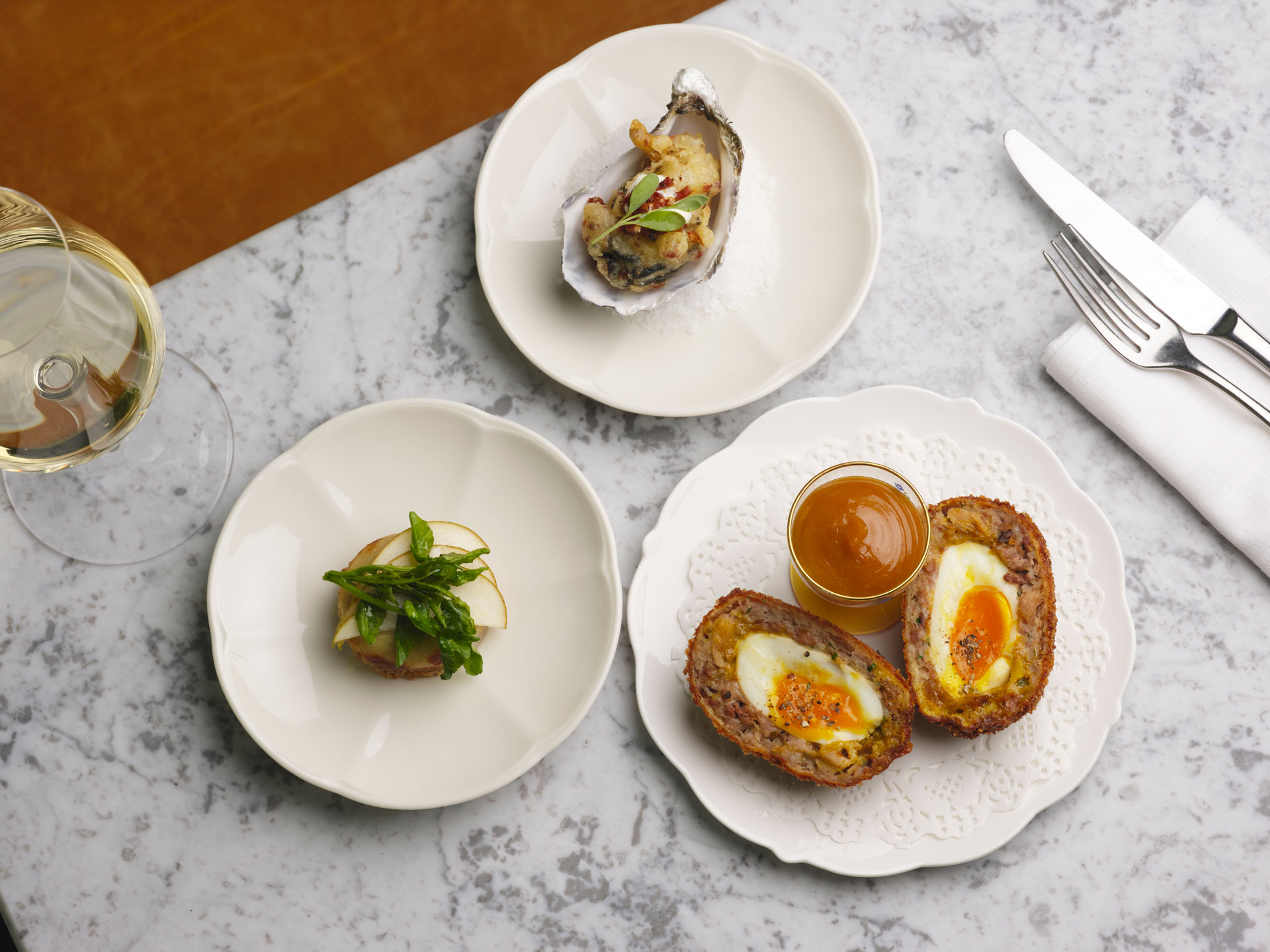
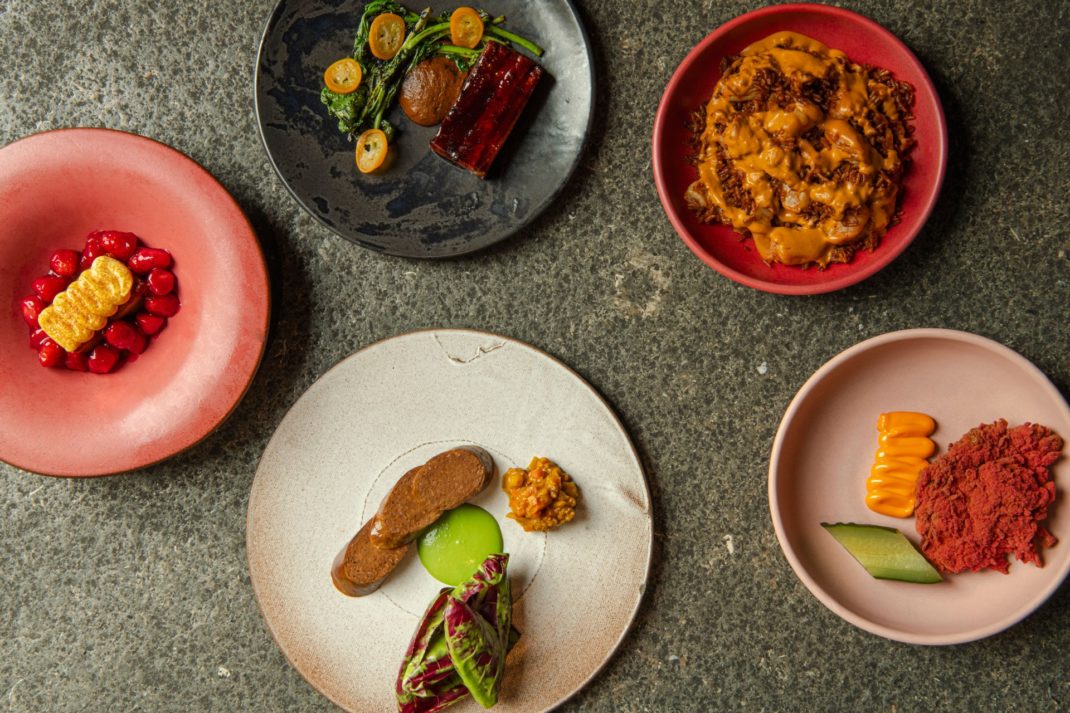
Savouries © Jodi Hinds
What’s on the ‘whimsical’ menu?
In years gone by, you would always have a course called savouries, and they’re generally one-bite things, often on toast. So, at Teal, we’re starting with our savouries, the snack courses. We have a blue cheese rarebit we’re calling a Locket savoury, named after where it was first eaten – at the Locket’s club in Westminster. In Victorian times, it would have been a little sourdough round with some blue cheese rarebit, and we top it with pickle pear and watercress on top because it lifts the flavours and takes away any heavy stodginess. And then we’ve got Devils on Horseback, and Angels on Horseback, two retro dinner party classics from the 80s. The former is basically a prune we’ve cooked in smoked tea, then wrapped in bacon and fried, and finally stuffed with a silky smooth chicken liver parfait. The latter is with oysters.
And the starters?
A baked bone marrow with snails and garlic and parsley; classic flavours but we’ve added textures to it, including a breadcrumb made with brewing malt. And then garlic chips.
Oh, nice.
Main courses, we’ve got a wonderful sirloin beef, a little piece of short rib – so you’ve got both a braised and roasted piece with different textures. We want to keep the mains as simple as possible, and let the ingredients speak for themselves.
Dessert is where I think the whimsy comes in. We’ve got a marmalade ice cream sandwich – which makes me think of Paddington! For that, we create a marmalade parfait ice cream, and then sandwich it between brown bread that we’ve brushed with sugar syrup and baked.
It sounds like there’s a great deal of historical influence running through the menu. How did you come to these dishes, this history, or is it the culmination of a lifetime of eating?
The history of British food is something I’ve been interested in for a long time. I found, especially when I started at the Harwood Arms, I wanted to understand the history of British food, because British food tends to get a bad rap, especially on the continent. It was important to me to try and unearth some of the historical dishes that exist, are delicious, and that we can bring to the forefront. Similar to what Heston did, but probably slightly less scientific.
You mention the Harwood Arms. Tell me about the kitchens you’ve worked in across your career; what have they each taught you and what’s the journey been to this moment in time.
I’ve worked in a lot of really amazing restaurants. I started off my career working under Gordon Ramsay at The Savoy, and then moved on to Claridge’s. That was the place where I first learned about kitchens and kitchen life, and how to blanch a vegetable.
After that, I moved on to The Ledbury. I was there for five years, which in normal working hours is about 10 years. That’s really where I learned most of the foundations of fine dining and modern European cooking, and I really enjoyed my time there.
The Harwood Arms is owned by Brett Graham as well, so it was a natural progression for me to move to the Harwood for my first head chef job. Every restaurant has taught me a different thing. But going to the Harwood, I found my calling in cooking this genre of reimagined classic British food.
Do you think it was at the Harwood that you established your ‘food voice’ – as it were?
Yeah, I think so. Until you become a head chef in most kitchens, you don’t really get the opportunity to put dishes on the menu and make those senior management decisions. So that was the first time that I was able to take the bull by the horns, and also find my cooking style.
So this is your first solo venture.
Although I’ve brought along my general manager, Abe, who is also my business partner. He has come with me from The Bull. We’re a very small team. We’re only seven in total!
The other thing I was wondering is – this seems like a moment in time where hospitality is facing a financial crisis. Why open a restaurant now and in this climate?
So many people have said, ‘Oh, it’s not really the year to do it’. But we’ve actually been saying that for the last six years – since Covid. Really, it’s always been the worst year for hospitality. And I don’t disagree that it is. But as this is a small business, our labour costs are lower than most – just due to the nature and size of the restaurant.
That said, we’re going to face the same challenges. Our business rates are going up in April, the same as everybody else. There’s always a pressure with VAT, because we can’t claim back VAT from anything we buy, and yet 20 percent of everything we sell has to go back to the government.
I know there’s an awful lot of noise at the moment in the media, as there should be. My plan is to try to be nimble, keep things tight and keep spending as low as possible.
Is there anything in hospitality you think headlines miss, like a moment to be celebrated right now?
I think that a lot of restaurants are struggling, but there are also a number of great restaurants opening at the minute. There is a shift towards more casual dining, and people want to have that sort of table full of food they can share and enjoy. And I think as people are dining out less due to the cost of living, dining has become a more special experience. It makes me want to make things even more special for diners as they’ve chosen to spend hard-earned cash with us.
And then the ‘where’. What’s brought you to Hackney? Are you local to Hackney?
No, I actually live in West London, so a bit of a schlep, but I actually looked at a restaurant on this road about two years ago – maybe a little bit longer – and it didn’t come to fruition. So when this site came up, I just felt like something was drawing me to Wilton Way. Plus, this site is small enough for me to do it without an investor. That was a real draw to be able to do this on my own, without having a crazy million pound investor.
So it was important for you to do it on your own terms then?
Yeah, exactly.
Is there a particular reason why?
I think it’s just always good to be your own boss, isn’t it?
You’ve said in other interviews that you didn’t always want to be a chef. It wasn’t the dream. What did you want to be when you were a kid?
I never really had a clear dream. When I was a young teenager, I wanted to present the radio or a Breakfast Show. Generally when I was younger, I was drawn towards writing, or journalism, and having written a book in the past few years, I’ve been able to express this within my career, even though I’ve become a chef.
Life is funny like that, as you’ve also hit that broadcast with a lot of TV in recent years. How does filming your process compare to a real life dinner service?
Obviously it’s completely different, but they’re both really enjoyable in two completely different ways. With the exception of Great British Menu, there’s a lot less pressure doing telly, and it’s less live, obviously. But it’s very much in the preparation. I suppose doing service is also in the preparation. What I love about doing the cooking shows is the actual act of getting to show people. People are always looking for more knowledge, so to be able to share that with such a wide audience is always really exciting for me.
I imagine they’re both fairly pressured. Do you feel resilient? Is that a necessity of the industry that you’re in?
I think I’ve always been a fairly resilient person, but it’s certainly something you have to build up over the years, and it’s something that I’m definitely going to be building up over the next 12 months. Even more now that it’s my neck on the line.
And will we see more TV soon, or is this a heads-down moment until Teal is in order?
For the foreseeable future, the plan is just to get this restaurant off the ground in the best way it can be. And I think it’d be silly of me to try and split my time at the moment. So, yeah, all guns blazing.
Quick Fire
My food philosophy is humble.
The first dish I ever learned to cook – or remember cooking – is croissants, with my mum. It didn’t go well. To be honest, I’ve not made many since. I’ve never worked in a bakery.
A kitchen gadget I can’t live without… I love Mac knives. That’s quite old school, but I’ve got quite a lot. I think I probably couldn’t function without the Vitaprep in the kitchen, too. They get the smoothest purées.
My favourite in-season ingredient is strawberries. I’ve been looking forwards to them. And wild garlic.
I use wild garlic in every single way possible. We’ll make a purée, a soup, ferment some, turn it into pestos and chimichurris.
My lazy-night dinner is always something with Thai flavours. My favourite thing to do is cook some chilli, garlic and ginger down along with some pork mince, put in some fish sauce and soy sauce, and then eat that in a lettuce cup.
If you opened my fridge right now, you’d find nothing there, except maybe condiments. All the hot sauces, basically, a sriracha and Frank’s.
The one restaurant everyone should try before they die is The French Laundry.
My most-leafed cookbook is Margaret Costa’s Four Seasons.
And, finally, my leftovers hack: I like turning Sunday roast stuff into bubble and squeak. Just fry it all up with an egg mixed in for a delicious breakfast the next day.
Sally Abé’s restaurant Teal is located at 52 Wilton Way, London, E8 1BG. Book via tealbysallyabe.com