


What Does A Food Critic Cook? Here Are 3 Recipes From Jay Rayner’s New Cookbook
By
2 months ago
The esteemed food journalist is also a keen cook
Having spent the best part of 30 years sampling restaurants around the UK, Jay Rayner certainly knows good food. Alongside his role as The Financial Times’ restaurant critic, and before that The Observer, Rayner has judged multiple series of MasterChef – and now he’s back with a second cookbook, Nights Out in the Kitchen. This is a compilation of recipes sparked by dishes Rayner has tried over the years, as well as his own recipes, refined in his home kitchen. Below, we share three favourites from the book.
Jay Rayner Recipes
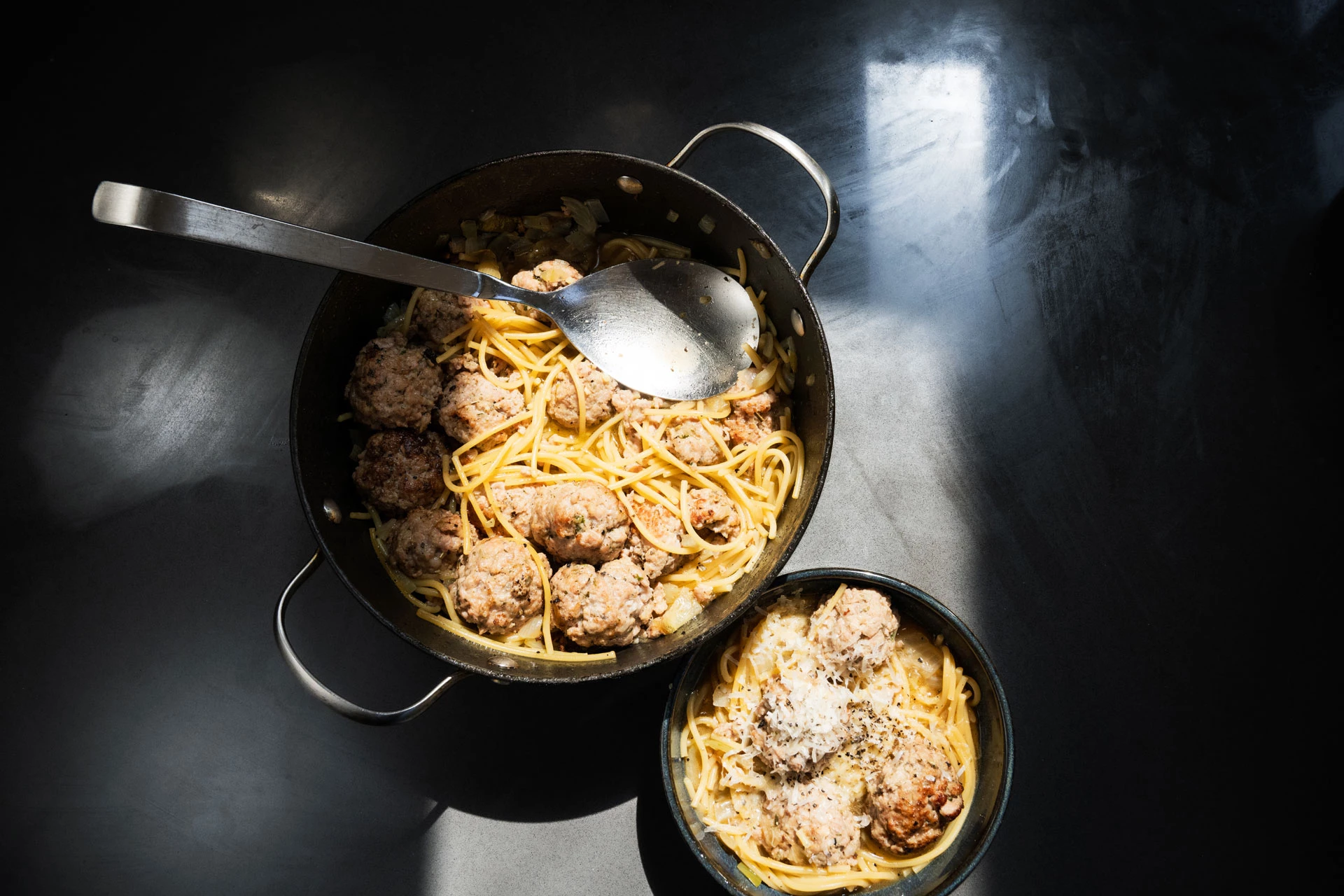
Meatballs and Braised Spaghetti
Ingredients:
- 400g highly seasoned sausages (probably about 6). I favour Toulouse sausages, but it works equally well with Cumberland, or Italian fennel. Just don’t use something bland and mimsy.
- 400g pork mince
- Vegetable oil, for cooking
- 1 large onion, chopped
- 1 litre chicken stock, from cube or gel pot
- 350g spaghetti
- Parmesan, to serve
Method:
- Heat the oven to 200°C/400°F/gas mark 6.
- Squeeze the sausage meat from the skins and mix thoroughly with the pork mince with your hands, then form the mix into roughly golfball-size meatballs. You may find wetting your hands occasionally helps with this. This amount should give you between 16 and 20 balls.
- Heat a couple of tablespoons of vegetable oil in a large oven-safe casserole or pot with a lid and fry the meatballs in the oil in batches until a little coloured on at least a couple of sides. Do not worry about cooking them all the way through. You just want some colour on them. As each batch is cooked, remove them to a dish, to await their return.
- Turn the heat down to low and gently fry the chopped onion in the mixture of oil and pork fat until translucent, stirring occasionally. This should take about 5 to 10 minutes. If the pot looks at all dry, add a knob of butter.
- Now pour in the chicken stock, scraping around the bottom of the pan to get up any caramelized bits of meat or onion. Then turn up the heat until the stock is on a gentle boil.
- Break up the lengths of dry spaghetti into thirds, add them to the stock and give it a very good stir so the pieces separate and are properly below the surface of the stock.
- Add the meatballs back on top so they are bobbing slightly in the stock. Don’t worry if it looks like too much liquor. It will be absorbed.
- Put the lid on the casserole and put it in the oven for 10 minutes. After this time take the pot out, remove the lid and give it a good stir. The spaghetti will still be very much al dente. Check whether any strands have clumped together. Separate those with a couple of forks. Put it back into the oven with the lid on for another 5 minutes.
- At which point we are dealing with the variables of your spaghetti, your casserole and your oven. For example, if, after this time, the spaghetti is still not quite there, you will need to put it back in for a couple more minutes, with the lid off. The pasta will eventually swim in its own rich, buttery, starchy sauce. The meatballs will be cooked through.
- Serve with grated Parmesan and a good grind of black pepper. Do not tell any Italian friends what you have done.
(c) Will Carne
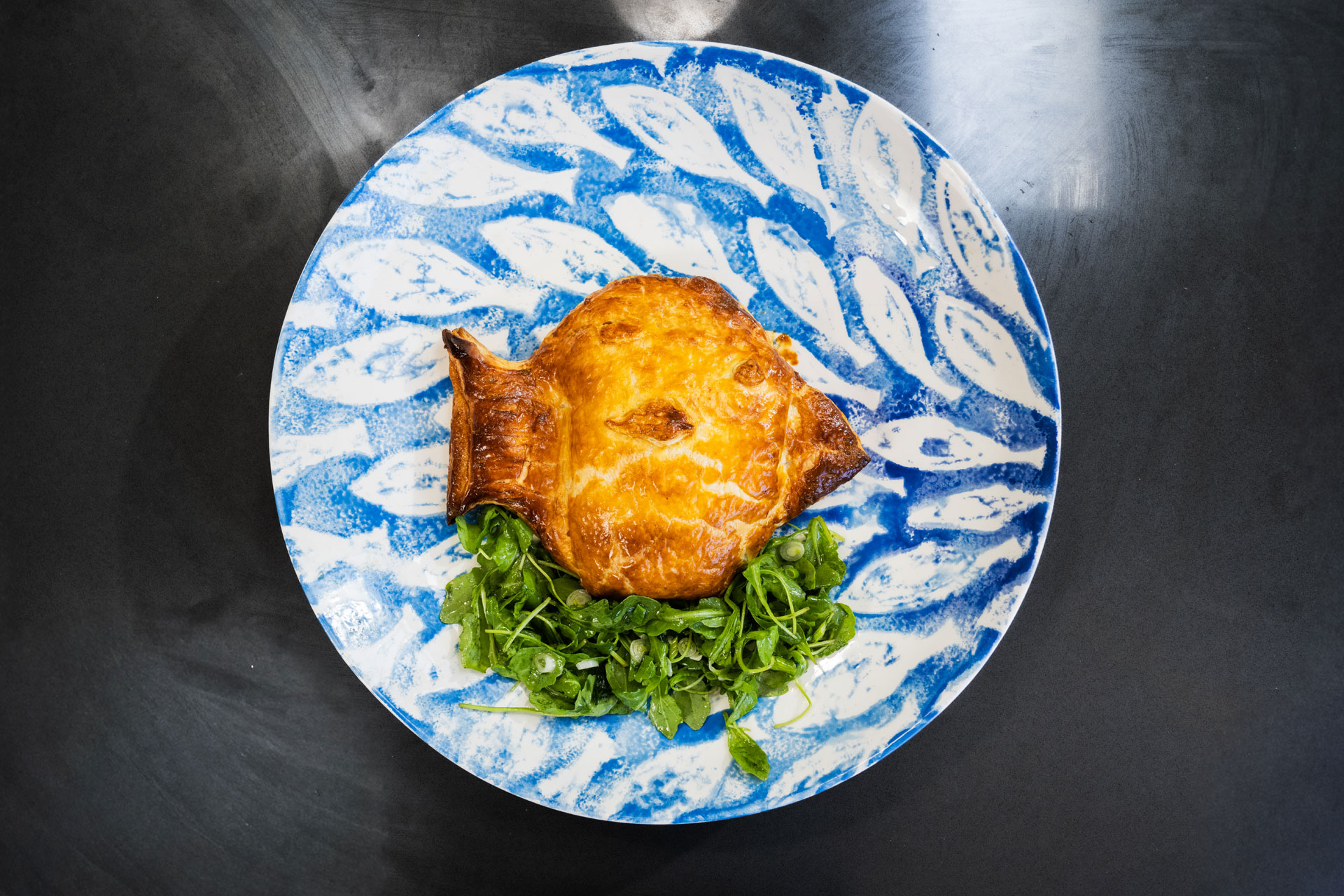
Salmon en Croute
Ingredients:
- 2 skinless salmon fillets, each between 120g and 150g
- Table salt
- 3 generous tbsp crème fraîche
- 1 tsp lemon juice
- Cracked black pepper
- 20g rocket, very roughly chopped
- ½ a 320g roll of shop-bought puff pastry
- 1 beaten egg
Method:
- Season the skinned salmon fillets all over with table salt.
- In a bowl mix the crème fraîche with the lemon juice, and season generously to taste with salt and black pepper. Mix the rocket into the crème fraîche. Don’t worry about the volume of greenery to crème fraîche. It will all mix in.
- Roll out the pastry and lay the first salmon fillet on it, 3–4cm from the left-hand edge. Top the salmon with the crème fraîche mix to about a centimetre’s depth. Lay the second fillet on top, to make as tidy a rectangle as possible.
- You may well have two of the long thin fillets. They are generally about 15cm long, 5cm wide, thick at one end and thinner at the other. Skin them, then slice them in half across the middle. Put the two thick pieces close together side by side to form a rough square. Top with the crème fraîche mix, then place the thinner pieces, inverted, on top of the fatter pieces. You will have formed a manageable block from the thin fillets.
- Brush the edge of the pastry with beaten egg, then fold it to make a neat parcel. In keeping with the variable size of the salmon fillets, the size of your parcel will vary. You will want an edge of a centimetre or two on both sides and at each end. Once you’ve closed it off, trim off any excess pastry.
- At this point you can have some fun, if you fancy, by shaping your salmon en croute to look vaguely like a fish. You can use any excess pastry to fashion a tail and a pectoral fin, and use a sharp knife to cut in a snout and an eye. Or you can roll your eyes at the mere suggestion and do none of that. Either way, egg-wash the whole parcel and refrigerate for at least a couple of hours. Helpfully, this means you can make enough of these for dinner in advance and then bake them when the time comes.
- Very lightly oil an oven tray and put it in the oven as it heats up to 220°C/425°F/gas mark 7. When the oven has reached its temperature, add an extra layer of egg wash to your salmon en croute and transfer it to the hot tray. This helps ensure a crisper bottom. Bake for 20–25 minutes, until golden brown.
- Although it’s great straight from the oven, it can also be eaten cold.
(c) Will Carne
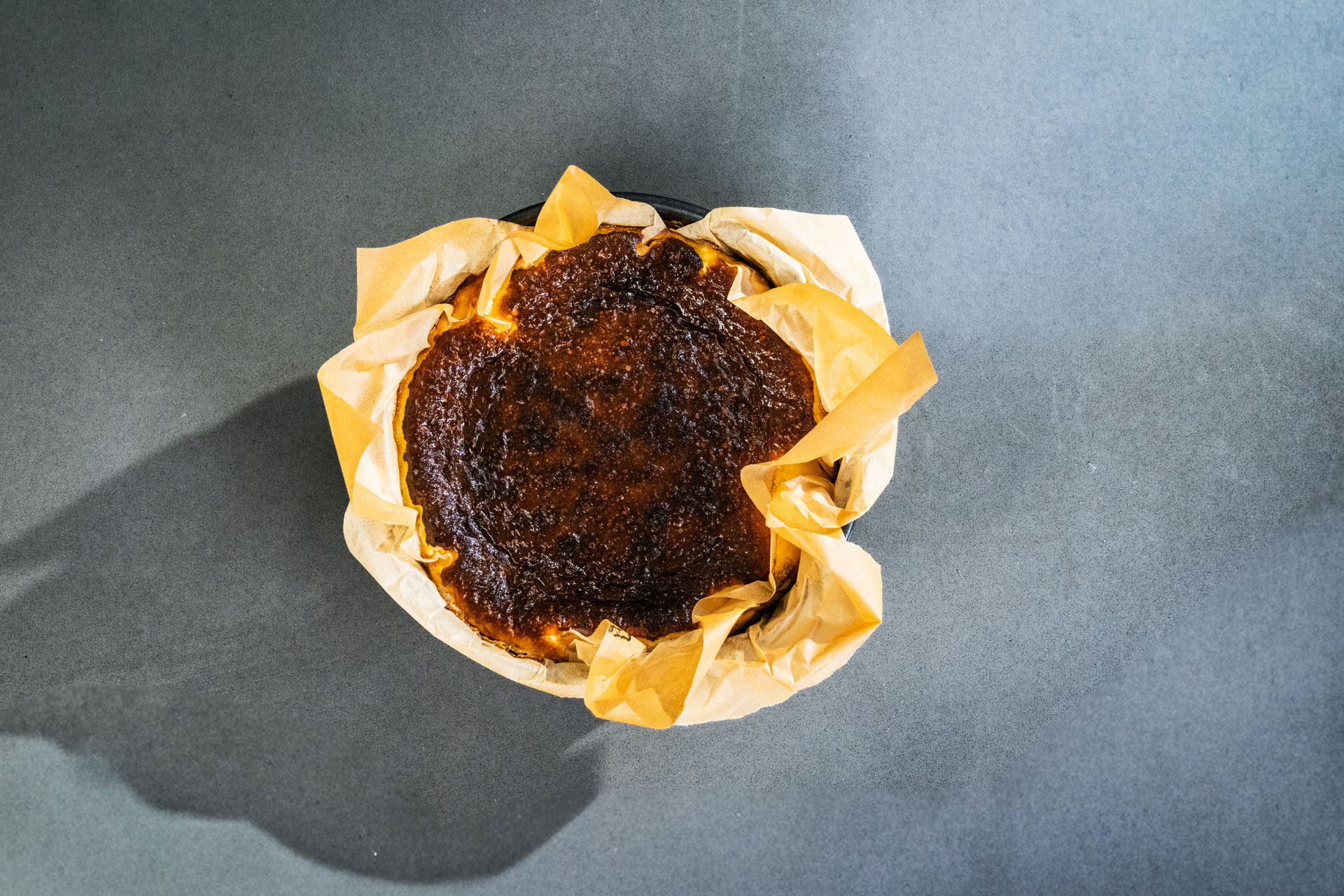
James ‘Jocky’ Petrie’s ‘Basque’ Cheesecake
Inspired by the version served at Brat in Shoreditch, London, and many other places.
Ingredients:
- 1kg cream cheese (you’ll probably use Philadelphia, which helpfully often comes in 165g packs, six of which comes to 990g. That is fine.)
- 2 whole eggs
- 5 egg yolks
- 400g sour cream
- 1 tsp vanilla essence
- 450g caster sugar
- 35g cornflour
- 3g table salt
Method:
- Preheat your oven to as high as it will go, which will probably be around 240°C (fan, if you have it)/475°F/gas mark 9.
- Lightly grease a spring-loaded cake tin measuring 24cm across by 5cm deep. Double line it with greaseproof paper, by cutting out two squares of paper which are big enough so the corners will go over the rim when you press the first one in roughly. Press the second square in so its corners come up above the rim of the tin between those of the first. It should look rustic, rather than tidy and elegant.
- Briefly whisk the cream cheese to bring together the separate packs, then whisk again with all the eggs. Add the sour cream and vanilla essence and whisk for 2 minutes, until incorporated.
- Mix the sugar, cornflour and salt in a separate bowl, then gradually add these dry ingredients to the cream cheese mix while continually whisking, until they have all been incorporated.
- Place your cake tin on an oven tray as close to the oven as possible, then pour in the cheesecake mix. (You don’t want to carry a tin full of liquid across the kitchen.)
- Bake for 30 minutes. Check after 20. If the browning of the top is uneven from front to back, turn the cake around in the oven for the last 10 minutes. It should and will look burnt. As all ovens vary, if it is not properly dark after the first 30 minutes, bake for an extra five or ten minutes.
- Leave to cool at room temperature, then put overnight in the fridge to set.
Nights Out in the Kitchen by Jay Rayner (£22) is out now (Penguin Books)