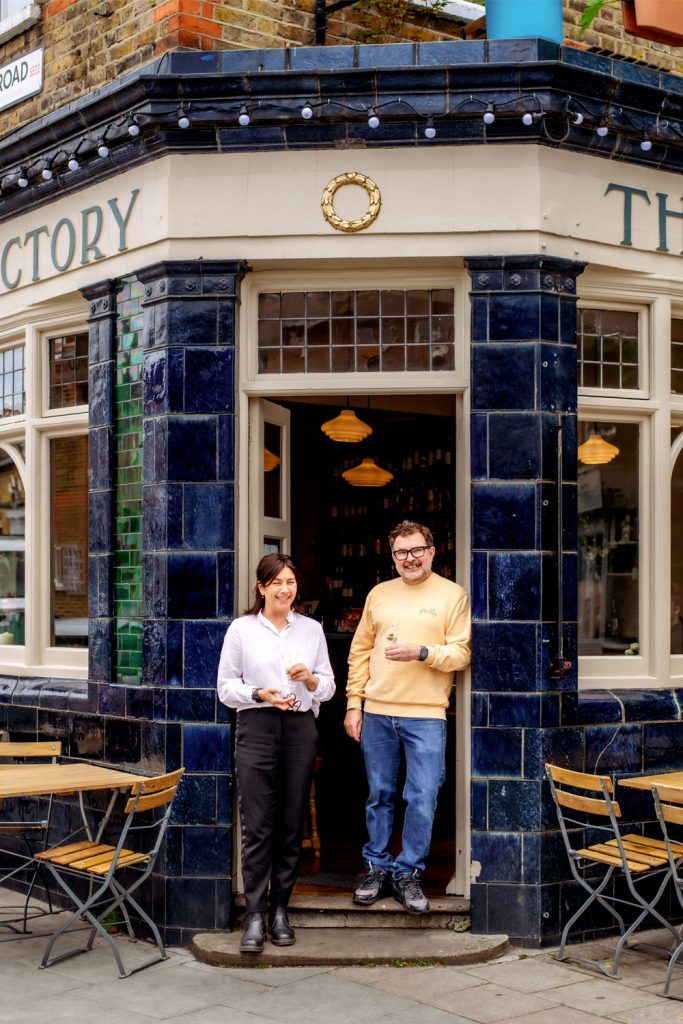




A Bite Of: Wilf Marriott, The Chocolate Founder Doing Things Differently
By
3 hours ago
The Islands Chocolate founder on growing his own cocoa, price swings and why chocolate deserves the respect we give coffee
Most cocoa farmers have never tasted chocolate. That, says Wilf Marriott, is the gulf at the heart of the industry – an industry he describes as dominated by five or six big makers buying cocoa at the cheapest point. Marriott took the opposite route. After giving up on a professional cricket career at 21, he joined his father’s cocoa company in St. Vincent in the Caribbean. Today, Islands Chocolate grows its own cocoa, works with farms in Peru, the Dominican Republic, Nicaragua and Costa Rica, and has chocolate makers at origin as well as in Switzerland and Belgium. It is a long way from the mass market, and an expensive one. With cocoa prices swinging by thousands and palm oil creeping back into bars, C&TH asked Marriott what a good bar should contain – and why he thinks the world of craft chocolate sits decades behind craft coffee.
Islands Chocolate Founder Wilf Marriott On Cocoa, Craft & Conscience
Give us a quick flavour of Islands chocolate: what led you to founding it? And what was the problem you were hoping to solve?
It started back in 2016. I’d been working for my dad’s cocoa company in St. Vincent in the Caribbean, and I realised there was a gap in the market for a chocolate brand that could manage the whole process, right from planting the seed all the way through to chocolate making. Dad had taken over a cocoa business just a few years prior; it was small, with a few farmers – we wanted to employ people at source – and a couple of wheelbarrows, plus a tiny nursery. Prior to this, I’d worked for three other chocolate companies (and prior to that, I’d been trying to break into the world of professional cricket). It occurred to me that most chocolatiers were missing key knowledge about the raw material, and didn’t know what it takes to grow cocoa properly: the blood, the sweat, the tears to get that cocoa harvested properly and fermented properly to create a good-tasting product.
So that was the eureka moment at Islands. Why is nobody else doing this? They do it in wine. The best vineyards grow the best grapes and make the wine on site. Why doesn’t that happen in chocolate?
So why doesn’t it happen?
Most cocoa is grown around the equator. It’s mostly grown in Africa and South America, and most cocoa farmers have never tasted chocolate. That’s one of the horrific things about the industry (beyond the child labour issues; there are still 1.5m children in child labour in Africa). There’s no connection between farm level and chocolate makers. The industry is dominated by probably five or six big makers who focus on buying cocoa at the cheapest point, to then mass-make it into a chocolate that is normally covered with sugar, so it tastes relatively sweet.
It’s also very, very difficult and very, very expensive to do the route we’ve done. We’ve done it the hard way. But we feel we’ve done it the right way, sticking to our three principles, which are cocoa, craft and conscience.
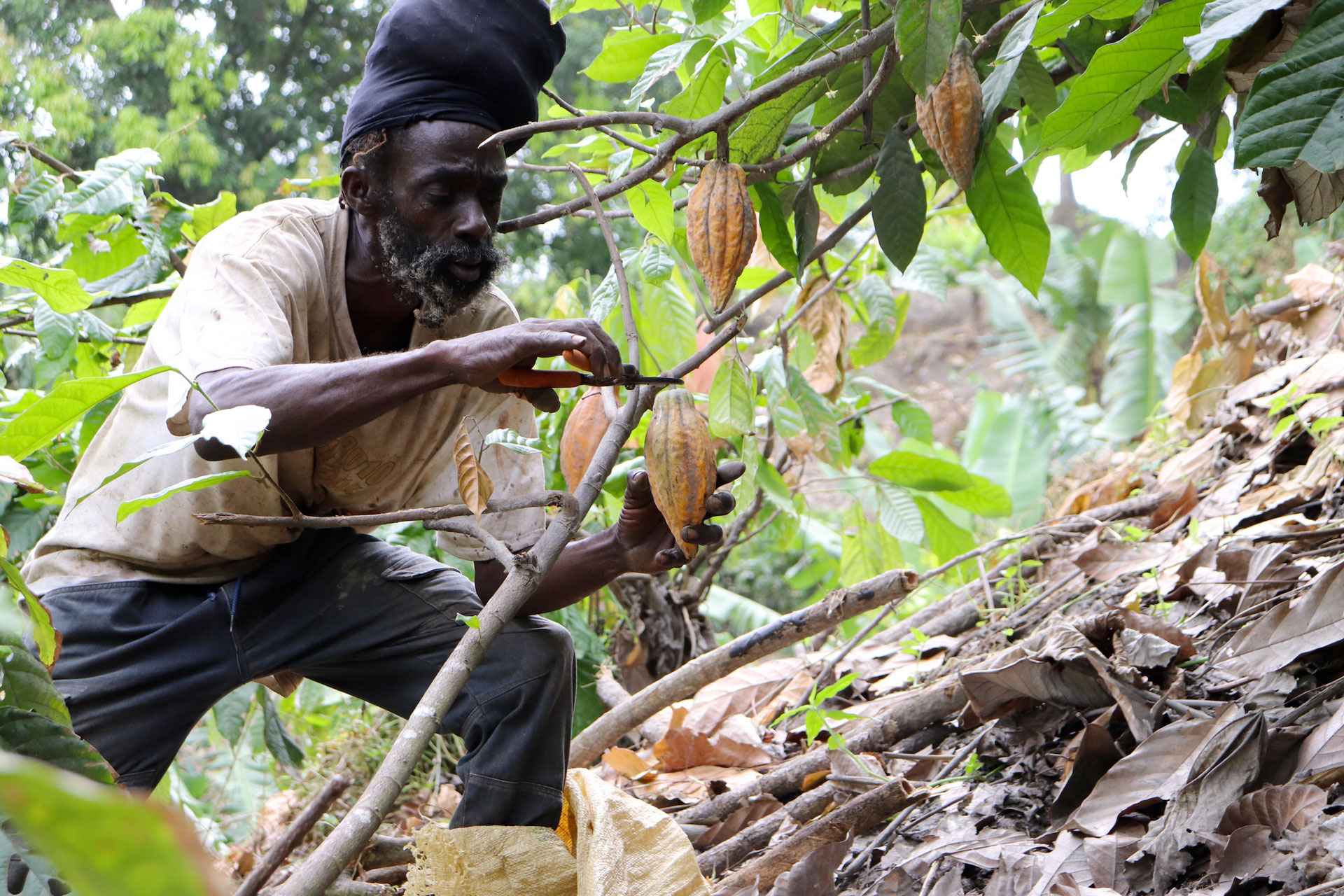
Origins harvesting for Islands Chocolate
Because we’ve run our own farm, which is a real privilege, we’re also able, as the business grows, to find more origins to work with. We work with Peru, the Dominican Republic, Nicaragua and Costa Rica. So we’ve got the Islands way, our blueprint of how it should work, and when we visit other farmers, we know whether they’re doing the right thing or not.
Chocolate prices have been changing in quite an extreme way recently. Why is that?
The last three years have been crazy, really up and down – and difficult to manage. It used to be a lot more stable. You could get into a year’s contract and the price might differ by a couple of hundred dollars a tonne. Now there are massive swings. We’re talking thousands.
The price has gone to, say, £6,000 [a tonne] for the lowest end of chocolate when it was down at £2,000 or £3,000 [a tonne] – as a premium brand, £6,000 was the level we were buying and selling at. It’s brought mass-market chocolate to the same pricing as ours without the quality uplift. So when you go to a customer and say you can either buy our chocolate or the bulk chocolate, and it’s the same price, it’s a no-brainer. If you want great traceability, great sustainability and great flavour, you’re going to have to pay that premium – and with chocolate prices now, the gap is a lot less extreme.
How has the pricing changed mass-market chocolate?
When the cocoa price increased, the cocoa butter price increased too, and those are the two main ingredients in a chocolate bar. Big companies said, right, how can we replace that ingredient with a cheaper alternative? Palm oil has suddenly gone back into chocolate. Palm oil mixes very well with cocoa powder, and cocoa powder is often much cheaper than the actual cocoa.
A good chocolate should have minimal ingredients: cocoa, cocoa butter and sugar. But bulk chocolate has palm oil and all sorts of rubbish in it and increasingly so.
Having reported on coffee becoming more of a luxury in the wake of climate change, I wondered: should we all be treating chocolate as less of a day-to-day buy?
I think craft chocolate is probably 20 years, some say 50 years, behind craft coffee. If you’re spending your money on your amazing coffee in the morning, which is probably one of your favourite parts of the day, it should be exactly the same with chocolate. You should be paying for quality. It’s better for everyone, and it’s going to be better for your health as well.
Do you think our tastes for chocolate are changing?
People like to think their tastes are changing, but they’re not. People still want a milk chocolate. But there’s a growing health angle: I’m particularly keen to come up with chocolate drinks that have a functional element and are a healthy part of your everyday routines.
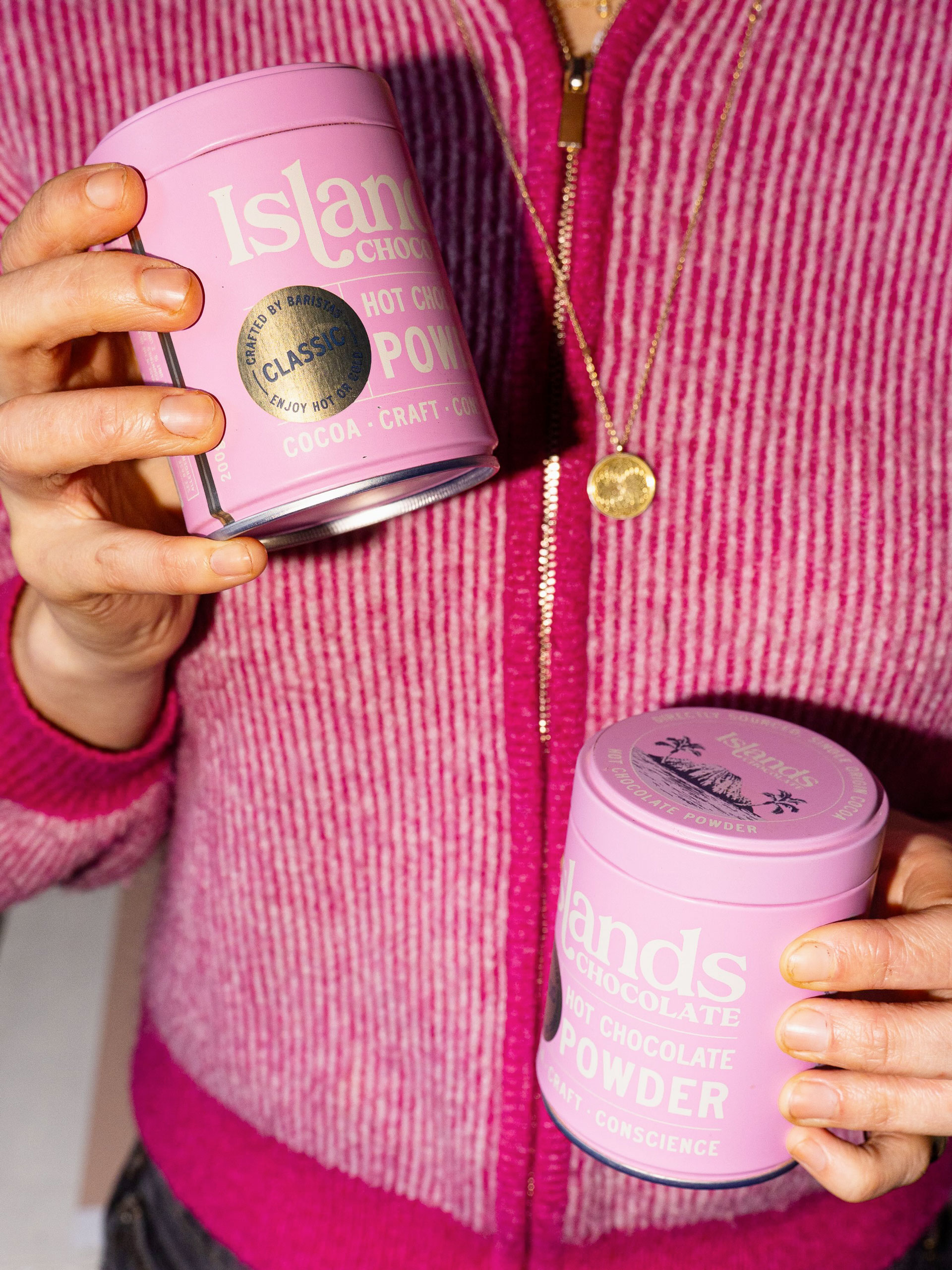
…And do you eat chocolate every day?
I do. I have to. Yesterday, for example, we had a tasting and I had to taste eight different hot chocolates, and I probably have to do that twice a day. My dentist has an absolute fit when I come in.
That’s why we’re very against hot chocolates sold in 12-ounce cups. If you’ve got a really good chocolate, you should be having a 6-ounce cup. A little bit more chocolate in it, a little bit more molten, and it doesn’t need huge amounts of milk and sugar. It should be your quick chocolate fix, and that should be enough, just like you’d have a lovely flat white or an espresso or a cortado.
Sound Bites
What’s in your fridge right now?
We actually had an Islands photoshoot at my place, so there’s a chocolate mousse in there at the moment, our 75 percent chocolate mousse, which is delicious. I’ve got a couple of kids, so there’s a lot of milk. Some rosé for the weekend.
What can you reliably get your kids to eat?
Chocolate, reliably. I’ve only started giving it to my daughter recently. She’s always like, ‘Daddy, is this your company?’ when we give her our big chocolate buttons. She absolutely loves them.
The kitchen gadget you can’t live without?
We’ve had this milk frother for the last seven years, which is great at frothing milk, but it’s also great for hot chocolate. It’s called a Severin, and it’s Mr. Reliable. And a sharp knife. If I go to a kitchen and the knife isn’t sharp, what’s the point?
The cookbook you use most?
I often cook from Jamie Oliver. But they’re simple. I do a slow-cooked leg of lamb, which takes a while to make, but it’s so, so good.
Your comfort snack?
Any type of crisp. I’ll literally have the whole packet. On the move it would be barbecue Hula Hoops, because they’re not that messy. At home, some sort of Tyrrells crisp, depending on the flavour.
A good way to use up leftovers?
Particularly when you have kids, just blitzing anything. You can make it into a soup, you can make it into a pasta sauce, you can have it with beans, have it with rice.
The biggest mistake people make when buying chocolate?
I think they’re just looking at the price and the size of the bar. You think you need to eat a lot of chocolate to get your fix, but you don’t. You need to eat less of a good quality chocolate. If you have something good, you’re going to need two or three cubes, and you’re going to get a more interesting flavour. If you’re into your coffee and you love the different fruity notes that come from different coffees, you get the same with chocolate if you buy a good quality one.
Islands Chocolates has just launched its 100 percent cocoa in tin form. Find out more at islandschocolate.com