


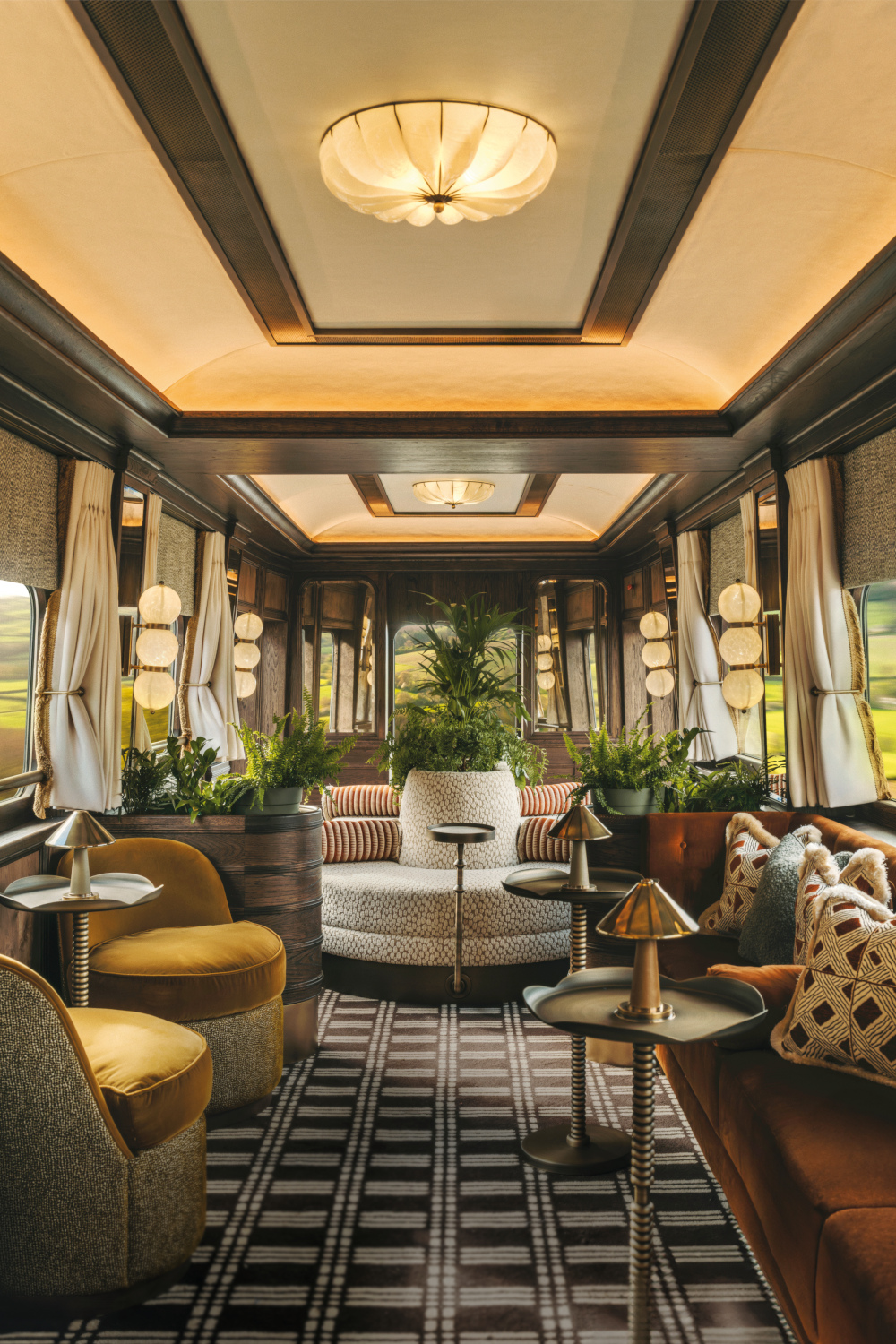
Inside Belmond’s Brand New Luxury Sleeper
By
3 minutes ago
Travel (and slumber) in style
Carole Annett discovers the meticulous British craftmanship at the core of Belmond’s cosseting new Britannic Explorer.
A Closer Look: Belmond’s Britannic Explorer
Meandering from city to countryside, showcasing a shifting backdrop from London to Cornwall, the Lake District and Wales, the Britannic Explorer is a quintessentially British experience. ‘It was a unique project for us,’ says designer Rebecca Floyd of Albion Nord, reflecting on the design of Belmond’s new luxury sleeper, ‘allowing us to lean into the romance of train travel.
‘The train is really a metal cylinder filled with incredible joinery,’ explains Albion Nord director Ben Johnson. ‘Everything needs to be meticulously detailed and have a reason for being there – the carpet pattern, the fabrics, the cabinetry.’ Floyd agrees. ‘And the ceiling is like another wall, because it’s only a metre away – you can’t forget any surface.’
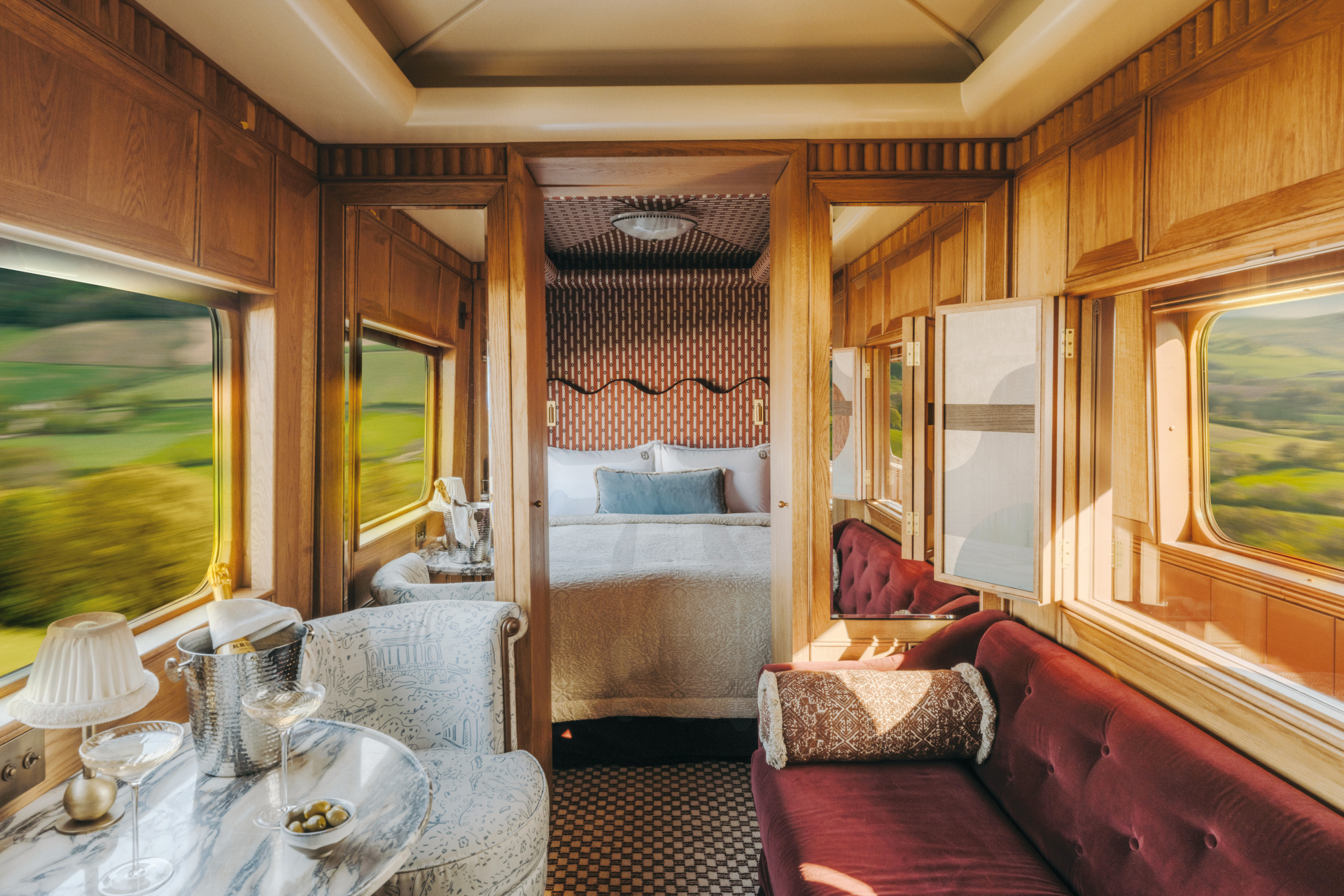
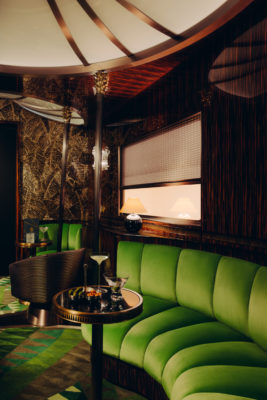
Johnson explains the London-based studio’s design concept: ‘It was important to pay homage to the landscape.’ Their research included stately homes, exploring how they convey a feeling of majesty and comfort, as well as famous trains such as the Orient Express. They took classic elements and reinterpreted them with a modern, often playful flourish, telling a story through fabrics, woodwork and metalwork.
Each of the train’s key guest areas is rooted in nature. ‘The suites are based on botanicals, the dining car has potting shed references with foliage-inspired lighting, and the observation car is like an apothecary where medicinal herbs turn into cocktails,’ explains Johnson. Everything has been crafted in Britain, elevating strict train-furniture regulations – so nothing can wobble or fall – into something serene and refined.
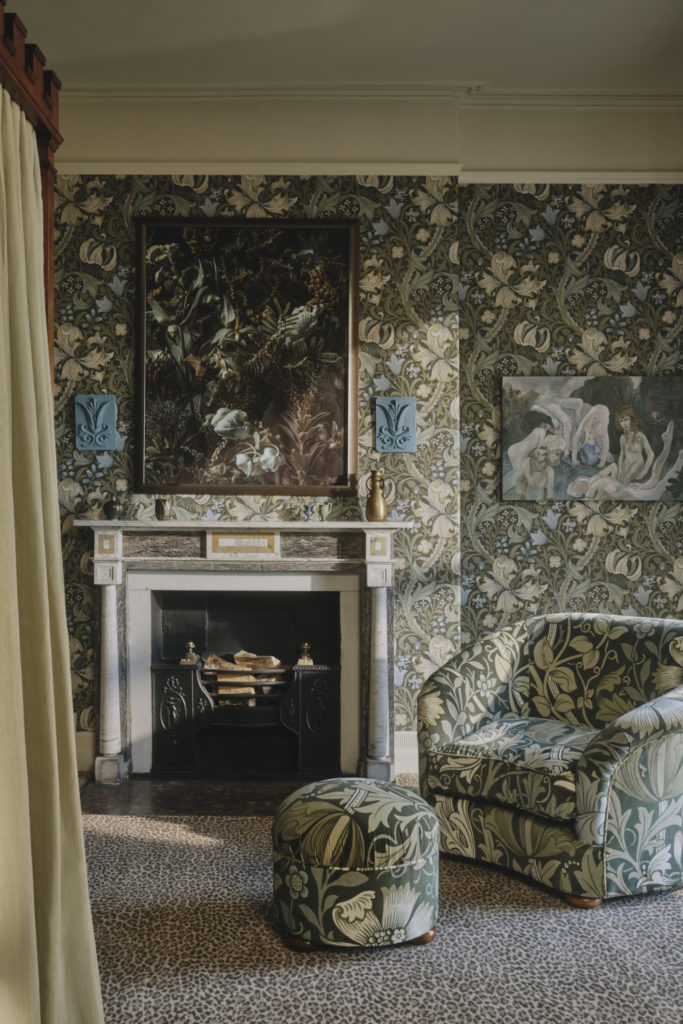
The studio gathered a host of British artisans for the project, including artist, writer and designer Luke Edward Hall who created a bespoke fabric used on walls, armchairs and headboards. His design references sights passengers may see along the route: seagulls and sandcastles, Welsh dragons, the bridges of Somerset and castles of Hampshire.
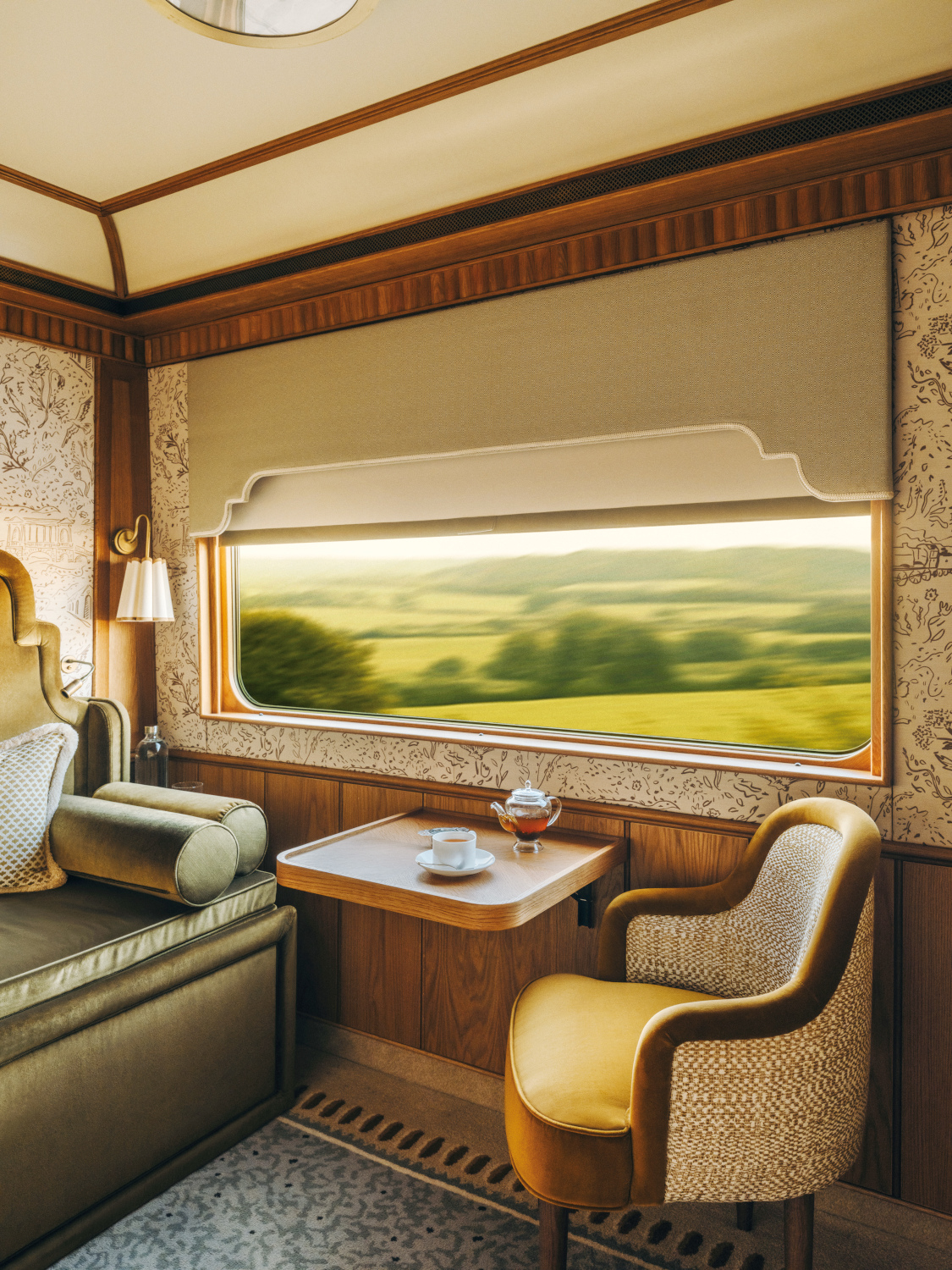
Luke Edward Hall’s bespoke fabric is a special edition of a design called Rousham and is made by Rubelli
Initially drawn by hand, Hall’s designs were transformed into digital patterns by Venetian manufacturer Rubelli, who then began the intricate weaving process, translating art into textiles. ‘When Belmond got in touch with Rubelli, the idea was to make a special edition of Rousham, a fabric I designed as part of a collection called Return to Arcadia,’ said Hall. ‘For this new bespoke version, I was imagining a train journey and hours spent looking out of the window, details I might notice among trees or on beaches as I whizz by at high speed – seashells, country houses, birds. I was picturing the new motifs originating from a sketchbook of drawings made during this journey.’
Another commission was shell artist Mel Campion, whose work has featured in other Albion Nord projects. ‘We thought it would be fun to create a shell-encrusted grotto-effect in the ladies powder rooms,’ Floyd recalls. ‘But with the motion of the train, covering all the walls in shells would have led to cracking.’ Instead, they added antique brass shell-shaped cabinet knobs and mother-of-pearl inlays to enhance the sense of a Cornish coastline.
The Britannic Explorer has 18 guest rooms including three grand suites. Art throughout was curated by Studio Graphite with an emphasis on commissioning emerging artists whose work echoes and responds to nature.
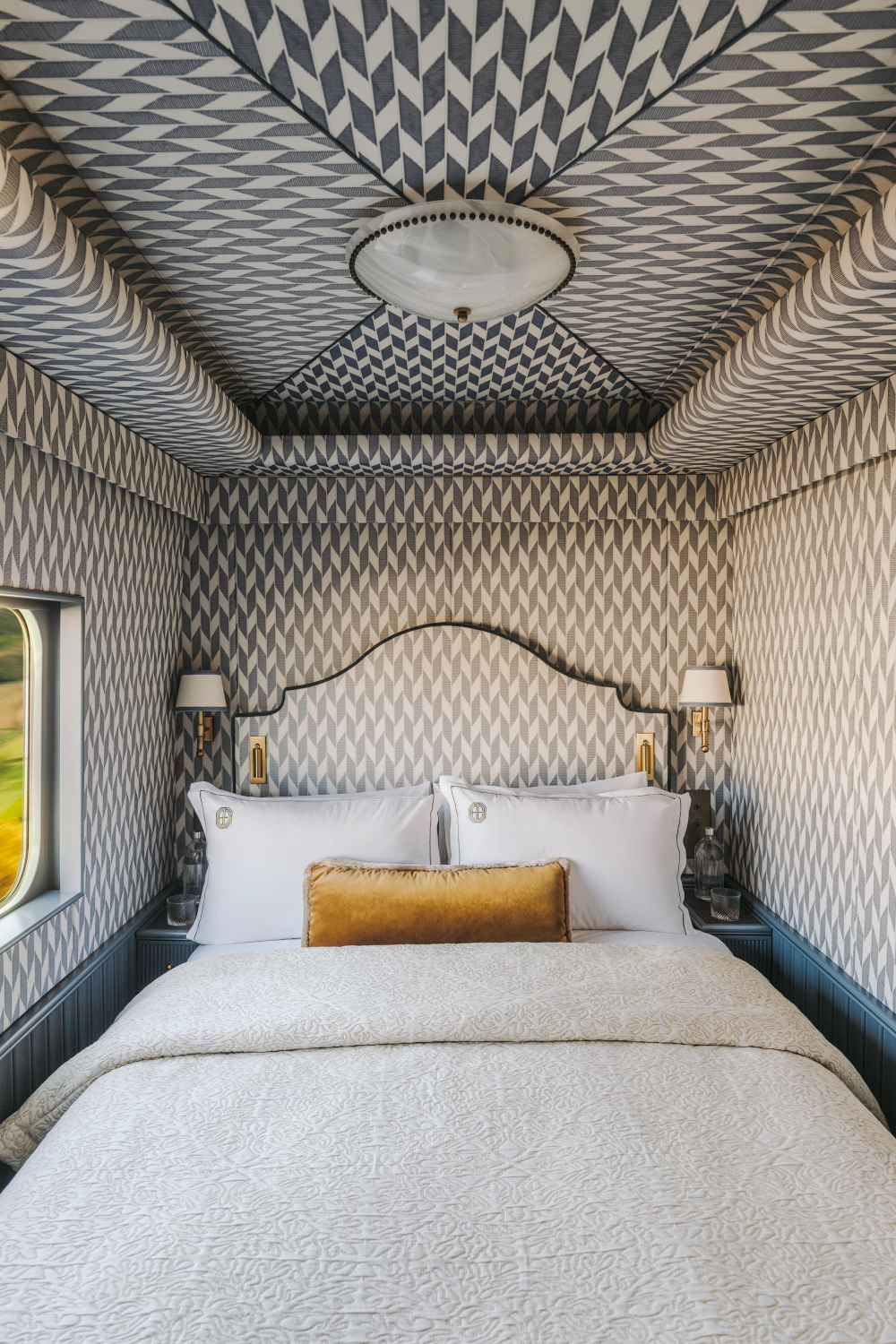
In the three suites, pen drawings mirroring hills and mountains by Marcus James adorn the walls, while Sarah Woods’ oil-painted beach scenes create a soothing ambience in the spa. In the restaurant car, Adam Halls’ stitched textiles are reminiscent of lichen and algae. Brixton-based artist Olly Fathers created graphic compositions resembling mid-century marquetry. ‘I’ve used some beautiful species of wood,’ he says, ‘each with their own character. They change as you move past them. I hope they will draw people in to look a little more closely.’
The Britannic Explorer is, ultimately, a celebration of the journey itself – of landscape as luxury, of craftsmanship in motion, and of design that honours both nostalgia and modernity. As Floyd puts it, ‘It’s not often you get the chance to create something so compact, yet so rich in detail.’