


These Sustainable British Brands Are Rethinking How Things Are Made
By
3 months ago
These modern British mavericks are working towards net zero in imaginative ways
From food to fashion, an elite handful of sustainable British brands are tearing up the rulebook to reduce waste streams, experiment with manufacturing, and build a better future. Meet the ten disruptor brands creating business blueprints that can help change the world.
10 Sustainable British Brands To Know Right Now
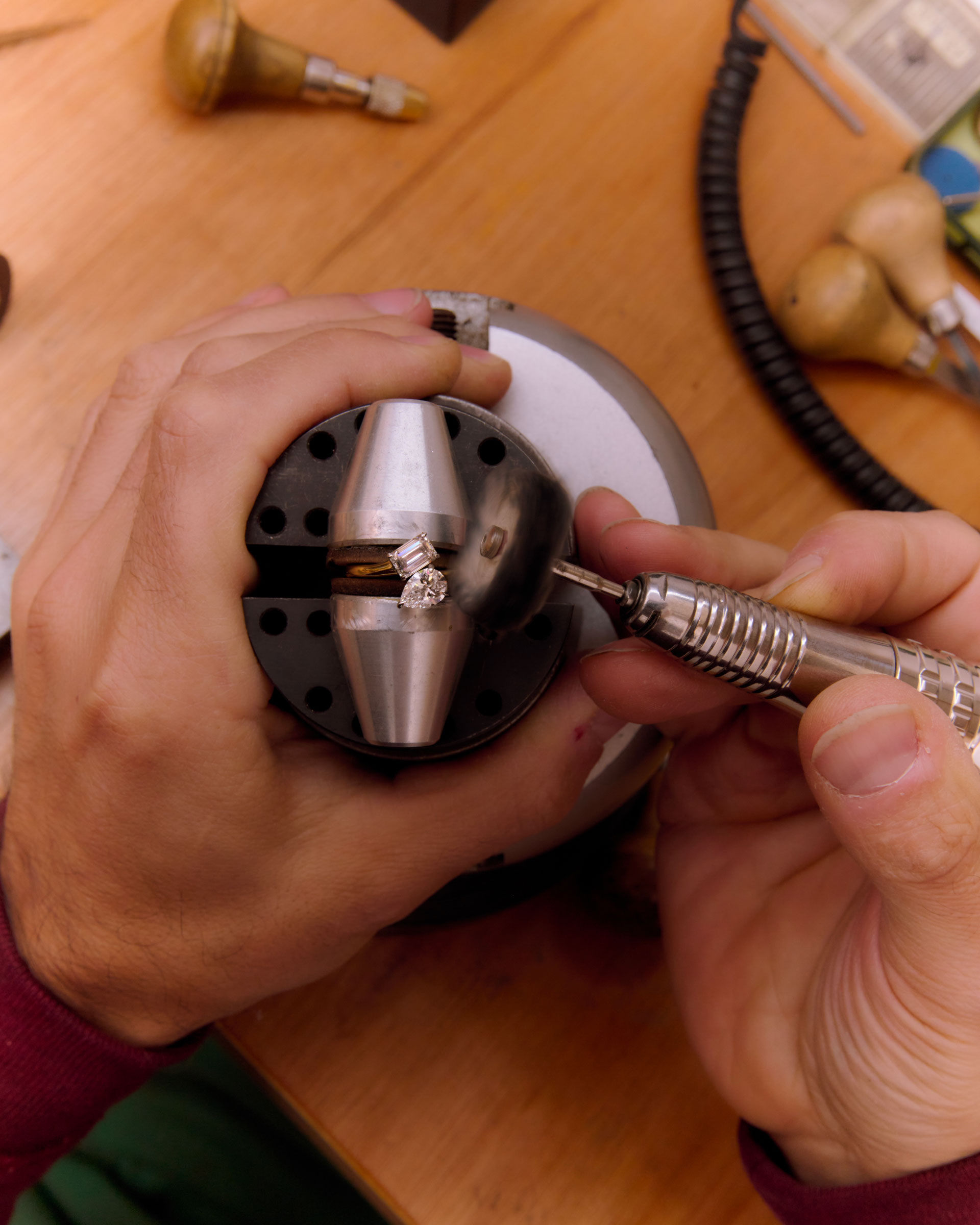
Skydiamond sits in Dale Vince’s portfolio of climate change combatting brands, this time targeting the incredible emissions produced by diamond mining
Skydiamond
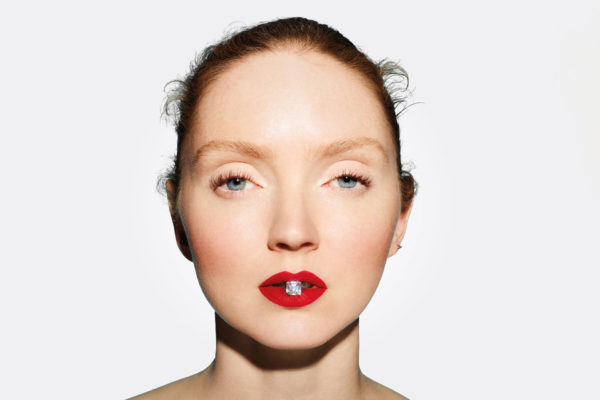
Skydiamond’s Dale Vince is a polymath for the anthropocene. Alongside Ecotricity and Forest Green Rovers FC, Skydiamond marks part of his effort to design industries that actively address the most pressing issue of our time: the climate crisis. This problem, the company says, ‘cannot be solved in silos. Jewellery, energy, agriculture and manufacturing are all interlinked, and to achieve real change, we must approach them as part of a broader system. At Skydiamond, we believe luxury should restore, not extract.’ In fealty to that mission, Vince’s lab-grown diamonds are sparkling carbon sinks, the result of a direct air capture that removes CO₂e from the atmosphere, powered only by green hydrogen. Traditional diamonds emit about 160kg of CO₂e per carat mined; an analysis by Imperial College London confirmed each carat of Skydiamond results in 99.79 percent less greenhouse gas emissions. When many other lab-grown diamonds are created with fossil fuels, Skydiamond is minimal-waste, uses no industrial pollutants, and sets a new benchmark for clean, circular luxury. skydiamond.com

Vivobiome by Vivobarefoot aims to radically reduce the overproduction of global footwear through a scaleable 3D printing model
Vivobarefoot
More than 19 billion shoes are produced each year, with ‘the majority destined for landfill,’ says Vivobarefoot co-founder Galahad Clark. The brand uses leathers from wild-roaming cattle and sustainably tanned hides alongside cork, natural yarns and recycled compounds, avoiding virgin materials wherever possible. Its most radical venture, though, is VivoBiome: the world’s first biodegradable, 3D-printed barefoot footwear. Customers scan their feet to produce perfectly fitted shoes, a model that could one day enable localised assembly. Launching in the UK in 2026, VivoBiome will then expand globally via mobile scanning. Systemic waste is tackled by eliminating unsold inventory before production even begins, and the mission is to demonstrate that scan-to-print footwear can be commercially viable. Barefoot shoes are no longer niche: a pair of Vivos is a credible style choice for 2026, reconnecting your tread with the planet. vivobiome.vivobarefoot.com
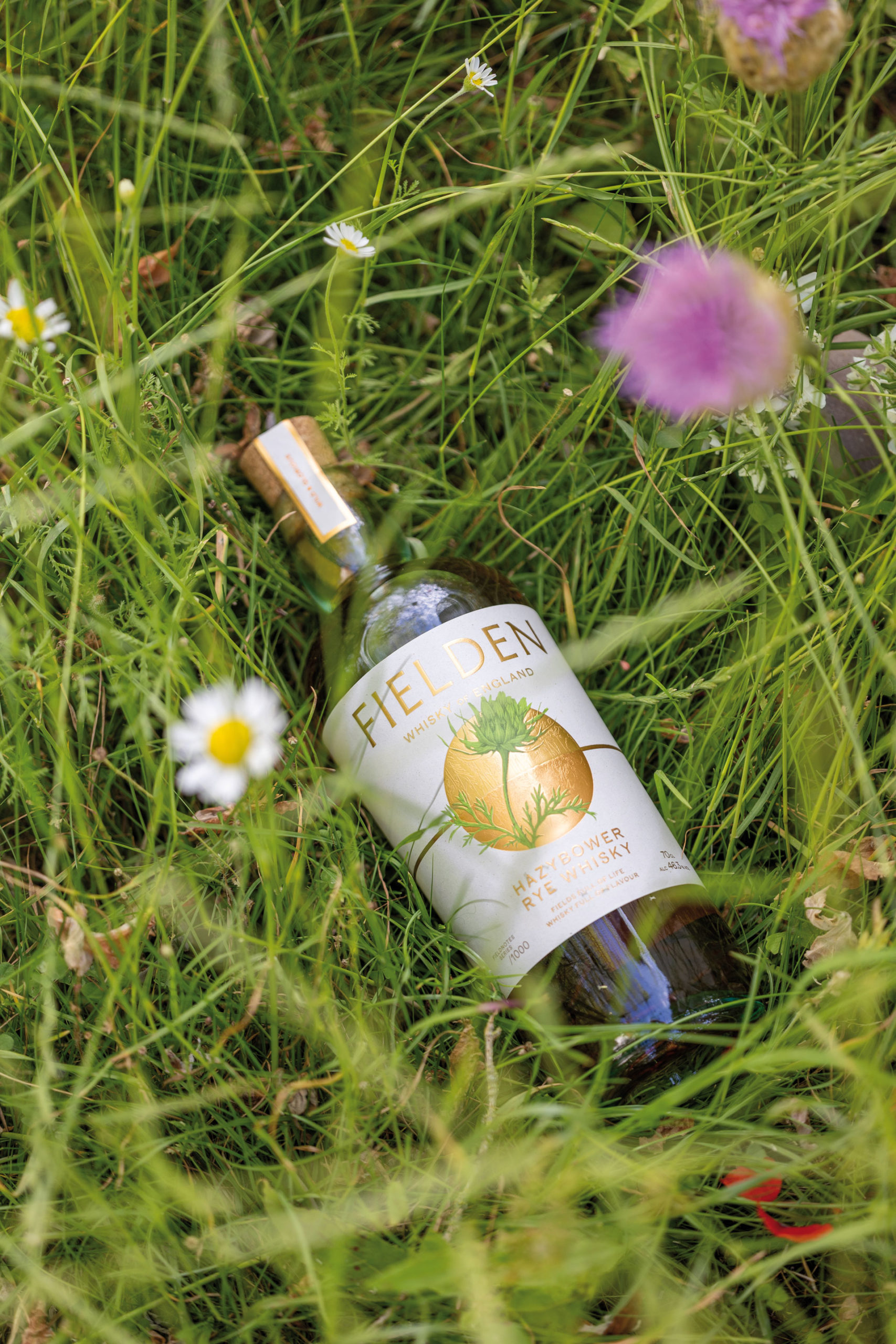
Fielden whisky aims to bring back a pre-industrial farming practice that uses diverse grains to produce its award-winning drink
Fielden Whisky
As if English whisky wasn’t itself still a slight oddity, Fielden Whisky of England is an outlier among outliers. The brand, founded as the Oxford Artisan Distillery in 2017 by Tom Nicolson, harks back to England’s heritage spirits and manufactures with methods to match. By using diverse grains that grow without sprays or fertilisers, it revives both a pre-industrial farming practice and a pathway towards lower-carbon spirit production that the rest of its industry can learn from. The brand’s partner farmers plant each of their fields with a mix of heritage grains – rye, malted rye, wheat and malted barley – grown within a permanent clover understory that feeds the soil, suppresses weeds and locks in moisture. The system allows minimal tillage and produces 44 percent less CO₂e (per tonne, per grain) than conventional cereals. Farmers are paid by the acre rather than by yield, with Fielden supplying seed and sharing risk. It’s a deliberately experimental approach that has paid off: Fielden’s rye whisky won gold at the World Whisky Awards 2025, proving that there’s no compromise for doing the right thing. fielden.com

BEEN London transforms post-consumer fabrics, linens and leathers into materials that become stylish accessories
BEEN
Waste not, want not. BEEN turns that adage on its head: its waste-derived luxury accessories are seriously covetable. Founded in 2018 by ex-BBC journalist Genia Mineeva, BEEN defines itself as both an accessories brand and design studio experimenting with unwanted materials. Its collaborations span from Rosewood Hotels to DHL, transforming post-consumer fabrics, linens and leathers into plastic-free, circular materials. Perhaps most impressive is its partnership with FastFeetGrinded, whose patented technology enables full recycling of post-consumer footwear. Together, they have created the first truly recycled post-consumer shoe leather, showcased in a proof-of-concept capsule featuring a tote, laptop case and cardholder, each made from deconstructed shoes: leather uppers, linings and foam soles reborn as new materials. With repairs, resale and end-of-life takeback also built into its model, BEEN demonstrates how waste can become a resource. Been.london
E.L.V Denim are the last word in gorgeous upcycling
E.L.V Denim
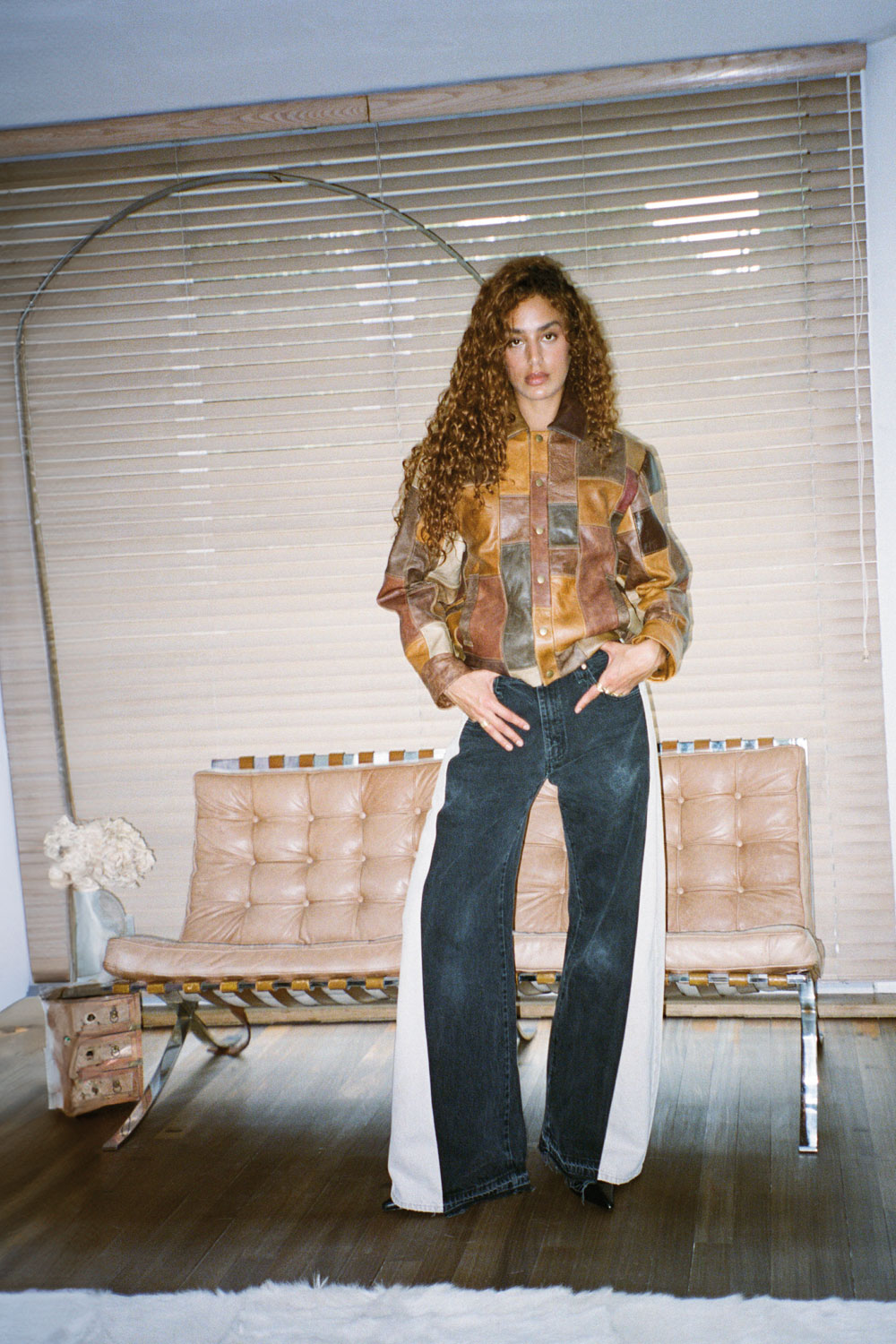
The first completely upcycled brand to present at London Fashion Week (AW24), E.L.V Denim is a staple in every British fashion editor’s wardrobe for its showstopping, bespoke jeans, each pair made from post-consumer denim waste. Founded in 2018 by Anna Foster with just £1,500, the brand has expanded from custom trousers into patchwork jackets, shirts, corsets and ready-to-wear pieces, all made exclusively from discarded materials. Its east London supply chain is so hyper-local you could walk from fabric-cutting stations to the seamstress finishing couture-inspired seams, which can be let out or in as bodies and styles evolve. To date, the brand has upcycled over 26,000 pairs of jeans, saving the equivalent of 275 million litres of water. It has also worked with luxury hotel groups to transform waste into high-end textiles, proving circular design can scale beyond fashion. Workshops and university lectures given by the brand further inspire the next generation of designers to embrace circular systems from the outset of their careers. elvdenim.com
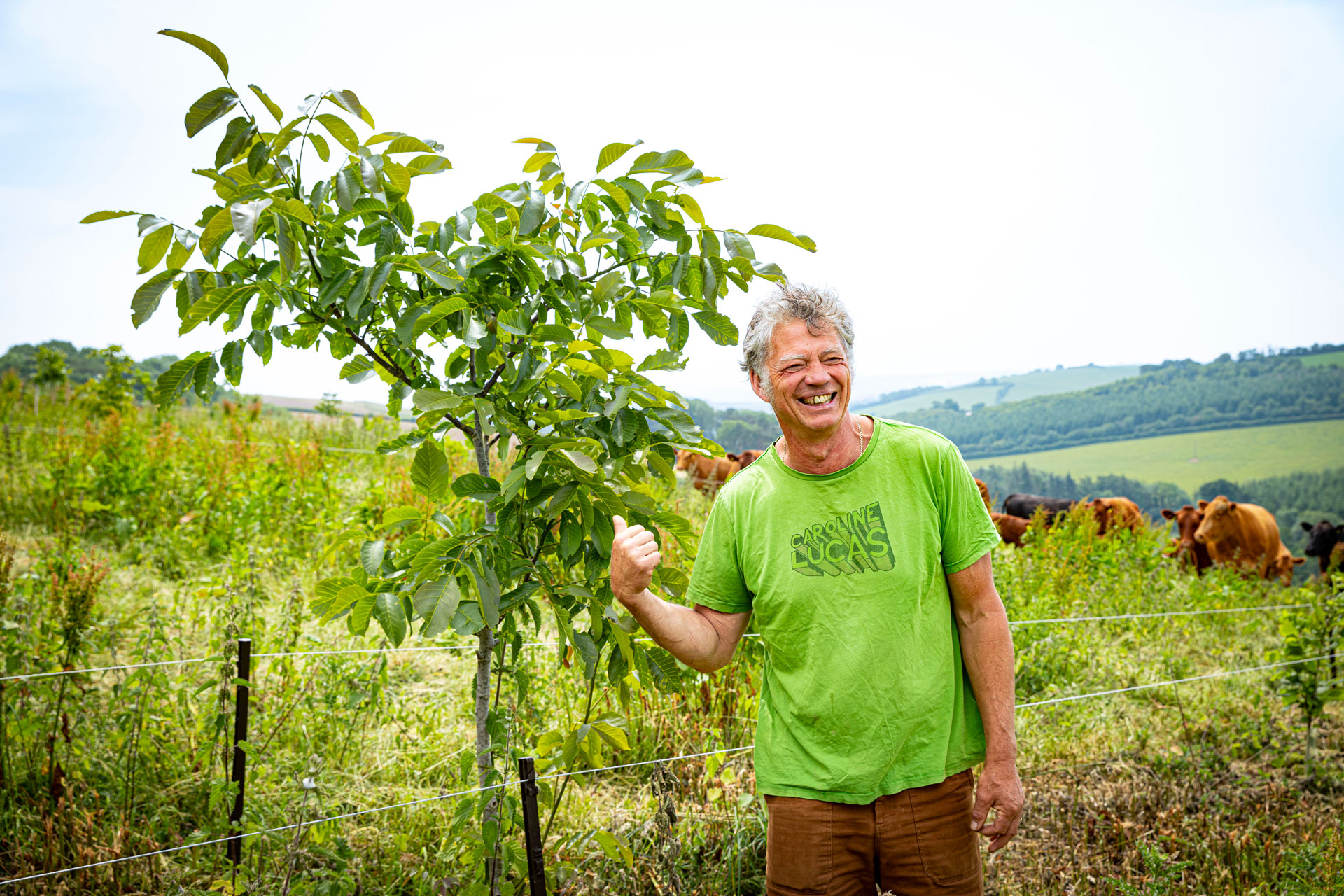
Guy Singh-Watson has championed organic farming since before it was cool, and his joint venture Baddaford Farm is a radical means of exploring new small-scale, land-based enterprises.
Riverford
Guy Singh-Watson is a radical among farmers. Founding his organic veg box company, Riverford, in 1986, he has scaled the business without compromising integrity. Its mission: to grow and supply the best organic food with nature rather than against it, treat people and growers with respect, and avoid ‘corporate convention’. In all three, it has succeeded. Riverford’s sustainability is pragmatic – closed-loop packaging, low-impact logistics – and a leading example to other direct-to-doorstep businesses. Baddaford Farm, Singh-Watson’s joint venture with his wife Geetie, is a more radical expression. It brings together small-scale, land-based enterprises exploring perennial crops, wildlife corridors and shared farming systems. Its regenerative practices, from wetlands to perennial systems, enhance soil health and biodiversity, demonstrating how experimental, tiny approaches can improve food security, reduce agricultural footprints and help repair the earth in the face of the climate crisis. riverford.co.uk
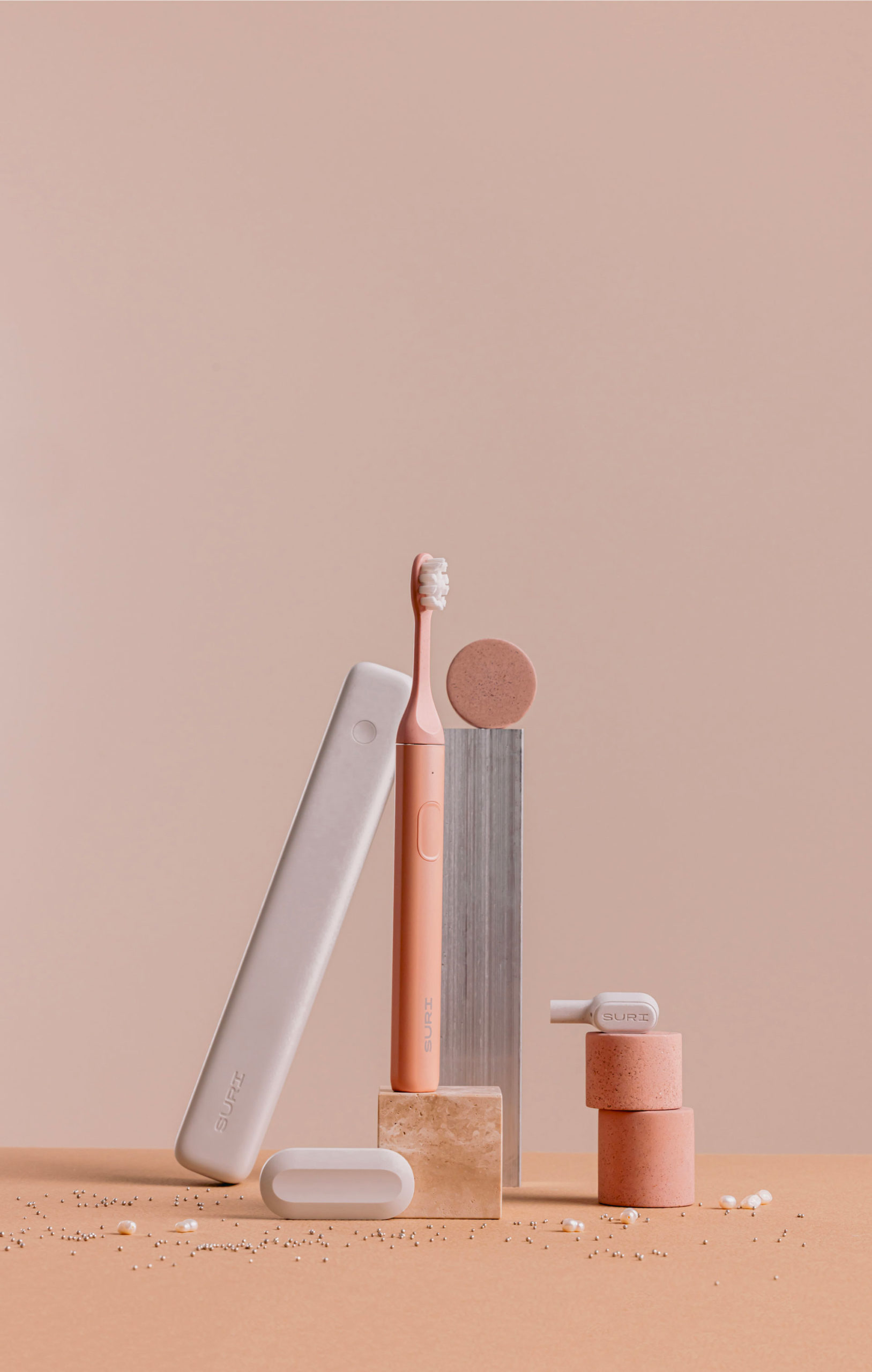
SURI addresses the toothbrush industry’s waste as one of the only UK oral care brnads with a free toothbrush head returns scheme – the toothbrush heads then are remade into washbags and toothpaste keys
SURI
This will leave a bad taste in your mouth: the average person uses around 300 manual toothbrushes in their lifetime, most headed to landfill. Switching to an electric toothbrush with a changeable head reduces plastic use in manufacturing but raises new issues, such as cobalt sourcing, e-waste and plastic heads that still require inconvenient drop-offs. SURI – Sustainable Rituals – is a British startup reimagining oral care with well-designed, attractive products. Its toothbrushes pair sleek aluminium handles, which can be repaired or fully recycled, with heads made from cornstarch and castor oil. Every step of the supply chain is mapped for ethical sourcing, including conflict-free cobalt, and SURI is the only B Corp business in its category. It is also one of the only UK oral care brands to offer a free toothbrush head returns scheme, turning used heads into new products like washbags or toothpaste keys. While the industry follows ‘buy-use-discard’, SURI offers a circular alternative… leaving a refreshing taste in the mouth. trysuri.com
Elvis & Kresse
Imagination is the trait that underpins the purpose – and success – of accessories brand Elvis & Kresse. Founded in 2005, married couple James ‘Elvis’ Henrit and Kresse Wesling OBE began their journey transforming decommissioned fire hoses from the London Fire Brigade into beautiful, hardy handbags and totes. ‘We now collect ten to 15 different waste streams, including leather from Burberry,’ says Wesling, as much an activist as she is a business owner; since 2015, the brand has doggedly pursued a wholly regenerative model, inspired by the climate solution playbook Drawdown by Paul Hawken. The brand’s recent investment in a barn HQ in Kent means the workshops are ultra energy efficient (thanks to 28 solar panels and a mechanical ventilation heat recovery system), completely water-regenerative, and able to scale its mission in ways it previously couldn’t imagine. The latest frontier is to produce an English sparkling wine on the farmlands it has almost completely restored from soil degradation – literally drinking in the fruit of its honest toil. elvisandkresse.com

WUKA tackles the 200,000 tonnes of single-use period waste that is discarded each year in the UK
WUKA
Periods don’t often get talked about. Nor do the 200,000 tonnes of single-use period waste discarded in the UK each year. Wake Up Kick Ass (WUKA) has fought both issues since its inception in 2017 by environmental scientist Ruby Raut and her husband, Dave Slocombe. Growing up in Nepal, Raut saw women use old sari rags as sanitarywear so, when she arrived in the UK, she was struck by the abundance of disposables. WUKA became the UK’s first reusable period underwear brand, expanding into active and swimwear that let women and girls move freely through their cycles. It believes sustainability isn’t a luxury, nor should good period care be a privilege. WUKA has created pants that are both accessible and desirable – a hard ask of a period product. Each pair diverts around 200 single-use items from landfill, while the brand’s activism removed VAT on period pants and its education programme now spans 600 schools. Its next step will be to develop end-of-life solutions for products past their wear, including take-back and recycling schemes. wuka.co.uk

Bamford’s merino collection is a first-of-it-kind capsule made from the brand’s own flock in the Cotswolds
Bamford
Founded in 2004 by Carole Bamford, Bamford grew from the soil of Daylesford Farm – a pioneering organic estate in the Cotswolds – and from a belief that true luxury begins with the land. It would not be a stretch to say that Carole Bamford brought organic principles into the mainstream. The company champions circularity, using ‘materials that could be mistaken for by-products’ from its sister brand Daylesford as the basis for beautiful lifestyle products. ‘I’m passionate about circularity initiatives that unite my businesses while reducing waste, from sheep’s wool to cattle hides processed at our abattoir,’ says Bamford. The Merino knitwear collection is a first-of-its-kind capsule made entirely from Daylesford Farm’s own flock of Saxon Merino sheep in the Cotswolds, which is then spun and knitted locally. Each piece travels less than 552 miles from fleece to garment – versus an average 18,000 miles for imported Merino wool – cutting transport emissions by 90 percent. Evidence for truly local, responsible luxury. bamford.com