Travel has the power to change us. This category champions those creating journeys that safeguard biodiversity, empower local communities and set a new bar for regenerative hospitality.

Founded in 1993, Explora is a certified B Corp that has spent more than 30 years operating lodges and expert-led expeditions across Chile, Argentina, Peru, Bolivia and Rapa Nui, with a mission to drive conservation through in-depth exploration. Crucially, conservation is built into the business model itself: its two Conservation Reserves – Torres del Paine in Patagonia and Puritama in the Atacama Desert – protect roughly 13,000 hectares, keep 95 to 97 percent of the land purely for exploration and conservation, and are designed to sustain themselves in perpetuity. Its own rangers run puma and endangered Andean cat monitoring, while the Echo Society programme allocated more than US$250,000 to conservation and community projects between 2023 and 2025.
‘I felt that Explora demonstrated everything which exemplifies an inspiring relationship between nature conservation and tourism. The enthusiasm shone in their video, the work that they are doing genuinely covers all aspects of a good conservation project demonstrating an empathetic and profound understanding of their work with wildlife, community, education and science.’ – Annabel Heseltine

Family-owned and run by naturalists for naturalists, Naturetrek has spent 40 years offering expert-led wildlife holidays – and ploughing its profits back into nature. Rather than outsourcing offsets, it buys threatened land in biodiversity hotspots and hands it to local conservation partners to steward. In Ecuador, a portion of every flight booking since 2007 has raised over £625k to secure 2,181 acres of WWF-classified cloudforest corridor, where two frogs and a beetle new to science were discovered in 2025; in Italy, the Macchietelle Reserve protects habitat for the critically endangered Marsican brown bear; and in Scotland, the 3,609-acre Stuckindroin estate is beginning a 200-year restoration with RSPB Scotland.
What the judges said:
‘Naturetrek offers a direct expression of conservation philanthropy, translating travel revenue into the permanent protection of highly biodiverse regions.’ – Shailja Dubé

When environmentalist Roberto Klabin transformed his family’s ranch in 1985, cattle ranching was considered the Pantanal’s only viable economy. Caiman pioneered a different model, combining ranching, ecotourism and conservation across 53,000 hectares, including the permanently protected RPPN Dona Aracy reserve. It is a base for research initiatives such as Onçafari and the Hyacinth Macaw Institute, and with 16 neighbouring properties forms an ecological corridor of more than 400,000 hectares. When fire burned 80 percent of the property in August 2024, Caiman closed the hotel for two months, set up wildlife feeding stations and a veterinary hospital, and replanted with resilience in mind. Women now make up 45 percent of the workforce, up from 5 percent – and a former jaguar hunter now shows travellers why the species must be protected.
What the judges said:
‘The model of turning a failing cattle farm into a conservation reserve is well rehearsed and Caiman, Pantanal is world-class in its apex predator recovery initiatives.’ – Annabel Heseltine

Restored from a ruin above the village of Imlil in Morocco’s High Atlas Mountains, and reachable only on foot or by mule, Kasbah du Toubkal sees itself not as a hotel but as a Berber hospitality centre and eco trekking lodge, run in partnership with the local community. A full 5 percent of all guest revenue is reinvested in village projects managed by the Association des Bassins d’Imlil, funding ambulances, communal hammams and waste management. All 34 staff come from neighbouring Berber villages, alongside more than 100 local muleteers and guides. Education For All, co-founded by owner Mike McHugo MBE, grew from 36 girls in 2007 to 186 within ten years. Rebuilt with the same ethos after the 2023 earthquake, the Kasbah is a living blueprint for community-led adventure travel.
What the judges said:
‘Convincing interpretation of responsible luxury: the experience is inseparable from the landscape and community in which it operates. Local employment and sourcing, a direct community contribution, investment in village infrastructure and long-standing support for education.’ – Shailja Dubé

A Certified B Corporation with 35 years of expedition experience, AE Expeditions sails three purpose-built small ships to Antarctica, the Arctic and other remote coastlines, with a 1:7 guide-to-expeditioner ratio and naturalists, historians and scientists on every voyage. Its Citizen Science programme turns guests into researchers: in the past year they helped record 344 whale encounters through Happywhale, including two sperm whales new to science. In FY25, AE provided A$364,000 of in-kind expedition support to researchers, donated A$140,000 to conservation organisations and, through its Ocean Regeneration Program, prevented 4,716kg of plastic waste from entering the ocean. Trials of marine biofuel, microfibre filtration and AI-assisted routing show a company determined to turn curiosity into positive action.
What the judges said:
‘AE could stop at just offering adventure but are intentional about ensuring that their guests leave with a deeper understanding of the impacts of climate change which will hopefully drive behaviour change back home.’ – Jamila Brown

Sweden’s first design-led boutique farmstay, Sibbjäns is a 22-room hotel, restaurant and regenerative farm on the southernmost tip of Gotland, set in 1887 limestone buildings restored with reclaimed materials and traditional Gotlandic techniques. Its philosophy is simple: nothing leaves the loop. A solar array charging a 558 kWh battery, a wood-chip burner and geothermal network power the property, the seedling nursery is warmed by manure heat and all farm vehicles run on HVO100 renewable diesel. Rainwater from roughly 3,000 square metres of roof fills a plant-purified natural pool, while on-site compost has lifted the soil’s organic matter from 6.6 to 10 percent in three years. With an independent biodiversity plan and master craftsmen training a new generation, Sibbjäns shows what regenerative luxury can really look like.
What the judges said:
‘Love that it’s a family-owned farmstay on Gotland. The energy running on their land is amazing. And talking about soil health! This made me want to go there and to really get up close to what they do, which in my books is ICONIC.’ – Juliet Kinsman
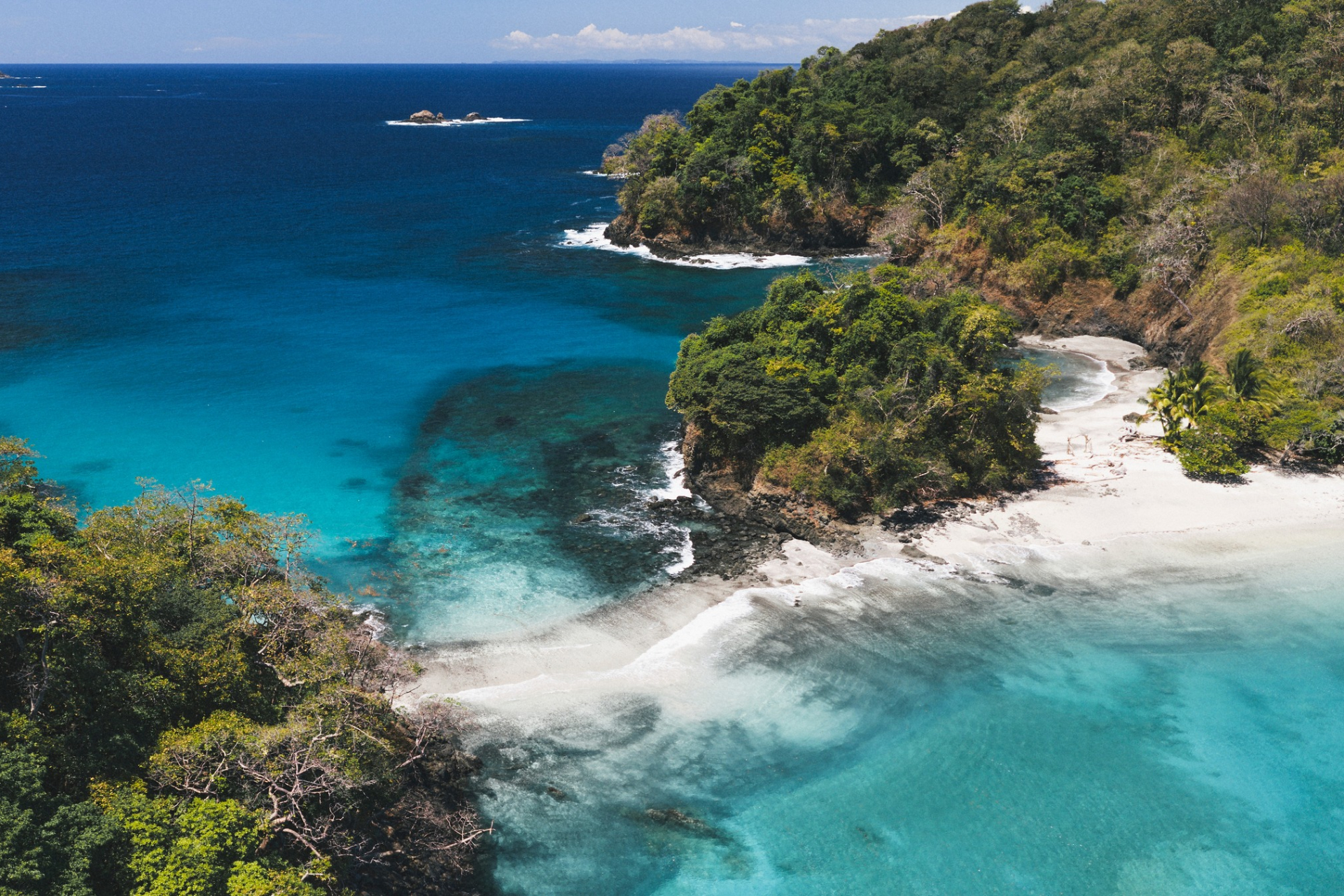
Set across a privately owned 14-island archipelago in Panama’s Gulf of Chiriquí, Islas Secas confines guest operations to a single island and leaves the other 13 untouched. Home to Panama’s largest off-grid solar array, the resort reclaims 100 percent of its water, composts or biodigests 100 percent of its food waste and has eliminated single-use plastics from the guest experience. It is the only resort in Panama to directly fund a deep-water ghost gear removal programme, with technical dive teams clearing more than 900 pounds of debris – including more than 15 miles of longlines and rope – from coral reefs. Through the Islas Secas Foundation it supports environmental education for more than 600 students.
What the judges said:
‘Clearly such effort is being put into everything the team is doing on sustainability here. The thinking is integrated across everything from guest experiences to the local community and natural ecosystems. Plus I love how focused they are on catalyzing broader market change.’ – Rachel Arthur

Dharana at Shillim is a science-led wellness destination in India’s UNESCO-listed Sahyadri Mountains, pairing advanced diagnostics and doctor-led assessments with Ayurveda, nutrition, movement and meditation to create deeply personalised programmes. Yet it began as a conservation project: the de Souza family’s retreat stewards more than 2,500 acres of protected Western Ghats landscape, and through its philanthropic arm, the Shillim Institute, has protected over one million trees, planted more than 110,000 native trees and conserves 461 rare and endemic species. Around 80 stone bunds built each year curb erosion and restore groundwater, while local residents are employed as forest guards, nursery teams and fire-prevention workers, and women are trained in organic farming.
What the judges said:
‘Beautiful synergy of regenerative wellness, conservation and social impact.’ – Michelle Pughe-Parry de Klerk

A five-star Relais & Châteaux hotel on Ireland’s Wild Atlantic Way, Park Hotel Kenmare opened Landscape, its new spa, in August 2026 – built to the highest environmental standards achievable in Ireland today. The A BER-rated building has a roof covered in solar panels generating 85kW, working alongside a biogas-powered combined heat and power system to cut grid imports from around 800,000kWh to 350,000kWh a year and reduce operational carbon emissions by nearly 60 percent. Existing building fabric was retained, carbon-storing Accoya timber used throughout, and treatments draw on Irish seaweed brand Seabody. In the restaurant, avocados and salmon are off the menu, produce comes from local farms and food waste goes back to them. The hotel is now targeting net zero carbon by 2030.
What the judges said:
‘Good data, solar power, carbon sequestration considered in construction (no one else has said this), no salmon or avocado finally!’ – Francisca Kellett

Nikoi Private Island is a 15-hectare barefoot-luxury family resort off Bintan, Indonesia, where two-thirds of the island remains native rainforest and the surrounding waters sit within a 138,500-hectare Marine Protected Area. Holder of The Long Run’s highest certification, Global Ecosphere Retreat® status, it employs a full-time marine biologist and in 2025 enjoyed its best turtle season yet: 77 nests and 3,983 hatchlings of critically endangered Hawksbill and endangered Green turtles reaching the sea. Open-air villas avoid air-conditioning, 43,957kg of organic waste was processed by black soldier flies and around 75 percent of water is reused as grey water. More than 60 percent of operational spend stays local, and The Island Foundation runs 13 learning centres.
What the judges said:
‘Global Ecosphere Retreat is The Long Run’s highest tier and a properly rigorous accreditation. This entry stands out for me as they provide me as a judge with actual figures rather than nice sounding descriptions.’ – Mirjam Peternek McCartney

Passed down through generations of the Kendlbacher family, Moar Gut has evolved from a working farm in the Austrian Alps into a luxury family resort still rooted in nature. The property is entirely car-free, largely powered by biomass heating and solar panels, and achieved top scores across all eight categories of the Green Sign sustainability certification. More than 80 percent of goods and services – from dairy and grains to furniture, textiles and building materials – are sourced within 100km, and refurbishments by regional artisans use merino wool, linen and wallpaper crafted from alpine grasses. Children learn about natural cycles on the resort’s pesticide-free organic farm, while staff earn wages above national and sector averages.
What the judges said:
‘The supply chain is the strongest part of this entry and genuinely impressive. More than 80% of goods and services sourced within 100km, covering food, furniture, textiles and building materials, with international sourcing limited to certified items like fair-trade coffee.’ – Mirjam Peternek McCartney

Set in the heart of Belgravia, The Hari London is a luxury boutique hotel of 85 guest rooms and 14 individually designed suites where sustainability is part of the experience. A comprehensive ESG strategy, led by a dedicated Sustainability Manager and benchmarked through EarthCheck, has delivered a 32 percent reduction in Scope 1 and 2 CO₂ emissions per guest night, a 74 percent recycling rate and continued Zero Waste to Landfill. Food waste becomes renewable energy and refillable amenities have prevented 693kg of plastic waste over three years. Staff earn at least the London Living Wage, while the Hari Art Prize and new Mini Maestro Art Prize open up culture to emerging artists and local schoolchildren.
What the judges said:
‘This is proof that you can make a difference right in the middle of a big city.’ – Julietta Dexter

Founded in 2019 as part of Montcalm Collection, Inhabit Hotels is London’s original restorative urban hotel brand, built on the belief that personal and planetary wellbeing are intrinsically connected. Its two B Corp-certified, EarthCheck Silver boutique hotels in Paddington and Bayswater run on 100 percent renewable electricity, operate a zero-waste-to-landfill model and wear their circular design proudly – from carpets made from recycled fishing nets to Goldfinger furniture crafted from reclaimed London timber. Scope 1 and 2 carbon intensity is down 35 percent against its FY2023 baseline, and 78 percent of annual spend is responsibly sourced. Free Community Wellness sessions with Live Karma Yoga and NHS Talking Therapies, plus partnerships with Saira Hospitality, Luminary Bakery and Nemi Teas, are further proof of its restorative ethos.
What the judges said:
‘Very impressive application! Love the focus on supporting local and marginalised communities, circularity, and the considered approach they take to drive impact across people (local communities) and the planet (waste and energy programmes). Very impressive for an urban London hotel.’ – Michelle Pughe-Parry de Klerk

Family-run Borana Lodge sits within the 28,000-acre Borana Conservancy in northern Kenya, one of the most biodiverse rangeland ecosystems in East Africa, and was created to prove that tourism can be a regenerative force. A minimum of 24 percent of each guest’s published rate (before commission) is reinvested into conservation and community programmes, with $1.27 million invested in conservation in 2024 alone. Alongside Lewa Wildlife Conservancy, it has helped restore over 200 black and white rhinos across the Lewa-Borana landscape, with over 12 years of zero poaching on Borana Conservancy. Pioneering regenerative grazing is restoring degraded rangeland, more than 90 percent of staff are hired from neighbouring communities, and the Mazingira Yetu Centre offers environmental education and youth leadership training.
What the judges said:
‘They model what we need the world to better appreciate: tourism as the primary engine for conservation finance!’ – Juliet Kinsman

Pioneers of gorilla and chimpanzee ecotourism in Uganda and Rwanda since 1997, Volcanoes Safaris has grown from a single tent at Mgahinga into five hand-built luxury lodges near the Albertine Rift’s finest great-ape sites. Through the Volcanoes Safaris Partnership Trust, it bought land and built a village for the Batwa, evicted from the forest when Mgahinga Gorilla Park was created – now 42 houses giving a permanent home to around 150 people. At Kyambura Gorge it has created a 3km wildlife buffer zone, restored a 45-acre wetland and set up a women’s coffee cooperative. With over 300 staff from the Great Lakes region and more than 50 percent of its management team women, it shows how luxury safari can safeguard rare species and lift communities together.
What the judges said:
‘Lovely to see the focus on not just incredible wildlife experiences, but providing guests with insights into the realities of conservation, how this connects and co-exists with local communities, and the challenges that come with safeguarding these remote, rare and special habitats and species.’ – Rachel Arthur

Oslo-based Up Norway, a B Corp-certified luxury travel operator founded in 2016, treats Scandinavian society – its trust, gender equality, democratic values and closeness to nature – as the destination, not just the scenery. Journeys such as Tracing Norway’s Super Women route guests away from the most visited spots and into communities that seldom see international travellers, with a minimum stay designed to justify the flight. A transparent ‘Economic Nutrition’ breakdown shows where client fees go, with 72 percent flowing directly to its 800-plus local partners. Its B Corp score has climbed to 105.5, and 77 percent of guests say their journey inspired them to make positive changes. Its research with the University of Stavanger is now shaping where meaningful travel goes next.
What the judges said:
‘I love the whole underlying premise of celebrating the positive impact of Scandinavian society. In short, there is some really progressive practice in here, and I believe in the authenticity with which the company is committed.’ – Thomas Bourne

Surrounded by a 10-million-year-old rainforest on the north-west tip of Langkawi Island, The Datai Langkawi sets out to show that luxury and sustainability are inseparable. Since 2020, The Datai Pledge has organised its impact around four pillars – Pure For The Future, Fish For The Future, Wildlife For The Future and Youth For The Future – working with partners from marine mammal non-profit MareCet to Universiti Kebangsaan Malaysia. Guests can join naturalist-led walks, night safaris and a behind-the-scenes Sustainability Tour of the resort’s Zero-Waste-to-Landfill programme. In 2025 alone, over MYR 700,000 was raised for Pledge projects, 12,903kg of food waste was composted and local Langkawi and Malaysian employment reached 96.77 percent. Independently audited and reported in an annual Impact Report, it is a model of nature-positive luxury hospitality.
What the judges said:
‘Outstanding example of fully integrated sustainable luxury offering across the value chain. Highly documented delivery, from local employment to waste management to Datai Pledge projects/collaborations across the four pillars, all structured around specific challenges local to the property.’ – Jonathan Hall

Founded in 1953, Metropolitan Touring is one of South America’s leading destination management companies and a pioneer of travel in the Galapagos Islands, operating across Ecuador, Colombia and Peru. Carbon neutral since 2017, it is leading the transition to regenerative tourism through four pillars – education, entrepreneurship, equity and ecosystems. Partnerships with universities, NGOs and government agencies support whale shark conservation, invasive species control at Wolf Volcano to protect the critically endangered pink iguana, and ecosystem restoration in the Andean Chocó cloud forest. In 2025, it supported the conservation of 2,111 hectares and its vessels diverted 153 tons of waste from landfill, while 3 percent of profits go to Fundación Futuro. It is also the only tourism company in Ecuador to report its ESG performance under GRI Standards.
What the judges said:
‘Extremely impressive and stand-out winner moving from traditional responsible tourism to a more sophisticated regenerative model. Their Sustainability Report is very comprehensive, with a strong combination of measured carbon impact, independent verification, conservation and regenerative tourism.’ – Oriele Frank

Cotswolds-based Steppes Travel, a B Corp-certified tour operator founded in 1989, refuses to make clients choose between an exceptional journey and a responsible one. Every booking follows its ‘Just One Thing’ principle – at least one decision that increases positive impact, from replacing a domestic flight with rail to selecting a community-supporting property. At least 1 percent of annual revenue goes to the Steppes Fund for Change, whose flagship Female Guides programme provides accredited training, mentoring and employment pathways for women across eight countries. In the Galapagos, every booking gives a US$100 donation to the Galapagos Conservation Trust, with support totalling £77,129 over three years.
What the judges said:
‘It is not particularly easy for a tour operator to become B Corp certified, so that is testament to the commitment of this company… On the whole, I would feel confident booking through this operator, knowing that my values were being reflected.’ – Thomas Bourne

Set within the 3,200-hectare Mashpi-Tayra Reserve in Ecuador’s Andean Chocó – a UNESCO Biosphere Reserve and one of the most biodiverse regions on Earth – Mashpi Lodge is a luxury ecolodge that doubles as a living laboratory. Research within the reserve has contributed to the identification of 25 species new to science and 62 scientific publications, and guests can engage with it through the on-site research laboratory. Its Andean Chocó Magnolia Conservation Project turns sustainably harvested Magnolia mashpi flowers into a cloud forest-inspired fragrance whose sales fund restoration, with more than 300 trees planted in the past year. Waste generation fell by 23.8 percent, 48 percent of employees come from neighbouring communities and the women-led association ASOMEG supplies the lodge. Every stay directly supports the protection of this extraordinary ecosystem.
What the judges said:
‘A true benchmark property for a regenerative, restorative model. Evidence that hospitality can drive real impact in remote parts of the world.’ – Michelle Pughe-Parry de Klerk

Broughton Sanctuary is a 2,500-acre estate in the Yorkshire Dales, home to Broughton Hall, 23 self-catering holiday homes, Avalon Wellbeing and a pioneering nature recovery project. Since 2021, more than 330,000 trees and shrubs from 19 native broadleaf species have been planted across 350 hectares, lifting tree cover from under 5 percent to over 35 percent. Beavers, Riggit Galloway cattle, Dales ponies and Iron Age pigs now act as architects of the landscape, while the sale of biodiversity credits is funding a 10-year wetland and hay meadow restoration plan. Guests can explore it all on the 30km Odyssey Trail and guided Nature Recovery Tours, part of 7,331 public engagement participants in 2025.
What the judges said:
‘Broughton is a blueprint for rewilding in the UK, 330,000 trees and shrubs planted across 350 hectares, major wetland and hay meadow restoration.’ – Francisca Kellett
PARTNERS