


The Pink Moon Will Shine In The Sky This Thursday
By
4 months ago
Here’s how to make sure you catch a glimpse
Every month, moongazers are treated to a full moon: when Earth’s natural satellite is balanced right between waxing and waning, appearing at its fullest and brightest. Based on Native American tradition, each moon has a nickname, and April’s full moon is known as the Pink Moon. Here’s why – plus how to see it.
Pink Moon: April’s Full Moon Will Rise On Thursday
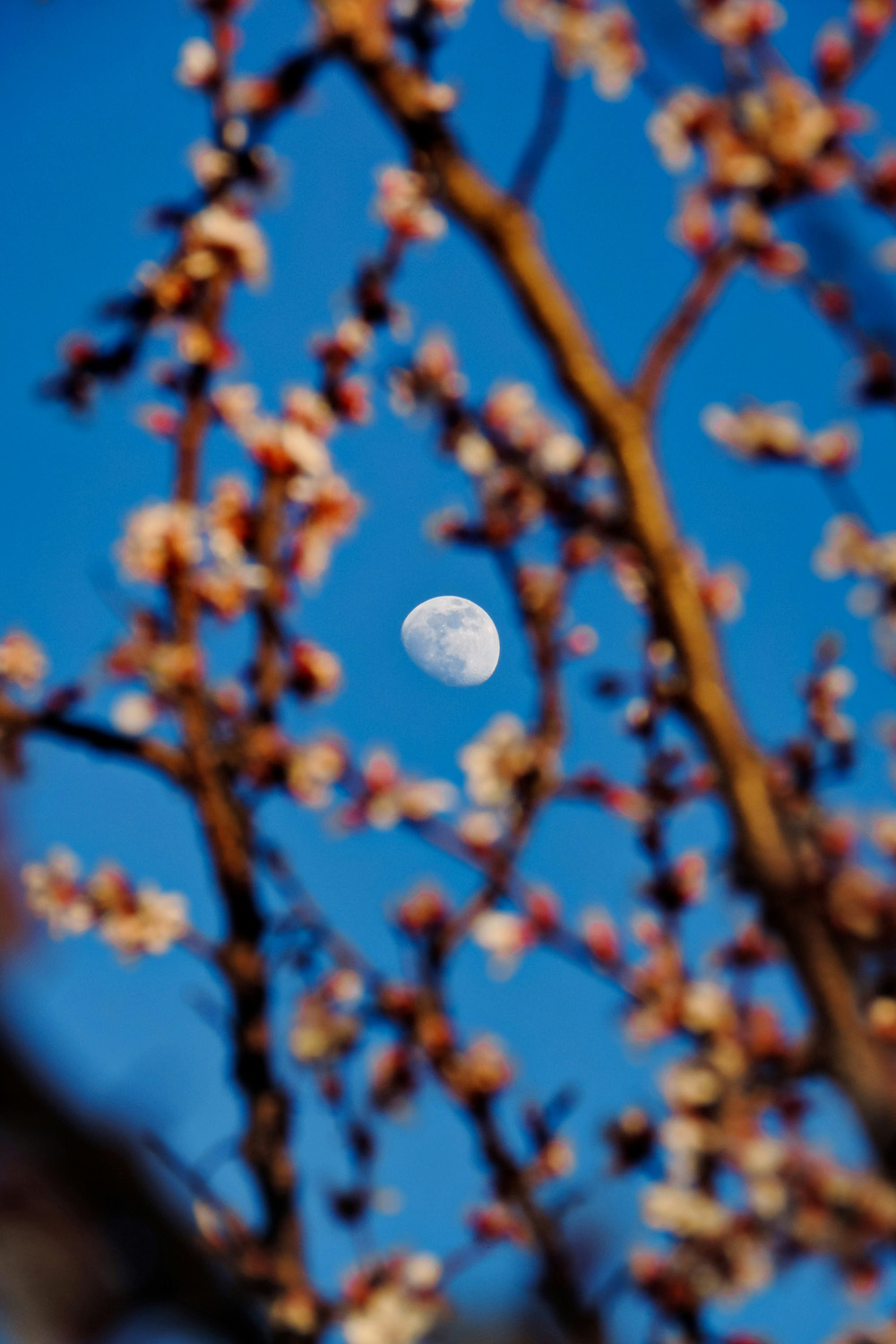
April’s full moon will take to the sky this Thursday (2 April). The Pink Moon will begin its ascent into the sky the night before, on 1 April, where it will rise low on the horizon – and take on a slight peachy tone – before carving its shiny path across the sky throughout the night. This means the moon will reach its peak at 3.12am. It’s an early morning showing, but those keen to see the moon all its illuminated glory will want to stay up to catch a glimpse. (And with it being a bank holiday this Friday, we have plenty of excuse to stay up late.)
While we’re used to hearing about supermoons – when the full moon appears brighter and larger because it is slightly closer to Earth – April’s full moon is actually a micromoon. This is the opposite of a supermoon: the moon is at its farthest point away from Earth in its elliptical orbit this weekend – known as the apogee.
It’s set to be a partially cloudy evening, but you should be able to catch a glimpse of the pink moon as it shines against the night sky. Contrary to the name, however, it won’t have a pink hue…
Why Is It Called The Pink Moon?
The pink moon doesn’t take its name from its hue, space or a historical event, but is instead named for an American plant, moss pink. Also known as creeping phlox, this low-growing plant can be found in the eastern and central parts of the US, forming cushions of hairy leaves across sandy soil and rocky ledges. Moss pink is perennial, meaning it grows and blooms over spring and summer before dying back in autumn and returning in spring.
When it blooms in early spring, one of the earliest wildflowers to emerge from hibernation, moss pink produces clusters of little flowers in white, blue, purple or, most frequently, pink. In the Native American tradition, moss pink is associated with April, and so April’s full moon takes its name.
According to the Farmer’s Almanac, the Pink Moon is imbued with hope, marking the end of winter and the resurgence of life after nature’s dormancy. In Asia, particularly China, April’s full moon is similarly well known as the peony moon, as this is when those blush-coloured native flowers bloom. In Native American tribes across the States, the moon takes on different names, but all are associated with plant changes. To the Oglala tribe, April’s full moon is the ‘Moon of the Red Grass Appearing’, while the Tlingit tribe call it the ‘Budding Moon of Plants and Shrubs’ and the Choctaw tribe call it the ‘Moon of Blackberry’. In Europe, the Celts had a similar outlook, variously calling April’s full moon the Budding Moon, the New Shoots Moon, the Seed Moon and the Growing Moon.

When Is The Next Full Moon?
Missed your chance to see the Pink Moon? Not to worry, the next full moon – known as the Flower Moon – will make an appearance in our skies 1 May, with the peak viewing time being 6.23pm. (A much easier time to stay awake for.) This will be followed by another full moon, the Blue Moon, which will grace skies on 31 May (and the peak time to see it will be 9.45am).