


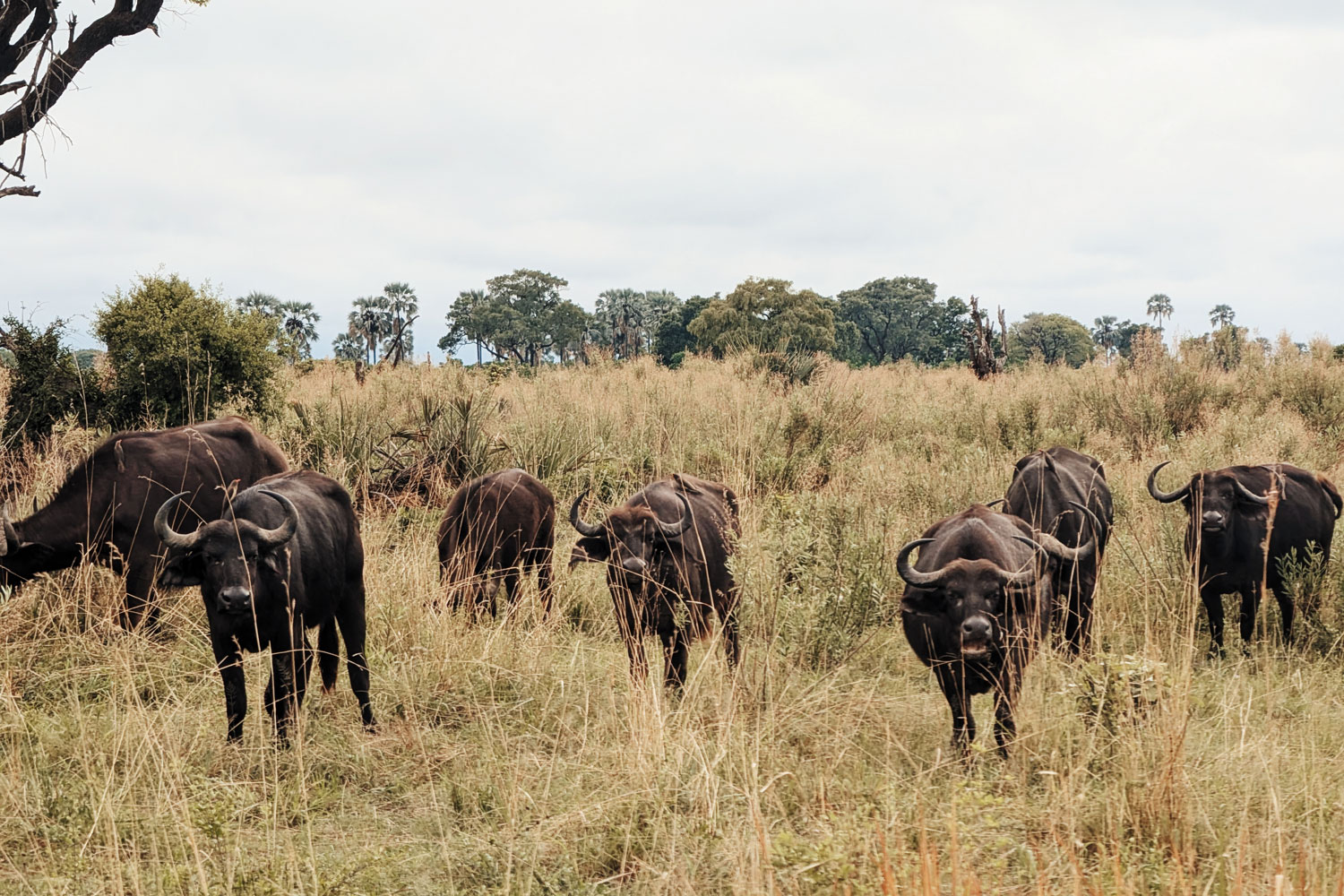
(c) Rebecca Cox
Southern African Adventure: Atzaró Cape Town, South Africa & Atzaró Okavango, Botswana
By
8 months ago
When nature calls
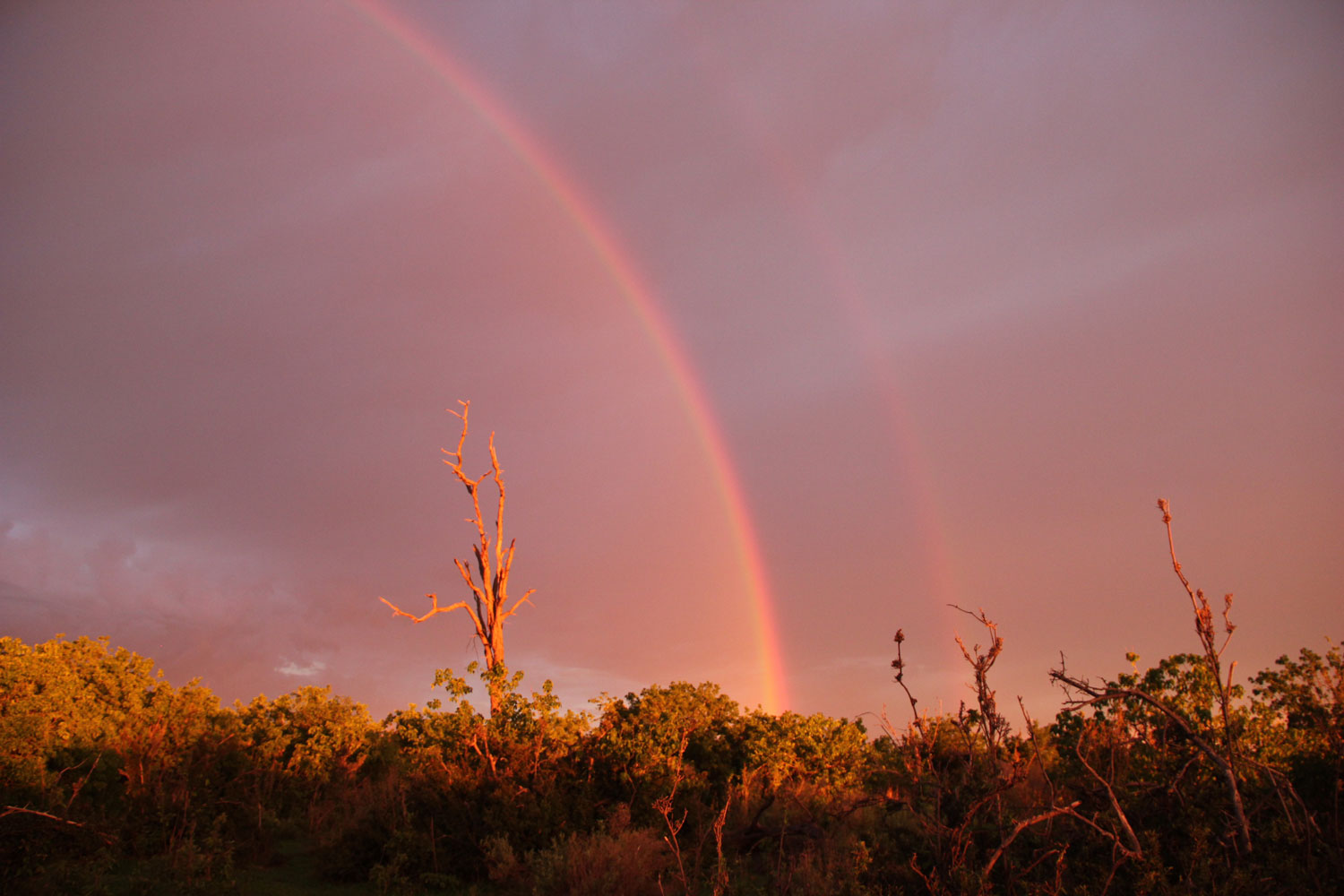
When people say that they have ‘seen the light’ I assume that they have come here, to Botswana. Because here the light has a tangible milky, inky quality, that looks, if not quite feels, as if you could swim in it. This is most striking at dusk, when the bright dry daylight fades via an explosion of fiery hues into a milky wash, before it is darkened with one drop of indigo ink at a time, fading to black. On my first night in the Okavango Delta, however, it feels like we really are ‘swimming’ in the air, as we race home from our evening safari drive in the heaviest rain I have ever experienced, that quickly fills the seats of our safari jeep, creating mini plunge pools to sit damply in, less enticing by far than the one waiting for us on the deck back at our Atzaró Okavango lodge.
But before we visit plunge pools and earth-shifting storms, let us rewind back three days to South Africa’s southernmost city, Cape Town, where Atzaró’s ‘African Ultimate Experience’ begins.
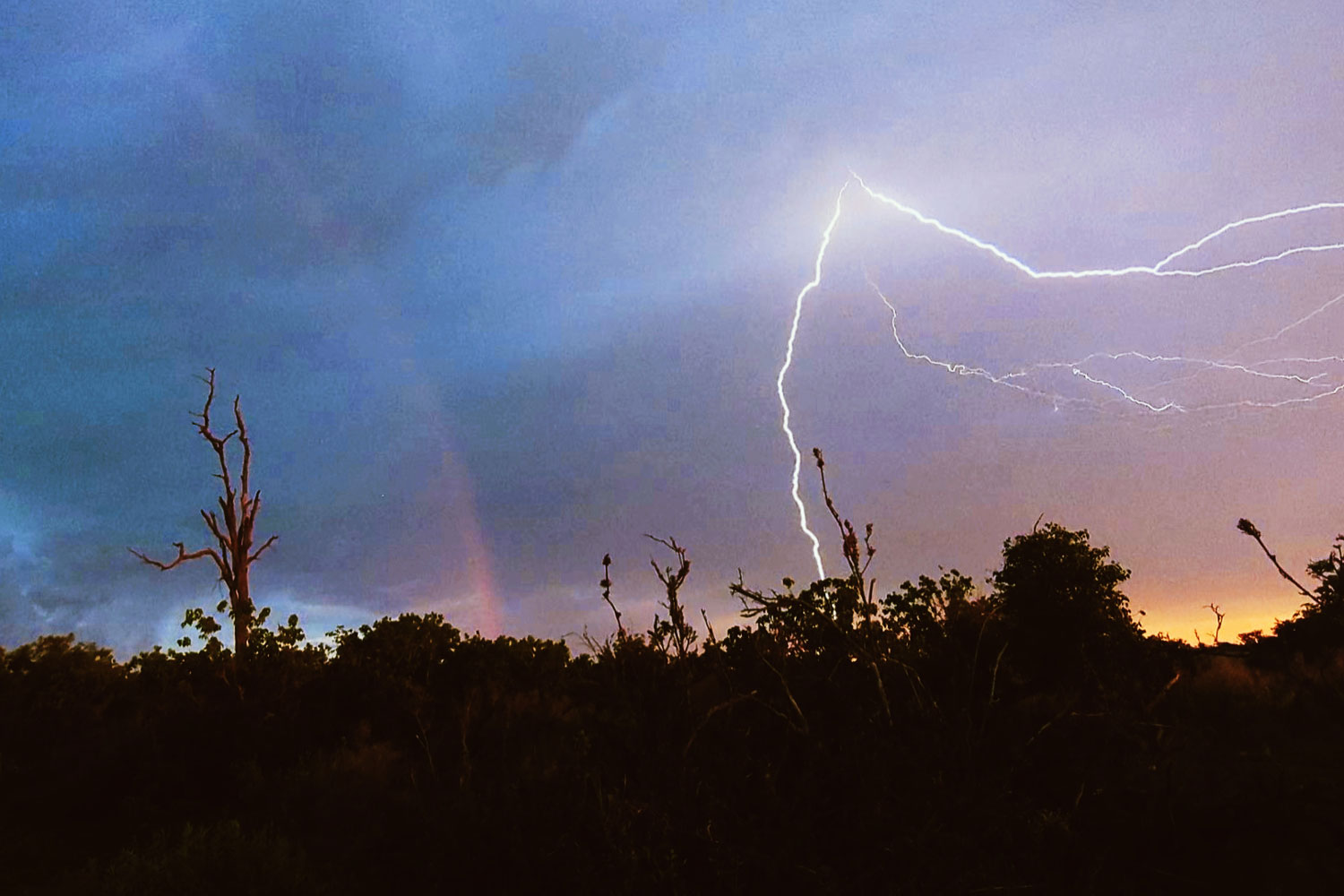
Lightning in the Okavango Delta (c) Rebecca Cox
Days 1–4: Atzaró Cape Town
The African penguin has been classified as critically endangered since 2024, with numbers having fallen by 80 percent in the last three decades. But it’s hard to believe they’re in trouble as we gaze out across Boulders Beach in Simon’s Town, where hundreds and hundreds of tiny, tuxedoed birds pack out the beach, waddling their way across the white sands and diving into the turquoise waters. It is one of the most wonderful, cheerful and cartoonish nature scenes I’ve ever witnessed, and I imagine trumpets and tinkling pianos accompanying their race into the waves. The entry fee here helps to limit visitor numbers, reducing stress on the birds, and going towards the conservation of the colonies and marine protected areas.
Boulders Beach is the first stop on our full day tour of the Cape Peninsula, from there it’s on to Cape Point National Park, another conservation area, where sheer cliffs rise over 200 metres high providing sweeping views from the southern tip of the continent over the Atlantic and False Bay. An enjoyable hike up to the old lighthouse is a must, as is a visit to the Cape of Good Hope marker, where you’ll spot cape fur seals and the occasional southern elephant seal loafing on the rocks. The park is also home to eland, bontebok, zebra, ostriches, abundant birdlife and baboons – who love to cause delays on the park roads by holding leisurely family meetings in the middle of them.
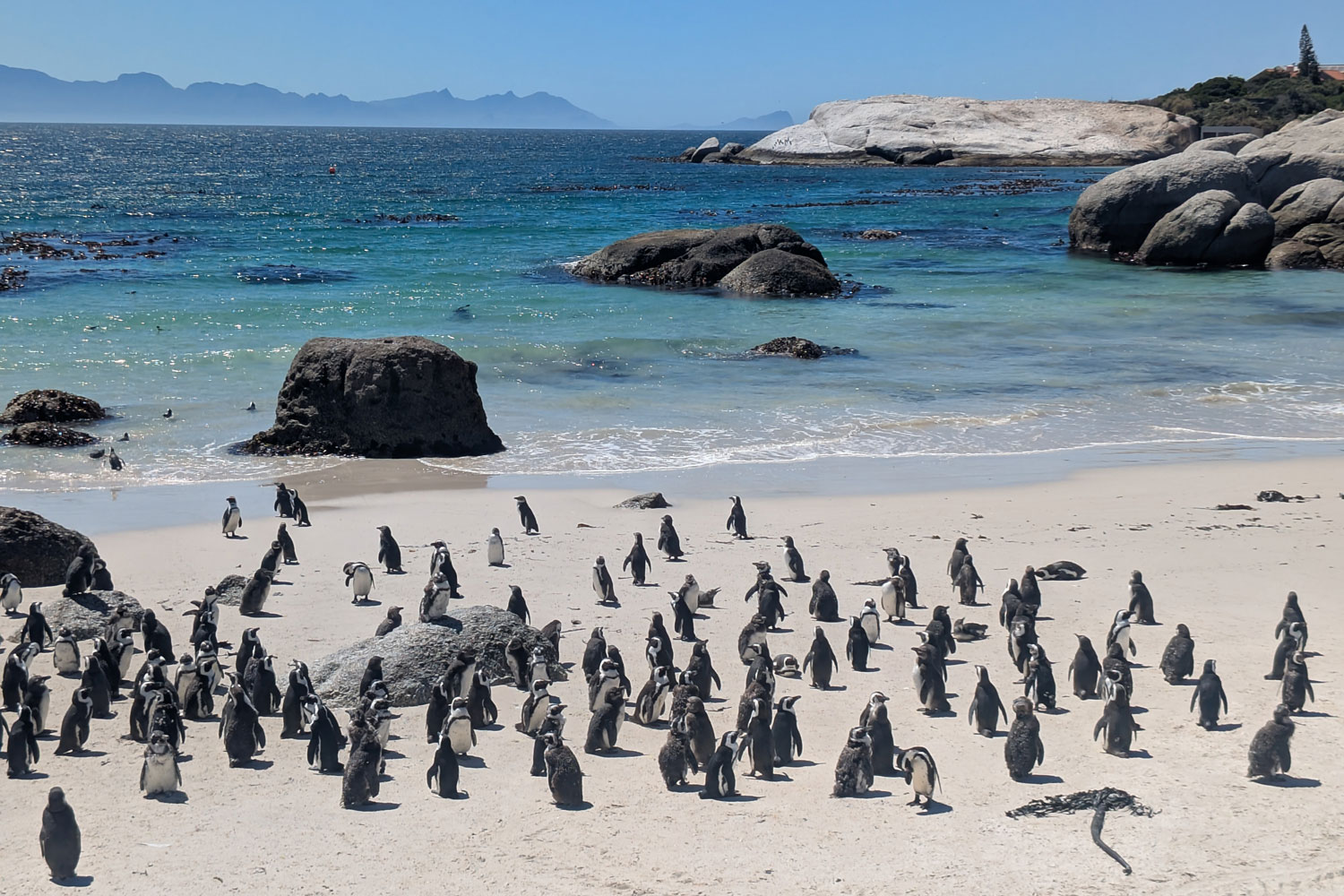
Penguins on Boulders Beach (c) Rebecca Cox
The journey back to Cape Town provides sweeping views of dramatic coastlines and the opportunity to call in at fishing villages and community hubs to pick up some local arts and crafts, as well as the chance to stop off at viewpoints to capture photographs that can never do justice to the heights and hues of the place.
Time at leisure in Cape Town can be spent beach and bar hopping, shopping or hiking; we choose the latter and embark on a journey up to Table Mountain’s 1,067 metre summit (via the Aerial Cableway base where we hopped onboard to fly above more seasoned hikers braving the near-40-degree heat and gusty winds). There are refreshments at the top, an hour or two of windy trails to explore, and of course, world-topping views of picturesque Cape Town below.
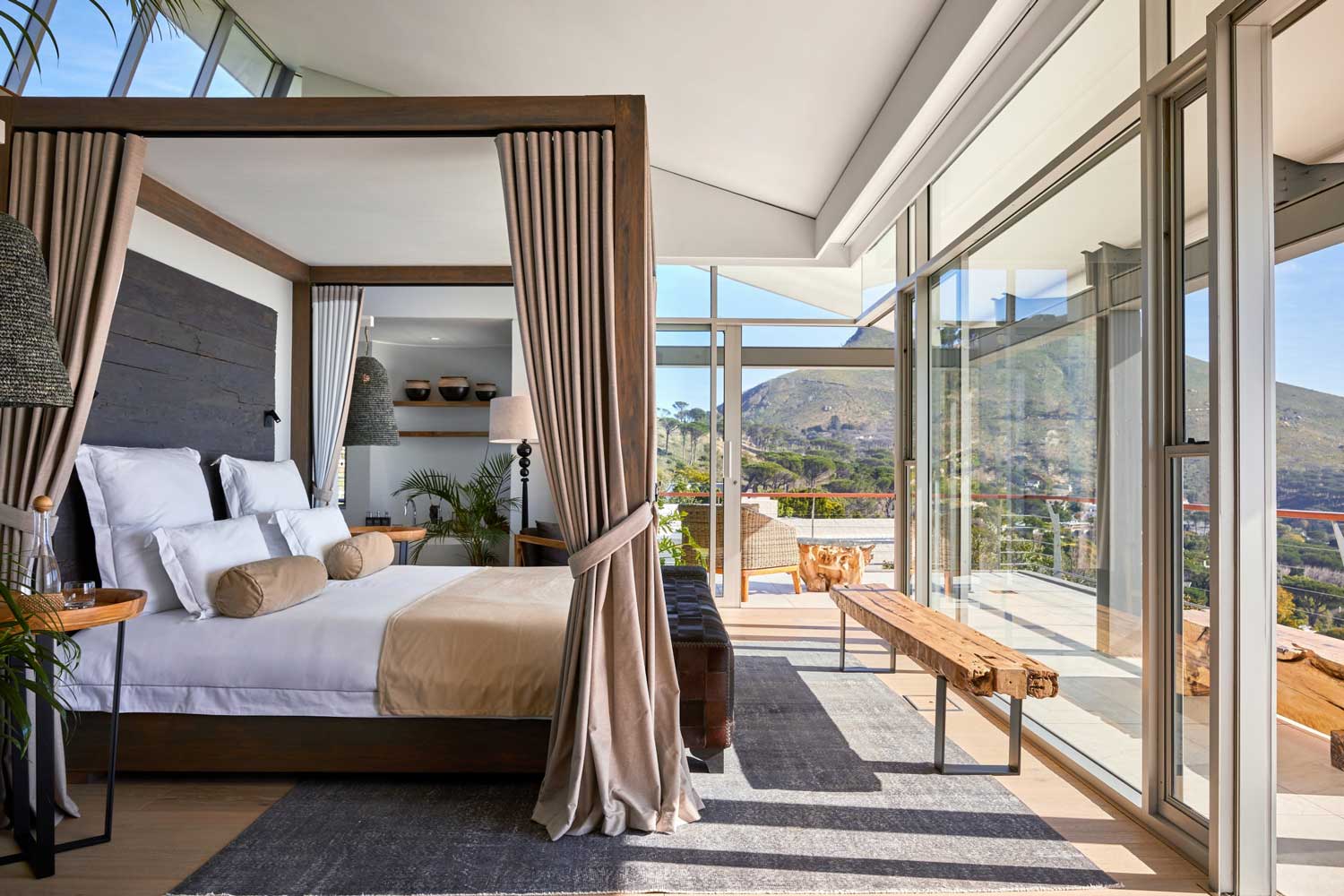
Atzaró Cape Town
STAY
Our ‘hike’ to the cable car is just a 25-minute climb from our base at Atzaró Cape Town. This six‑suite, 5‑star hotel is perched at the foot of Table Mountain, offering an intimate, villa‑style stay with panoramic views over the city bowl, Lion’s Head and the ocean beyond. Converted from a private residence, it offers a homey feel with full hotel-style service, spa and wellness facilities, and a long sleek pool that has become the signature of the Ibizan Atzaró brand. We are in the Lion’s Head suite, a huge chic open-plan room at the top of the hotel with an expansive deck that stretches right around the building offering impressive views on all sides. The glass walls don’t keep out the noise (though in this quiet corner of the city it’s only other guests that you’ll hear) and nor do they keep out the light; glorious dry South African sunlight by day and the endless stretch of starlight by night. On my first morning I am woken at 4am by the first burst of sun climbing over Table Mountain and I rush outside to watch the pink sky shift across the sleeping city.
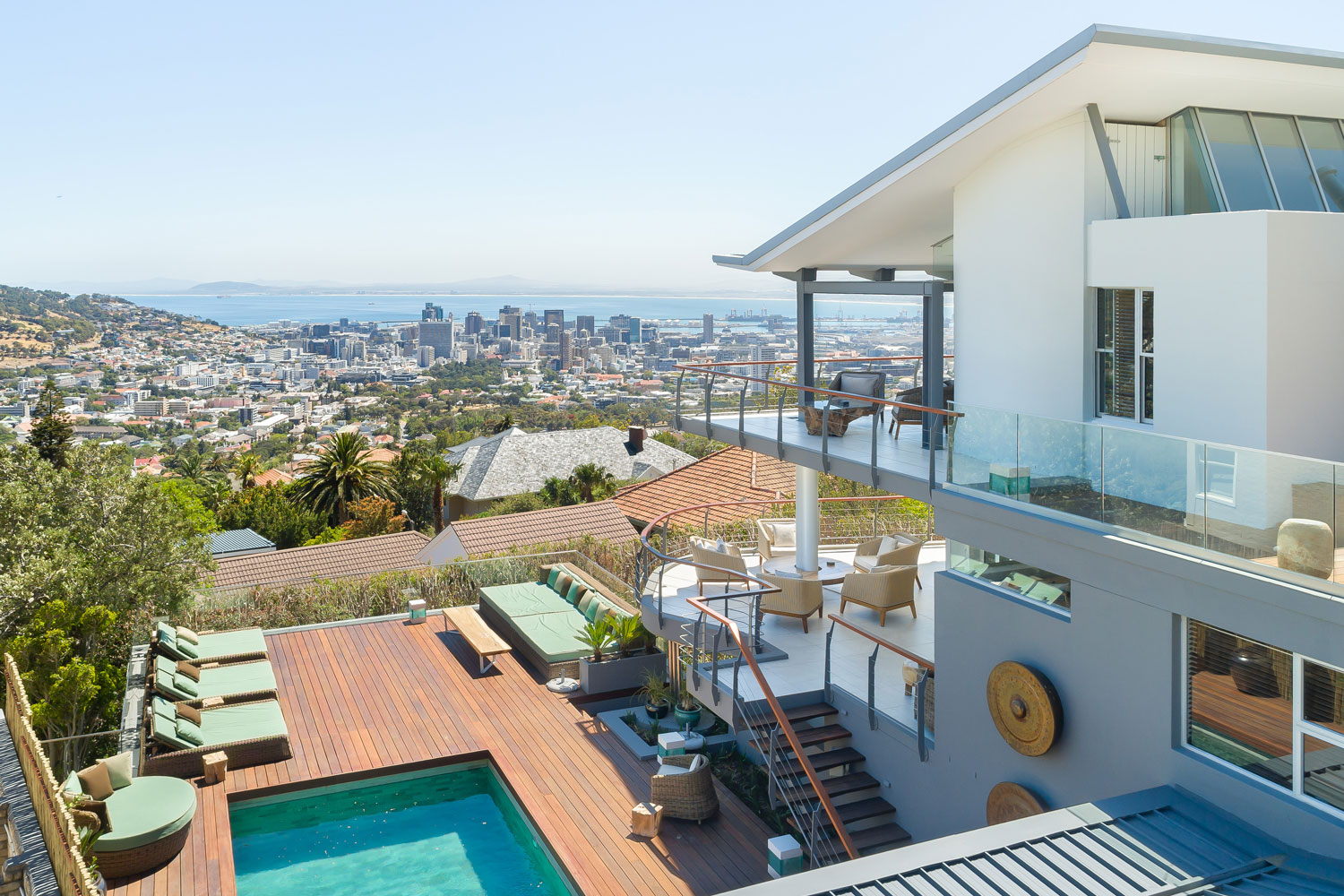
Atzaró Cape Town
EAT
Days start at Atzaró Cape Town with a homely breakfast of juice, coffee, meats and cheeses, vegetables, yoghurt pots and pastries that becomes a daily highlight. I had heard prior to my visit that the culinary scene in Cape Town would impress, and it does; there are countless exciting chefs and restaurants to check out, particularly in the buzzy Kloof Street neighbourhood. Kloof Street House is an atmospheric and cosy local favourite, while Upper Union serves up delicious elevated cuisine and superlative cocktails in a sophisticated setting.
Days 4–9: Atzaró Okavango
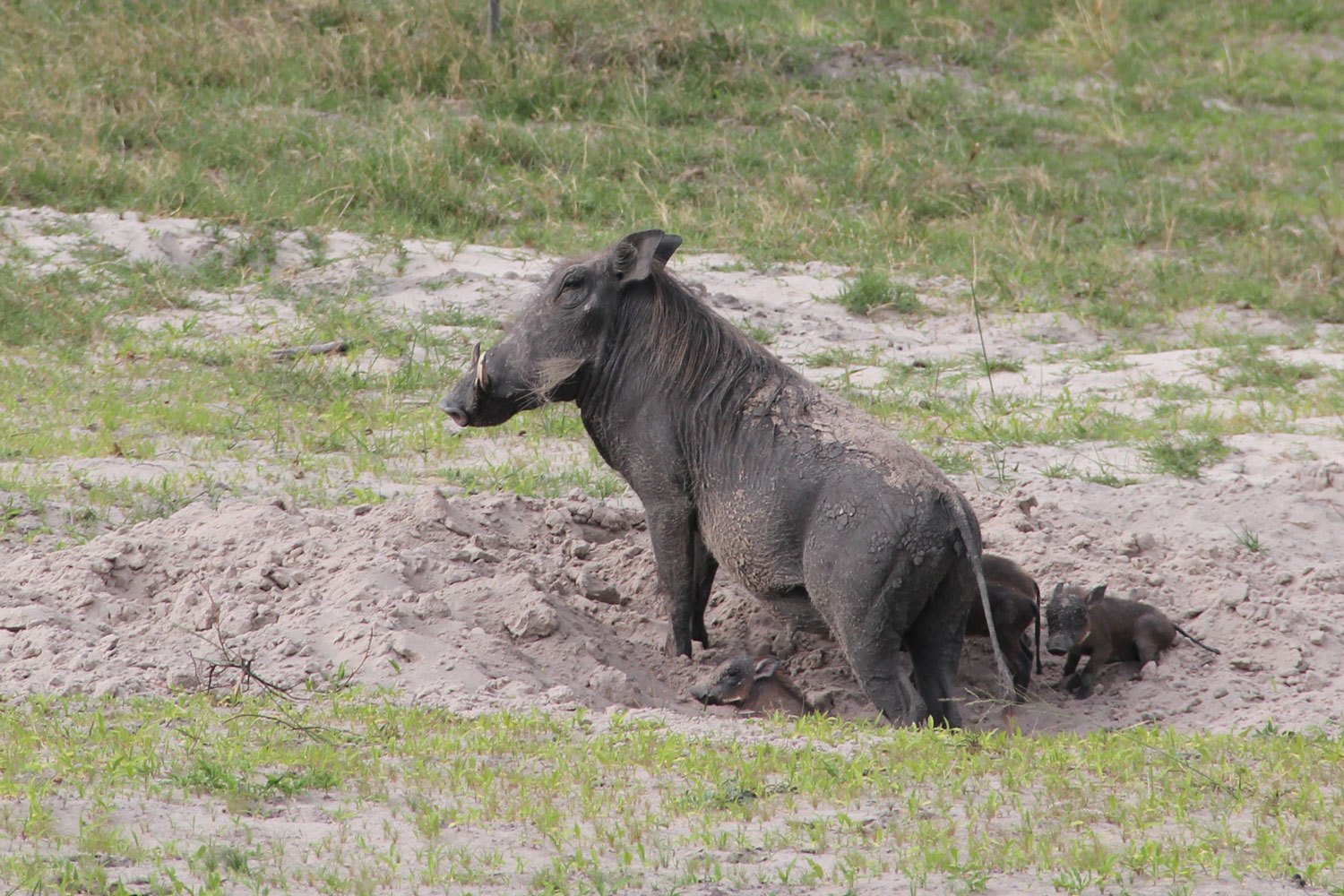
The journey to Atzaró Okavango camp from Maun International Airport takes less than 30 minutes, but it does involve climbing into a tiny bubble of a helicopter and zipping fast and low to the ground into the Okavango Delta National Park. Scary, but the ride is smooth and the views glorious; we spot hippos and warthogs and the occasional giraffe as we descend into the rich wildlife hub that is to be our home for the next few nights. Our greeting into camp is the stuff of African fairytales, the full staff waiting in the entrance to sing and dance us in, which I embrace as any awkward Brit would; by shuffling in red-faced and doing a sort of clap-wiggle in appreciation. But there’s no time for bashfulness here; within 20 minutes, a cool glass of crisp South African chardonnay in hand, we know most of the team by name and our guide Luckym – a local from the nearby village of Mababe – has put us at ease with his calm, quiet energy.
(c) Rebecca Cox
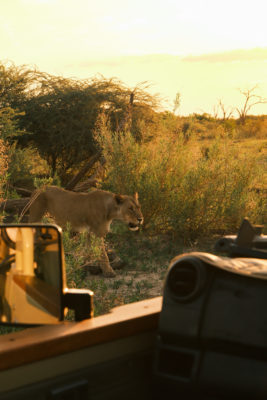
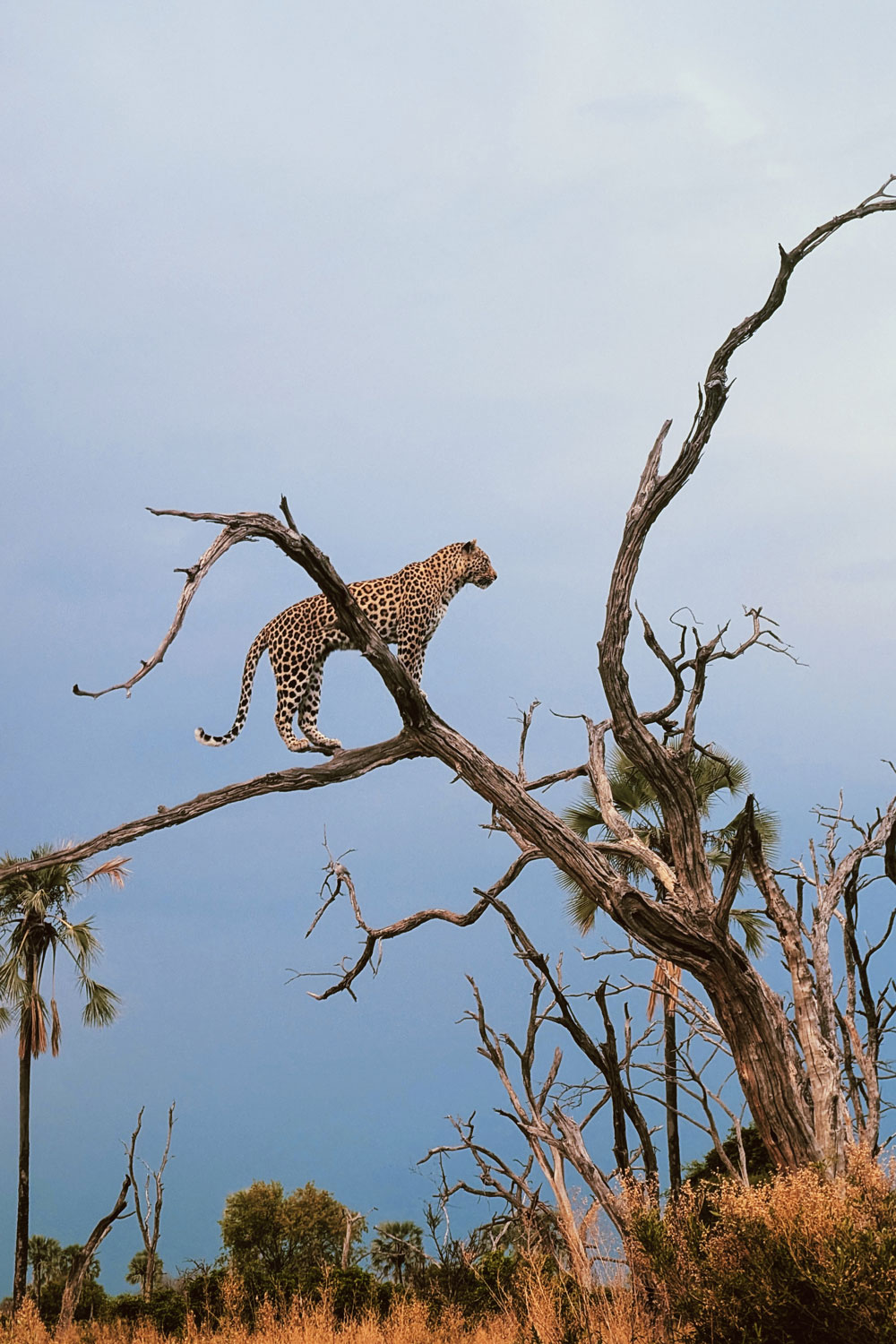
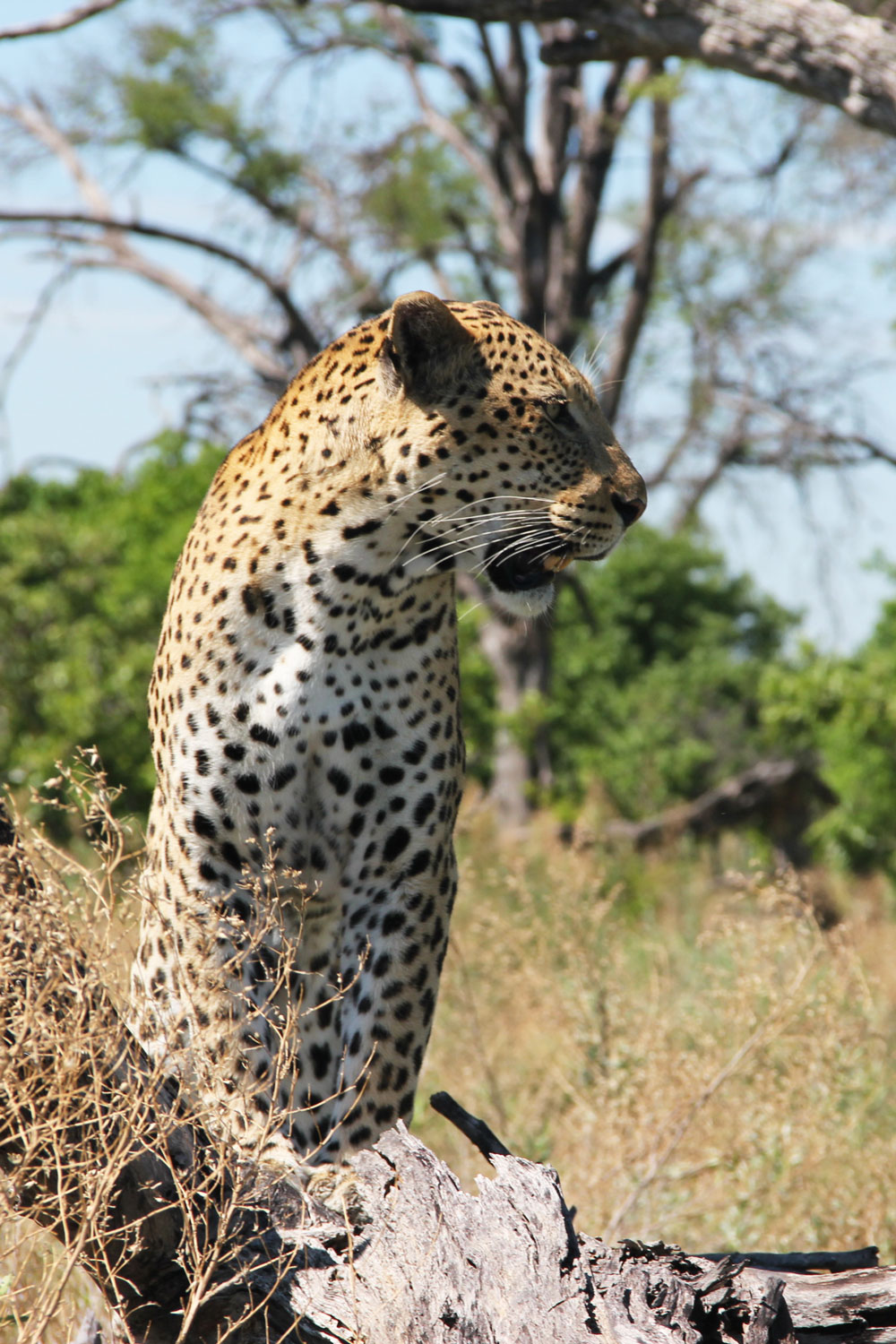
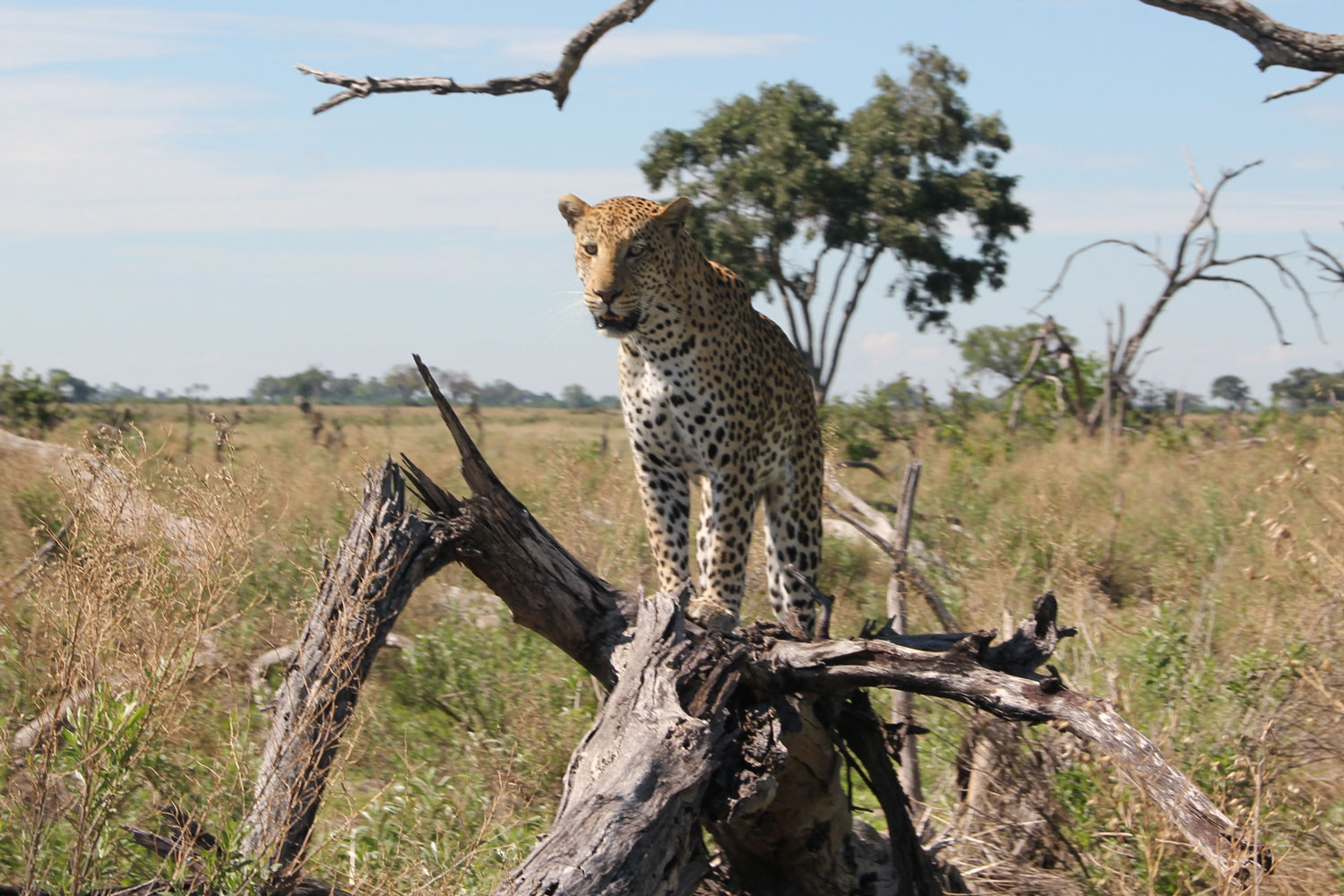
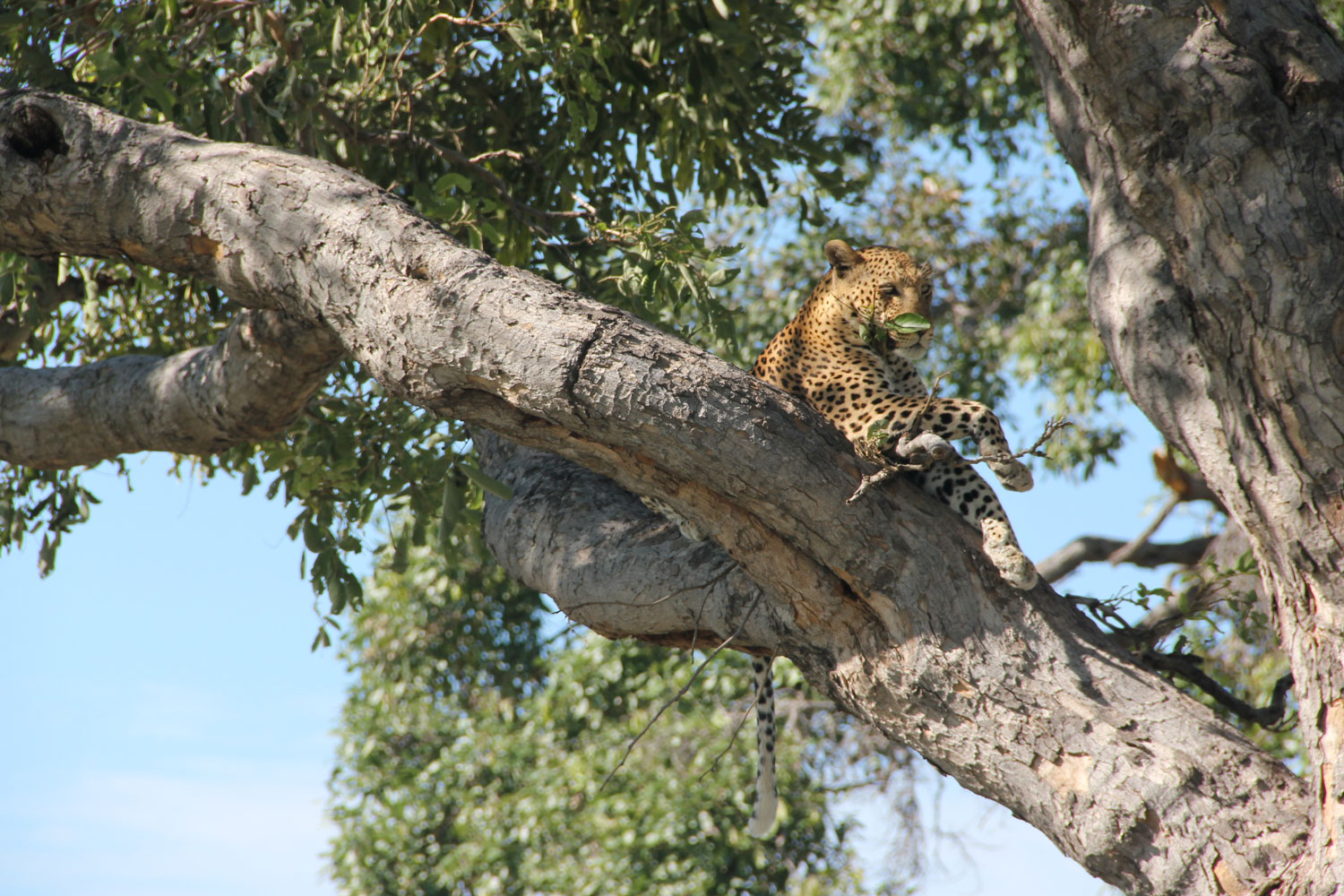
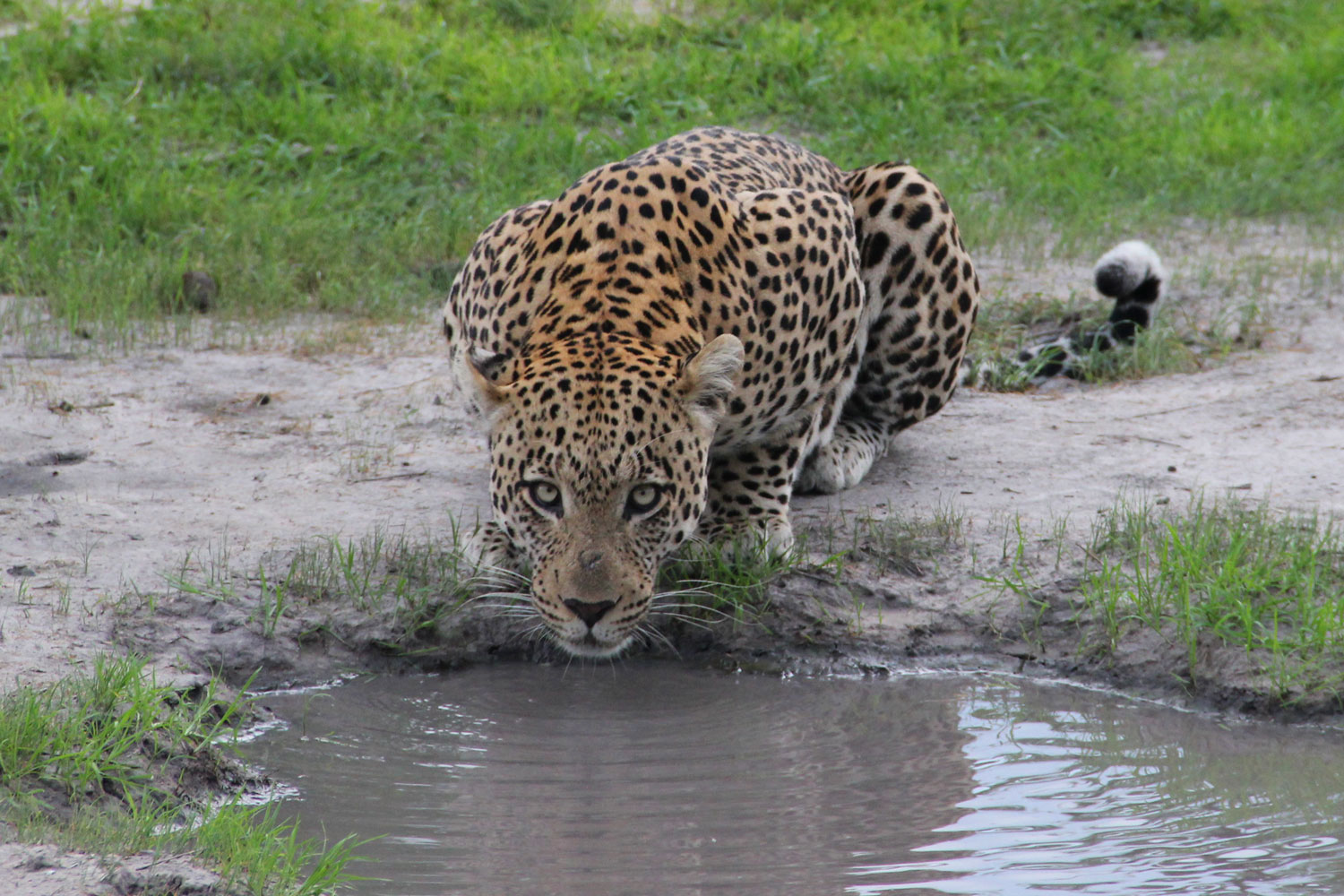
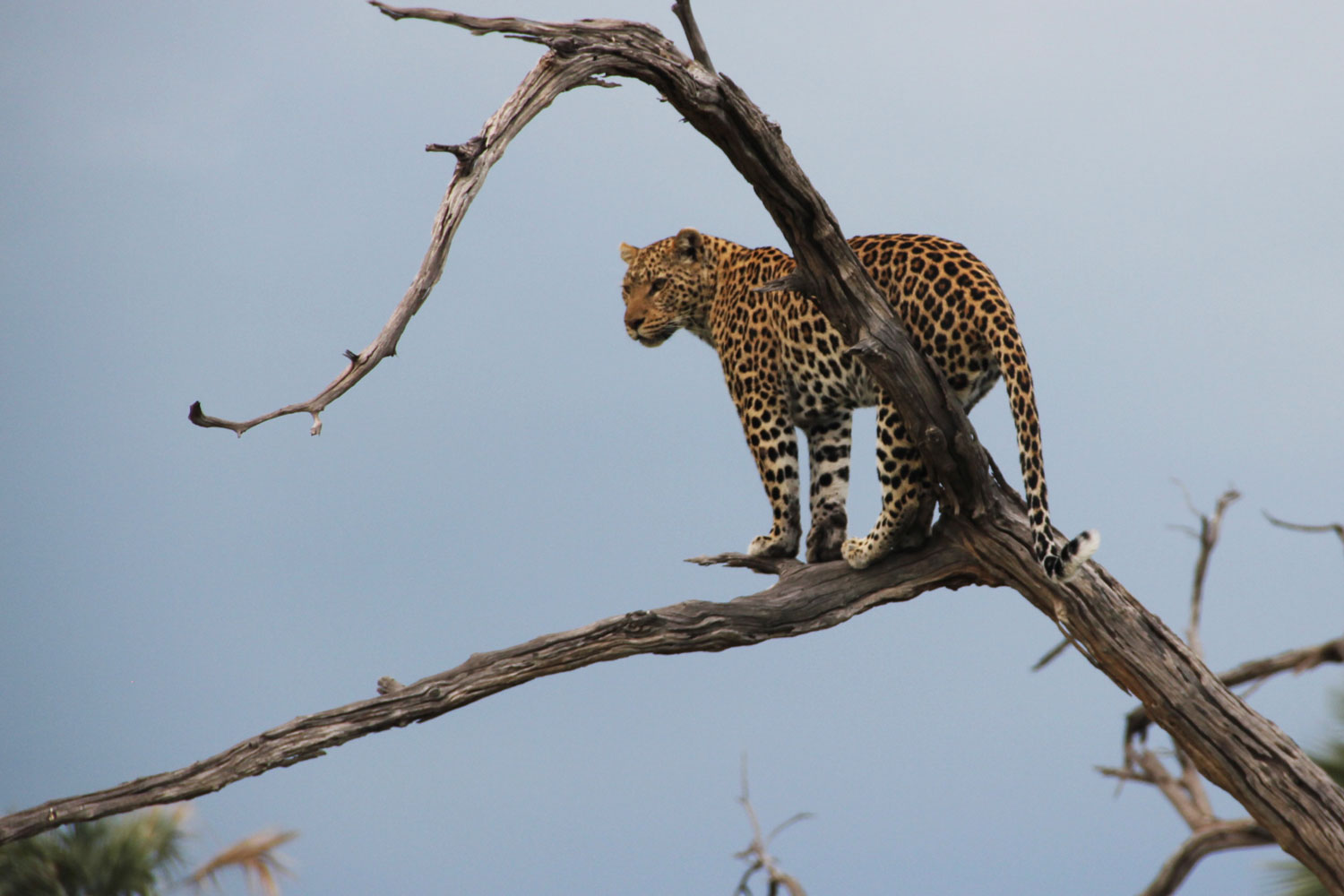
The aforementioned near-underwater drive home from our first game drive is preceded by a slew of wildlife sightings, the most exciting of which – as a cat lover – is a pair of leopards. I won’t list off all the animals we saw like a khaki-clad bore, though I enjoyed trading sighting stories with our fellow camp-mates in the evenings. But, of course, the animals are the star here, the full-time residents: we are on their patch and we must act accordingly.
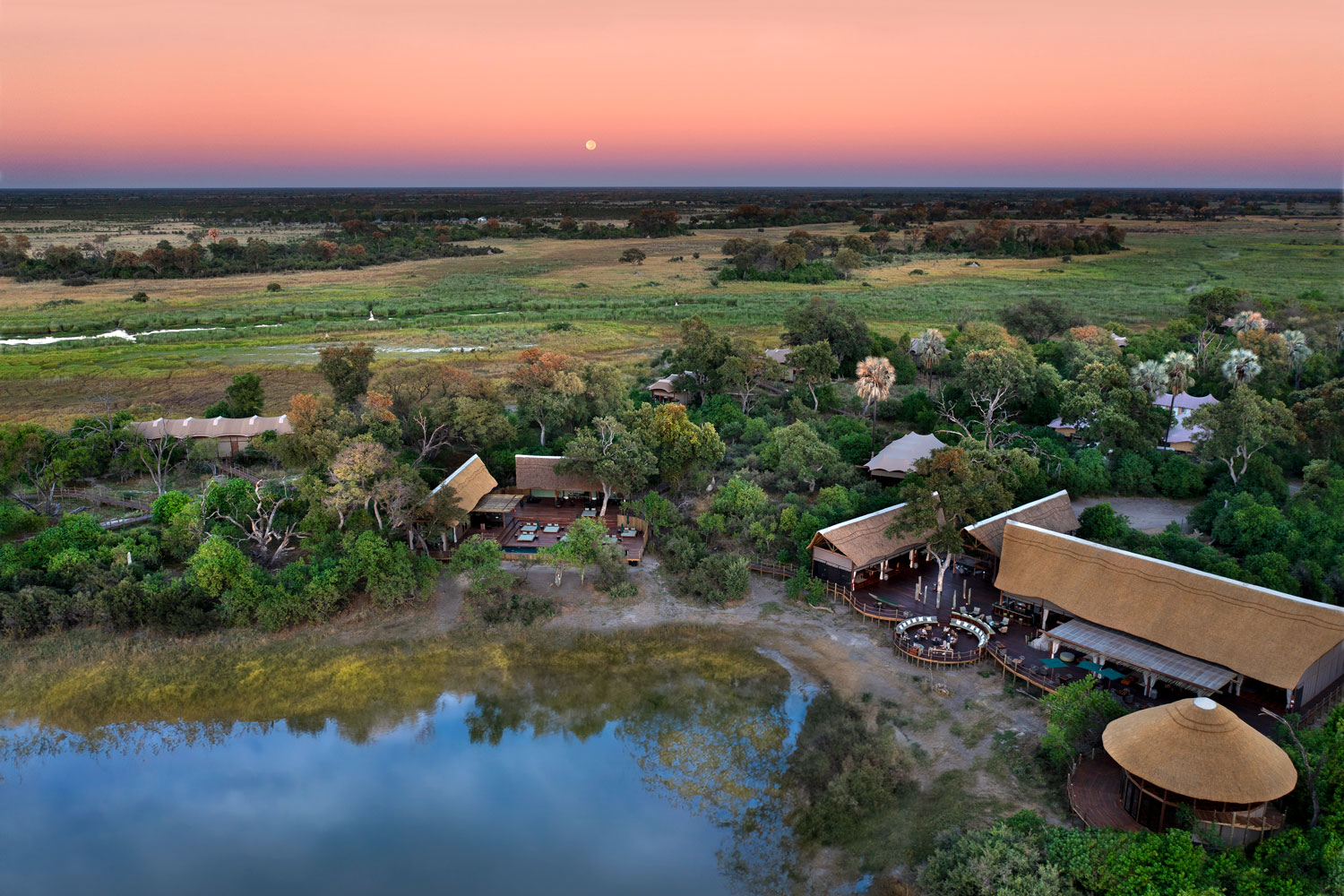
A great reminder of this comes around 2am on our first night at camp. We are awoken by the bellowing wheezy grunts of a hippo right outside the canvas walls of our lodge, and in the morning the wooden walkways it has trampled over are being hastily repaired. I ask the camp general manager Kele Modiagane-Muzhuzha whether we’re in the way here and how we can be sure our presence isn’t causing issues for the animals. ‘The camp is built in an area that is away from game movement routes,’ she tells me. ‘The lodge is also carefully designed so that it is not a permanent structure, which means no foot print will be left so the environment remains in the same condition it was in before it was built.
Atzaró Okavango
‘Atzaró Okavango is also built sensitively regarding walk ways – using careful research it has been designed not to disrupt any movement and allows for game to pass through the lodge. The decks where hippos cross are lowered and can carry the weight of the hippo as well as an elephant walking across, and from time to time they actually pass through the camp. There is really zero impact to the environment caused by the lodge.’
IMPACT
But the best safari camps go further than zero impact and make a positive one. ‘Atzaró Okavango is within 5km of a village called Ditshiping,’ Kele tells me. ‘Through the foundation there is a patrol team that patrols the area to discourage the poaching of game. Culture conservation is also a focus; the basket weavers and sculptors in the area sell and share their heritage with guests that visit Atzaró Okavango.’
Furthermore, Atzaró Okavango’s female guide programme, run with the African Bush Camps Foundation, is a two‑year training initiative that equips local women with guiding, tracking, safety, conservation and hospitality skills to help them begin their guiding career. It helps to breaks gender barriers in a male‑dominated field, creating highly trained female guides who lead guest safaris at the camp. One of them is Bae, the first ever female guide in Botswana, whom I meet during my visit. She shares her story: ‘I enrolled for this programme because I have always wanted to interact with people across the world by sharing the beauty that is my country. Also, guiding has been male dominated and I wanted to showcase the capability of a woman.
‘The programme takes two years but because of my capabilities and enthusiasm to learn, I completed it in one year and was placed as a junior guide… With the changes in skilling and improved equipment (e.g. vehicles) it has made it easier for females to guide, and I hope to see an increase in female guides over the next years.’
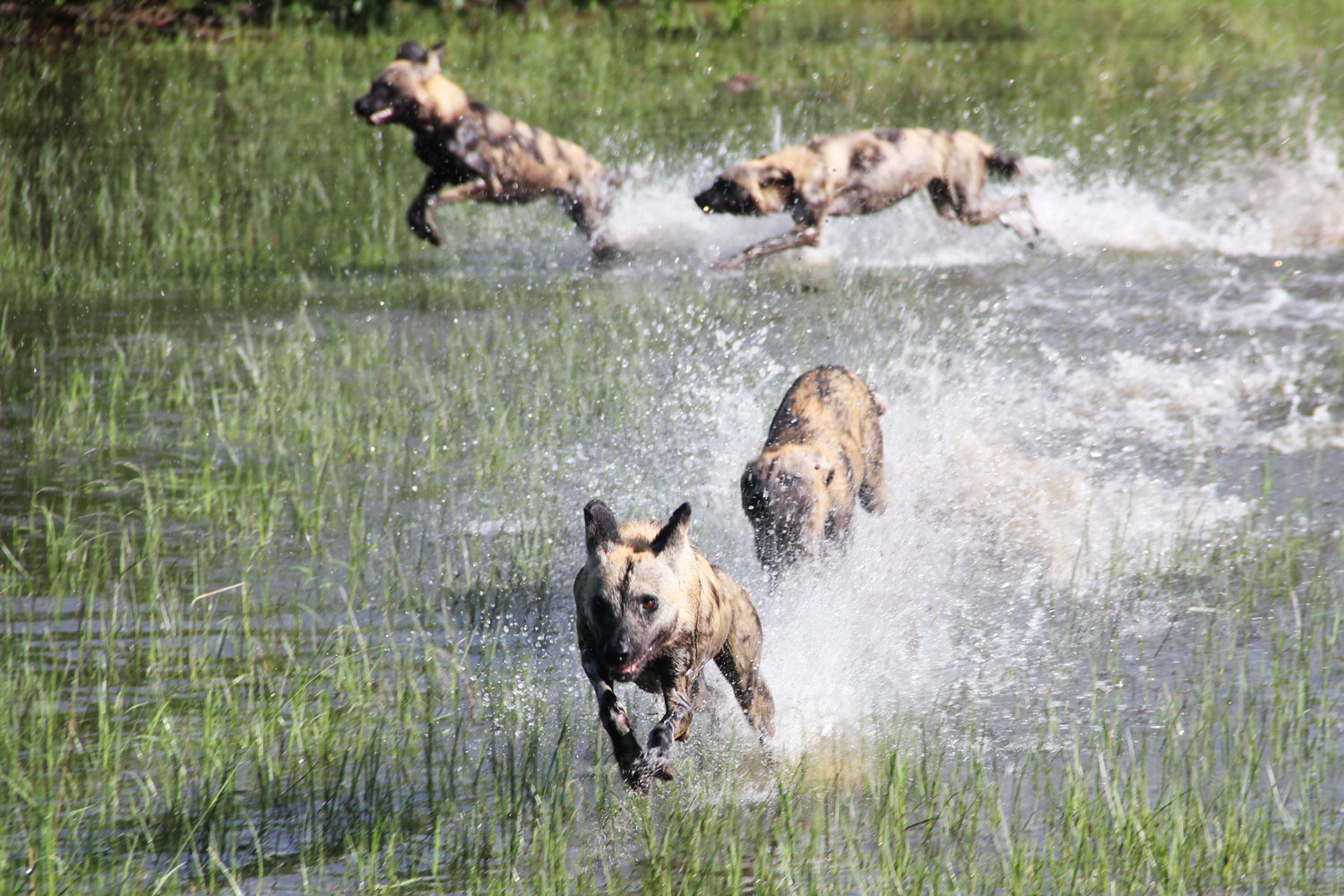
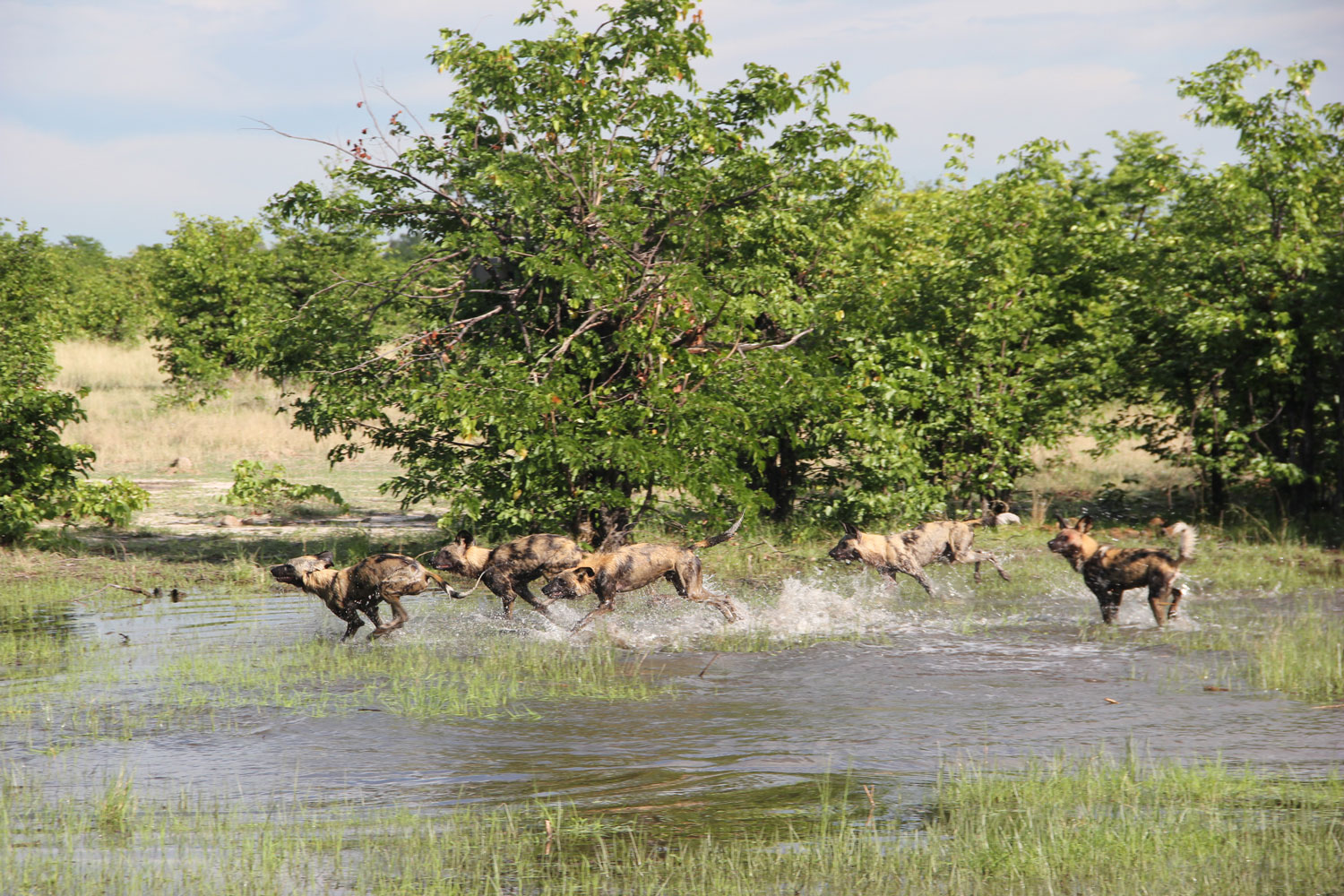
African wild dogs in the Okavango Delta
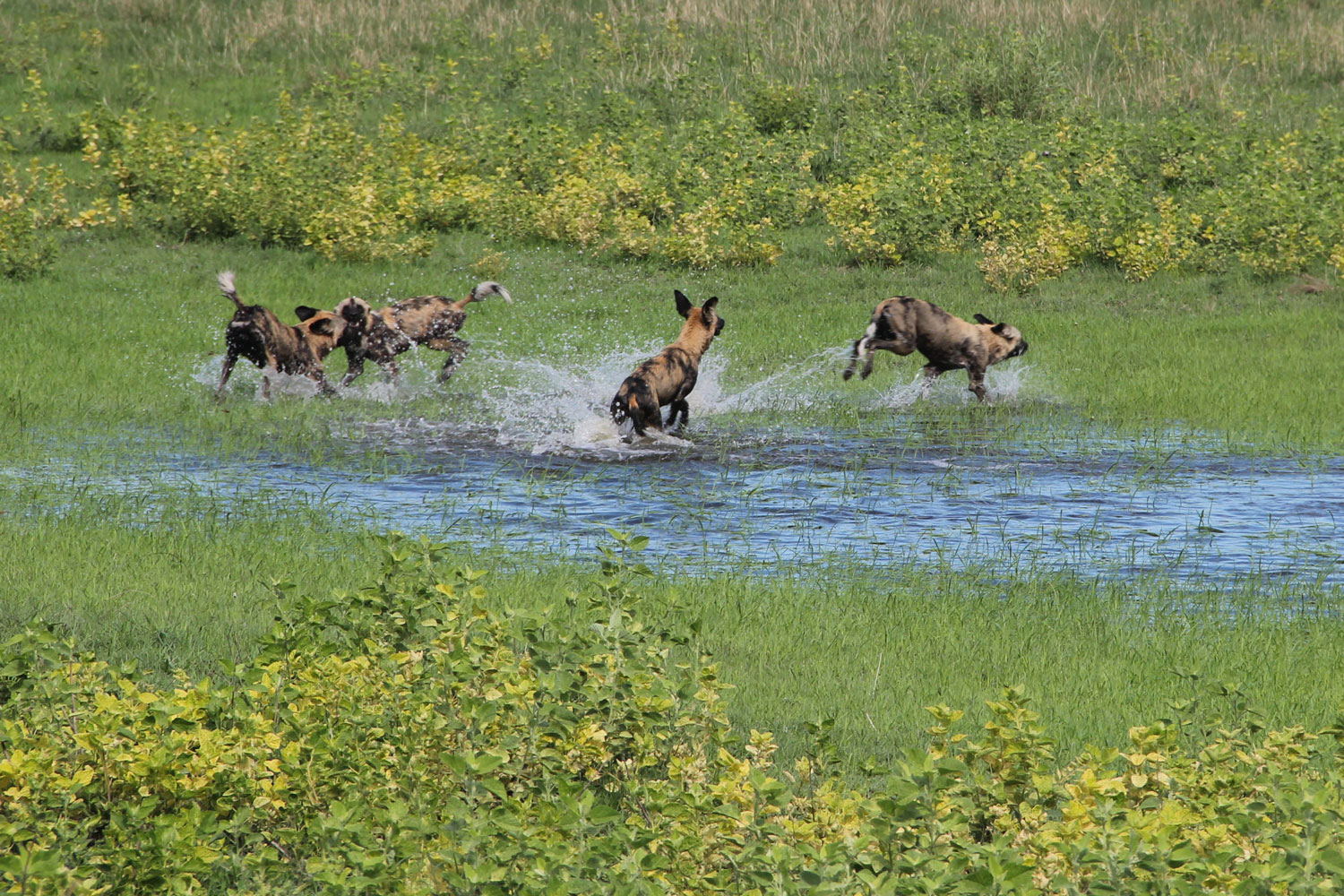
And what of the animals? The endangered African wild dogs are at the heart of the conservation efforts in Botswana, the last stronghold of the predator on the continent. The Botswana Predator Conservation Programme tracks wild dog packs in the Okavango Delta, though they are hard to contain as their movement and hunting patterns are much more random than their feline counterparts. Spotting a large pack of them on our final drive of the trip is an absolute thrill, tearing after them as they splash around in lakes and complete several victorious hunts (they are considered to be the most successful predators on the continent). By far the most joyous of the animals we’ve seen, watching them play together in a sun-dappled pond it feels vital that we help to protect them, and their beautiful home.
So are we really helping, or hindering, by being here? ‘Safari does not impact the ecosystems in any way, the regulations that are in place for compliance completely protect the ecosystem,’ Kele tells me. ‘This goes as far as not even being allowed to collect firewood. The tipping point occurs when there is an over-population of activity in the area, but this is once again highly regulated, hence the exclusivity of the concession around Atzaró Okavango and the limitation of activity and other operators in the area.’
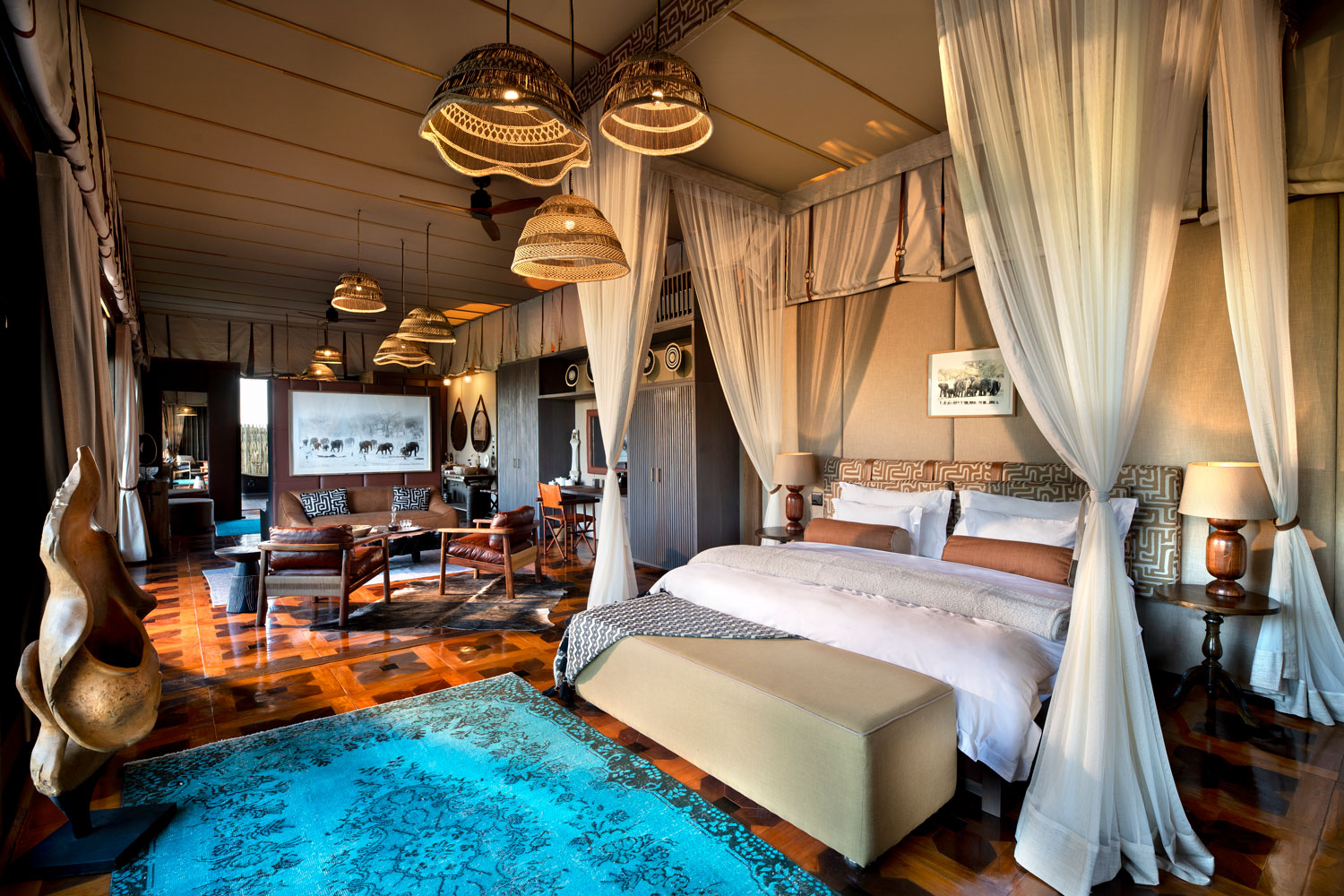
Atzaró Okavango
STAY
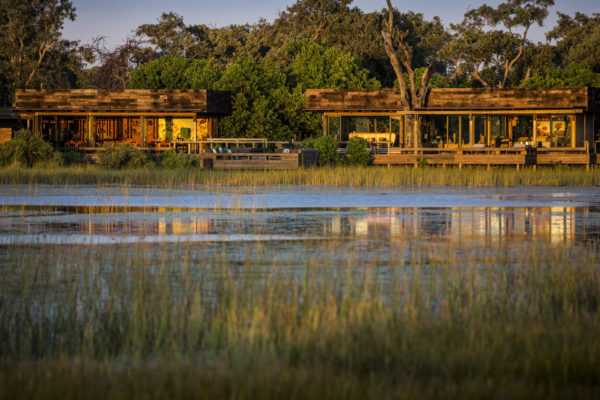
Atzaró Okavango is not your average safari camp. It is a genuinely sustainability‑focused, ultra-luxe destination set on a private concession between the Moremi Game Reserve and Gomoti Plains in Botswana’s Okavango Delta. The entire camp runs on solar power, with on‑site water treatment. It is accessible only by helicopter and is designed to be as low‑impact as possible (building and rebuilding bits of the camp per the hippos’ demands).
Tented suites sit elevated on stilts and blend canvas with natural woods, leather and handcrafted basketry, framing wide Delta views while remaining integrated into trees and vegetation. They make for perfect couples’ retreats, spacious and cosy, with indoor and outdoor showers and baths, air-conditioning and a sprawling private deck with a plunge pool from which you can overlook the lagoon or floodplain, teaming with wildlife by day (unseen but not unheard after dark) and enveloped under a canopy of stars by night.
There is a gorgeous communal 20‑metre lap pool, reminiscent of Ibizan Atzaró Agroturismo Hotel flagship spa pool, plus a gym, spa and yoga shala, so you can pursue wellness goals alongside day-long fine dining and drinking opportunities.
(c) Rebecca Cox
THE FINAL WORD
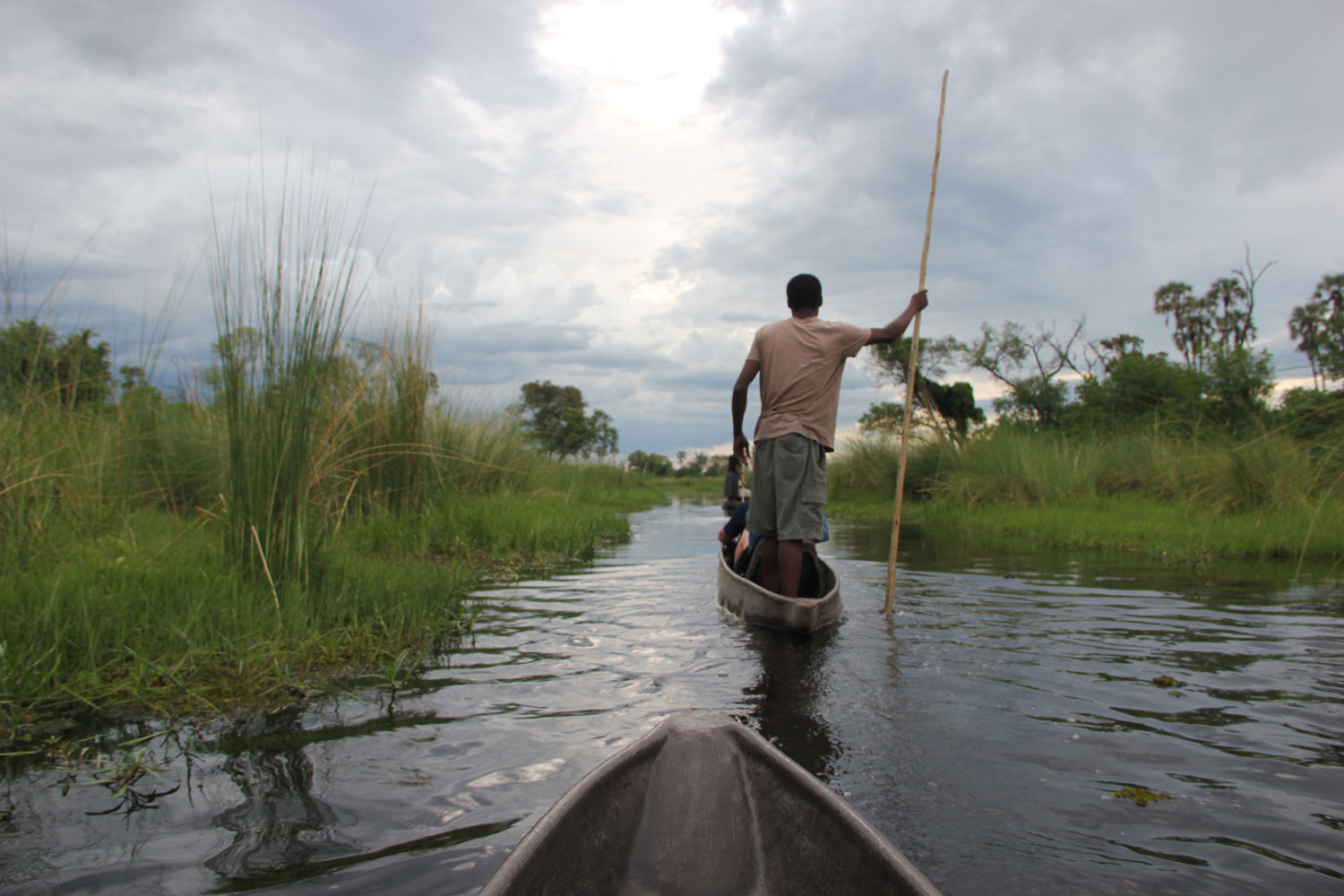
A visit to the Okavango Delta is incomplete without floating down the waterways in a traditional mokoro, the most picturesque and peaceful way to immerse yourself in the landscape – unless half-way through you find yourself racing back to safety as another apocalyptic thunderstorm closes in on you. Here, nature always has the final word.
BOOK
To a stay at Atzaró Okavango visit atzaro-okavango.com | To book a stay at Atzaró Cape Town visit atzarocapetown.com
To book the nine day itinerary – ‘The Atzaró African Ultimate Experience’ visit atzarocapetown.com | Rates for this itinerary start at £8,600 per person.
See more pics from the trip below.
ADVERTISEMENT
Ad
ADVERTISEMENT
Ad
ADVERTISEMENT
Ad
ADVERTISEMENT
Ad
ADVERTISEMENT
Ad
ADVERTISEMENT
Ad
ADVERTISEMENT
Ad