


Kitchen Trends 2026: The 13 Looks Designers Are Backing
By
1 month ago
What’s cooking?
With more Brits than ever choosing to ‘improve, not move’ their homes, the interest in DIY transformations has never been bigger. And if your next project takes place in the kitchen, you’ve come to the right place. Here, we delve into 2026’s biggest kitchen trends, as told by industry experts and designers.
The Biggest Kitchen Trends For 2026
A house wouldn’t be a home without a kitchen – which is why it’s often the subject of renovation projects and DIY tasks. ‘Kitchens – the rooms used to literally sustain life, through food and drink – are primordial places, so a lot of people want to use it as a space to express security, safety and soul,’ notes Leila Touwen, co-founder of Pluck. ‘There isn’t really one rule to follow. The point is self-expression; what feels minimalist and cold to one person, will be calming and cleansing to the next. One person’s collection is another person’s clutter. It is just the idea of expressing who you really are through your kitchen’s design to create a space that you are absolutely comfortable in.’
And with comfort comes ample opportunity to make the space your own – which is where some of the biggest interior design trends of the year come in. ‘The passion for personal, nurturing kitchens will continue to evolve with the use of colour, or the commitment to an absence of colour along with individual design details to create a space that is just right for each home,’ predicts Leila. ‘It is true to say that the world feels pretty unstable right now, and so more than ever our homes become a refuge, predictable, reliable and safe places.’
Keen to see how this will play out at home? These are the kitchen trends to have on your radar in 2026:
Top Trends At A Glance
- Mix-And-Match Cabinets
- Fluted Details
- Natural Materials
- Wood Kitchens
- Leafy Greens
- Moody-Warm Tones
- Freestanding Kitchens
- Soft Silhouettes
- Coloured Lacquers
- Hosting Heroes
- Visible Craft
- The Irregular Kitchen
- Layered Lighting
Neptune
1. Mix-And-Match Cabinets
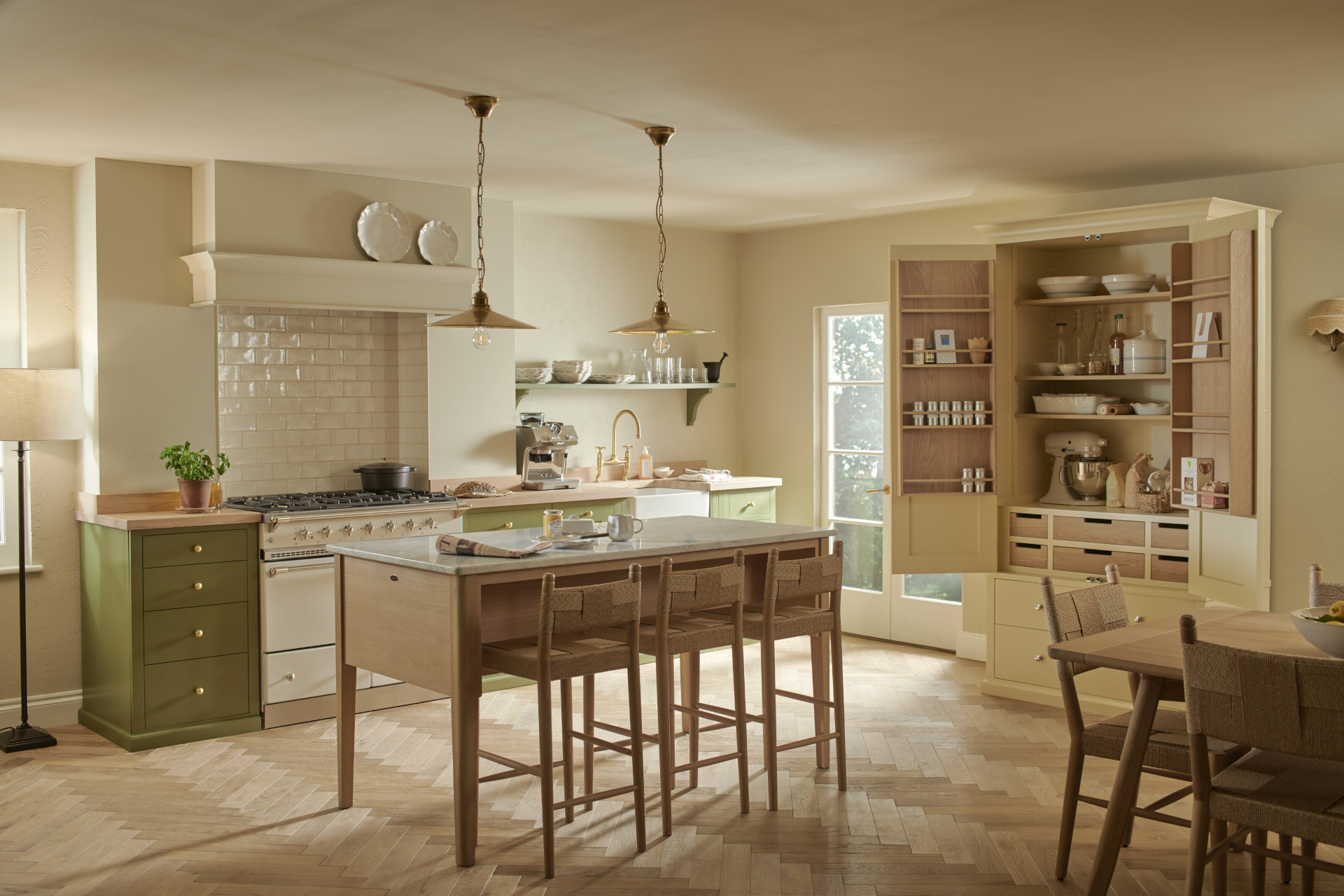
We’re leaving matchy-matchy interiors behind us in 2026 – and instead embracing a more curated, personal touch in the kitchen. ‘We’re seeing customers moving away from completely matching cabinetry towards a more mix and match style,’ notes Fred Herlock, Design Director at Neptune. ‘Think complementary paint colours being used on wall cabinets to base cabinets, mixing natural wood finishes with painted, or freestanding kitchen furniture like larders and islands alongside more traditional, fitted cabinetry.
‘This gives the sense that the kitchen has evolved over time, evoking vintage kitchens of old, and helps to give the kitchen personality and warmth with the use of different colours, textures and materials.’
Sola
2. Fluted Details
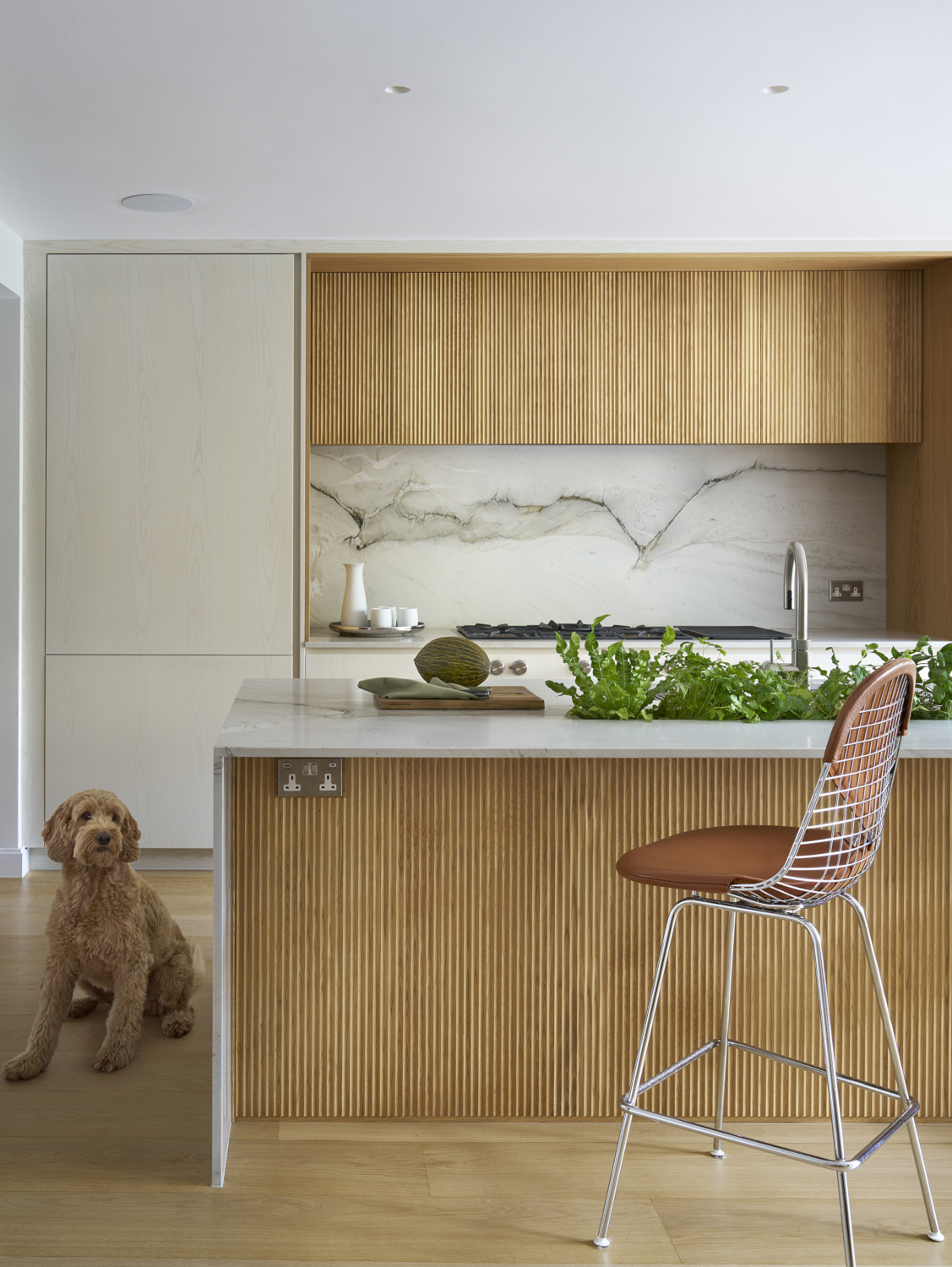
Another trend taking over our kitchen cupboards, fluted doors – which see cabinets decorated with vertical concave grooves or ridges – are set to habe a majoy moment this year. ‘We’ve seen a real shift toward kitchens that feel crafted, and fluted doors are the perfect expression of that,’ says Rhiannon Phenis, Head of Design at Sola. ‘They’re subtle, tactile, and architectural without being overwhelming.’
Neptune
3. Natural Materials
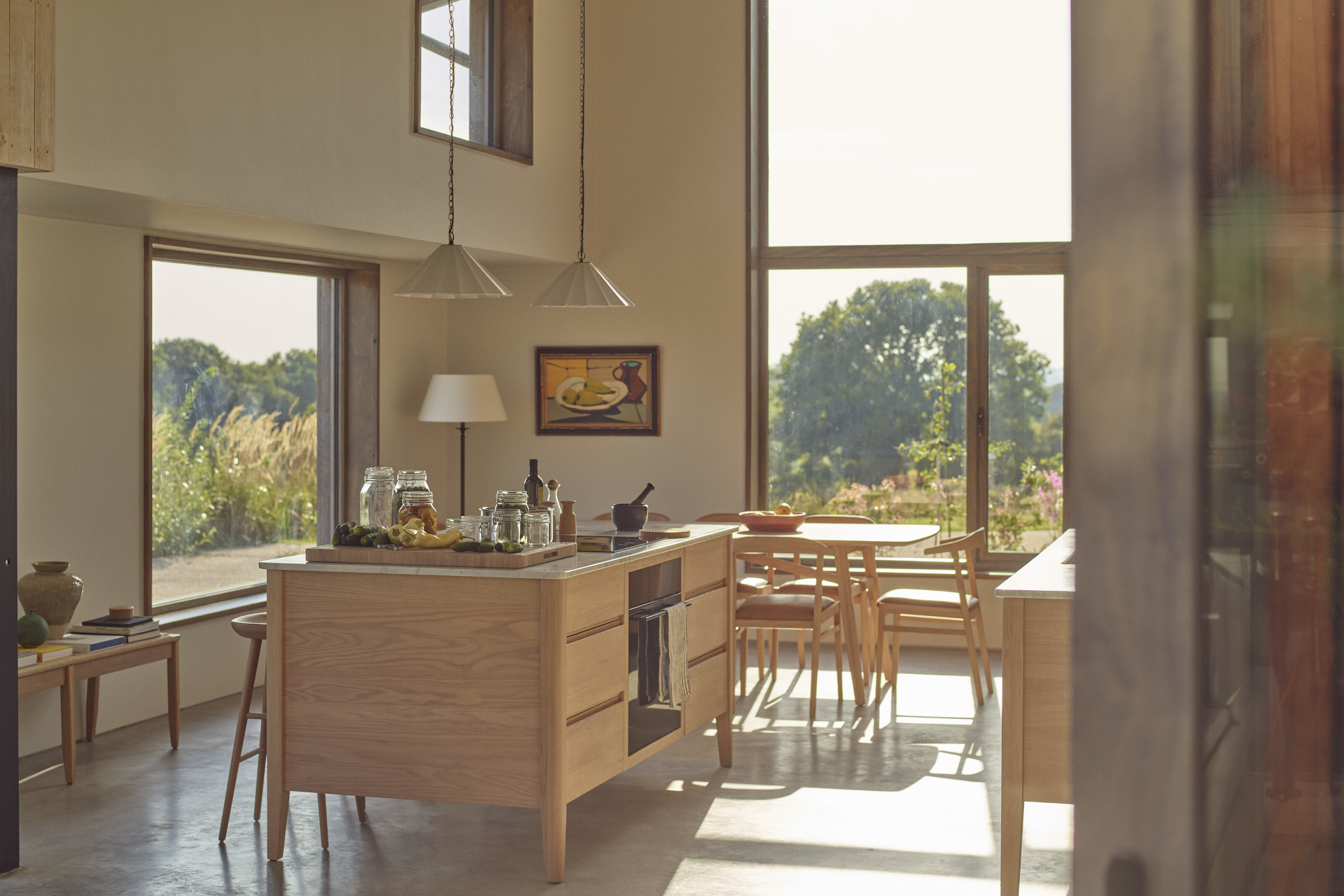
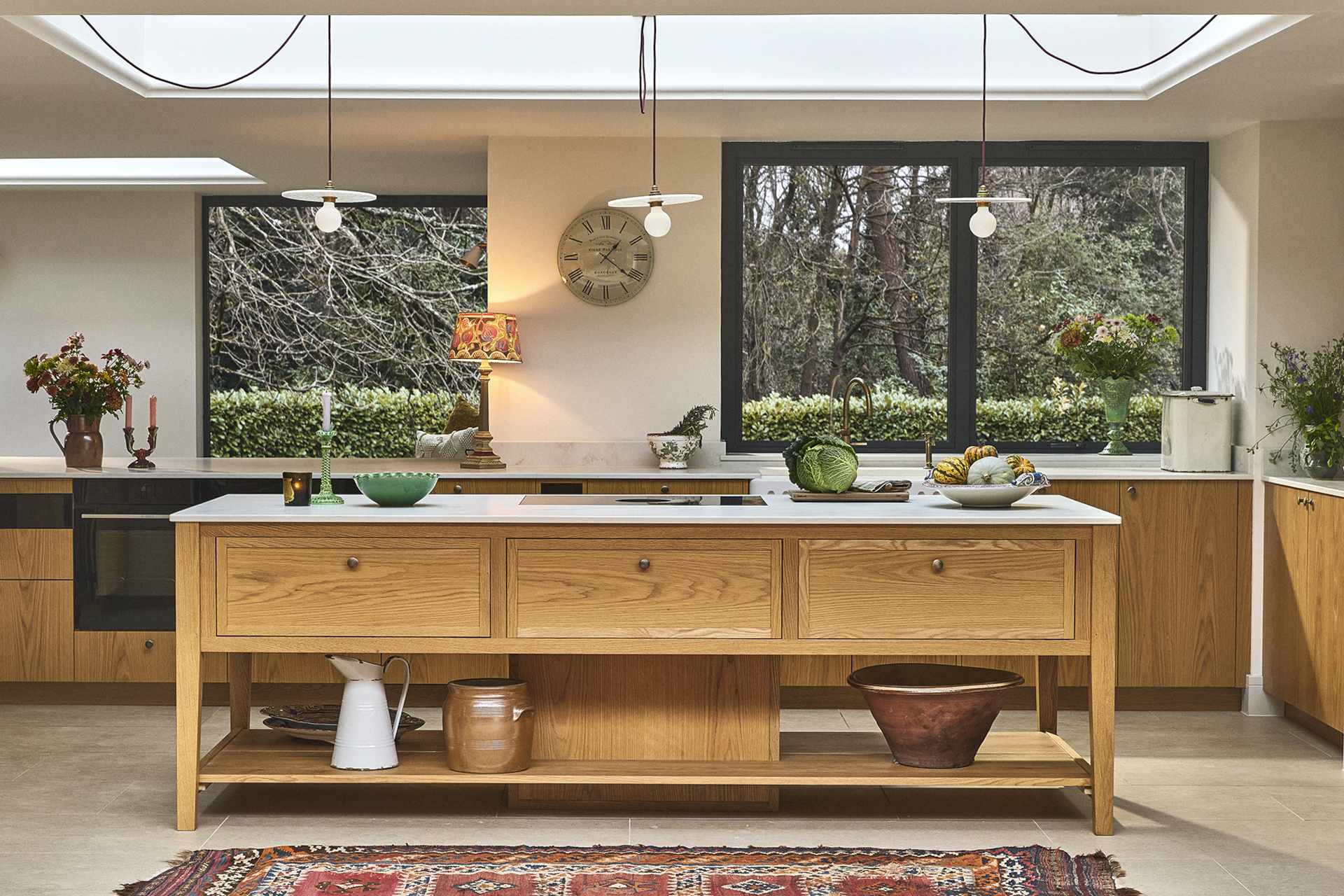
And speaking of tactile finishes, one of this year’s sweeping interior design trends is natural materials. ‘Solid oak finishes and natural stone worktops provide a look that is considered and timeless,’ emphasises Fred. ‘Mixed in with materials like rattan on lighting or accessories, soft linens and solid brass hardware, you can create an inviting yet functional space filled with depth and personality.’
Pluck
4. Wood Kitchens
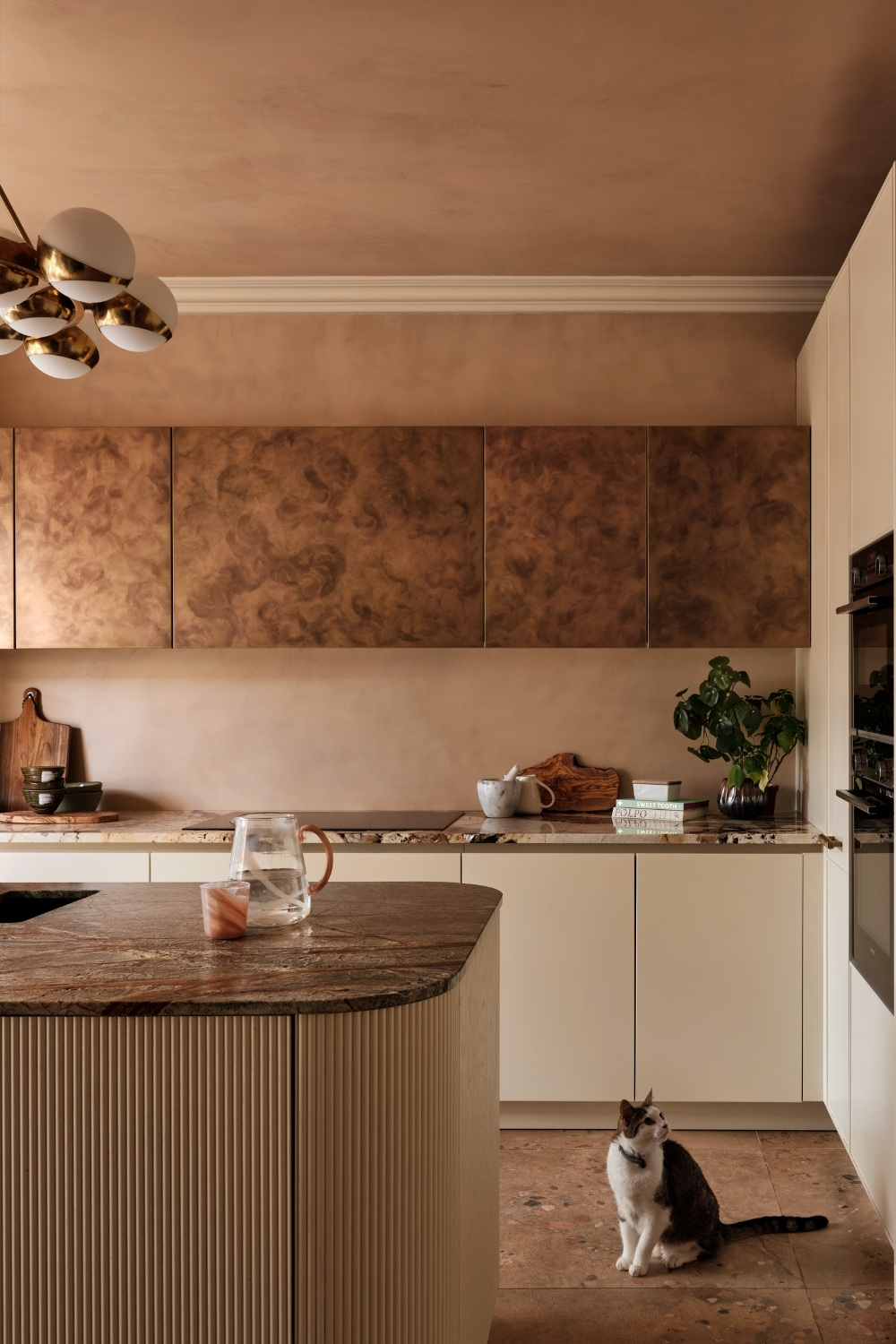
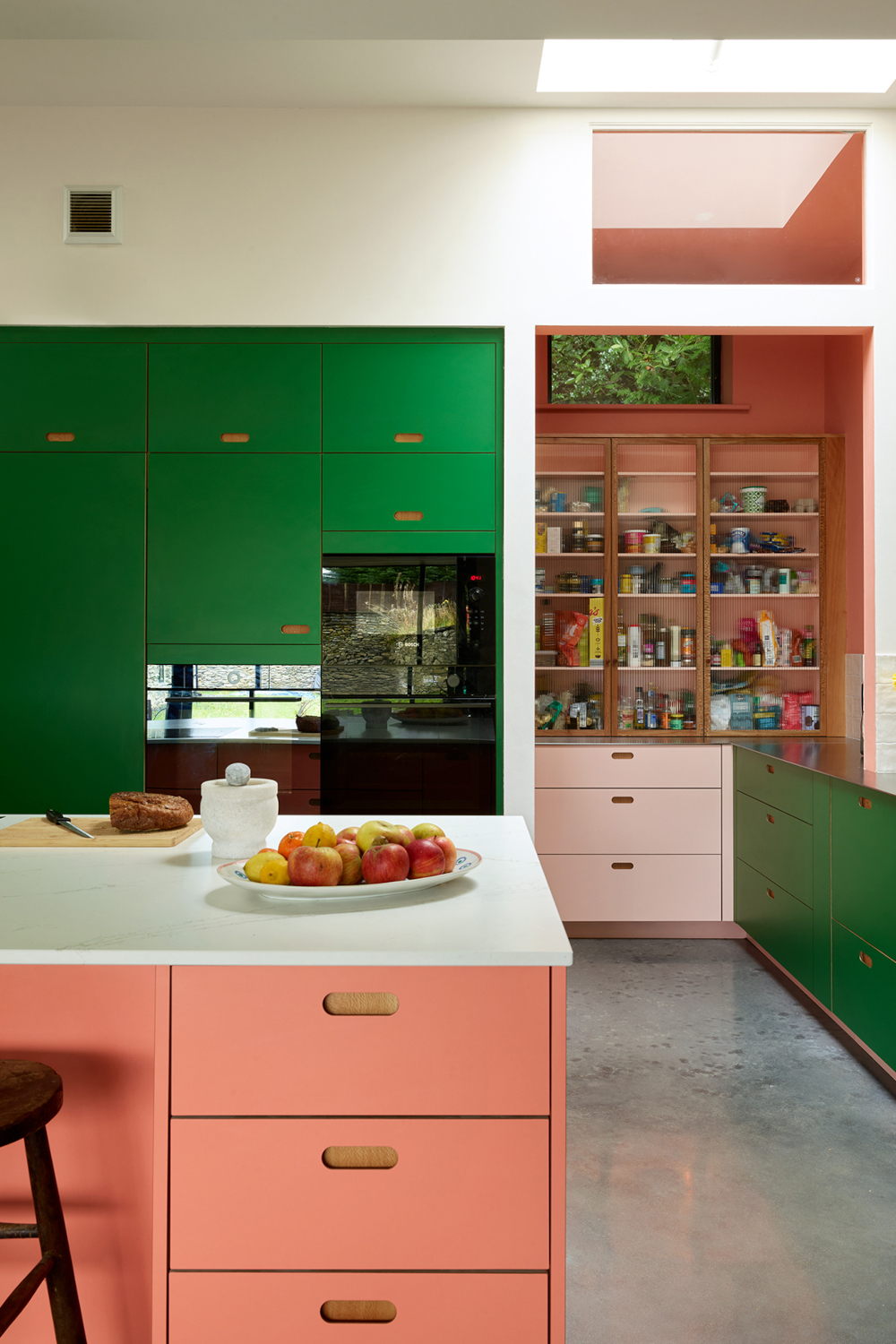
The maximalist take on natural textures? Go beyond the finishes and accessories, and dress the whole kitchen in wood. ‘All-wood kitchens, and wooden cupboards that are dedicated to the beauty of the swirling grain are having a big moment,’ says Leila. ‘The emphasis is on warm tones and undulating, uneven texture that can only be introduced to a scheme by wood. Again, it’s grounding, reassuring, rooted in nature.’
It’s this craving for warmth in kitchen interiors that’s driving the trend, says Rhiannon. ‘There’s a real craving for soft heat in their interiors,’ she says. ‘Mid-tone woods like walnut and smoked oak add richness and character, without the heaviness of darker finishes, making them a go-to choice.’
Pluck
5. Leafy Green Kitchen Colour Schemes
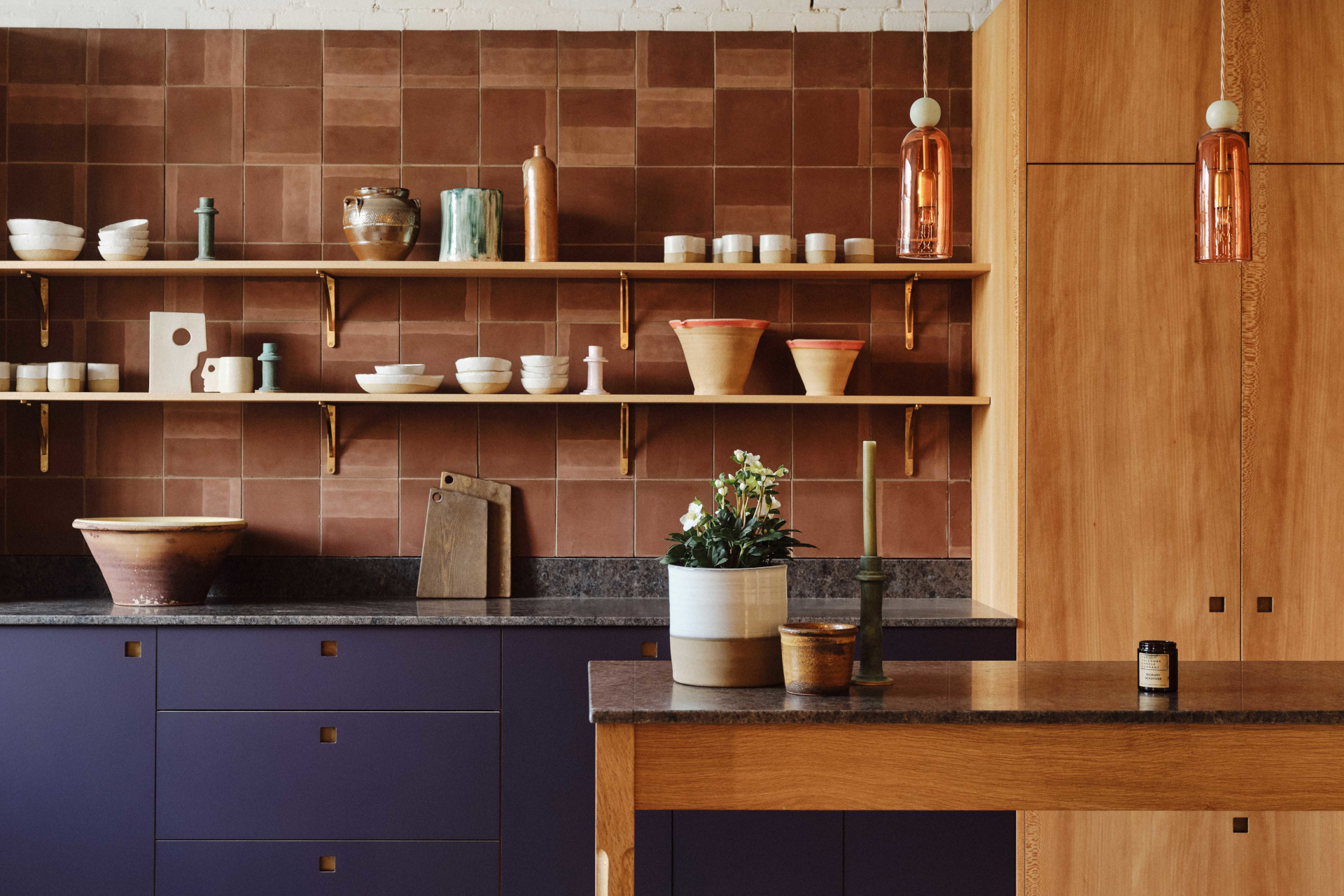
The craving for naturalness even extends to the colour palettes we’re picking for the kitchen. ‘We are seeing a move towards green hues, from pale celadon to earthy olives as clients put wellbeing and relaxation at home at the top of their wish lists,’ notes Richard Moore, Creative Director at Martin Moore.
And while there are plenty of greens to choose from, the hue taking over this year boasts a leafier hue. ‘Kitchen cupboard greens will be fresh and leafy this year,’ predicts Leila. ‘More muted, soft, sagey shades have been embraced with vigour – and understandably so – but a punchier shade, that feels like looking at moss or bracken in summer, so evocative of life, will be the green of 2026.’
Pluck
6. Moody-Warm Tones
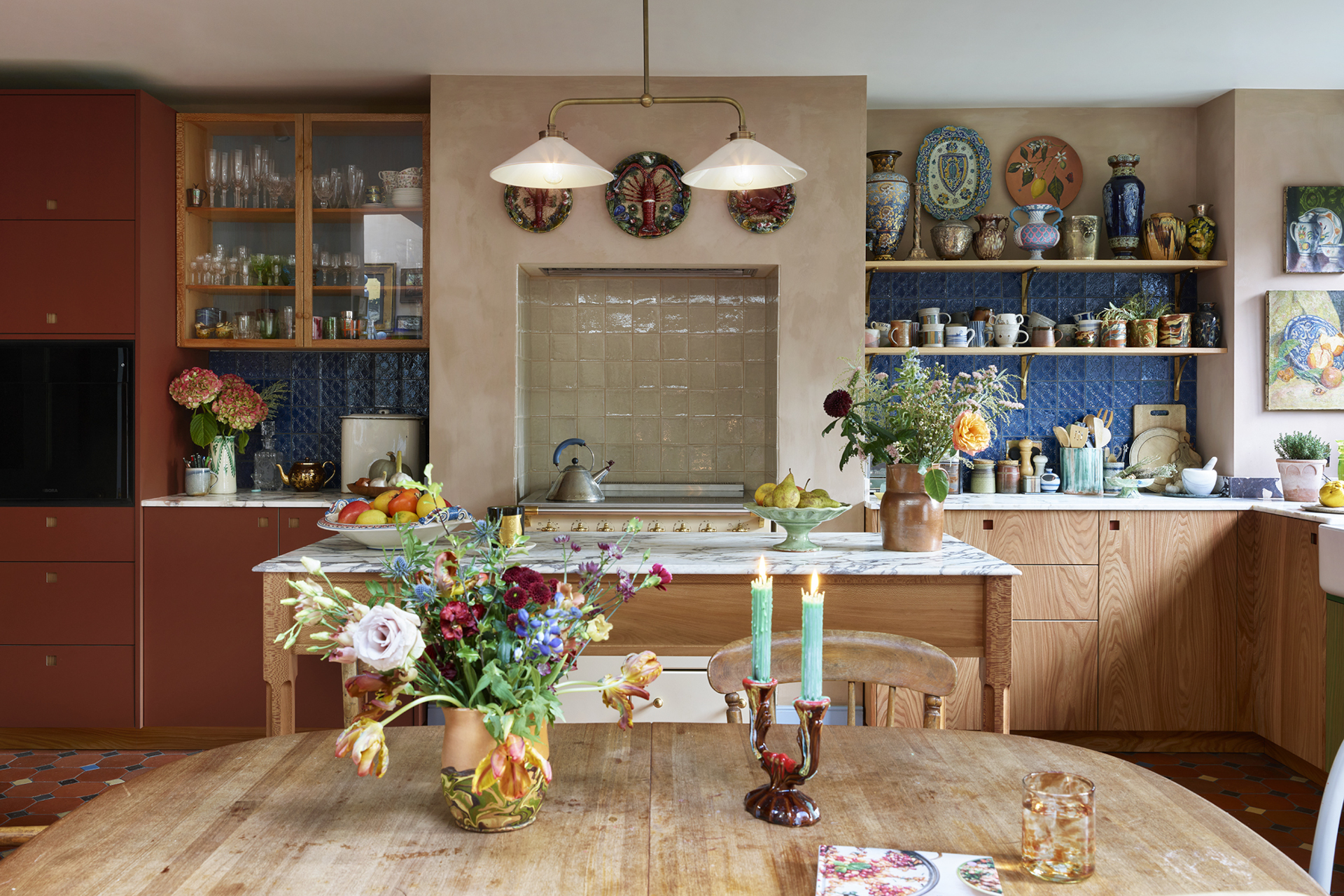
Aside from shades of green, the experts tell us that warm hues with moody undertones will set the tone for kitchen design in 2026. ‘The other colours I think we’ll be seeing are rich and dark warm tones – deep clay reds and plums, specifically,’ confirms Leila. ‘For me, these colours get lost if used as a small accent, so work better when used on a larger area. They look beautiful with glints of metal, pale blues, woods and beiges; sumptuous, velvety colours that feel earthy and grounded.’
Pluck
7. Freestanding Kitchens
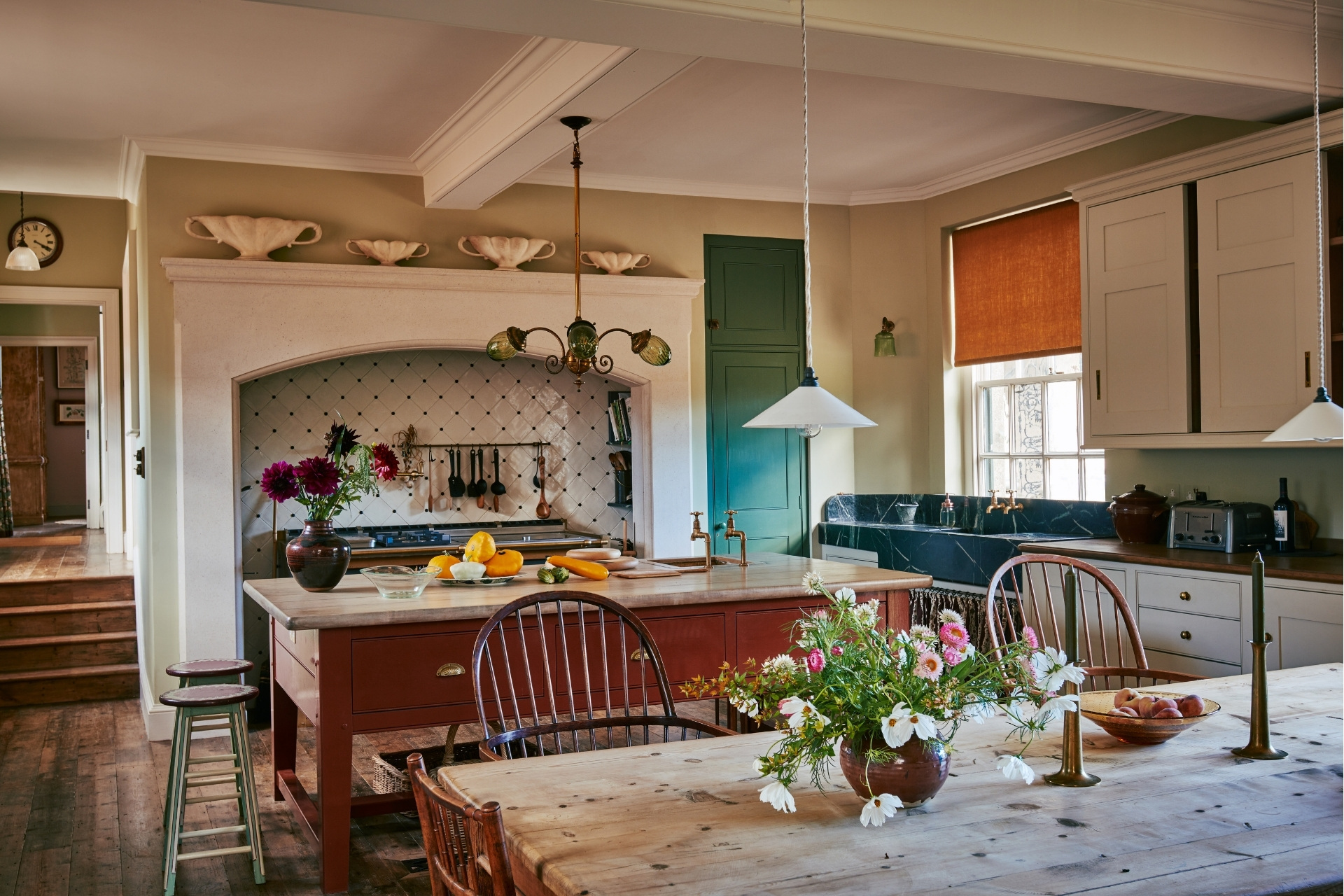
Moving beyond colour palettes and finishes, the experts also see a revival of freestanding furniture in the kitchen this year. ‘I think we’re moving away from the kind of kitchen where you’re just looking at acres of cabinetry,’ explains interior designer Max Rollitt. ‘That might mean introducing a dresser or a glazed cupboard so there’s not just one continuous line around the room, or even just having something of interest in the middle of the table, rather than a blank surface. It could be as small as a box or a bowl of fruit – as long as there is room for ornament.’
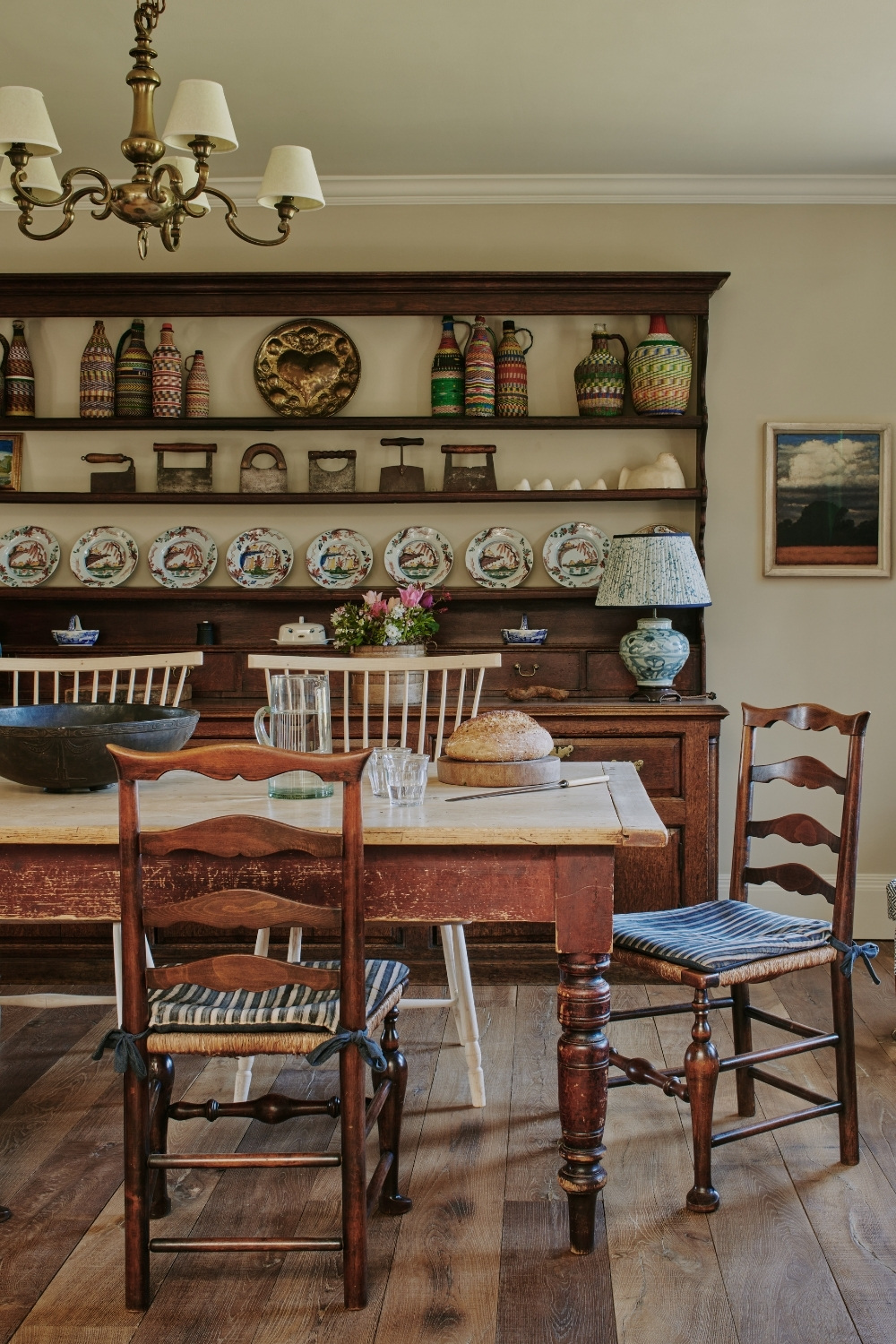
Max Rollitt
8. Soft Silhouettes
It’s not just bathrooms getting the softcore treatment – kitchens will experience a shift towards fluid silhouettes in 2026 too. ‘Softer shapes in the kitchen seem to be having a renaissance,’ confirms Fred. ‘Think gracefully curved corners and tapered legs. For a fluid, informal approach to cabinetry, it brings a contemporary ease and character that feels both timeless and modern. Or, for a more statement piece, opt for curved cabinetry in a contrasting colour; this will help give your kitchen a more striking look.’
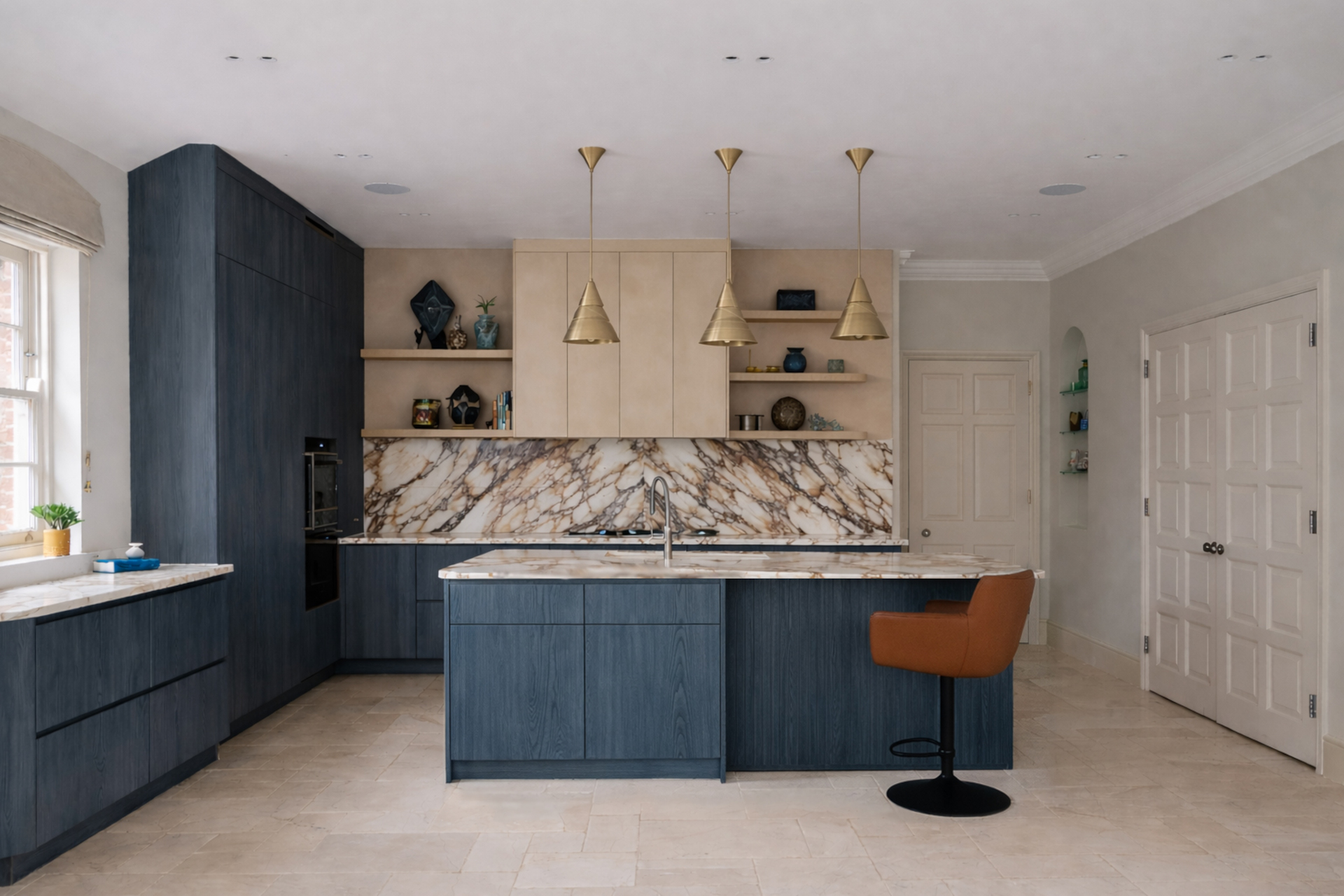
Sola
9. Coloured Lacquer Cabinets
Caught between natural wood finishes and colour? This 2026 lets you have both. ‘Thin coloured lacquers on wood lets you see the grain through a veil of colour,’ explains Rhiannon. ‘It’s soft, sophisticated, and feels layered. A lovely way to use colour without overpowering the space.’
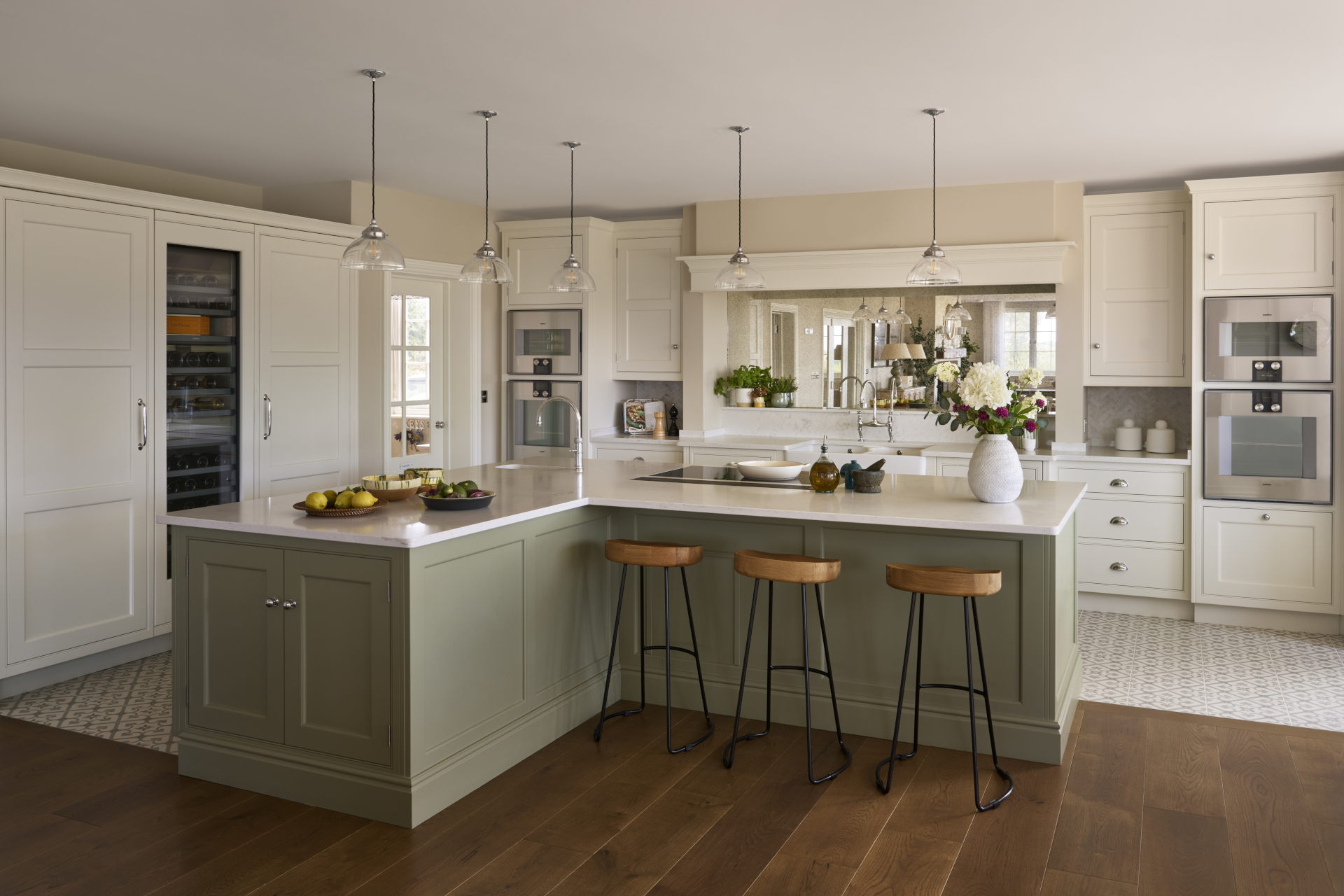
Martin Moore
10. Kitchens Built For Entertaining
It’s not just style we want from our kitchens in 2026 – we also want them to function as chic hosting spaces. ‘Entertaining at home is going from strength to strength,’ notes Richard, who sees personalised hosting features taking centre stage in 2026. ‘We predict not only a marked increase in home bars, drinks cabinets and wine room but an increase to the space given over to these custom-designed areas.’
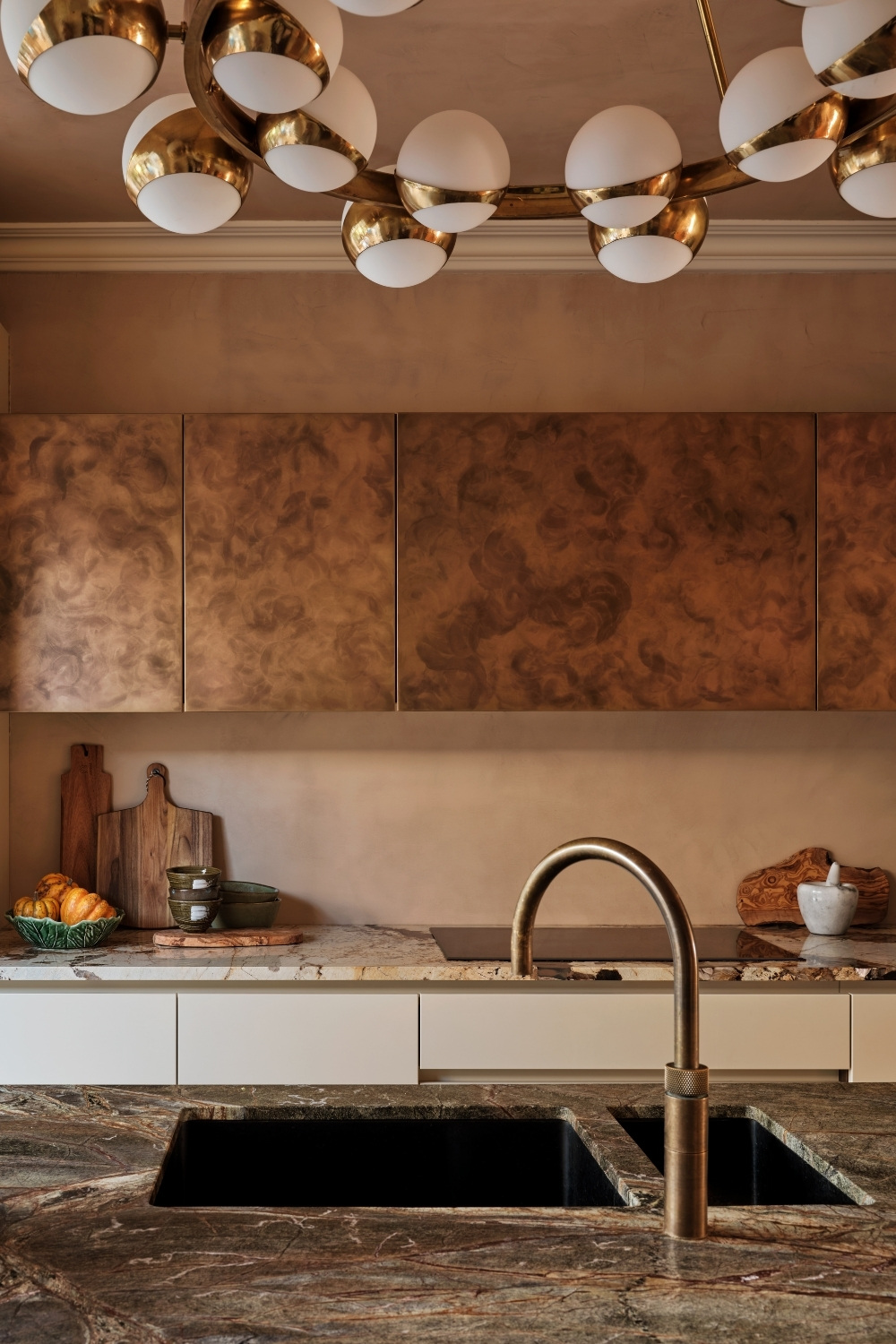
WOOLF Interior
11. Visible Craft
In 2026, perfectionism is out – and handcrafted luxury is in. ‘There is a definite move away from finishes that feel too perfect,’ notes Verity Woolf, founder and Creative Director of WOOLF Interior Architecture & Design. She highlights that honest materials, backed by the hands of craftspeople, will fall more into the spotlight. ‘We’re seeing a renewed appetite for two tone materials with texture, variation and the ability to age beautifully.
‘Timber with a visible grain, richly veined stone, aged metals, handmade tiles and tactile plaster are bringing depth back into kitchens. We’re particularly interested in mixing these materials rather than relying on one dominant finish – warm timber against cool stone, microcement or metal, for example. The luxury is increasingly in the craftsmanship and material integrity: surfaces that develop a patina and become better, rather than worse, with use.’
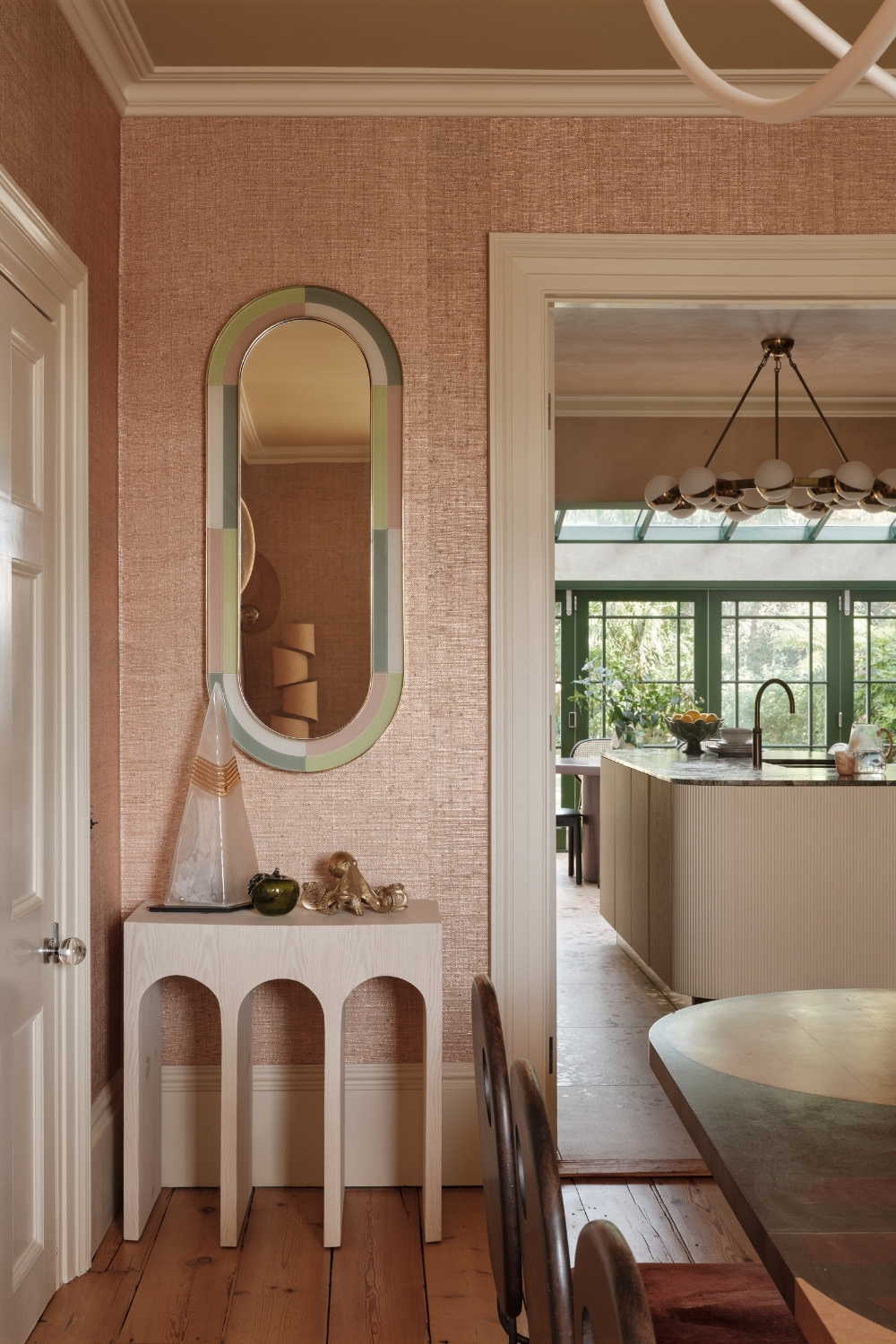
12. The Irregular Kitchen
Designers also point out that the ‘modern kitchen’ – complete with sleek countertops, hidden features and chrome colour palette – is becoming a thing of the past. Instead, we can expect spaces filled with character, comfort and the unexpected. ‘We have been designing the kitchen so it becomes less “kitchen-like”,’ notes Verity. ‘The dominance of uniform repetition is giving way to something softer and more individual – kitchens that feel furnished rather than installed.’
Cue, the irregular, collected kitchen. ‘Freestanding prep tables, glazed cupboards, antique pieces and furniture-style islands create a more collected interior that can evolve over time,’ adds the designer. ‘It’s particularly effective in period properties, where allowing the kitchen to sit naturally within the architecture feels far more sympathetic than filling every wall with cabinetry. The result is a kitchen with personality — a room to live in, rather than simply a place to cook.’
Max Rollitt
13. Layered Lighting
And finally, in 2026, designers are getting clever with their lighting. Max tells us that creating different points of illumination throughout the room – at the counters, by the cooker, over the dining table – is crucial for zoning the space and giving the whole room utilitarian flexibility. ‘It can be difficult for people to let go of the idea of a plethora of downlights. They’re very useful for preparation and when you need to see what you’re doing – don’t want to chop your fingers off – but they don’t necessarily have to do all the work,’ the designer explains. ‘You want to be able to adjust the atmosphere for dining, so having lights at various vertical levels is important as it allows for different activities in different areas. It’s all about finding that balance between practicality and creating a space that feels like somewhere you want to spend time, which is even more relevant given that many kitchens now double as dining rooms.’