


Rethinking Safari At Sarara, Kenya
By
8 months ago
Totally community led, Sarara is a new way to safari, says Charlotte Flach
As tourism takes on a sense of purpose, Sarara is responding with community-led conservation and travel with a conscience. Charlotte Flach visits to see how this Kenyan camp is leading the way.
Safari Lodge Review: Sarara, Kenya
Credit: Simon Pocock
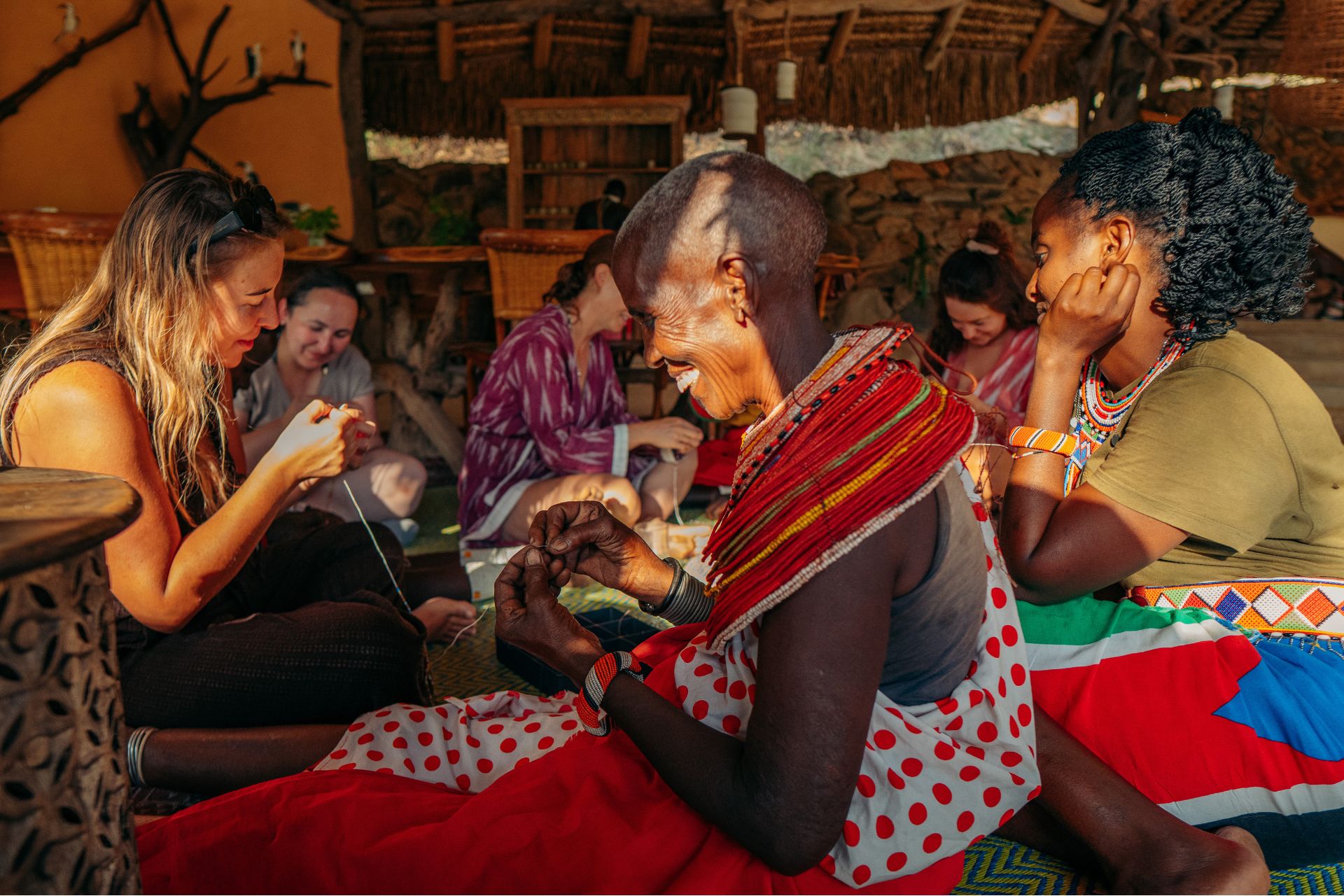
Our eyes meet and a slow smile spreads across her face, warm and conspiratorial. The Samburu woman sitting cross-legged just inches from me has stopped her beading and is listening intently as my words are translated back to her. A ripple of laughter, genuine and infectious, moves around the circle; a mixture of Samburu and English women.
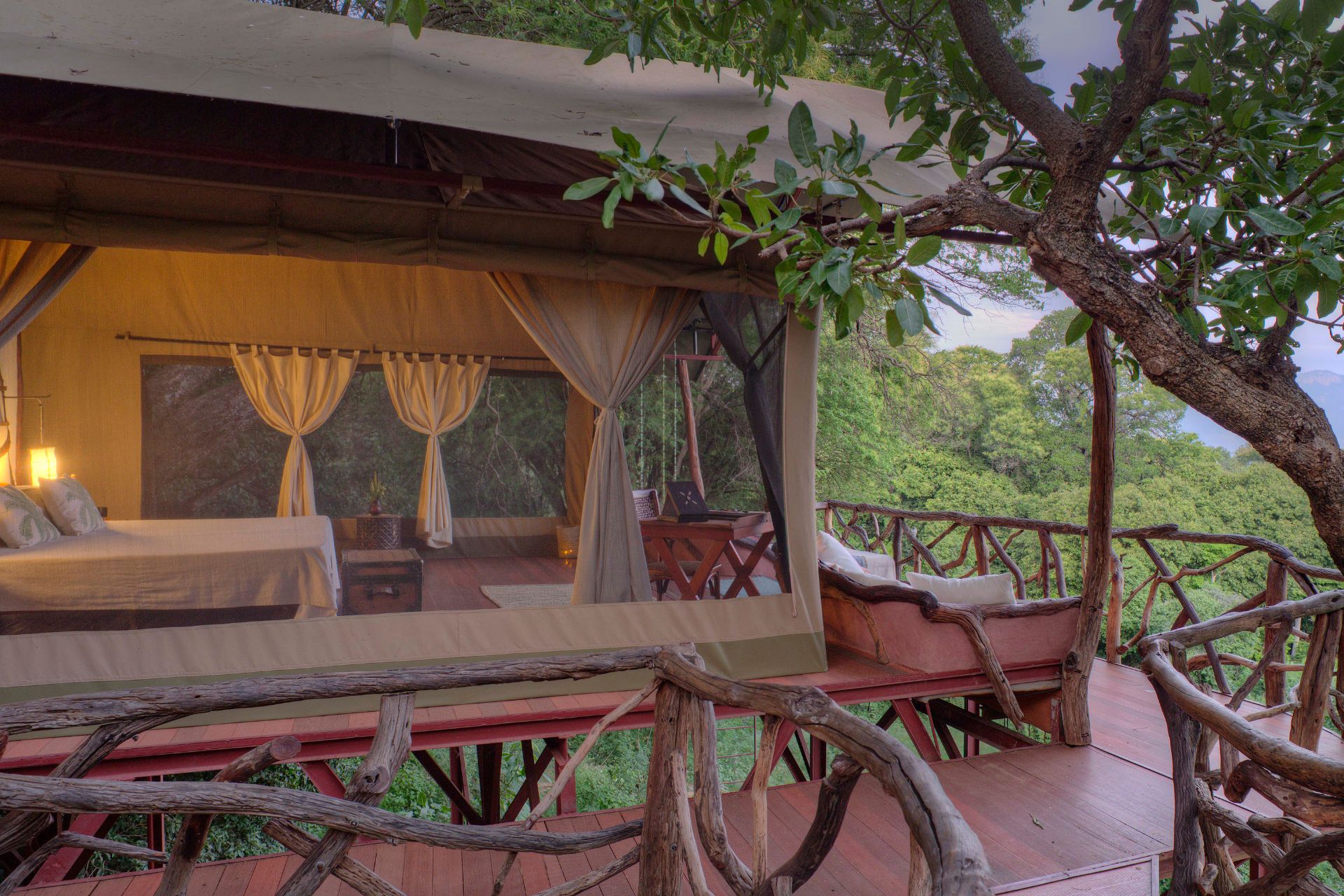
I’m at the Sarara Treehouses, perched high in the forest canopy, taking part in what can best be described as a cultural exchange. As we sit in a circle on the ground, the Samburu women weave anklets from beads in a multitude of bright colours that match their own intricate necklaces, bangles and earrings.
We bond by swapping questions on our respective lives, topics ranging from food to our homes to our monogamous lifestyles compared to their polygamous ones. The Samburu women seem bemused to discover that the three English women in their 30s aren’t married and have no children, which prompts a round of infectious giggling. It is intimate and authentic – something I’m quickly discovering Sarara has perfected.
Credit: Thige Njuguna
A collection of four ecolodges scattered across Northern Kenya offering up-close wildlife experiences, Sarara is so much more than a traditional safari camp. An entire conservation and ecotourism project that thrives here is powered by the Samburu people, an Indigenous tribe that is integral to the understanding and flow of life in the Namunyak Community Conservancy, an area of 850,000 acres of wilderness in the Mathews Range.
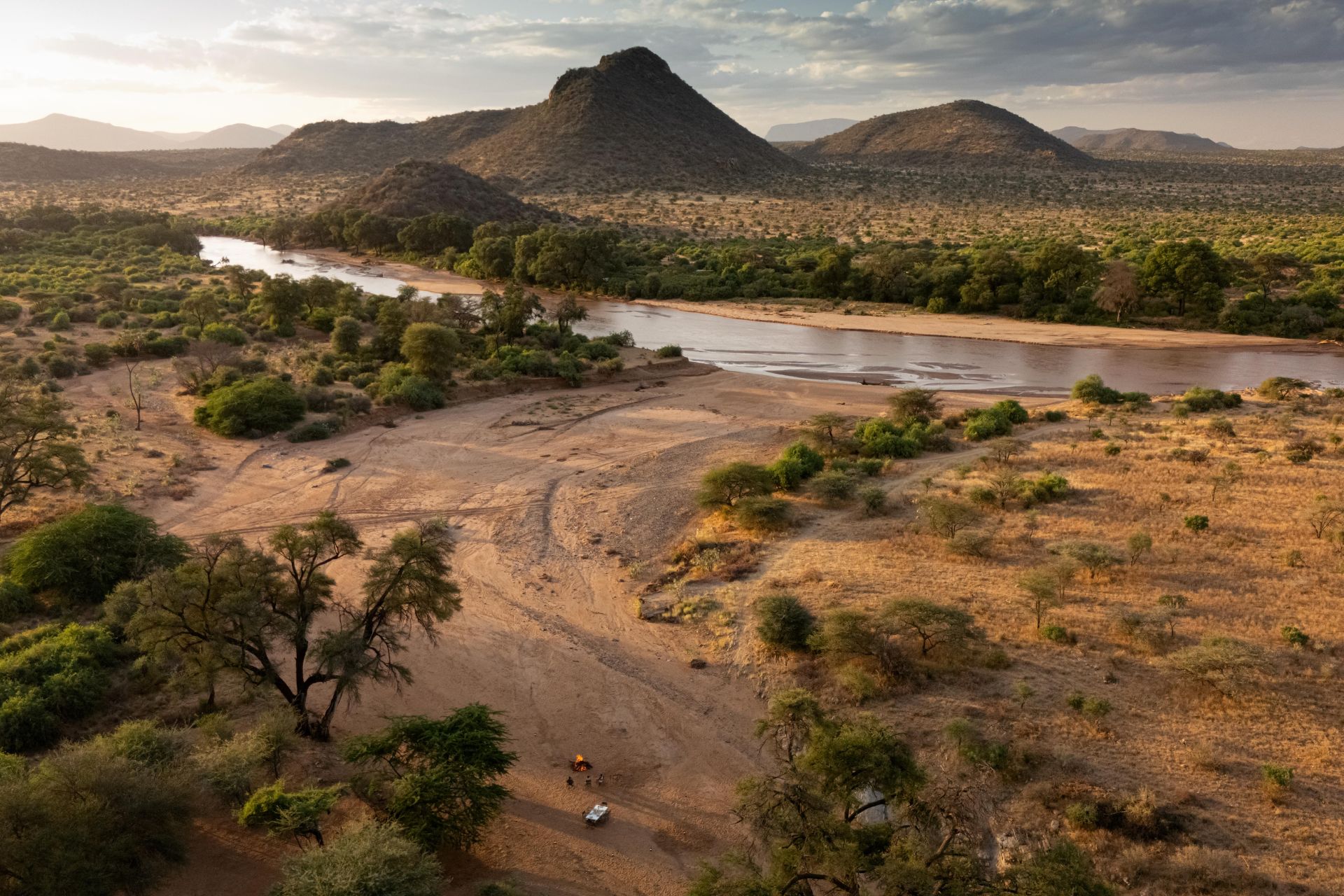
The epicentre is Reteti Elephant Sanctuary, a short walk from Reteti House, the first camp we visit. On our first evening, as the sun kisses the lip of the horizon, we follow the lodge manager, Tilas, through the bush, kicking up the red savannah dust which settles on our boots. We arrive at the elephants’ dinner time, an experience made even more magical by the encroaching twilight. A couple dozen calves are orphaned in Northern Kenya each year and many end up here to be rehabilitated. The keepers are all from the Indigenous Samburu community, so are deeply invested in the land’s ecosystem and the balance between man and nature.
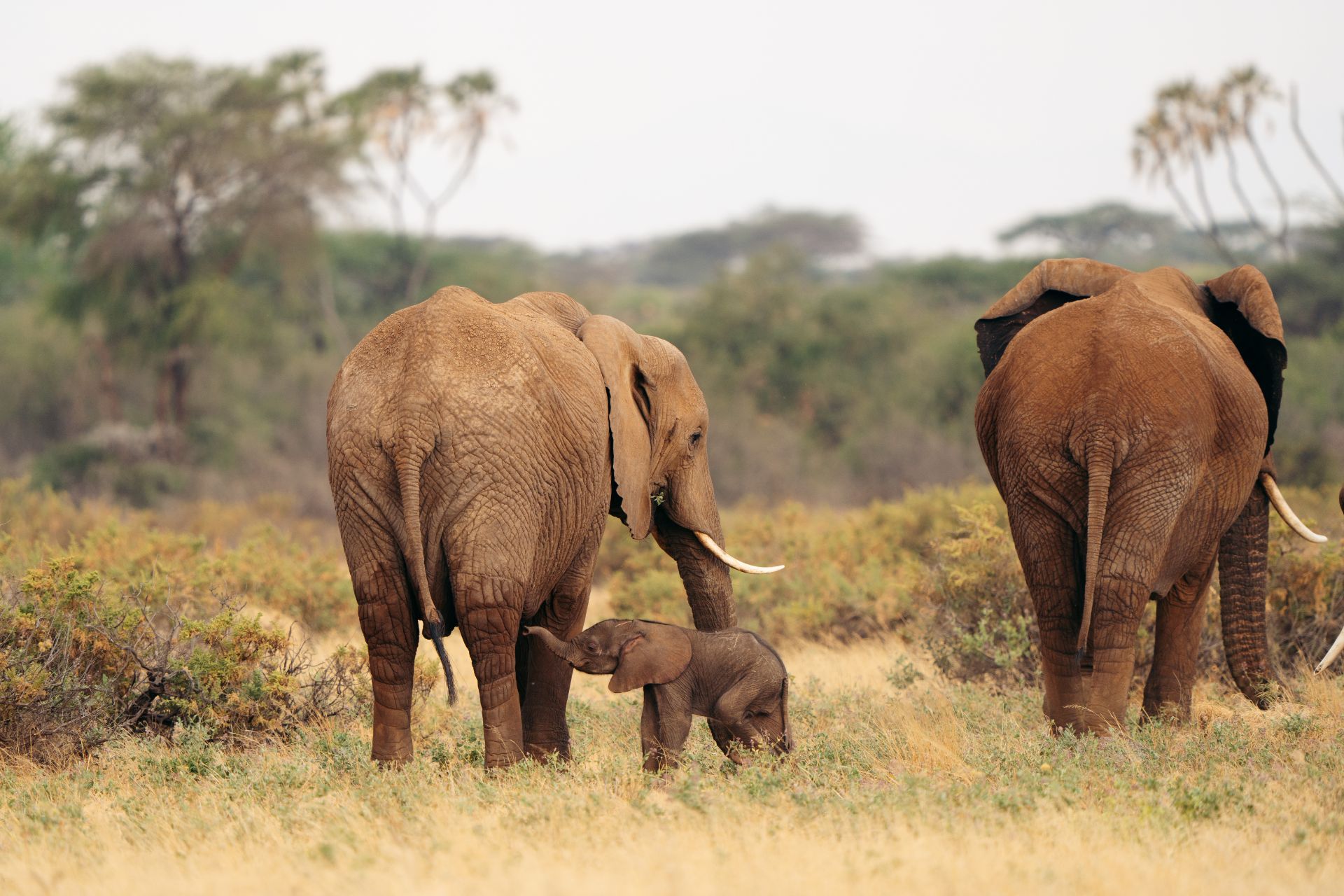
As we stand behind chest-high wooden bollards, a hypnotic, resonant song slowly builds as the staff begin their call to the elephants. Right on cue, we see them approaching from between the bushes, running across the plains, the timing of their meals built into their bodyclocks. Each calf has (and appears to respond to) a name and is recognised by the keepers on sight.
A smaller baby who is missing most of his trunk gallops up to keeper Naomi, who happily obliges him with a bottle of milk. His name is Long’uro, she explains, and he was found in a well with most of his trunk eaten by hyenas. Despite his difficult start, he is doing well and has learned to adapt without this appendage, which is so vital to elephants to survive in the wild.
‘Long’uro is very smart,’ she says, her affection for him clear in her voice. ‘He doesn’t have a trunk to wash himself, so he stands behind the other elephants at the water hole and gets washed when they splash themselves.’ He has, unsurprisingly, become a local symbol of courage and resilience, something the Samburu people seem to identify strongly with themselves.
Credit: Stevie Mann
This is just one of many grassroots projects in the conservancy. And the more I see, the more I realise that everything is interconnected. Next up is a visit to the local Milk to Market Programme, set up to give Samburu women access to their own incomes. Local women gather outside one of the homesteads (or manyattas in Samburu) each morning, bringing with them milk from their goats and cows which is transported to the sanctuary and fed to the baby elephants.
I get stuck in, lifting heavy canisters and painstakingly pouring them into larger vats, watched over by the Samburu to make sure I don’t spill a drop. It’s an unmatched opportunity to be part of something important and significant, without the usual distance put between tourists and local communities.
Over the following days, I visit several other projects, including a mobile clinic for mothers and children run by the indomitable Nurse Dorcas Lemargeroi, who speaks candidly about the challenges local women face when it comes to receiving healthcare and natal services. The homesteads are deep in the bush, meaning this clinic is a vital lifeline for local women who come in droves.
There is also one of The Sarara Foundation’s (TSF) four Nomadic Montessori Schools (the world’s first community-led Mobile Montessori School), which regularly moves location to give children access to an education, when they might otherwise go without. I watch children take part in dynamic maths lessons, engage in play in groups and help themselves to porridge (for some, this might be their only meal of the day).
A trip to the ‘Singing Wells’ is an honest look into the difficulties of survival in the harsh, arid landscapes. Men and their sons work tirelessly to dig deep wells to reach the water table so their livestock can access fresh water. For the Samburu, animals are wealth. For this reason, it is prohibited to take pictures.
A chance to witness a local blacksmith and his eldest son at work and the meeting with the ‘beading mamas’, gives us an insight into local crafts and culture, completing the circle of understanding of the Samburu way of life.
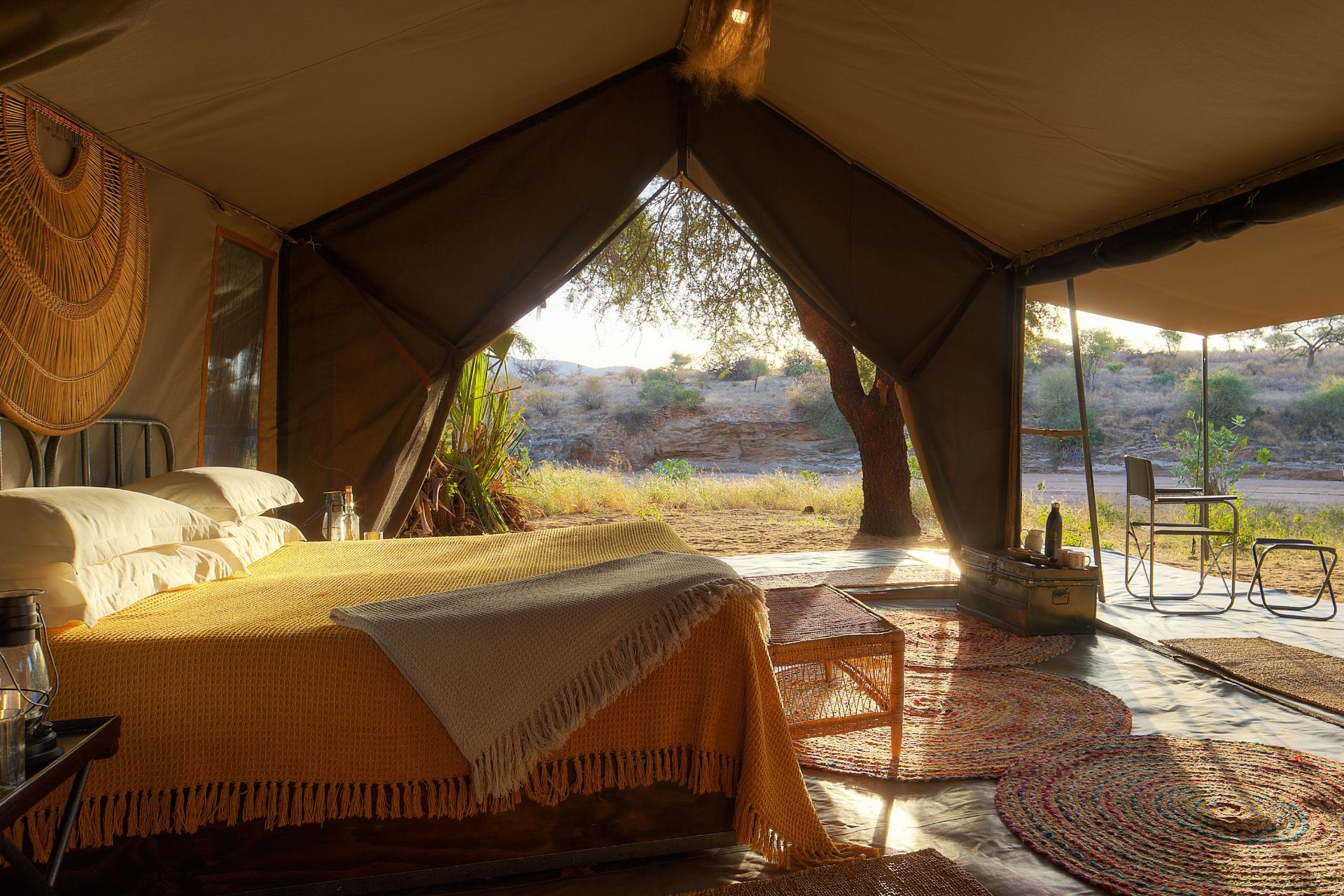
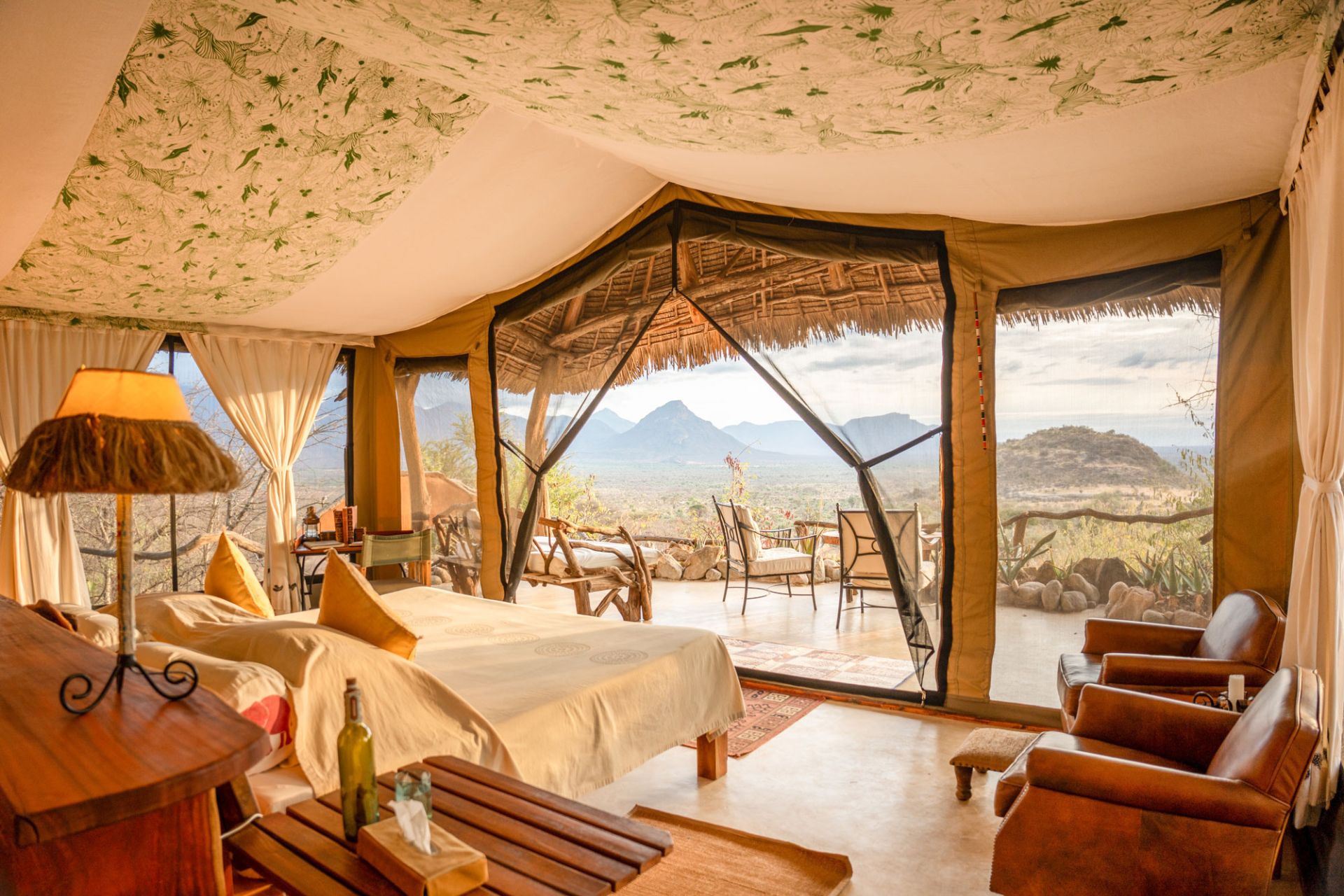
Alongside the chance for all guests to see community-led initiatives up close, there is of course all the luxury that you would expect from a safari stay. In addition to Sarara Treehouses and Reteti House, I stayed at Sarara Camp and Sarara Wilderness. While the first three are permanent lodges, Wilderness is a new exclusive-hire camp and comprises a series of high-end tents which can move to follow the best camping spots.
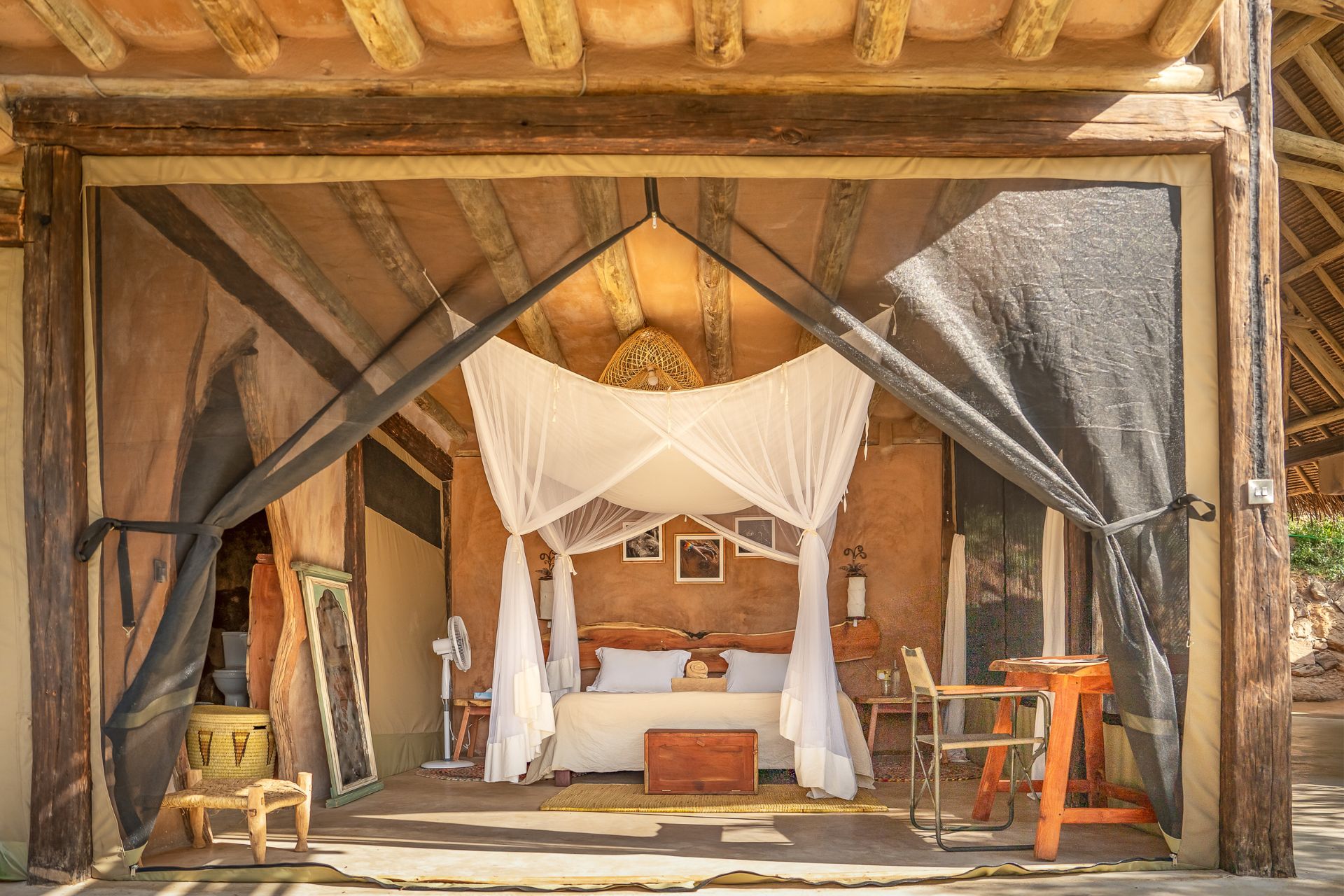
Each camp has Samburu hosts who can offer anecdotes and access to the wonders of the surrounding natural world. At Reteti, Tilas takes us on a trip through the cosmos with a pre-dawn stargazing session, while at Wilderness champion leopard tracker James Leitore points out fresh tracks and stops at nothing to make sure we get a coveted sighting.
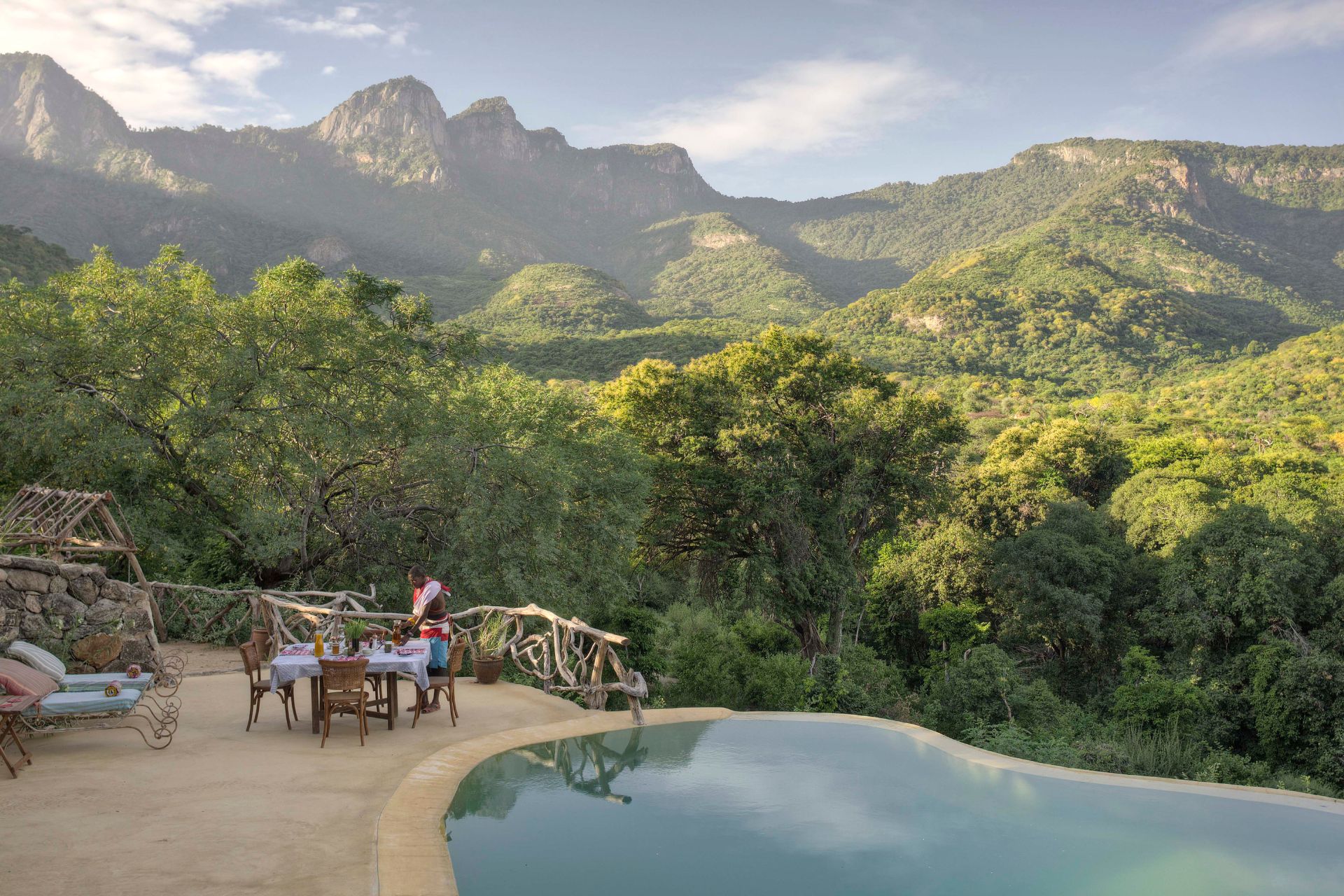
Guests can expect true farm-to-table meals cooked lovingly using local and seasonal ingredients, with a fully-stocked bar for poolside drinks or sundowners. The pools themselves are remarkable – at Sarara Camp the infinity pool is built into the rocks, with a view directly over a watering hole just metres away from where elephants, giraffes and zebras drink and bathe around the clock.
Luxury en-suite accommodation, plenty of game drives spotting everything from entire prides of lions to elusive cheetahs, and sparkling conversation with hosts and other guests alike are all par for the course. But most importantly, supporting this model of regenerative tourism means becoming part of something far greater than just a safari.
Sarara is clearly onto something. The tide is gradually shifting, with travellers embracing experience-rich travel over trips that simply cater to opulence and luxury. Scott Dunn is one of the tour operators who book trips with Sarara. ‘People want to go deeper, travel a little slower, and spend more time genuinely connecting with the people and places they visit,’ says Charlie Darlington, Scott Dunn sustainability and nature positive tourism lead. ‘There’s a move away from material commodities towards more meaningful, experiential travel.
‘At Scott Dunn we believe tourism should enhance lives, both for travellers and for people on the ground and that can only happen through participation and consultation,’ Charlie adds. ‘Tourism must be led by local communities, with their voices valued. Sarara is a best-case example of how that can work. From the moment you arrive, you feel the autonomy, leadership, and pride of the people behind it.’
With this shared people-first ethos and a true commitment to leaving a community better than they found it, Sarara and Scott Dunn are leading the way when it comes to best-practice examples of community-led tourism.
I reflect on this as I watch a baby elephant try, and fail, several times to climb a riverbank during an evening game drive. Even though she slips again and again, she gets up every time and tries again – until finally, she conquers the bank and ambles off into the sunset. Just like the people who call this beautiful place home, she is determined, courageous and she knows this land belongs to her.
BOOK IT
Find out more about Sarara at sarara.co
Scott Dunn offers four nights at Sarara Camp Wilderness exclusive use basis based on minimum four guests travelling from £5,985 per person including international and internal domestic flights, VIP meet and greet service, conservation levies, all meals and local drinks, and wildlife activities on safari. scottdunn.com
Return domestic flights from Nairobi to Namunyak airstrip with Scenic Wilderness start from $600 per person, or opt for a private air charter with Scenic Air Safaris for up to nine people at a cost of $3,470 for the aircraft.
Charlotte’s return flights from London to Kenya emitted 2245.2kg CO2e. ecollectivecarbon.com