


Famed Artist John Collier’s Chelsea Townhouse Is Available To Rent
By
8 months ago
Tite Street was once a magnet for London's creatives
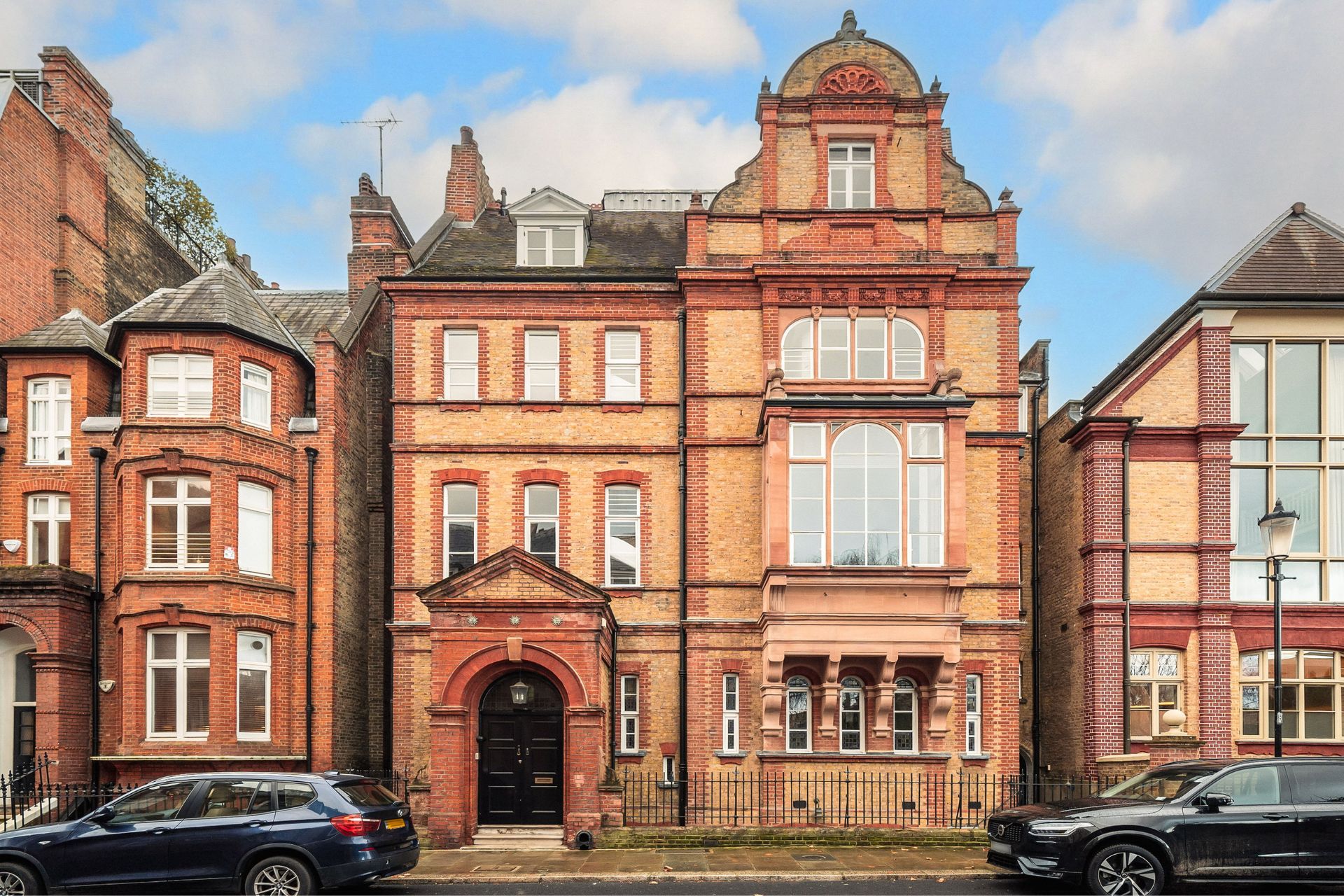
If you were a model coming to pose for renowned Victorian painter John Collier, you would have had to sneak into his house undetected. Deemed unfit company for the rest of Collier’s family (with models in the era, much like actresses, still possessing an air of prostitution too scandalous to encounter on the stairs), these women would instead have to enter the raised changing vestibule through a separate external staircase. From here, they would get dressed (or more often undressed) before taking up their pose in the first floor studio, which can still be spotted in the background of many of Collier’s most famous works.
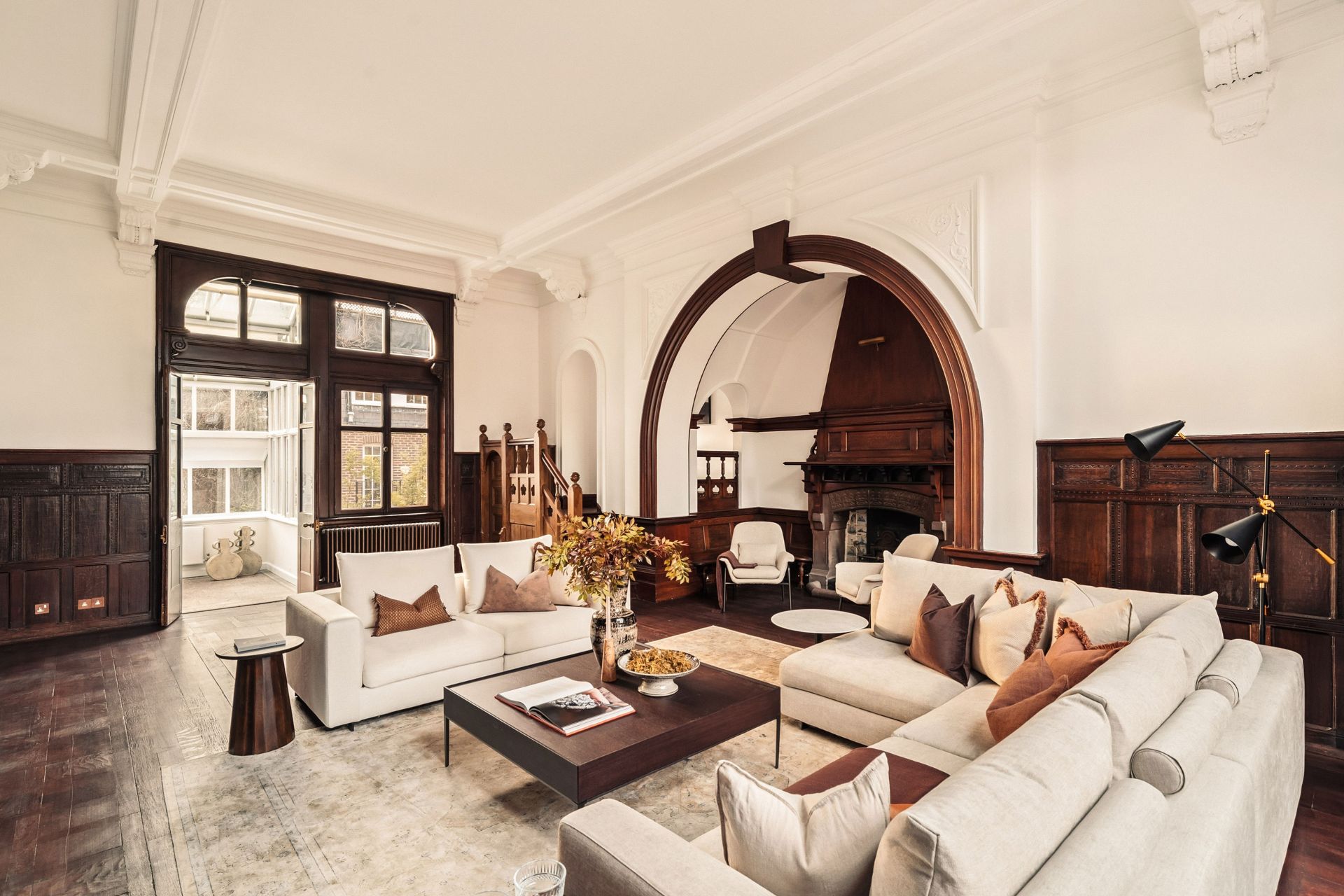
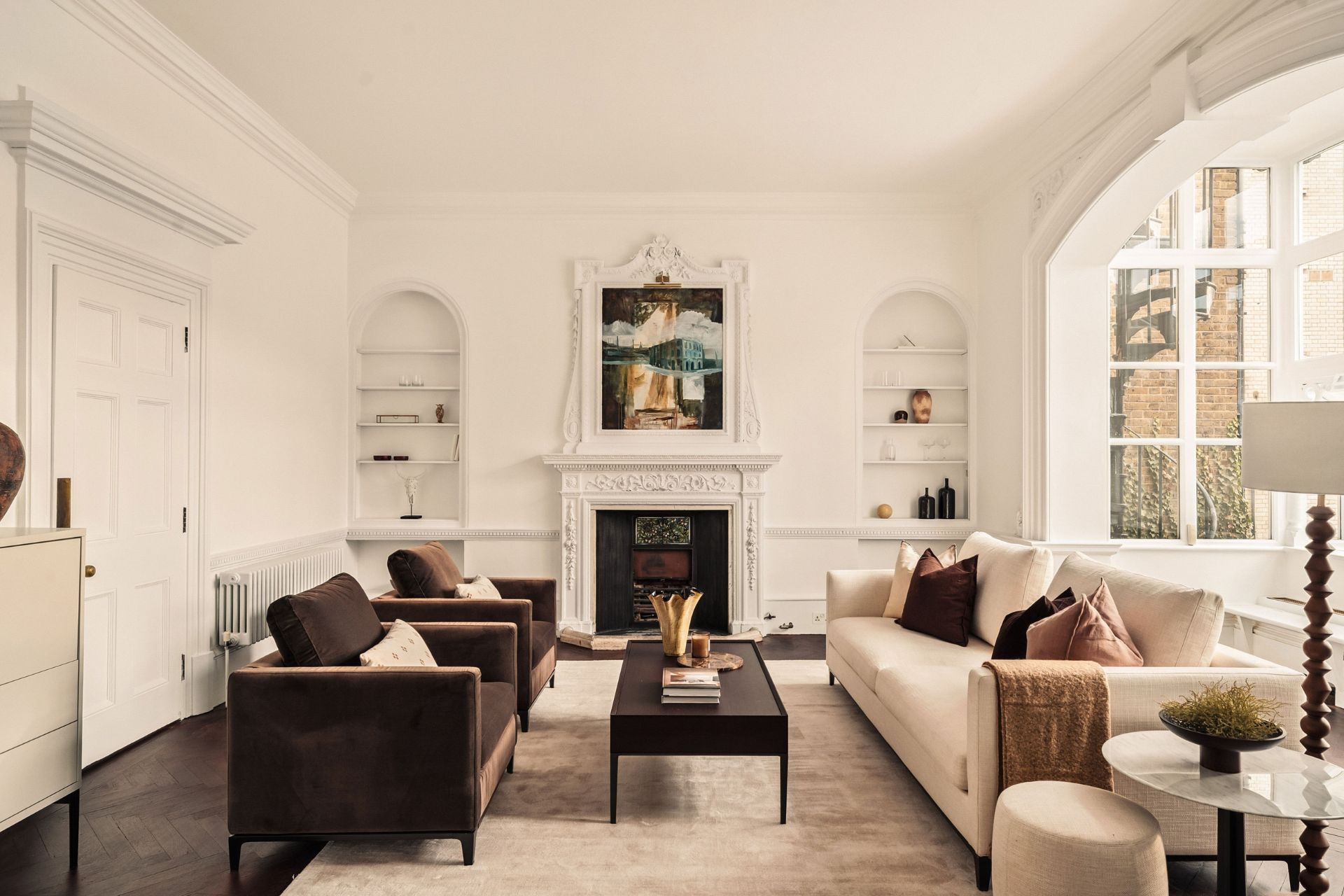
Today, the home is no longer teaming with models, brushes and paints, but memories of its artistic past persist, quite literally buried in the walls. Collier’s first floor artist studio has been transformed into a drawing room and entertainment space, while the external staircase which connected through to the vestibule has been enclosed in the walls by an extension. Another detail which remains is the concealed flap in the studio floor which allowed Collier to lower canvases to the ground floor which were too large to go down the stairs. Sound enchanting? Whether you’re on the hunt for your own artist studio, or a Chelsea retreat, Collier’s former home is now available to rent.
Discover John Collier’s More House
If you were a creative in the 19th century, Tite Street in Chelsea was the spot to be. Named after architect William Tite who laid out the street in 1877, Tite Street was dubbed ‘the street of wonderful possibilities’ by fellow resident Oscar Wilde, and acted as a magnet for the artists, actors and writers who gathered there throughout the late 1800s.
One of the first artists to call the street home was American painter James McNeill Whistler who built his own studio house (since demolished) on the street after the embanking of the river made the area safe from flooding. Meanwhile, John Singer Sargent, owned a house across the road from which he brought many of his most famous masterpieces to life.
In 1892, John Collier finally joined the gaggle of artists when he built More House – named for Henry VIII’s ill-fated counsellor Sir Thomas More who once owned a residence nearby. And he was quick to immerse himself in the creative scene. Friends and neighbours of the Wilde family, he and his wife were a great help to Wilde’s wife Constance after the writer was imprisoned.
Who Was John Collier?
Born in 1850, John Collier went on to become one of the most prominent painters of the late 19th century. A writer and artist, Collier was a member of the Royal Academy, with many of his works still hung in the Tate Gallery, National Portrait Gallery and the Uffizi today.
Though born too late to join the Pre-Raphaelite brotherhood, his paintings were heavily inspired by their work – often depicting women from literature and legend like Clytemnestra, Lady Godiva, Circe, Lilith and Cassandra. But it was his ‘problem paintings’ which made him most famous. In each, the viewer has to guess what is going on in the scenarios presented, such as in his painting The Cheat (1905) which shows a group of card-players at the moment one is discovered to be cheating – but which player it is, is up to the viewer to work out.
In his personal life, Collier married the daughter of renowned Darwinian biologist Thomas Henry Huxley, Marian (better known as Mady). An artist in her own right – having studied at the Slade and exhibited at the Royal Academy – following her pregnancy of their daughter Joyce, Mady suffered from post-partum depression. But when she was taken to Paris for treatment she died of pneumonia, leaving Collier no other choice but to illegally (pre the Deceased Wife’s Sister’s Marriage Act of 1907) marry her younger sister Ethel up in Norway.
The History Of More House
Following Collier’s residence, More House passed to the Hope family – and became home to the eccentric aristocrat and genealogist Felix Hope-Nicholson, an infamous bachelor known as ‘the Squire of Chelsea’. During the Hope family’s residence, Felix’s mother painted Collier’s studio gold for one of her famous children’s parties in which she would engineer having a full-sized tree rise through the flap in the floor once used to transport Collier’s paintings. Meanwhile, Felix, a devout Catholic, converted the first-floor conservatory into a chapel which he filled with relics, including a spectacle case labelled ‘Oscar Wilde Esq’ which he claimed contained a splinter from the coffin of Charles I.
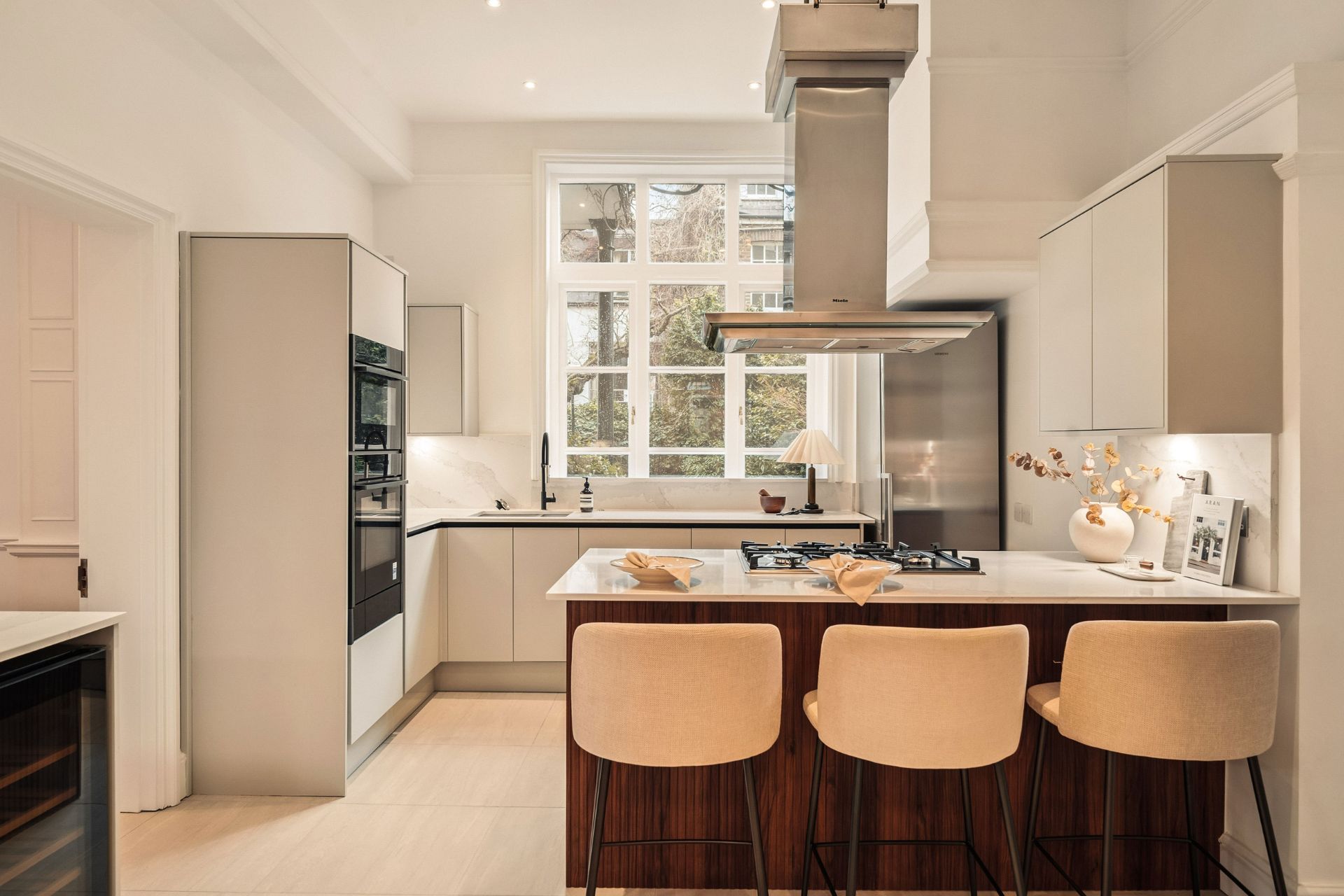
Upon Felix’s death, the house returned to the market – but in a rather sorry state. Hunting for a new owner, the property featured in an article in The Scotsman titled ‘Who Will Save This Victorian Gem?’, where the writer described it as ‘the most interesting house I have ever been in’. Encouraged by his words, the new owners fell in love at first sight – accepting the Herculean task of renovating the property back into a functioning family home. Undecorated since the nineteenth century, the gold-painted studio has since oxidized black, the library (now kitchen) was wet with damp, and the apple store in the basement had grown a peculiar mold described as ‘unknown to science’.
As part of their renovations, the new owners uncovered the curved glass at the top of the studio window and attempted to retain as much of the original decoration as possible, while ensuring it remained suitable for 21st century family life. And their hard work paid off. The home – beyond its family function – became a renowned party venue, with their thirty years’ residence seeing a range of writers, musicians, rock stars, actors, artists, publishers, historians, poets and politicians flock to their soirees.
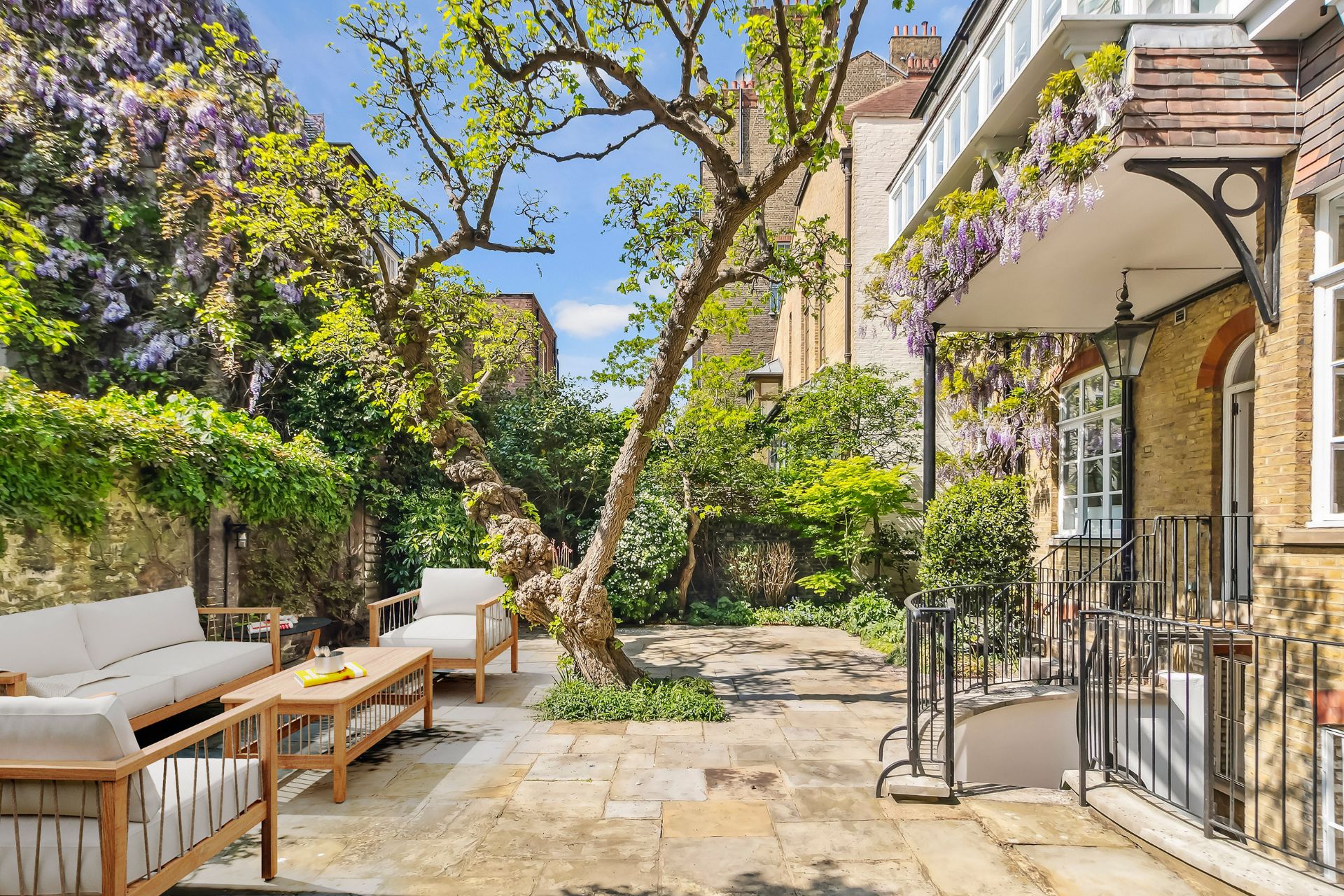
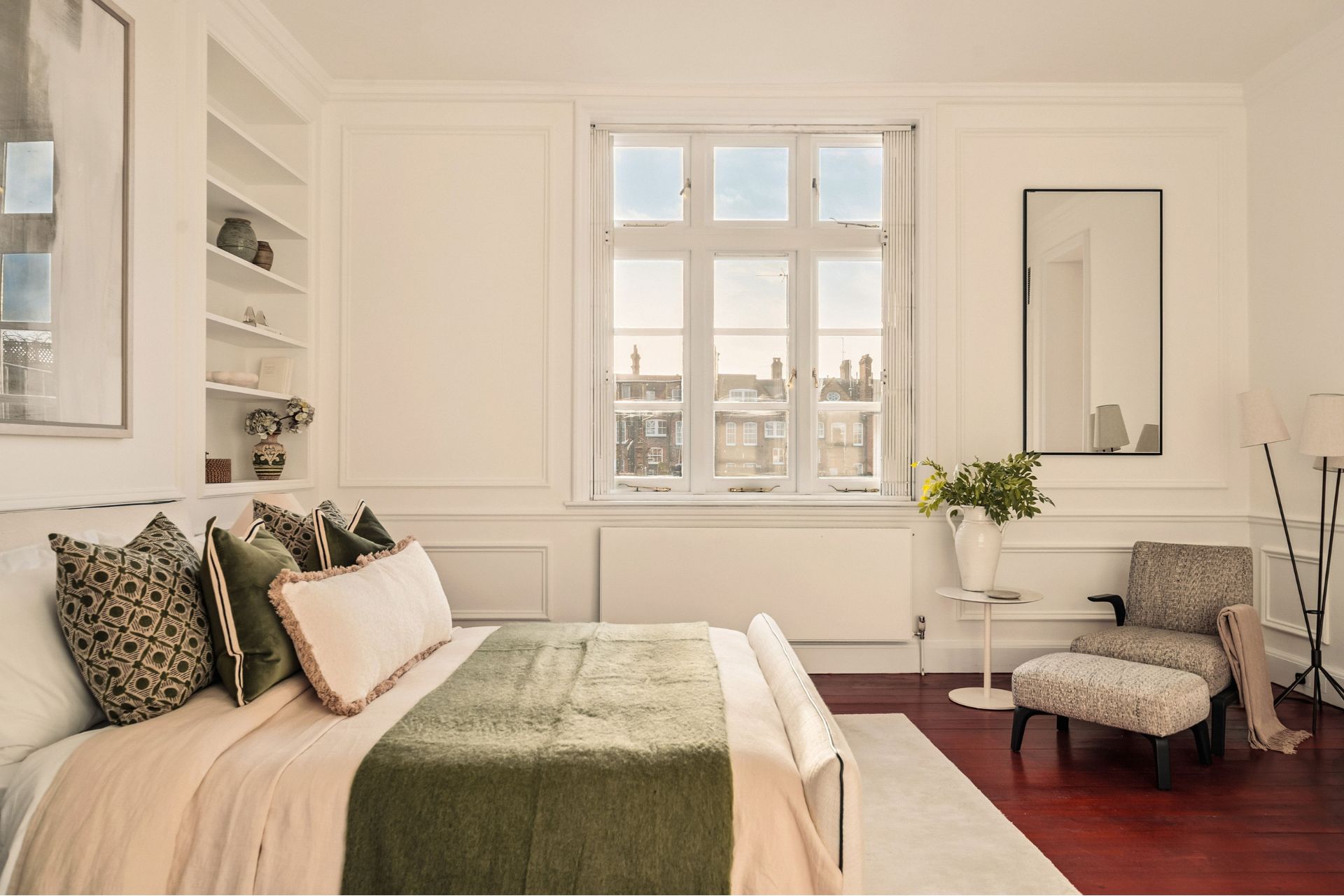
Arranged across four floors plus a basement level, this 6,400 sqft, seven-bedroom home has always been attractive to artistic types, having also been home to painter Wendela Boreel during the early 20th century. Although it’s now done up with sleek up-to-date interiors, More House still holds echoes of its eras past. Key features include the bright conservatory room, first floor entertainment area and reception rooms, the principal en-suite bedroom with its own dressing room, a home study, the formal dining room and informal dining areas, landscaped garden with patio and wine cellar. The glossy green paint effect in the hallway which reflects the window light is another highlight: a recipe first invented by New Delhi architect Sir Edwin Lutyens for the dining room at Blagdon House near Newcastle. Meanwhile, the Vaseline‑glass lanterns, which date back to around 1900, came from Renishaw Hall, the home of the Sitwell family.
Available to rent for £30,312 per month. Find out more at knightfrank.co.uk