


Britain’s Land Owners Are Turning to Shamans and Druids to ‘Heal’ Their Estates
By
8 months ago
With climate change impacting our landscapes, Britain's genteel are reassessing their relationship to nature – with literal translators
British landowners are turning to shamans, druids and land energy healers to help nature flourish, finds Tessa Dunthorne.
Land Energy Healing: The ‘Woo-Woo’ Trend That’s An Open Secret Among Britain’s Land Owners
Before felling two trees at 42 Acres in Somerset, Russell Rigler sought a secondary opinion – from the trees. Rigler, who works as the regenerative estate’s lead ornamental gardener, contacted Bríd Walsh, the resident land energy healer. She possesses, she says, the ability to commune with nature.
‘We needed to fell some non-native holm oaks, as they were crowding out the native oaks,’ explains Walsh. ‘Before we coppiced them, we entered into a negotiation with the trees, explaining our needs as humans and embarking on a listening journey. Once communication was clear, nature was more than willing to support our actions.’
Walsh, who is from Cork, has a soothing, earthy presence and a conversational tendency to wander. She describes herself as a ‘multi-sensory’, someone who can read the subtle energies of the earth. Her role at 42 Acres was not to reverse a decision to remove the oaks – this had been made on safety and ecological grounds – but to guide how and when it happened, like nature’s mediator.
An Open Secret Among The Super Rich
This might seem alternative but, according to landscape architect Marian Boswall, it’s something people have been doing for years – ‘only now they are doing it in the open’. Everyone from duchesses to British Water engineers are employing dowsers, shamans, druids and crystal healers who claim to have extraordinary, extrasensory abilities to help heal our lands.
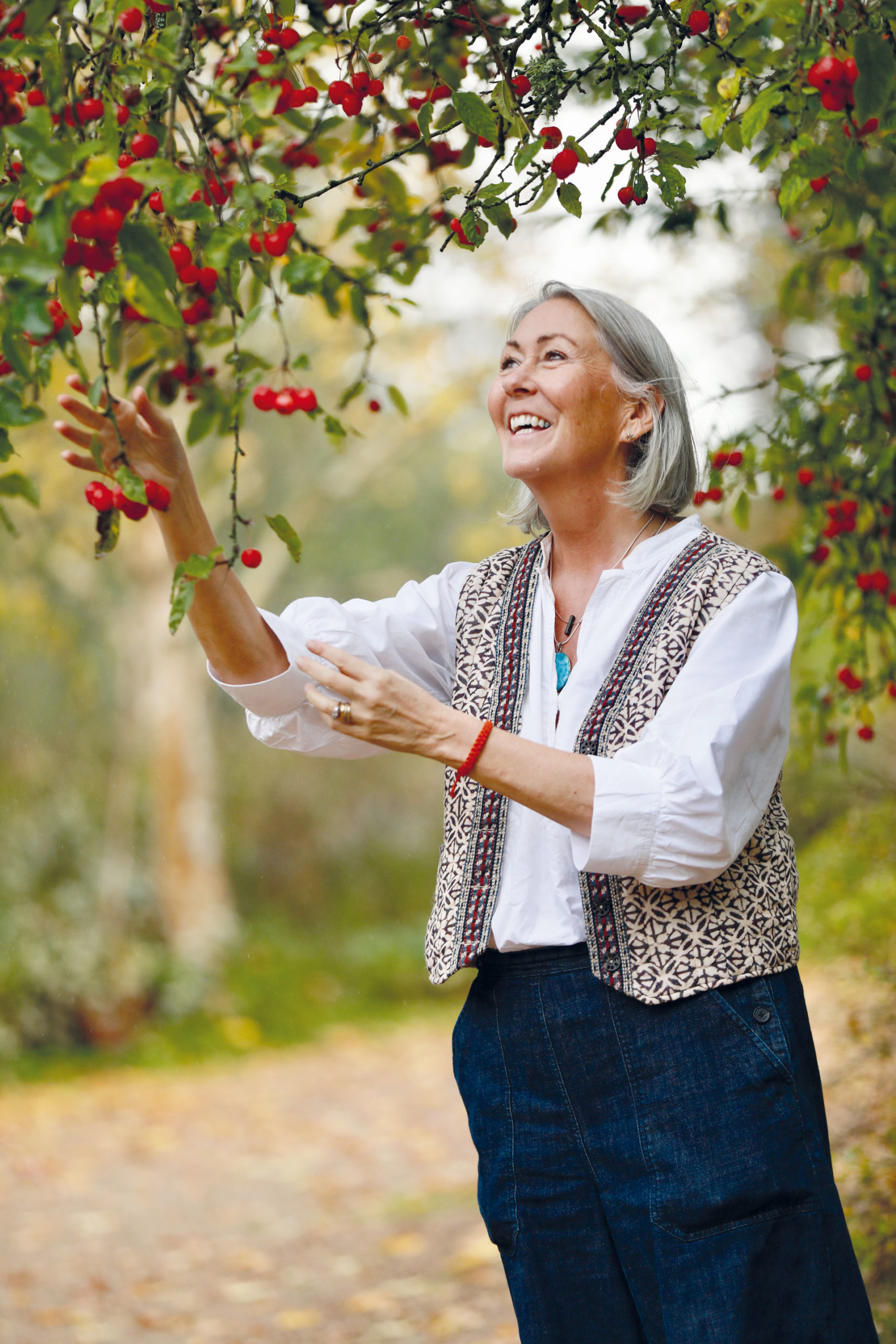
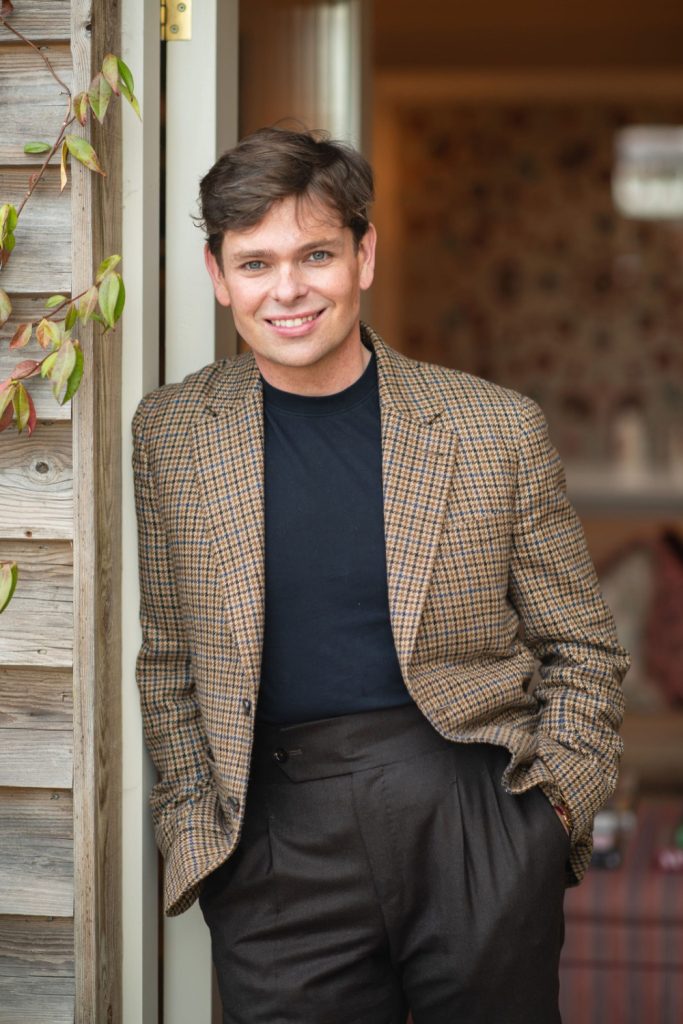
British landscape architect, Marian Boswall © Xanthe Elbrick
Boswall, who runs a leading design practice based in Kent, has a special interest in land energy healing thanks to training with a Feng Shui master early in her career, and is particularly fascinated by sacred geometry and geomancy. Her book, The Kindest Garden, argues the case for regenerative planting – in conjunction with carefully deployed land energy healing.
‘Some clients are very left-brained and would find these beliefs uncomfortable,’ she says, but this is changing: ‘I used to say I was a bit like a Trojan horse – I would go in and create what looked like a beautiful garden but I’ve also been doing these [energetic] things underneath. I no longer have to do that; people are receptive.’ She cites a ‘high achiever’ who runs an institute in New York ‘who asked me straight away how I felt about sacred geometry’. A few years ago, she created a garden labyrinth ‘which works as an amplifier for positive energy’ for Sophie Nevill, daughter of the Marquess of Abergavenny.
Why Healers Are On The Rise
In the UK, there are an estimated 30,000 healers, of which 1,400 are registered with official bodies like the British Alliance of Healing Associations. The fascination is longstanding, with healers dating back to pre-Roman society, but this particular strand of spiritualism – which includes mediumship and energy healing – was popularised in the 19th century.
There are, according to Walsh, many types of nature-focused practitioners. There are extra-empathetic multisensories like her, whose work is similar to shamanism; druids, who come from particular ancestral lineages; and then there are healers who work more conventionally – think reiki practitioners but for the land, or dowsers who seek water with metal rods. King Charles is an advocate of sacred geometry; his 2010 book Harmony discusses the spiritual power of platonic solids and spirals.
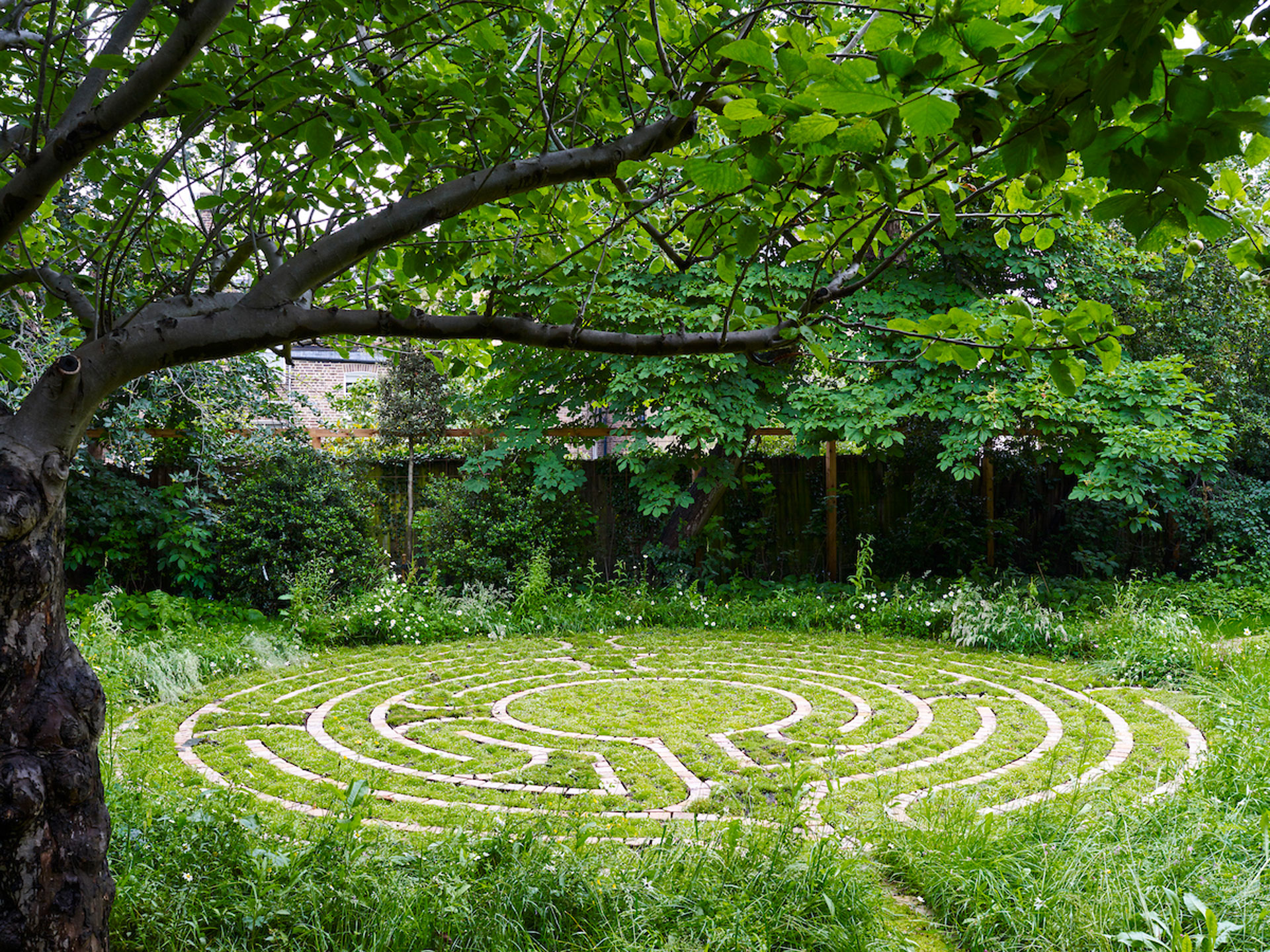
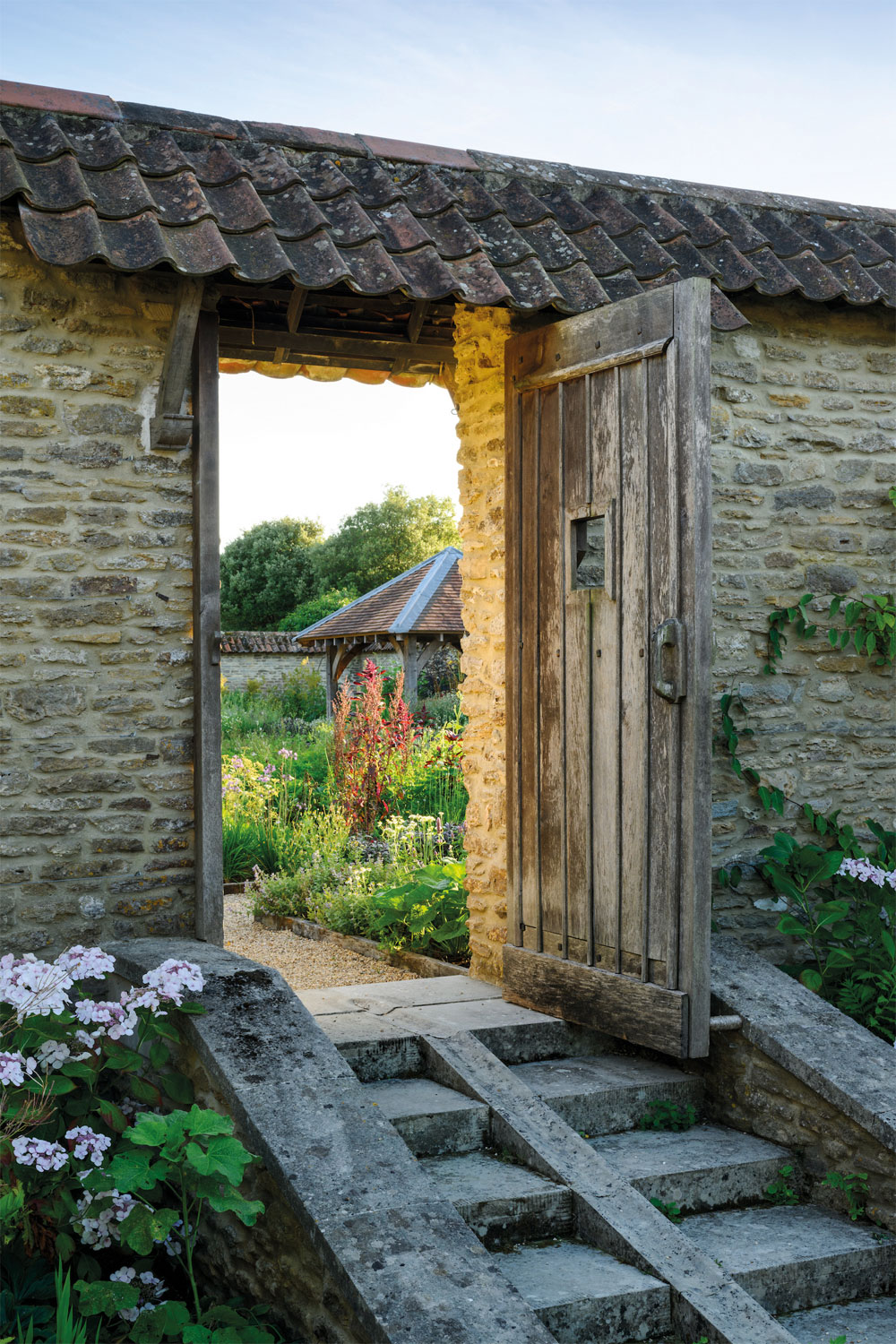
Sacred geometry: a garden labyrinth designed by Marian Boswall © Jason Ingram
These healers are more familiar, perhaps, inside the home. Smudging and saging is not a wholly uncommon practice, nor is domestic blessing (Roman Catholics have long asked priests to bless their thresholds). Where globally ‘mind, body and energy healing’ – including yoga, meditation and acupuncture – is growing, it’s not surprising there is increasing appetite for holistic wellness for our land, too.
Elizabeth Peterken, who works as both a domestic and land energy healer, says the increasing trend for shamanism owes its rise to a political and physical climate that leaves people ‘lost’. ‘People are distraught at what’s happening to Mother Nature,’ she says. ‘We can’t ignore it. There’s flooding, earthquakes, natural disasters. We have this growing sense of our own impact, and shamanism is appealing because it subscribes to older, more holistic worldviews.’ Boswall agrees: ‘When your friends [in nature] are dying, you notice.’
Census data reflects a rise of British pagans. In 2021, 74,000 Britons identified as pagans, while 8,000 identified as shamans (up from 57,000 and 650 in 2011). Both spiritual beliefs are strongly linked to animism, which is the belief in the energy and sentience of all natural phenomena.
Does It Work?
It is hard, of course, to put a concrete measurement on the outcomes of land energy healing. ‘As we didn’t take a baseline, I haven’t observed anything in a measured way,’ Rigler, a traditionally trained gardener, admits. For him, though, it’s not about concrete evidence. Before working with Walsh, his gardening followed established frameworks, rooted in baseline monitoring and measurable outcomes. Now, he says, the emphasis is on observation and trust, on spending time with the land before intervening.
‘Brid’s work complements rewilding practice,’ he says. ‘You can do a lot for the land in the name of rewilding that’s less beneficial than you think. Sowing the wrong wildflower mix, for example. If you haven’t stopped to really understand the land, you might not do the best thing for nature.’
Is it all a bit ‘woo-woo’? ‘That’s definitely the word people would have used,’ admits Walsh. ‘If it’s not proven by science, then it’s not real. Now what’s happening is that science is catching up with indigenous traditions, proving what we already knew.’
‘Germ theory was disrespected until it was proven,’ agrees Boswall. ‘Now, plant sentience is beginning to be understood.’ Recent scientific discoveries give this more credibility: we now know that trees communicate through underground fungal networks, and LSE’s animal sentience research has provided evidence that many fish and crabs experience more complex inner lives than we had previously thought.
Energy practice might be a harder push to prove – and there’s further tension to these conversations: a conspiracist thread of climate change denial. ‘If you look at the history of the planet, you will see that the earth has always experienced cycles,’ says Walsh. ‘The last mini ice age in the UK and Ireland was 250 years ago.
‘Let me put it this way: turning on the news every night, we give our consciousness and life force to the story we’re being told. This contributes to the energetics of it. If a situation advocates fear, it helps control the population.’
Peterken emphasises that this is not what most of the energy healing community believe. Her take is one of the value of debate, ‘that maybe the earth is doing its own thing; it’s just a natural turn of a cycle. Either way, it’s still impacting people’s thoughts and how we treat the earth.’
Many land energy healers also borrow the language of conservationists and rewilders: they speak of ‘recovering’ and ‘rebalancing’, focusing on how we must repair a damaged land while making space for nature. Their politics feel at odds with the output of their work, which is almost always climate-positive.
At 42 Acres, the team will continue to marry rewilding and land energy healing as they create a free-flying flock of white storks. Walsh has blessed the space to welcome the storks before they come in. ‘Imagine,’ says Walsh, ‘if we give nature a chance. Can I hold the natural world in my heart? And say: “I’m going to send you so much love.”’
Correction: In an earlier version of this article, C&TH named a land healer called Elizabeth Peterson; this is incorrect and is Elizabeth Peterken.