





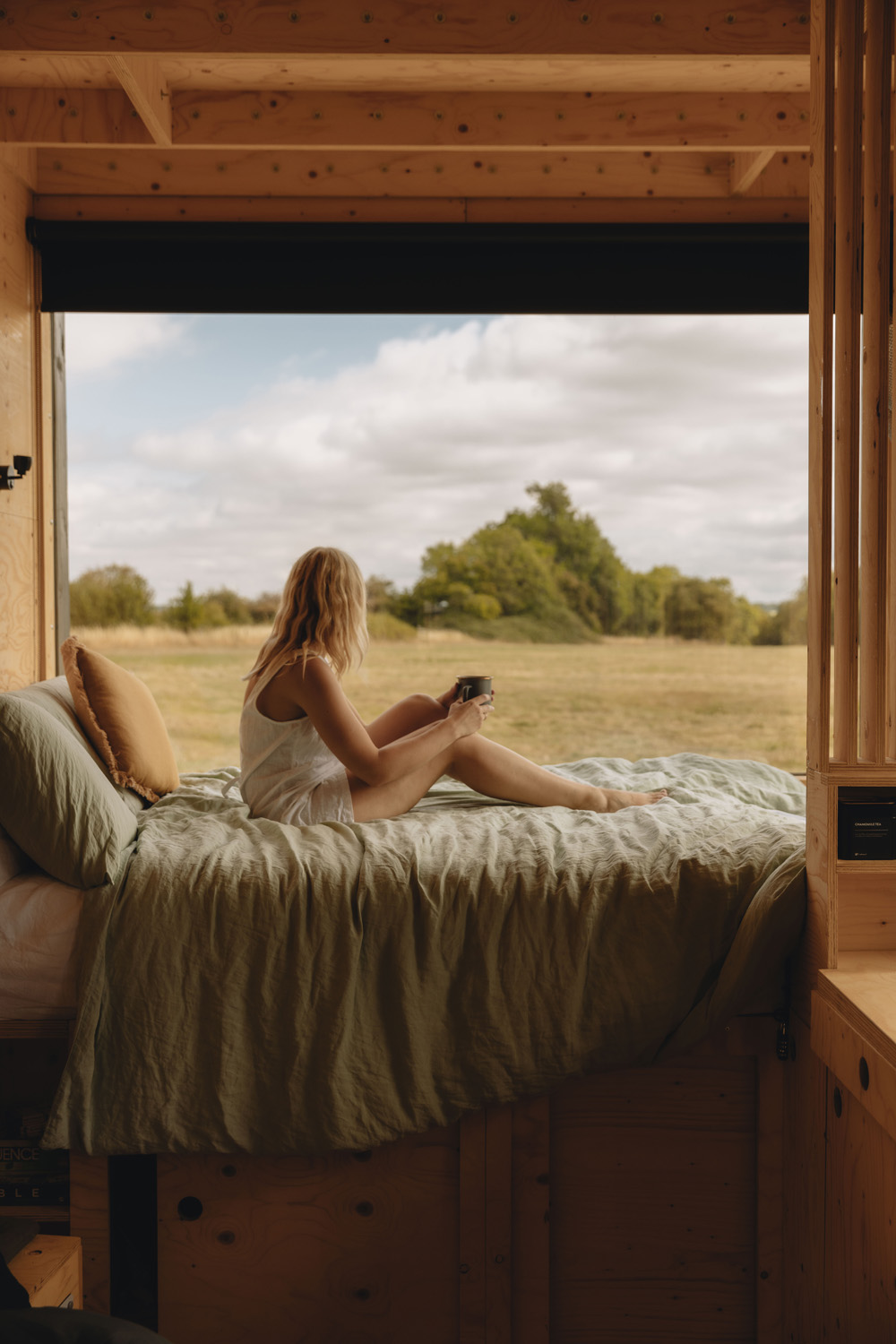
Is It Worth Staying In An Unplugged Cabin? 6 Month Review
By
8 months ago
The Global Day of Unplugging is here – but how effective is totally switching off?
It’s the Global Day of Unplugging tomorrow (6 March), an initiative challenging screen fatigued people to disconnect from their devices from sunset to sunset – that’s 6pm Friday 6 March to 6pm Saturday 7 March 2026. It has taken place across the first weekend of March every year since 2009, and asks participants to focus on real-world connection from anywhere between one hour and the full 24.
Digital detoxes help alleviate feelings of loneliness and improve life satisfaction, and this is just one way to switch off, unplug and reboot your brain, as it were. It’s also possible for those with strong willpower to unplug at home or on a camping trip for example – but here in the UK, my favourite way is to visit an Unplugged cabin.
When I checked into an Unplugged cabin six months ago, I didn’t think I had an internet addiction. My screentime hovered around a four to five-hour daily average, I had set myself limits across apps like Instagram and X, and had taken pains to disconnect myself from TikTok entirely a couple of years prior after too many a morning waking bleary eyed after a late night of dissatisfying scrolling. Smugly, I knew my peers had worse digital habits than I did, and I left it at that.
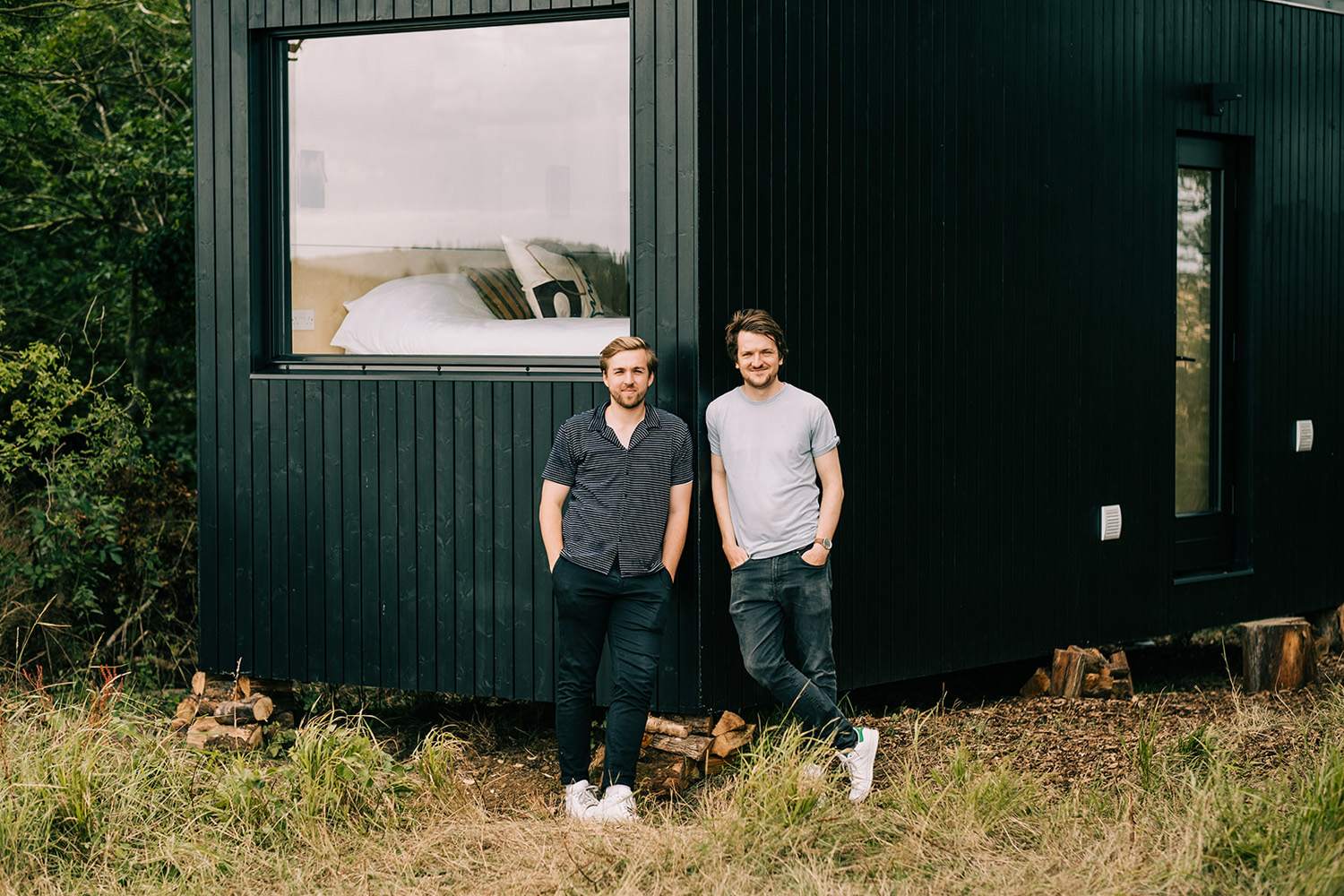
Founders Ben & Hector outside cabin Koya, Essex
Purposefully created by Hector Hughes and Ben Elliott in 2019 to provide easy digital detoxes for burnt out city dwellers (like themselves at the time), an Unplugged cabin is an off-grid log cabin surrounded by countryside, with more than 50 now scattered across the UK within easy reach of our major cities. When I booked mine – Frank, a black wood-clad beauty hidden on a working farm just outside Hemel Hempstead – I was more drawn to the Scandi aesthetics and promise of nature immersion than the concept of unplugging on its own. It had been a long, busy summer, and in London that can quickly feel suffocating. This would be my escape. I hadn’t realised it would change my life so drastically.
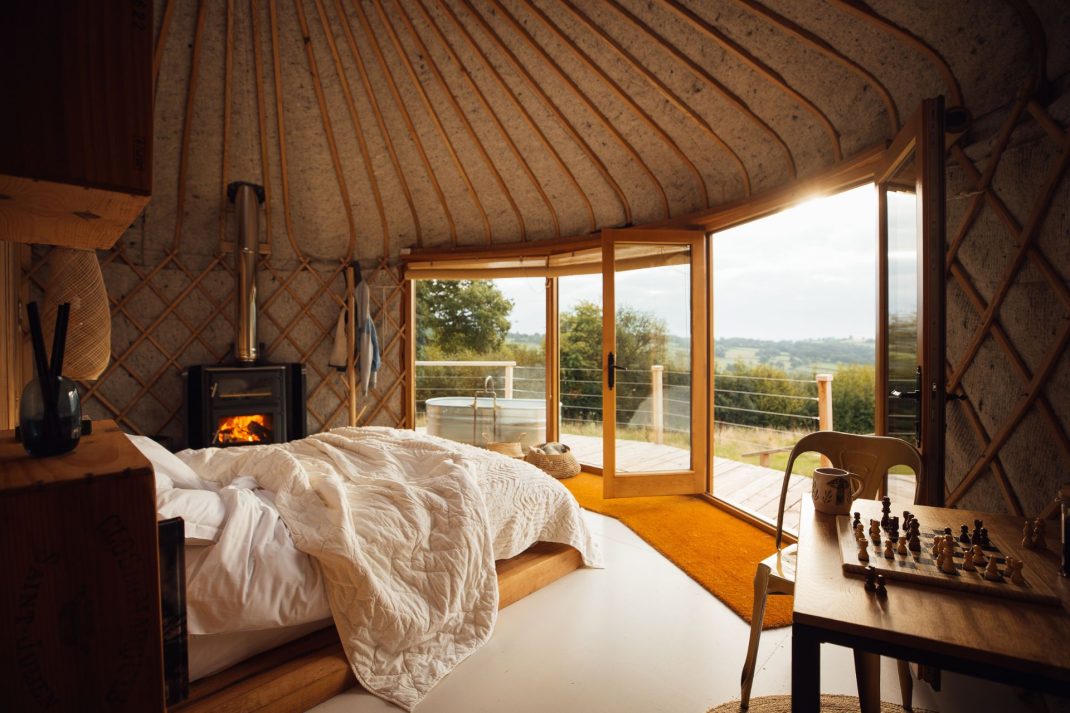
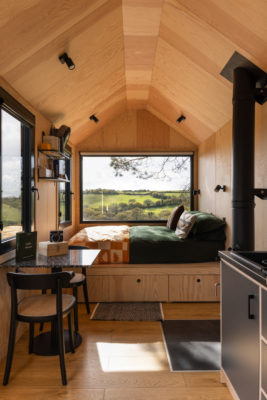
Unplugged cabins are beautiful in their minimalism; think exposed wood, dual-purpose surfaces, and plenty of natural light from massive picture windows. Entirely solar powered, they are fully equipped to live from for three days (the minimum stay) or more: you’ll find a micro kitchen (gas stove, fridge, sink, crockery and utensils), a surprisingly stylish ensuite with a hot shower, shampoo, shower gel, soap and a clever eco-composting toilet (yes, you are actually off-grid; no, it doesn’t smell), space to relax with board games, a radio and cassettes, plus a super-comfy bed dressed in cosy Piglet in Bed linen. You need only bring yourself and enough food to last you. You’ll also find a lockbox for your phones, an old school Nokia for emergencies, a polaroid camera with film to document the memories, and a paper map of the local area to help you navigate.
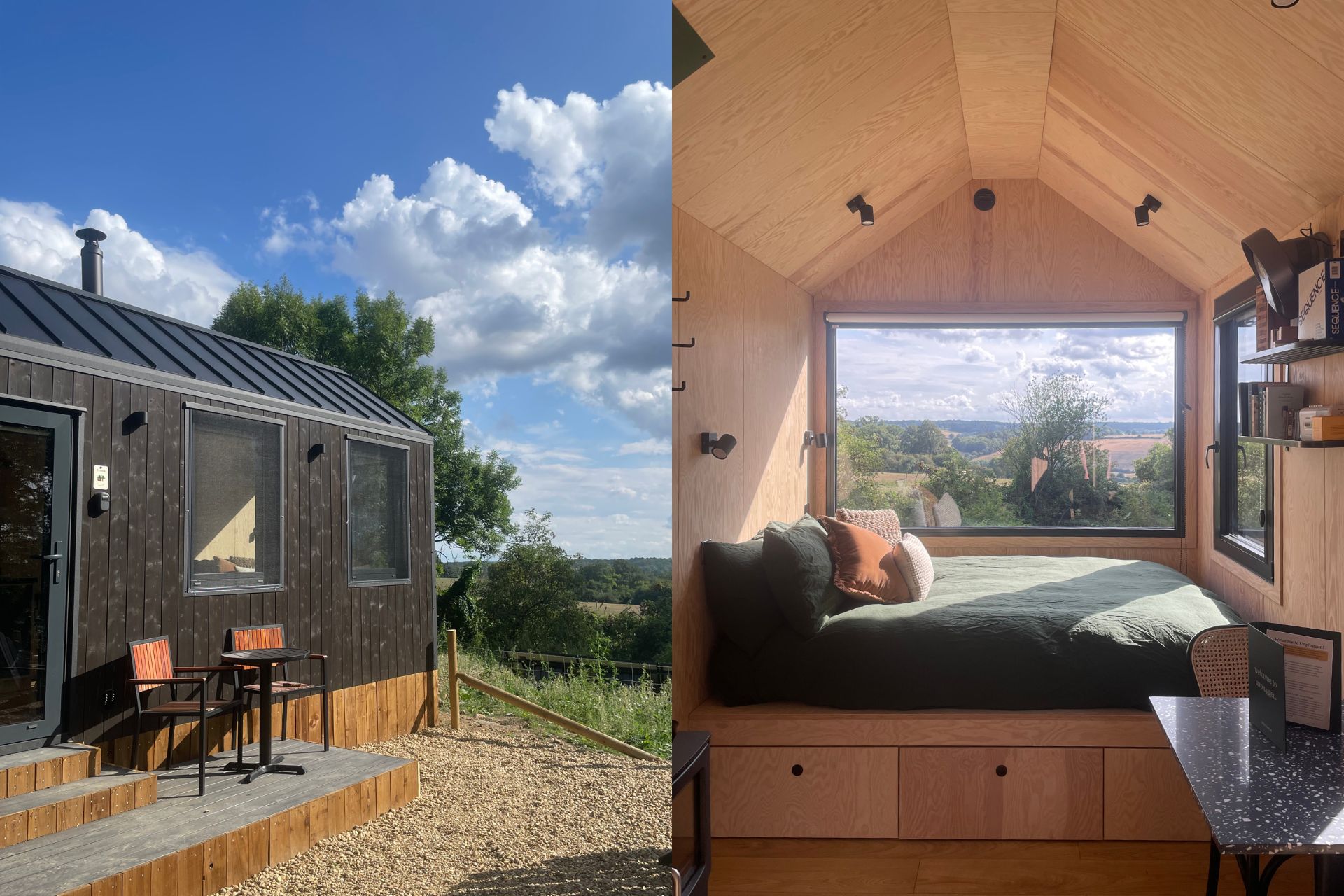
Our cabin, Frank (images quickly snapped before locking my phone away – no cheating here).
Locking my phone away felt surprisingly easy, but some guests can find this moment anxiety-inducing, co-founder Hector tells me. ‘It can take up to 24 hours for your mind to settle and get used to being offline – we call this the adjustment period,’ he says. While I didn’t find myself unconsciously tapping my pockets or reaching absentmindedly for my device, it did feel like something was missing on our first day. But with bright sunshine pouring in through our dual-aspect windows, we easily filled our time with walks through sheep fields, coffee and books in bed or on our deck chairs outside, sketching en plein air, planning strolls, and mindfully listening to the tweets and rustles piercing the silent air.
The cabins come equipped with a few books, and after spotting the same bird hopping between the branches outside our window on two mornings, curiosity piqued, I found myself flipping through the RSPB handbook to track down the name of my new friend – something I’d never felt inclined to do before. Occasionally, especially when cooking, we’d reconnect with civilisation by slotting one of our cassettes into the wind-up radio and dancing along to Fleetwood Mac, Spice Girls and The Beatles (the three options supplied in our cabin) as we chopped and stirred. It felt like we’d stumbled across our own pocket of the universe; already I felt pained at the idea of leaving.
‘After you’re used to being without your phone, your brain will feel much calmer, you’ll be more comfortable in still moments and be more present,’ Hector explains. ‘You soon forget about your phone and begin to recognise how much more time and clarity you have when you’re not constantly checking notifications.’
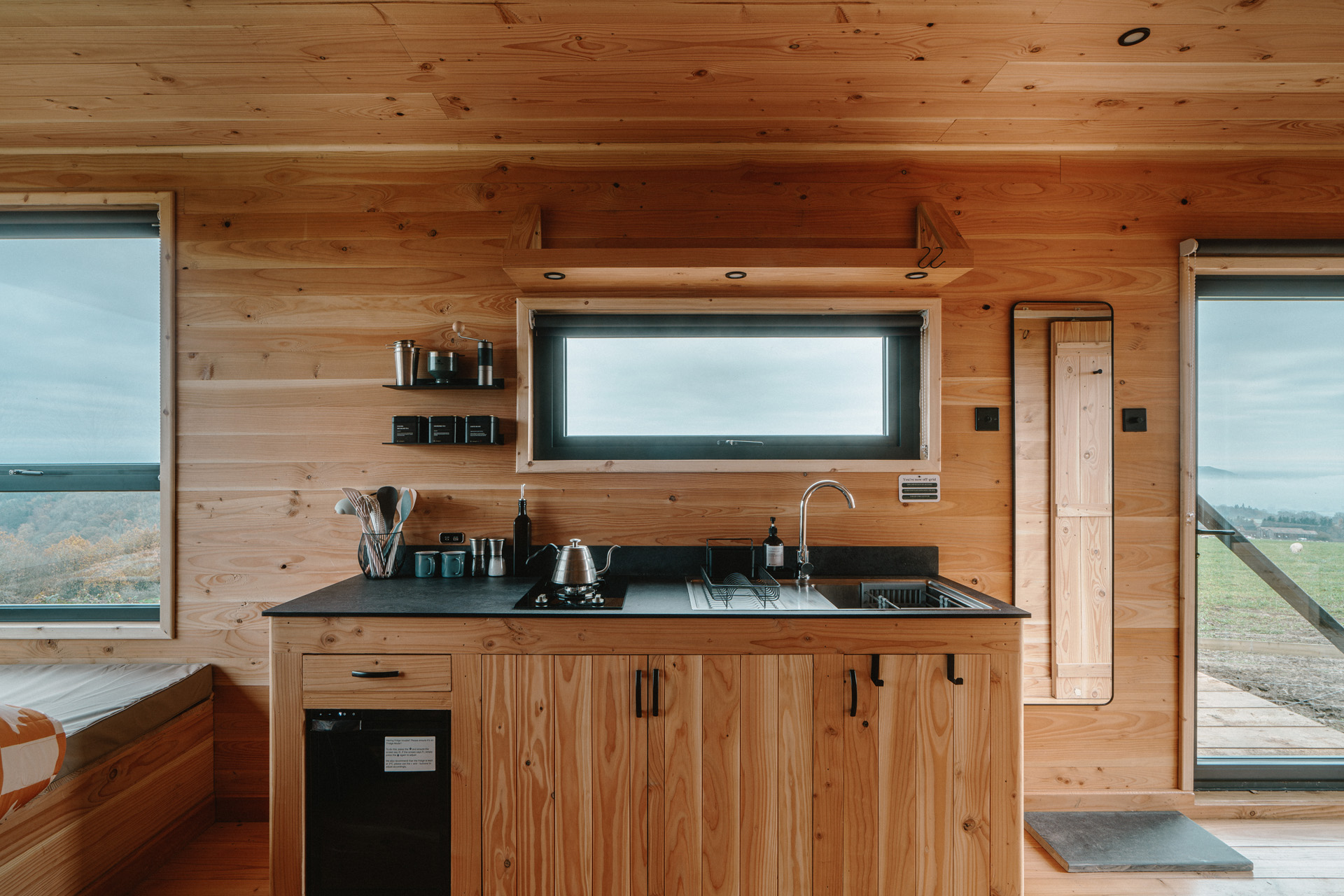
Compact kitchens stock everything you need. (Bracken, Shropshire © Adam Firman)
It’s true that time stretched before us long into the distance – but that’s no problem when you have some sleep to catch up on in this lovely bed, books you’ve been wanting to get around to reading, and walks to embark on. The only time we really longed for media (crucially not social media) was as the night drew in – dinner had been eaten, the dishes washed, Jenga played – and our tired eyes couldn’t face any more reading. At that moment, all I really craved was the portable DVD player I’d taken on car journeys as a child.
When we left our cabin confines and embarked on a walk, the challenge of map reading proved a thrilling adventure. Despite learning to map read at school, our reliance on digital maps was immediately apparent; we laughed at our foibles, lost in this unknown land less than an hour from home. Zipping cars raced past us and it felt like our unplugged-ness was an exciting secret; these people don’t know that, without Google Maps at our fingertips, their streets are as foreign and unknowable to us as they would be to aliens.
When we finally made it to a pub, we laughed again deliriously at the music floating through the space: Fleetwood Mac on repeat, the very same songs we’d been dancing to in our pocket-sized kitchen. We clambered through fields home and, rosy cheeked, returned the following day by retracing our steps, commenting on the trees, the flowers, the birds rustling in the bushes, remembering the leafy corners that would guide us to the bar.
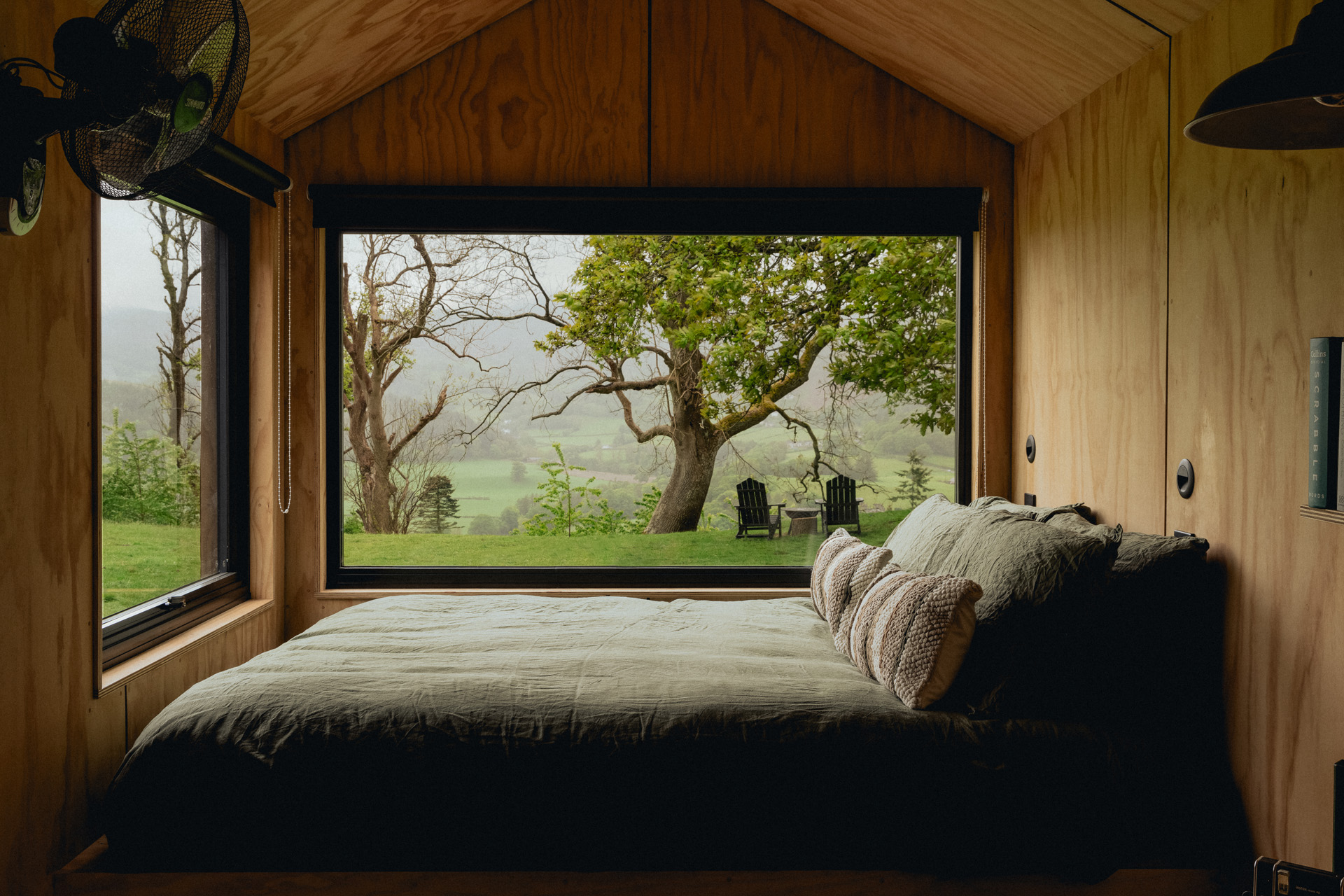
The promise of nature immersion is reason enough to unplug. (Griffin, North Wales © Rebecca Hope)
By the end of our stay, we were reluctant to leave our haven. We unlocked our phone box, and packed our phones in our luggage, hesitant to turn them back on – another normal anxiety, Hector assures me. ‘You may even feel a little anxious again when unlocking it,’ he says. ‘This time away from devices reminds you what it feels like to switch off, so you’ll be more motivated to alter your tech habits and set new goals.’
He’s right: while I didn’t set myself any goals, I haven’t doomscrolled since my return to reality. I simply don’t reach for social media anymore – don’t see the need to document my life other than with pen on paper. My only moment of weakness was a month-long obsession with a match-three puzzle game called Match Villains with its bright colours, easy-wins and satisfyingly tactile vibrations which saw my screentime rocket, but even that felt rather quaint and eventually faded.
These days my daily average screentime hovers around one and a half hours, the majority of that taken up by Google and Wikipedia thanks to my insatiable desire for the answers to the random questions that spring into my mind. I’m not sure it would work like this for everyone, but staying in Frank felt like a hard reset for my brain. I’ve been reading more, and reflecting on what I’m reading, too. I’ve been drawing again, a habit I lost after leaving school a decade ago. I’ve been feeding an obsession with Norwegian artist Edvard Munch – a side quest that now occupies my evenings. I’ve been writing creatively (previously this felt insurmountable with writing being my day job), taking walks sans headphones and quite simply feeling more calm, more settled in the still moments of life.
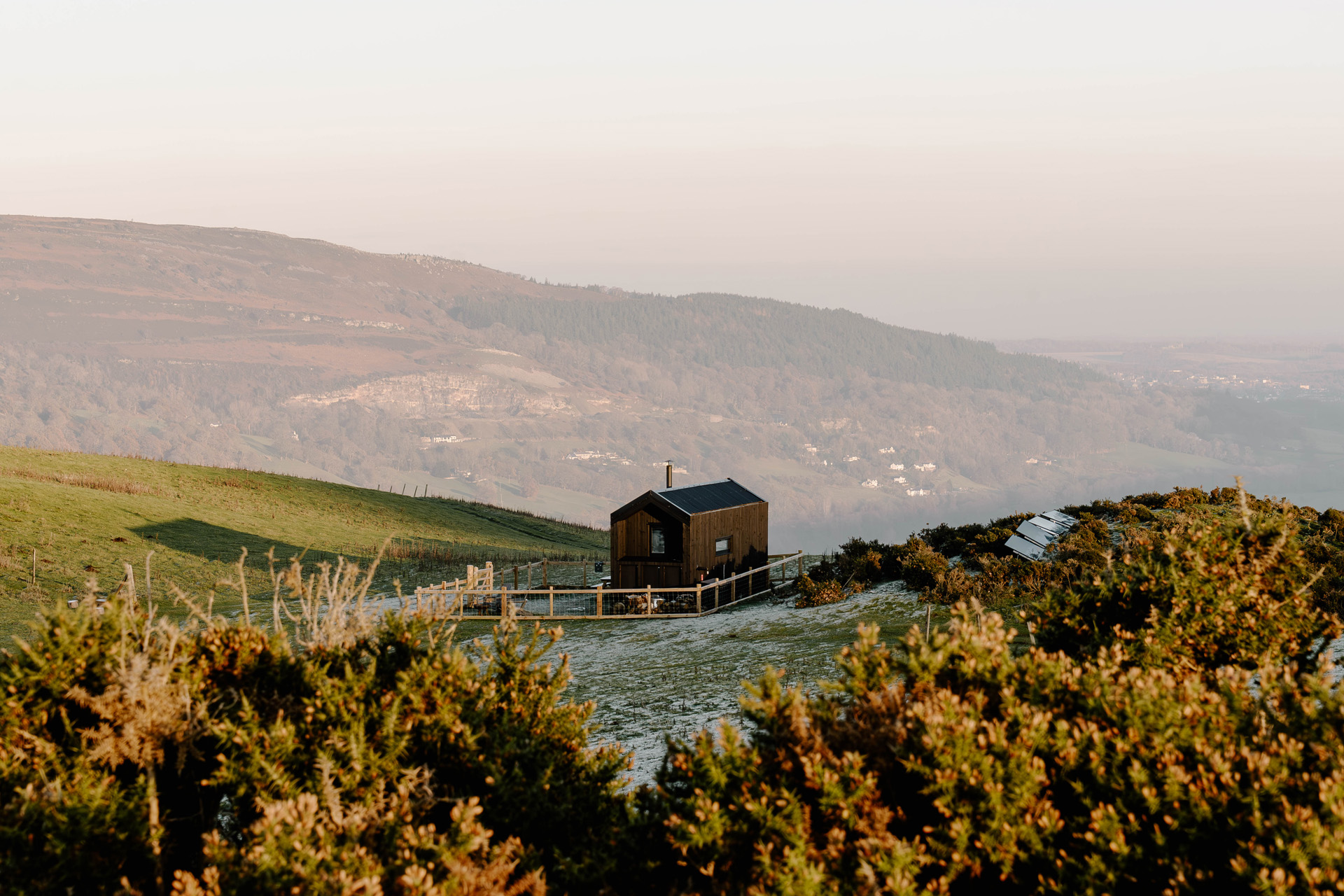
Unplugged cabins can feel like your own little universe. (Marley, North Wales © Adam Firman)
C&TH Key Notes
– Cabin to book: Created in partnership with Healf, Helix is the ultimate wellness cabin, featuring a sauna, ice baths, red light therapy and more.
– Must do: Walk to a local pub using the map provided and your nose for guidance – dedicate a whole afternoon to it, and you’ll feel totally accomplished.
– When to go: All cabins are equipped with indoor and outdoor log burners, but spring and summer promise the very best freedom-in-nature feeling.
– Don’t forget: To plan your meals ahead of time – the whole experience is best done when you’re not fretting about where (or how) you’ll find your next meal, especially if you are car free.
– Probably best if: You text your nearest and dearest before you drop off the face of the (digital) Earth for three days.
The Final Word
Whether you want a proper digital detox or just a nature-immersed escape, Unplugged helps you do this with luxurious ease. Even just three days of slowing down and disconnecting is refreshing for brain and soul. You can read more about the benefits here.
BOOK IT
Cabins start from £420 for three nights, with more than 50 locations across the UK, all within one to two hours from London, Manchester, Bristol, Brighton, Devon, Cornwall, Liverpool and Birmingham, and all accessible by train and a short taxi ride. unplugged.rest