


How Modern India Is Reviving Its Heritage For A New Generation
By
6 months ago
Juliet Herd checks in to The Leela Palace
‘If you are driving in India, you must have three things,’ our chauffeur, who is ferrying us from the airport to The Leela Palace New Delhi, smiles. ‘A good horn, good brakes and good luck.’ He’s not wrong. Entering the city, you’re assailed by a cacophony of beeping horns that somehow prevents the swirl of vehicles and loose livestock from colliding.
India is as contradictory as it is compelling. Ancient traditions and superstitions rub alongside rapid modernisation; social inequalities remain glaringly rife yet a ‘jugaad’ (do-it-yourself) mindset prevails. But how does the world’s most populous nation – 1.45 billion people and counting – preserve its heritage while embracing change?
This is what Leela Palaces, Hotels and Resorts is hoping to unveil as a part of its bespoke north/south ‘Palace Trail’ routes, where I gain an insight into how the country’s heritage is being reimagined by a new generation of creatives.
Delhi: Tradition In Motion
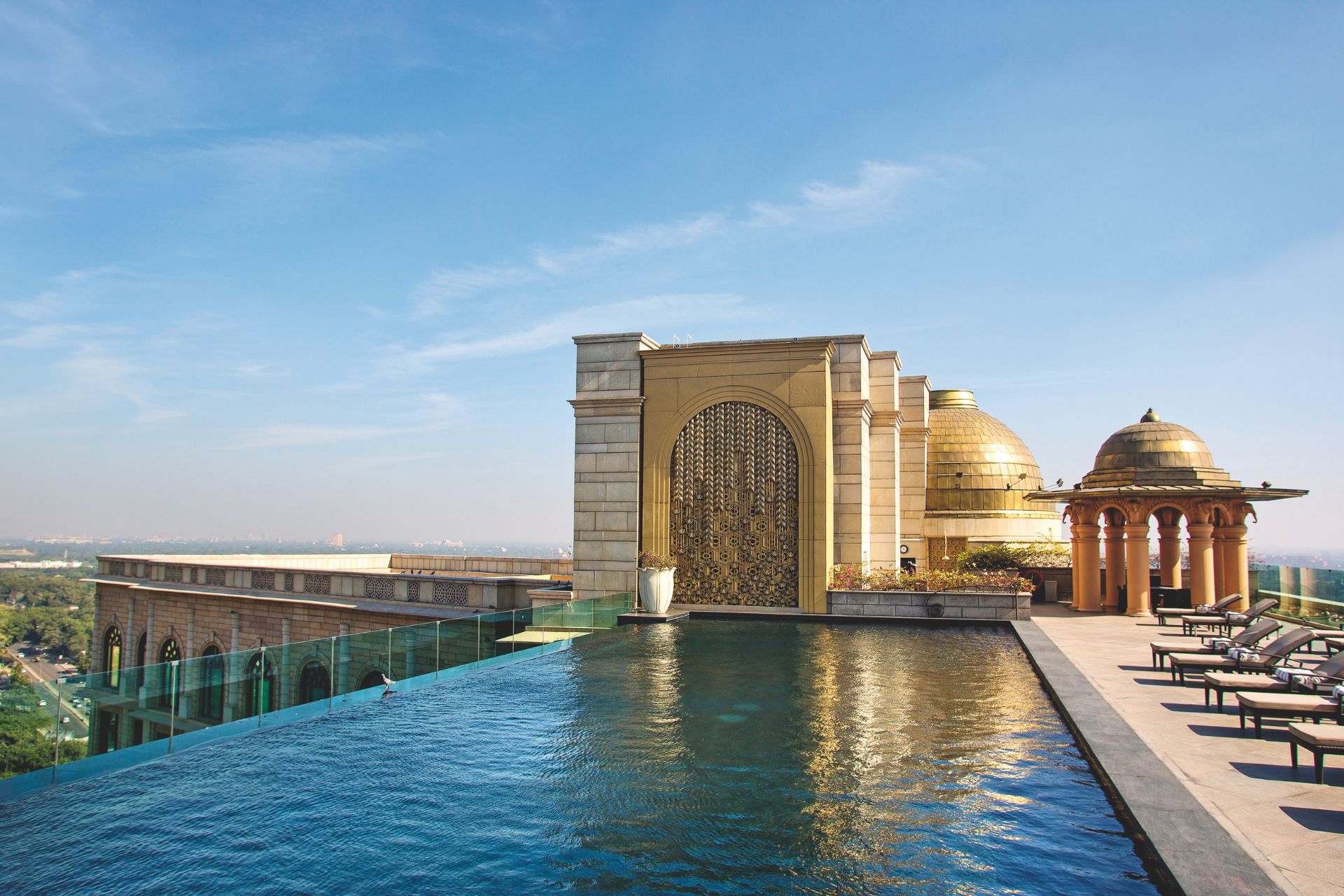
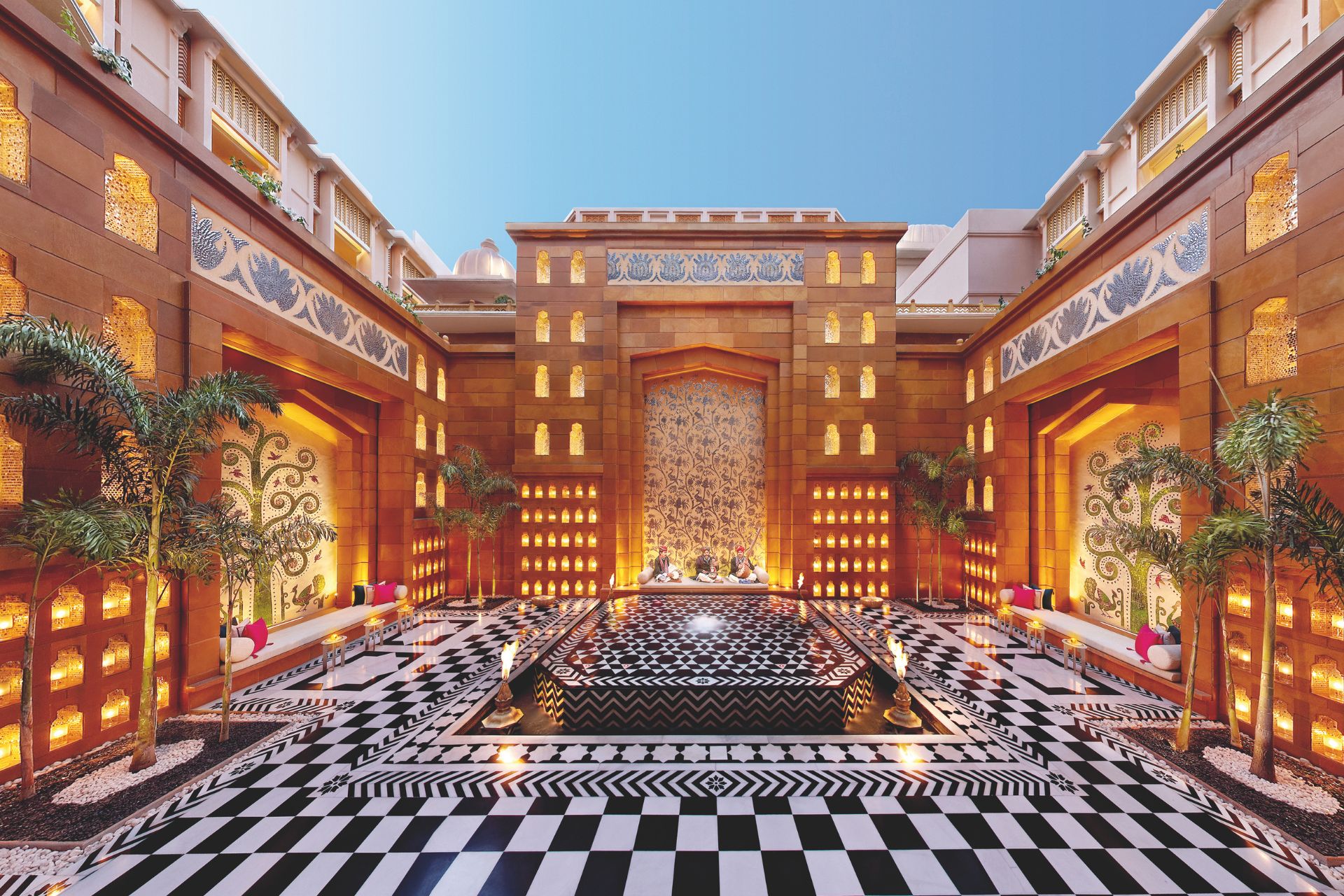
Located in the capital’s smart diplomatic enclave and built to resemble a modern maharaja’s residence with acres of marble flooring and soaring Lutyens-style colonnades, The Leela Palace New Delhi serves exceptionally good masala chai. Our chai wallah veteran, Bhuvan, brews the hottest, sweetest and spiciest tea, poured in a seemingly never-ending milky stream from a brass teapot.
This simple ritual is just one example of how the ‘intrinsically Indian’ luxury brand promotes age-old customs in each of its 13 heritage-inspired properties.
Over dinner at the hotel’s elegant Le Cirque restaurant, dancer Shivani Varma explains how she is reintroducing ancient Kathak dance to the country’s urban elite, who, she says, look to the West for their cultural fixes. ‘They have lost touch with their own culture,’ says Shivani. ‘Part of my work is to redefine dance and make it more relevant.’
On a tour of the city’s historic heart, we marvel at the blend of Mughal and colonial architecture and lose ourselves in the labyrinthine and pungent Khari Baoli wholesale spice market, where dried spices, fruits and exotic herbs are piled high, traders and tourists jostle for space, and everyone from errand boys to money lenders play their part in maintaining this thriving centre of commerce.
After sampling fresh parathas in Old Delhi’s legendary Paranthe Wali Gali lane, we’re driven at speed by electric rickshaw to meet renowned calligrapher Ameen Ur Rehman, who conducts workshops to inspire new generations. ‘It’s important to preserve these art forms,’ he says, while helping us to produce our own scribbles.
Later, as we sip cocktails in the hotel’s Library bar, voted one of India’s top 30, and dine like a Maharaja on a modern version of the traditional Thali feast in Jamavar restaurant, the thread between classic and contemporary is pulled that little bit tighter.
Jaipur: The Joy of Living Heritage
When Prince Albert visited Jaipur during his grand tour of India in 1876, Maharaja Ram Singh II was so keen to impress that he painted the entire town pink. It’s an enduring legacy for the so-called Pink City that boasts more palaces and havelis than anywhere else in Rajasthan, from the sprawling City Palace to the 953-windowed Hawa Mahal, the pinkest of them all.
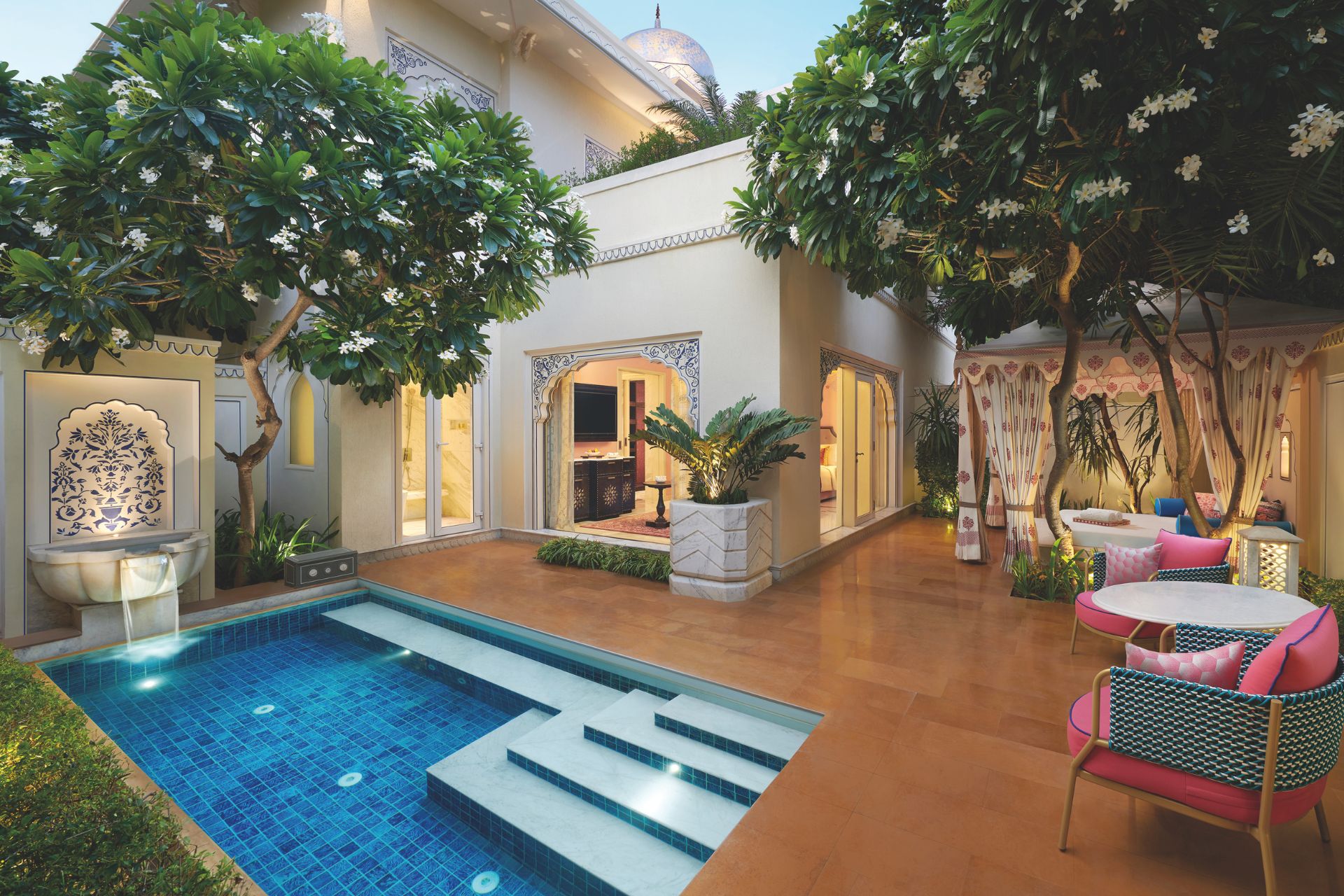
Under the beating midday sun, colourful Kalbelia dancers give us a royal welcome on the gleaming marble courtyard of The Leela Palace Jaipur, a lush oasis in the Aravalli foothills. We have arrived in the middle of the Navaratri festival, honouring Goddess Durga, representing feminine power and motherhood.
At magnificent 16th-century Amber Fort, a fusion of Hindu and Mughal styles and a UNESCO World Heritage site, thousands of barefoot, mostly female worshippers in saffron and fuchsia saris pour through the gates seeking temple blessings. ‘More than 100,000 people will pray here today,’ says our guide. ‘They are raised in patience,’ he notes of the respectful throng.
With its wealth of arts and crafts, from block printing and gemstone cutting to marble carving and miniature painting, Jaipur plays a pivotal role in preserving and adapting artisanal skills. We’re treated to a Kathputli puppetry show and bangle-making session at The Leela, which regularly hosts local artists and is one of the partners of the Jaipur Literature Festival.
The hotel’s décor pays homage to Rajasthani artistry with hand-cut thikri mirror mosaics (the candlelit Jamavar restaurant is illuminated by no fewer than 350,000), Shekhawati frescoes and hand-carved details in its 200 rooms and villas.
Udaipur: Lakeside Calm
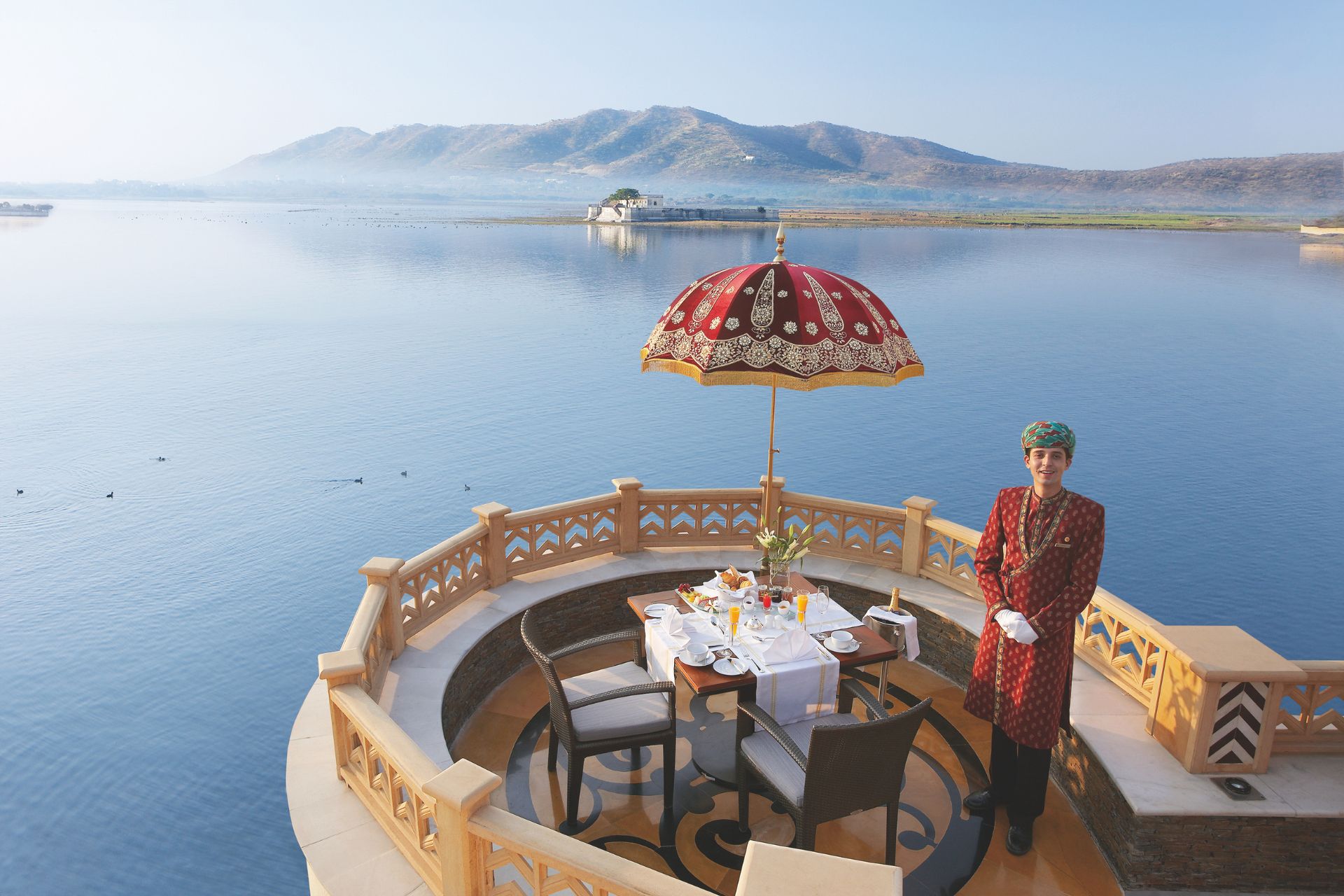
Gliding across the glassy expanse of Lake Pichola in an electric boat helmed by a red-turbaned captain is a pinch-me White Lotus moment.
In Udaipur, former capital of the Mewar Kingdom and set around a series of artificial lakes dotted with royal residences, the pace is gentler, the vistas greener and the weather cooler. It is like coming up for air.
Local crafts are celebrated by fashion enterprises such as Aavaran, which is reviving the region’s 500-year-old Dabu mud-resist printing and dyeing techniques. Watching these labour-intensive processes is a humbling experience.
One of The Leela’s most sustainable properties, the romantic lakeside Leela Palace Udaipur, operates on mostly green power and adheres to a strict zero-waste policy. Like its sister palaces, it supports holistic well-being through a balanced ‘Aujasya’ cuisine that features seasonal produce, some of which is grown on its own farm.
‘Renew and restore’ is the goal, and after three days of mindful activities here, including sunrise yoga, Ayurvedic treatments and a joyful Hindu service at the 17th-century Shri Jagdish temple, I leave this magical, mysterious country imbued with a deep sense of peace and a more nuanced understanding of its heritage. And, naturally, some masala chai teabags.
BOOK IT: Rooms at The Leela Palaces, Hotels and Resorts start from £140 a night. theleela.com
Juliet’s return flights from London Heathrow to Delhi had a carbon footprint of 1990.7kg of CO2e (ecollectivecarbon.com)