


Meet The Chef Behind Berkhamstead’s Truly Wild Restaurant: Matt Larcombe
By
5 months ago
C&TH interviews the chef behind farm-to-plate restaurant, Wild
Wild, which opened in Hertfordshire’s Berkhamsted in October 2025, does what it says on the tin very well. Its heart is a commitment to farm-to-fork cooking, sustainability and low-miles, with much of its produce drawn from its own nearby farm project. Seeing in its first sunny season, Jenny Jefferies meets chef-patron Matt Larcombe (ex-The Crown at Bray, The Victoria in Oxshott) to get to the root of his blossoming food philosophy.
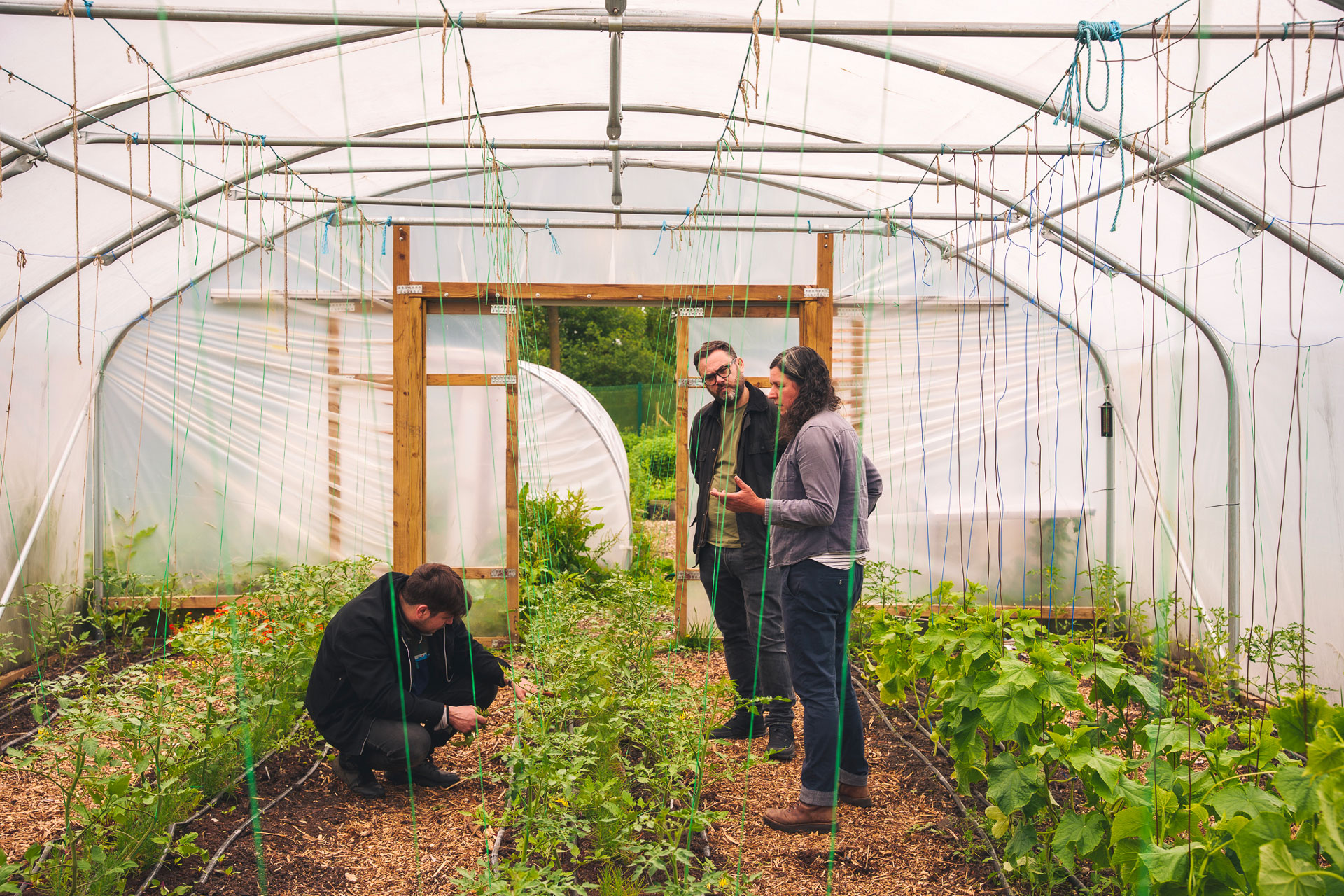
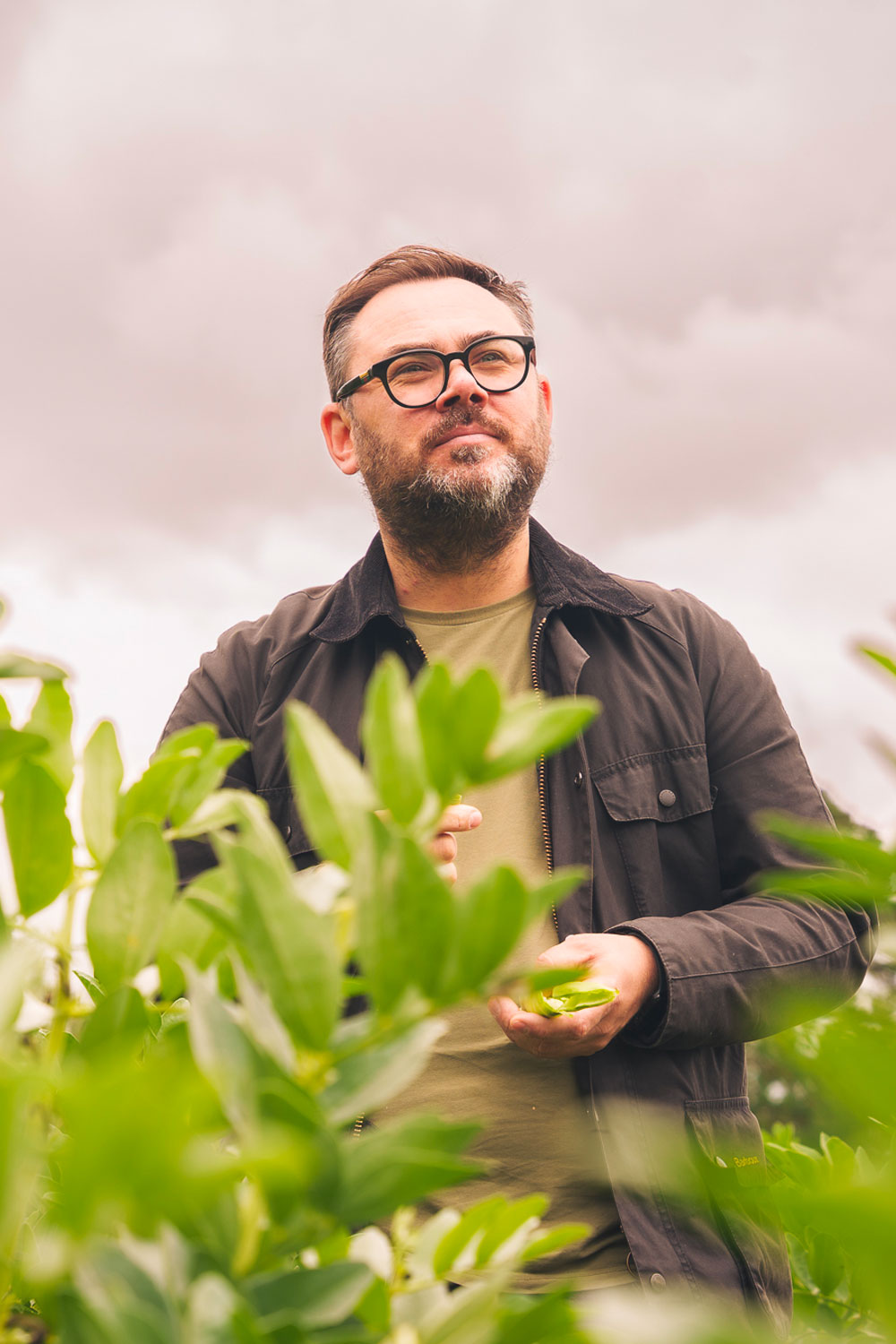
On the Wild farm, with head grower Jude Allen
Chef Matt Larcombe Thinks Of His Menus From The Soil Up
You source from your farm; what comes first, when designing the menus? The produce, or the vision?
Neither comes first, but it’s the produce that ultimately guides us. Our menus begin in the soil, in that they’re shaped by what Jude [our head grower] and the team are excited about. Our role in the kitchen is then to respond with care and creativity.
The farm grows over 200 varieties of plants. That must complicate collaboration between the kitchen and the soil.
It starts with constant dialogue. The farm isn’t separate from the restaurant; we walk the fields regularly and speak daily. We often taste and discuss what’s coming through, too, and this is weeks before the produce hits the kitchen. With such diversity, the focus is on restraint, that is: letting each ingredient express its natural character. Techniques are chosen to enhance, not disguise, and dishes are built to showcase the nuances of each variety, whether that’s through texture, maturity or seasonality.
And the farm uses regenerative agricultural techniques. How does this translate to what lands on diners’ plates?
Regenerative agriculture underpins everything we do, from improving soil health and encouraging biodiversity on our arable land, to closing loops and minimising waste in the kitchen. Healthy soil grows naturally stronger, healthier and nutrient-dense plants; that density then not only creates crops resilient to pest and environmental stress, but directly correlates to increased flavour.
Regenerative agriculture also informs how we think about menu planning; we respect scarcity, use the whole ingredient wherever possible, and use it as an opportunity to have a conversation with our diners.
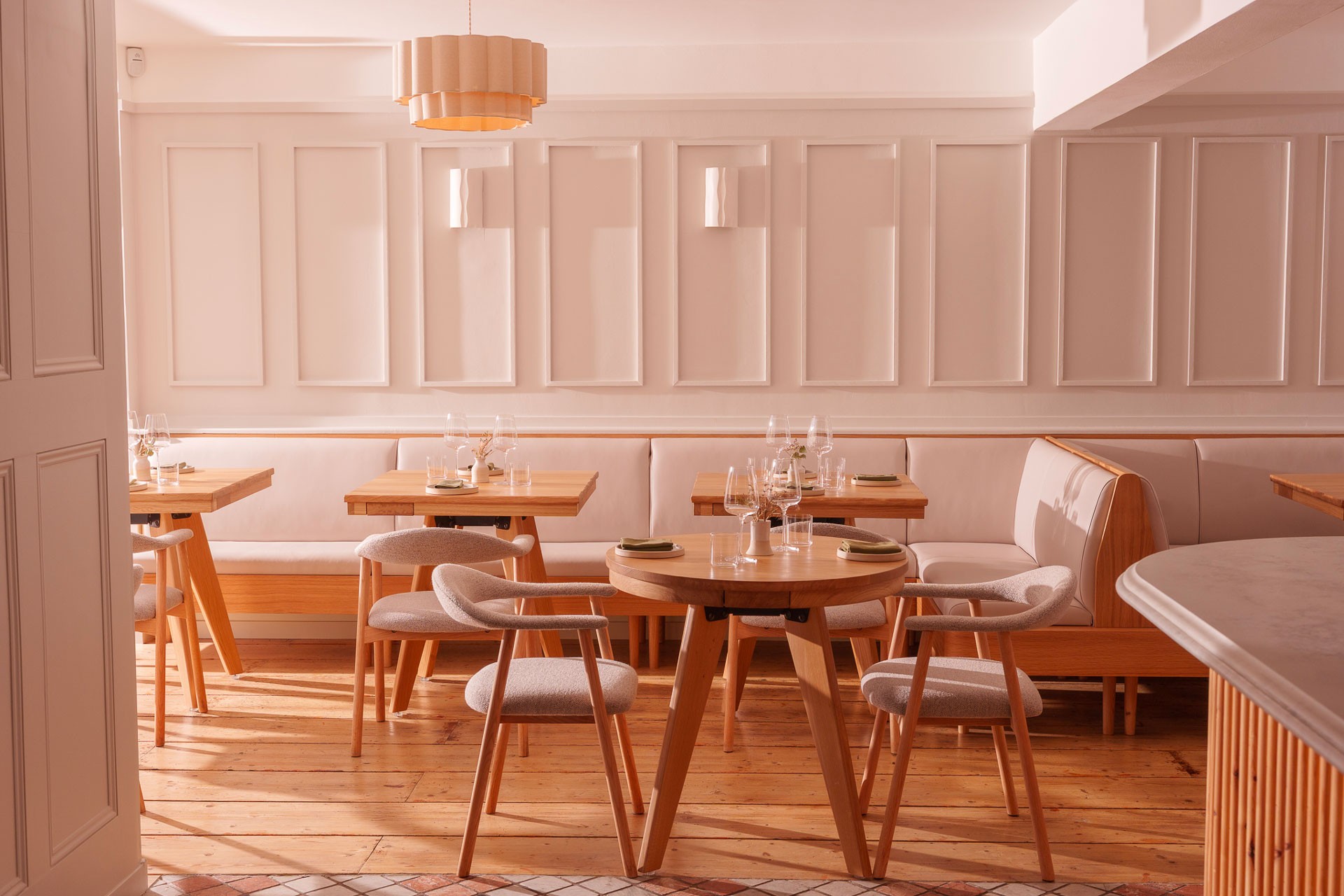
The interiors at Berkhamstead’s Wild restaurant
Let’s move to your interiors. How did its design reflect your sustainable ethos?
Yes, we designed the interiors to echo our food ethos: natural, considered, confident (but not loud). The space is soft, so we incorporated light tones, organic textures, and kept it open, to reflect the surrounding landscape. We wanted guests to feel a sense of calm and connection, almost as if they are stepping into an extension of the farm itself. Nothing is overly ornate, instead, the focus is on creating an environment where the food and service can take centre stage.
How important is seasonality?
Seasonality is fundamental! And I don’t view it as a constraint, I find it inspiring. Respecting the seasons means working in rhythm with nature, which results in dishes that feel more expressive and honest. Ingredients are used at their peak, when they require the least intervention. It also brings a natural sense of progression to the menu, allowing returning guests to experience something new and reflective of that exact moment in time.
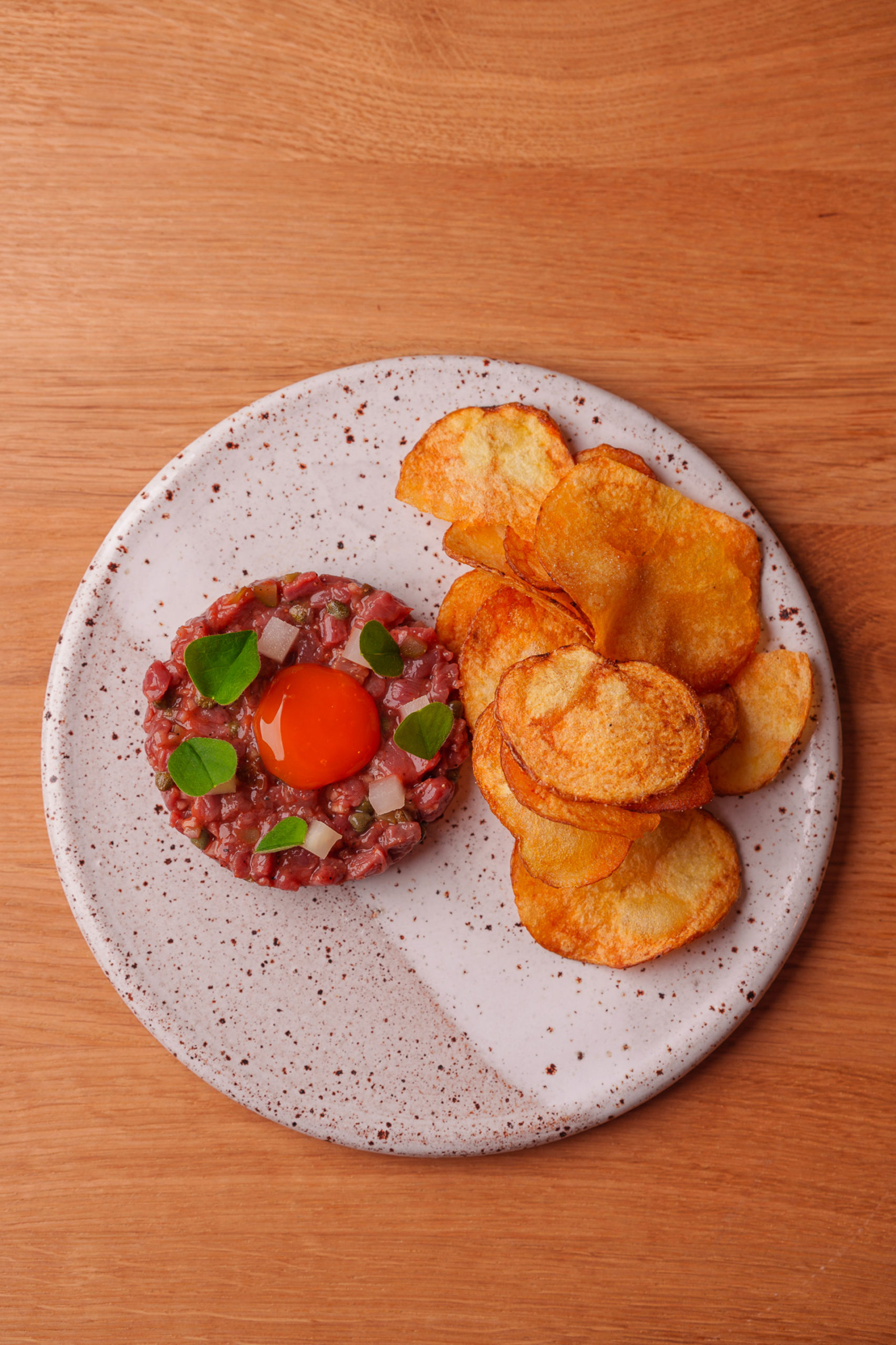
A lighter, brighter, meatier menu
Talk us through the current menu.
As we move into spring, the menu begins to lighten and brighten. Guests can expect the first tender shoots, heritage leaves and early herbs coming through from the farm, alongside carefully sourced meat and fish. Dishes are increasingly vegetable-led, celebrating new season asparagus, young brassicas and delicate greens, often paired with subtle broths, ferments or light sauces that enhance without overpowering. It’s a time of renewal, and the menu reflects that sense of freshness and possibility.
Veg obviously makes up a large part of Wild’s menu, but there’s animal produce on the menu, too. What’s your approach with fish and meat?
While vegetables lead, responsibly sourced meat and fish play an important supporting role. Sourcing locally ensures quality, traceability and alignment with our values. It allows us to work with producers who share our commitment to welfare and sustainability. By treating these ingredients with the same respect as our vegetables, using them thoughtfully and without excess, we create a more balanced and conscientious offering.
Having completed your first six months together, where do you see the Wild restaurant and farm in 5 years’ time?
In five years, we hope to deepen the relationship between the farm and the restaurant even further. That means expanding what we grow, continuing to improve soil health and biodiversity, and refining how that produce is translated onto the plate. Ultimately, the goal is to create a fully integrated ecosystem, one that not only produces exceptional food but also contributes positively to the environment and the community. We see Wild as a long-term project, constantly evolving but always grounded in its core principles.
The C&TH Report:
Wild – both the restaurant and farm – forms the perfect collaboration between chef and grower – the farm, growing and providing its enormous produce variety only a short distance from the table allows the diner to taste the benefit of regenerative agriculture. And, during my visit, benefit I did: each plate brought a total flavour bomb that felt profound, exciting, and, not least, celebratory of its provenance. This freshness, too, felt reflected in contemporary interiors that are bathed in warm, natural light. I thoroughly enjoyed welcoming spring into my world when I visited both the restaurant and farm a few weeks ago. Their homegrown mushroom parfait, wild garlic flatbread and home made Agnolotti with roasted cauliflower were absolutely divine in their simplicity and an authentic ode to Jude Allen, head grower. Their dishes are truly rooted in nature.
How To Visit
Bookings available via sevenrooms.com, open Tuesday to Saturday. 247-249 High Street, Berkhamsted, Hertfordshire, HP4 1AB