


High-Fibre Recipe Ideas From Hugh Fearnley-Whittingstall
By
5 months ago
The River Cottage chef's new cookbook is out now
Fibre is pivotal to our health, but more than 90 percent of adults aren’t getting enough of it in their diets. That’s why king of veg Hugh Fearnley-Whittingstall has made it the focus of his latest cookbook, High Fibre Heroes. The book is packed with recipes celebrating 12 of the most inexpensive and readily available plant superstars which will help boost your fibre count – as well as hit your 30 plants a week target. It includes staples like peas, carrots, leeks, lentils, tomatoes and broccoli, used to make delicious lasagnes, sandwiches, soups, pastas and much more. We’ve shared three recipes from the book below.
Hugh Fearnley-Whittingstall Recipes
(c) Emma Lee
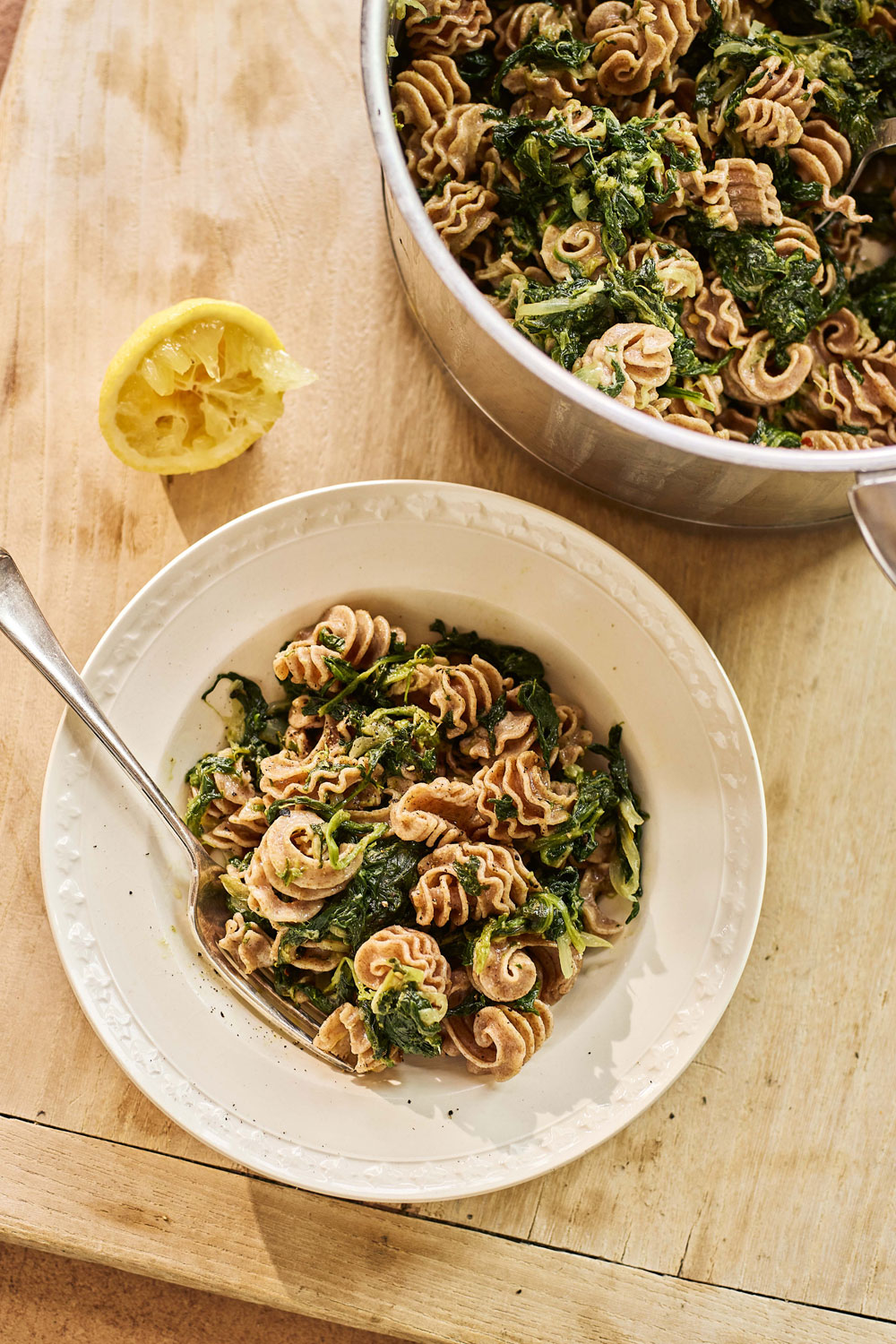
Spinach, Chilli and Lemon Pasta
‘You can use blocks of frozen spinach straight from the freezer for this delicious dish, or go for a fresh spinach version (see below). If you’re organised, you can defrost frozen spinach first, in a cool place or overnight in the fridge – this might take a few hours, but it will cut down on the cooking time.’
- Plant count 7
- Fibre count 11g
- Serves 4
- Ready in 40 minutes
Ingredients:
- 2 tbsp olive oil, plus extra for the pasta
- 1 large onion, sliced
- 3 garlic cloves, slivered
- 600g frozen spinach
- 300g wholewheat pasta, such as penne, radiatori, gomitini or fusilli
- A pinch of dried chilli flakes, or 1 fresh red chilli (membranes and seeds removed for less heat if you prefer), finely chopped
- Finely grated zest and juice of 1 lemon, or 40–50g preserved lemon, pips removed, finely chopped
- 2 tbsp nutritional yeast (optional)
- Sea salt and black pepper
Method:
- Heat the olive oil in a wide frying pan over a medium heat, then add the onion with a pinch each of salt and pepper. Fry, stirring often, for about 8 minutes. Add the garlic and cook for a minute or two longer.
- Add the frozen spinach. (If it has been frozen as loose bits, it won’t take long to defrost and heat up. If it’s in solid bricks, it will take about 10–15 minutes.) Cover the pan to start with, then lift the lid occasionally to stir. Once all the spinach is defrosted, cook, stirring, for a couple more minutes, to make sure it is completely separated and combined with the onion. Meanwhile, cook the pasta.
- Boil the kettle. Fill a large saucepan with boiling water and add a big pinch of salt. Tip in the pasta and cook, according to the packet instructions, until al dente. Drain, saving some of the cooking water. Toss the pasta with a little olive oil; keep warm in the covered pan.
- When the spinach is piping hot, add the chilli and lemon zest or preserved lemon. Stir over the heat for a minute or so, then add about 50ml of the pasta cooking water and the nutritional yeast, if using. Stir to combine.
- Tip the spinach mix into the pan of hot pasta. Stir over a low heat for a couple of minutes to get everything piping hot. Squeeze over the lemon juice (if you’re not using preserved lemon) and taste to check the seasoning, adding salt and pepper if needed. Serve at once.
SWAPS
- Use fresh spinach instead of frozen. Add in 3 or 4 lots to the sweated onions, wilting it down as you go, and cook for just a couple of minutes, stirring until well combined with the onions.
- Frozen peas are a nice addition to this dish. Add 50–100g to the pasta water when the pasta is almost done, then bring back to the boil and cook for 2 minutes. The peas and pasta should be perfect, so you can drain them together and toss with the spinach.
- Omni/VBNV option: Use grated Parmesan (or veggie alternative) instead of the nutritional yeast. Grate a little over the dish before serving as well.
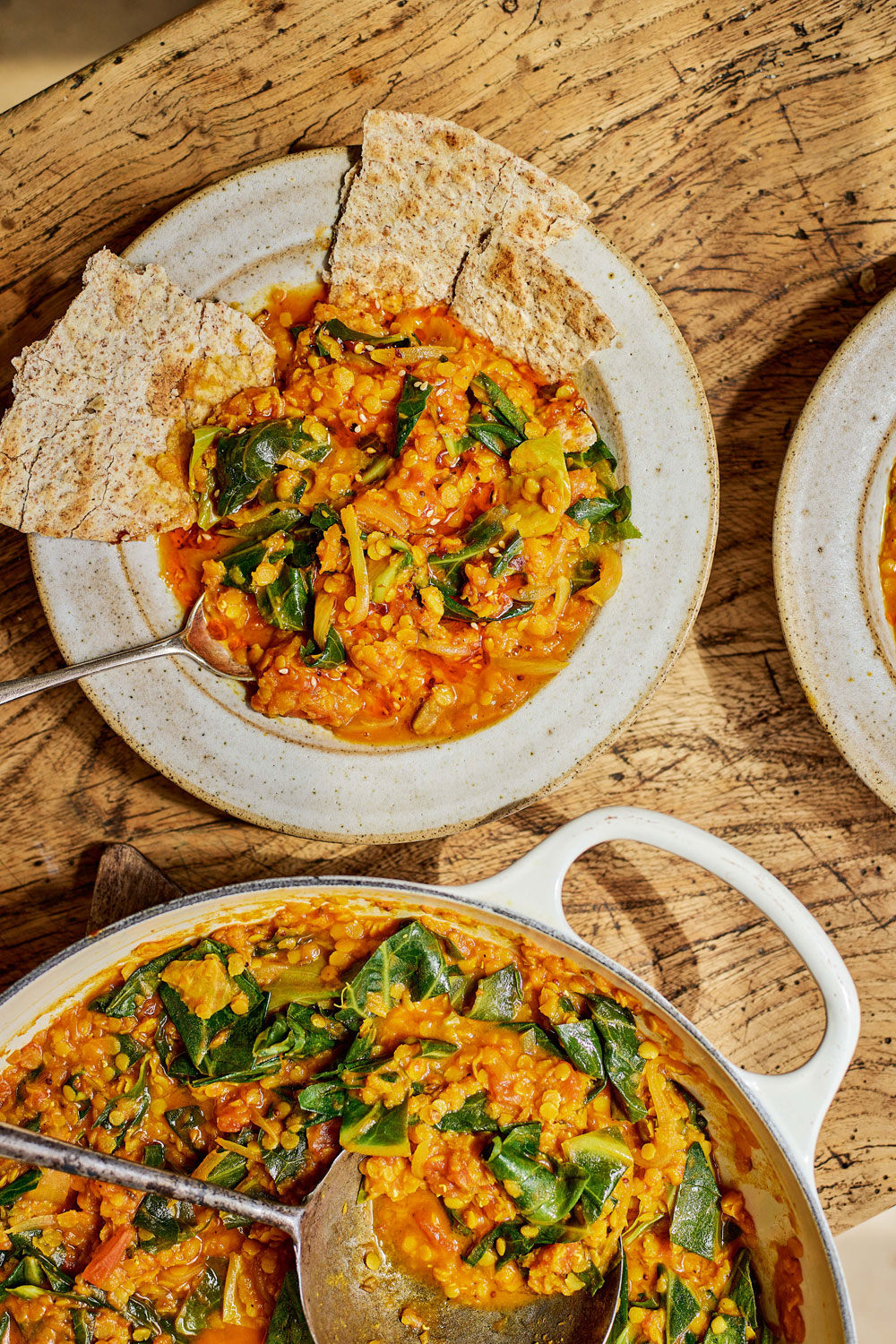
Tomato Dhal with Greens
‘This is based on a delicious dhal recipe from my book, Much More Veg, with some lovely fresh greens stirred in at the end, turning a classic side dish into a hearty meal.’
- Plant count 12
- Fibre count 9g
- Serves 4
- Ready in 1 hour
Ingredients:
- 2 tbsp rapeseed oil
- 1 black cardamom pod or 3 green cardamom pods, bashed to split open
- 1 tsp brown mustard seeds
- 1 tsp cumin seeds
- 1 bay leaf (optional)
- 1 large red or brown onion, sliced
- 2 garlic cloves, grated, plus 2–3cm piece of fresh root ginger, grated, or 1 blob of garlic and ginger paste
- 2 tsp ground turmeric, or a 2–3cm piece of fresh turmeric, grated
- 400g tin whole plum tomatoes
- 200g dried red lentils, rinsed
- About 200g greens, such as spring greens, kale or chard
- ½–1 tbsp soy sauce or tamari
- A squeeze of lemon or lime juice
- Sea salt and black pepper
- Chilli oil, to finish (optional)
- Brown rice or wholegrain flatbreads, to serve (optional)
Method:
- Heat the rapeseed oil in a large saucepan over a medium heat then add the cardamom, mustard and cumin seeds, and the bay leaf if using. When the seeds start to pop, add the onion and lower the heat. Cook, stirring now and then, for 5–7 minutes, until the onion starts to soften. Add the grated garlic and ginger (or garlic and ginger paste) and turmeric, stir well and cook for a minute or two.
- Now add the tinned tomatoes, mashing them with a potato masher as they go in. Bring to a brisk simmer and cook for about 10 minutes, stirring now and then, to reduce and concentrate the tomatoes.
- Add the rinsed red lentils and 800ml water. Stir well and bring back to a simmer. Cook for about 20 minutes, until the lentils are tender, stirring often to prevent sticking. You can add a little more water if the mixture gets a bit thick.
- Meanwhile, tear spring greens or kale off the stalk (chard doesn’t need to be de-stalked) and roughly shred the greens.
- Add the greens to the almost-cooked dhal with ½ tsp salt. Stir in well then continue to cook at a low simmer for 10 minutes, or until the greens are tender and the lentils have broken down to a creamy purée. Take off the heat and stir in ½ tbsp soy/tamari, a few twists of pepper and a squeeze of lemon or lime juice. Taste and adjust the seasoning with more salt, soy or lemon/lime juice as needed.
- Ladle the dhal into warmed bowls, trickle with chilli oil if you like, and serve straight away. This is a meal in itself, but brown rice alongside, or wholegrain flatbreads for scooping, makes it really substantial.
SWAPS
- Use 350–400ml very simple tomato sauce (page 176) in place of the tinned tomatoes.
- Replace the cardamom and spice seeds with 2 tsp curry powder or paste, letting it sizzle for just a minute before adding the onions.
- Instead of the greens, add green beans, cut into short lengths.
(c) Emma Lee
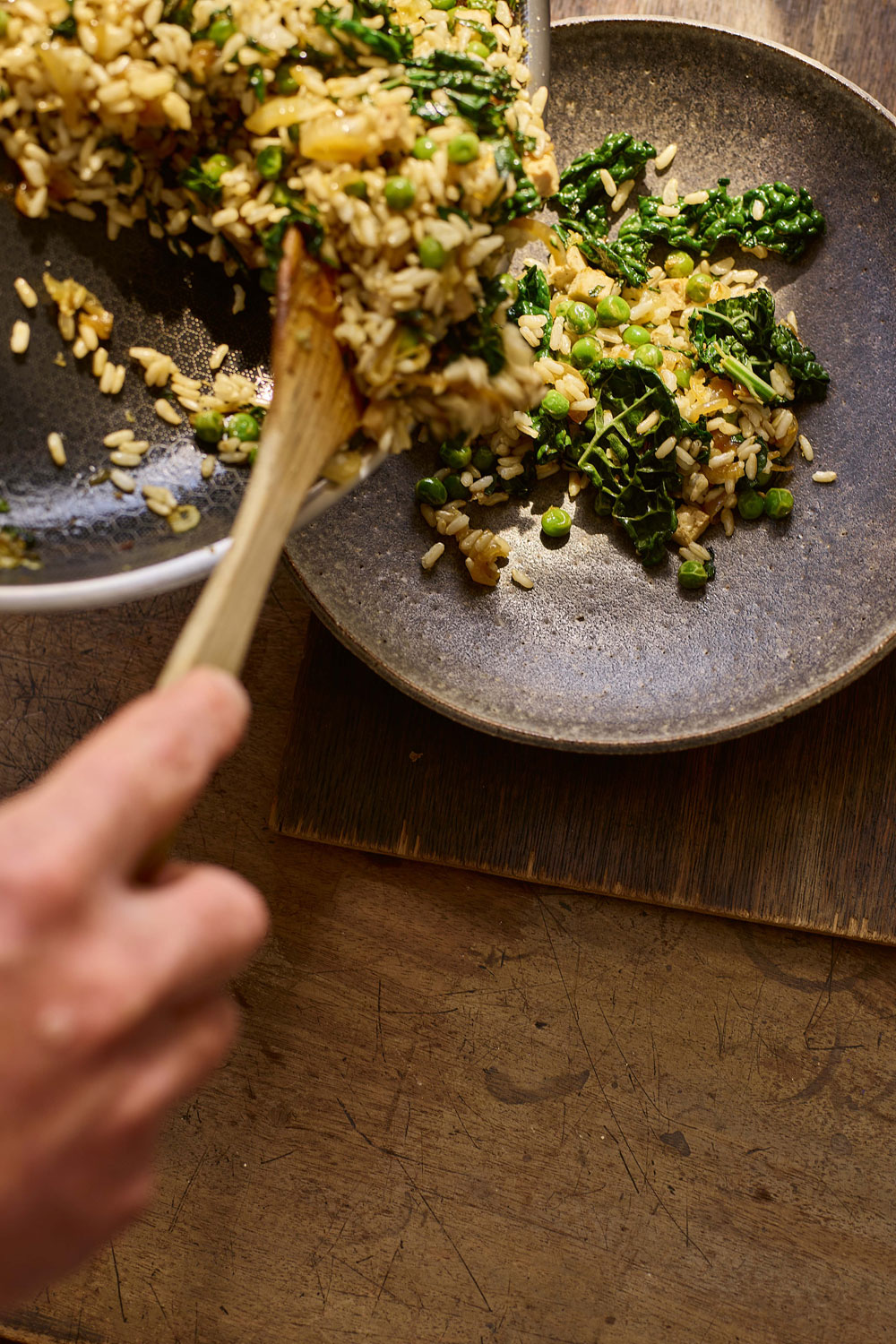
Fried Rice with Peas, Soy and Sesame
‘This simple main course is very customisable. The key things are the onion and the soy/sesame/bouillon mix, which brings lots of savoury flavour. You can then use pretty much any veg you like (see below). If your brown rice is a bit clumpy in places, break it up with a fork before adding it to the pan.’
- Plant count 8
- Fibre count 7g
- Serves 2
- Ready in 25 minutes
Ingredients:
- 2 tbsp rapeseed oil
- 1 medium onion, quartered and sliced
- About 75g extra-firm tofu
- 1 tbsp soy sauce or tamari, plus a little more to serve
- 1 tbsp toasted sesame oil
- 1 tsp vegetable bouillon powder (or ¼ veg stock cube, crumbled)
- 1 small garlic clove, grated
- 1–2cm piece of fresh ginger, grated (optional)
- 100g frozen peas
- A couple of handfuls of roughly shredded de-stalked kale, cabbage greens, spinach or pak choi (or a mix)
- 300g cooked brown rice
To finish
- 2–3 tsp sesame seeds
- A handful of coriander and/or mint leaves, chopped (optional)
Method:
- Heat the rapeseed oil in a large, wide frying pan over a medium heat. Add the onion and fry for about 10 minutes until softened, stirring from time to time.
- Meanwhile, cut the tofu into roughly 1cm cubes. Whisk the soy/tamari, sesame oil and bouillon powder (or stock cube) together in a small bowl.
- Add the grated garlic to the onion with the ginger, if using, and cook for another minute, stirring often. Add the tofu cubes to the pan and cook for another few minutes, stirring frequently.
- Add the frozen peas and cook for 2–3 minutes until defrosted, then add the shredded greens and cook for a few minutes more until they are starting to wilt.
- Add the soy, sesame and bouillon mix, stir and cook until most of the liquid has evaporated (less than a minute).
- Add the cooked rice, stir it through, then cover the pan and cook for 3–4 minutes, stirring now and then, to get the heat into the rice and make sure everything is piping hot.
- Serve straight away, with a scattering of sesame seeds and herbs, if using. Add a little more soy sauce/tamari at the table if you like.
SWAPS
- A handful of mushrooms, chopped fairly small, is a lovely addition. Toss them into the softened onion and cook for a few minutes before adding the garlic and ginger.
- Instead of kale or greens, use Tenderstem or purple sprouting broccoli, or green beans – all of these need a little more cooking than leafy greens, so chop into 2cm lengths, slicing broccoli stems lengthways if thick, and add to the softened onion. Cook for a couple of minutes before adding the garlic and ginger.
High Fibre Heroes by Hugh Fearnley-Whittingstall (Published by Bloomsbury), £26