


The Fancy Pantry Is Having A Moment
By
5 months ago
Back-of-house rooms are taking centre stage
Whether a status symbol or chaotic hide-all, these hardworking back-of-house rooms are worthy of the spotlight, says Hatta Byng
Pantries, Sculleries & Larders: How Food Storage Turned Chic
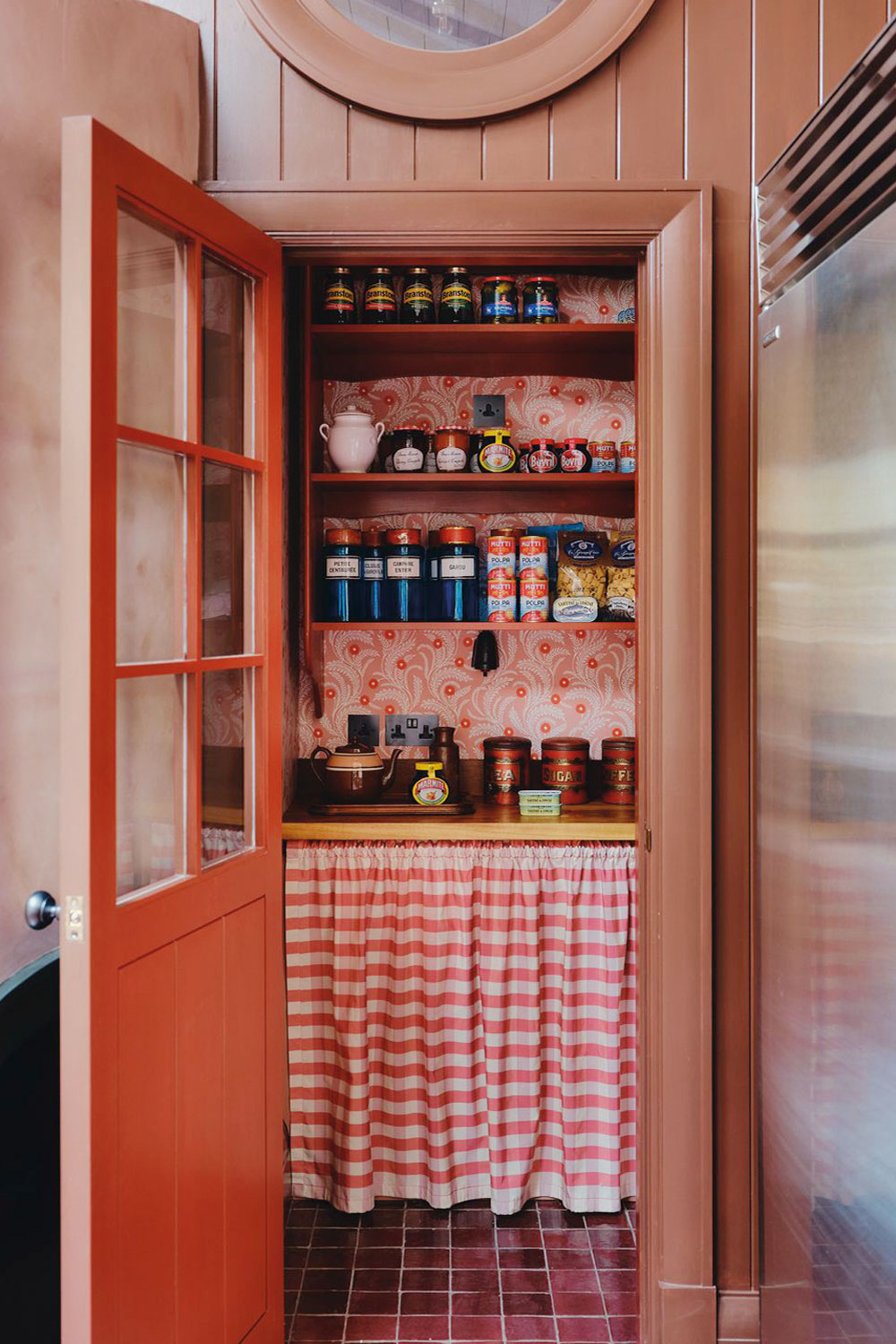
Our obsession with back-of-of-house rooms – and pictures of covetable pantries, sculleries and larders with smart joinery, appealing paint colours, rows of perfectly decanted jars and pretty, skirted counters – has been quietly gathering pace.
You’d be forgiven for feeling slightly faint if instead, you have a half-eaten packet of Weetabix poised to tumble from a crammed cupboard and no time (or desire) to label and decant into Instaperfect rows of glass jars. And surely, a skirt just gets grubby. But there are good reasons for having one (or two, or even three if you’re lucky) of these hard-working spaces – ‘even if it’s a cupboard fitted under the stairs’, says interior designer Nicola Harding. She has been known to make a kitchen smaller in order to accommodate a pantry or scullery, such is their usefulness.
For most of us, the kitchen is where we spend much of our time. As a result we want to furnish it more like a room, with elegant furniture, a comfortable armchair or two and less storage, particularly of the wall-hung kind. Hence the need for a harder-working room behind the scenes that allows the kitchen to breathe.
A scullery tends to be more of a second kitchen, with a sink for washing-up, a second dishwasher and so on, while a pantry is, strictly speaking, for storage (although these days many of us mix the two). Our ‘pantry’ is the room where we do most of our washing up, but it also houses a big larder cupboard where we keep all dry food, a surface for the microwave and Magimix, our main fridge, and a separate freezer.
‘A reality of life is we’ve all got so much stuff,’ says Harding, ‘and we are all happier with a bit of order.’ A pantry helps deal with the chaos of a busy household. ‘Try to have your pantry close to the door where your groceries come in, so they land here first rather than on your kitchen table.’
(c) Andrew Montgomery
How To Design A Pantry, According To Top Interior Designers
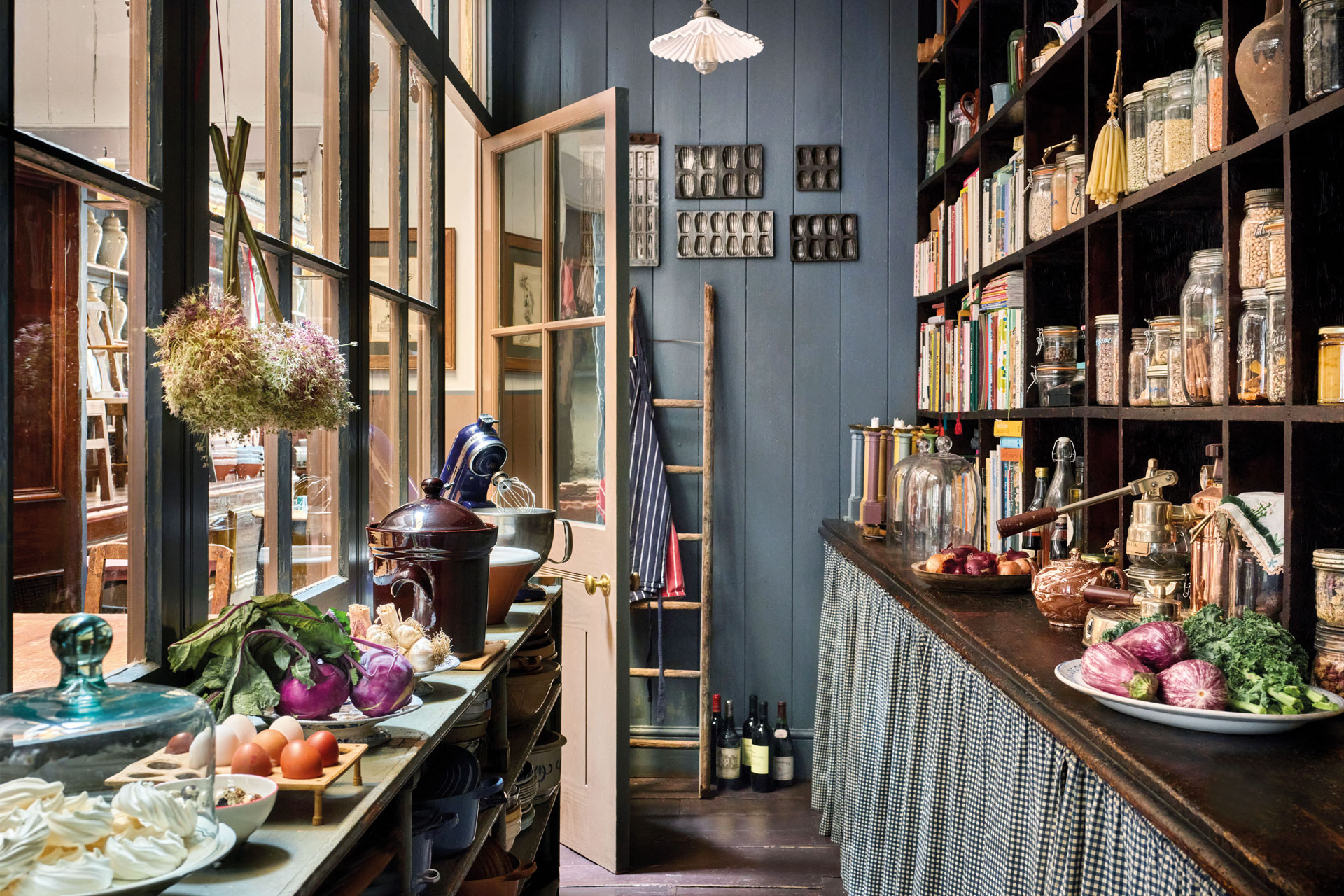
If space allows, a pantry means dirty dishes and messy prep can happen away from the kitchen itself, so you don’t have to hang out among it all and a door can close it off, out of sight. ‘A walk-through space is ideal for flow and ease of use,’ says Patrick Williams of interiors practice Berdoulat, who has gained a name for his atmospheric, immaculately detailed back-of-house rooms. He readily admits these are the rooms he gets most excited about. ‘A richly stocked pantry is like a microcosm of a food market, where you can walk in and get ideas.’
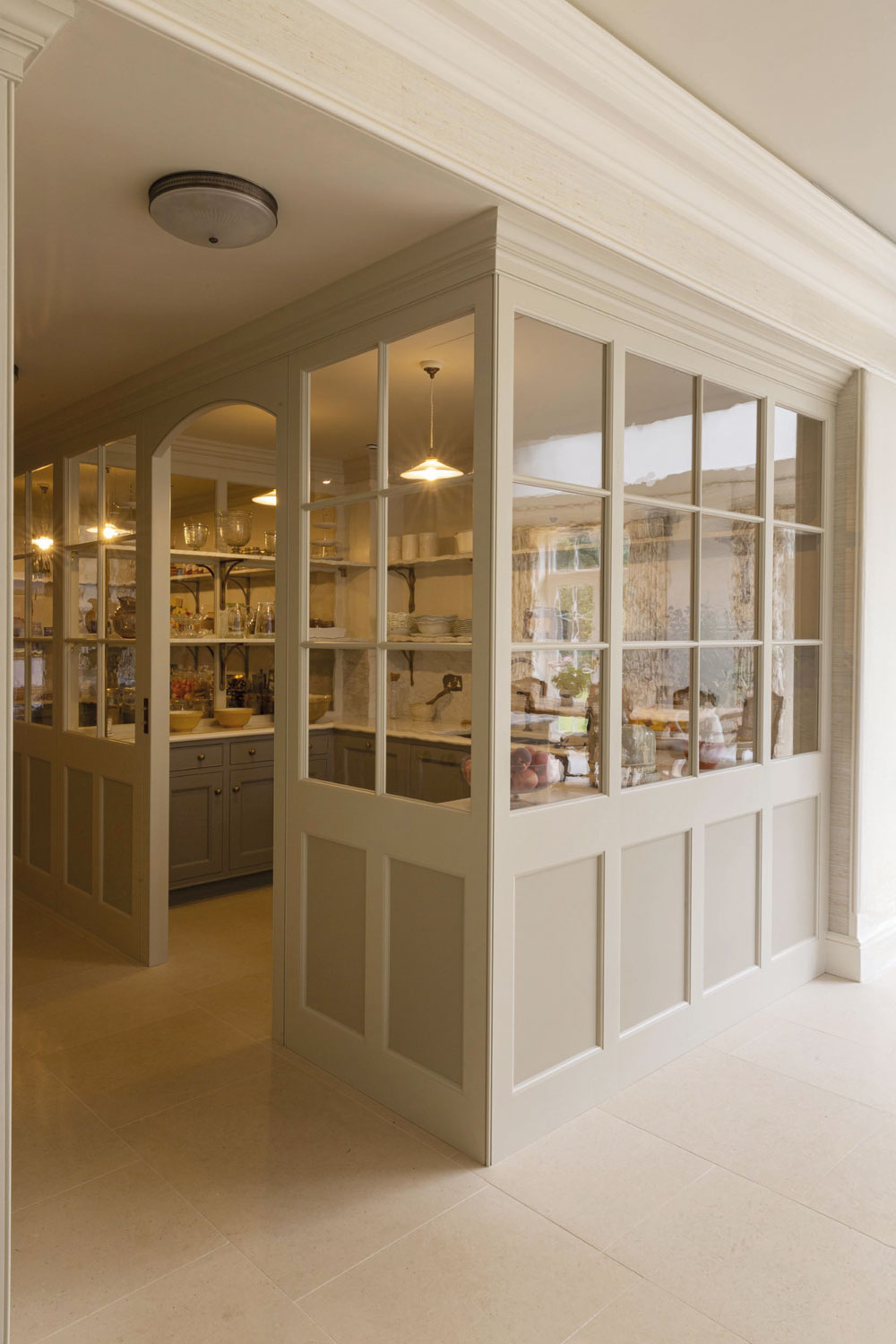
He often carves out a pantry space from the kitchen using a glazed partition. He doesn’t mind looking at open shelves – even if there is the odd bit of supermarket packaging – as the items being behind a glass divider brings a sense of order. In his own home he uses specially blown glass, its wibblywobbliness adding texture and at night reflecting the candlelight; when the family eats supper with the pantry lights dimmed, it gives the kitchen a warm glow. Recently, a client asked for an unheated pantry for optimal food storage, so Williams added copper draft exclusion to seal the doors and keep the cold in.
Anthony Earle, lead designer at Artichoke – in my opinion, the RollsRoyce of kitchen and joinery specialists – also talks about the joy in designing these spaces, often taking ideas from National Trust houses. A recent house included separate pickling and dairy rooms, inspired by the below-stairs rooms at Castle Drogo in Devon. The difference is these rooms will be used by his clients rather than any household staff. In another project, individual drawers labelled for different ingredients were inspired by a large house that had handpainted inscriptions like ‘Barley Sugar, Cocoa and Chocolate’ and ‘3 Types of Almonds’. For Earle, ‘it’s all about bringing pleasure to everyday tasks’.
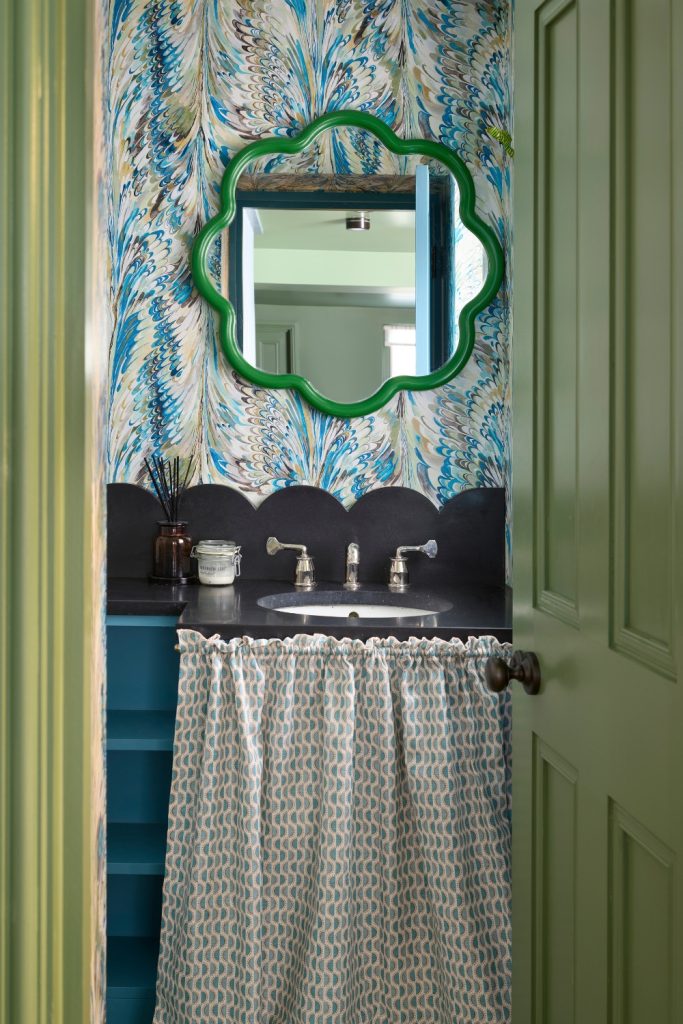
Of course, he is lucky to work with extraordinary budgets to bring order to his client’s lives in this way. But as Harding says, a working pantry does not have to cost a lot of money. This is where the under-counter skirt comes in: it’s not only pretty, but also a relatively inexpensive way of hiding things like the ice cream maker or large pans you don’t use every day. Just avoid putting a bin or dishwasher anywhere close, and make sure there are plenty of gaps so you can easily find what you need.
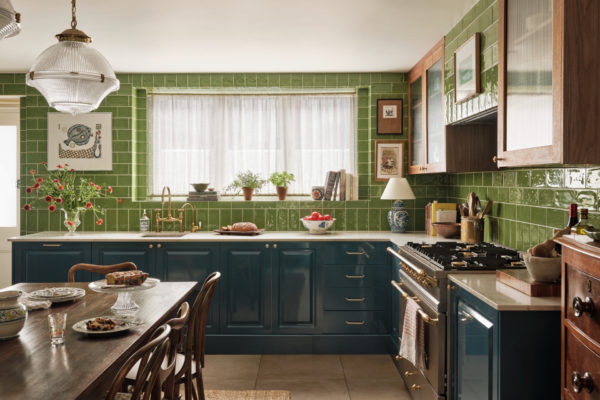
Even the simplest of pantry spaces can be made visually pleasing by choosing a good paint colour – and you can afford to be braver here as you might only be passing through. Harding plans floor-to-ceiling turquoise tiles for her own pantry. Williams likes dark colours: ‘They contain the visual noise better and your clobber melds into the shadows.’
How To Organise Your Pantry
When it comes to planning the details of the storage, be honest with yourself. Organiser extraordinaire Susanna Hammond of Sorted Living is not an advocate of decanting into glass jars unless you really have the time and inclination to do so (and if you do, she suggests putting a label on the underside with the ‘use by’ date). She always asks her clients how much time they have for unpacking their shop. If, like me, it’s ten minutes maximum, she says the most effortless way to keep things in order is to keep packages clipped shut and grouped in labelled boxes or baskets. For ease of cleaning, she favours plastic containers over baskets.
Hammond also suggests thinking about what tasks will be carried out where. For instance, if you have a KitchenAid on a surface, you might want baking ingredients and its spare parts in the drawers below. Obvious, you might think, but currently I have our picnic paraphernalia below our Magimix.
Pantry Ideas For Small Spaces
If space is the issue, a tall larder cupboard with double doors in the kitchen or a passage can do a good job of containing everything we need for day-to-day cooking. As I search for things at the very back of ours, I think of Neptune co-founder John Sims-Hilditch’s solution to the problem. The furniture company’s deep larder cupboards have inner doors with shelves on either side that open out to magically reveal the things stored at the back. Thankfully, there are people like him (and the others mentioned here) who have put a great deal of thought into how to make our lives so much easier and bring joy to otherwise dreary domesticity.