


Can Venice Be Saved?
By
6 months ago
Safeguarding the past and looking to the future of one of the world’s most famous cities.
Will Venice still be here in 100 years? The threat of Venice sinking into the lagoon has loomed over the city for centuries. Also sinking is the city’s population, which has shrunk from 175,000 in the city centre at its peak in 1951 to just 48,000 today. It is therefore often thought of as a city in crisis, a victim of its own tourism success, with those 48,000 residents playing host to more than 5.8 million recorded visitors each year, closer to 30 million if you include day trippers. Inside the city, alongside the declining population, atop those precariously supported streets, is some of the world’s most precious art and architecture. So, what can be done to protect all three – the place, the people, and the priceless possessions?
There are at least 21 organisations worldwide dedicated to the safeguarding and conservation of Venice. We journeyed to the city with one of them – Save Venice, alongside one of its partners, The Gritti Palace – to find out what is being done to safeguard the floating city.
Save Venice
‘We want to make sure there is something behind the flood gates worth saving,’ Leslie Contatini, Venice Programs Director of Save Venice tells me, as we weave between tour groups on a staircase in the Palazzo Ducale. We’ve been chatting about the enormous MOSE flood gates that are now in place and promising to protect the city from high tides like the devastating flooding of 2019.
Our destination is the Room of the Four Doors, which receives around a million visitors each year as part of the wider palace tour. The room is the latest completed restoration project by the charity, and it contains works by some of Venice’s greatest masters, Palladio, Tintoretto, Bombarda, Vittoria, precious frescoes, paintings and statues.
The restoration was no mean feat. Take the ceiling: recent conservation research found that the Room of the Four Doors ceiling decorations in the Doge’s Palace were not true frescoes but oil paintings by Jacopo Tintoretto painted on a gypsum-and-glue ground, suspended on a mat of reeds, which began decaying just decades after their completion in the late 16th century. In the centuries that followed, attempted conservation efforts only led to additional problems. Nails and pins were added, often hitting thin air, plaster crumbling from useless screws in places across the masterpiece.
The first part of the project therefore involved securing the ceiling, accessed via the attic in a crawl-space, using a detailed digital map of pins and screws to follow as the foundations for the famous ceiling were secured, and the artwork beneath could be painstakingly cleaned and touched up. The result? Millions of visitors, including myself, can wander crane-necked through this historical masterpiece once more, and for many years to come.
Next, Save Venice turns its sights to Scala dei Giganti (the staircase of the giants), not only restoring the sculpture of Mars by Jacopo Sansovino, but undertaking testing of the degradation that they hope can be shared with and applied by numerous other conservation charities across Venice. ‘The current preservation cycle is around 30-40 years,’ Leslie tells me. ‘We are working to lengthen this to 50 or even 100 years. It’s an uphill battle, but we believe it can be done’.
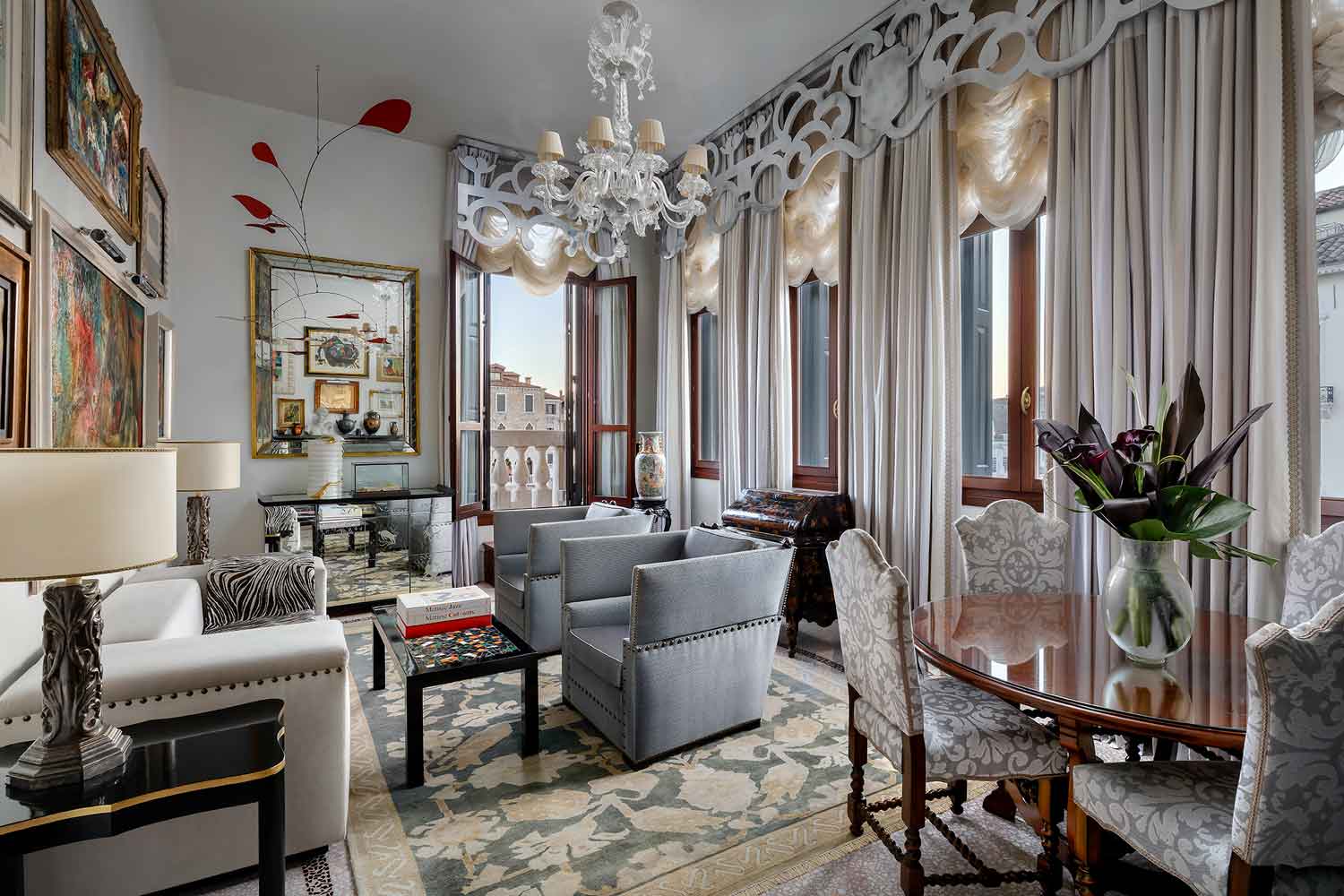
The Patron Grand Canal Suite
The Gritti Palace & The Future Of The Arts
Both of these projects are supported in part by The Gritti Palace, one of Venice’s oldest luxury hotels. The Palace traces its origins to a 15th-century noble palazzo that was reshaped into its present Venetian Gothic form in 1475, then became the residence of Doge Andrea Gritti in 1525 before eventually becoming a hotel in 1895. It’s pure Venetian grandeur: detailed historic interiors, terrazzo floors, antique furnishings, painted ceilings, and a Grand Canal setting that preserves the feel of a private Venetian residence. The partnership with Save Venice underscores the hotel’s role as a Patron of the Arts & Venice, through restoration, philanthropy and support for local craftsmanship.
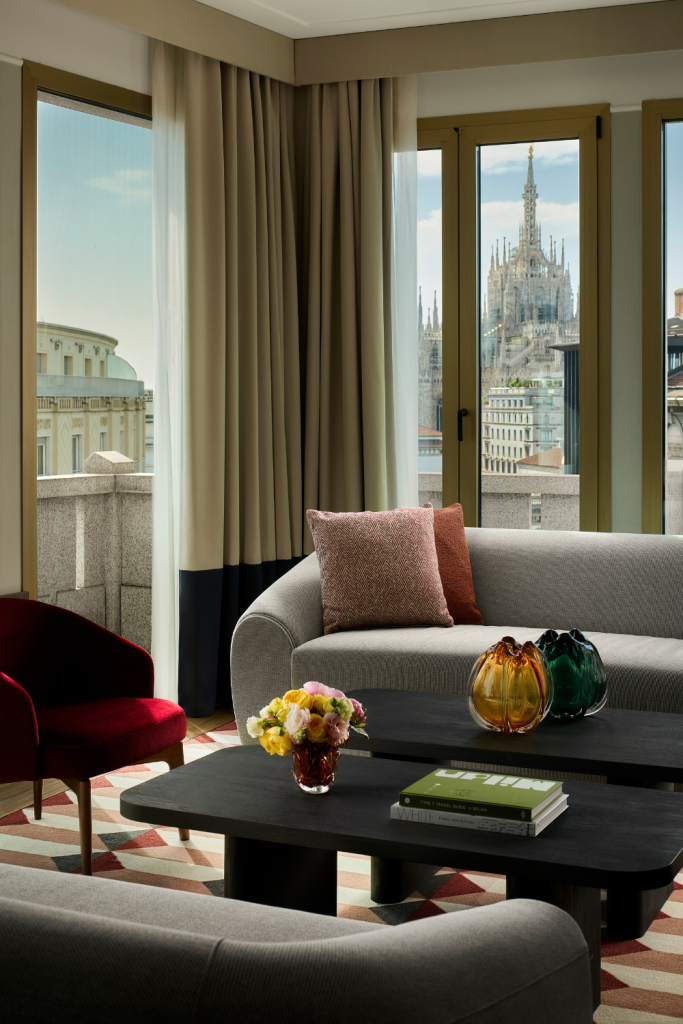
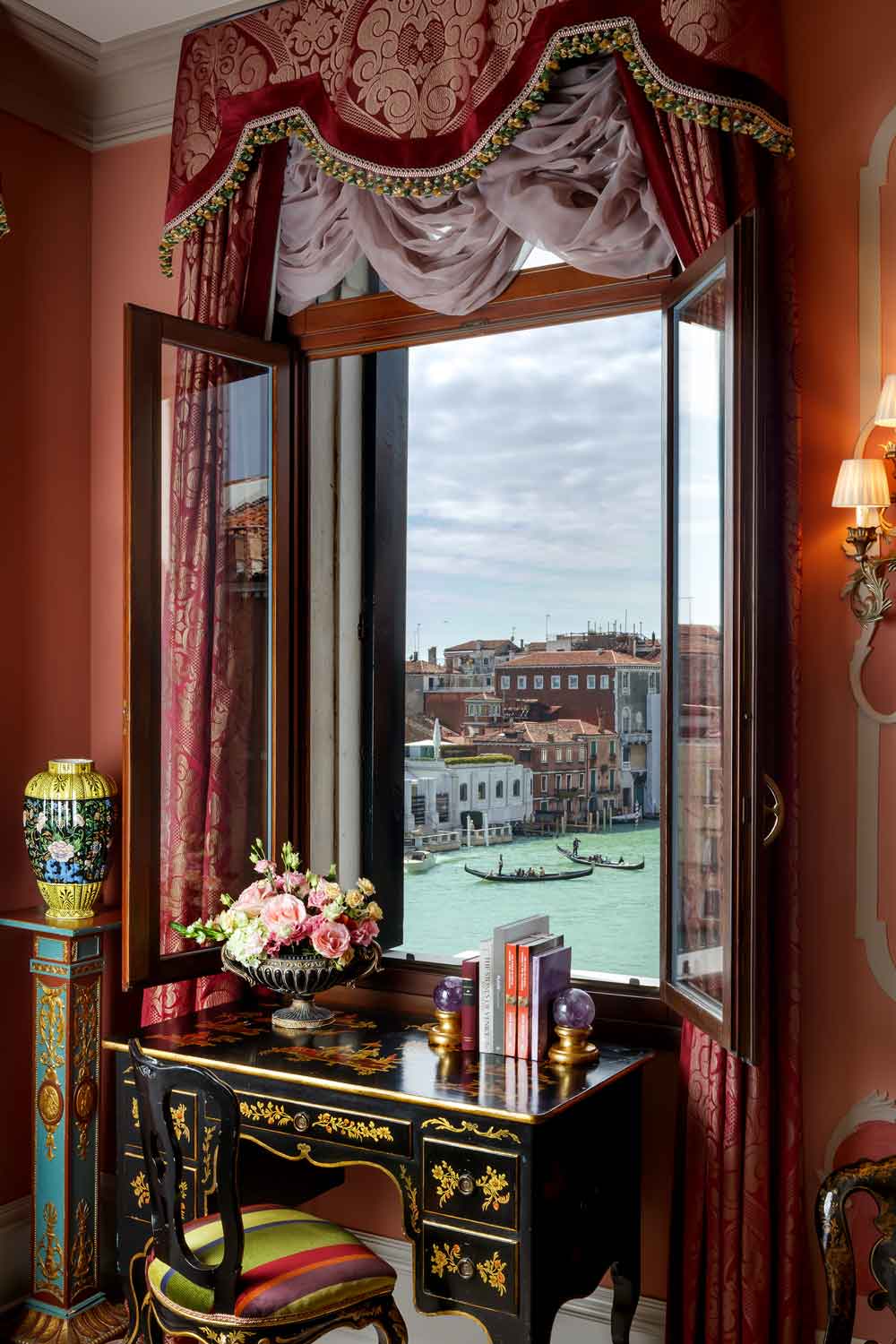
My home for the duration of my visit is The Patron Grand Canal Suite, a one-of-a-kind lodging in the otherwise classically-Venetian rooms and suites of The Gritti Palace. Mine is a 1930s-inspired, sprawling corner plot that pairs ornate luxury with an art-world narrative: there’s classic-contemporary design, a library of modern-art books, and views across the Grand Canal, which mean I’m within touching distance of the city’s artistic past and future.
From my balcony, beyond the gondola-lined waterway I can see two major temples of modern art (the Ca’ Pesaro and Punta della Dogana). Back inside, the walls are lined with contemporary art and replicas of famous pieces currently on display elsewhere in the city, a reminder – just as The Venice Biennale, the world’s oldest cultural exhibition, opens once more – that Venice is not just a museum but very much still a hub for the future of the arts, too.
Having said this, you don’t come to The Gritti Palace to miss out on a bit of baroque. My suite’s main bathroom is floor to ceiling Italian marble with an enormous free-standing bath, back-to-back sinks and a shower big enough to dance in, while the suite’s second bathroom is dramatic black marble with the most beautiful sink and wall sconces I’ve ever seen.
The rest of the hotel continues in kind: ornately painted walls and ceilings, gold furniture, soft blush pinks and rich red velvets. The whole building is a feast for the eyes, and I’m a glutton for grandeur.
The Present: Keeping Arts & Crafts Alive In Venice
In the 70s, when motorised boats came entered the city’s waterways and gondola usage gradually started to decline, there was, for a time, just one single Remèri — a Venetian artisan who handcrafts traditional oars (remi) and oarlocks (fórcole) for gondolas and other lagoon boats – in Venice.
In Venice’s Le Forcole workshop, Pietro Meneghini tells me that there are now five Remèri in Venice, speaking with a gentle passion about the history of his craft. ‘The job started with the city,’ he tells me, tracing oar-making back over 700 years to the medieval guilds of 1307, when remèri shaped the wooden lifeblood of a waterborne republic. Today, four workshops are going strong, and Pietro credits the art’s revival to master Saverio Pastor – along with tourism’s gondola demand.
‘Until there is no tourism, the job will survive,’ Pietro says plainly. A single forcola (the oarlock used to steer and push the boat) lasts decades under a gondolier’s 500kg load, but yearly repairs sustain the craft, and the masters are finding new ways to expand their business, selling decorative forcole to tourists (including, reportedly, Mick Jagger, when he visited Le Forcole several years ago).
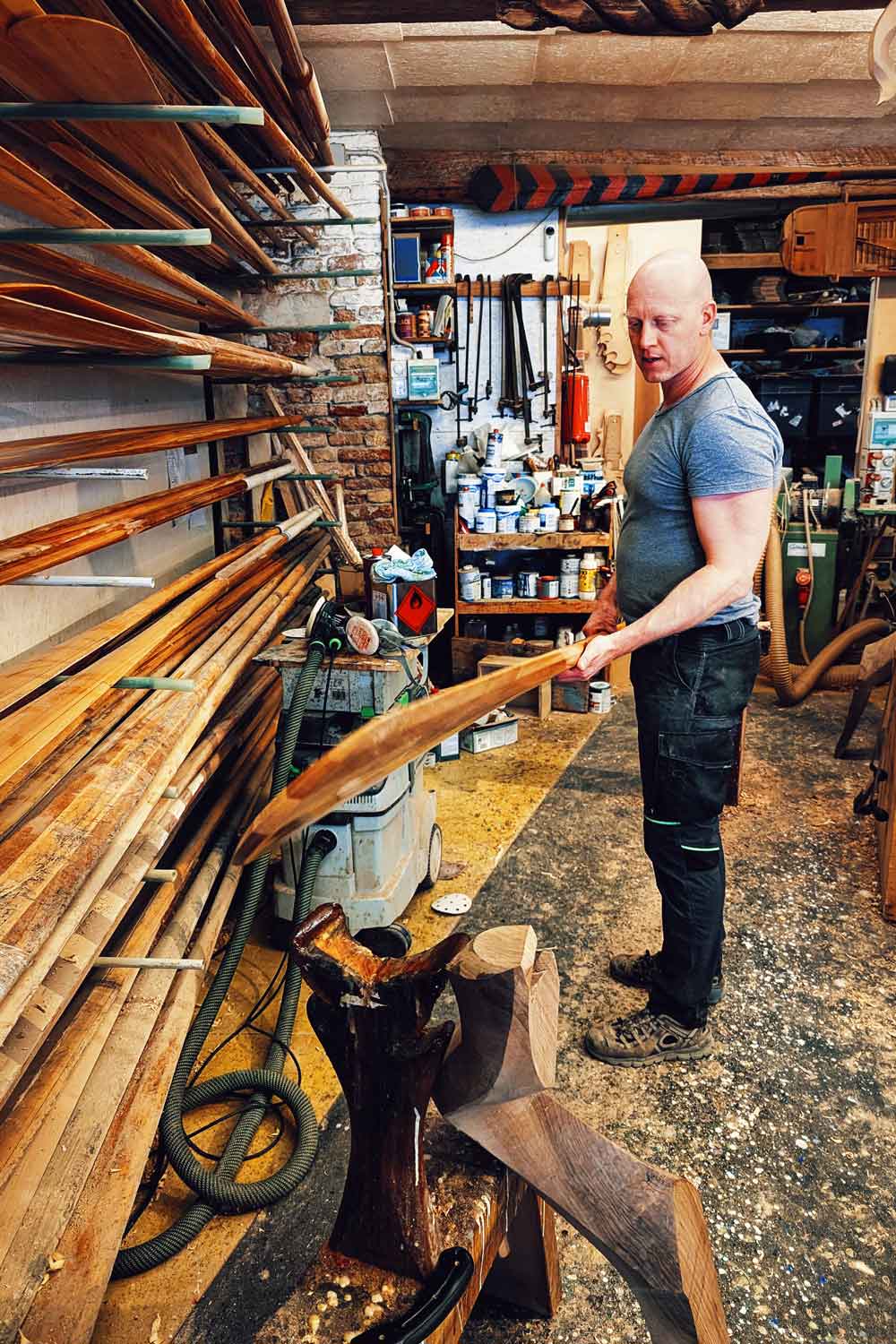
Pietro Meneghini at work in Le Forcole
Pietro and Saverio are just two of Venice’s heritage crafters that are also being supported by The Gritti Palace’s Patron scheme. They also champion glass masters, jewellers, costume creators, bookbinders and many more, through education, workshops and shopping guides for guests, keeping Venice’s artistic present thriving and protecting the crafts that are unique to the city.
Venice Shopping Guide: What To Buy & Where
There are dozens of craft shopping destinations around Venice, and the team at The Gritti Palace can even provide you with a handy guide and a map of them dotted around the city so you won’t return home empty handed. Here are a few highlights to look out for:
- Buy a forcola at Le Fórcole
- Buy glasswork at Carlo Moretti or Cesare Toffolo
- Buy jewellery at Attombri
- Buy fabrics (or visit the archives) at Rubelli
- Buy an artisan book at Paolo Olbi
- Buy a Venetian mask at La Bottega Dei Mascareri
- Buy some lace at Dalla Lidia Merletti D’Arte
The Gritti Palace: C&TH Key Notes
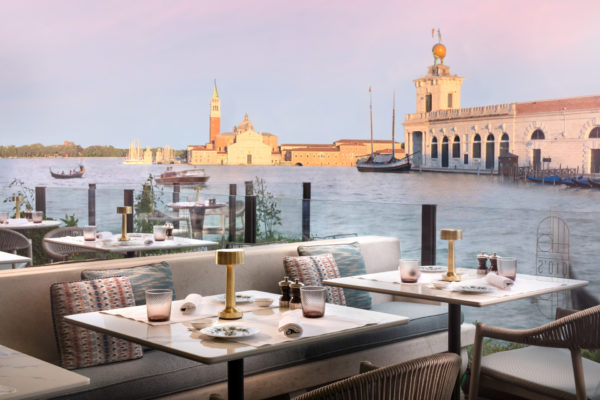
– What to eat: the Hemingway risotto on The Gritti Terrace
– The drink order: a spritz, of any variety
– The breakfast order: scrambled eggs and smoked salmon – the eggs are perfection
– The room: The Redentore Terrazza Suite comes with a 250-square-metre private roof terrace, a total one of a kind in Venice with sprawling 360-degree views of the city
– Don’t miss: a chat with the concierge, one of the most knowledgeable in Venice and the secret to unlocking the city’s hidden treasures
The Last Word
Venice’s greatest treasures are not only its palazzi and paintings, but the skills and stories that keep them alive. Through its partnerships and patronage, The Gritti Palace is helping safeguard that both, so they can be enjoyed for many generations to come.
BOOK
Rooms at The Gritti Palace start at 1300€ per room per night including breakfast | marriott.com