


How To Eat Like A Sardinian – One Of The World’s Blue Zones
By
5 months ago
This new cookbook spotlights Sardinian cuisine
Sardinia is one of five Blue Zones – parts of the world where people have exceptional longevity. So, naturally, there’s a lot of interest surrounding the Sardinian diet: what are its inhabitants eating to live a long, healthy life? Chef Francesco Mattana gives us a taster in his new cookbook, Eat Like a Sardinian, which features 90 recipes centred around principles of fresh, seasonal ingredients and healthy fats. We share three recipes from the book below.
3 Longevity Recipes From Sardinia
Cascà alla Carlofortina
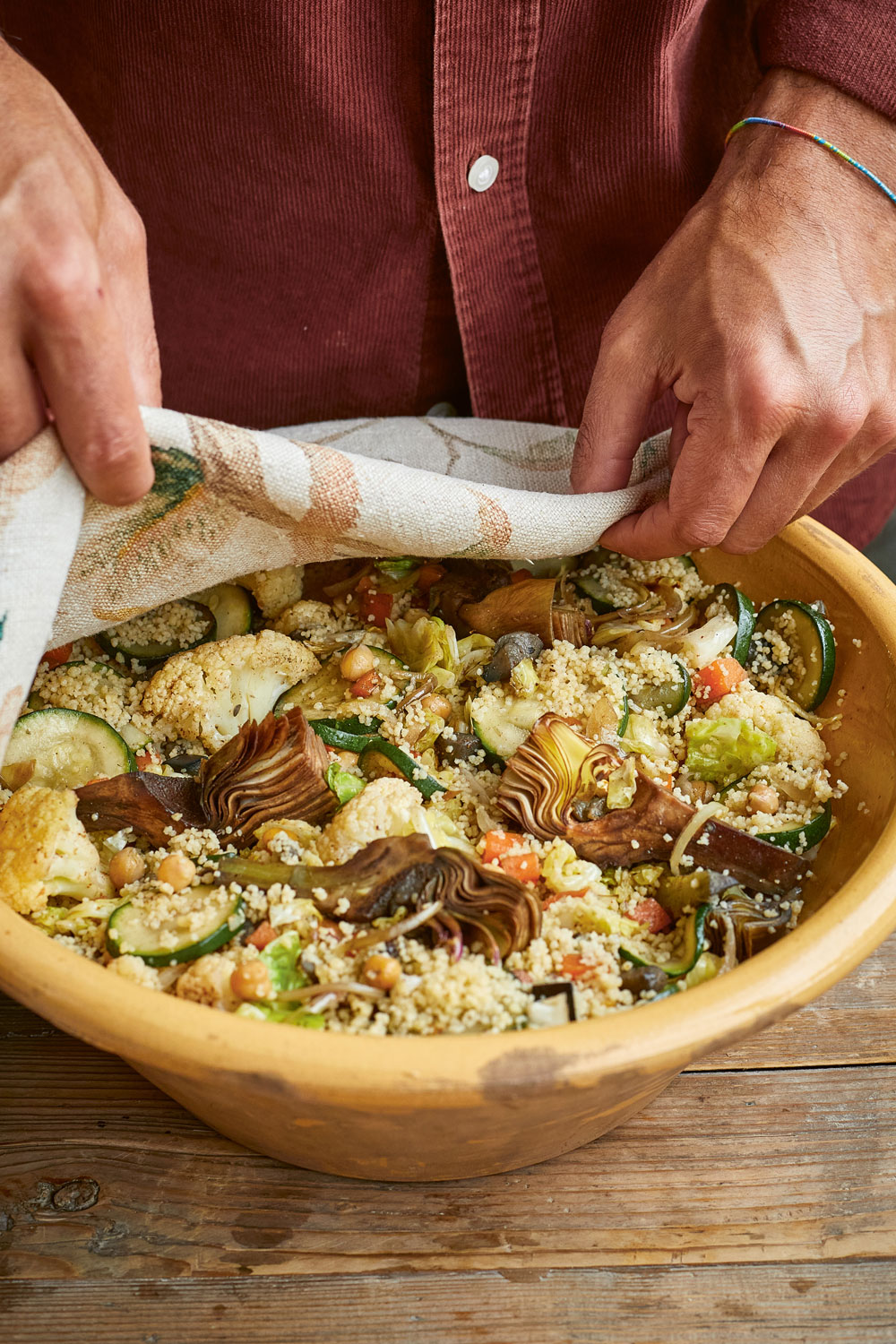
Couscous from Carloforte
‘This is a great recipe from Carloforte, a small town situated on the island of San Pietro, just off the south-west coast of Sardinia. This part of Sardinia has been heavily influenced by the Arab cuisine of Tabarca, just off the coast of Tunisia in Africa. People from Liguria, in the north-west of Italy, moved there for fishing purposes, then later settled in Carloforte, bringing with them the couscous and spices from the region. This dish, with its rich history, is a blend of traditions and is unique to Sardinian cuisine. The carefully cooked seasonal vegetables and couscous are combined with a blend of aromatic spices. Perfect to be enjoyed warm or cold the following day.’
Ingredients:
Serves 4–6
- 1 lemon
- 4 artichokes
- 250g (9oz) couscous
- 2 courgettes (zucchini), thinly sliced
- 1 small aubergine (eggplant), chopped into 1cm (1/2 inch) cubes
- 2 carrots, peeled and chopped into 1cm (1/2 inch) cubes
- 1/2 cauliflower, chopped into florets
- 1 onion, thinly sliced
- 1/2 Savoy cabbage, sliced lengthways and then into small chunks
- 150g (5 1/2oz) cooked chickpeas
- 2 1/4 teaspoons La Saporita spice mix (or make your own, see below)
- Extra virgin olive oil
- Fine sea salt and freshly ground black pepper
Method:
- First, prepare the artichokes. Fill a bowl with water and squeeze in the juice from the lemon halves, then drop the squeezed halves into the bowl.
- Hold an artichoke firmly with one hand and use a small, sharp knife to remove and peel off the tough, dark green outer leaves at the base. Cut off the top 1–2cm (1/2–3/4 inch) of the artichoke, where the leaves are still tough, and leave about 2.5cm (1 inch) of the stem attached. Using a vegetable peeler or sharp paring knife, peel the tough outer layer of the stem. Cut the artichoke in half and use a teaspoon to scoop out the fuzzy choke in the middle. Cut it in half again so that it is quartered. Place the artichoke quarters immediately in the lemon water to prevent browning. Repeat with the remaining artichokes, leaving the quarters in the water until needed.
- Put the couscous in a bowl, add a pinch of salt and a drizzle of oil and then cover with boiling water to 1cm (1/2 inch) above the couscous. Give it a quick stir and cover the bowl with cling film (plastic wrap) or a plate and set aside.
- Thinly slice the artichokes, then heat 1 tablespoon oil in a large frying pan over a medium-high heat and add the courgettes, artichokes and aubergine. Heat 2 tablespoons oil in another large frying pan over a medium-high heat and add the carrots, cauliflower, onion and cabbage. Keep an eye on both pans, stirring often.
- After 5 minutes, add the chickpeas to the courgettes, artichoke and aubergine and continue cooking for around 10 minutes, or until all the vegetables in both pans are cooked but still have a little bit of crunch.
- Once the vegetables are cooked, divide the spice mixture between the two pans, season with salt and pepper and stir everything together. Cook for another minute, then remove the pans from the heat. Transfer the cooked couscous to a large bowl and fluff it up with a fork. Stir in the cooked vegetables and 1 tablespoon olive oil.
- Taste and adjust the seasoning. Serve right away or at room temperature.
TOP TIP
You can make your own spice mix with 1/2 teaspoon ground coriander, 1/4 teaspoon ground cinnamon, 1/4 teaspoon ground cloves, 1/4 teaspoon ground nutmeg, 1/2 teaspoon ground caraway seeds and 1/2 teaspoon aniseed or ground star anise.
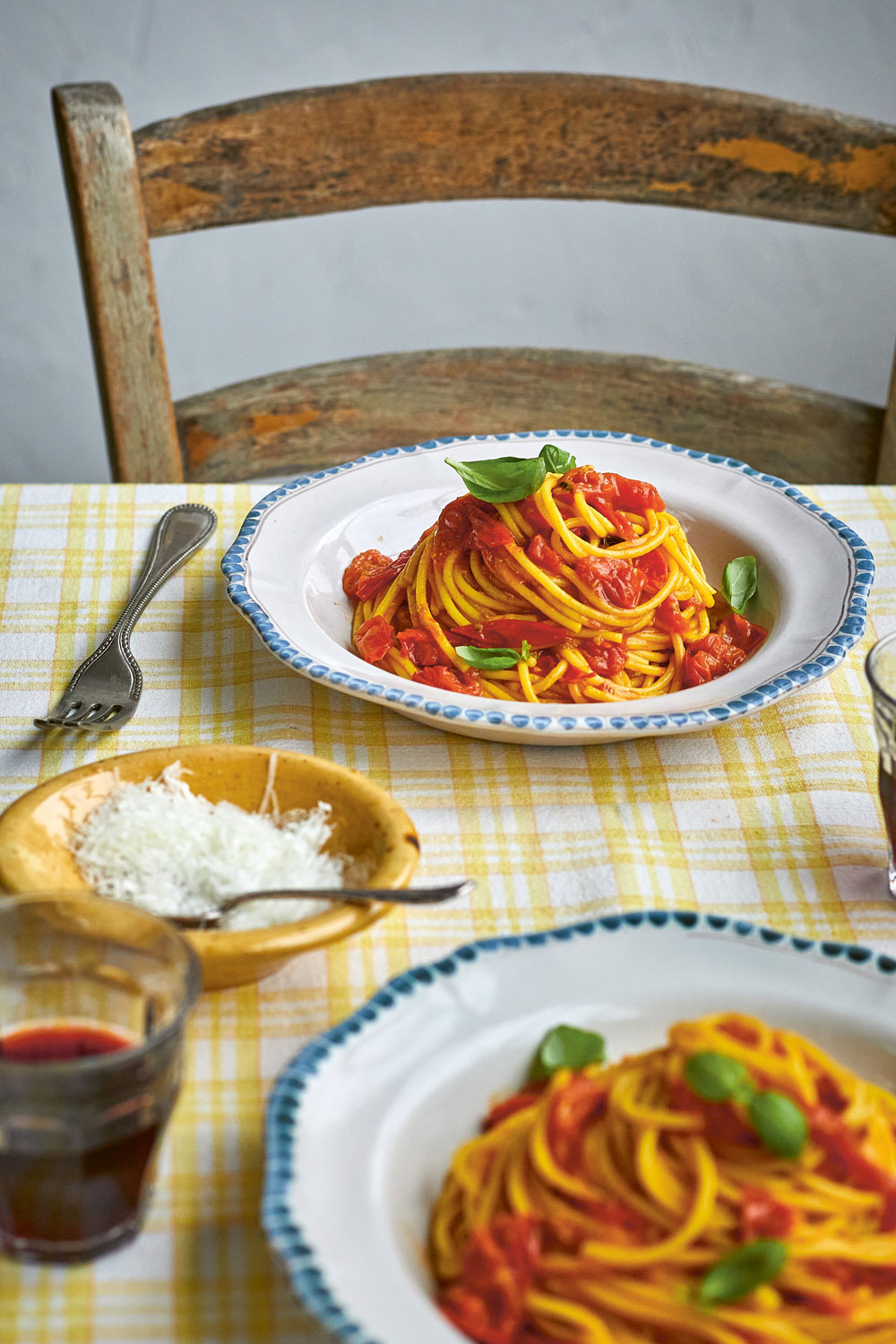
Spaghetti al Pomodoro e Zafferano
Tomato and Saffron Spaghetti
‘So many people over the years have asked me, “What’s your favourite pasta?” It might be surprising, but really it’s a simple spaghetti al pomodoro! This version of this simple dish also has a touch of saffron, which adds a subtle but beautiful aroma that marries perfectly with the rest of the sauce. The quality of the ingredients here is really important. They must be at their best if you are to get an incredible result. If you can, buy the best-quality extra virgin olive oil you can afford and bronze drawn dried pasta. As this is a summer dish, make the most of the tomatoes during or at the end of the season, when they are sweetest.’
Ingredients:
Serves 2
- 2–3 tablespoons olive oil, plus extra for drizzling
- 1 large garlic clove, lightly crushed
- 500g (1lb 2oz) sweet baby plum tomatoes, halved
- 10g (1/3oz) basil, leaves picked, plus extra for garnish
- 100ml (scant 1/2 cup) water
- 200g (7oz) spaghetti
- 1/2 teaspoon ground saffron
- 25g (1oz) pecorino or Grana Padano cheese, grated, plus extra to serve
Method:
- Bring a large saucepan of water to the boil, ready to cook the pasta.
- Heat the oil in a large frying pan or saucepan over a medium heat. Add the garlic and cook for 1–2 minutes. Ensure the garlic infuses the oil but doesn’t burn.
- Add the tomatoes and season with a good pinch of salt. Stir in the half of the torn basil leaves and cook for 2 minutes.
- Add the water to help the tomatoes soften, then cover the pan and let the sauce simmer for 10 minutes, stirring occasionally, until the tomatoes have broken down to create a chunky sauce.
- While the sauce is simmering, salt the boiling water and cook the spaghetti according to the packet instructions, or until al dente.
- When the pasta is almost ready, remove the garlic clove from the sauce, place it on a board and mash it into a purée, then place it back in the sauce. Add the saffron, stir well and cook for a further 2 minutes.
- Use tongs to transfer the spaghetti to the pan with the sauce. Increase the heat to medium-high and toss the spaghetti in the sauce to coat it evenly. If the sauce is too thick, add a splash of the pasta water to loosen it. Remove the pan from the heat, sprinkle over the cheese and the remaining basil, then drizzle with oil and stir well once more.
- Serve the spaghetti straight away with more cheese and basil, if desired.
TOP TIP
You can also blend the sauce until smooth after adding the saffron if you prefer a velvety tomato sauce.
Live To 100 Minestrone
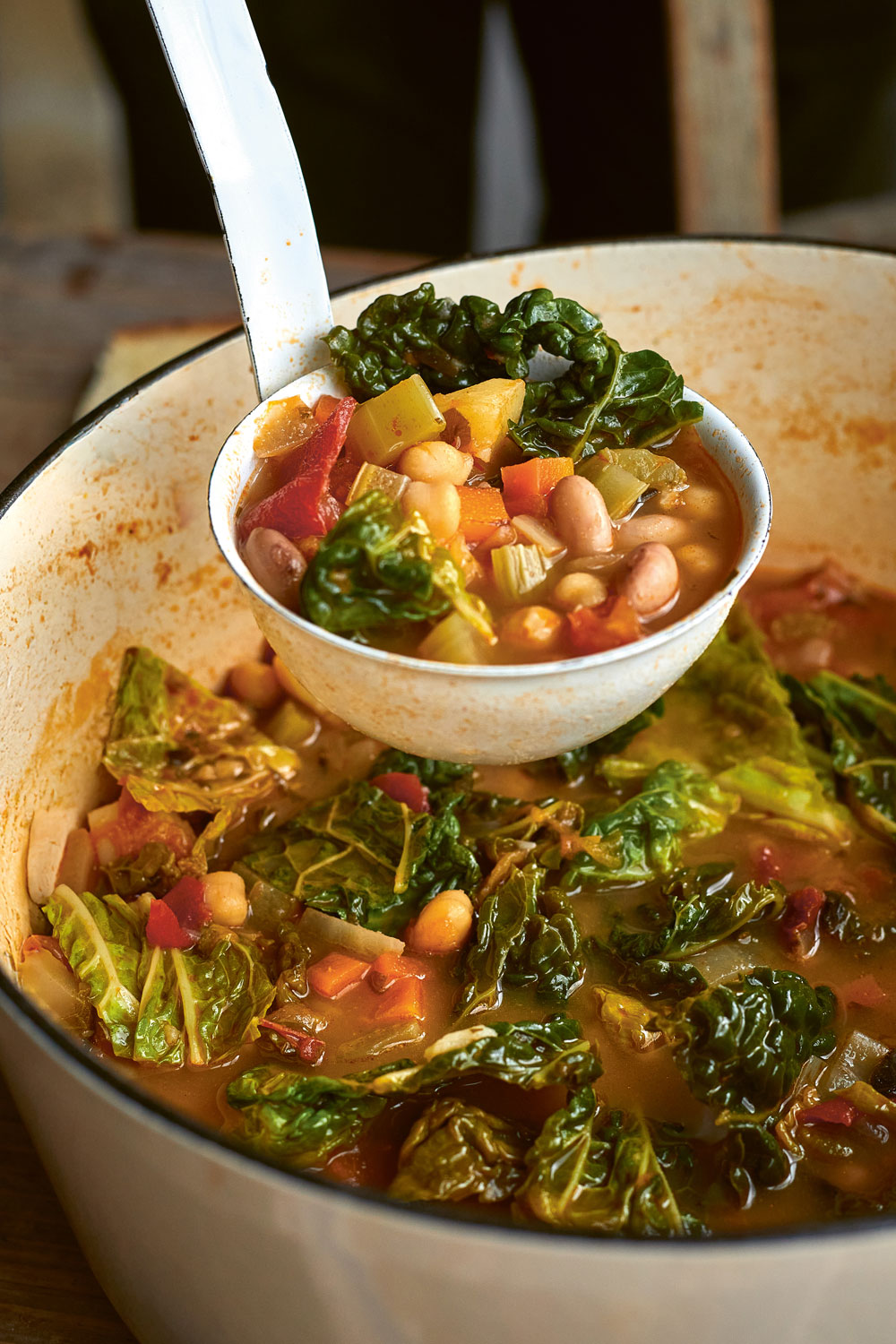
‘Minestrone is a big deal all over Italy, but the most famous minestrone comes from Sardinia. For many years, this comforting and delicious dish was the main meal in Sardinian households, and our grandparents ate it almost every day. This might sound boring, but actually the recipe would vary depending on what was available and what was in season. Minestrone is a great example of why Sardinia is one of only five ‘blue zones’ in the world and why people here are more likely to live to 100 years old. It’s a simple, accessible dish, packed full of seasonal vegetables and legumes. Even today, minestrone is still something that we eat very often. My advice would be to use my recipe as a guide but try to make it seasonal and make it your own, just like we do in Sardinia. Swap things in and out – if you prefer to use different pulses or different greens, you can try chard (silverbeet), cavolo nero (lacinato kale), courgette (zucchini), cauliflower … the list goes on.’
Ingredients:
Serves 4
- 100g (3 1/2oz) dried borlotti (cranberry) beans
- 100g (3 1/2oz) dried chickpeas (garbanzo beans)
- 1 onion, roughly diced
- 2 celery sticks, chopped into 1cm (1/2 inch) cubes
- 1 large carrot, peeled and chopped into 1cm (1/2 inch) cubes
- 2 tablespoons extra virgin olive oil, plus extra for drizzling
- 2 garlic cloves, finely chopped
- 3 sun-dried tomatoes, finely chopped
- 15g (1/2oz) basil
- 15g (1/2oz) parsley, finely chopped
- 3 large tomatoes, roughly chopped (or halved if using small tomatoes)
- 1 large potato, peeled and chopped into 2cm (3/4 inch) cubes
- 4 large Savoy cabbage leaves, tough stalks removed and roughly chopped
- 40g (1 1/2oz) pecorino, grated, or 4 tablespoons Pangrattato (see below)
- Fine sea salt and freshly ground black pepper
Method:
- The night before, wash the beans and chickpeas in cold water. Place them in a large bowl and cover them with fresh cold water; they will expand as they soak, so make sure the container is large enough and there is plenty of water. Cover the bowl and leave them to soak for at least 12 hours (or longer – check the packet).
- The next day, drain and then rinse the beans and chickpeas thoroughly with fresh water. Set aside.
- Place a large casserole dish (Dutch oven) or ceramic pan over a medium heat.
- Add the onion, celery, carrots and olive oil and cook for 8–10 minutes, stirring occasionally. Now add the garlic and sun-dried tomatoes and cook for a further 2 minutes. Tear the basil leaves and stir them in along with the chopped parsley and cook for another minute. Next, add the tomatoes and potato, give everything a stir and cook for a further 2 minutes, or until the tomatoes are starting to soften. Add the drained beans and chickpeas and a good pinch of salt and pepper. Cover with water and bring it to the boil. Once boiling, reduce the heat back to medium, cover and cook for 1–1 1/2 hours, or until the beans and chickpeas are soft. If needed, top up with water so that the vegetables are always submerged.
- Once the beans and chickpeas are cooked, add the cabbage, cover and cook for a final 10 minutes. Taste and adjust the seasoning before serving.
- To serve, use a slotted ladle to divide the vegetables, beans and chickpeas equally between serving bowls, then pour over the warm broth. Sprinkle with cheese or pangrattato and drizzle over some olive oil.
TOP TIPS
If you want to save time or you are making this at the last minute, you can swap out the dried pulses for 250g (9oz) tinned borlotti beans and 250g (9oz) tinned chickpeas. If using tinned, add them along with the cabbage.
Sometimes we also add fregula or small pasta shapes towards the end of the cooking time, along with some extra water.
Eat Like a Sardinian by Francesco Mattana is out now (Murdoch Books)