


Opinion: The Nutritional Profile Of Regeneratively Grown Food Might Surprise You
By
3 months ago
We know how food is grown. We don't have a consistent way to measure what that means for what ends up on our plates. Vitagri, a new independent body of farmers, scientists and nutritionists, is trying to change that – and its early findings are more nuanced than the organic-versus-conventional debate suggests.
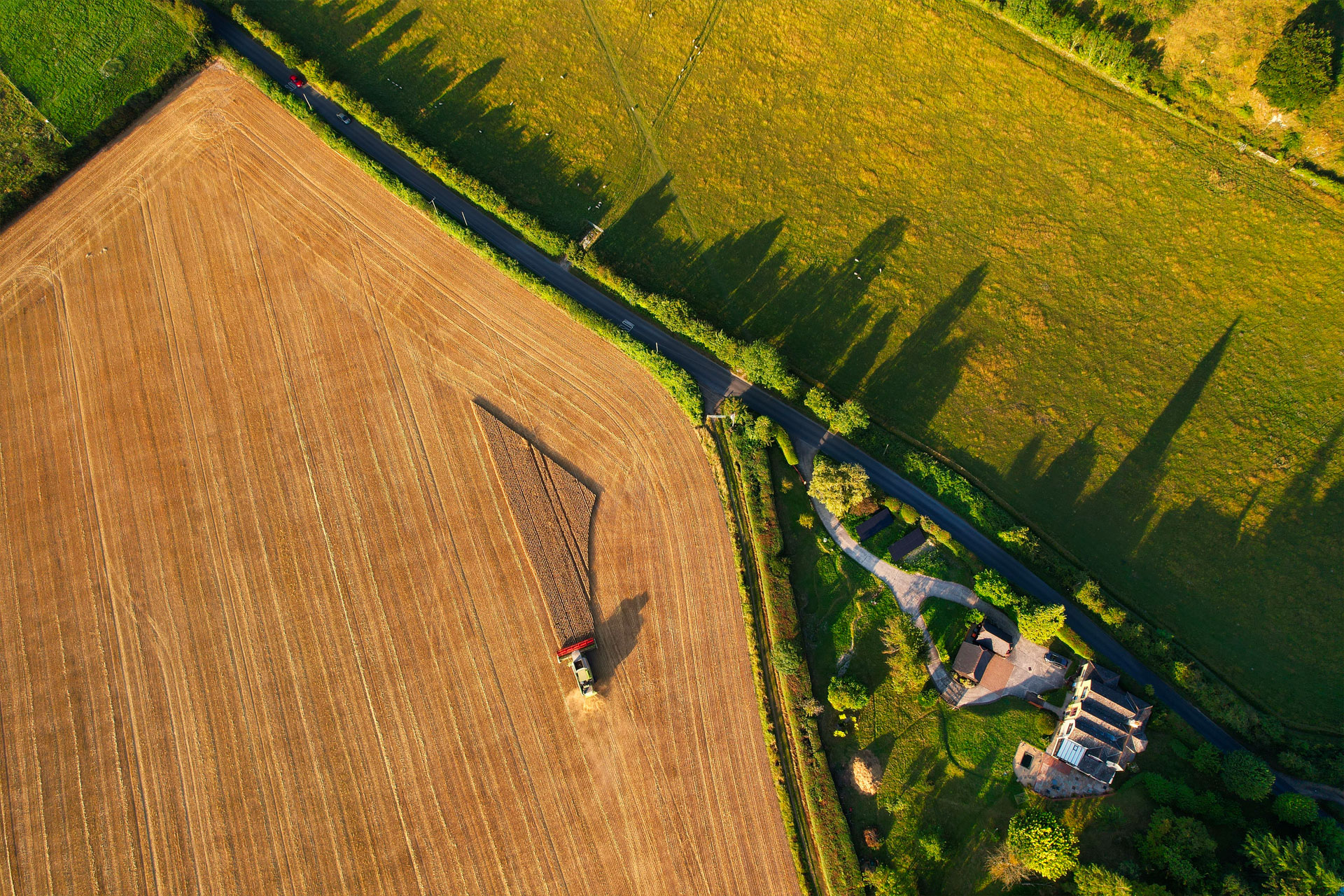
We’ve woken up to the reality that the practice of conventional, intensive farming – and its associated use of chemical fertilisers, pesticides, insecticides, and industrial machinery – encourages vast biodiversity loss and heavily contributes to climate change. More farmers are moving to natural means of farming, i.e. growing food with regenerative farming principles, that work with nature as opposed to against it, and on some farms, the result has been that biodiversity has received a much-needed boost.
Though the western world may call it ‘regenerative agriculture’, natural farming has been around for centuries in countries like Japan and India; this style of farming improves waterways (and watersheds), improves the health of soil and replenishes the natural environment. It does so by using methods including cover cropping, crop rotation, no tillage, mob-grazing, and the planting of wild-flower margins which attracts natural pollinators like bees to the farm. Rather than using heavy chemicals, these farmers apply biostimulants and bio-fertiliser, which, while on the outset expensive, turns a positive yield after an average of six years.
These practices are key to building healthy soils that bring reliable, resilient crop yields, a process that can then take 3-10 years depending on the start state of the soils. The hope behind this is that regenerative agriculture could deliver food that’s significantly more nutritionally valuable. Yet it is only recently that we have had the ability to measure many aspects of the nutrition of crops, from micronutrients to phytochemicals in a comprehensive manner.
There’s no shortage of interest in the idea of ‘high-nutrition foods’, as an emergent food category; M&S launched its Nutrient Dense range in January 2026. More broadly, the Good Food Bill is currently before Parliament, DEFRA’s agricultural policy is actively evolving, and the NHS faces significant financial strain amid diet-related chronic diseases. The annual regenerative agriculture festival, Groundswell, attracted over 10,000 attendees in 2025, including the first ministerial and Royalty appearances at the event, which undoubtedly reflects a farming community already shifting towards soil-health-focused management.
Enter Vitagri, an independent organisation which was co-founded in 2025 by Nuffield Farming Scholars David Rose and Rob Ward. It comprises of UK farmers, scientists, nutritionists, and healthcare professionals, and has received a grant from the Frank Parkinson Agricultural Trust to research how soil health affects nutritional quality.
‘Our main conclusion [that we hope to model and verify in the next year], is that the type of farming – i.e. whether it’s regenerative, organic or conventional – does not directly influence these nutritional differences,’ says Rose. ‘Instead, soil biology remains the key factor that determines the nutritional quality of farm-produced food. This does not imply that any specific farming system cannot enhance nutrition; both regenerative and organic farming focus on improving soil biology, which supports this goal. Essentially, any farming practice that boosts soil biology is likely to result in better nutritional quality in the crops.’
By 2027, Vitagri aims to have created predictive models for key food categories which would provide the first infrastructure of its kind in the UK connecting soil health to nutritional quality. The team hopes this will have political repercussions, says Dr Tom Pearson, representing the medicine and human health team at Vitagri. ‘For the government, a comprehensive understanding of nutrition offers a solution to multiple critical challenges,’ he explains. ‘Whether reducing the burden of diet-related diseases on the NHS, supporting the transition to climate and nature friendly agricultural practices, and ensuring national food security amid increasing climate vulnerabilities.’
However, we don’t want nutrient dense food to contribute to Britain’s current nutritional divide whereby this specific food group is more expensive and less available on the open market. The sociological and cultural implications of nutrient dense food are under-researched, and there is an urgent need for food policy to improve economic access to adequate nutritious foods, and to prevent further entrenching social inequalities. There’s no point in producing and ultimately identifying good, highly nutrient dense food if not everyone can access it, or indeed, afford it. Is consuming ‘better’ food, perhaps only desirable and achievable for the most affluent demographic of our society?
Nonetheless, Vitagri’s vision is that we will one day ‘live in a world where farming and nutrition are integrated,’ says Ward. A good hope, and one to be seen when Vitagri’s predictive modelling is released next year.