


What’s It Like For Farmers During The UK Heatwave & Drought?
By
2 months ago
Jenny Jefferies reports from her family’s regenerative farm
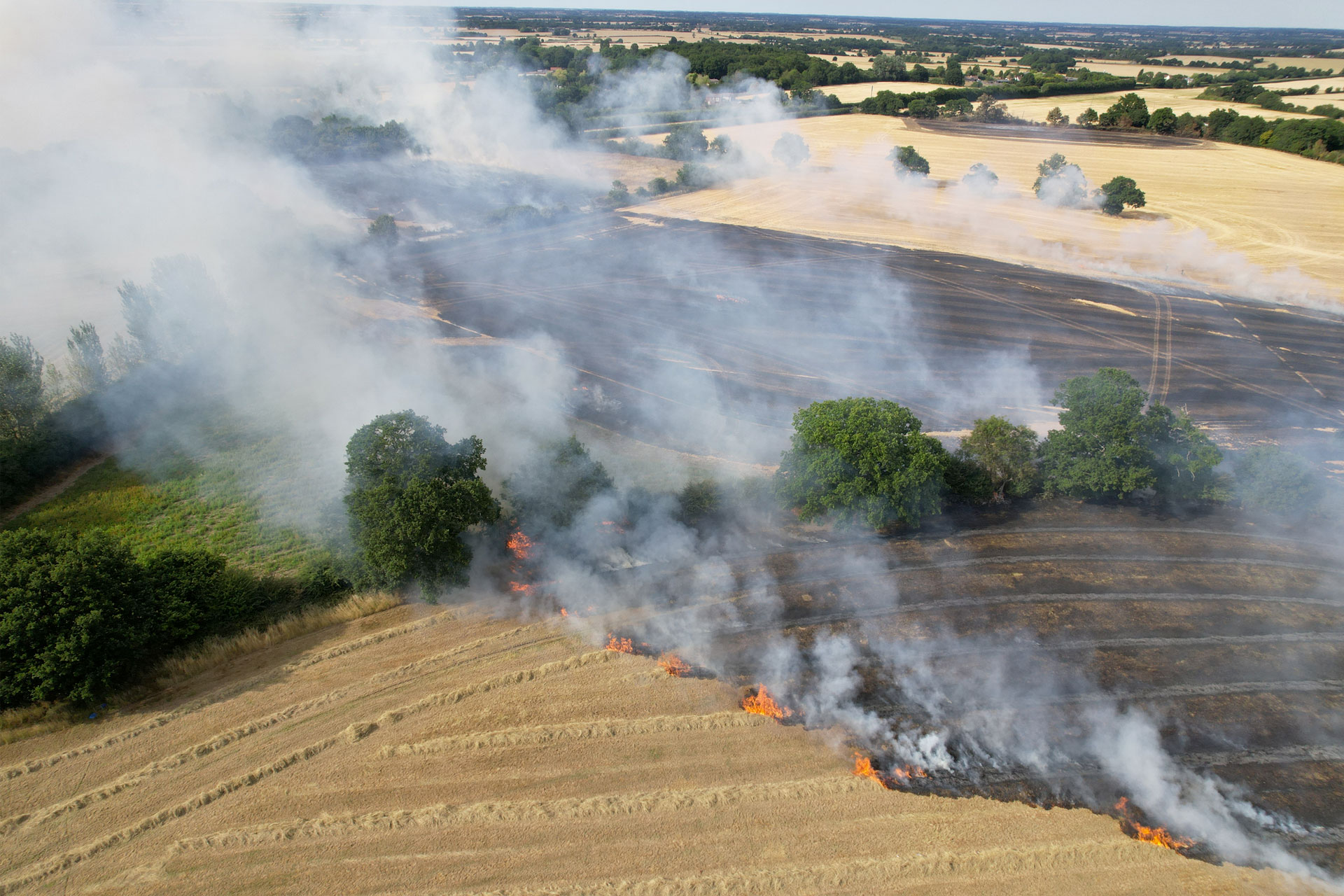
Record breaking heatwaves have sent almost three-quarters of England and the whole of Wales into drought, resulting in significant stress on UK farms. But, says Jenny Jefferies, the damage was being done to arable crops before the majority of people knew there was a drought. As Prime Minister Andy Burnham calls an emergency Cobra meeting to discuss the situation, our farm-based writer shares her thoughts.
On A UK Farm In The Heatwave
Contrary to what you’d imagine, the drought currently being reported in mainstream media has had little effect upon arable crops. Harvest has come earlier – even more so than the infamous harvest of 1976 – but more damage was happening peacefully and quietly back in April and May whilst we all enjoyed the warmth and sunshine. Farmers, of course, knew this before everyone else.
Crops Yields Are Falling – Or Worse, Failing
While our crops bolted in May, prematurely, other issues are arising only now. For example, the lack of rainfall in those months has caused fertiliser on crops to fail. Fertiliser needs rain to be washed into the ground so it’s within the soil solution, for the roots to absorb it.
On our family farm in south-west Cambridgeshire, my husband John Jefferies was just one of many farmers who decided to keep the fertilizer in the shed. ‘The heat and drought stress has caused crops to rush through its growth stages and bolt to seed head. Some of the seed heads were remarkably small,’ he tells me.
Fortunately, when the June showers came, our farm received 55mm of welcome rain in that cooler first 10 days of the month. This ‘was an absolute life saver,’ he says, ‘as without that rain the crop would have come to a big fat zero. Just another 20mm of rainfall in late June (around the 25th) would have turned the harvest into a very good season. But that rain did not come, so we now have a crop that is about 25 percent below what was expected.’
Showerings Cider, a Somerset-based fine cider producer, has reported that it expects its harvest to halve this year, falling from 2,000 tonnes of apples to just 1,000. It says that the next two weeks are critical to prevent further losses.
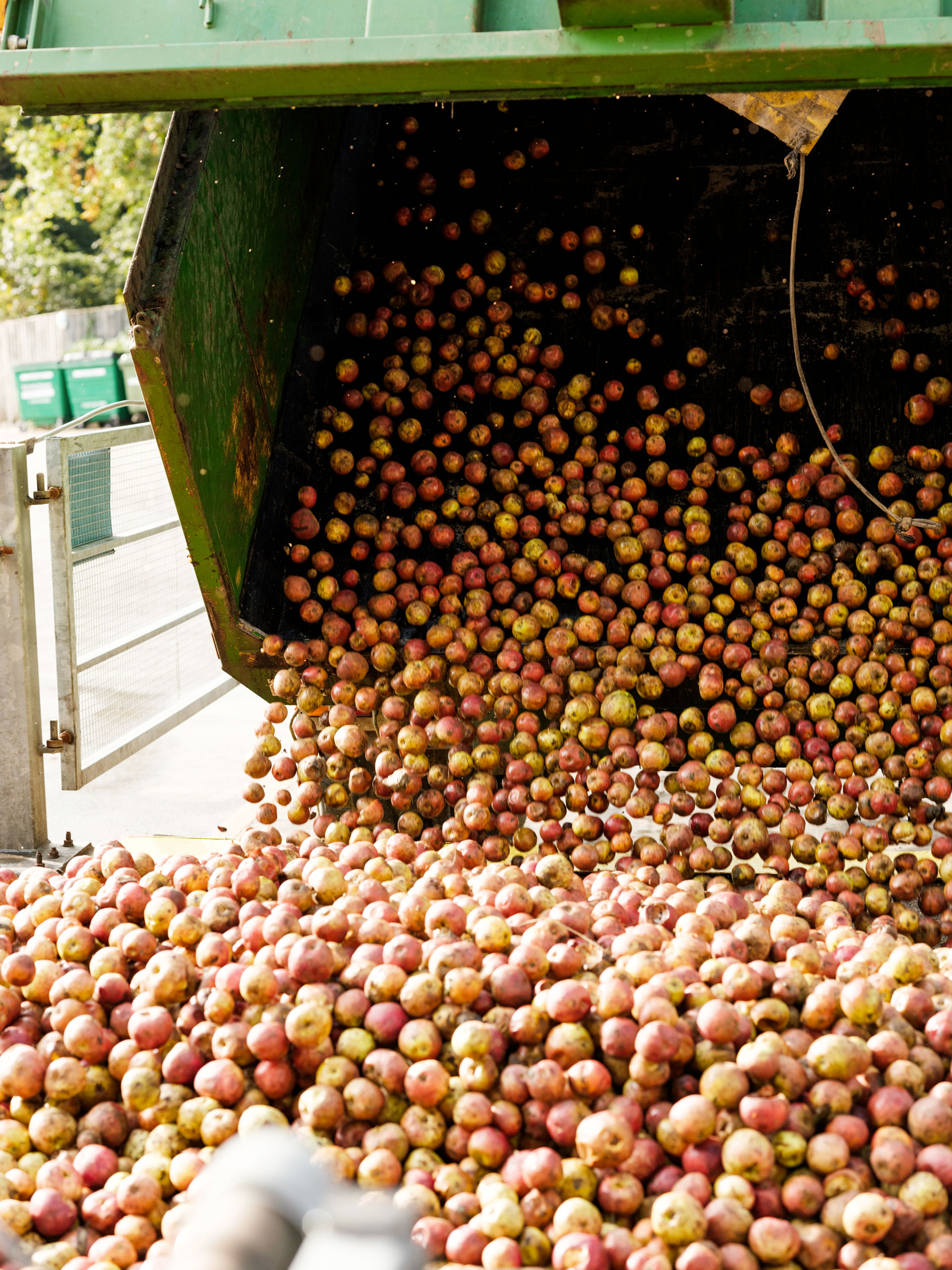
The apple harvest for UK cidermakers is expected to be disappointing this year, warns Nick Showering
The Water Problem
Many people seem to have come to the conclusion that water irrigation is the answer. Richard Hirst, an arable farmer on the Norfolk Broads, cautions: ‘It’s not just about water – it’s the way those [catchment] areas are managed and whether they’re properly grazed, and how they reduce the grazing stocking densities. That’s actually what will have a big impact. It’s easy to blame water.’
‘And the crop still might not fulfill its potential,’ says Hirst.
To add to this, not everywhere can straightforwardly irrigate. Could we irrigate? ‘You’re on heavy clay soil, growing cereals,’ points out Hirst, ‘I don’t think there’s the money in cereals to justify that investment. If you’re building a 100 million cubic meter reservoir, for example, I think that will be north of £750,000. And then you’ve got to get the infrastructure to get the water around the farm; you could end up spending £1 million. Irrigation is not necessarily the answer across the whole country.’
Nor is it an easy ride after receiving an irrigation licence. ‘The Environment Agency, and their wisdom, have got to review all licenses. Apparently, there may be this perceived rare weed of some description, or orchid, that’s much more important to protect than supplying good, wholesome food to the British public,’ Hirst explains. ‘So, the quantity of water that you’ve got available is really at the whim of the Environment Agency. And they can just withdraw your license or reduce your license at any time. I understand there has to be some environmental protection, but at what point do some areas of wildlife become more important than producing food?’
Is Regenerative Farming More Resilient?
Regenerative farming practices do help, but perhaps only up to a certain point. ‘I think regenerative farming can help reduce the exposure of farming businesses to geopolitical and climate volatility,’ says Joe Redman, a UK agronomist. ‘Relying less on artificial inputs, reducing operation passes and allowing the soil to provide more is an obvious win. However, getting to that point isn’t easy and relies on a whole system approach, pulling together livestock integration, strong varieties, a varied rotation and organic matter applications to be truly regenerative.’
The Damage In Our Soils
In the face of such fierce heat and severe drought, the extra water held in the soil is soon used. Dr. Lizzie Sagoo, a soil scientist at ADAS, an agriculture and environment consultancy, explains that, ‘whilst we can see the impact of drought on above ground vegetation, we can’t so readily see the impact on our soils – but it is happening.’
‘Soil microbial life slows down,’ she says, ‘with larger soil macro fauna like earthworks moving deeper into the soil to find moisture,The first rain after a drought can cause a flush of soil microbial activity, and soil life will begin to recover as the soil wets up. However, it is entirely possible – or even likely – that the increased intensity and frequency of droughts that we are now seeing caused by climate change will, over time, cause measurable longer term changes in soil microbial communities.’
Soil will play an important role in increasing resilience to drought. Sagoo agrees. ‘A healthy soil high in organic matter can hold more water and better support plant growth during drought,’ she echoes. ‘It is also important to remember that bare soil heats up and dries out much quicker than soil that has plants growing in it. So, we need to focus on maintaining healthy soils, rich in organic matter, and minimising the amount of time our soil is bare.’
The Climate Crisis Continues
There does seem to be a direct correlation between prioritising the health of our soils and mitigating climate change, but the specific extreme weather patterns are catastrophically influenced by man’s obsessive and destructive use of fossil fuels. Professor Ed Hawkins MBE – the climate scientist made famous by his 2018 viral ‘warming stripes’, which visualise two possible futures for English summers: high emission or net-zero – says that ‘British society, and the infrastructure on which we depend, is built for the climate of the past, not the climate of now, and certainly not the climate of the future.’
‘Hotter global temperatures caused by greenhouse gas emissions, primarily from burning fossil fuels, are already making extreme weather events in the UK more severe,’ he says. ‘Drought conditions are then exacerbated because hotter temperatures dry out the soils more quickly, and also increase the risk from wildfires. Heavy rainfall is becoming more intense, increasing the risk of flooding. Heatwaves will continue to get hotter and hotter and hotter until we reach global net-zero greenhouse gas emissions. Any delay in reducing emissions results in worse climate consequences for the UK and around the world.’
Frankly, this data, coupled with the deeply disturbing and shocking images of wildfires around the world, are a blatant clue that we must immediately re-evaluate our political and life priorities. The climate emergency, as illustrated by the nation-wide droughts we are currently experiencing, must not be underestimated if farmers are to continue to help feed the global population. As it stands, we do still have a choice about what future we want to live in. But for how long?
Jenny Jefferies is a farmer, author and columnist based in Cambridgeshire. Follow her @jennyljefferies