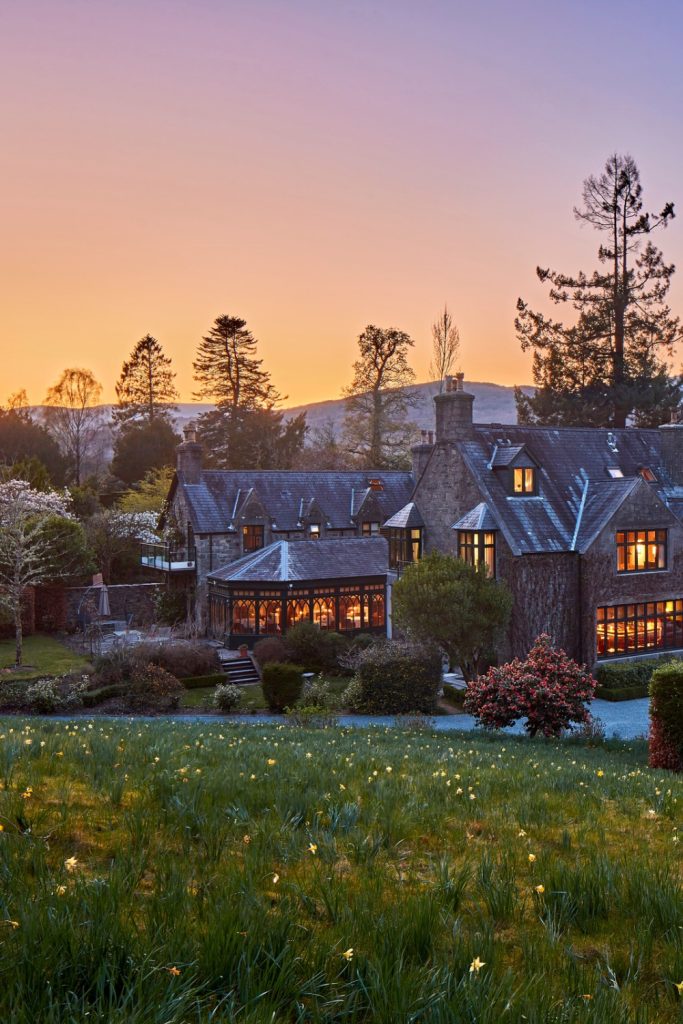



Where The World Runs Out: Inside El Nido, Palawan
By
3 months ago
Harriet Compston discovers Palawan’s far-flung El Nido archipelago – where barefoot luxury meets conservation-led design across the sister islands of Pangulasian and Lagen
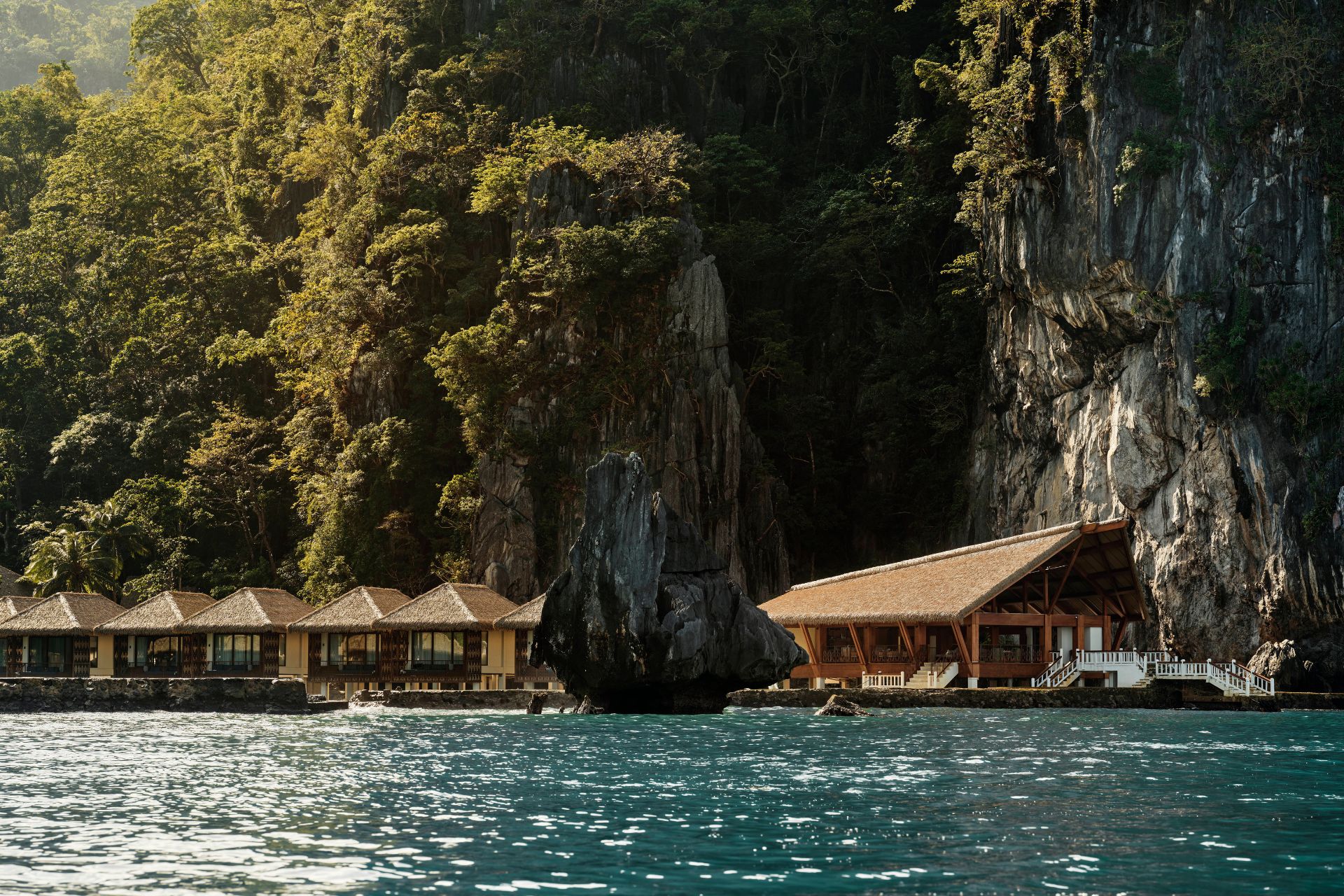
Dinosaur. Helicopter. Human face. My guide Dean and I debate the shapes of the giant limestone cliffs jutting out from the emerald water. We are making the 25-minute boat journey from the mainland to private island resort Pangulasian in El Nido, an archipelago of 45 islands in Palawan – known as the ‘last frontier’ of the Philippines. It’s only a 90-minute flight from Manila but feels like another world.
El Nido was historically known for edible nests produced by swiftlets, Dean tells me. Highly prized as the key ingredient for China’s famous bird’s nest soup, they were once heavily harvested until populations declined. Today, many nesting sites are protected, and tourism continues to grow, spearheaded by homegrown El Nido Resorts. The company has pioneered eco-tourism here since 1982, when two Japanese divers founded the first resort, Miniloc. Pangulasian followed in 1993 and Lagen Island in 1998. Soon the luxury grew; El Nido Resorts now sits under Ayala Hospitality, part of the Philippines’ largest and longest-standing family-run real estate groups, whose portfolio includes Raffles Makati and the forthcoming Mandarin Oriental in Manila.
Pangulasian: A Private-Island Sanctuary
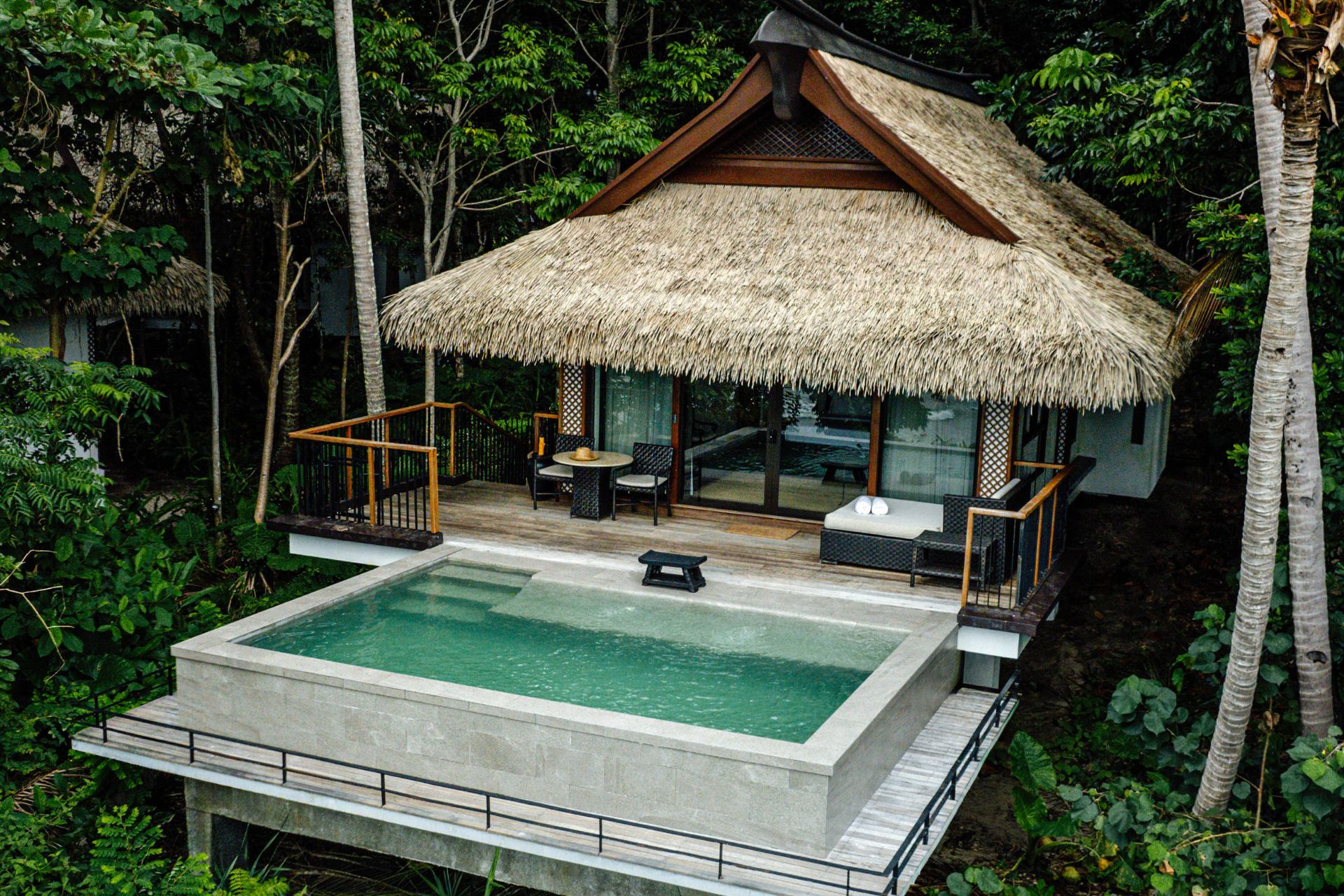
Despite its corporate backing, Pangulasian has retained its remote beauty. We moor at the jetty before I am shown to my beach villa, one of 24 lining the sand. The light and airy interiors are pared back, with a generous veranda overlooking the beach. There are also four Kalaw villas, six pool villas and eight canopy villas, tucked into the lush foliage.
Later, I swim off the beach to discover the coral-strewn sea. It’s been hard fought for, explains Dean, who is part of ongoing efforts to control the coral-eating crown-of-thorns starfish. Fortunately, it’s working. A neon blue damselfish flashes past, a pufferfish drifts by, and a zebra angelfish flickers through. A clownfish hovers in its anemone.
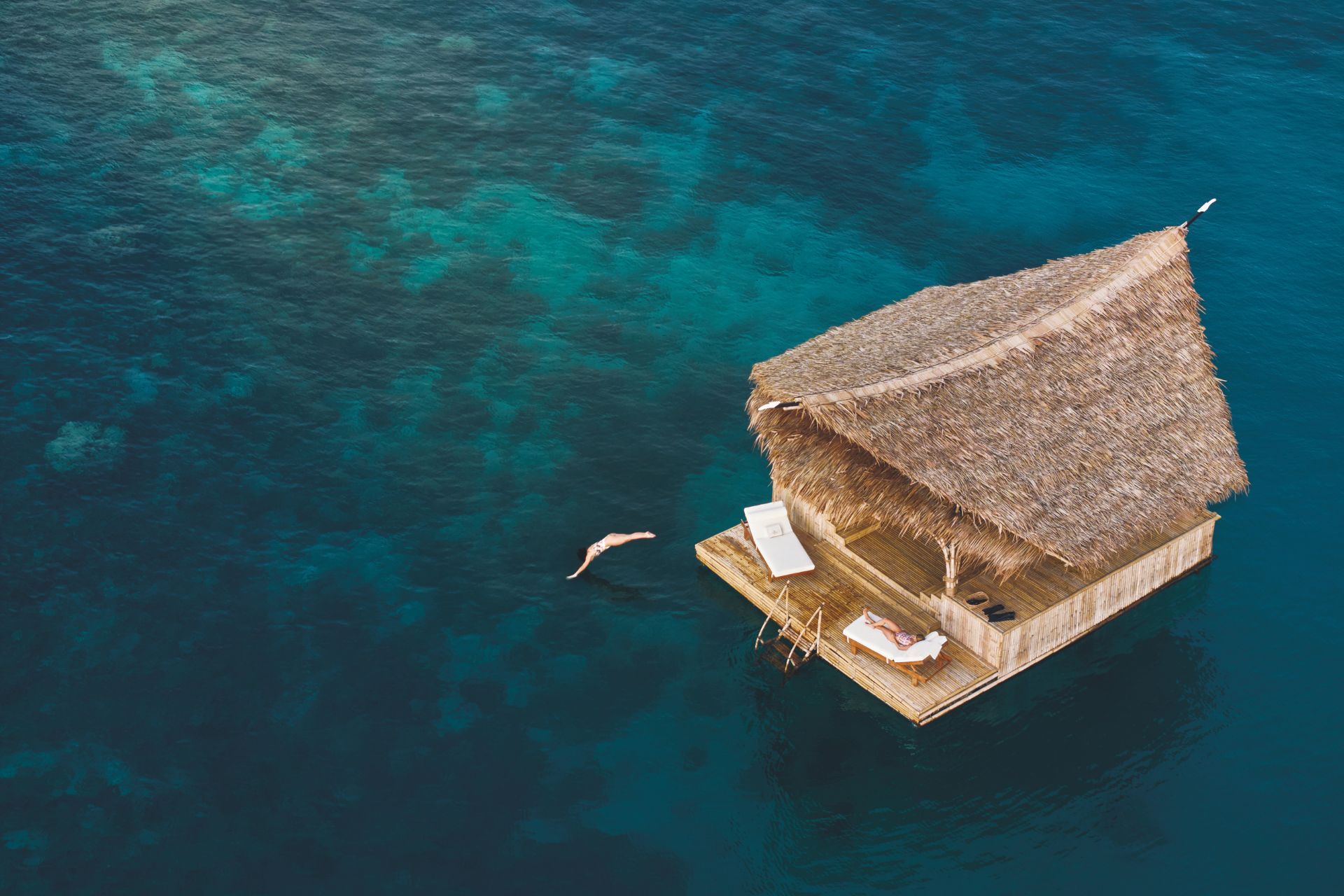
The next day, we head to the ‘S’-shaped Snake Island beach, where I take in the small fishing village squeezed among the mangroves. We island-hop on, picnicking on the boat before gliding into caves, stalagmite-lined and pitch black but for a single shaft of light.
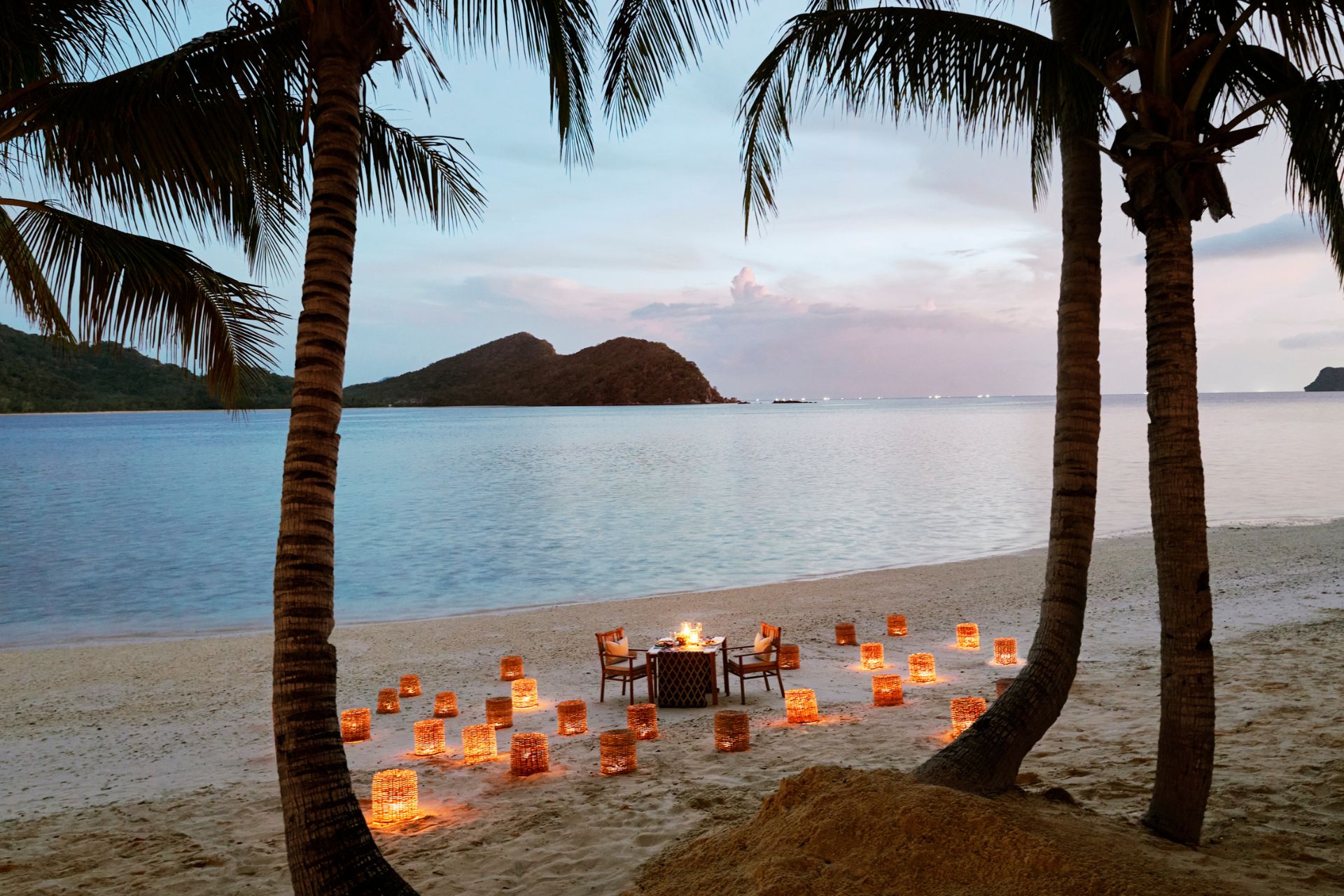
Dusk is falling as we return to Pangulasian. The sun burns pink, purple and orange; fishing boats pop up one by one as the stars appear. Dinner follows on the beach: velvety lobster bisque, seafood kare-kare and calamansi meringue pie. It’s magical – and topped off with a blood moon.
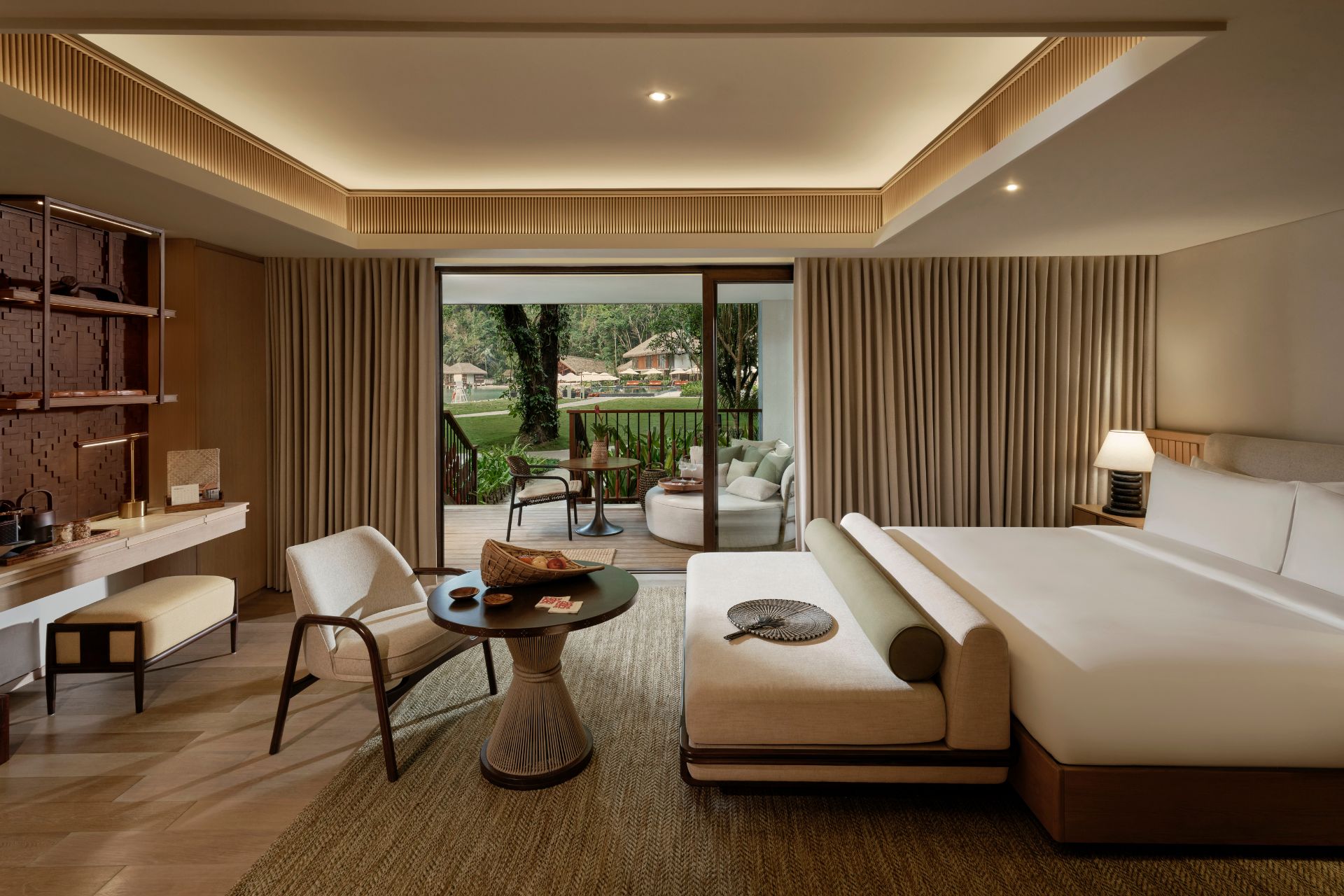
Lagen Island: Craft, Design And Dreamweavers
The following day, we make the 20-minute boat ride to sister property Lagen Island. Fresh from a year-long renovation, the hotel reopened in December 2025, with a new design centred on Palawan’s three main crafts: the woodcarving of the Tagbanua tribe’s bangka fishing boats, weaving, and terracotta pottery.
We putter into a cove of 18 overwater villas, stilted and thatched in a nod to the traditional Filipino bahay kubo houses. A thick napuro forest unfolds behind. Joanna, the general manager, greets me in a beautifully embroidered shirt, crafted by T’boli artisans from Mindanao. They are known as ‘dreamweavers’, whose delicate patterns are said to be inspired by dreams sent by the goddess Fu Dalu.
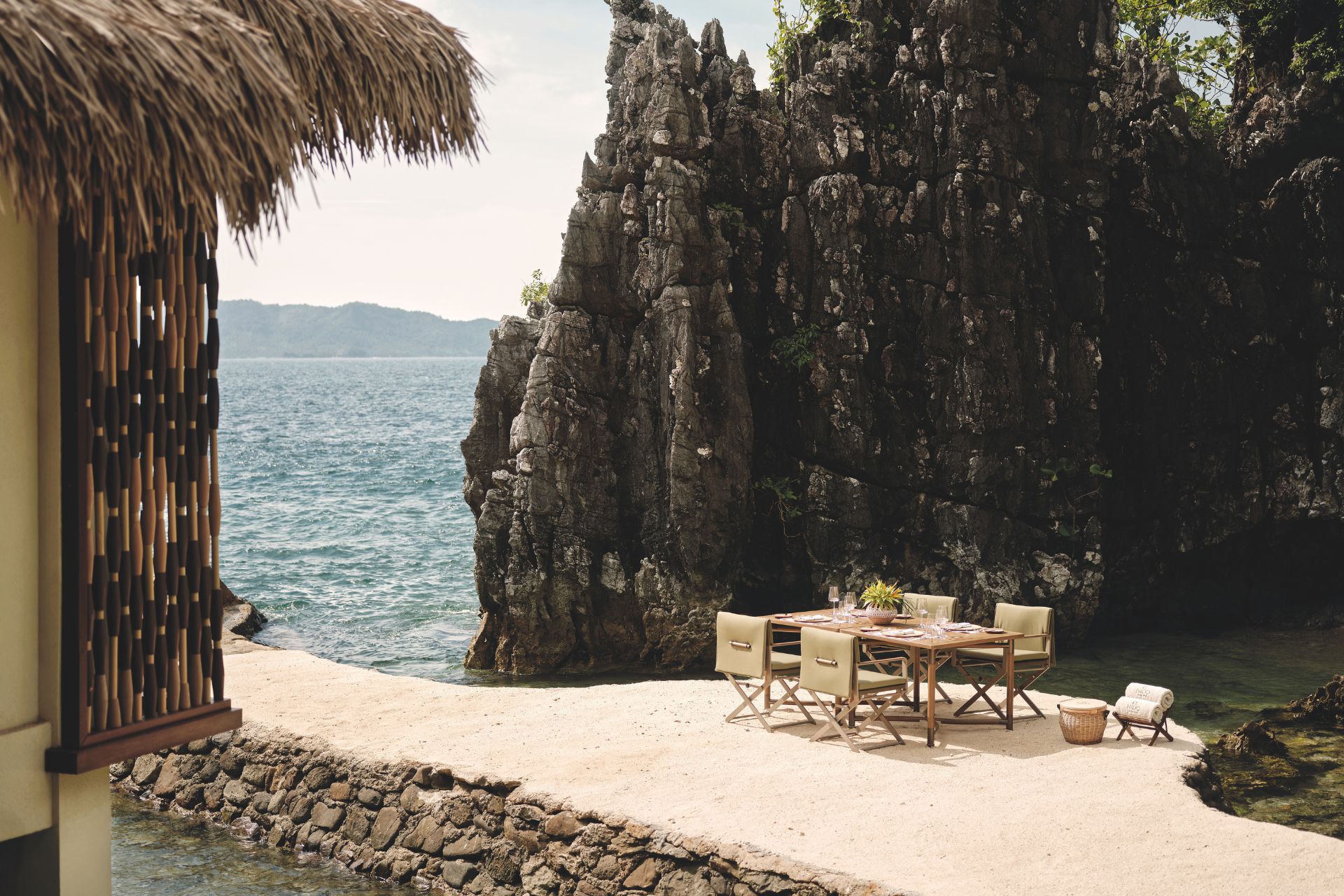
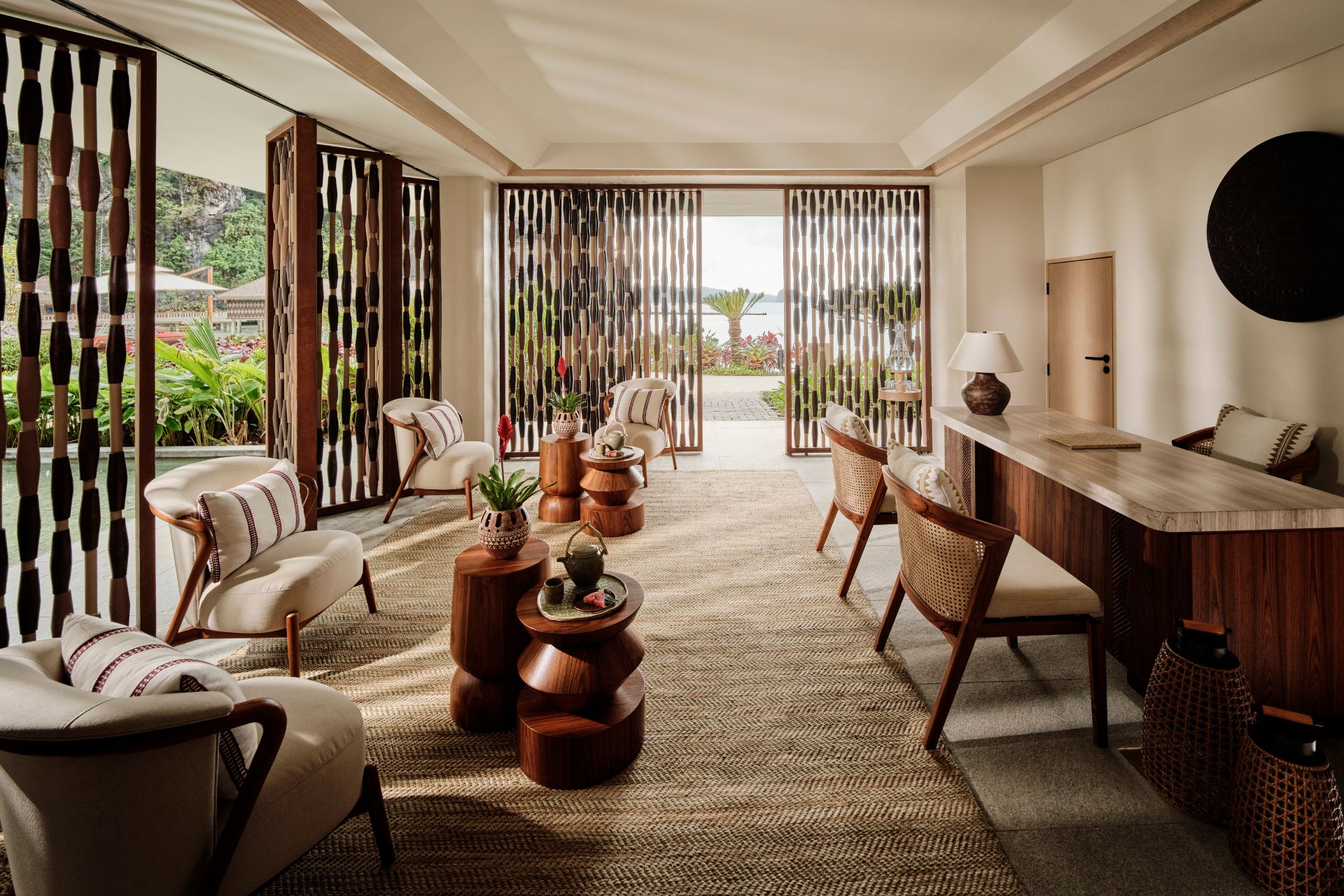
In my villa, the design narrative continues: a grid of handmade, cylindrical ceramics lines the exterior, inspired by the geometric giyanggangan pattern of Palawan’s Batak tribe. The look inside is contemporary, with cream walls, pale woods and a coral stone bathroom. Rattan-woven table legs and lamp bases add texture, alongside turquoise cushions decorated with indigenous motifs. Floor-to-ceiling glass windows lead out to the balcony, suspended over the water.
Gian Lopez, sustainability officer at El Nido Resorts, explains only 12 acres of the island’s 766 acres have been touched. He points to the 24 forest rooms and suites, moulded around the trees. ‘We build with nature, not over it. We don’t want to disturb any of the natural habitat so we can protect what is already here.’
Indeed, nature is abundant. Sunbirds hover over tropical hibiscus, bougainvillea spills across walkways and a Palawan hornbill calls overhead. I lunch on lobster roll in the ocean-facing restaurant, which is dramatically decorated with bold local artwork. Two children swim in the pool before scampering off to play ‘biodiversity bingo’ with one of the Lagen team. Eighty percent of the staff are local and know the flora and fauna inside out.
Lagoons, Spa And Filipino Rituals
Over the next few days, I explore El Nido’s lagoons. I squeeze through limestone crevices to reach the ‘secret lagoon’ and kayak through gaps in the rock to the ‘small lagoon’, an inlet of crystal-clear turquoise water, surrounded by soaring cliffs.
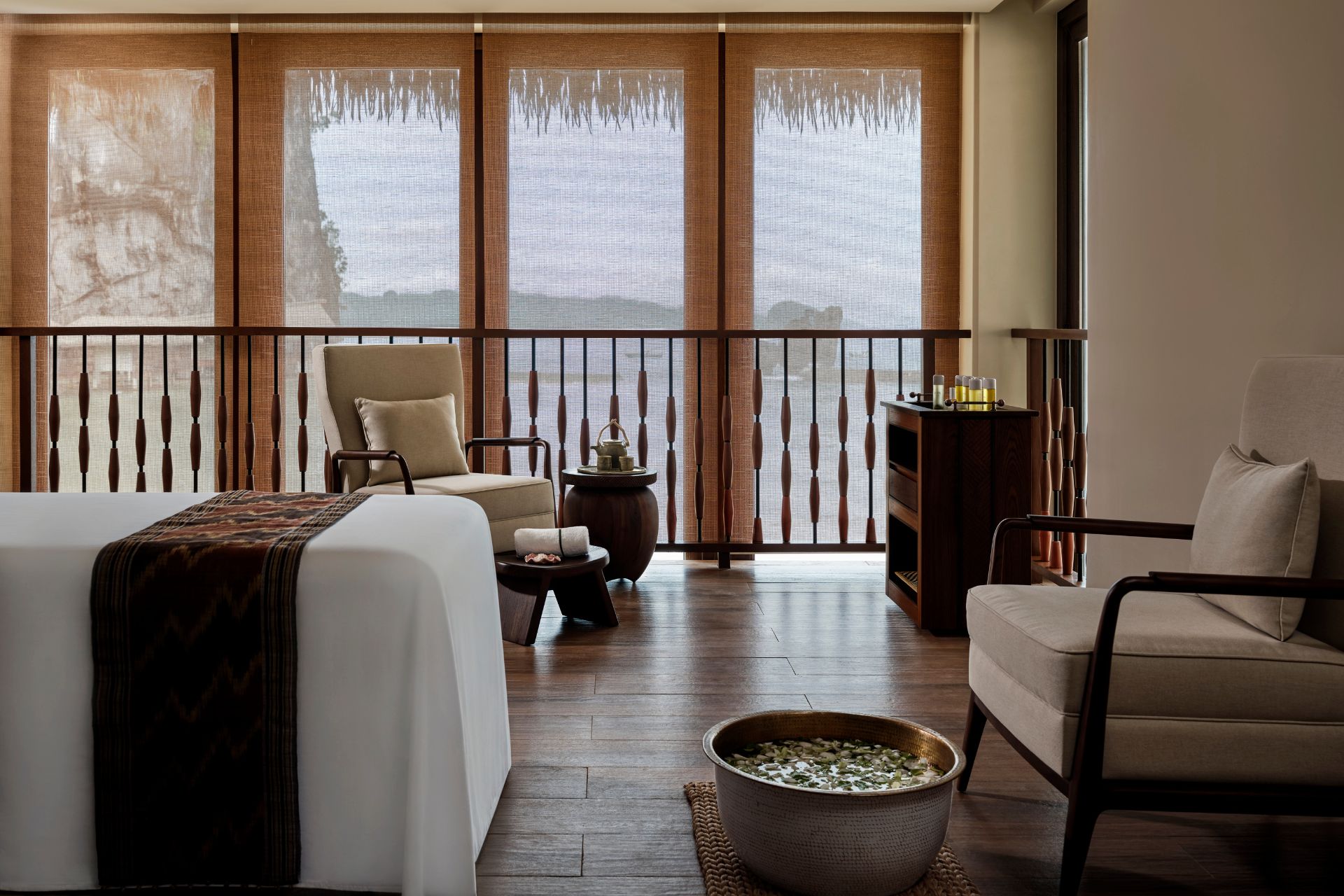
Back at Lagen, I try the newly designed spa, once again set on stilts with large glass windows maxing out the sea view. Here, ESPA treatments sit alongside the more local, including healing sessions inspired by the rituals of the Babaylan (pre-colonial Filipino shamans). But I plump for the relaxing traditional hilot massage, which uses hot stones to rebalance body energy.
In the evening, after a cocktail made with lambanóg (a Filipino distilled palm liquor) in the new beach bar, I settle down for dinner at the water’s edge. Lopez has told me to look out for a civet cat; I don’t spot one, but the chorus of cicadas and candle-lit beach is beautiful. So is the ginataang alimango (braised mud crabs in a creamy coconut-lime milk).
The next morning, I rise early to learn where the crabs came from, heading with Lopez to meet 54-year-old fisherwoman Gina. I watch her step into the mangroves barefoot to pull out the three traps, each containing one crab. She ties the claws and puts them in a plastic bucket for us to take back to the kitchen.
As we return to Lagen, Lopez says: ‘We want to turn people into storytellers and to make nature that story. Once you understand why something is here and how it belongs, that’s where the conversation about conservation begins.’ I certainly leave with lots of stories to tell and well aware this paradise needs protection.
Book It:
Harriet’s return flights from London to El Nido had a carbon footprint of 2,894kg of CO2e (ecollectivecarbon.com).