


Meet The Sussex Pottery Recreating The Bayeux Tapestry In Clay
By
1 minute ago
986 years on, the Battle of Hastings is being refought in a Sussex pottery studio
As the Bayeux Tapestry makes its historic return to Britain, one family-run Sussex pottery has spent decades stitching the same story into clay. Ahead of the British Museum’s blockbuster exhibition, Rye Pottery unveils a striking new addition to its hand-painted 1066 collection.
Rye Pottery’s Bayeux Tapestry Collection Gets A New Figure
There is a unique magic to the medieval town of Rye. With its cobblestoned streets and historic hilltop citadel, it feels like a place where history lingers in the air. It is entirely fitting, then, that just minutes from the battlegrounds of 1066, a family-run artisanal business is pulling England’s heritage right out of the clay.
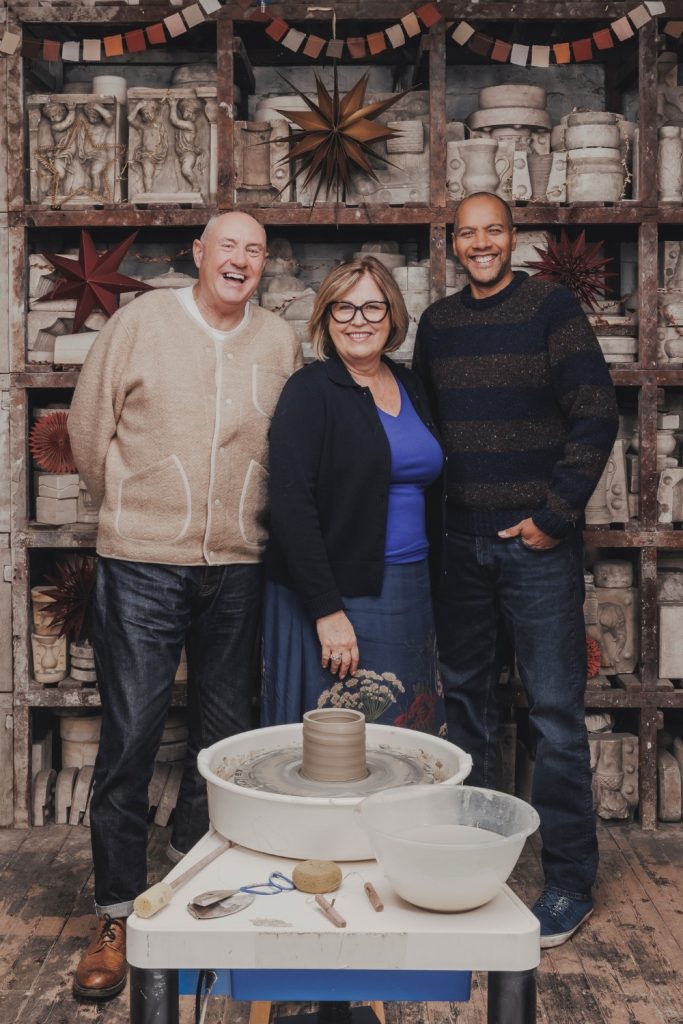
Step inside Rye Pottery, a design-led institution that has been perfecting its craft in Sussex since 1793. Run by the Cole family since 1947, with third-generation sibling duo Tabby and Josh now taking the helm, this rare gem bridges the gap between raw studio artistry and British heritage industry. As the legendary Bayeux Tapestry makes its monumental return to British shores for a blockbuster exhibition at The British Museum, Rye Pottery (an official partner) has expanded its renowned 1066 ceramic series with a striking, brand new sixth figure: the Saxon Shield Wall.
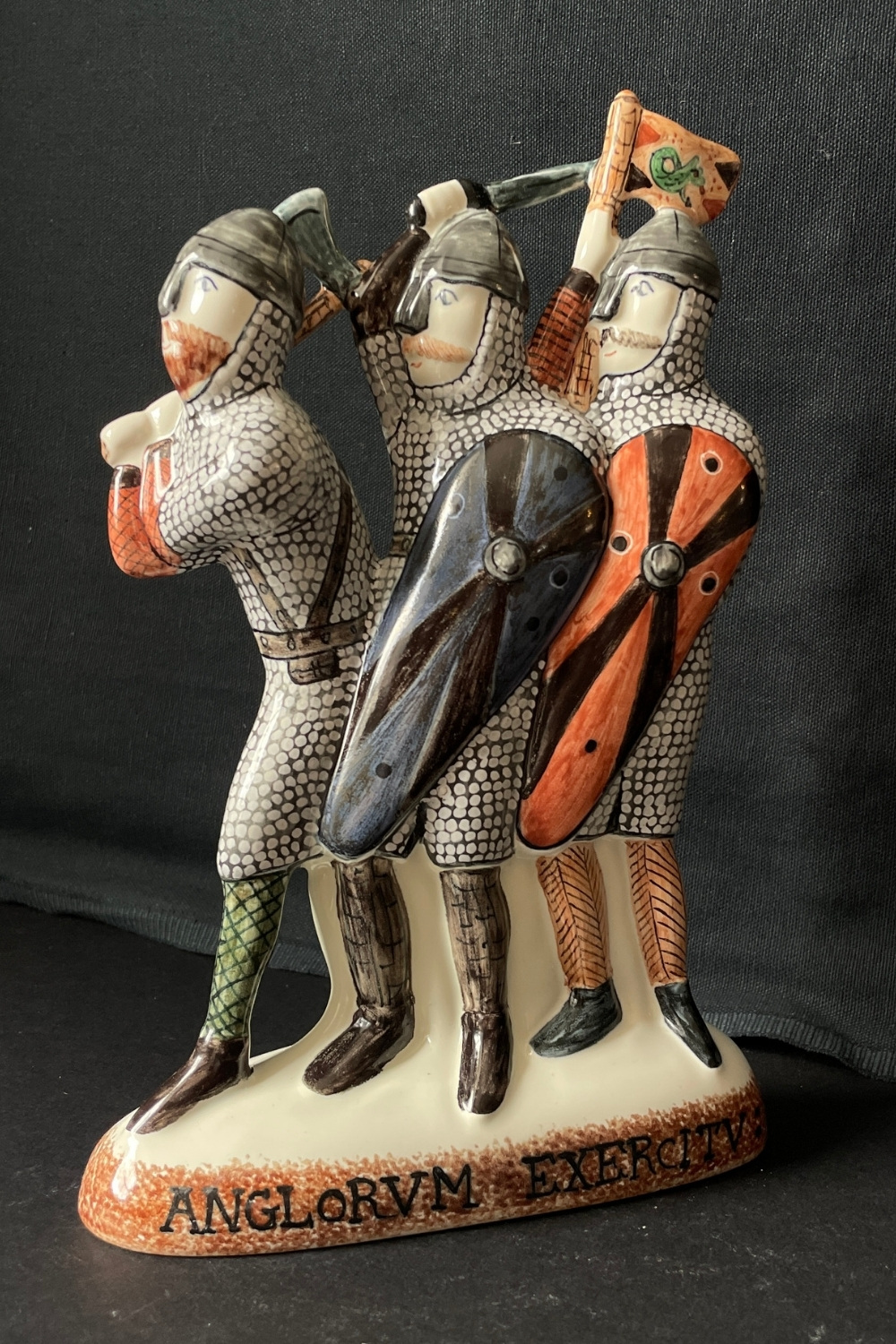
The Saxon Shield Wall
In an era of mass production, Rye Pottery remains fiercely dedicated to the slow, deliberate art of the handmade. It is one of just a handful of production potteries in the world that continues to produce everything by hand, using a 17th century decorating technique known variously as Faience, Majolica, or Delft. Every single ceramic piece that leaves the studio passes through a minimum of ten hand processes.
The journey begins with traditional slip-casting, where liquid clay is carefully poured into Plaster of Paris moulds. For the complex figures of the 1066 Collection, multiple individual clay elements are painstakingly joined to the main body by hand. After the first kiln firing, the pottery’s skilled team dips the figures in glaze before hand-painting each one individually, using freehand brushwork. Every piece is guaranteed to be a little different and totally unique.
‘Training in our technique takes a really long time and a lot of patience and determination,’ says Tabby Cole. ‘Everyone who works for us started as an apprentice and we have painters on the team who were taught by a decorator who joined just after WW2, so skills and techniques have passed on through the decades. Every piece, colour and paint brush is different and you have to learn how to manage all of that whilst painting upright. It takes a long time to build up that knowledge, understand how it applies to the different pieces and be able to repeat it consistently.’
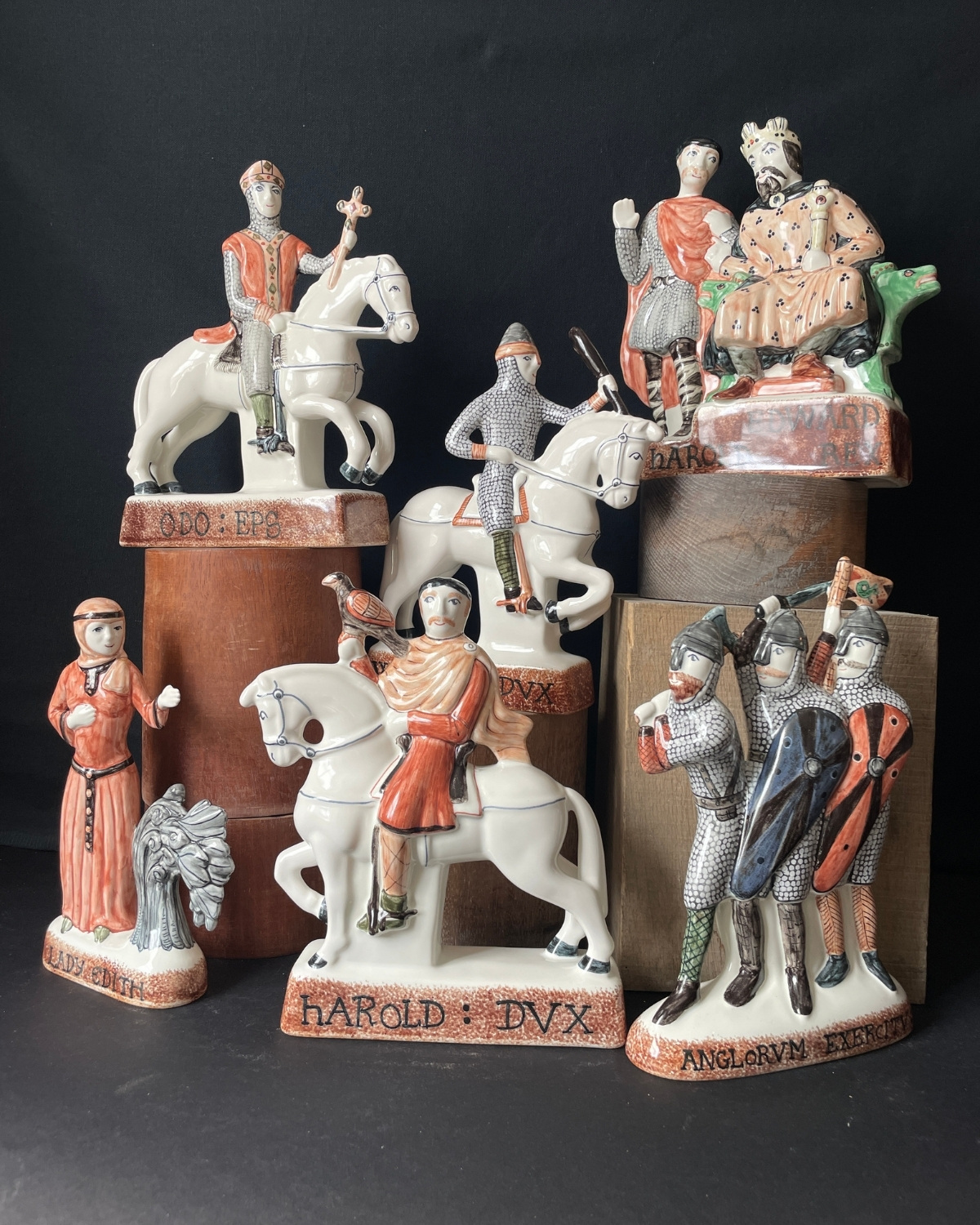
Rye Pottery’s Bayeux Tapestry collection
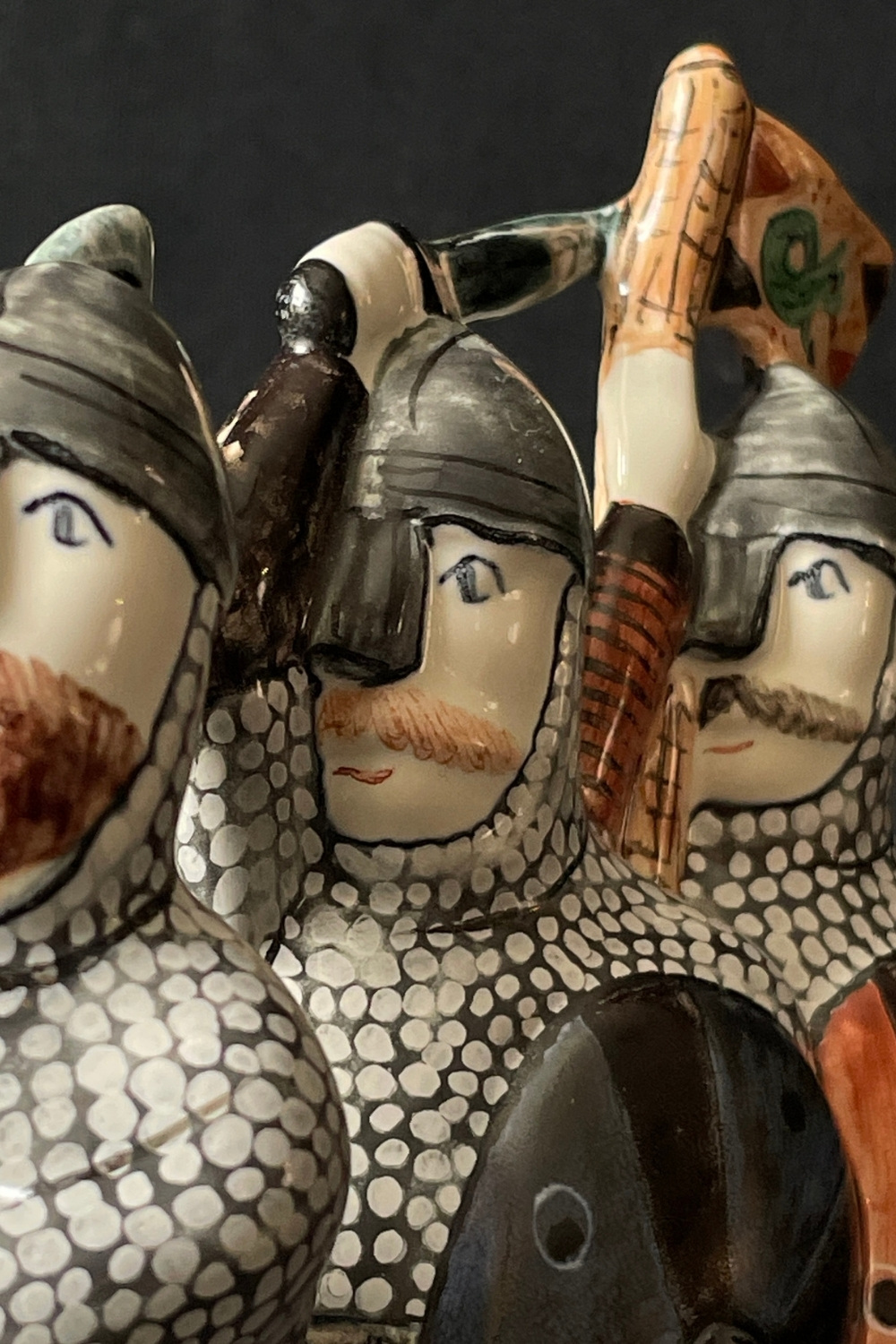
The newly introduced Saxon Shield Wall figure is a striking tribute to the resilient English defensive line at the Battle of Hastings. Intricately modelled by Tony Bennett (RCA), the 3D sculpture captures three Saxon warriors with a powerful sense of movement, whilst abstract tree tendrils in the background evoke the needlework of the original 70-metre tapestry.
The Saxon Shield Wall was a proven, famous 11th century Anglo-Saxon military tactic and formation, and the breaking of shield walls during the Battle of Hastings is highly studied in medieval military history. It is regarded as a significant contributing factor to the Anglo-Saxon loss on 14 October 1066, and a key turning point on the battlefield that day.
‘We wanted to include one of the vital but less discussed “characters” in this pivotal battle, the Saxon soldiers themselves,’ Tabby explains. ‘The base is inscribed with Latin lettering translating to “English Army”, serving as a poignant nod to the role and cost of ordinary people in war, something that is all too relevant still today.’
The Shield Wall proudly joins the existing, highly collectable lineup, also comprising: William the Conqueror, depicted in full battle mode astride his horse; Bishop Odo, the historic figure widely believed to have commissioned the original tapestry; Harold Godwinson, featured in an intricate ‘Hawking’ pose; Lady Edith, also known as Edith Swan Neck and one of the few women recorded in the history of the battle; and a detailed narrative vignette of Edward The Confessor with Duke Harold.
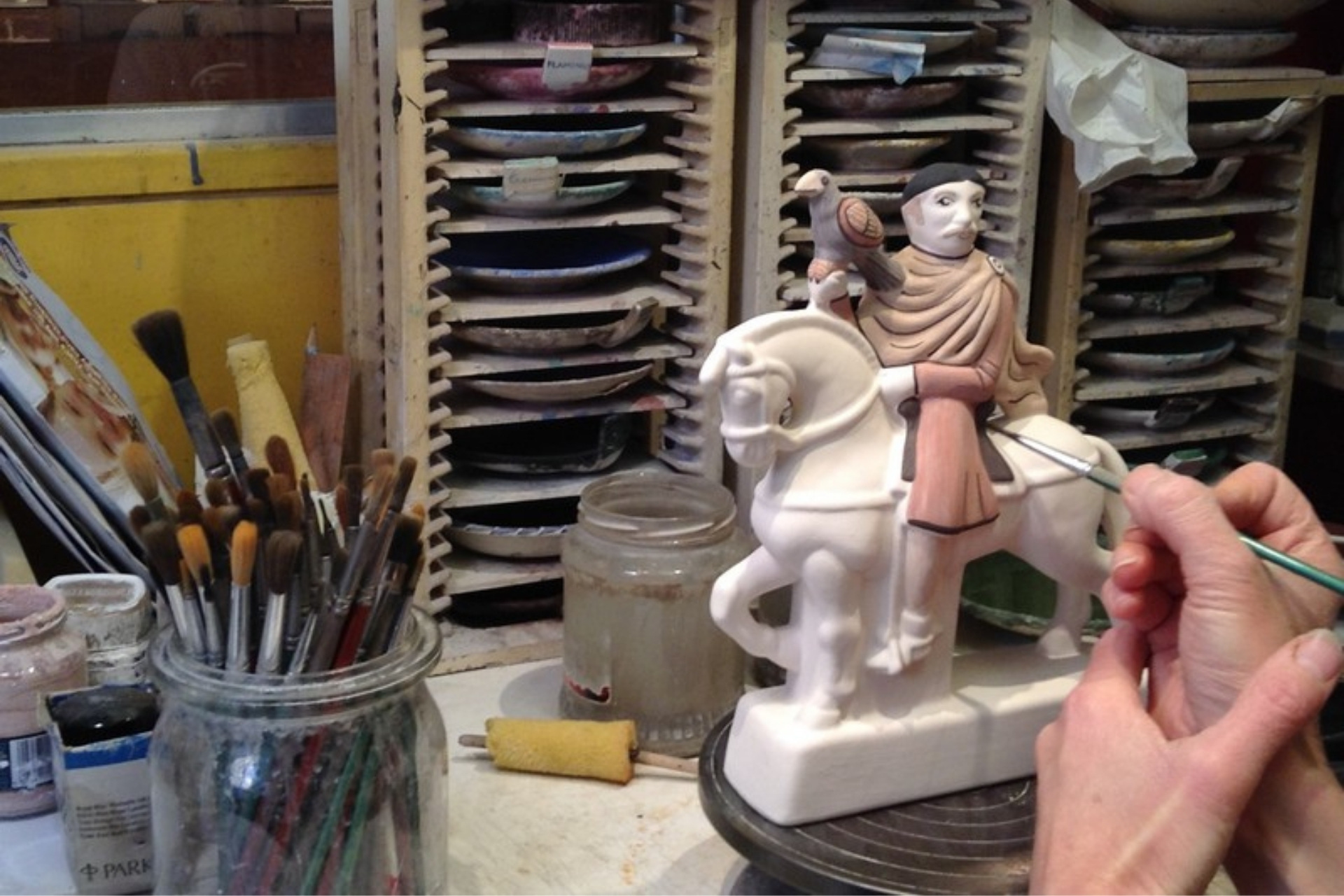
Behind the scenes on the collection
‘The collection has been popular since its launch in 2006,’ Tabby comments. ‘Because of our series based on characters from Chaucer’s Canterbury Tales, we have a dedicated collector base of medieval history buffs. We have also noticed a distinct uptick in interest after the Bayeux Tapestry’s trip to the UK was announced.’
Despite economic hurdles facing independent British craft businesses, from rising material costs to energy spikes, Rye Pottery continues to thrive, aided by its position in a vibrant town packed with independent shops. With the official British Museum collaboration underway and fresh, quirky lighting and animal design projects on the horizon, Rye Pottery is proof that traditional British craftsmanship is not just surviving. It is poised to make and commemorate history all over again.
Shop The Collection
The 1066 Bayeux Tapestry Inspired Collection, including the new Saxon Shield Wall, is available with free mainland UK P&P from ryepottery.co.uk and from the Rye Pottery showroom (6 Wish Ward, Rye, TN31 7DH), open daily.