


Toxic Gas, Raves & Razor Blades: Inside Tate Britain’s The 90s: Art And Fashion
By
1 hour ago
From YBA shock tactics to Alexander McQueen's beaded Joan of Arc gown, Edward Enninful's blockbuster captures the 90s collision of fashion and art – but mainstream culture vultures may leave wanting more.
The last time Hamad Butt’s Familiars went on show at Tate Britain, it didn’t go as planned. It was 1995, the work’s first institutional outing, and the installation – glass vessels filled with toxic iodine, bromine and chlorine – broke. The whole gallery had to be evacuated.
Thirty-one years later, it’s back on Millbank, taking up a third of the biggest room in The 90s: Art and Fashion, which opens to the public on Thursday. ‘That showing here is part of the mythology of the work, because it contains three different toxic gases,’ curator Jessica Vaughan said at the press view of the exhibition. ‘It broke when it was on show here in the 90s, and the whole gallery was evacuated. So we’re really excited to have it back.’ Hopefully this time it remains in one piece.
Butt made Familiars a few months before he died of HIV/AIDS-related complications, aged just 32. At its centre stands Substance Sublimation Unit, a ladder whose glass rungs hold iodine that, when lit, turns from solid to gas. To the left is Hypostasis, an arch of glass spears tipped with bromine – walk through it and you’d shatter them. To the right sits Cradle, a supersized executive desk toy: pull back one glass sphere and the momentum would smash the rest, releasing the gas into the room.
‘He holds fear and desire together in the same space,’ says Vaughan. ‘The thing that we most desire and are attracted to, actually, it’s the thing that causes us the most harm.’ A contemporary of the Young British Artists (the YBA), Butt is said to have influenced the likes of Damien Hirst – but having died at the peak of his career, he never became a household name. His return is one of the most captivating moments in the show.
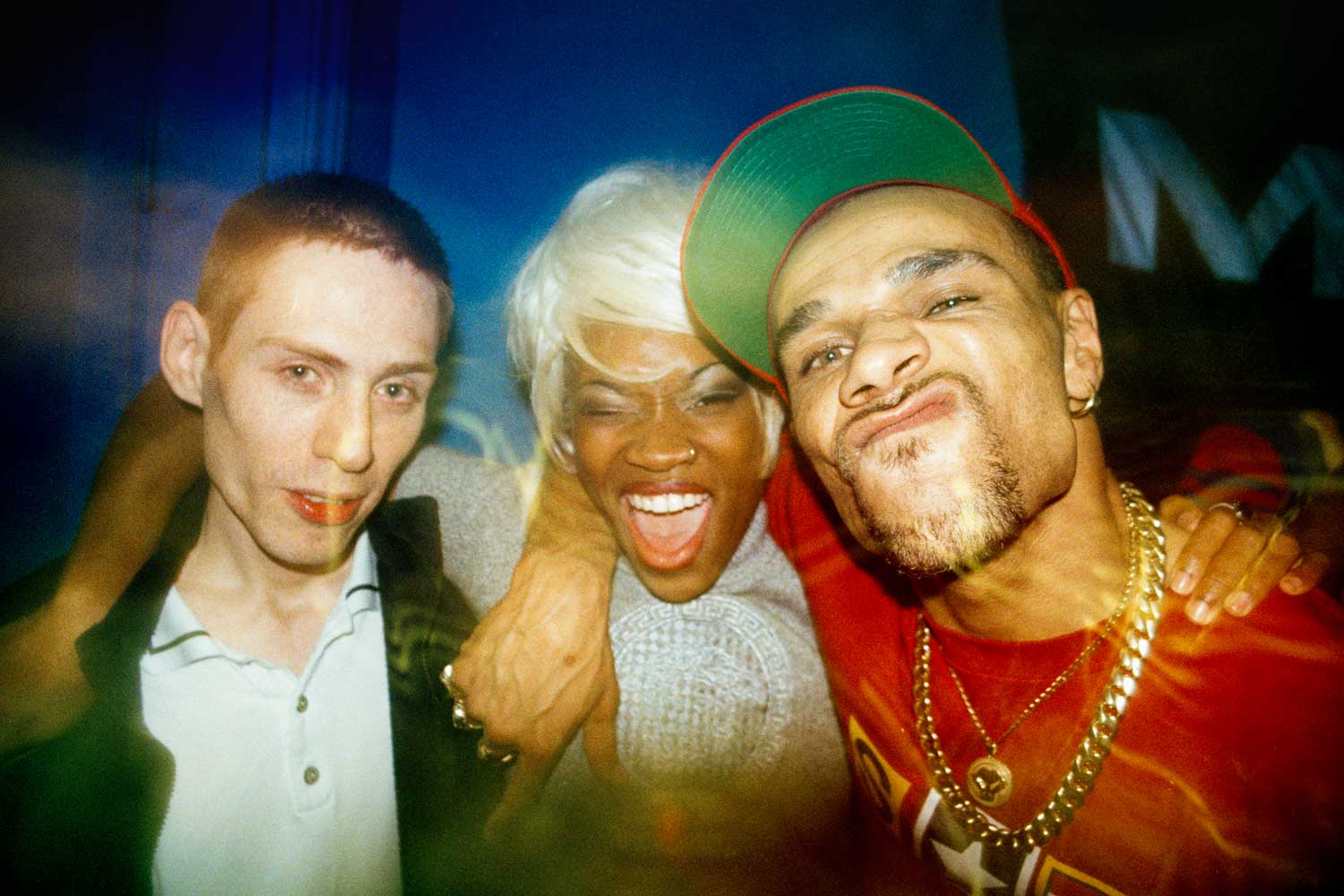
Eddie Otchere, Metalheadz Sunday Sessions in the Blue Note, Hoxton Square 1995-1996 © Eddie Otcher
Edward Enninful’s 90s
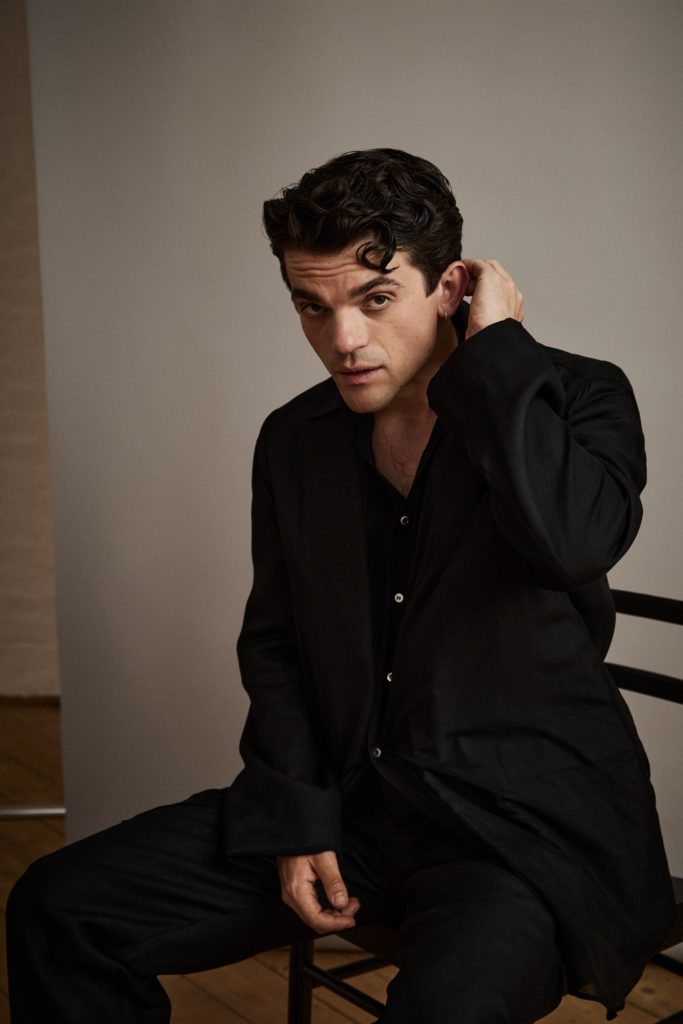
Billed as the first exhibition to explore the art, photography and fashion of the decade together, The 90s brings together more than 100 works by nearly 70 artists, photographers and designers. The idea came from Edward Enninful OBE, who lived it from the inside: he became the youngest-ever fashion editor of i-D at 18, and by 1998 was a fixture at Italian Vogue. He appears in the exhibition three times – the curators challenge visitors to spot him on the walls.
Tate Britain Director Alex Farquharson thanked Eninnful ‘for bringing the idea of the exhibition to us, which feels so timely’. Following Life Between Islands, Women in Revolt and the gallery’s 80s photography show, he said, The 90s ‘brings together artists most emblematic of the era, as well as those who were too overlooked at the time’.
The show is supported by McQueen, a fitting partner, since the late Lee Alexander McQueen founded his iconic house in London in 1992. ‘His work showed that fashion could be more than just a product or clothing,’ said CEO Gianfranco Gianangeli. ‘It could provoke emotion, question lots of ideas, challenge tradition – but still with respect, honouring arts and crafts – and become a form of artistic expression of its own.’
Girls, Grunge & The Last Analogue Dancefloor
At the centre of the first room are Sarah Lucas’s size-seven Dr. Martens with razor-blade toecaps, a nod to the tough personas girls needed to walk home late after a party. ‘It was a real manifestation of a moment of saying enough with the opulence and the glamour and the excess of the 80s,’ said curator Helen Little.
Taking its name from Faithless’s ‘Insomnia’, the second room I Can’t Get No Sleep gathers 15 photographers who shot Acid House, jungle and queer nightlife, with Mark Leckey’s Fiorucci Made Me Hardcore playing in the middle of the room. ‘This is the final analogue moment where people were able to go out and truly be anonymous,’ said assistant curator Celeste McEvoy. People were dressing for utility, not to be seen, ‘wearing clothes they were able to sweat through, or maybe even lose on a night out’. One whole wall belongs to a Vinca Petersen collage of 185 diary entries, flyers, stickers and photographs. She moved to London at 17, found her community in a squat and did two weeks’ work experience at i-D with Enninful, so this inclusion brings her full-circle.
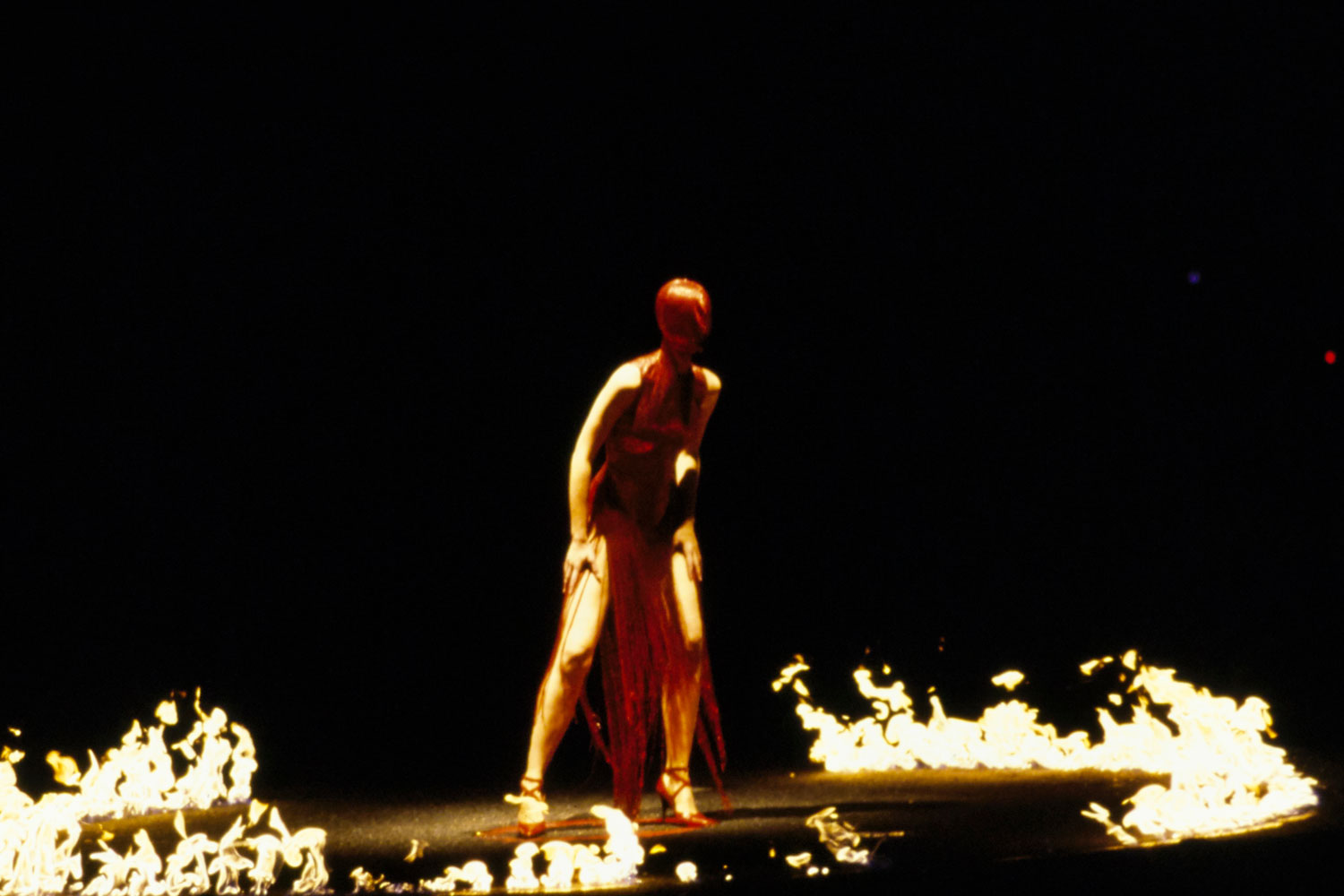
Alexander McQueen, AW98. Photo Guy Marineau, Vogue © Condé Nast
The YBAs Meet McQueen
The heart of the show is Body Shop, where the art world’s enfants terribles meet fashion’s. The YBAs used shock to feed ‘a new media landscape that was hungry for controversy’, said Vaughan, ‘and designers like Alexander McQueen also did the same thing’. McQueen’s gown that recreates Joan of Arc’s burning skin in beading is present, along with a video of the show where the model wore it surrounded by fire. Helen Chadwick, who taught many of the YBAs, shows Nostalgie de la Boue, a ring of earthworms and a skull caving in. Pulling the room together, the curators were struck by how many of its stars died young: McQueen, Chadwick and Butt among them. ‘It felt even more poignant to group them in this way, because their work speaks so much about the precipice between life and death,’ said Vaughan. Throughout the exhibition you’ll also find Damien Hirst’s formaldehyde works plus pieces by Tracey Emin, Sam Taylor-Johnson and Sarah Lucas.
Cool Britannia
Nation’s Finest is the show’s most personal room for Enninful. It takes its title from Keith Piper’s film about Black sporting excellence, and features two Ozwald Boateng suits, runway footage of Joe Casely-Hayford’s shows and Donald Rodney’s In the House of My Father. Hidden in a dark corner is Steve McQueen’s silent film Bear (1993). The room also features Chris Ofili’s Turner Prize-winning No Woman, No Cry (1998), a portrait of grief that pays tribute to Doreen Lawrence and her son Stephen, who was murdered in 1993.
The finale, The Swing of History, finishes with Yinka Shonibare’s The Swing (2001), his headless, wax-print-clad take on Fragonard’s painting at the Wallace Collection. ‘I love that the show begins with Sarah Lucas’s boots,’ said Heyse-Moore, ‘and concludes with a slipper flying from a foot.’
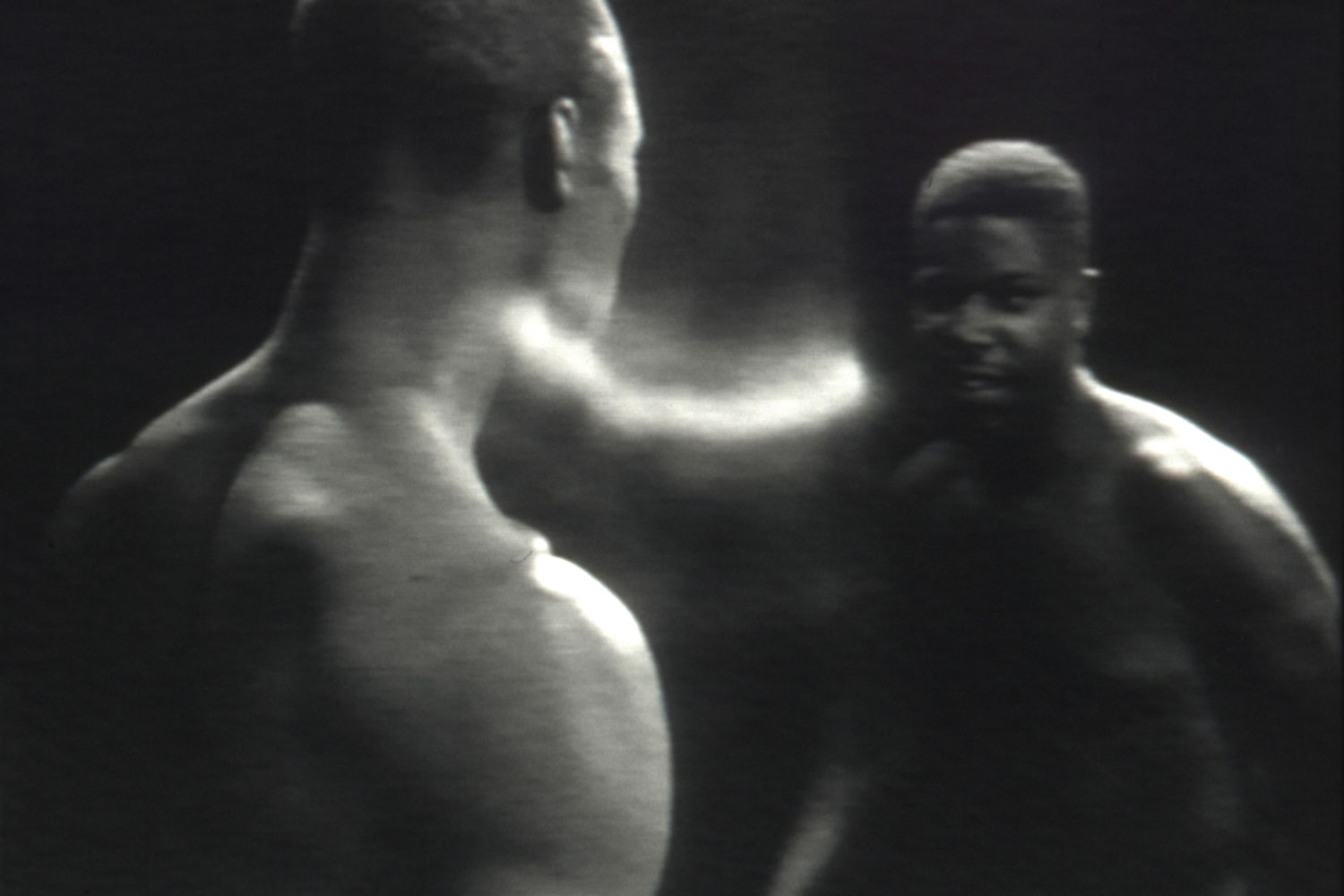
Sir Steve McQueen, Bear, 1993 © Steve McQueen. Courtesy the artist, Thomas Dane Gallery and Marian Goodman Gallery. Tate.
The Last Word
The Tate’s 90s retrospective will likely delight fashion fans more than the art set; magazines, couture and fashion photography are given more wall space than some of the biggest artists to emerge from the 90s. Those looking for mainstream 90s nostalgia and Britpop icons might leave disappointed, too; but with more than 100 works by nearly 70 artists across seven rooms, there are multiple layers to The 90s, and Eninnful and co have opted for some of the most intriguing, with enough iconic imagery to keep the selfie set happy, too.
BOOK IT
The 90s: Art and Fashion runs from 8 October 2026 to 14 February 2027 at Tate Britain, Millbank, London SW1P 4RG. Open daily 10am-6pm. Tickets £22, free for Members; £5 for 16-25s with Tate Collective. tate.org.uk