


The Best Independent Watch Designers To Have On Your Radar
By
6 hours ago
Watches by independent makers are must-haves for collectors and first-timers alike, says Simon de Burton
The initials AHCI won’t mean much to most. But dedicated horophiles know that they stand for the Académie Horlogère des Créateurs Indépendants, founded in 1985 by master watchmakers Vincent Calabrese and Svend Andersen. Back then, during the dark days of the ‘quartz crisis’ when battery-powered movements sounded the death knell for clockwork, the lone makers who still built watches by hand using springs, wheels, jewels and screws were rapidly fading into obscurity.
The aim of the fledgling AHCI was to reverse the situation by arranging exhibitions for independent makers to reduce costs and provide a platform for promotion. Slowly but surely it worked, as people such as George Daniels, Giulio Papi, Franck Muller and Bernhard Lederer joined its ranks.
Fast forward 41 years and independent watchmaking has burgeoned beyond belief and the creations of its leading protagonists are regarded as must haves by the world’s top collectors.
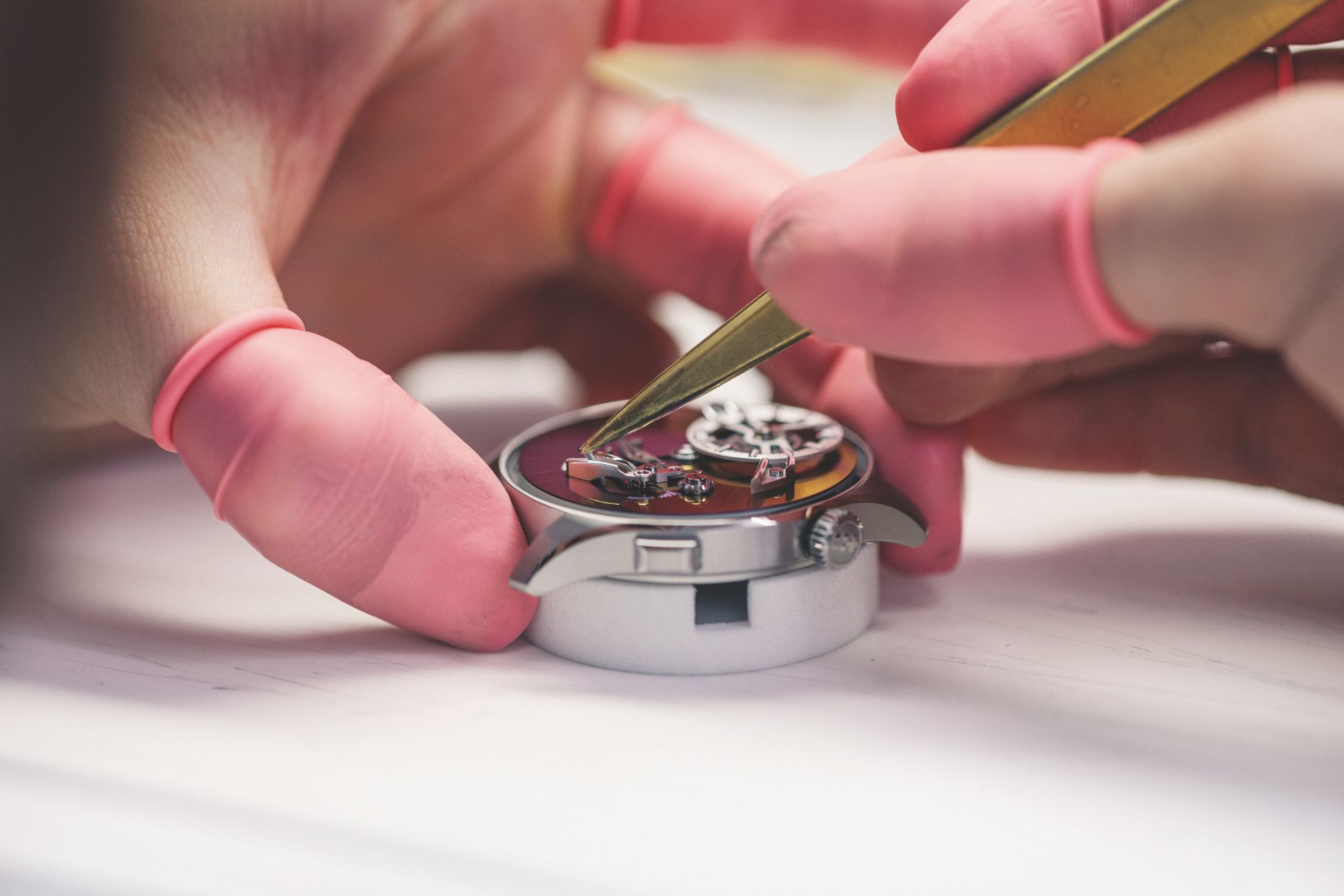
Assembling Christopher Ward’s GPHG award-winning C1 Bel Canto watch, which chimes on the hour
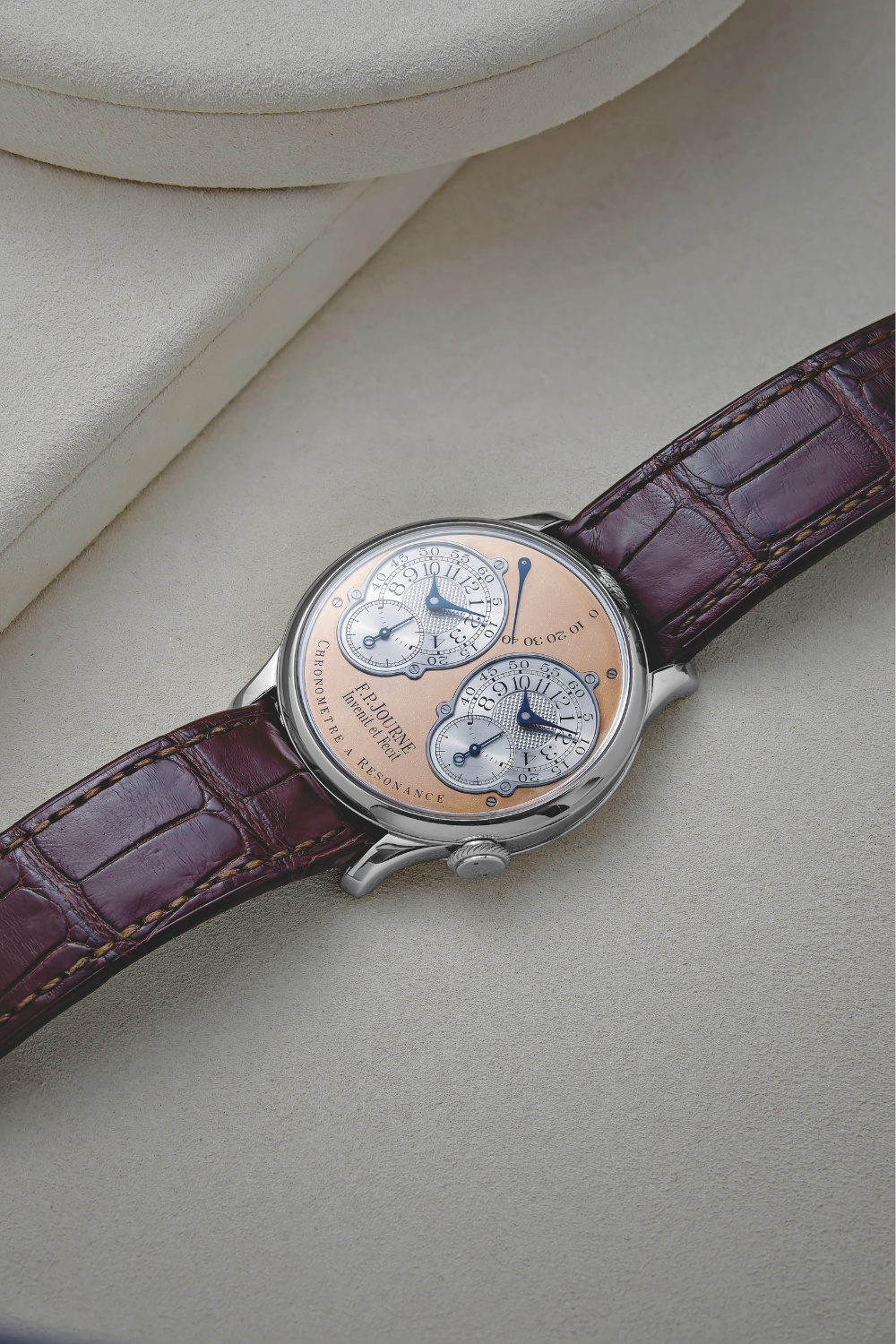
To put that into perspective, the major spring and summer auctions were dominated by independent names, with Phillips alone selling five watches by F.P. Journe for more than $1m apiece – including a Souscription Résonance model that soared to $13.9m, the most ever paid for a timepiece by an independent maker.
The house also sold an Akrivia watch by the celebrated 39-year-old Kosovan Rexhep Rexhepi for $3.9m and a unique Roger W. Smith Reference 3 for $1.2m, a record price for any wristwatch signed exclusively by the Isle of Man maker (another watch double-signed by Smith and George Daniels, the unique ‘London Millennium’, sold for CHF2.17m – around $2.42m – in 2023.
But what actually is ‘independent watchmaking’? While the term used to refer exclusively to individuals who made watches alone, without the financial or practical backing of an outside organisation, the definition is now broader and looser, encompassing an extensive range of timepiece types and values.
At one end of the scale, makers such as Journe and Smith and contemporaries ranging from Finnish genius Kari Voutilainen to Swiss traditionalists including Philippe Dufour, Laurent Ferrier and Romain Gauthier, still sit at their benches to design, build and sell their very expensive creations to global connoisseurs.
It’s a niche that has enabled Silas Walton to build a thriving pre-owned business called A Collected Man specialising in watches by top individual makers. ‘Independent watchmaking has become the most exciting corner of our world, and it’s no accident,’ he says. ‘Collectors have grown weary of the conventional big brands, however brilliant, and there’s a real hunger for something authentically rare and personal. At their best, these watches sit on the border between high craft and art, and the market has begun treating them accordingly.’
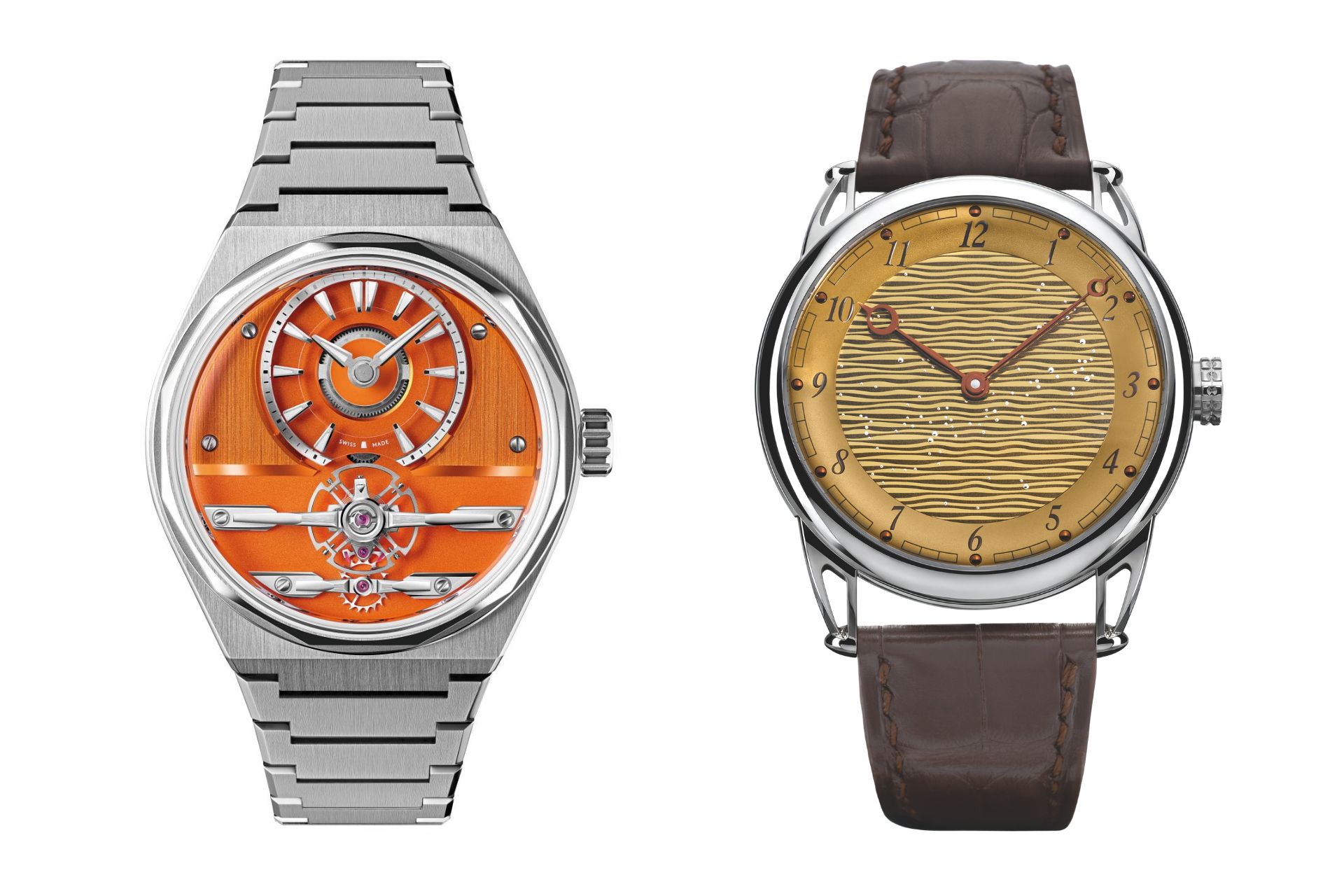
Cristopher Ward C12 Loco, featuring the watchmaker’s new CW-003 movement; De Bethune’s DB25xs Sand Winds watch
Occupying a similar price bracket is another type of independent brand that runs a larger, more commercial operation employing a few master watchmakers producing anything from a hundred to a few thousand pieces annually. Among these are Richard Mille, Greubel Forsey, De Bethune and MB&F (to name but a few).
Then, of course, there are independently owned names familiar beyond the connoisseur sphere, such as Chopard, Patek Philippe, Audemars Piguet, and even Rolex.
In between, there are the ‘independents’ who have retained their reputation for making small numbers of watches despite being secured by financial backing from major players. F.P. Journe is partly owned by Chanel, which also has a significant stake in the more affordable independent Bell & Ross; De Bethune belongs to US watch retailer The 1916 Company; and the majority shareholders of British indie Bremont are US billionaire Bill Ackman and New York investment firm Hellcat Acquisitions.
Louis Vuitton has boosted awareness of the independent scene by not only reviving dormant names such as Daniel Roth and Gérald Genta, but staging its biennial Louis Vuitton Watch Prize for Independent Creatives. The award, which combines a significant cash payment with a mentorship programme run through the firm’s watchmaking arm La Fabrique du Temps Louis Vuitton, this year went to Alexander Hazemann and Victor Monnin, two 20-something horologists who formed a partnership after meeting at watchmaking school in Morteau, France.
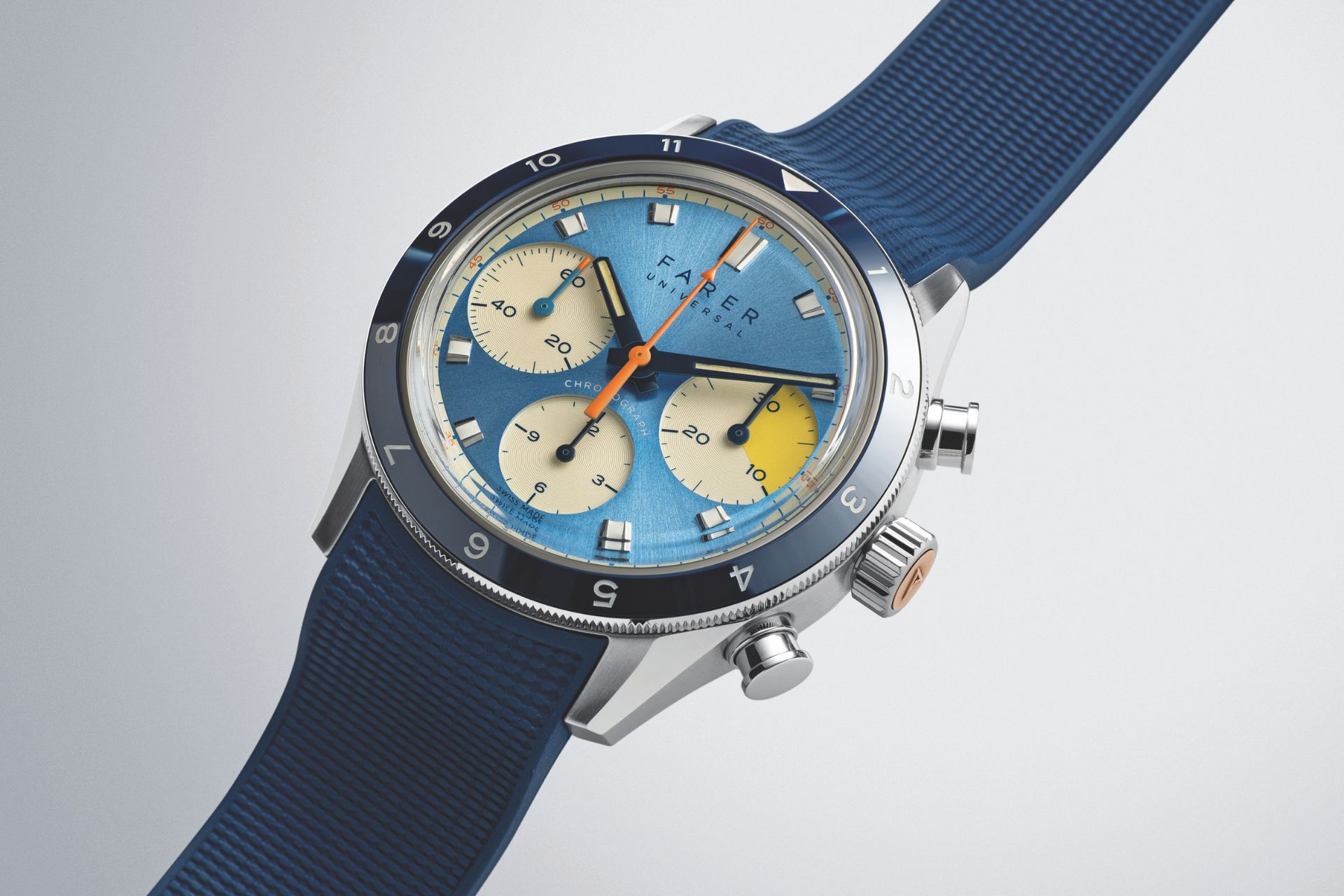
Farer Volante racing chronograph
But perhaps the most interesting development for independents during the past decade is the rise of the microbrand – small businesses that produce models that are well-made, good-looking and easily accessible. In some cases, this has been achieved by conceiving and developing designs in the West and having the finished product created in the East, where manufacturing methods and quality now come close to Swiss standards.
There are also some British microbrands that manufacture closer to home. Among these are Farer (which designs in the UK but has its watches made in Switzerland by Roventa-Henex, a top ‘white label’ operation), Christopher Ward (which has acquired its own Swiss atelier) and Studio Underd0g (which recently opened its ‘Dogh0use’ assembly centre in Maidenhead, Berkshire, see page 63).
Access to third-party manufacturers has also enabled the revival of some British dial names by the descendants of their creators, including once-celebrated military watch maker Vertex (brought back to life by Don Cochrane, great grandson of founder Claude Lyons) and Bristol-based Fears, which was raised from the dead a decade ago by Nicholas Bowman-Scargill. His ancestor, Edwin Fear, established the business in 1846.
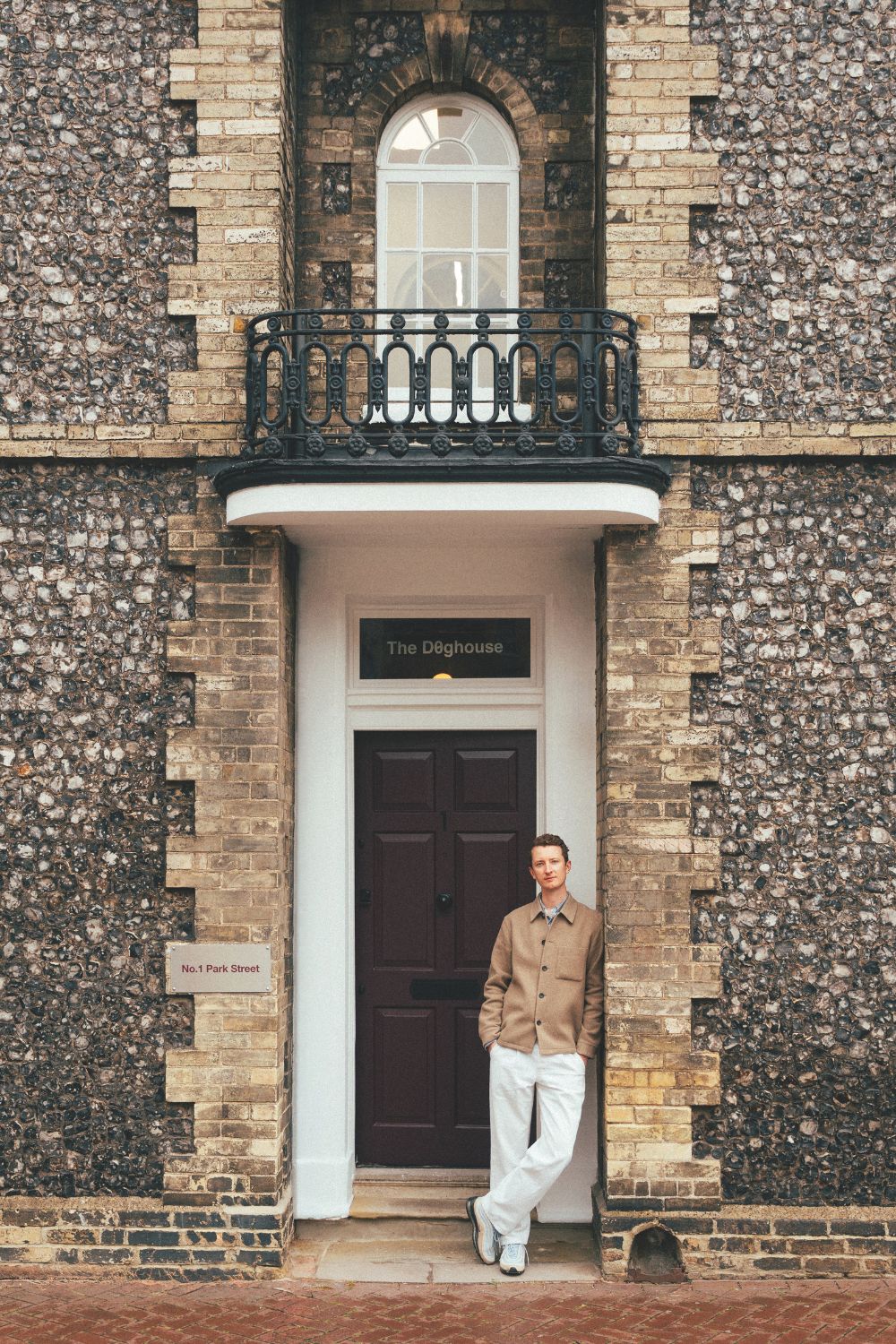
Studio Underd0g’s founder, Richard Benc, outside its D0ghouse studio in Maidenhead
Watch industry veteran Neil Duckworth has also realised a long-standing ambition to revive his family dial name, Prestex, which was established in Bolton more than a century ago. ‘Designing and developing my own watch brand without huge resources would have been impossible a few years ago,’ he says. ‘But with 45 years in the industry, I have built up contacts both with Far East manufacturers, whom I use to make the majority of our products – which start at £550 – and with small, Swiss firms willing to produce very small runs of more expensive special editions.’
The latest of the latter is the £2,750 Prestex Valjoux 7750, which refers to its celebrated chronograph movement that is also found in watches made by long-established brands but costing thousands of pounds more. ‘We are soon to introduce a women’s watch, which will be manufactured in China using a Swiss-made Sellita jump-hour module, which would have been impossible a few years ago.’
According to Duckworth, the rise of the microbrand has led to a significant increase in collectors and enthusiasts drawn to the greater availability of good quality, affordable watches. ‘In many ways, these people have created their own demographic’, says Duckworth. ‘They are different from the general, watch-buying public who used to walk into a retailer, buy a single watch and never be seen again. These new collectors have knowledge and enthusiasm; they do extensive research before making a purchase and only want watches that are well made and, importantly, sensibly priced.’