


Inside The Crockett & Jones Factory, Where Britain’s Finest Shoes Are Still Made By Hand
By
2 hours ago
Step behind the scenes at Crockett & Jones
In our age of throwaway sneakers, Country & Town House goes behind the scenes at British shoemaker Crockett & Jones to see just what it takes to be well shod.
Inside The Crockett & Jones Factory In Northampton
Northampton may not be on the bucket list of most worldly viators, but look a little closer and you’ll realise this unassuming town in the East Midlands has a rather well-heeled story behind its red brick façade. Once home to countless cordwaining firms – of which a handful survive – Northampton defined itself as the capital of British shoemaking in the 19th century. At its beating heart is Crockett & Jones – a name familiar to well-shod folk from Teddington to Tokyo for the kind of footwear that’s made to go the distance.
Since its establishment in 1879, the firm has dressed royalty, explorers and even 007, counting King Charles III, Ernest Shackleton and Daniel Craig amongst its clientele. It produced over a million boots for the armed forces during the Second World War and was recently tasked with recreating George Mallory’s 1920s hiking boots for an experimental climb up Everest by the Turner Twins. It has remained a standard bearer for British-made footwear, weathering shifting tastes and the tidal wave of social media-hyped fashion footwear that sneakerheads queue around the block for on drop day.
‘When you are genuinely one of the last bastions of two centuries of a specific industry, in a town such as Northampton, there’s a greater importance than revenue or profit,’ explains James Fox, Director of Marketing at Crockett & Jones, who has been at the firm for over 15 years. ‘Crockett & Jones, and the other remaining shoe factories in the town, have a deep responsibility to keep this industry alive.’
A Factory Fit For A King
The Grade II-listed factory was built on Perry Street in 1890 in the Abington district of Northampton – a stone’s throw from the town centre. A stroll through the now quiet streets evokes images of a bustling community that once shod the world. All around are reminders of the Victorian industrial might that made Britain a manufacturing powerhouse, from the surfeit of cordwaining depositories to the neat rows of terraced workers’ houses.
For an industrial building, the factory has a stateliness to it – the megalith red brick walls, vast Crittall windows and Weldon limestone lintels, which proudly bear the firm’s name. As I arrive at the visitors’ entrance, which has the grandeur of a 1930s town hall with its terrazzo staircase and Deco wooden glazed doors, there’s a palpable feeling of stepping into a place which has honed its craft.
In the leather store, the heady smell of hides pervades the air – shelves groan under the weight of European grained leather, milled calf and fuzzy suede, rolled up en masse like Persian carpets, waiting to be transformed into shoes. This material is the lifeblood of the factory. It is sourced from leading tanneries and fine-tuned to ensure it’s fit for purpose. ‘You’ve got to have good relationships with the tanneries. We can give them feedback, and they will go away and make development changes. Other customers can’t do that with them,’ explains Fox of its new milled calf leather, which makes a particularly comfortable travel loafer.
The Hand Skills Behind Every Pair
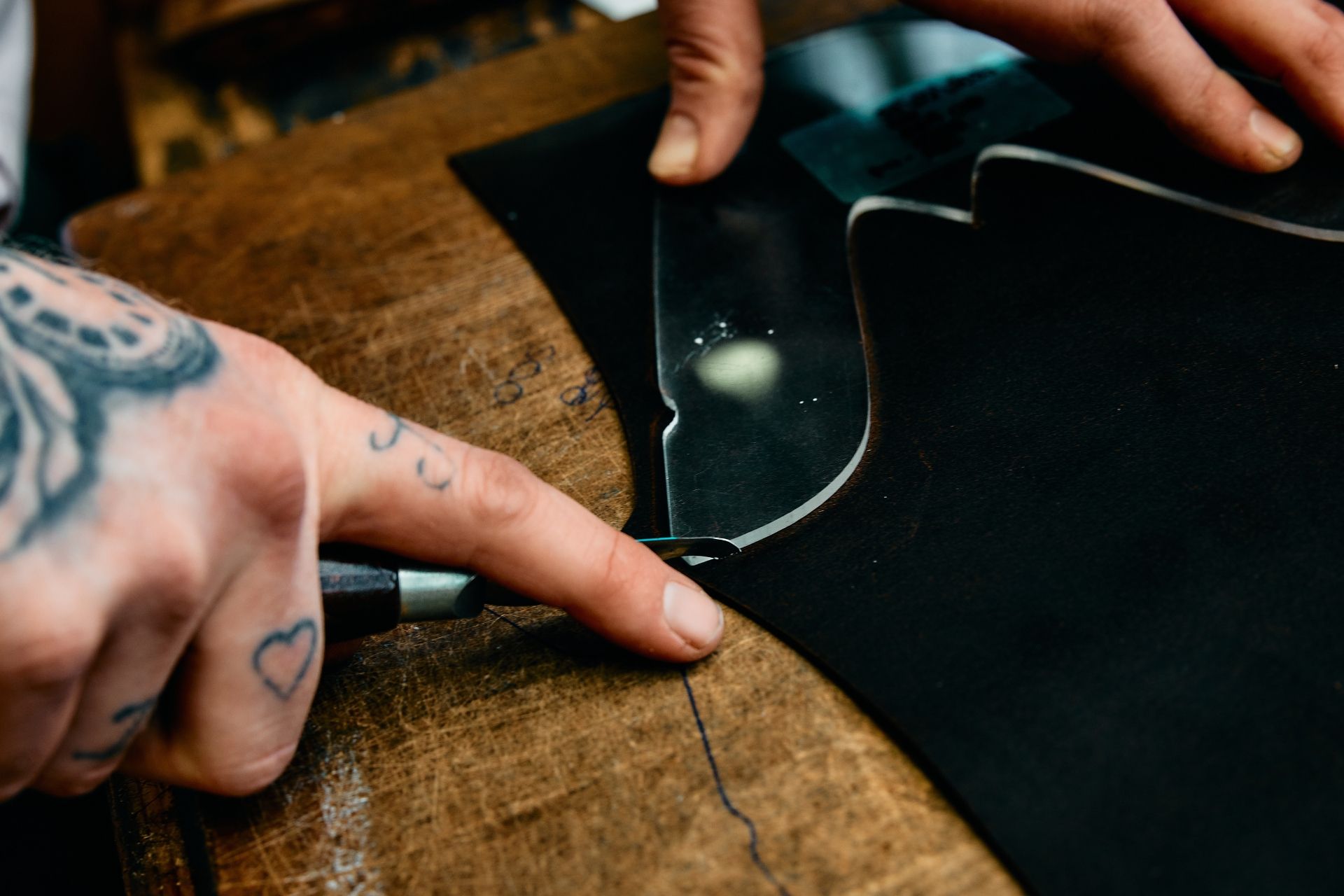
From here, we head up to the clicking room – so called for the ‘clickers’ who work there, hand-cutting hides with knives made in-house, which emit a distinctive ‘click’ when a cut is made. I meet Ed, who is examining a vast milled calf hide spread across the table, destined to become Cavendish loafers and Chelsea boots. He can cut up to 40 to 50 pairs of shoes a day. He tells me it’s a precise process, which requires careful consideration to select the right parts of the skin to maximise yield, avoid natural flaws and utilise the natural stretch of the leather so shoes mould well around the wearer’s foot.
After cutting out the component parts of the upper, the main body of the shoe, the pieces move on to the closing room. Here, some of the most detailed work in the manufacturing process takes place, including ‘skiving’ the edges of the leather to ensure smooth seams and adding eyelets for lacing.
Jeanette, who has worked on the bench in the closing room for over 14 years, tells me that in our digital age of apps and screen swiping, hand skills bring her a sense of satisfaction – in particular binding, the process of taping raw edges to prevent fraying. ‘I like looking at it when I’ve done around a quarter, or at the end, to see how nice it is,’ she explains amid the whirr of industrial sewing machines. ‘I can tell by looking at a shoe whether I’ve binded it – we all bind differently,’ she adds.
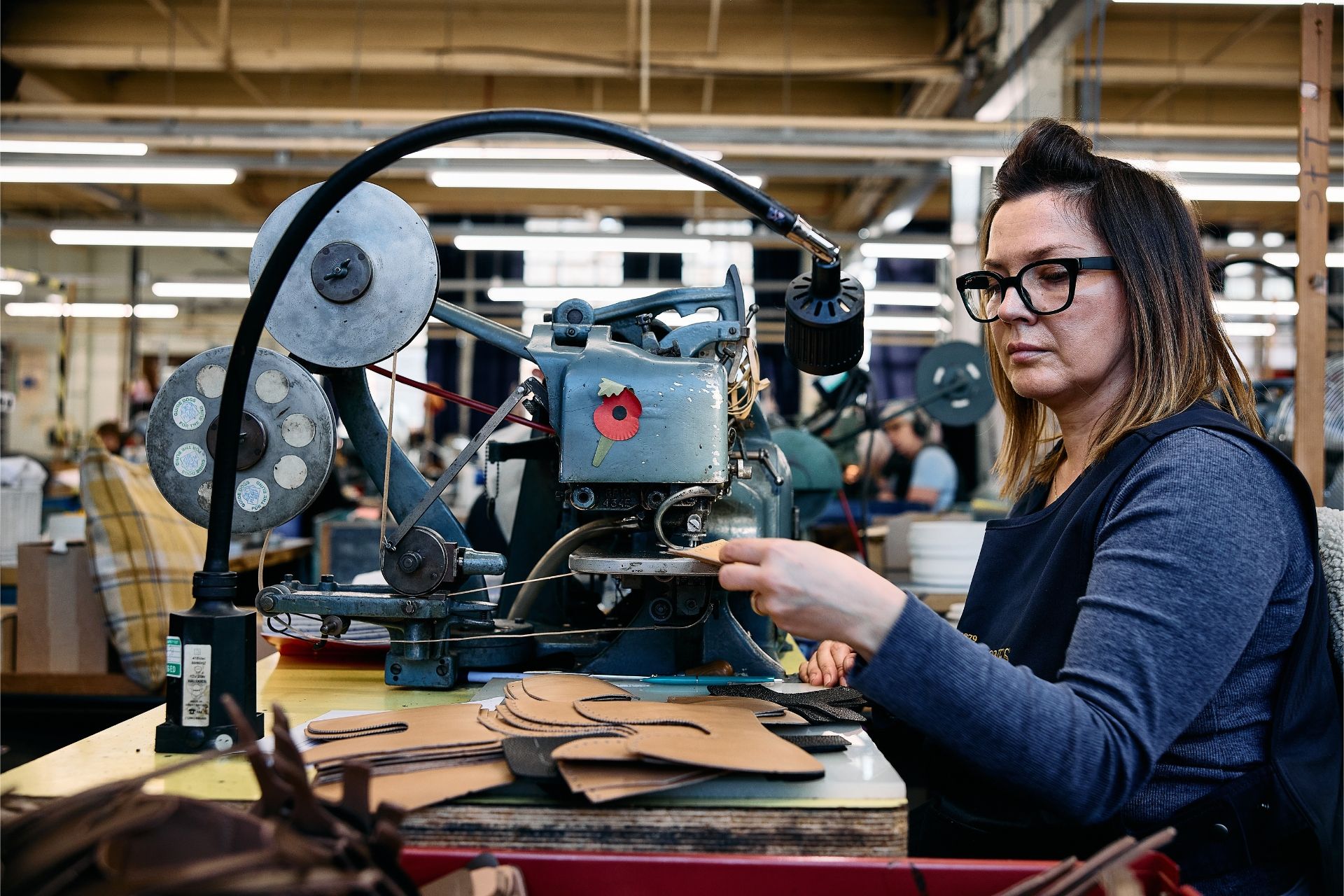
Decorative details are also added at this stage, including gimping, the zigzag-like pattern found on seams and edges, and royal punching, the circular perforations on brogue toecaps. Approaching a bench, I watch the nimble handiwork of Catalina, who specialises in punchwork and has been at the factory for a decade. There’s no room for error here – the job requires a steady hand to guide the steel perforating tube of the punching machine along the edge of the toecap. ‘You can’t put the leather back in the hole if you make a mistake,’ she explains. ‘Once you’ve ruined it, you’ve ruined it and need to start again.’ The various decorated and finished 2D leather components are sewn together to form the upper before heading to the lasting room in the basement.
From Last To Goodyear Welt
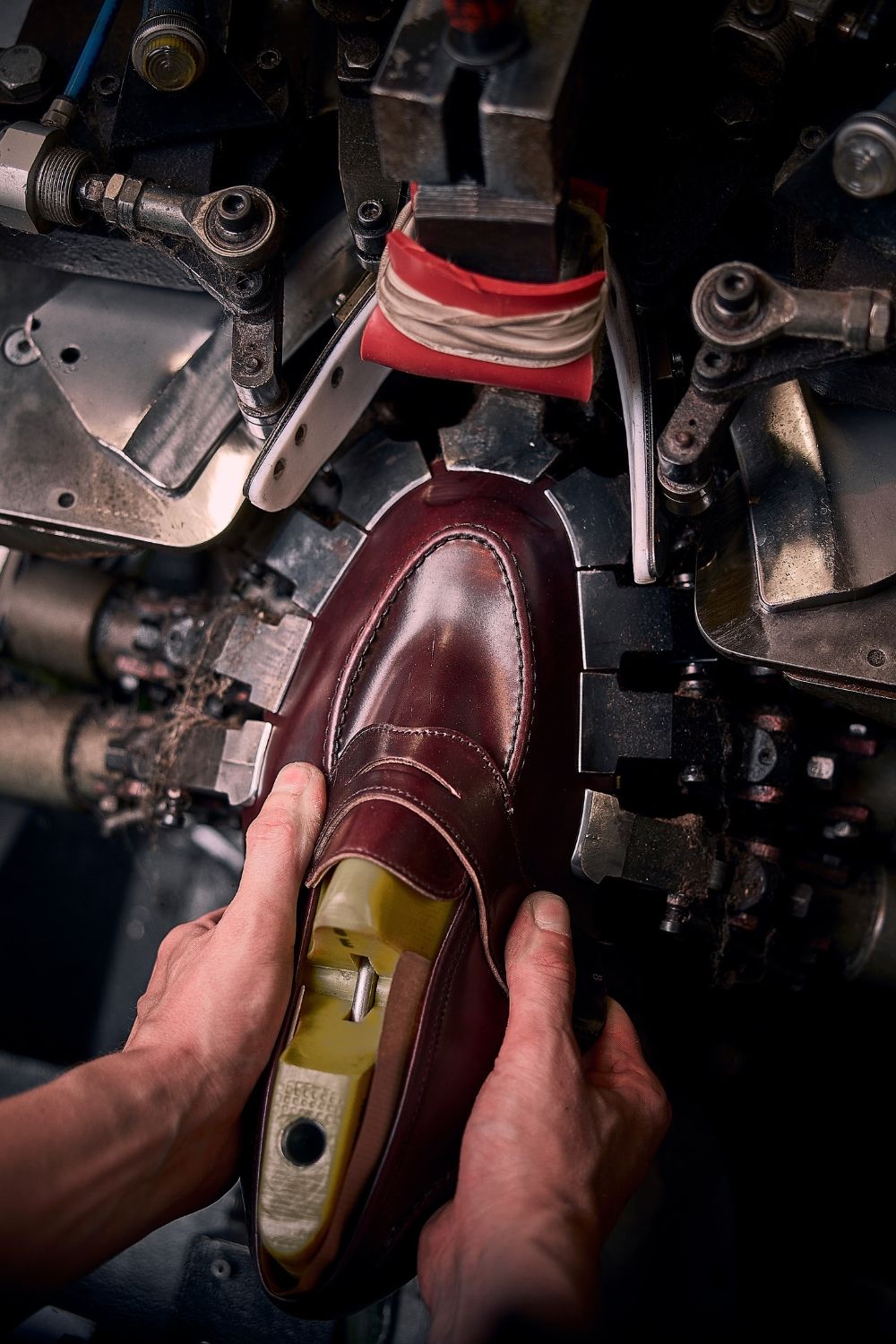
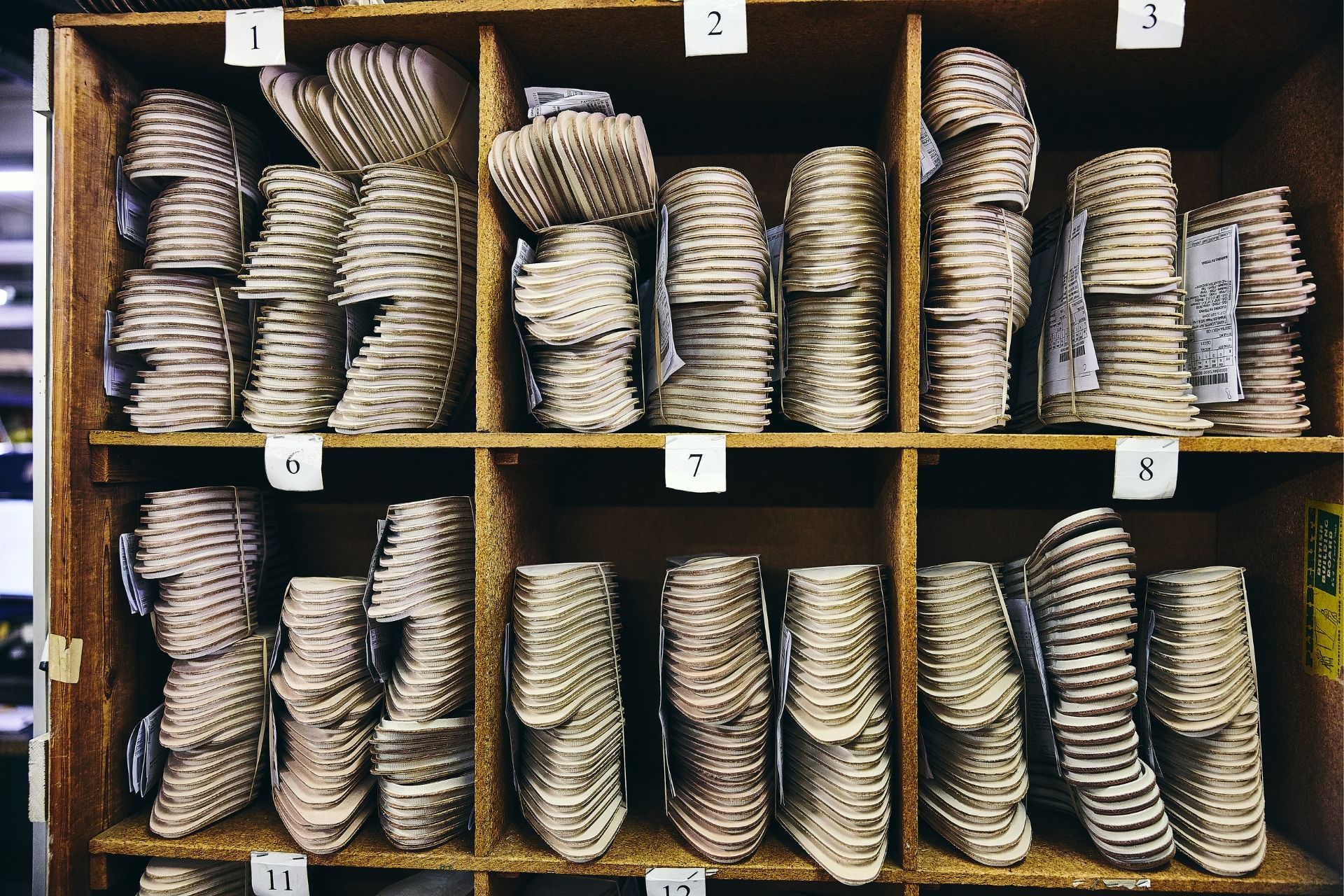
A last is a 3D, foot-shaped block, traditionally carved from wood, which dictates the fit and form of the design, from the toe shape to the overall proportions. It serves as the foundation of the shoe when the leather upper is stretched over it to give it form and support. Developing a new last costs over £100,000, while a new sole can cost upwards of £150,000 to come to fruition. The room is vast, with ancient wooden drawers and bins full of thousands of moulds in a myriad of shapes and sizes for shoes, boots and sandals.
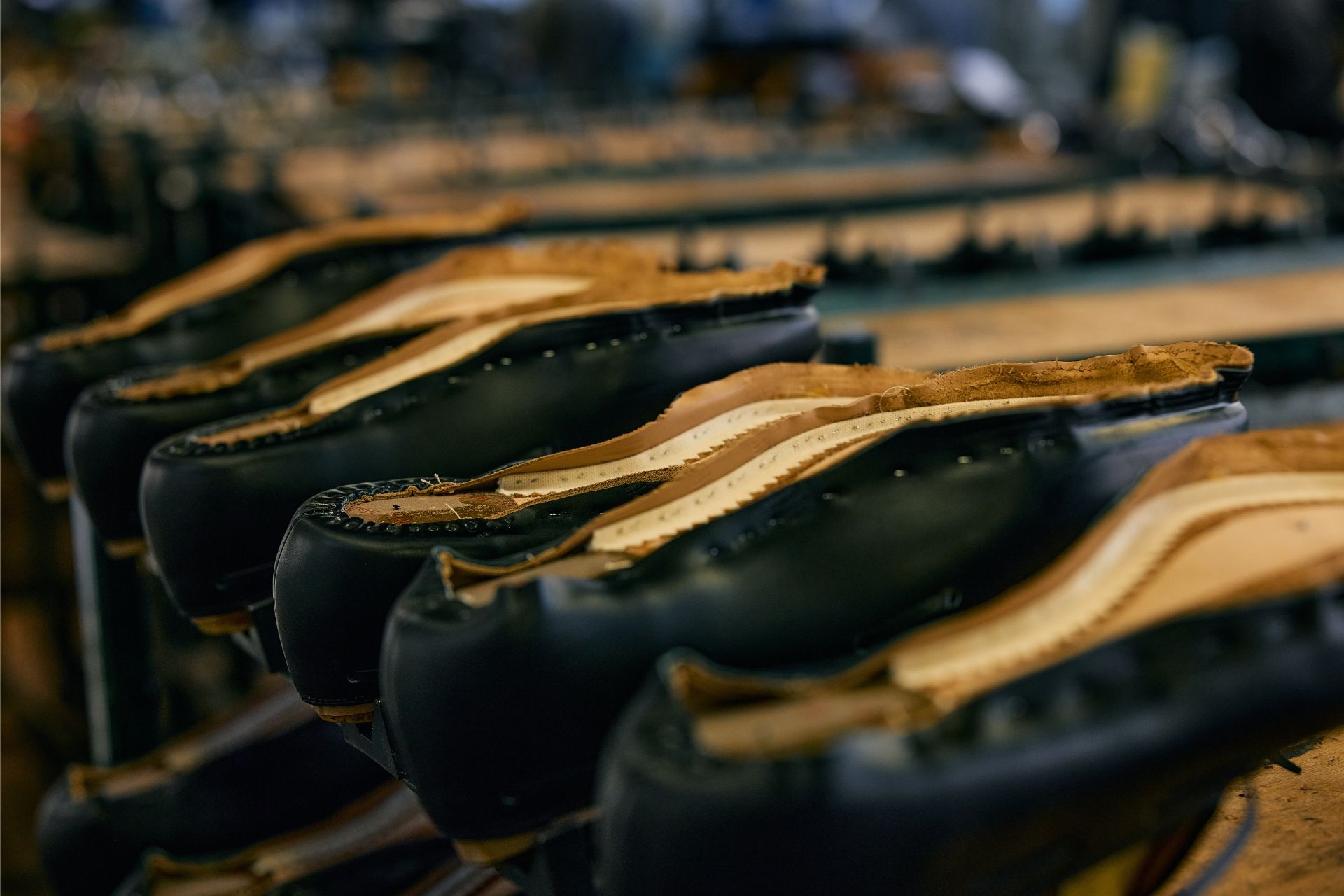
With the lasts in place and a recognisable shoe-like form materialising, the next stop is where one of Crockett & Jones’ pillars of production is executed: Goodyear welting. Despite being invented across the pond by Charles Goodyear Jr, the British shoe industry has made the process its own. The benefit of the technique is that worn soles can be removed and replaced with new soles – giving your favourite pair of shoes another lease of life. Amid the metallic din of century-old machinery and the odour of leather and oil, I watch in awe at the speed at which the welter deftly stitches the sole along its edge.
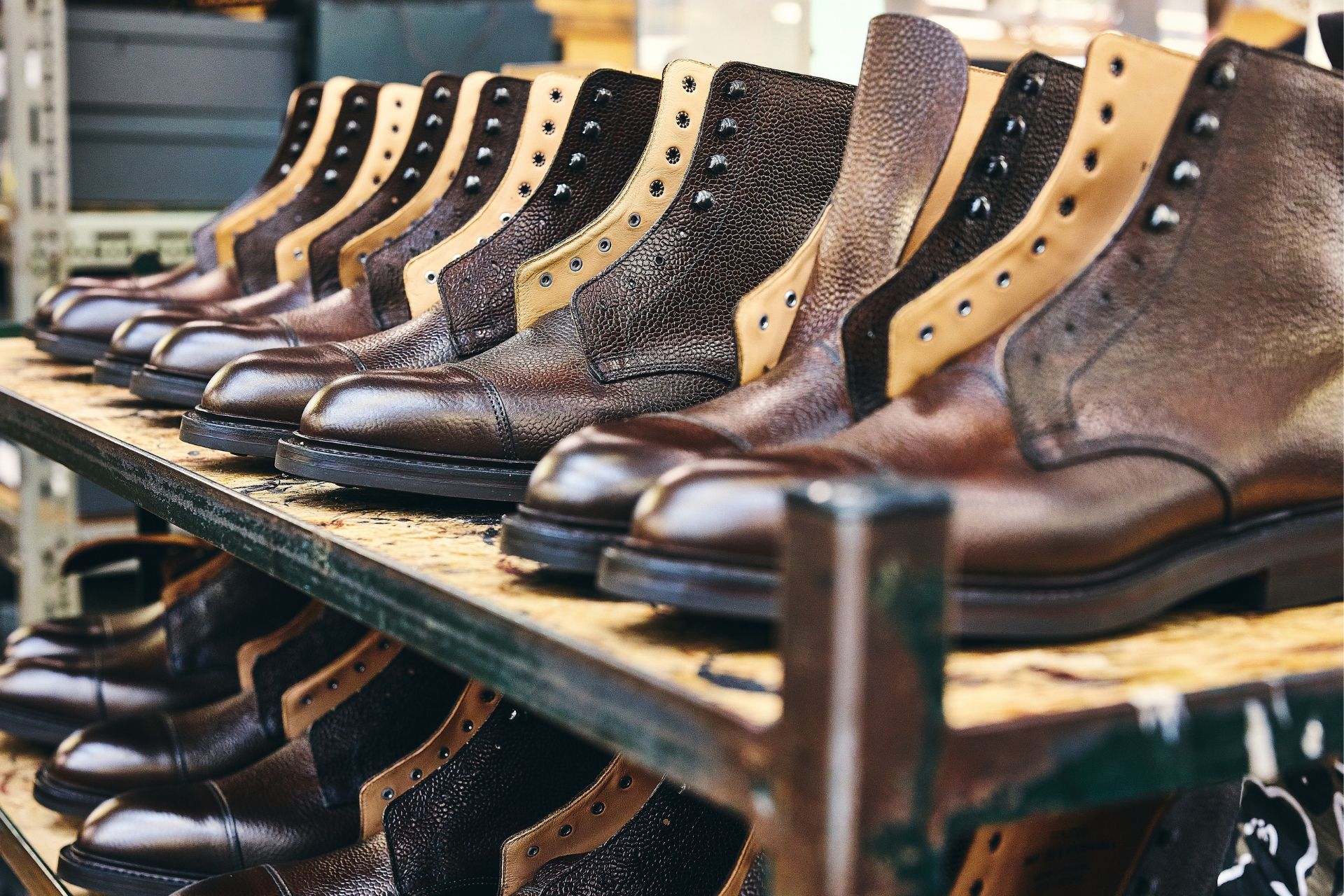
Next, a dough-like mixture of cork, the traditional material used to offer suppleness, support and bounce to your step, is pasted in between the soles of the shoe before the outsole is attached. At this stage, the shoe is beginning to look like the end product, before it heads to the finishing room. Here, coats of polish are applied, shoes are laced, and soles and heels are paint-stained for a uniform finish. I meet my namesake, Shane Fenton, who recalls painting the edges of the grained-leather fisherman sandals on my feet when they were made to order several years ago.
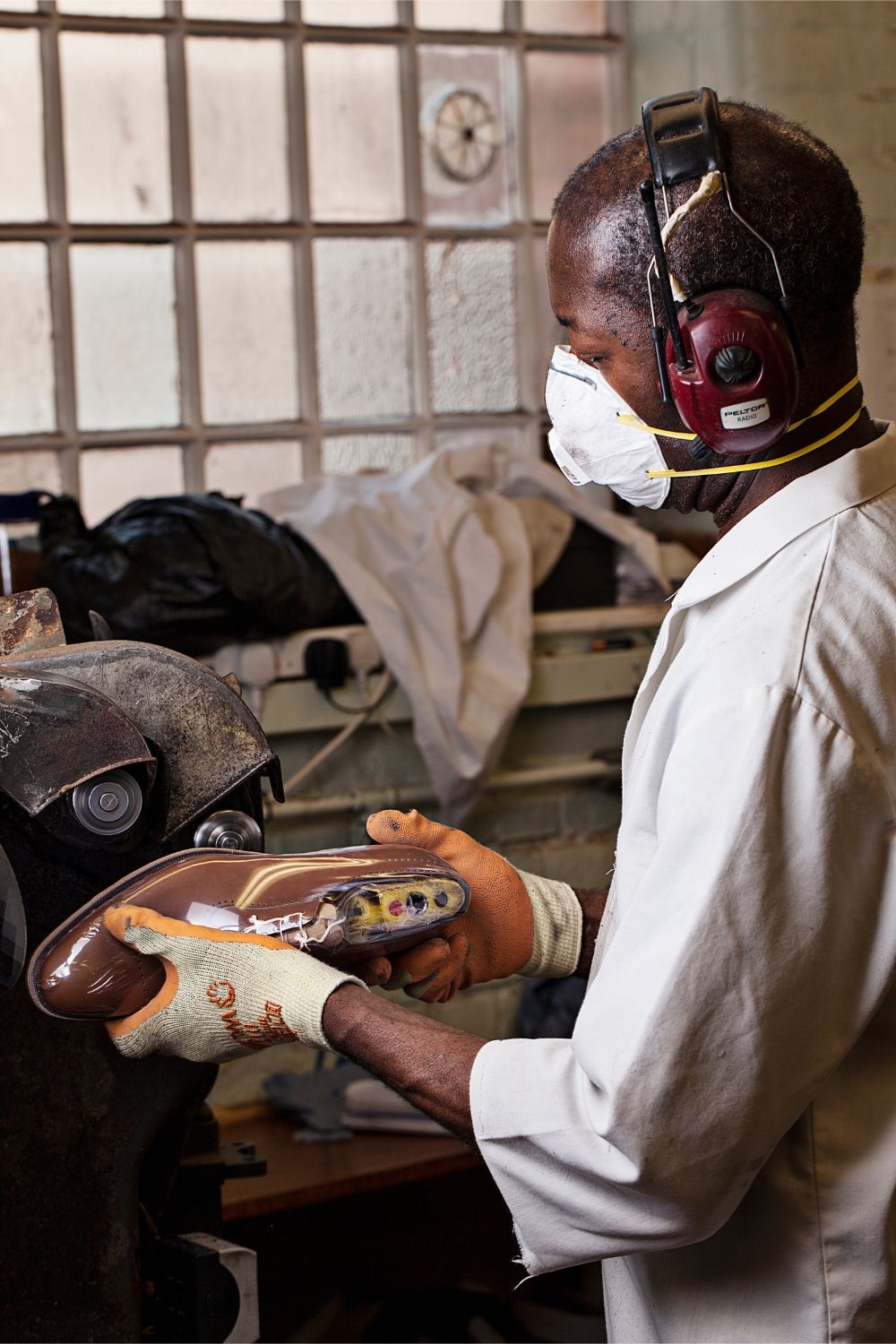
The Future Of Made In England
This is the final stop in the journey of the 100,000 pairs of shoes produced at the factory annually. Each has undergone over 200 separate processes and taken at least eight weeks to reach this room. These numbers might seem impressive, but the business isn’t without its challenges. Cheap footwear made in the East has decimated much of the Northampton footwear industry since the 1970s, and the cost of the key raw material for the business, leather, has risen by 40 per cent since the pandemic.
‘This country produces very few 100 per cent made-in-England, home-grown products from UK-owned and run businesses now. And that is a huge problem for this country as debt continues to rise – businesses like ours pour our hearts and souls into promoting “Made in England”,’ says Fox.
Before leaving, I stop by the showroom upstairs, which, like the rest of the office floor, retains its handsome Lutyens-style panelling and Art Deco flair. It’s an Aladdin’s cave of the firm’s creations over the past 150 years. As I browse through the myriad of ornate boots inlaid with fanciful designs and natty two-tone correspondent shoes, all around are mementos of Crockett & Jones’ place in the footwear hall of fame: sepia photographs of the Duke of Windsor, board directors and family members that made the brand’s name as a premier shoemaker. I spot a pair of wooden lasts sitting on a table, scrawled in copperplate hand: ‘HM The Queen’. It feels apt as I look at a 1950s portrait of the late Queen holding her lasts. She was an enduring symbol of permanence, and after a century and a half in the business, this firm is in it for the long walk, too.
Shop the collection at crockettandjones.com. The Crockett & Jones Factory Shop is at 27 Perry Street, Northampton NN1 4HN; 01604 631515.