


Does The Fight Against The Climate Crisis Need More Sex Appeal?
By
25 minutes ago
Fresh from COP31, Solitaire Townsend says doom is the real danger
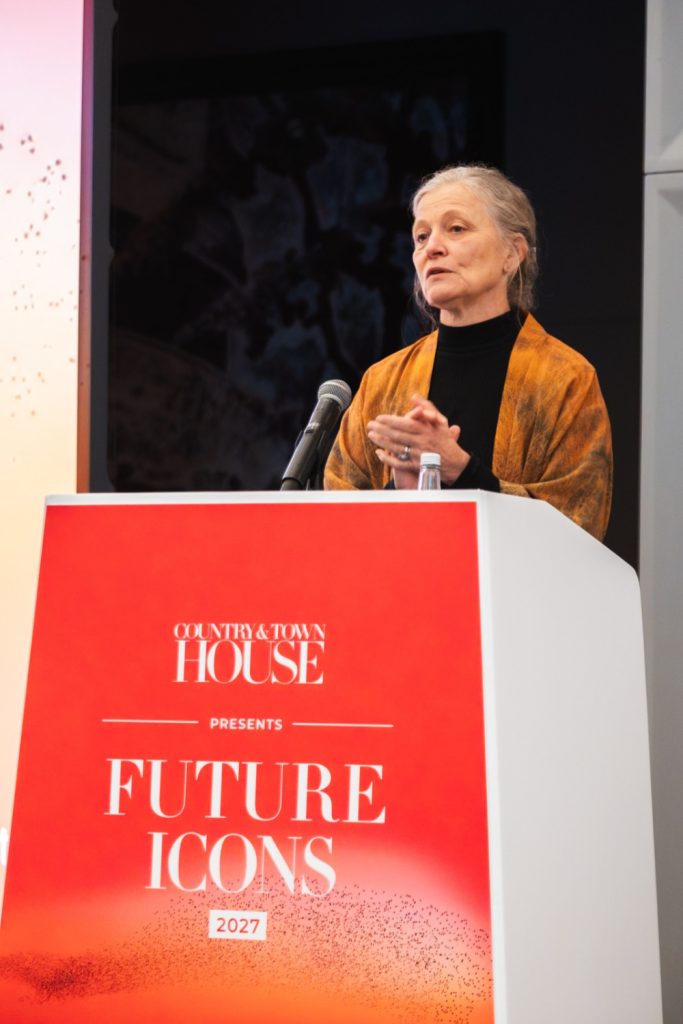
Media coverage of Climate has fallen by almost 40 percent. Brands have gone quiet, governments have gone quiet, and half of under-30s around the world have given up on humanity altogether. Solitaire Townsend, co-founder and chief solutionist at Futerra, arrived at the Country & Town House Future Icons 2027 event straight from COP31 to explain why she isn’t scared of climate change. She’s scared of fatalism.
‘Giving up is guaranteed to screw everything up,’ she told attendees, before hosting a panel titled F**k Doom, Make Desire. ‘When you give up, you stop. You’re not angry anymore. You’re not out on the streets campaigning. You’re not inventing and creating. You’re not standing to be prime minister or the head of the PTA. That’s the only thing I’m properly scared of.’
A Story Of Sacrifice
Townsend grew up on a council estate in Bedfordshire, in an old railway workers’ house with a wood-burning range and a coal fire. ‘I had coal dust under my fingernails,’ she said. ‘I was cold all the time.’ Today she lives in a house with solar panels. ‘In one lifetime, I’ve gone from being fossil fuelled to being renewably powered.’ That, she argues, is the story the climate movement keeps forgetting to tell; the good news.
‘What we don’t talk about is how amazing life could be if we solve this.’ Better food, less pointless flying, better sleep, more energy. ‘Right now, it sounds like those of us who work in sustainability want to take stuff off everybody. Sacrifice, sacrifice, sacrifice. I don’t know how to sell sacrifice. And it’s not true.’
The science isn’t all bad news, either. ‘We can reverse climate change. It might feel economically and politically overwhelming, but it’s not scientifically.’

Make Change Sexy
Joining Solitaire on the panel was Samantha Moyo, founder of Morning Gloryville, the sober early-morning rave, who sits on the board of Shambala festival. The first party, at the 700-capacity Village Underground, sold 26 tickets. ‘It was a fail, but those 26 people had the best time, and they made it go viral.’
The secret to her success? Designing for pleasure. No bouncers at the door, but dancers in glorious outfits hugging everyone on the way in. ‘What’s going to make us feel good? What’s going to make us feel sexy and uplifted?’ she said. ‘That’s really it with sustainability. It’s okay to feel pleasure.’
‘Isn’t it extraordinary,’ agreed Townsend, ‘that only on a panel about sustainability would we need to say it’s okay to feel pleasure.’
Moyo, who grew up in Zimbabwe with the Ubuntu philosophy of ‘I am because we are’, prefers to frame the work as Earth restoration. ‘Getting excited about being the generation that restores this planet back to what it was. That really excites me.’
Make Beauty Part Of The Story
Fellow panel member Frieda Gormley co-founded House of Hackney with her husband in 2011 and has turned it into a B Corp with Mother Nature and Future Generations on its board. Asked for the most desirable thing she owns, she said: ‘Something desirable always has a story to it. I have a patchwork quilt I inherited from my Irish grandmother. We’ve tried to recreate it at House of Hackney, but it just doesn’t have the same story.’ In the words of William Morris, she added, it is beautiful and useful.
Gormley says that beauty must be more than skin-deep; a lesson learnt in her twenties when she worked in fast fashion. ‘There’s surface beauty, beauty that’s superficially pleasing to our human eye, but actually is really destructive,’ she said. ‘We need to redefine beauty. We need to redefine luxury. We need to redefine business success so it isn’t just about financial growth at all costs.’
‘We definitely see beauty as an act of resistance,’ she said. ‘Beauty is our birthright, but it shouldn’t be at the detriment of the planet.’ Five years into moving the business from sustainable to regenerative, she says work has become ‘more creative, more collaborative, juicier, just zingier’.
What Are We Throwing Away?
Gavin Turk, whose work is held by Tate, the Centre Pompidou and the V&A, has made a career of turning bin bags and rubbish into things people covet. His interest lies in the moment value disappears. ‘That moment where you go to throw something in the bin, and as it leaves your hand, you grab it back and go: what is this thing? What is this part of me? We are what we throw away.’
He once signed piles of rubbish on London streets with a Posca pen and photographed them. Turk summarises a key issue with getting people excited about sustainability. ‘To sustain is just like sustaining a note. It’s keeping the same note. It gets a bit monotonous.’
‘We don’t want that. We want a symphony,’ said Townsend.
Future Icons
Future Icons is Country & Town House’s annual celebration of the people building a better future, from grassroots founders and campaigners to artists and business leaders. This year’s list brings together 30 changemakers, and the Future Icons 2027 event brought them together with the thinkers inspiring them. Meet them all and catch up on the day at our Future Icons hub.