


Following The Herd: On The Spring Reindeer Migration With Norway’s Sámi
By
1 minute ago
Kate Eshelby and her two sons join one of Europe’s last Indigenous people on their 250km spring migration across Arctic Norway
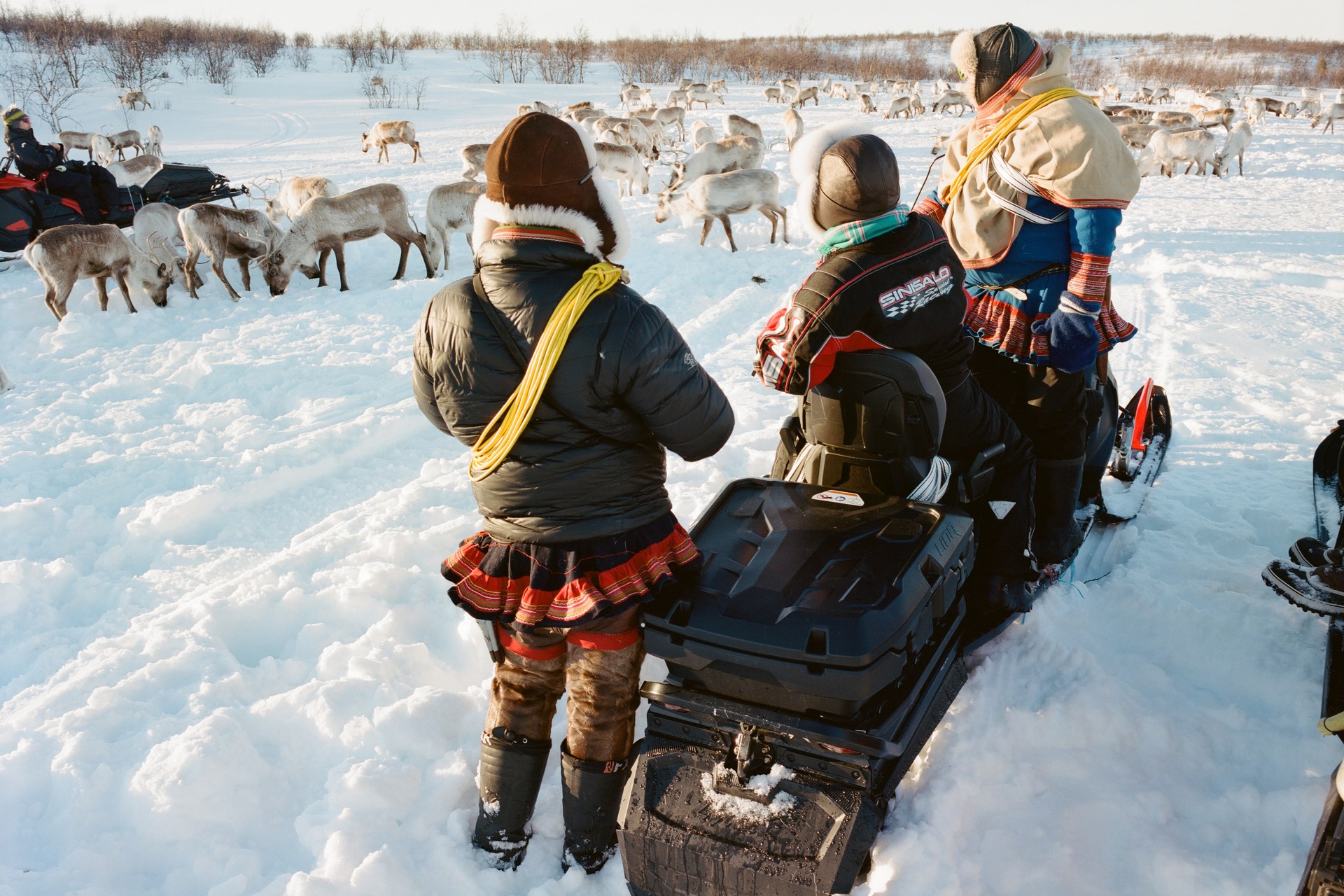
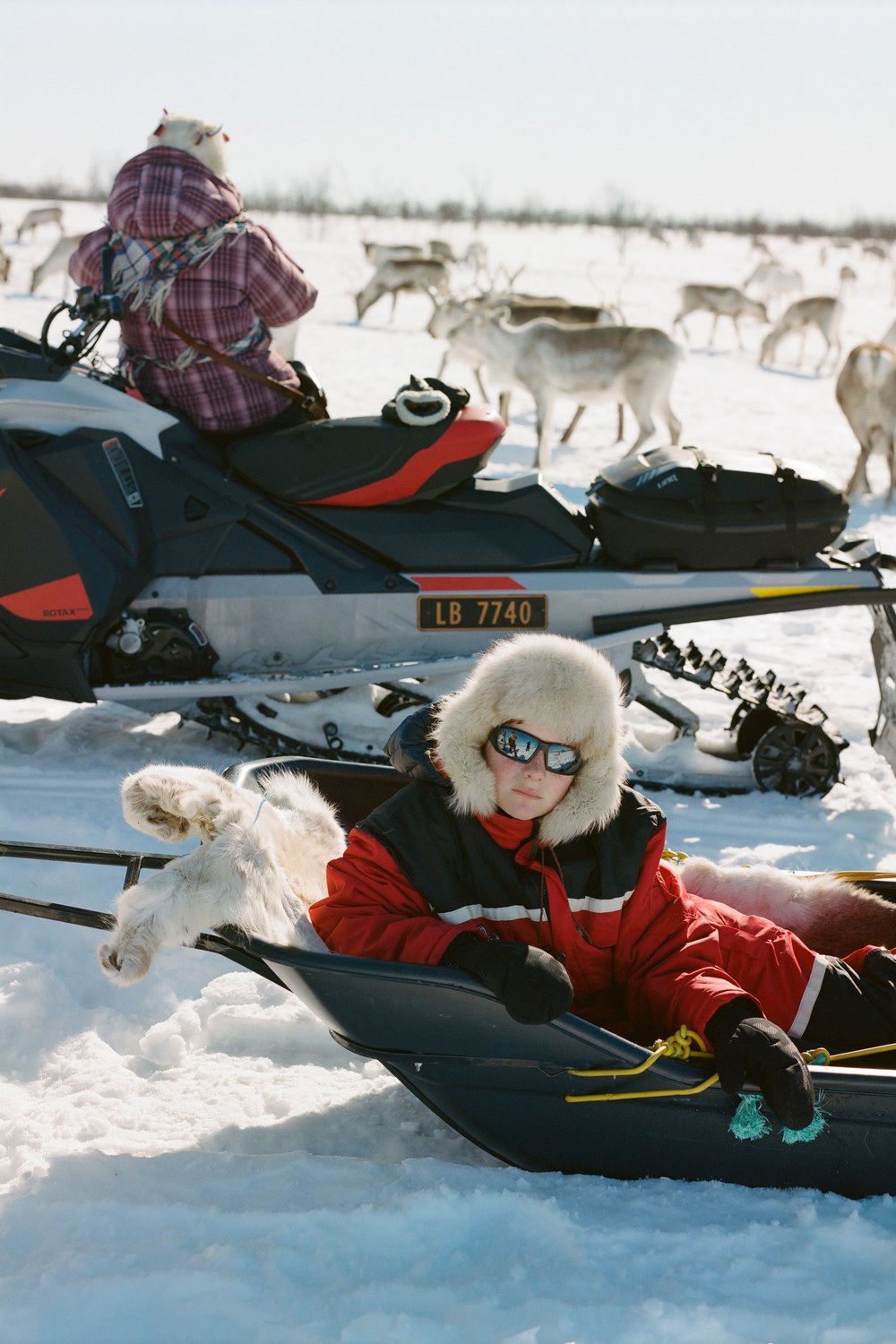
Surrounded by yapping dogs, the reindeer flow, a river of caramel, a maze of antlers moving towards wide, empty horizons, dwarfed by the enormity of the landscape. I’m sitting on a reindeer skin in a low-slung sledge, being pulled across the whiteness by a snowmobile. Glancing back, I see other snowmobiles gliding over the tundra like giant intergalactic black beetles.
My two sons and I are joining a Sámi family on their 250km spring migration above Norway’s Arctic Circle, following hundreds of reindeer as they head to their summer grazing land on an island in the Lopphavet Sea, the final stretch crossed by boat.
The Sámi, one of Europe’s last Indigenous people, remain tied to the seasons, migrating twice a year. We’re travelling with Nils, his brother and their children: they form a siida, a cooperative group who herd reindeer together.
Soon we make camp; Archie, my youngest, helps, shovelling snow onto the tent’s edges to stop the wind from lifting it, and Zac, the eldest, lays birch branches topped with reindeer furs for us to sleep on. Each night we curl up in the tent by a warm stove, its chimney poking out of the roof. We’re sharing with Nils’ children, Niillas Heaika and Inga, who have been making these migrations since they were babies.
Life On The Move
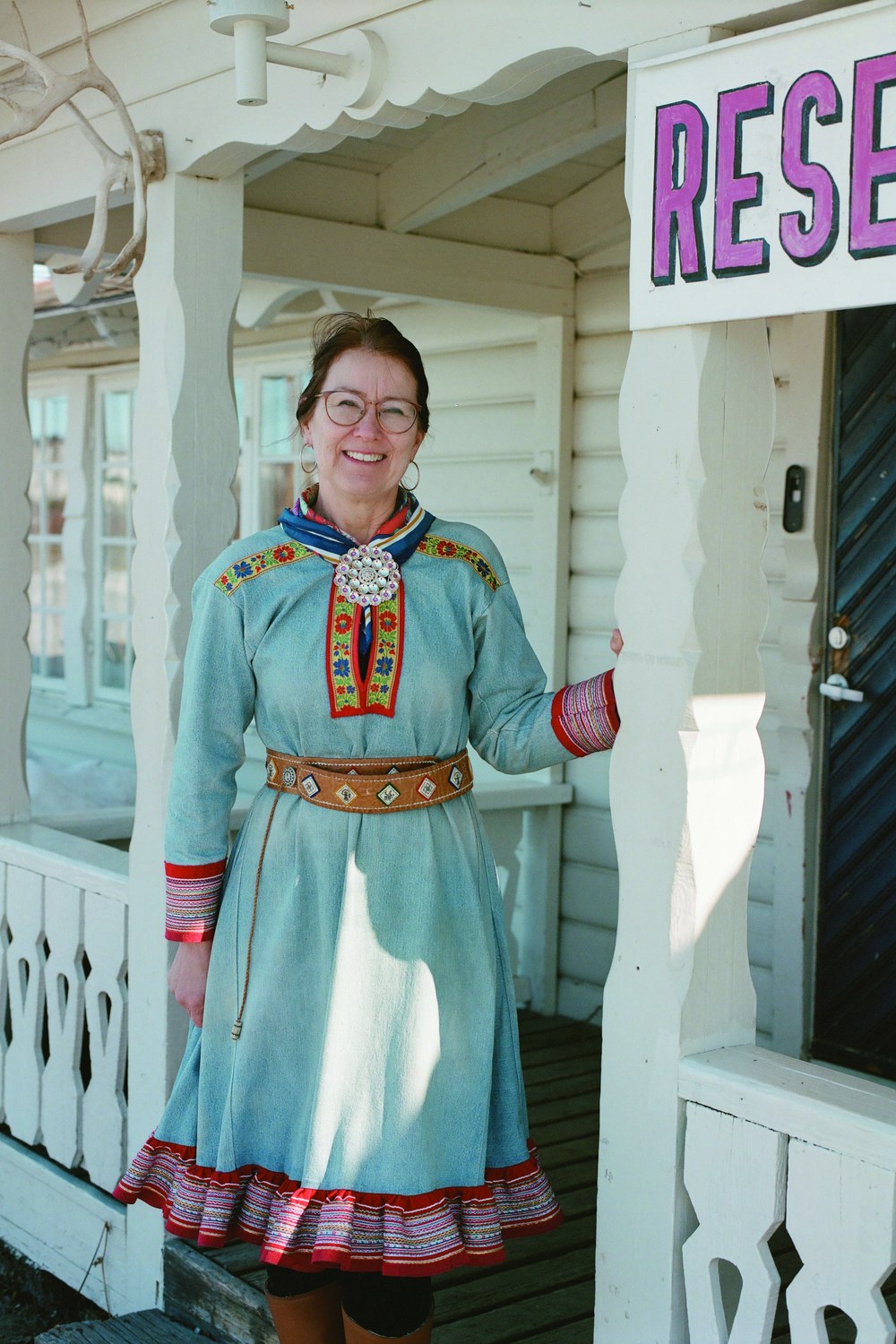
That evening Heaika sits in the tent – dressed in a gákti, a tunic with a gathered skirt and colourful embroidery – cutting reindeer meat with a knife hanging from his belt. He’s just 17, but already so practical and knowledgeable: an inspiration to my sons. There’s no real schedule; it’s 11pm and we’re eating fried reindeer tongue, a Sámi delicacy, for dinner.
Heaika explains that the autumn migration is more stressful than this one because the reindeer often wander off; they eat mushrooms and start acting crazily. His grandfather once found a reindeer lying on its back, its legs in the air, high on mushrooms.
While his grandfather would have travelled by skis or on foot, today’s herders use snowmobiles. ‘But we still believe the land has soul,’ he says. ‘We ask for permission, we bless, and we know that we can’t explain everything we experience. If you see a reindeer with no markings, it’s from the underworld. We hang protective silver orbs called komsekule above our cribs as sometimes human babies are switched with those from the underworld.’
During the migration, there’s a lot of lying around on skins in the sunshine (for guests at least), reading, and eating bread spread with lingonberries and cloudberries. ‘The reindeer decide when we leave,’ Heaika says on the first morning. He’s been awake most of the night to keep watch over the herd.
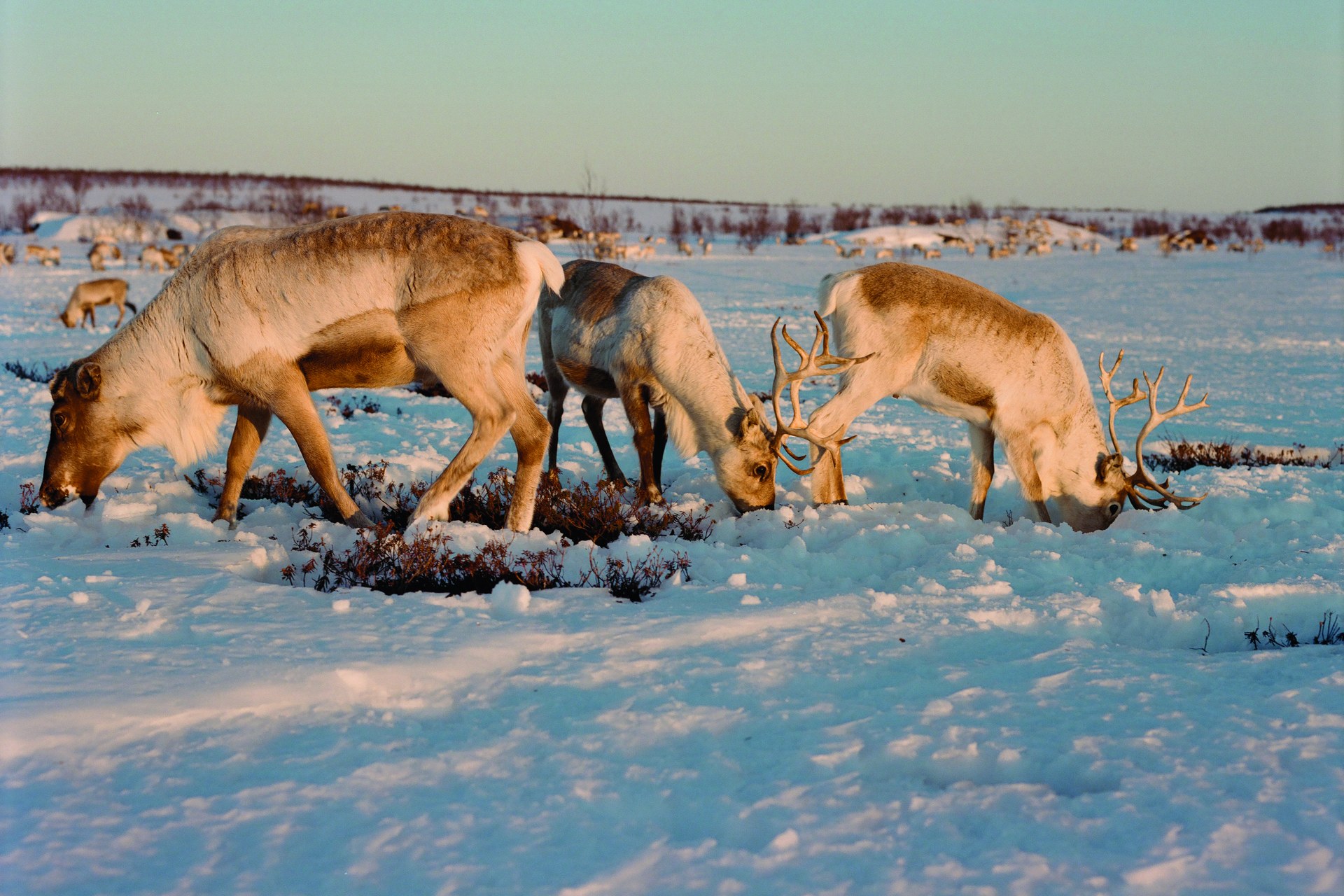
Later, we snowmobile to where the reindeer are feeding, pawing through the snow for lichen. Heaika tells us how the Sámi language has a name for every type of forest, mountain and rock. ‘So you can describe where the reindeer are,’ he says. ‘We have a deep connection to nature.’
And they have words for all the different colours of the reindeer. Cahppat describes white under the belly with grey on the side, muzet black, and galbbenjunni a white nose. We spend time watching the animals as the colours are dialled up just before sunset, the coats becoming a blaze of warm brown and gold.
The Sound Of The Joik
Heaika starts to joik, a traditional Sámi chant-like song which recalls a person or place. It’s powerful to listen to as he sits on his snowmobile, eyes shut as the melody rises. ‘This is a joik about my mother,’ he says. Then Nils begins, joiking his grandmother. ‘She gave me this joik before she died,’ he shares. ‘You joik the person themselves; they are a feeling.’
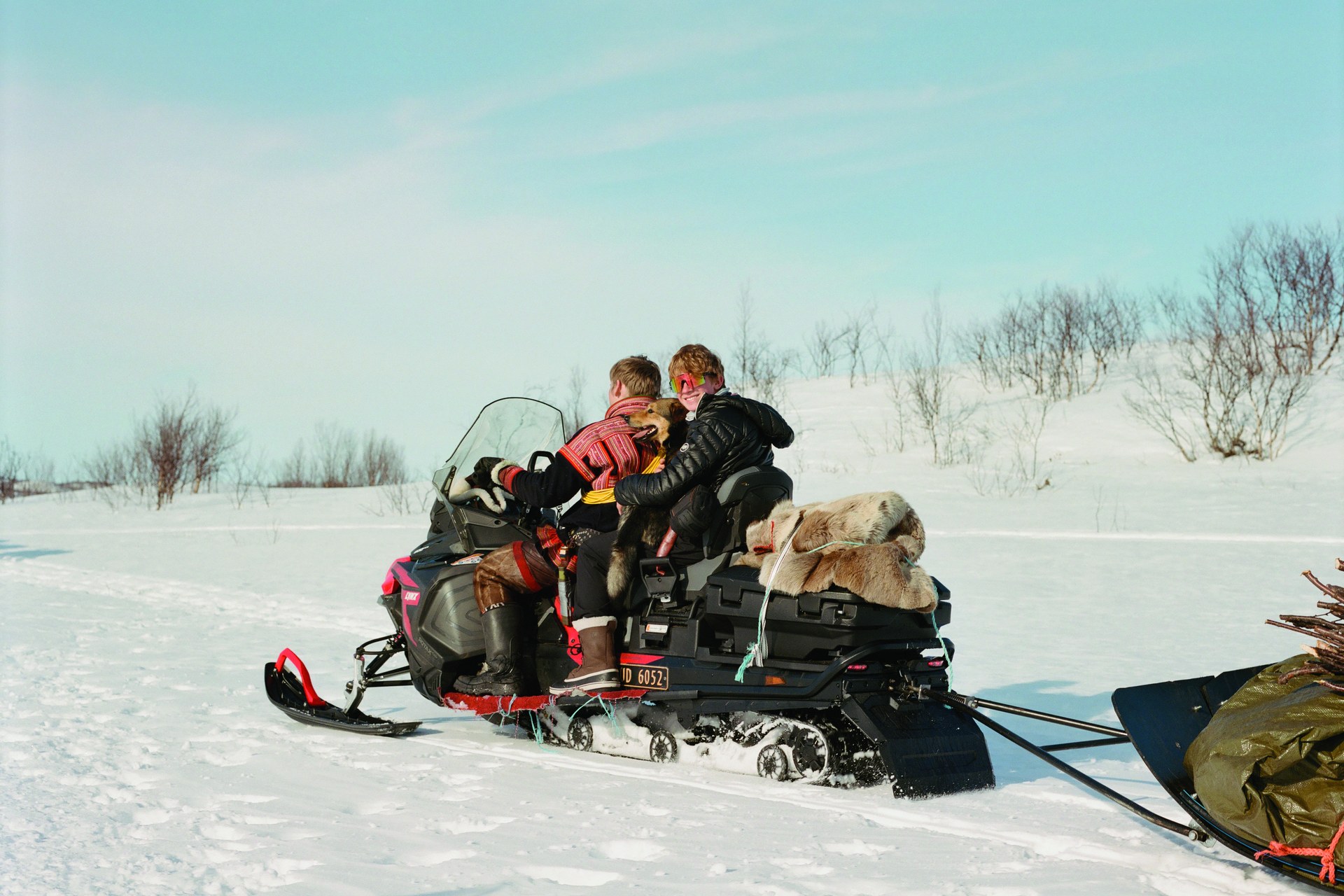
Then we’re off again, everything loaded onto the sledges. Zac is driving one of the snowmobiles, a dog perched on his lap. There’s excitement and energy as a tide of reindeer moves in front, the sound of bells disappearing into the vast blue sky.
The clicking hooves are a trill of insects fizzing through the landscape. ‘It’s so they can stay together in the dark,’ Nils explains. ‘The sound comes from a tendon in their foot sliding over bone as they walk.’
Five other tourists are in the group. The cameras, selfie sticks and especially the drone which one guest flies overhead can feel intrusive – but tourism helps keep the tradition alive. ‘We used to be self-sufficient,’ Nils says. ‘Now reindeer herding is harder and prices are higher, so tourism helps.’
A Changing Landscape
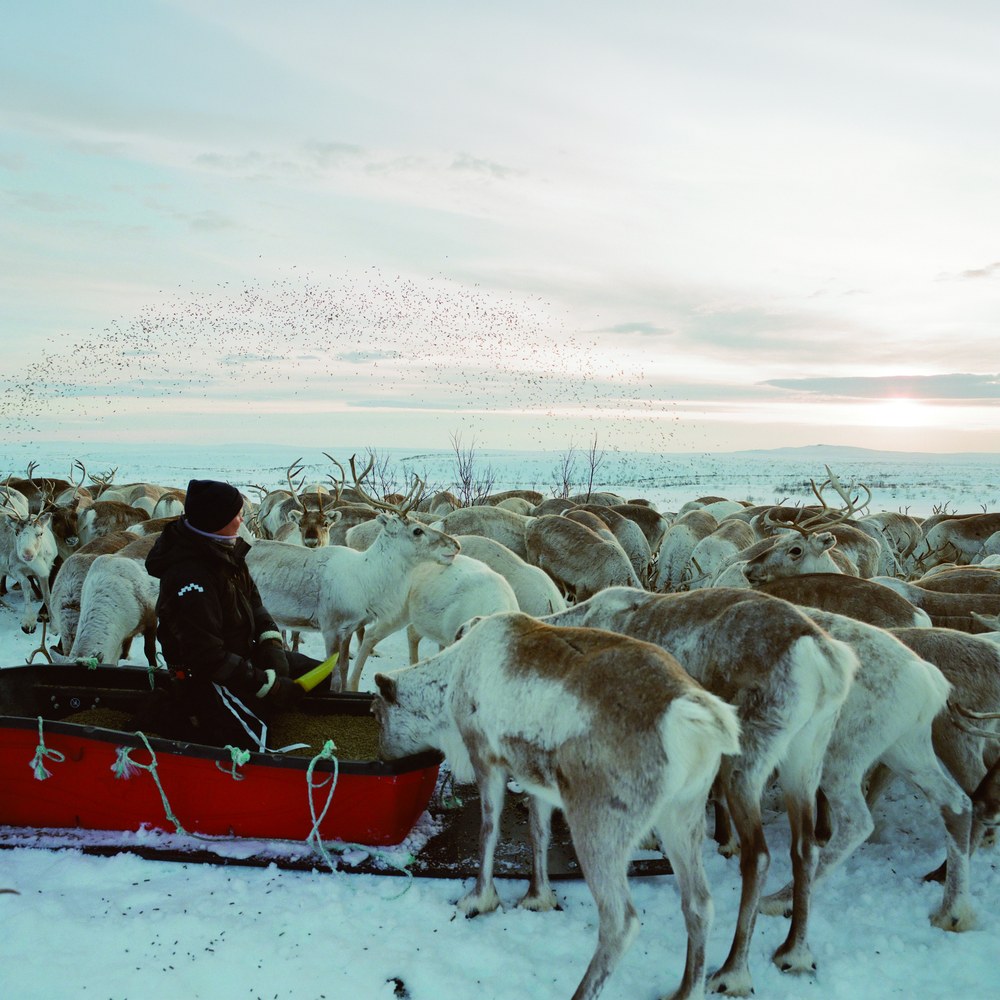
The spot of our next camp is spectacular, but Nils is worried. ‘The snow is hard because of global warming,’ he says. ‘It was never like this when I was a child.’ The pasture is too poor for grazing, so the reindeer need expensive supplementary feed. Archie rides in a red sleigh, scattering arcs of pellets into the midst of the herd like the Pied Piper of Hamelin.
That afternoon in the tent, Nils talks and I realise nothing here is black and white. Norway is celebrated for its rising numbers of electric cars, but green energy is not good for everyone. ‘Wind turbines go up on high mountains, which is where the reindeer feed in summer,’ he says. ‘These companies all take land from the Sámi.’
Sápmi, the Sámi’s homeland, stretches across Norway, Sweden, Finland and Russia; in Norway, there are over 40,000. For decades, government assimilation policies sought to quash their language, religion (their sacred drums were destroyed) and way of life.
A turning point came after fierce resistance against a hydroelectric dam on the Alta-Kautokeino River; and in the 1980s, the Sámi were finally recognised as an Indigenous people, establishing their own parliament in nearby Karasjok. Nils explains the importance of this way of life. ‘It’s in our blood to follow the same paths as our forefathers. If you take this from me, then I am nothing.’
‘It’s in our blood to follow the same paths as our forefathers. If you take this from me, then I am nothing’
I find I love waking to nature’s details: as the snow melts inside the tent, it reveals a carpet of berries, heather, leaves and lichen. Some days we go ice fishing on frozen lakes, drilling through to catch trout and Arctic char, and Heaika teaches my sons to lasso. In turn, they teach Heaika and Inga French cricket and rounders in the snow.
And as I fall into a deep drift attempting to find a wild loo, ptarmigans, hidden in their white winter coats, flare up from the wilderness.
The Sacred Stone
On the last day, the mountains fold into a Narnian world of sparkling white. I crest a hill and face a landscape as untouched as a newborn universe. The silence is broken only by the laughter of my sons as they appear over the horizon.
We’re heading to a sacred stone. ‘We have several of these powerful places,’ Nils says. ‘We call them sieidi.’
The rock suddenly appears, as if dropped from above, shaped like a giant tulip, blooming from the snow. Antlers have been offered, and a necklace hangs from one. ‘My grandfather once lost his herd,’ Nils says. ‘He came here to ask for help, and the next day found them grazing around this rock.’
We stand for a while in quiet thought. In a world that has asked the Sámi to give up so much, I celebrate what remains and marvel at the culture’s strength.
BOOK IT
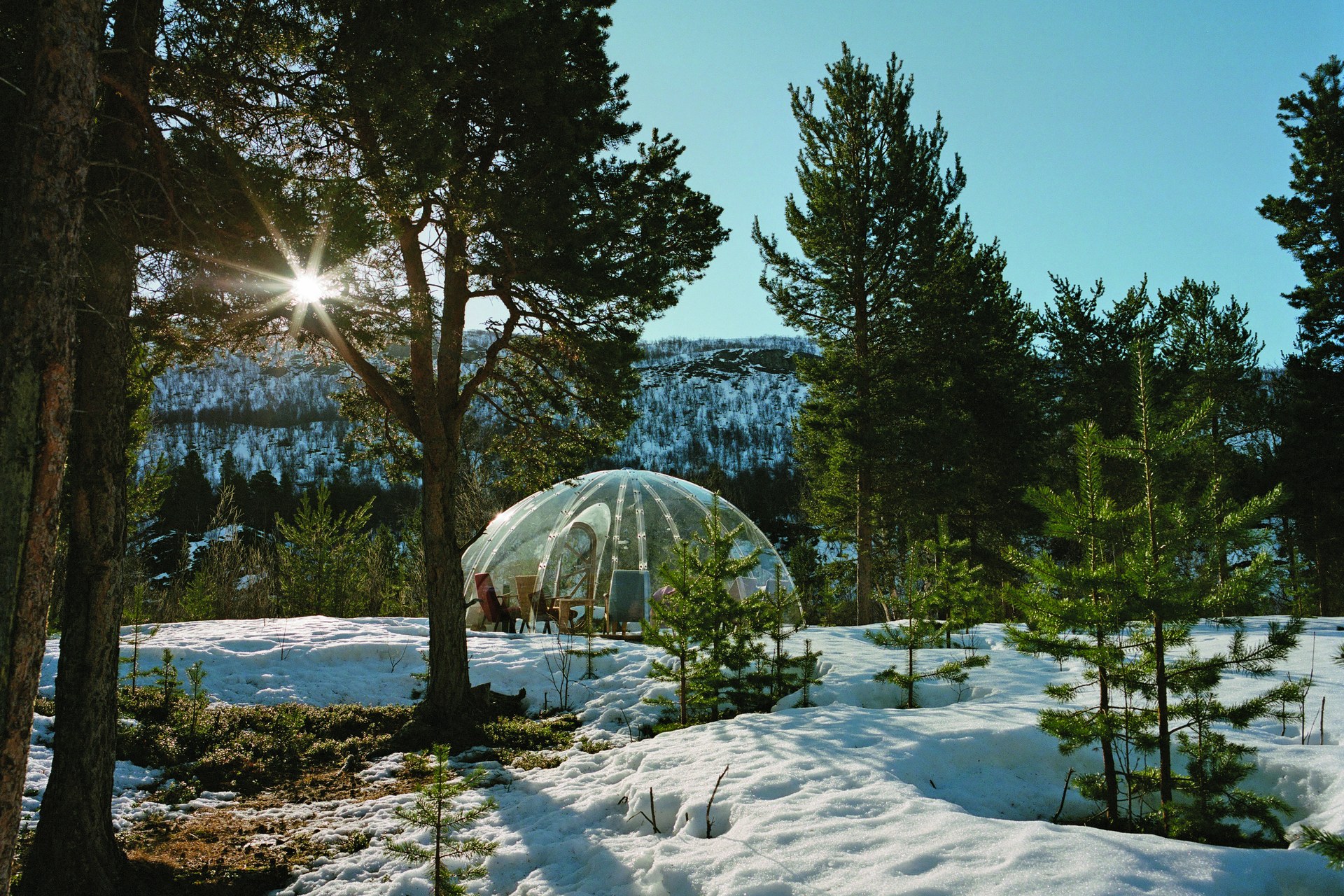
Trek with the Sámi from £3,169pp with engholm.no or with visitnatives.com. Kate stayed in Alta at Onga, which also offers overnight stays in glass aurora domes to view the Northern Lights.
Kate’s return flights from London Heathrow to Alta had a carbon footprint of 603kg of CO2e (ecollectivecarbon.com)