


Take Up Residence At The Home Of A Pre-Raphaelite Painter
By
2 months ago
Though his artwork hangs in Tate Britain, Arthur Hughes is one of the more forgotten painters of the Pre-Raphaelite movement
In 1848, there was only one clique to be in. And any artist worth their salt stuck outside the sacred circle would look on in envy at those admitted to the inner sanctum.
The Pre-Raphaelite Brotherhood were the innovators, the hipsters, the cool kids stirring the pot. Heralded by artists William Holman Hunt, John Everett Millais and Dante Gabriel Rossetti (with William Michael Rossetti, James Collinson, FG Stephens and Thomas Wolner also admitted to the fraternity), only a special few – Ford Madox Brown, Edward Burne-Jones and Williams Morris – managed to weasel in beyond the group’s initiation, while others, though basically one of the brothers, like Christina Rossetti and Swinburne, were never granted official admittance.
Even if the esteemed circle was limited in number, it must have been just as thrilling to bask in their shine from the outskirts. And though Pre-Raphaelite painter Arthur Hughes never quite made it into the brotherhood, he could at least truthfully call himself pals with some of the clique’s biggest stars. With his Georgian manor house now available to rent, discover more about the Pre-Raphaelite artist who remained trapped on the edge of notoriety.
Discover Arthur Hughes’s Home

Who Was Arthur Hughes?
Born in London in 1832, Arthur Hughes first entered the world of art in 1846 at just 14 years old when he was admitted to Somerset House to learn his craft under the tutelage of renowned Belgian painter Alfred Stevens. It wasn’t, however, until he moved onto the Royal Academy and happened to discover a copy of The Germ – the famous Pre-Raphelite publication produced by the brotherhood – that he got a chance to meet his artistic idols: John Everett Millais, William Holman Hunt and Dante Gabriel Rossetti.
Though his name is less well-known than these today, Hughes did earn plenty of his own stripes across his career. One of his first major works, Musidora Bathing (inspired by James Thomson’s poem Summer) was hung at the Royal Academy when he was only 17. From then he contributed to the Royal Academy exhibition almost annually, as well as exhibits at Grosvenor and New Gallery.

Throughout his career, he continued to brush shoulders with his starry idols. When his 1865 painting of Ophelia – now found in the Toledo Museum of Art in Canada – hung near Millais’ (much more famous) version of the same name, the pair became good friends. So much so that Millais invited Hughes to model for his painting The Proscribed Royalist.
While his Ophelia didn’t exactly make the same reed-dashed waves as Millais’, Hughes did eventually make a lasting mark of his own in the form of April Love – which still hangs in Tate Britain today. The painting made such a splash among the Pre-Raphaelite clan, in fact, that it was purchased by none other than Pre-Raphaelite darling William Morris.
Other notable works by Hughes include The Long Engagement (inspired by John Everett Millais’ earlier ‘couple’ paintings), his illustrations of the Keats poem The Eve of St Agnes and Shakespeare’s As You Like It, as well as the painting Springtide – which like April Love starred his wife Tryphena Foord as the model. Even if he wasn’t part of the official clan, he could follow their ways, and everybody knows any good Pre-Raphaelite painter must become romantically entangled with their models.

In 1857 Hughes finally got his chance at making history when golden boy Dante Gabriel Rossetti eagerly persuaded Hughes to join him and a group of other young artists in painting the walls of the newly opened Oxford Union. Together the painters fancied up a series of frescoes inspired by the legend of King Arthur, with Hughes chosen to paint the ancient king’s death. Tragically for Hughes and the rest of the gang, they failed to prepare the walls properly, leaving the paintings to deteriorate over time with now only the barest trace visible.
But unfortunately that wouldn’t be the last time poor old Hughes found himself erased from history. When he died in 1915 at his Kew Green home (where a blue plaque hangs today), he left around 700 known paintings and drawings, along with over 750 book illustrations. But when his wife died six years later, all his possessions passed to his daughter Emily. Forced to move to a small home to save money, and with a shortage of space available, she destroyed her father’s remaining preparatory sketches, private papers and correspondence.

Step Inside His Home
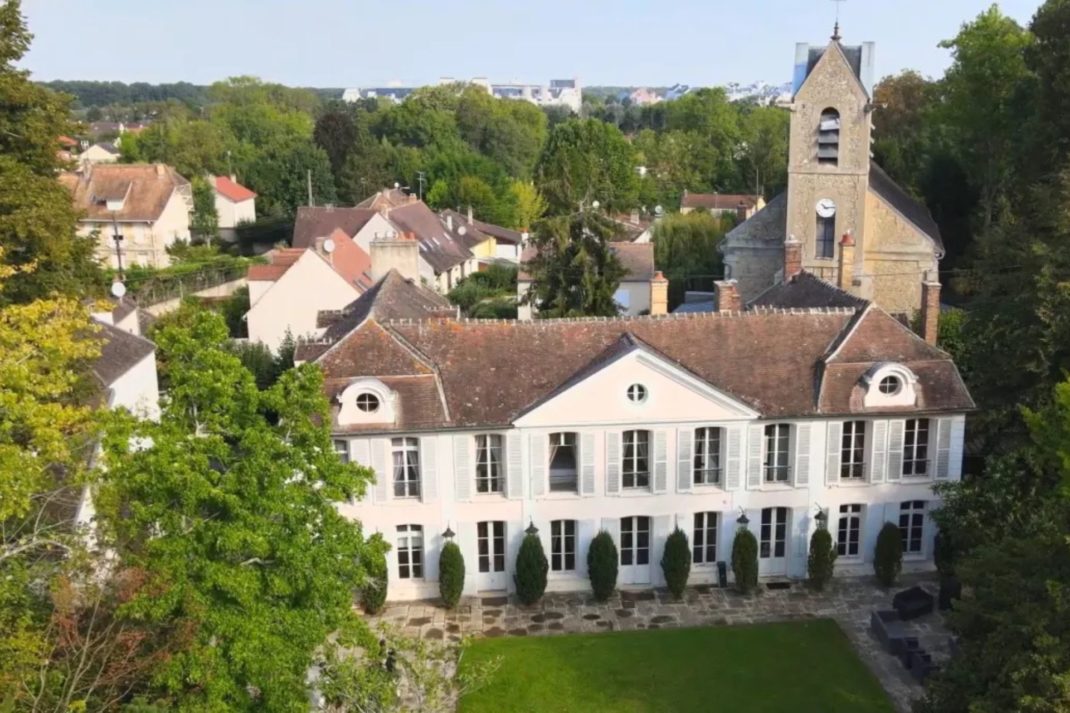
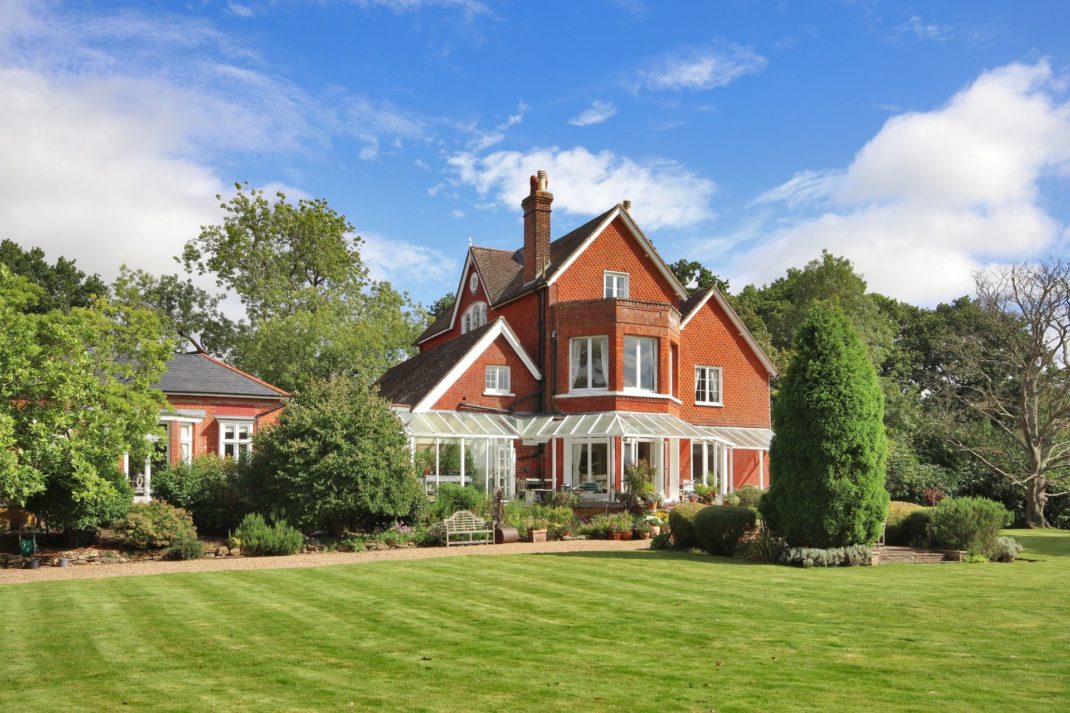
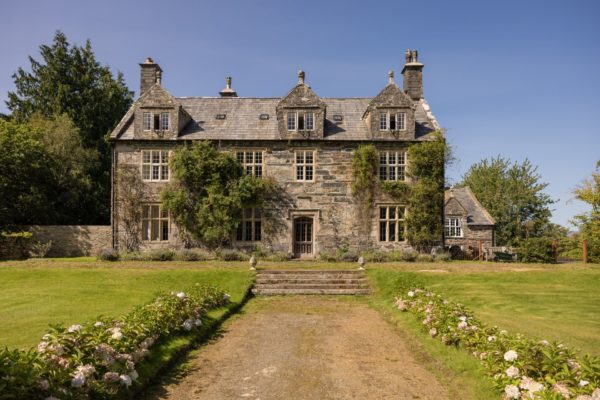
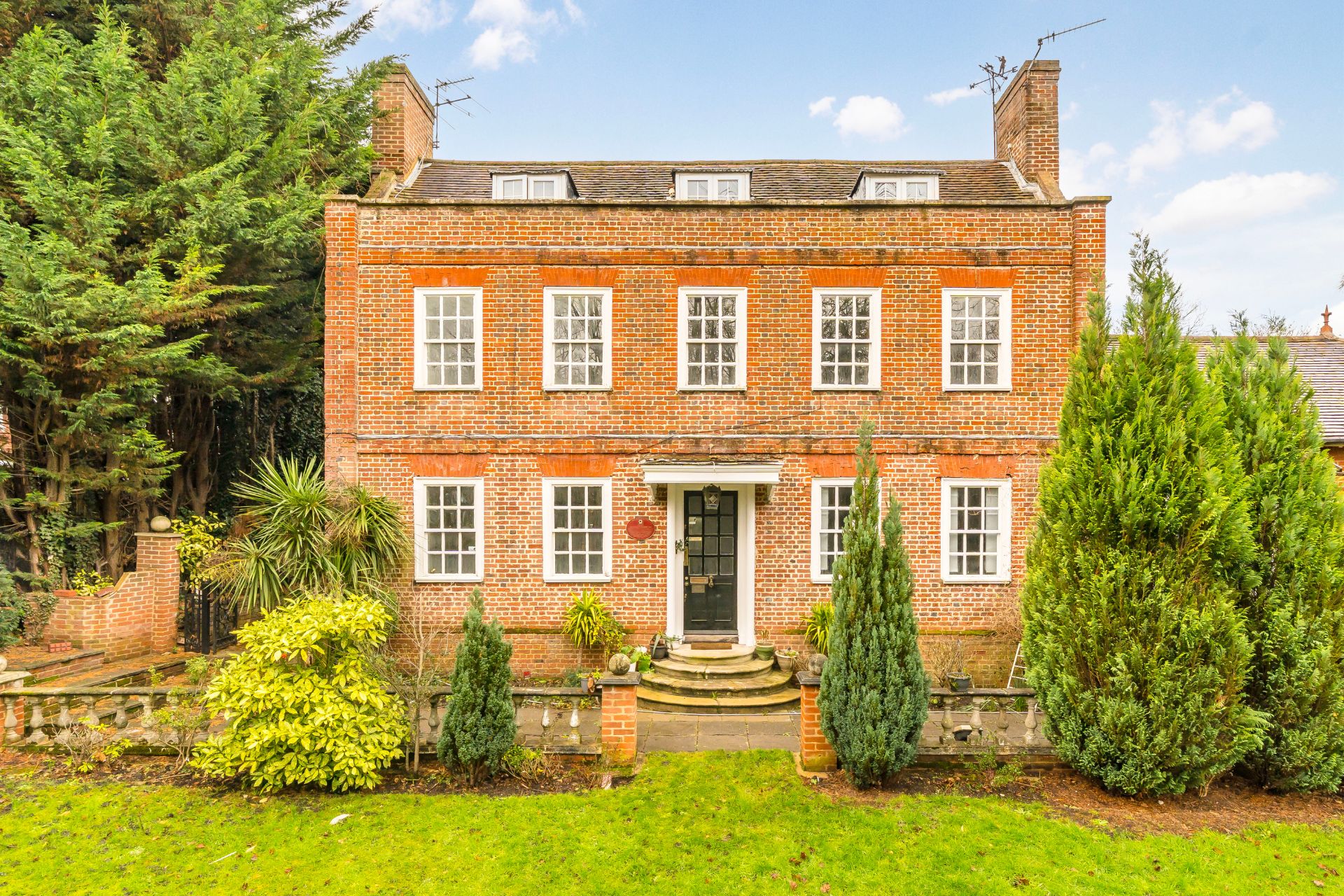
Though much of Hughes’s legacy has been lost to time, this London home is the perfect way to keep his memory alive, with the artist having resided in Wandle Manor from 1876 to 1891. Located in Wallington – on the London edge of the London-Surrey border – Wandle Manor is one of the last surviving large Georgian houses in the town.
With a history tracing back to the 15th century when another older property sat on the site, this Grade II listed manor house dates back to the early 1700s. With six bedrooms, four reception rooms, a conservatory and a cellar, stand-out features include the artist’s studio added by Hughes at the north end of the building, the restored hand-painted doors in the foyer, and the red plaque which commemorates the artist.

Located beside the river Wandle and the nearby Beddington Park (a Pre-Raphaelite dream of weeping willows and arched stone bridges), and with an acre of land to call its own, this rental may just be the dream spot for an artist in need of inspiration.
Available to rent for £4,950pcm. Find out more at dexters.co.uk