


How The Other Half (Want To) Live
By
3 months ago
‘The wealthy have never been more mobile. Countries are actively attracting these individuals through tailored visas and tax incentives’

Liam Bailey draws on market-leading insights to reveal what the über wealthy really want from their homes.
How (& Where) Do UHNWIs Live In 2026?
1. Silence
The most frustrating challenge when selling homes to the wealthy is that their top requirement from estate agents is: silence. Everyone wants access to them, so they surround themselves with advisors whose main job is to keep you out.
2. A Home That Behaves Like A Five-Star Hotel
If you do manage to get access to a wealthy buyer, you will increasingly find that their demand is for an address that comes with housekeeping, a concierge who knows their dog’s name, and exceptional on-site facilities. Our recent Residence Report confirmed that branded residences globally are set to rise from 611 today to well over 1,000 schemes by 2030. In short: buyers want comprehensive luxury, minus the admin.
3. A Wellness Regime That Actually Moves The Needle
‘Best body ever’ now reads longevity, not tight abs. Luxury developers are attempting to attract the wealthy with magnesium shots, bio-marker testing and serious clinics under their apartments, from Surrenne in London to SHA in the UAE. The new baseline is science-backed wellness, not scented steam.
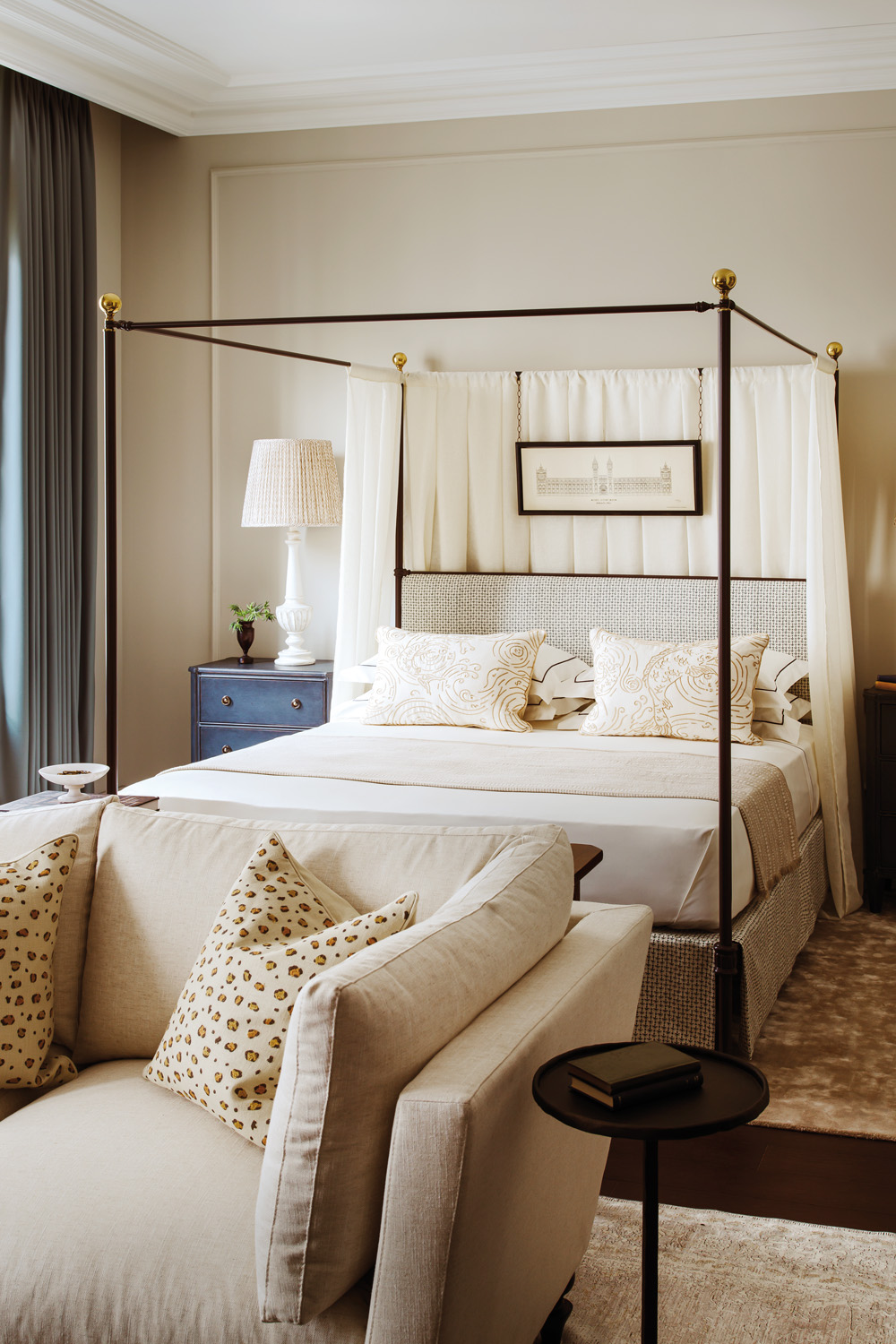
Branded residences like that at The OWO offer luxury minus the admin.
4. Community, Not Just Amenities
For today’s footloose wealthy, the new luxury is belonging. Private clubs, such as that at Six Senses London, are multiplying within high-end residential developments, with the London model now extending to Milan, Zurich, and Hong Kong. Buyers are drawn to a sense of engagement and community, often fostered through exclusive clubs and shared rituals.
5. A Table That Tells A Story
If you want a sign of the rising importance of hospitality, the forthcoming Maybourne Saint-Germain will contain a 101-key hotel and 23 branded apartments, all served by no less than 12 restaurants and bars. Dining is now integral to community anchoring. Developers are partnering with Michelin-starred chefs. Whether residents want bespoke menus served in-residence or the perfect martini, the F&B offer must be intensely curated.
6. Making An Exhibition
Wealthy collectors are thinking bigger, requiring real estate that accommodates their passions. Expanding car collections call for bespoke storage or direct apartment access, such as the Dezervator in Miami. Interiors increasingly feature gallery-style walls and unique spaces for rare collectibles, designed to enhance storytelling. Even wine collections are no longer hidden away in cellars – the tasting room itself is now a showcase, there to impress.
7. A Bigger Boat
As superyachts and private jets have grown in size, so too has the requirement for second-home getaway locations to offer larger berths and longer runways. With US$3.6bn spent on super-prime yachts and US$22.7bn on private jets in the past 12 months, demand for making off-grid locations accessible is only set to increase.
8. True Rarity
As the wealthy gain access to an ever-wider range of locations, the search for true frontier markets continues. Emerging hotspots for luxury residential development include Belize, Fiji, Japan’s snow belt, and Sardinia. Even established destinations are presenting new opportunities – Paris, long a market that felt it had no need for fresh luxury developments, is now seeing a wave of new schemes.
9. On The Move
The wealthy have never been more mobile. Countries are actively attracting these individuals through tailored visas and tax incentives, such as Italy’s flat tax on foreign income and the appeal of low-tax US states like Texas and Florida. Residency-by-investment schemes, often tied to property ownership, are further fuelling rapid growth in prime housing markets.
10. Where Next?
Global demand has driven luxury house prices sharply higher in markets such as Dubai (up 147 percent in five years), Palm Beach (up 117 percent), and Aspen (up 73 percent). While lifestyle remains the primary driver of purchase decisions, investment is a close second. With prices in Miami and across Florida slowing, Dubai continuing to rise, and Hong Kong back in positive territory, does luxury London’s recent decline signal a reassessment by the world’s wealthy?
Liam Bailey is Knight Frank’s global head of research.