


Women’s Prize Shortlistee Addie E. Citchens On Her Debut Novel, Patriarchy & What Comes Next
By
5 months ago
The Women's Prize for Fiction winner is announced tomorrow
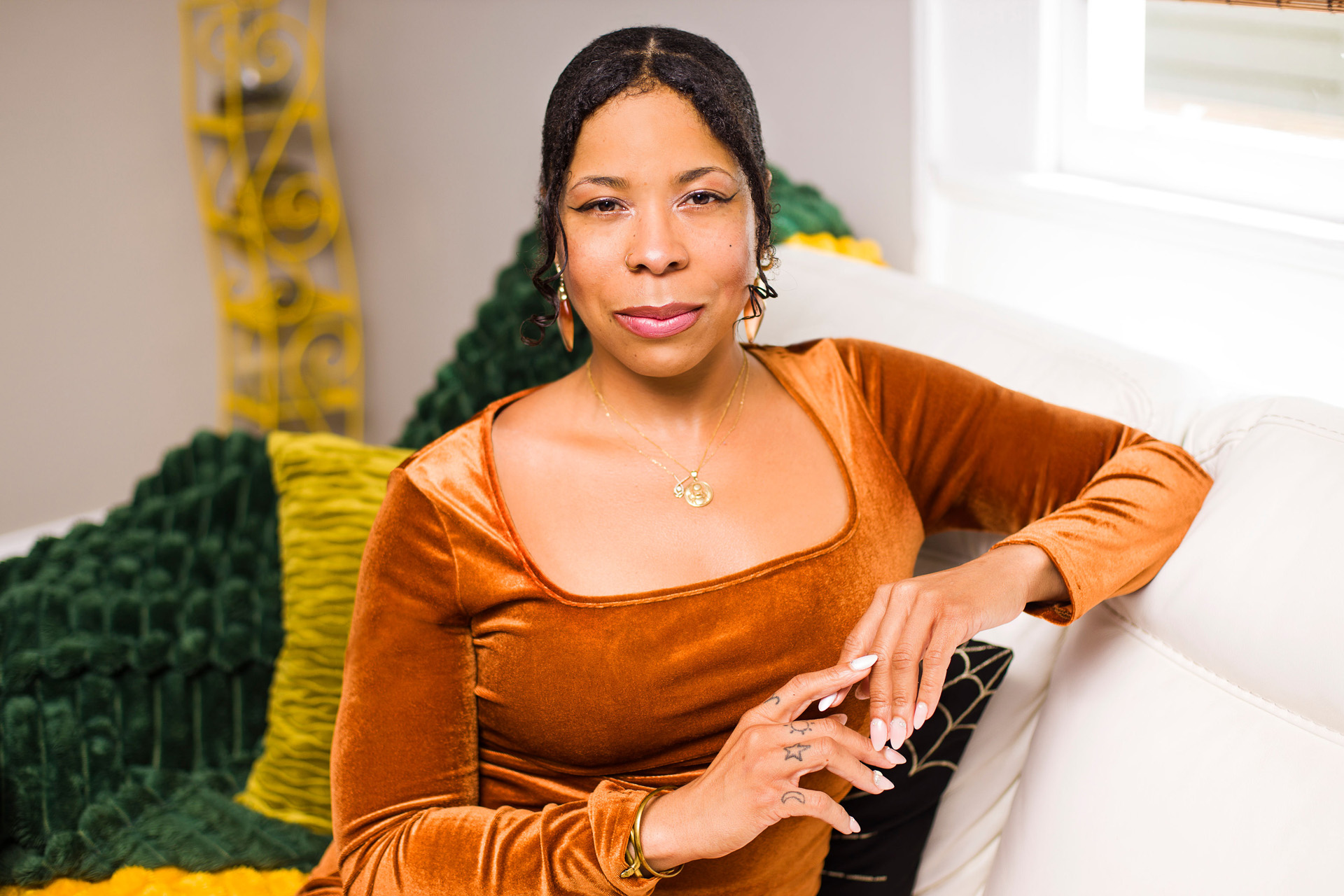
For 30 years, the Women’s Prize for Fiction has celebrated exceptional writing by women – and 2026 is no different. This year’s shortlist includes Addie E. Citchens’ debut novel Dominion, a multi-generational story of Black women navigating patriarchal structures within the church.
Born in Clarksdale, Mississippi, and now based in New Orleans, Citchens has published short fiction in The New Yorker and The Paris Review. Ahead of tomorrow’s winner announcement, C&TH sat down with her to discuss the prize, her debut novel, Toni Morrison’s influence, and the women at the heart of Dominion.
Q&A: Addie E. Citchens
What was your reaction when you heard Dominion had made the Women’s Prize shortlist? How does it feel to be recognised alongside such strong work?
Honestly, I am still in disbelief. I don’t know how I got here. I did set out to make something that resonated with people, but as an artist, who is sensitive about their work and always critiquing their words after the fact, I see my novel as this imperfect thing standing among the gorgeous work of such wonderful and esteemed individuals.
All that said, I am grateful to be here and grateful to be recognised for what I’ve been trying to do for so long.
The Women’s Prize is specifically for women’s writing. How important is that distinction to you, and what do you think it signals about the literary landscape?
It is supremely important to recognise women’s writing. Everything we write is filtered through a patriarchal lens and thus judged by it, and because that lens is smudged by the biases of men, it is distorted and deemed lesser. Women need to be seen by each other in the purest ways, and the Women’s Prize, with its cast of wonderful female judges allows for this and signals to me we are creating a room of our own.
The novel is told through the perspectives of the women around Reverend Sabre and Wonderboy. Why did you choose multiple voices rather than a single protagonist?
How a Baby Boomer has learned to navigate patriarchal structures can be very different from how a Millennial approaches the very same issues. I wanted to use the novel to illustrate multi-generational methods of coping with the structures that contain and restrain us.
Your novel explores the compromises women make to survive within patriarchal systems, particularly within the church. How much of that came from your own childhood observations?
My whole childhood I watched marginalised folk, like women and queer folk, vie for the oppression under doctrines that sought to diminish their value and intellect and rightful place, and it always struck me as weird and harmful. I feel I had to blurt the obvious shenanigan and bullshittery of it all.
The blurb struck me, how this violent act propels a novel that ‘exalts the beauty and strength of Black womanhood’. What does that phrase mean to you, and was that an intentional focus?
The strength bit wasn’t necessarily an intentional focus, as the trope of Black women’s strength has been damaging us since the Triangle Trade forced the diaspora. I mostly wanted the story to be an example of Black women’s persistence and beauty, in spite of, and to illustrate the fact we are fragile and tender just like everybody else. That tenderness doesn’t always show up in the same ways, as the legacy of slavery, discrimination, and segregation has very much shaped us to be these portraits of fortitude, but it is there, and it bears notice.
You told The Rumpus the book took six months to write but 13 years of ‘living and maturing’. What changed in you over those years that made you ready to write this story?
I had to decenter men and dissect the patriarchy (a process I hadn’t even recognised as necessary when I began the novel) before I could get the right ending for the novel.
You also mentioned the second half changed dramatically after your FSG fellowship. What shifted in your vision for the book?
My editor, Jenna Johnson! She asked me if the story was saying what I wanted to say, and in that iteration of the novel, it absolutely was not. Her question spurred my ability to make the changes necessary.
You’ve published short stories in The New Yorker and The Paris Review before this novel. How does writing short fiction compare to sustaining a novel’s voice?
For me, a short story is a delicious snack you assemble to assuage a quick need, and a novel is a sumptuous holiday dinner, a process of dicing, baking, choosing, sweating, sampling, and adjusting for flavour.
You grew up in Clarksdale, Mississippi, and now live in New Orleans. How does the South – past and present – live in your work?
The South is the source of my story and the voice of my work, the ache, the humour, the rhythm, the musicality, the deceptive depths.
You cite Toni Morrison and Zora Neale Hurston as literary idols. Can you point to a specific moment in reading either of them where you thought, ‘This is what I want to do’?
Reading Their Eyes Were Watching God was the first novel I read that let me know I could deal with heavy, nasty, traumatic topics with nuance, humour, and brevity. I still read it regularly in awe.
Dominion has been compared to Morrisonian fiction. What does Morrison’s example give you as a writer?
Morrison’s work gave me the freedom to just do it. Her words aren’t like a saw to hack into the reader’s subconscious, it is a laser that burns through it. Her work says: you’re going to get this story in this focused, interesting, powerful way, whether you are ready for it or not, whether you want to hear it or not.
Dominion has attracted lots of awards buzz. How are you managing the attention, and what does it mean for your next book?
Dominion‘s success has meant a lot of GI bubbling and perimenopausal sweating for me. I know it should feel like pressure on the next book, but seeing that there are changes I would make to the novel in hindsight, I feel like it frees me to fashion my new book into precisely what it needs to be.
What’s a story or character that’s been nagging at you – one you might write next?
I have a two-book deal with FSG, so the next book is already locked and loaded. But I have begun the research on a sweeping, generational jukebox of a novel based on a now-forgotten Mississippi neighbourhood that was a model of resistance throughout the Jim Crow era South. I can’t wait to get the time to really immerse myself in it. I love it already.
You’ve said you treat writing as a vocation. What does a typical working day look like for you?
For years, my ritual was to wake up, get coffee, and sit at my keyboard for two hours. Then I would work out, do chores, and get right back to the keyboard in the evening for a couple of hours. Lately, as I’ve been meeting the demands of the marketing for Dominion, I’ve fallen out of that, but when I start this new work, I will return to my old ways.
Are there contemporary writers besides those you’ve already mentioned whose work is shaping how you think about fiction right now?
Absolutely! Kiese Laymon, Han Kang, Agustina Bazterrica, Dawnie Walton, Cebo Campbell, Saara El-Arifi, P. Djeli Clark, Oyinkan Braithwaite, and Ayana Gray are some of the contemporary writers that are shaping what and how I write. They are emboldening me to do bigger, deeper, more terrifying, and more exciting work.
The winner of the 2026 Women’s Prize for Fiction will be announced on Thursday 11 June 2026.
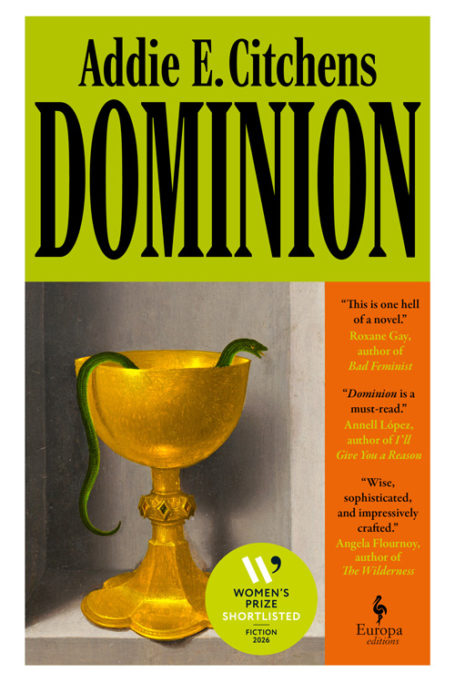
Dominion by Addie E. Citchens
Out now, published by Europa Editions.
Paperback, £12.99