


Surfing, Travels & Poisons: Agatha Christie: A World Of Mystery At The British Library Review
By
1 hour ago
This new exhibit tears up the image of Christie contained to the country house, shedding light on the adventures that shaped her works
James Prichard, Agatha Christie’s great-grandson and the CEO and chairman of Agatha Christie Limited, hates anniversaries. Because with Agatha Christie there’s far too many. ‘I find them silly, because if you look at someone like Agatha Christie there’s actually an anniversary every year.’ 2026 alone marks 50 years since the crime writer’s death, 100 years since the publication of The Murder of Roger Ackroyd, and 50 years since Sleeping Murder – and, one that Prichard failed to mention, 100 years since her mysterious disappearance.
In other words, though it comes in honour of her death date, the British Library’s new exhibition Agatha Christie: A World Of Mystery could’ve come at any time, at any date, in any year – Agatha Christie is just that consistently relevant. To date, she has sold 2 billion copies (and counting) of the near-100 books she penned in her lifetime. There have been hundreds of adaptations, and as the exhibition’s opening wall reveals, even more translations. On my commute, I pass two posters for her West End shows: Witness for the Prosecution and The Mousetrap. The world’s longest-running play, the latter will be celebrating its 75th consecutive year on-stage next year, a fact that would’ve staggered its playwright who is projected on screen in the exhibit jubilant to have achieved just 10 back in 1962.
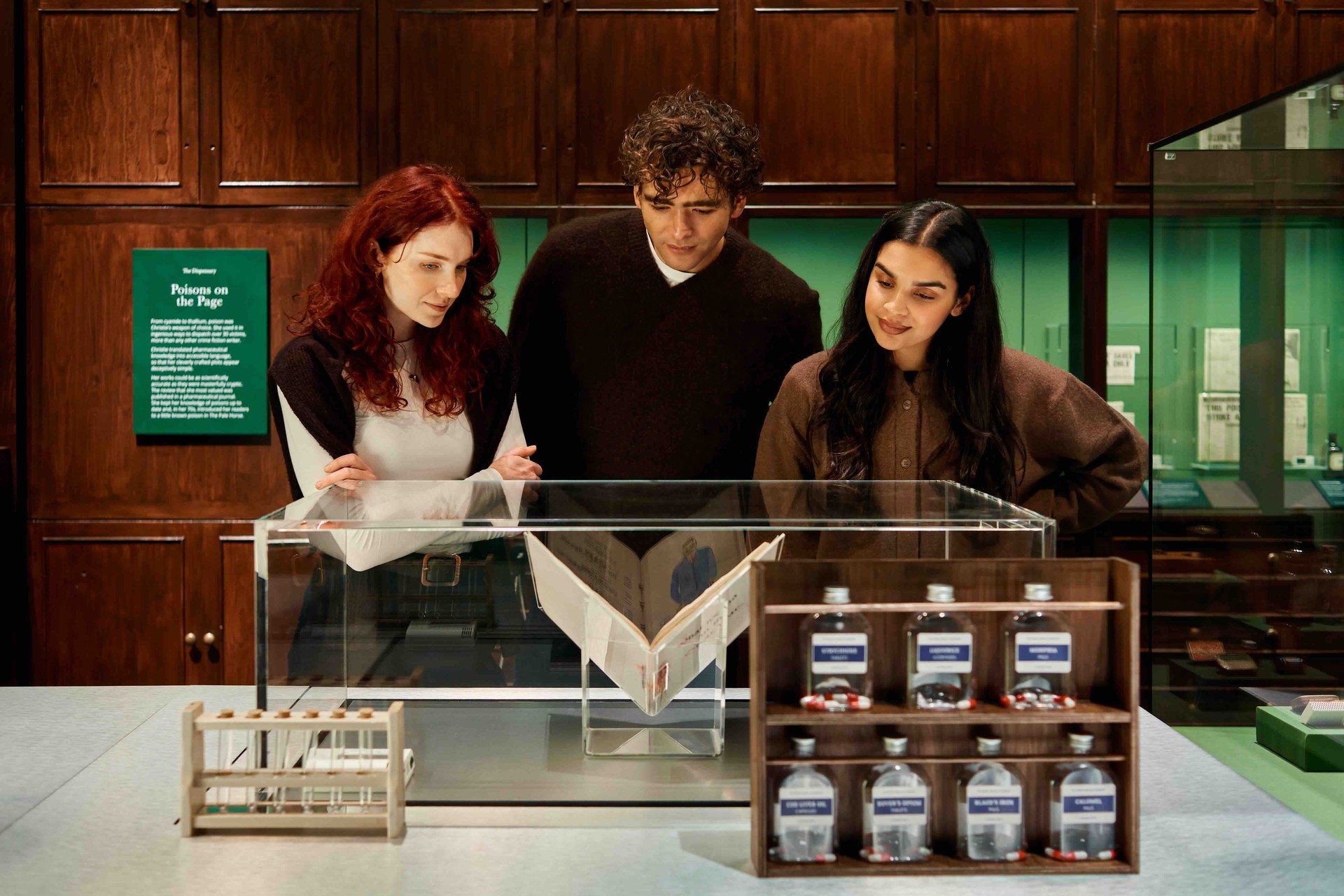
Visitors looking at What We Did in The Great War. On loan from The Christie Archive Trust. On display at Agatha Christie: A World of Mystery. Photo by Justine Trickett. © British Library Board
Though I’ve seen my fair share of Christie crime dramas throughout my time, it was only as I toured round this exhibit that I realised how little I knew about the woman behind the poisoned pen. Despite all the buzz, there remains a sense, says Prichard, that Agatha Christie has always been a bit ‘underestimated’ and ‘underappreciated’.
‘We can all argue as to why that is,’ he says during the exhibit’s unveiling. ‘Maybe she’s just too damn popular. Maybe it’s the genre thing – people don’t appreciate genre writing. Maybe it’s just because she’s a woman. I don’t believe that if a man had done what she did, they would not be feted from every single place. Now, certainly more than any time in my lifetime, but perhaps ever, she is taken more seriously by serious people – and I think she’s worthy of that.’
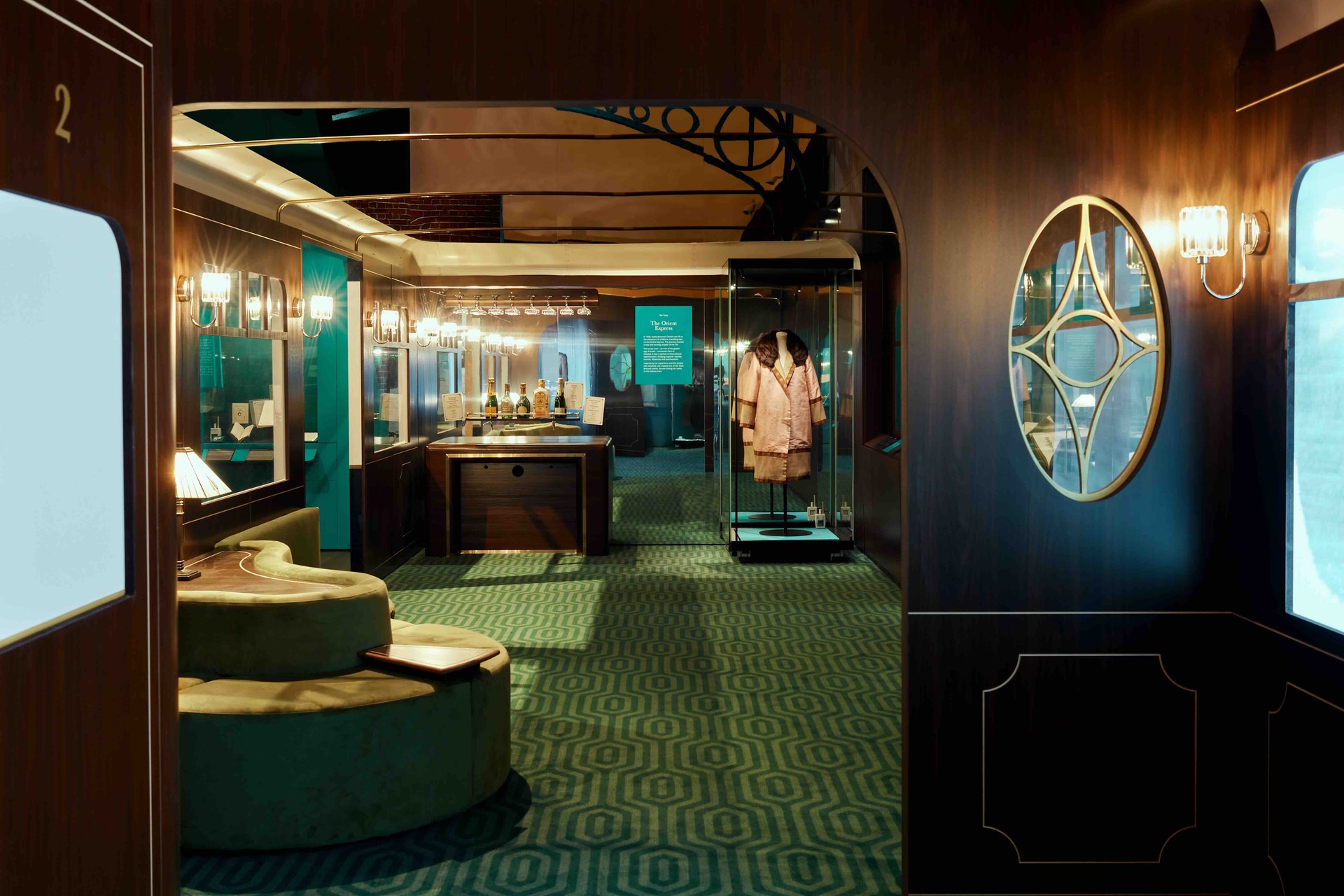
A replica train carriage at Agatha Christie: A World of Mystery. Photo by Justine Trickett. © British Library Board
‘Who, why, when, how, where, which’ are the words to open this new exhibit. It is how you’re taught to write in primary school. How you’re taught to craft an essay and an article. It seems a stunningly simple formula, and yet it was the secret to Christie’s success.
From these opening words, the exhibition leads through to a series of Cluedo-esque rooms, capturing key scenes and settings from Christie’s works and life. The first is the quintessential country home – reminiscent of Christie’s own childhood home in Torquay, and the setting of so many of her most beloved plots. ‘Easter eggs’ are laced throughout the wallpaper for keen-eyed sleuths, including a blackbird from A Pocket Full of Rye and a yellow iris for Sparkling Cyanide. Alongside momentos of her youth, and the ground-breaking editor’s letter which first suggested the ‘drawing room reveal’ idea, sits her first, and never before displayed, novel Snow Upon the Desert.
As Lucy Rowland, Agatha Christie: A World of Mystery’s lead curator, told us: ‘We’ve had rare and unparalleled access to Christie’s personal archive, revealing many things that have never been on public display before.’ She hopes that the exhibit will be accessible to everybody – ‘whether you’ve read every book multiple times, watched the TV shows with your family, or never engaged with Christie before’.
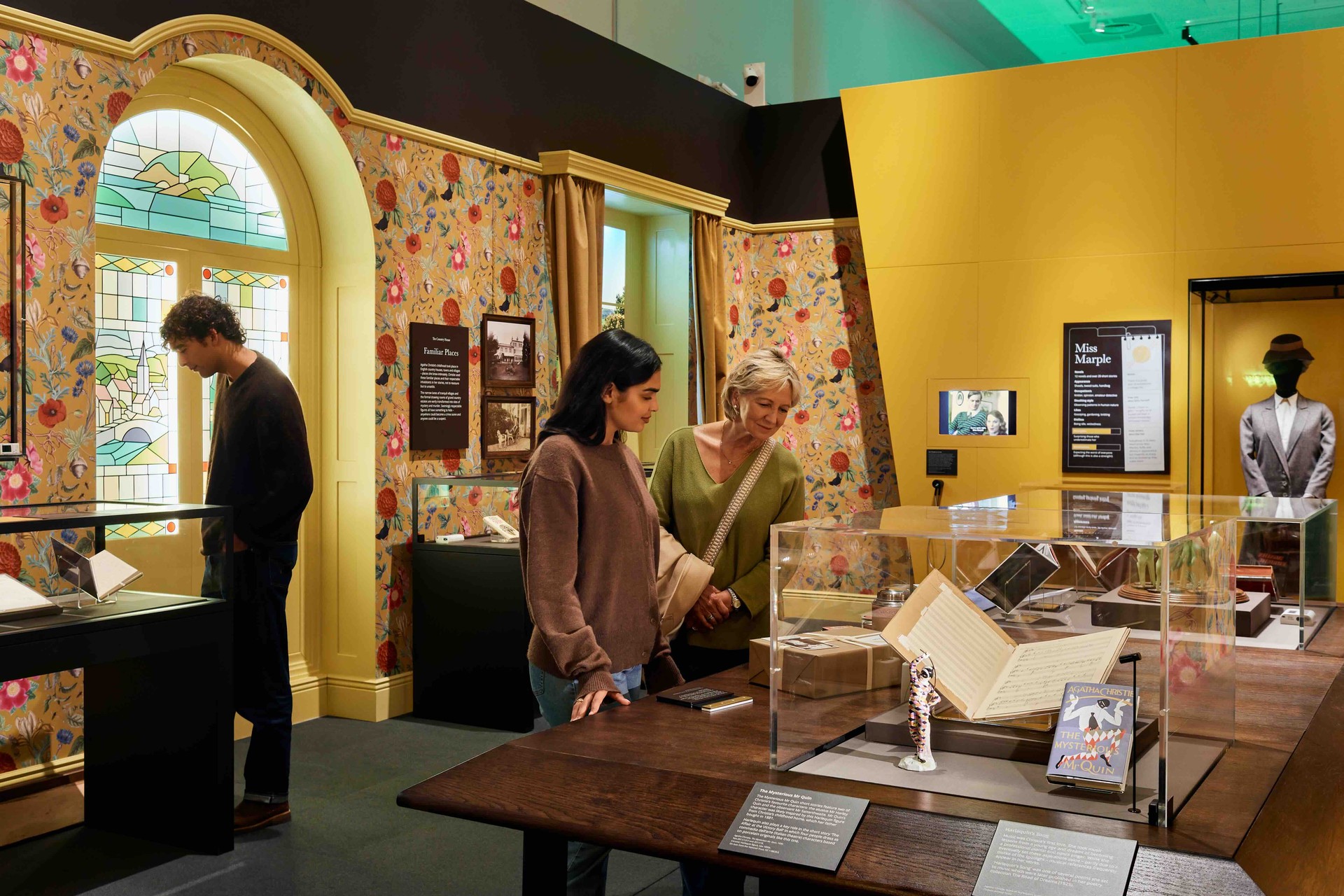
The Country House at Agatha Christie: A World of Mystery. Photo by Justine Trickett. © British Library Board
The room, like the following displays, is enriched by audio – chugging steam trains interspersed with the sprinkling of piano keys (Christie was an avid musician and even considered a career in music before deciding that she couldn’t handle the stage fright). There is a murder mystery on the go, with which to entertain kids, along with other fun, interactive displays like ‘How likely are you to survive an Agatha Christie novel?’ (I got moderate). References to adaptations abound in costumes and clips, with never-before or rarely-seen notebooks, scribbled with plots, maps and markings throughout. It is celebratory and considered, with the mandatory museum discussions about what was and wasn’t politically correct then and now, sat alongside all the myriad crime writers indebted to her style and craft.
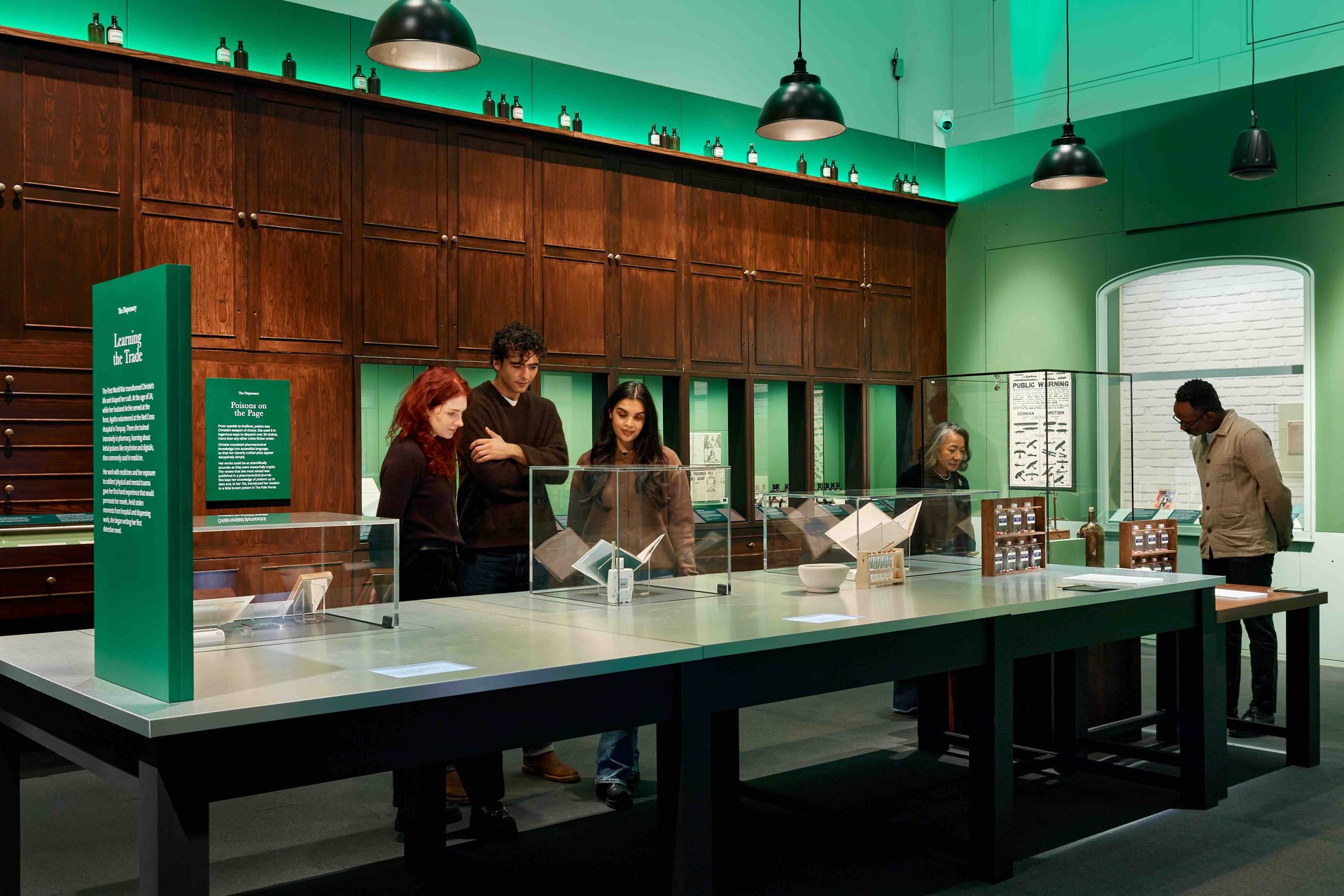
The Dispensary at Agatha Christie: A World of Mystery. Photo by Justine Trickett. © British Library Board
The public imagination has a tendency to entrap Christie in the country house: the zeitgeist image an older lady tapping away at her typewriter, curled up in a country pile. Here she makes her great escape. It is the subsequent displays that paint the most vivid (and oft-forgotten) portrait of Christie. From her early days as a debutante in Cairo to her later globe-spanning tour, Christie was far from some fuddy-duddy homebody. Rather, she was remarkably well-travelled for her era, and a woman well-versed in the world’s beauty and brutality.
This brutality is best observed in the WWI hospital dispensary, commemorating Christie’s time as a pharmaceuical dispenser at the Red Cross hospital in Torquay while her first husband Archie served in the army. It is here, aged just 24, that she developed her penchant for poisons – learning about lethal chemicals like strychnine and digitalis. This first-hand experience of pharmaceuticals, and her exposure to soldiers’ physical and mental trauma, went on to permeate her novels, as she diluted her scientific knowledge into accessible language for her readers. Included here is her recipe for arsenic, a notebook entry titled ‘Poisons: Possibilities for Books’, and a newspaper clipping about a real-world murder that stumped doctors. It’s only because the nurse had read The Pale Horse, that she knew thallium was involved.
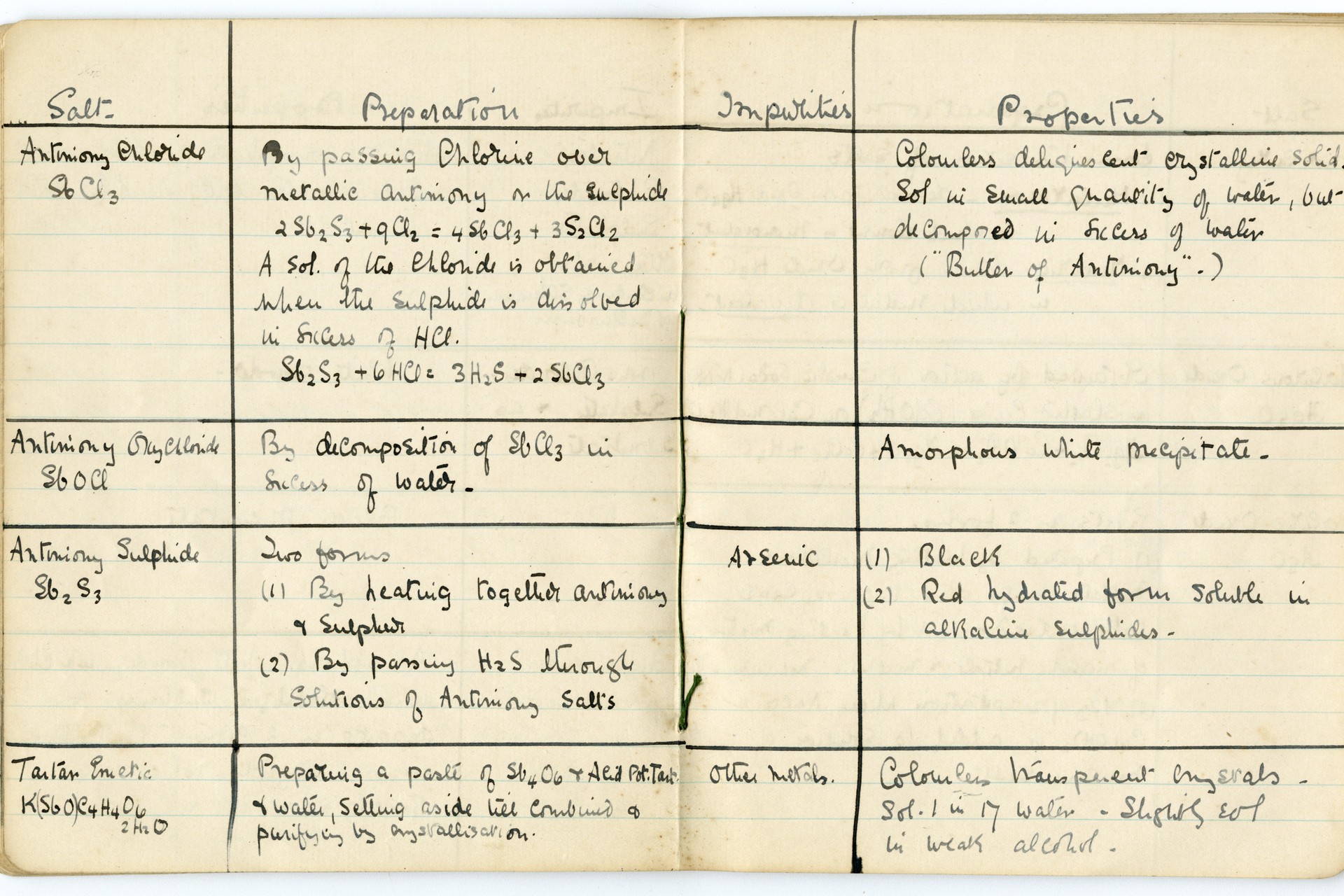
Agatha Christie’s study notes for her pharmaceutical exam taken in 1917. © The Christie Archive Trust
Following her days in the Detection Club, it’s a journey around the world. There’s the trip with Archie to promote the British Empire Exhibit in 1922, when, aged just 31 she embarked on a round-the-world, 10-month expedition of the country’s former colonies, spanning Canada, South Africa and Hawai’i (where she’s widely believed to be the first British woman to ever ride a standing-up surfboard). Then there’s her post-divorce adventures on the Orient Express in 1928 and 1931 – the latter of which left her stranded for 24 hours after a flood destroyed tracks. Her fellow passengers irritated her so much, suggests her letters, that she penned Murder on the Orient Express.
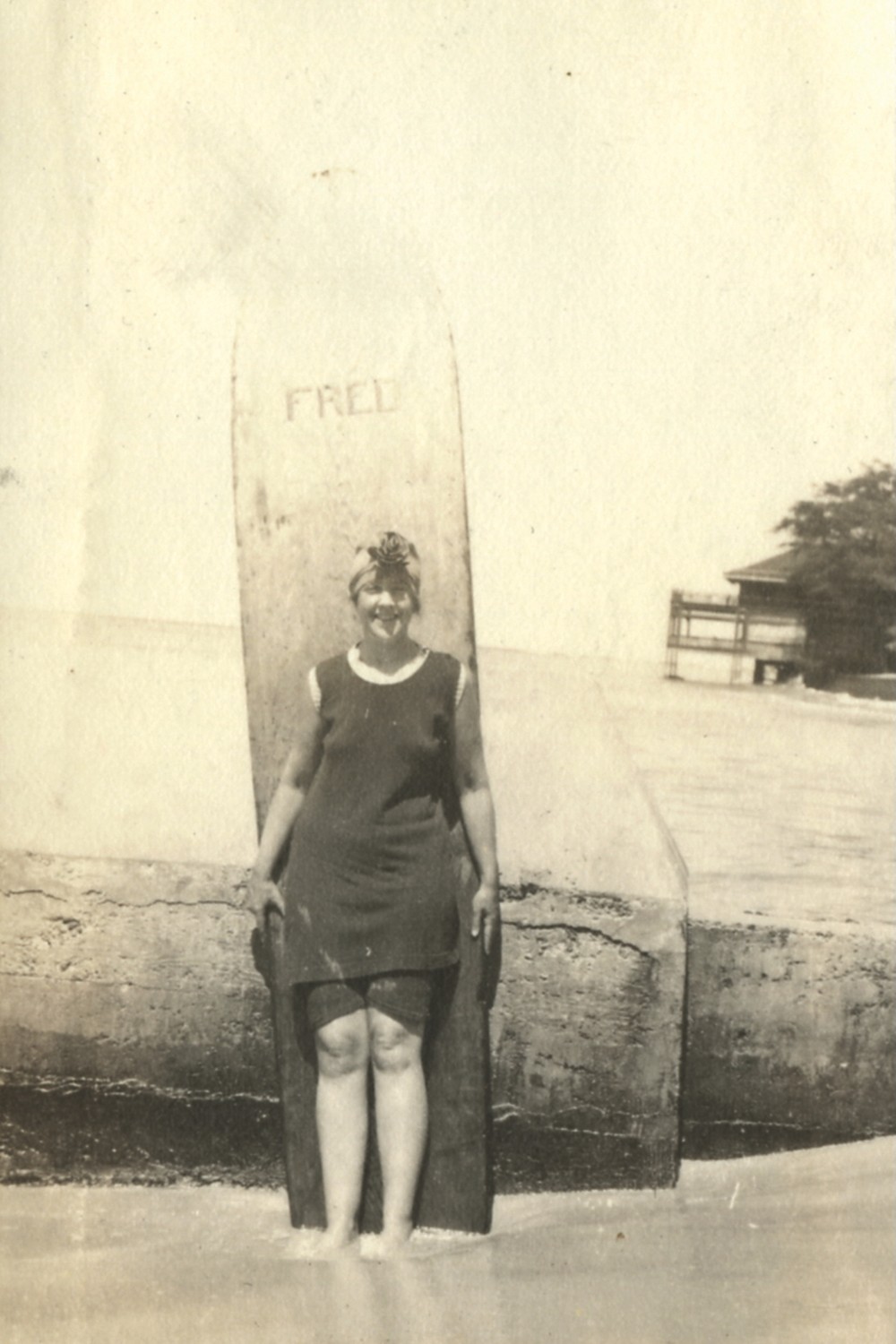
Image from Christie’s photo album (Honolulu). © The Christie Archive Trust
Her adventures continued into her later life, returning to the Nile and assisting her new husband, Max Mallowan, on his archaeological digs – experiences that seeped into Death on the Nile and Murder in Mesopotamia. Here we witness footage of the dig captured by Christie, and her portable typewriter, alongside her little-known pen-name romance novels, published under the pseudonym Mary Westmacott.
Journeying from Iraq to London via tube, we land in the theatre district, and the later years of Christie’s life. Though struggling to type and write, she continues to spin yarns down a dictaphone, on display alongside the audio. She remains a force to be reckoned with up until the last, protesting against film-makers polluting her beloved plots of profit (of the 1963 film Murder At The Gallop she said: ‘You cannot expect me to agree or to like the complete distortion of one of my favourite creations’) and plotting Poirot’s curtain call. It was originally planned during the uncertainty of the Blitz and released to the world in 1975, just one year before Christie’s own demise in 1976.
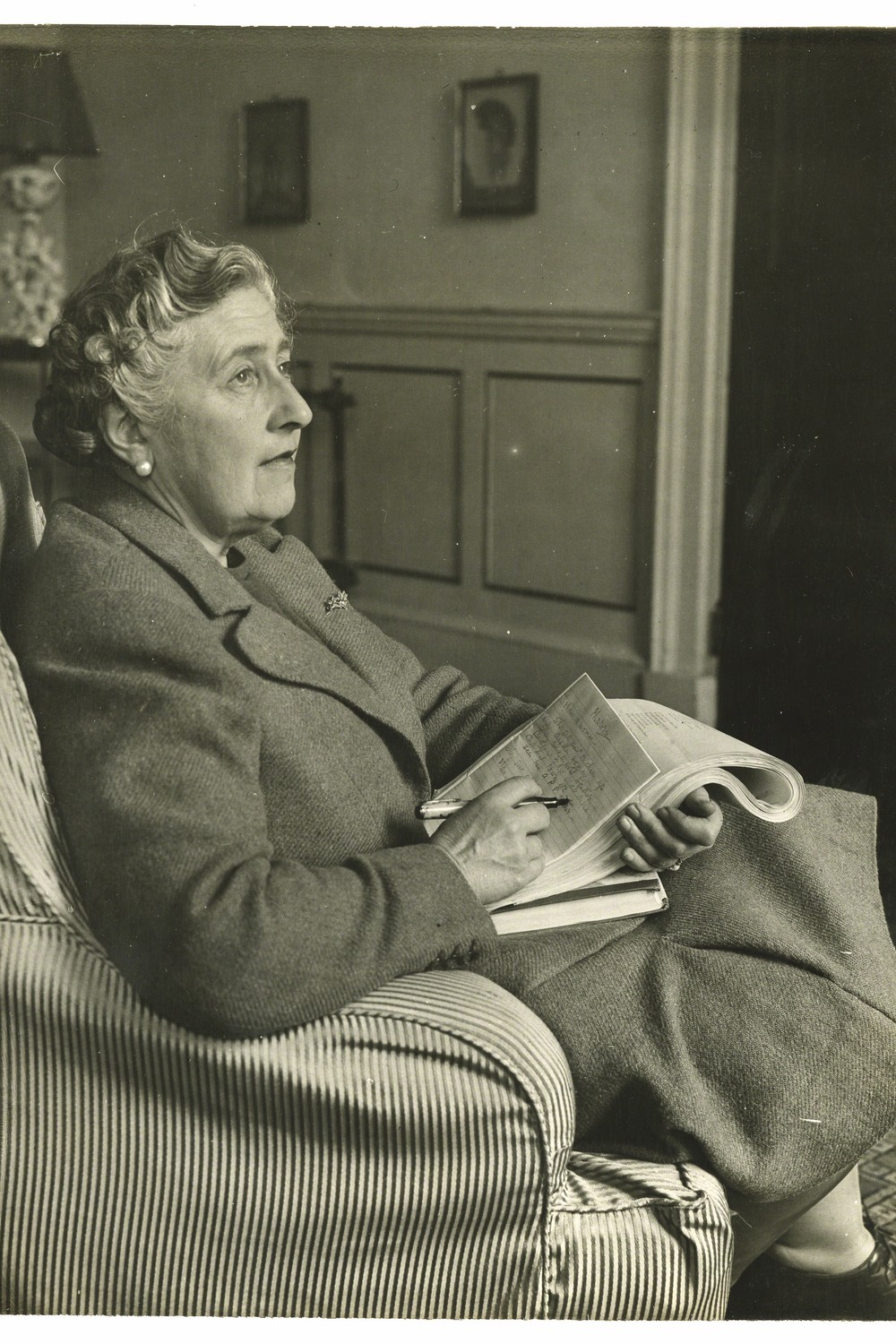
Through the final room and there’s Christie in her last portrait, discerning eyes still alert. Testimonials from fans echo out from the walls, discussing Christie’s eternal appeal and ongoing popularity. With fans spanning the world, it seems that she’s escaped the country house at last.
Agatha Christie: A World Of Mystery is showing at the British Library from 30 October 2026 – 20 June 2027.