


Meet The Woman On A Mission To Save Our World Monuments (Including The Moon)
By
3 months ago
Meet the head of the World Monuments Fund, Bénédicte de Montlaur
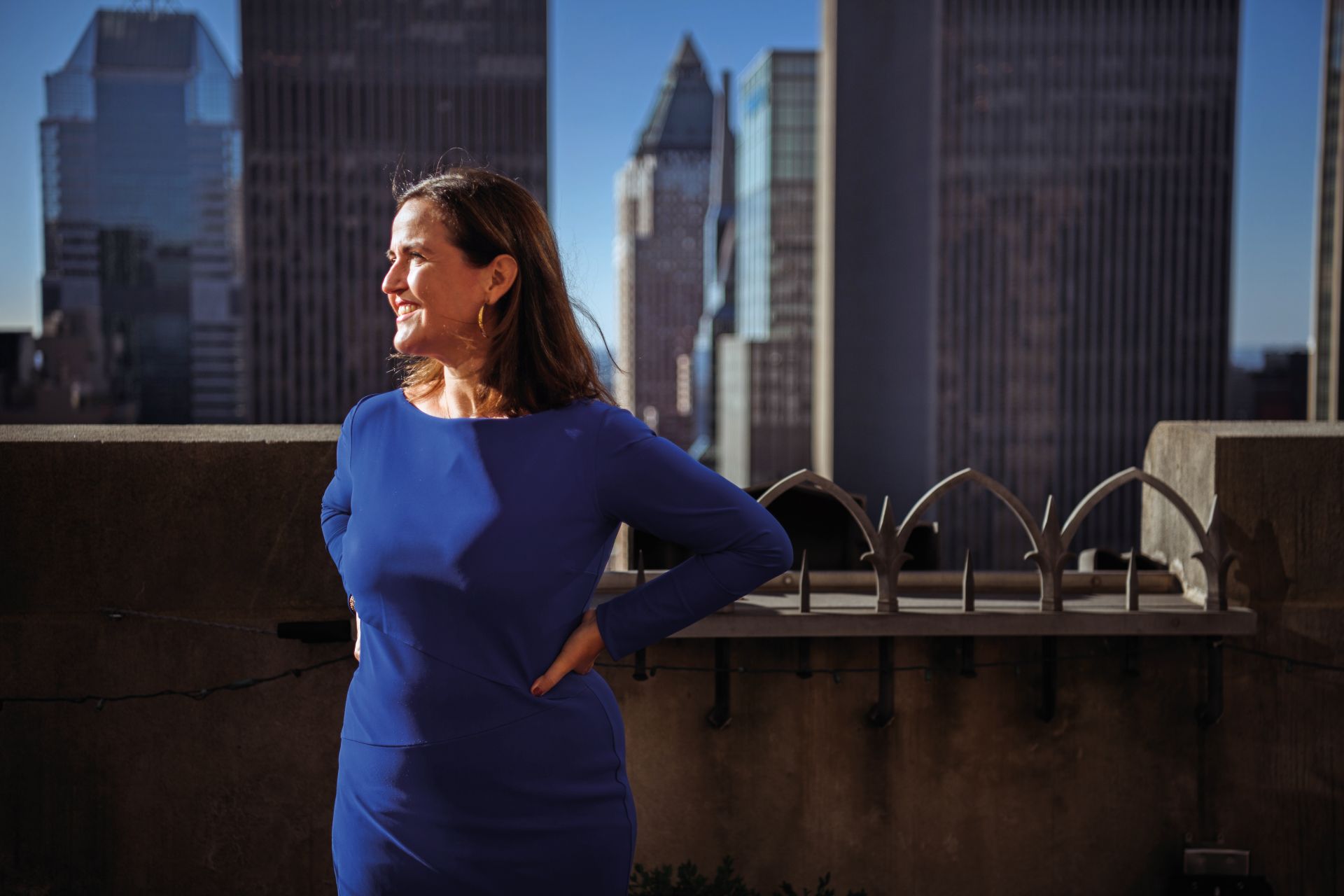
Lisa Grainger meets Bénédicte de Montlaur, the head of the World Monuments Fund on a mission to save meaningful places.
Interview With Bénédicte De Montlaur
Bénédicte de Montlaur is one of those women who always appears to be upbeat. But when I talk to her over Zoom, she is positively fizzing with energy. The president and CEO of the World Monuments Fund (WMF) is about to leave New York for a series of celebratory dinners across the globe – including at Windsor Castle – to mark the organisation’s 60th anniversary. The elegant Frenchwoman, clad in a suitably chic scarlet dress, is also heading to France to be awarded the country’s highest civic honour, the Légion d’Honneur, alongside culture giants such as David de Rothschild and Bernard Arnault. ‘And that means champagne!’ she says delightedly. ‘Good French champagne.’
The 47-year-old has much to celebrate. Since assuming her role in 2019 – after four years in New York as head of the Cultural Services of the French Embassy, where she launched a podcast (the now hugely popular Night of Philosophy and Ideas events series) and an intellectual festival to debate issues from racism to democracy – the WMF has had considerable successes. Not only has de Montlaur managed to double the amount raised for heritage sites across the world from $13m to $28m and created a junior board to bring in youthful advocates, she has attracted high-profile ambassadors (including Christian Louboutin) to help amplify her message about the importance of saving mankind’s heritage.
Heritage, she stresses, is not only the big famous buildings like Angkor Wat and Notre-Dame. It’s the everyday structures that tell you something about a nation’s culture: a wooden monastery in Bhutan where the devout have prayed for centuries; Peruvian burial sites from ancient civilisations; and the Moseley Road Baths in Birmingham and the Assembly Rooms in Belfast, where local communities have converged. ‘People need structures to bring them together. They need symbols of their past to rally around.’
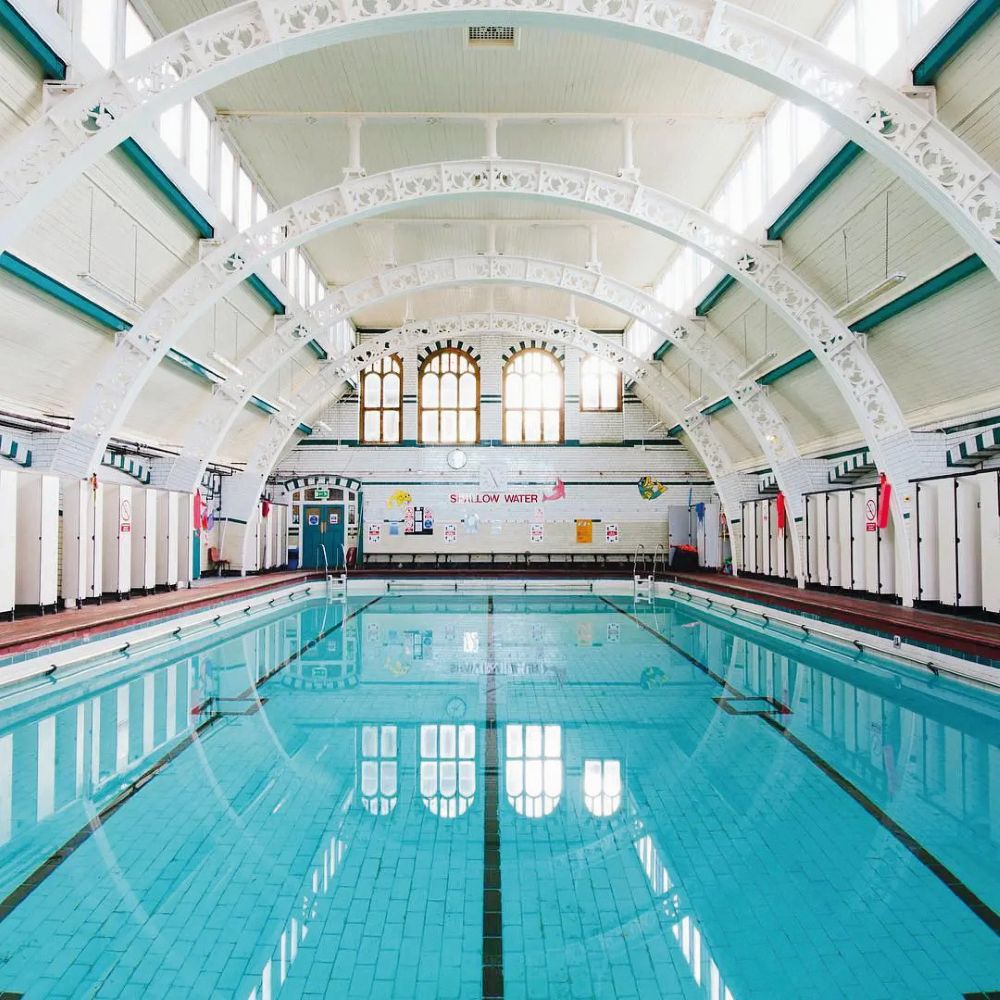
Moseley Road Baths
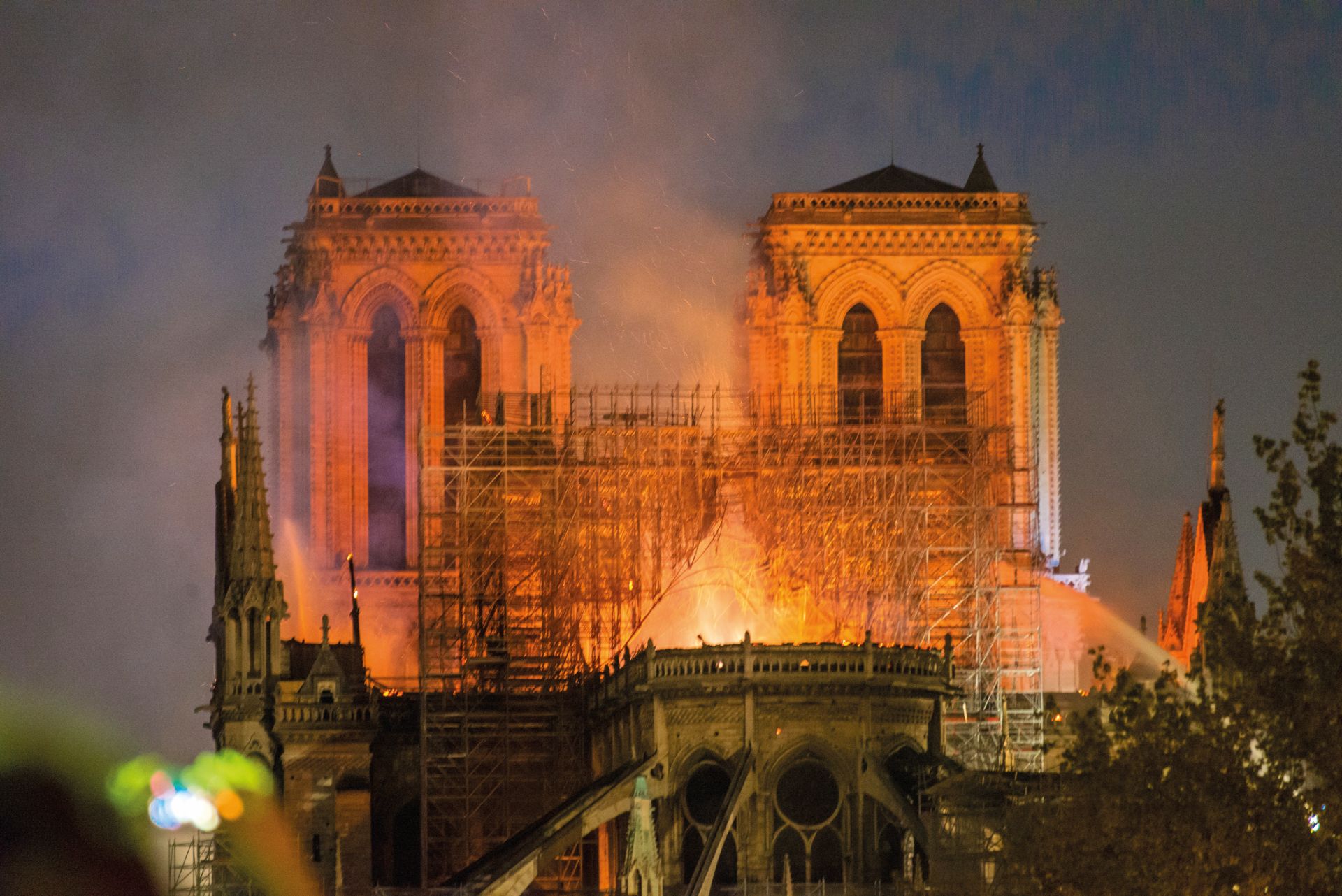
It is usually when these are destroyed by war or natural disasters, de Montlaur says, ‘that people realise what they’ve lost – and what they meant to civilisation’. Take, for instance, the sixth-century Buddhas of Bamiyan, blown up by the Taliban; or the ancient city of Antakya in Turkey, flattened by an earthquake; or Notre-Dame in Paris, which caught fire five years ago. ‘Everyone had a deep emotion about the cathedral burning,’ she says. ‘It was our common path being destroyed.’
Because the WMF is not a grant-making organisation but instead finds heritage areas or structures that need restoring before bringing together donors and experts to revitalise them, its work is varied. After the Notre-Dame fire, it gathered 500 firefighters to share learnings with other institutions so future fires could be avoided. In India, it provided expertise to restore stepwells and communities’ access to water. In Tanzania, it assisted in the replanting of destroyed mangroves to protect villages against rising seas, and in China, is in the process of finalising strategies to prevent overtourism in Buddhist grottoes.
In collaboration with the Metropolitan Museum’s new Arts of Africa galleries, WMF co-commissioned director Sosena Solomon to make 12 mini-documentaries on special African sites so more people can know about them. ‘Everyone knows about Versailles,’ de Mountlaur says, ‘but who knows about Great Zimbabwe, which is the largest stone structure in sub-Saharan Africa and is as intriguing as the Eygptian pyramids? We want people to be curious, to understand the treasures on our planet that need protecting.’
Once these sites have been discovered, she adds, then countries can build tourism projects around them and create new economies. ‘Think of France and Spain and Italy – people go there to see their heritage. Or Angkor Wat [on which the WMF has worked for 35 years]. When we arrived there, it was just after the fall of the Khmer Rouge; they had killed anyone with a degree. So we helped restore temples and train craftsmen. Today, it’s a huge part of the economy.’
In Iraq, she adds, WMF is helping to rebuild the Mosul Cultural Museum, whose building and collections were destroyed by ISIS. The restoration of key landmarks like this gives ‘a common purpose to people, creating an income for some and inspiration for all. They can rally around those places that represent their identity and history and recreate activity around them’.
Unlike at many other ‘heritage’ organisations, de Montlaur says, the WMF projects are nominated by communities who want to save something they love. Every two years, 25 are chosen for the World Monuments Watch and help is given to them, ranging from expertise to funding. Increasingly, money is being donated by heritage lovers from all over the world, rather than just by the US – where in 1965, Colonel James A. Gray set up a New York-based non-profit that would later become the World Monuments Fund.
Expanding the organisation’s donor base to other parts of the world has been a big part of de Montlaur’s role, she adds. Today, the WMF has 700 projects in over 112 countries (as well as one on the moon to protect the technology and footprints we have left behind), funded by 12 international chapters from Peru and the Middle East to the UK.
A key function is also resuscitating old crafts. ‘In Mandalay, we found an old man who had restored a temple and got him to train young furniture-makers. In Japan, with backing from Tiffany & Co., we are helping to bring back gold-leaf experts in Kanazawa, where the art was dying.’
Why should anyone care about heritage? ‘Because so many of these things are so beautiful,’ de Montlaur says with feeling, ‘and that elevates the soul.’ It also gives us a record of our past, she adds, and how it evolves. At the Alhambra in Spain, there are both statues of the Virgin Mary and inscriptions in Arabic – a physical manifestation of how we can all live together. ‘Our life is so fast. And so preserving these places gives a sense of continuity, of meaning, and of sanity.’
What she needs, she emphasises, is for ‘everyone to get involved in our network of concerned citizens. The more of us who protect the wonders of our world, the better’.